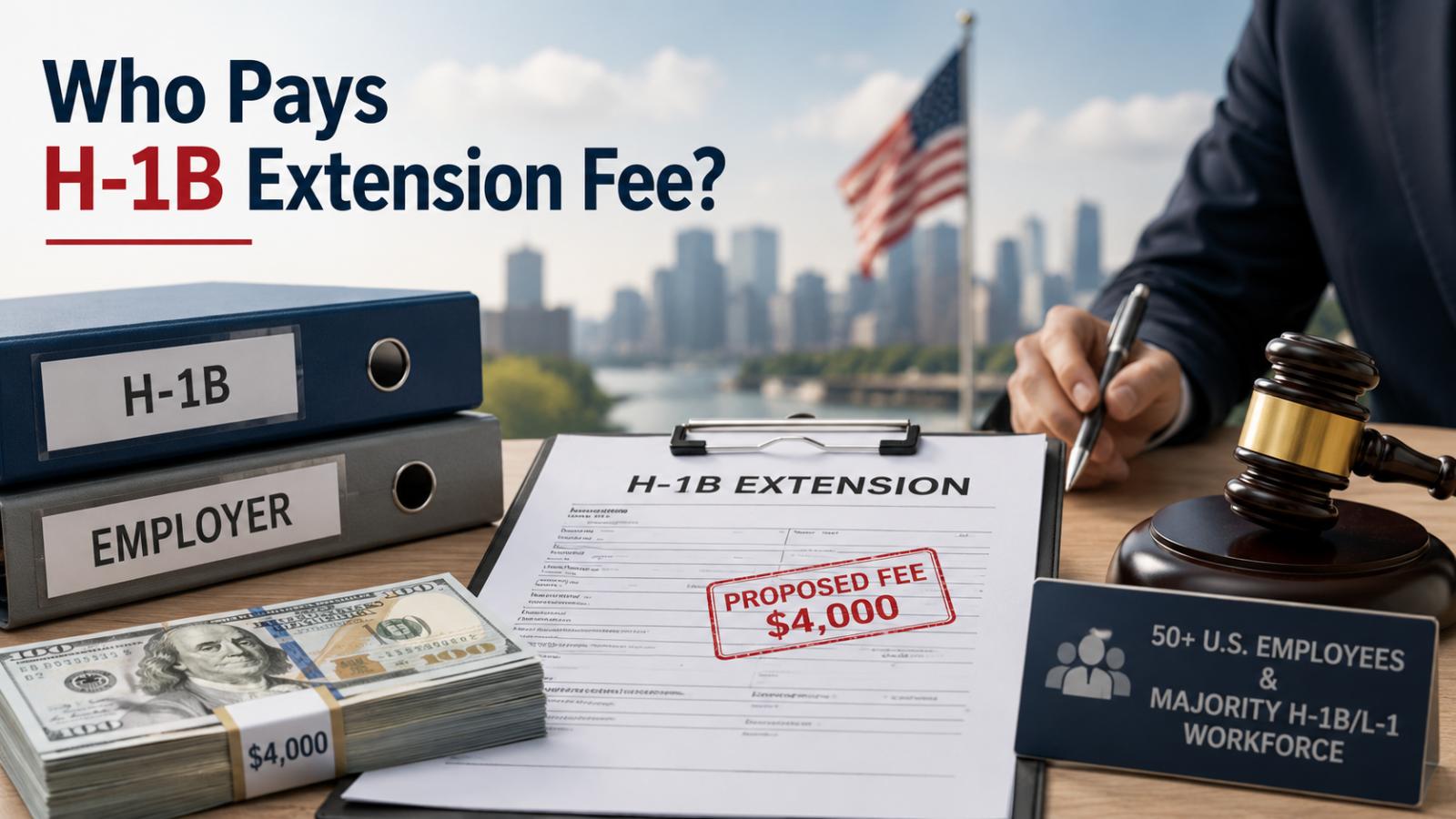
The proposed $4,000 H-1B extension fee would not apply to every employer or visa holder. It targets companies with at least 50 U.S. employees when more than half hold H-1B or L-1 status, expanding the surcharge to same-employer extension petitions as well.
Which employers meet the threshold?
The eligibility rules are part of a broader U.S. plan that could add a $4,000 H-1B extension fee to certain extension-of-stay petitions.
The proposed $4,000 H-1B extension fee would apply only to a defined group of employers. A company must employ at least 50 people in the United States, and more than 50% of its U.S. workforce must collectively hold H-1B, L-1A or L-1B status.
The filing obligation would fall on the employer submitting the petition, not directly on the visa holder.
What petitions would be covered?
Under current DHS practice, covered employers generally pay the surcharge for petitions seeking an initial grant of H-1B status and qualifying change-of-employer filings. Routine extensions that keep a worker with the same employer generally fall outside the surcharge.
The proposed rule would expand the fee to all extension-of-stay petitions filed by covered employers, including same-employer extensions. An amended petition without an extension-of-stay request would remain excluded under the proposed regulatory language.
Not every H-1B extension would cost $4,000 more
Employers below the 50-worker threshold would not be covered. Neither would companies with 50 or more U.S. employees when workers holding H-1B, L-1A and L-1B status account for 50% or less of the workforce.
The proposal also carries a separate $4,500 surcharge for qualifying L-1 petitions. These amounts are additional employer filing charges and do not replace standard Form I-129 or other applicable USCIS fees.
When could the rule take effect?
DHS published the proposal on June 6, 2024, and closed the public comment period on July 8, 2024. The federal government’s 2026 regulatory agenda lists it at the final-rule stage with a July 2026 target but provides no Federal Register citation for a completed rule.
The expanded charge would begin only after DHS formally publishes a final rule and specifies its effective date.
Until then, employers and workers should distinguish the pending expansion from the narrower surcharge already collected in qualifying cases.