









London Gunfire and Stabbing Incidents Leave Multiple Hospitalized
Four people were hospitalized after a shooting incident in Brixton, south London, during the early hours of Saturday, raising concerns about public safety and urban violence. Authorities reported that gunfire was discharged from a moving vehicle along Coldharbour Lane shortly after 1:00 am, leaving all four victims with gunshot injuries. Emergency services responded quickly, providing treatment at the scene before transporting the injured to nearby hospitals. Among the victims, a 25
London Gunfire and Stabbing Incidents Leave Multiple Hospitalized
Four people were hospitalized after a shooting incident in Brixton, south London, during the early hours of Saturday, raising concerns about public safety and urban violence. Authorities reported that gunfire was discharged from a moving vehicle along Coldharbour Lane shortly after 1:00 am, leaving all four victims with gunshot injuries. Emergency services responded quickly, providing treatment at the scene before transporting the injured to nearby hospitals. Among the victims, a 25

Oscar statuette recovered after going missing on flight from New York to Frankfurt
An Oscar statuette belonging to Russian director Pavel Talankin was recovered after going missing on a Lufthansa flight from New York to Frankfurt. The incident followed a TSA security check that required the award to be placed in checked luggage, prompting an internal review. Oscar statuette recovered after going missing on flight from New York to Frankfurt blends into a broader aviation and security incident that raised concerns over airport screeni
Oscar statuette recovered after going missing on flight from New York to Frankfurt
An Oscar statuette belonging to Russian director Pavel Talankin was recovered after going missing on a Lufthansa flight from New York to Frankfurt. The incident followed a TSA security check that required the award to be placed in checked luggage, prompting an internal review. Oscar statuette recovered after going missing on flight from New York to Frankfurt blends into a broader aviation and security incident that raised concerns over airport screeni
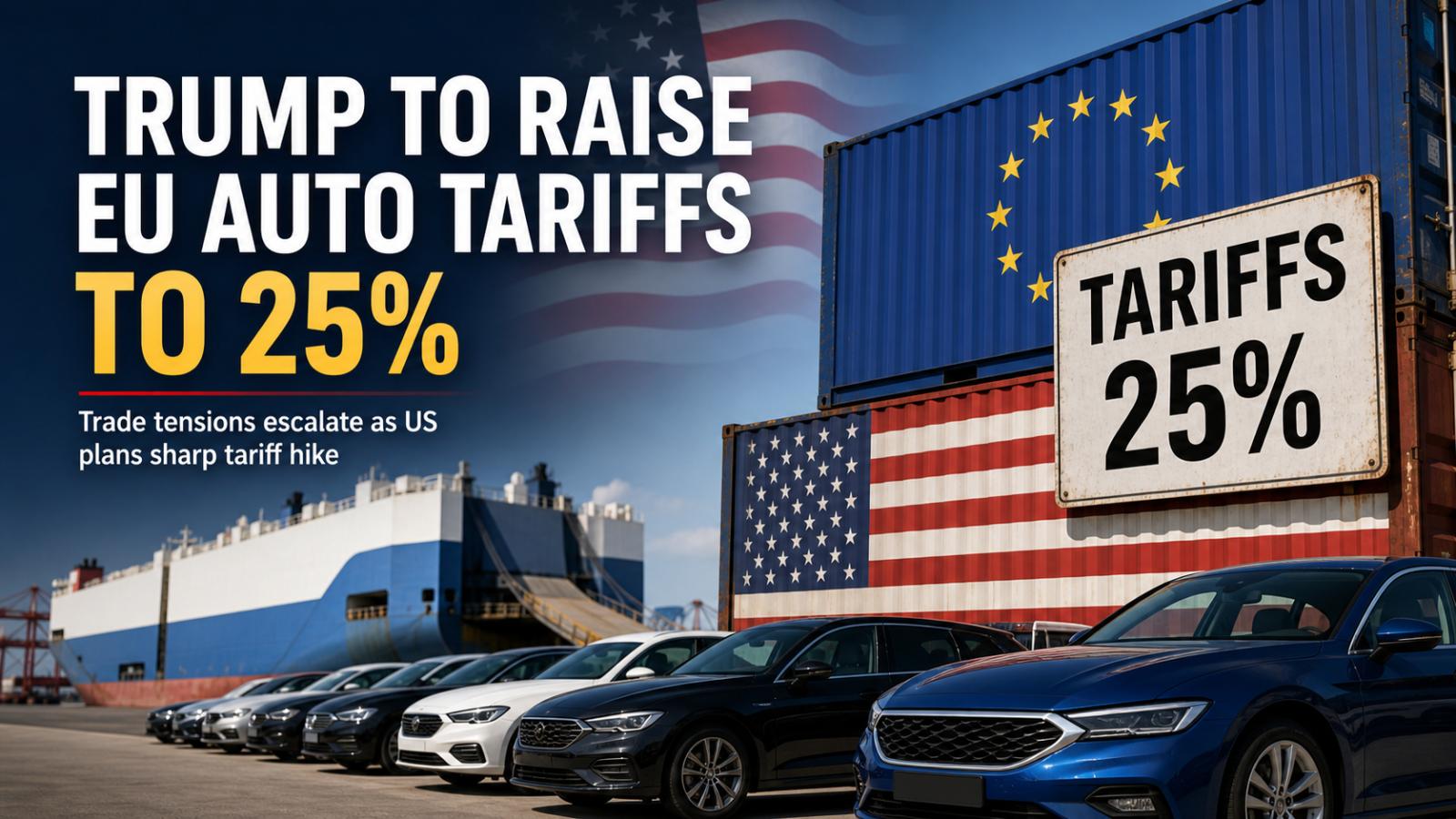
Will Trump raise EU auto tariffs to 25%? Yes, escalation risks trade tensions
Trump signals sharp increase in tariffs on EU vehicles WASHINGTON — On Friday, May 1, 2026, U.S. President Donald Trump announced plans to raise tariffs on cars and trucks imported from the European Union to 25%, signaling a significant shift in U.S.-EU trade policy. The move, shared publicly in a statement, comes at a time when global markets remain sensitive to policy changes and could trigger broader economic repercussions. Trump stated that the European Union was “not complying” with the previously agreed trade deal, though he did not provide specific details regarding the alleged violations. The announcement marks a departure from the earlier tariff framework negotiated between both sides. Background of the US-EU Turnberry trade framework The current dispute traces back to a bilateral agreement reached in July 2025 between Trump and Ursula von der Leyen, which set a 15% tariff ceiling on most traded goods. Known as the Turnberry Agreement, the arrangement aimed to stabilize trade relations and reduce uncertainty for industries on both sides of the Atlantic. Both the United States and the European Union had reaffirmed their commitment to maintaining this framework even after legal and policy challenges emerged earlier in 2026. Legal challenges reshape tariff authority The agreement’s stability was called into question after a ruling by the U.S. Supreme Court, which determined that the president lacked authority to impose tariffs under an economic emergency declaration. Following the ruling, tariff limits were effectively reduced, prompting the administration to explore alternative legal pathways to implement new import taxes. Ongoing investigations into trade imbalances and national security concerns have since been cited by the administration as justification for a revised tariff strategy, potentially putting the original agreement at risk. Economic stakes for EU and global markets The European Union has consistently emphasized the importance of maintaining agreed tariff limits, noting that the deal was expected to save its automotive sector between €500 million and €600 million monthly. Trade between the U.S. and EU reached approximately €1.7 trillion ($2 trillion) in 2024, highlighting the scale of economic interdependence. European officials have reiterated that commitments under the agreement should be upheld, stressing that EU exports must continue to benefit from competitive tariff treatment without unexpected increases. Rising tensions threaten trade stability The proposed tariff increase introduces fresh uncertainty into one of the world’s largest trading relationships. Analysts warn that such measures could disrupt supply chains, increase costs for manufacturers and consumers, and strain diplomatic ties. As the administration moves forward with its trade investigations, the future of the U.S.-EU trade framework remains uncertain, with potential implications extending beyond the automotive sector into the broader global economy.
Will Trump raise EU auto tariffs to 25%? Yes, escalation risks trade tensions
Trump signals sharp increase in tariffs on EU vehicles WASHINGTON — On Friday, May 1, 2026, U.S. President Donald Trump announced plans to raise tariffs on cars and trucks imported from the European Union to 25%, signaling a significant shift in U.S.-EU trade policy. The move, shared publicly in a statement, comes at a time when global markets remain sensitive to policy changes and could trigger broader economic repercussions. Trump stated that the European Union was “not complying” with the previously agreed trade deal, though he did not provide specific details regarding the alleged violations. The announcement marks a departure from the earlier tariff framework negotiated between both sides. Background of the US-EU Turnberry trade framework The current dispute traces back to a bilateral agreement reached in July 2025 between Trump and Ursula von der Leyen, which set a 15% tariff ceiling on most traded goods. Known as the Turnberry Agreement, the arrangement aimed to stabilize trade relations and reduce uncertainty for industries on both sides of the Atlantic. Both the United States and the European Union had reaffirmed their commitment to maintaining this framework even after legal and policy challenges emerged earlier in 2026. Legal challenges reshape tariff authority The agreement’s stability was called into question after a ruling by the U.S. Supreme Court, which determined that the president lacked authority to impose tariffs under an economic emergency declaration. Following the ruling, tariff limits were effectively reduced, prompting the administration to explore alternative legal pathways to implement new import taxes. Ongoing investigations into trade imbalances and national security concerns have since been cited by the administration as justification for a revised tariff strategy, potentially putting the original agreement at risk. Economic stakes for EU and global markets The European Union has consistently emphasized the importance of maintaining agreed tariff limits, noting that the deal was expected to save its automotive sector between €500 million and €600 million monthly. Trade between the U.S. and EU reached approximately €1.7 trillion ($2 trillion) in 2024, highlighting the scale of economic interdependence. European officials have reiterated that commitments under the agreement should be upheld, stressing that EU exports must continue to benefit from competitive tariff treatment without unexpected increases. Rising tensions threaten trade stability The proposed tariff increase introduces fresh uncertainty into one of the world’s largest trading relationships. Analysts warn that such measures could disrupt supply chains, increase costs for manufacturers and consumers, and strain diplomatic ties. As the administration moves forward with its trade investigations, the future of the U.S.-EU trade framework remains uncertain, with potential implications extending beyond the automotive sector into the broader global economy.

Gold Slips Lower, Silver Also Dips – Wednesday, April 29, 2026
Precious metals recorded a decline in prices. Gold and silver both moved downward in the latest session. Gold Price Gold (per oz): $4,549.40 ↓ Gold 24K (per 10g): ₹138,751 approx Gold 22K (per 10g): ₹127,076 approx Silver Price Silver (per oz): $72.41 ↓ (₹6,867 approx) Silver (per kg): $2,328 (₹220,764 a
Gold Slips Lower, Silver Also Dips – Wednesday, April 29, 2026
Precious metals recorded a decline in prices. Gold and silver both moved downward in the latest session. Gold Price Gold (per oz): $4,549.40 ↓ Gold 24K (per 10g): ₹138,751 approx Gold 22K (per 10g): ₹127,076 approx Silver Price Silver (per oz): $72.41 ↓ (₹6,867 approx) Silver (per kg): $2,328 (₹220,764 a
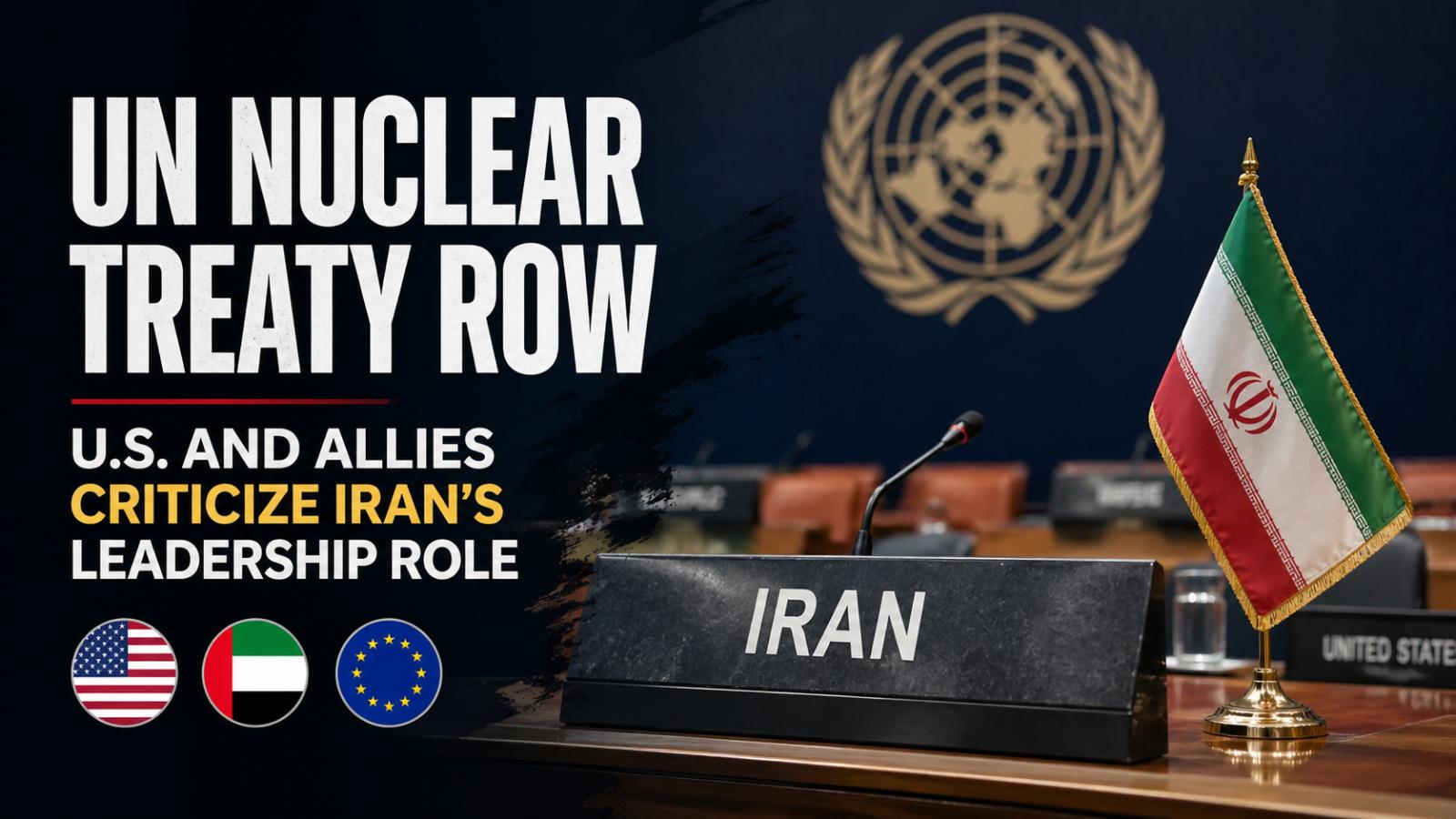
Why did the UN grant Iran a leadership role? It reflects procedural voting dynamics despite criticism
It reflects procedural voting dynamics despite criticism The United States, joined by the United Arab Emirates and supported by several European governments, condemned a United Nations decision made on Monday, April 28, 2026, to appoint Iran as one of the vice presidents at a major nuclear treaty conference in New York. Iran’s appointment through Non-Aligned Movement voting bloc The controversy emerged as the 11th Review Conference of
Why did the UN grant Iran a leadership role? It reflects procedural voting dynamics despite criticism
It reflects procedural voting dynamics despite criticism The United States, joined by the United Arab Emirates and supported by several European governments, condemned a United Nations decision made on Monday, April 28, 2026, to appoint Iran as one of the vice presidents at a major nuclear treaty conference in New York. Iran’s appointment through Non-Aligned Movement voting bloc The controversy emerged as the 11th Review Conference of
India Enters Top Five as Global Defense Spending Surge
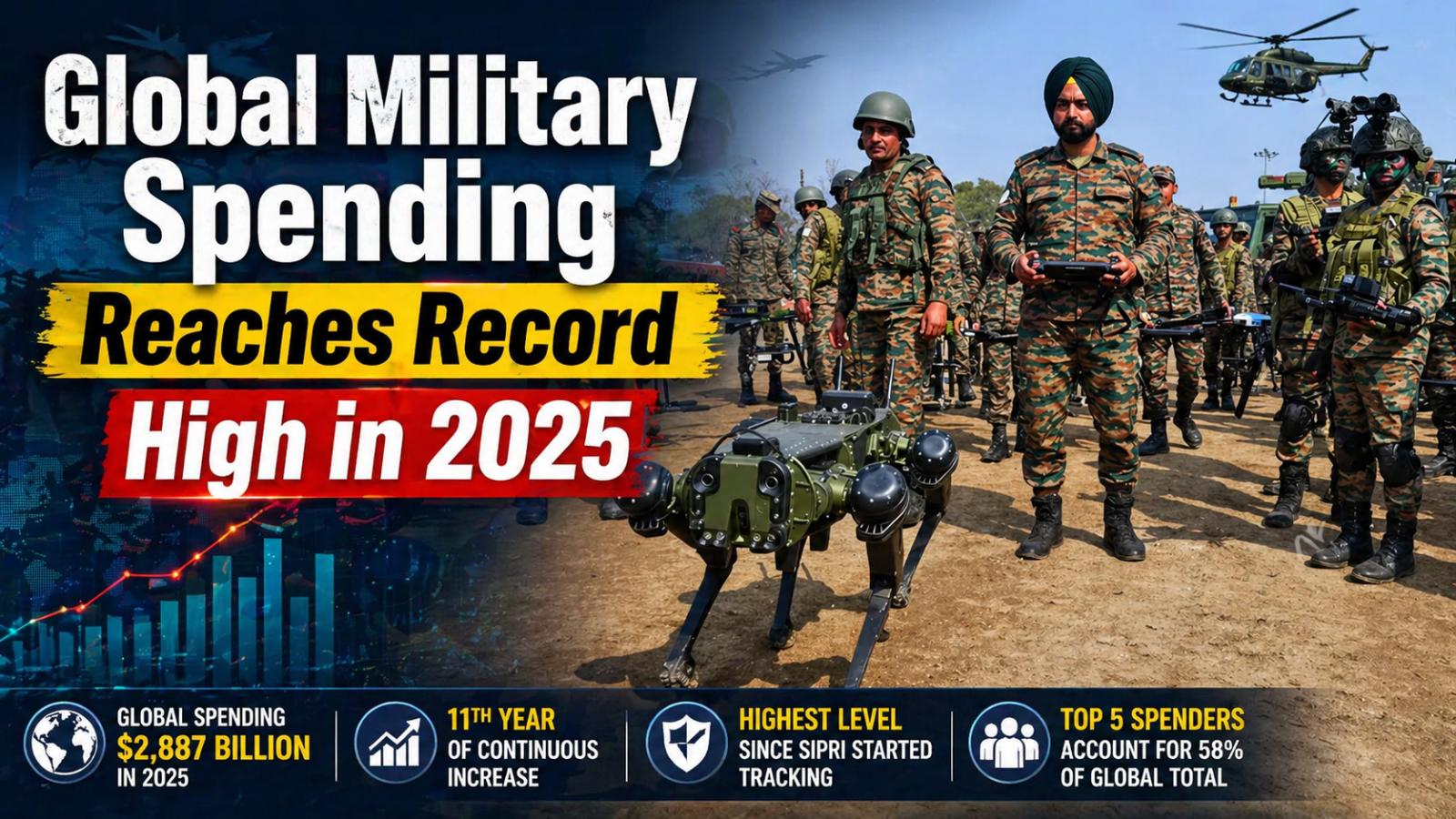
Global military spending reached a record $2,887 billion in 2025, marking the eleventh consecutive year of growth and the highest level ever recorded. According to the latest SIPRI report, the increase reflects rising geopolitical tensions, ongoing conflicts, and a shifting global security environment that has prompted governments to expand their defense budgets. India emerged as one of the world’s top military spenders, entering the top five for the first time with total expenditure of $92.1 billion. The country’s defense spending rose by 8.9 percent, reflecting heightened security concerns and operational demands. The report noted that this increase coincided with armed tensions involving Pakistan in May 2025, during which India deployed a range of military assets including aircraft, drones, and missile systems. The five largest spenders—the United States, China, Russia, Germany, and India—collectively accounted for 58 percent of global military expenditure, totaling $1,686 billion. Pakistan also increased its defense budget by 11 percent to $11.9 billion, driven largely by procurement activities and ongoing modernization efforts following regional tensions. Europe was identified as the primary contributor to the global rise in military spending, with a 14 percent increase bringing the region’s total to $864 billion. This marked the fastest growth in Central and Western Europe since the Cold War, as countries accelerated rearmament programs in response to security concerns, particularly the ongoing conflict involving Russia and Ukraine. The United States remained the largest military spender globally, allocating $954 billion in 2025. However, this represented a 7.5 percent decline compared to the previous year. The decrease was attributed mainly to reduced financial assistance to Ukraine, contrasting with higher levels of support in earlier years. Overall, the data highlights a continued global trend toward increased defense investment, driven by evolving security challenges and shifting geopolitical dynamics.
India Enters Top Five as Global Defense Spending Surge
Global military spending reached a record $2,887 billion in 2025, marking the eleventh consecutive year of growth and the highest level ever recorded. According to the latest SIPRI report, the increase reflects rising geopolitical tensions, ongoing conflicts, and a shifting global security environment that has prompted governments to expand their defense budgets. India emerged as one of the world’s top military spenders, entering the top five for the first time with total expenditure of $92.1 billion. The country’s defense spending rose by 8.9 percent, reflecting heightened security concerns and operational demands. The report noted that this increase coincided with armed tensions involving Pakistan in May 2025, during which India deployed a range of military assets including aircraft, drones, and missile systems. The five largest spenders—the United States, China, Russia, Germany, and India—collectively accounted for 58 percent of global military expenditure, totaling $1,686 billion. Pakistan also increased its defense budget by 11 percent to $11.9 billion, driven largely by procurement activities and ongoing modernization efforts following regional tensions. Europe was identified as the primary contributor to the global rise in military spending, with a 14 percent increase bringing the region’s total to $864 billion. This marked the fastest growth in Central and Western Europe since the Cold War, as countries accelerated rearmament programs in response to security concerns, particularly the ongoing conflict involving Russia and Ukraine. The United States remained the largest military spender globally, allocating $954 billion in 2025. However, this represented a 7.5 percent decline compared to the previous year. The decrease was attributed mainly to reduced financial assistance to Ukraine, contrasting with higher levels of support in earlier years. Overall, the data highlights a continued global trend toward increased defense investment, driven by evolving security challenges and shifting geopolitical dynamics.

Statewide Kerala Protest After Nithin Raj Death Affects Buses, Patients And Students
A statewide hartal called in Kerala on April 28, 2026, has significantly disrupted daily life, with public transport services coming to a near standstill and thousands of commuters stranded across the state. The protest was triggered by the death of Nithin Raj, which has sparked widespread outrage and led to demonstrations in multiple districts. According to reports, private buses, taxis, and auto-rickshaws largely stayed off the roads as protestors enforced the hartal. Shops, comme
Statewide Kerala Protest After Nithin Raj Death Affects Buses, Patients And Students
A statewide hartal called in Kerala on April 28, 2026, has significantly disrupted daily life, with public transport services coming to a near standstill and thousands of commuters stranded across the state. The protest was triggered by the death of Nithin Raj, which has sparked widespread outrage and led to demonstrations in multiple districts. According to reports, private buses, taxis, and auto-rickshaws largely stayed off the roads as protestors enforced the hartal. Shops, comme
Global military spending hits $2.9 trillion in 2025 amid rising tensions
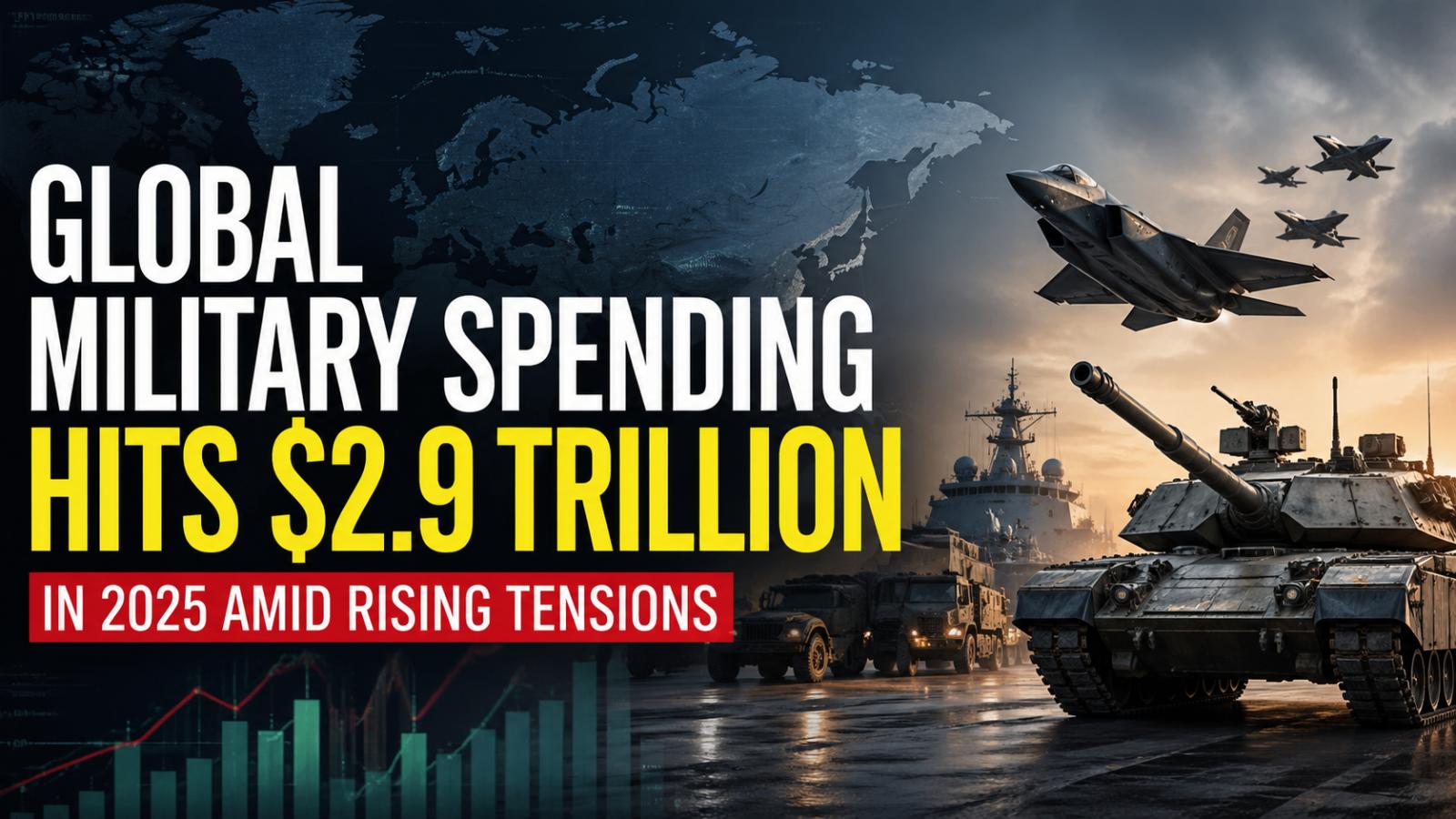
Global military spending 2025 overview Global military spending in 2025 has reached nearly $2.9 trillion, clearly showing how countries are increasing defence budgets as global tensions continue to rise. The total spending stood at $2887 billion in 2025, marking a 2.9 per cent increase from 2024, highlighting a steady rise in military expenditure trends worldwide. This reflects a world becoming less secure, with nations investing more in defence to protect themselves. The United States, Russia, and China remained the top three military spenders, with a combined total of $1.48 trillion. These nations continue to dominate global defence spending, shaping international security dynamics. Experts say this rise in defence budget growth shows that countries are preparing for both current conflicts and future uncertainties. Europe witnessed a major surge, with military spending increasing by 14 per cent to $864 billion in 2025. This sharp rise is mainly driven by the ongoing Russia-Ukraine war and reduced dependence on the United States for security. Countries like Germany increased spending by 24 per cent to $114 billion, while Spain recorded a significant 50 per cent jump to $40.2 billion, crossing two per cent of GDP for the first time in decades. The United States remained the largest spender despite a decline of 7.5 per cent, bringing its total to $954 billion in 2025. The decrease is linked to reduced financial aid approvals for Ukraine, although future budgets suggest spending could exceed $1 trillion in 2026, indicating a possible rebound. In Eastern Europe, Russia increased its military expenditure by 5.9 per cent to $190 billion, while Ukraine saw a sharp rise of 20 per cent to $84.1 billion. Ukraine’s defence spending now accounts for a large share of its GDP, showing the intensity of the ongoing conflict. Asia and Oceania recorded one of the fastest growth rates, with spending reaching $681 billion in 2025, an 8.5 per cent increase. China led the region with $336 billion, followed by Japan and India. India increased its defence budget by 8.9 per cent to $92.1 billion, making it the fifth-largest military spender globally. This growth highlights rising security concerns across the region. In the Middle East, spending patterns were mixed. Iran’s defence expenditure fell by 5.6 per cent to $7.4 billion, mainly due to high inflation. Israel also saw a decline of 4.9 per cent to $48.3 billion after reducing military operations following a ceasefire in early 2025, although its spending remains significantly higher compared to earlier years. Regional tensions continue to influence defence strategies across the Middle East. Overall, the SIPRI report shows that global military spending is steadily increasing as countries respond to rising geopolitical tensions and conflicts. The trend highlights a shift toward stronger military preparedness, reflecting uncertainty in the global security environment.
Global military spending hits $2.9 trillion in 2025 amid rising tensions
Global military spending 2025 overview Global military spending in 2025 has reached nearly $2.9 trillion, clearly showing how countries are increasing defence budgets as global tensions continue to rise. The total spending stood at $2887 billion in 2025, marking a 2.9 per cent increase from 2024, highlighting a steady rise in military expenditure trends worldwide. This reflects a world becoming less secure, with nations investing more in defence to protect themselves. The United States, Russia, and China remained the top three military spenders, with a combined total of $1.48 trillion. These nations continue to dominate global defence spending, shaping international security dynamics. Experts say this rise in defence budget growth shows that countries are preparing for both current conflicts and future uncertainties. Europe witnessed a major surge, with military spending increasing by 14 per cent to $864 billion in 2025. This sharp rise is mainly driven by the ongoing Russia-Ukraine war and reduced dependence on the United States for security. Countries like Germany increased spending by 24 per cent to $114 billion, while Spain recorded a significant 50 per cent jump to $40.2 billion, crossing two per cent of GDP for the first time in decades. The United States remained the largest spender despite a decline of 7.5 per cent, bringing its total to $954 billion in 2025. The decrease is linked to reduced financial aid approvals for Ukraine, although future budgets suggest spending could exceed $1 trillion in 2026, indicating a possible rebound. In Eastern Europe, Russia increased its military expenditure by 5.9 per cent to $190 billion, while Ukraine saw a sharp rise of 20 per cent to $84.1 billion. Ukraine’s defence spending now accounts for a large share of its GDP, showing the intensity of the ongoing conflict. Asia and Oceania recorded one of the fastest growth rates, with spending reaching $681 billion in 2025, an 8.5 per cent increase. China led the region with $336 billion, followed by Japan and India. India increased its defence budget by 8.9 per cent to $92.1 billion, making it the fifth-largest military spender globally. This growth highlights rising security concerns across the region. In the Middle East, spending patterns were mixed. Iran’s defence expenditure fell by 5.6 per cent to $7.4 billion, mainly due to high inflation. Israel also saw a decline of 4.9 per cent to $48.3 billion after reducing military operations following a ceasefire in early 2025, although its spending remains significantly higher compared to earlier years. Regional tensions continue to influence defence strategies across the Middle East. Overall, the SIPRI report shows that global military spending is steadily increasing as countries respond to rising geopolitical tensions and conflicts. The trend highlights a shift toward stronger military preparedness, reflecting uncertainty in the global security environment.

Bitcoin Hits $78,000 12-Week High: 3 Key Reasons Behind The Surge
On April 27, 2026, Bitcoin touched a 12-week high near $78,000, driven by institutional demand, global economic trends, and long-term investor confidence. Bitcoin has climbed to a 12-week high, hovering close to the $78,000 mark as of April 27, 2026, reflecting a steady and controlled u
Bitcoin Hits $78,000 12-Week High: 3 Key Reasons Behind The Surge
On April 27, 2026, Bitcoin touched a 12-week high near $78,000, driven by institutional demand, global economic trends, and long-term investor confidence. Bitcoin has climbed to a 12-week high, hovering close to the $78,000 mark as of April 27, 2026, reflecting a steady and controlled u

2 Birthday Parties Turn Deadly in Delhi and UP, Four Killed
Two separate birthday celebrations in Delhi and Uttar Pradesh ended in tragedy, leaving four people dead after small arguments turned violent. In Delhi, a 21-year-old delivery executive named Pandav Kumar was shot dead during a birthday celebration at his friend’s house. The incident happened when Pandav and his friend were leaving for work late at night. A Delhi Police head constable, Neeraj Balhara, who was off duty, stopped them and questioned them. According to reports, an arg
2 Birthday Parties Turn Deadly in Delhi and UP, Four Killed
Two separate birthday celebrations in Delhi and Uttar Pradesh ended in tragedy, leaving four people dead after small arguments turned violent. In Delhi, a 21-year-old delivery executive named Pandav Kumar was shot dead during a birthday celebration at his friend’s house. The incident happened when Pandav and his friend were leaving for work late at night. A Delhi Police head constable, Neeraj Balhara, who was off duty, stopped them and questioned them. According to reports, an arg
Trump criticizes NATO support amid tensions over Iran conflict
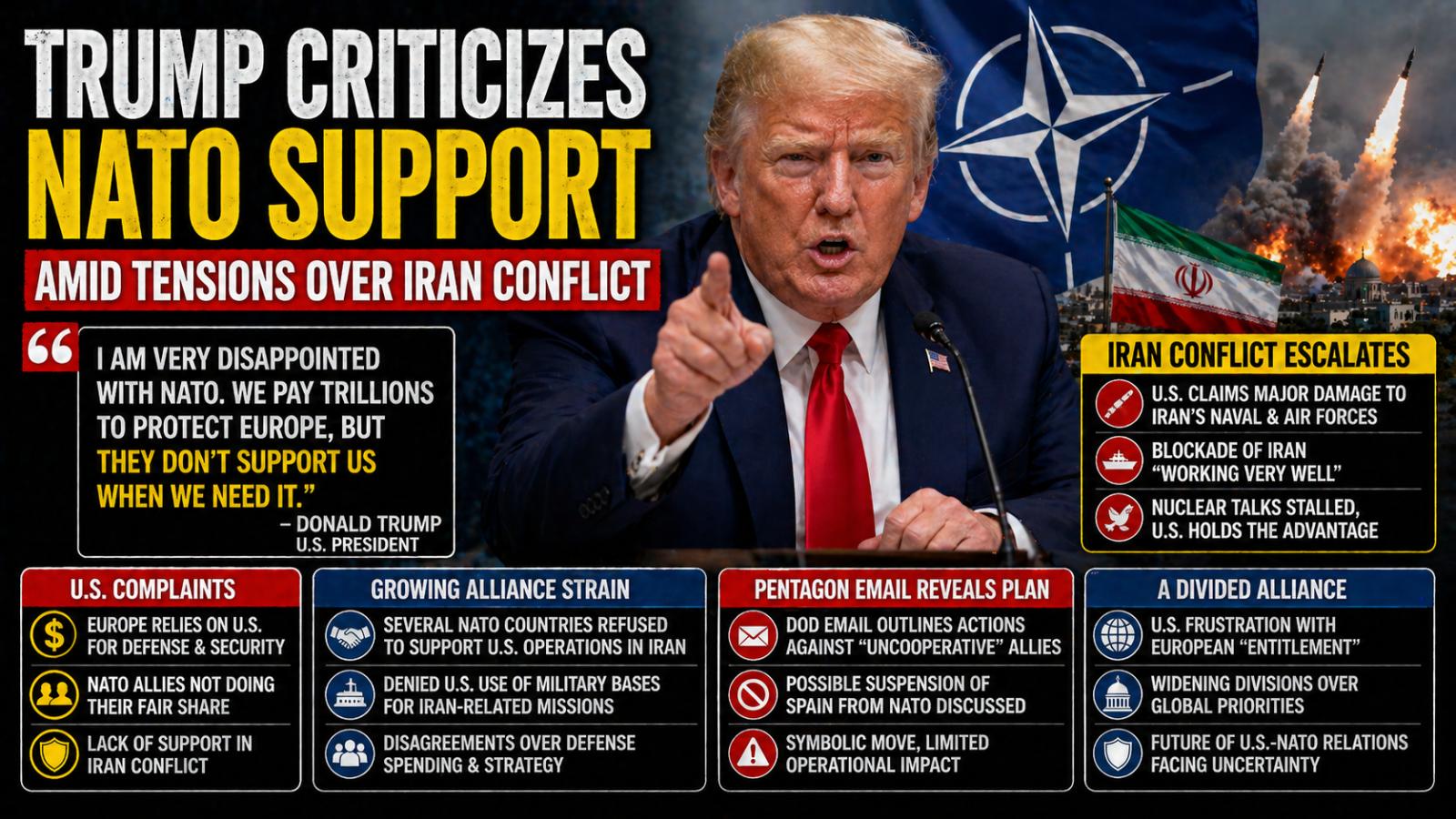
Trump criticized NATO for lack of support during the Iran conflict, highlighting growing US-alliance tensions and potential policy consequences for member states. A growing rift between the United States and NATO allies intensified after President Donald Trump voiced disappointment over support during the Iran conflict and broader security concerns. Amid escalating tensions between the United States and its allies, Donald Trump said on Sunday April 26, 2026 that he was “very disappointed” with NATO, accusing the alliance of failing to support Washington during a critical period. His remarks followed heightened security concerns earlier that day at the White House Correspondents’ Dinner. In an interview with Fox News, Trump emphasized the scale of US financial contributions to NATO, arguing that the alliance depends heavily on American resources. He said the United States has invested trillions of dollars to protect Europe from threats such as Russia and suggested that NATO members have not reciprocated adequately. The comments come as the Trump administration faces frustration with Western allies over their reluctance to back US actions in the ongoing Iran conflict. During the same interview, Trump shifted focus to Iran, asserting that the United States holds a strategic advantage despite stalled negotiations. He claimed US forces had significantly weakened Iran’s naval and air capabilities and described a blockade as highly effective. Tensions with NATO have been building since Trump returned to office, particularly as he has pushed member nations to increase defense spending. Disagreements intensified after several NATO countries declined to support US military operations in Iran or allow the use of their bases. The strain deepened further after a controversial email from the United States Department of Defense outlined potential actions against NATO allies perceived as unsupportive. Among the measures discussed was the possible suspension of Spain from NATO, a move officials indicated would carry symbolic significance but limited operational impact. Officials said the communication reflected growing frustration within the US government, describing what it characterized as a sense of entitlement among European partners. The developments underscore widening divisions within the alliance as geopolitical and military priorities diverge.
Trump criticizes NATO support amid tensions over Iran conflict
Trump criticized NATO for lack of support during the Iran conflict, highlighting growing US-alliance tensions and potential policy consequences for member states. A growing rift between the United States and NATO allies intensified after President Donald Trump voiced disappointment over support during the Iran conflict and broader security concerns. Amid escalating tensions between the United States and its allies, Donald Trump said on Sunday April 26, 2026 that he was “very disappointed” with NATO, accusing the alliance of failing to support Washington during a critical period. His remarks followed heightened security concerns earlier that day at the White House Correspondents’ Dinner. In an interview with Fox News, Trump emphasized the scale of US financial contributions to NATO, arguing that the alliance depends heavily on American resources. He said the United States has invested trillions of dollars to protect Europe from threats such as Russia and suggested that NATO members have not reciprocated adequately. The comments come as the Trump administration faces frustration with Western allies over their reluctance to back US actions in the ongoing Iran conflict. During the same interview, Trump shifted focus to Iran, asserting that the United States holds a strategic advantage despite stalled negotiations. He claimed US forces had significantly weakened Iran’s naval and air capabilities and described a blockade as highly effective. Tensions with NATO have been building since Trump returned to office, particularly as he has pushed member nations to increase defense spending. Disagreements intensified after several NATO countries declined to support US military operations in Iran or allow the use of their bases. The strain deepened further after a controversial email from the United States Department of Defense outlined potential actions against NATO allies perceived as unsupportive. Among the measures discussed was the possible suspension of Spain from NATO, a move officials indicated would carry symbolic significance but limited operational impact. Officials said the communication reflected growing frustration within the US government, describing what it characterized as a sense of entitlement among European partners. The developments underscore widening divisions within the alliance as geopolitical and military priorities diverge.
Lavrov criticizes US foreign policy over oil and energy dominance
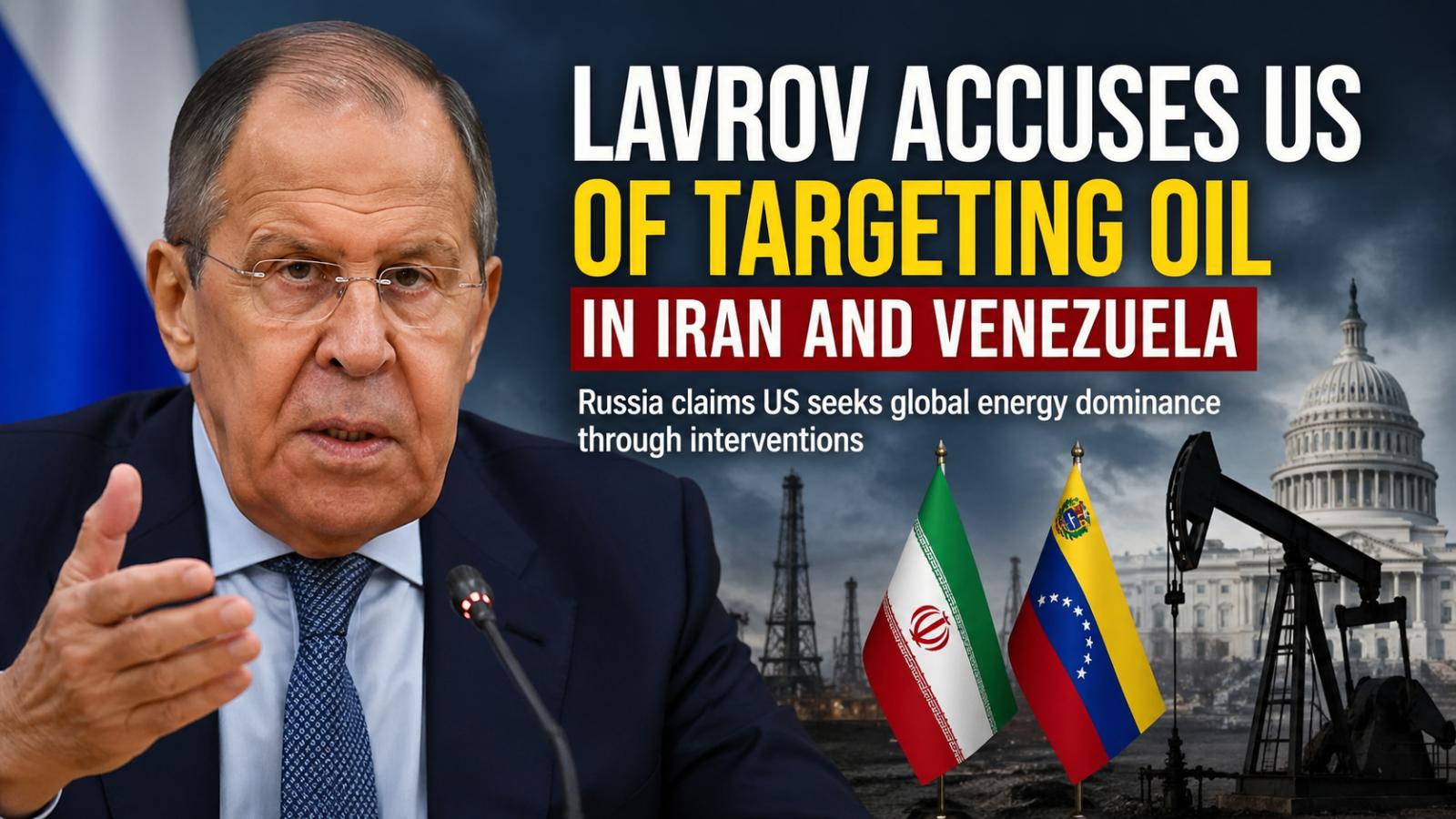
Russian Foreign Minister Sergei Lavrov has accused the United States of pursuing oil-driven policies in Iran and Venezuela, claiming that control over global energy resources is a central goal of Washington’s foreign strategy. Speaking in a televised interview, Lavrov said the US focuses primarily on its own interests and is willing to use extreme methods to secure access to oil and energy assets in resource-rich nations. Lavrov alleged that US actions in countries such as Iran and Venezuela are not hidden, but openly tied to securing influence over energy markets. According to him, Washington’s approach reflects a broader ambition to dominate global energy supply chains. He argued that such policies show a shift away from international legal norms, suggesting that decisions are increasingly shaped by power rather than agreed rules. The Russian minister also criticized the US for what he described as inconsistent diplomacy. He urged Washington to prioritize dialogue, stating that the US has a pattern of withdrawing from agreements instead of maintaining stable international commitments. His remarks come as American envoys prepare for discussions in Pakistan, signaling ongoing diplomatic engagement in the region. The White House has indicated openness to negotiations with Iran, while maintaining that it will not act under pressure. Meanwhile, Iran’s Foreign Minister Abbas Araghchi has begun a regional visit, adding to the ongoing diplomatic activity surrounding the issue. Lavrov further linked US foreign policy to developments in Europe, particularly in the context of the Ukraine conflict. He accused Washington of encouraging European nations to reduce dependence on Russian gas, framing this as part of a broader geopolitical strategy. According to Lavrov, such moves resemble attempts to reshape global energy dynamics in a way that benefits US interests, raising concerns about a return to power-based international relations.
Lavrov criticizes US foreign policy over oil and energy dominance
Russian Foreign Minister Sergei Lavrov has accused the United States of pursuing oil-driven policies in Iran and Venezuela, claiming that control over global energy resources is a central goal of Washington’s foreign strategy. Speaking in a televised interview, Lavrov said the US focuses primarily on its own interests and is willing to use extreme methods to secure access to oil and energy assets in resource-rich nations. Lavrov alleged that US actions in countries such as Iran and Venezuela are not hidden, but openly tied to securing influence over energy markets. According to him, Washington’s approach reflects a broader ambition to dominate global energy supply chains. He argued that such policies show a shift away from international legal norms, suggesting that decisions are increasingly shaped by power rather than agreed rules. The Russian minister also criticized the US for what he described as inconsistent diplomacy. He urged Washington to prioritize dialogue, stating that the US has a pattern of withdrawing from agreements instead of maintaining stable international commitments. His remarks come as American envoys prepare for discussions in Pakistan, signaling ongoing diplomatic engagement in the region. The White House has indicated openness to negotiations with Iran, while maintaining that it will not act under pressure. Meanwhile, Iran’s Foreign Minister Abbas Araghchi has begun a regional visit, adding to the ongoing diplomatic activity surrounding the issue. Lavrov further linked US foreign policy to developments in Europe, particularly in the context of the Ukraine conflict. He accused Washington of encouraging European nations to reduce dependence on Russian gas, framing this as part of a broader geopolitical strategy. According to Lavrov, such moves resemble attempts to reshape global energy dynamics in a way that benefits US interests, raising concerns about a return to power-based international relations.

Grieving UK mother seeks euthanasia abroad amid stalled right-to-die law
A 56-year-old woman from the United Kingdom has chosen to undergo assisted suicide in Switzerland, highlighting the ongoing debate over end-of-life rights and mental health support. Wendy Duffy, who lost her 23-year-old son Marcus in a tragic choking incident four years ago, has said she no longer wishes to continue living due to overwhelming grief that she believes cannot be alleviated through conventional treatment. Marcus died after choking on food while asleep, an incident that
Grieving UK mother seeks euthanasia abroad amid stalled right-to-die law
A 56-year-old woman from the United Kingdom has chosen to undergo assisted suicide in Switzerland, highlighting the ongoing debate over end-of-life rights and mental health support. Wendy Duffy, who lost her 23-year-old son Marcus in a tragic choking incident four years ago, has said she no longer wishes to continue living due to overwhelming grief that she believes cannot be alleviated through conventional treatment. Marcus died after choking on food while asleep, an incident that

Álvaro Fidalgo Returns to Start for Betis vs Real Madrid After 4-Game Absence
Álvaro Fidalgo Returns to Start for Real Betis vs Real Madrid After 4-Game Absence Real Betis have received a timely boost ahead of their clash against Real Madrid, with Mexican midfielder Álvaro Fidalgo returning to the starting lineup after a four-match absence in LaLiga. The 27-year-old, who joined Betis in January, had been out of league action in recent weeks but now gets an opportunity to make an impact in one of the biggest fixtures of the season. What Happened
Álvaro Fidalgo Returns to Start for Betis vs Real Madrid After 4-Game Absence
Álvaro Fidalgo Returns to Start for Real Betis vs Real Madrid After 4-Game Absence Real Betis have received a timely boost ahead of their clash against Real Madrid, with Mexican midfielder Álvaro Fidalgo returning to the starting lineup after a four-match absence in LaLiga. The 27-year-old, who joined Betis in January, had been out of league action in recent weeks but now gets an opportunity to make an impact in one of the biggest fixtures of the season. What Happened
US deploys three aircraft carriers to Middle East amid Iran tensions
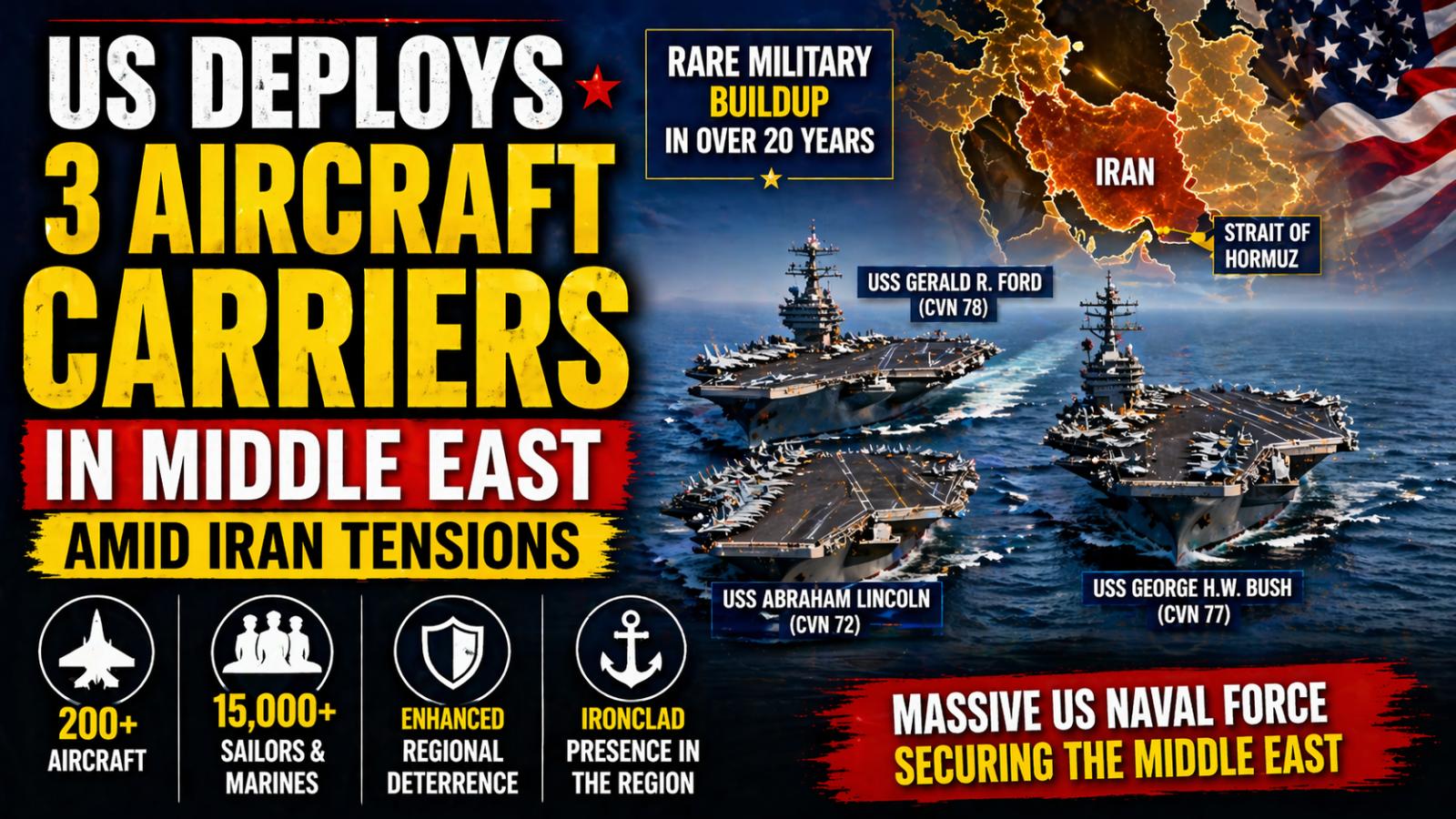
US deploys three aircraft carriers to the Middle East amid Iran tensions, expanding naval operations and reinforcing security in key maritime routes including the Strait of Hormuz. US deploys three aircraft carriers to Middle East amid Iran tensions as Washington significantly expands its military footprint across the region, marking one of the largest naval concentrations in more than two decades. Officials confirmed that three carrier strike groups—the USS Abraham Lincoln, USS Gerald R. Ford, and USS George H.W. Bush—are operating simultaneously, supported by more than 200 aircraft and approximately 15,000 sailors and Marines. A statement from US Central Command on Thursday confirmed the rare deployment, describing it as a significant concentration of naval power aimed at maintaining operational readiness amid rising tensions involving Iran. The carrier groups and their air wings are conducting coordinated missions, underscoring the strategic importance of key maritime routes in the Middle East and reinforcing a broader posture of deterrence. The announcement coincided with remarks from Donald Trump on Thursday, who declined to provide a timeline for a potential resolution to the Iran conflict. He indicated that any agreement would depend on conditions favorable to US interests, highlighting ongoing uncertainty surrounding diplomatic efforts. The absence of a clear timeline has aligned with increased military activity and messaging focused on regional stability. Defense officials stated on Friday that the US blockade of Iranian vessels in the Strait of Hormuz remains “ironclad,” with additional naval assets expected to join the operation in the coming days. The expanding mission signals a broader enforcement effort in one of the world’s most critical shipping corridors. The USS George H.W. Bush, commissioned in 2009, is among the newest Nimitz-class carriers involved, measuring nearly 1,000 feet in length and powered by two nuclear reactors, with the capacity to carry more than 80 aircraft and support a crew exceeding 5,500 personnel.
US deploys three aircraft carriers to Middle East amid Iran tensions
US deploys three aircraft carriers to the Middle East amid Iran tensions, expanding naval operations and reinforcing security in key maritime routes including the Strait of Hormuz. US deploys three aircraft carriers to Middle East amid Iran tensions as Washington significantly expands its military footprint across the region, marking one of the largest naval concentrations in more than two decades. Officials confirmed that three carrier strike groups—the USS Abraham Lincoln, USS Gerald R. Ford, and USS George H.W. Bush—are operating simultaneously, supported by more than 200 aircraft and approximately 15,000 sailors and Marines. A statement from US Central Command on Thursday confirmed the rare deployment, describing it as a significant concentration of naval power aimed at maintaining operational readiness amid rising tensions involving Iran. The carrier groups and their air wings are conducting coordinated missions, underscoring the strategic importance of key maritime routes in the Middle East and reinforcing a broader posture of deterrence. The announcement coincided with remarks from Donald Trump on Thursday, who declined to provide a timeline for a potential resolution to the Iran conflict. He indicated that any agreement would depend on conditions favorable to US interests, highlighting ongoing uncertainty surrounding diplomatic efforts. The absence of a clear timeline has aligned with increased military activity and messaging focused on regional stability. Defense officials stated on Friday that the US blockade of Iranian vessels in the Strait of Hormuz remains “ironclad,” with additional naval assets expected to join the operation in the coming days. The expanding mission signals a broader enforcement effort in one of the world’s most critical shipping corridors. The USS George H.W. Bush, commissioned in 2009, is among the newest Nimitz-class carriers involved, measuring nearly 1,000 feet in length and powered by two nuclear reactors, with the capacity to carry more than 80 aircraft and support a crew exceeding 5,500 personnel.

US Mall Shooting In Baton Rouge: 1 Dead, 5 Injured After Group Fight
A deadly shooting incident shook the Mall of Louisiana in Baton Rouge city, US, on Thursday, April 24, 2026, around early hours as per official updates at 06:53 IST. At least one person was killed and five others sustained injuries when gunfire broke out inside a busy food court area. The sudden violence created panic among shoppers and staff, forcing authorities to immediately evacuate the premises and initiate emergency response protocols. According to officials, the shooting was
US Mall Shooting In Baton Rouge: 1 Dead, 5 Injured After Group Fight
A deadly shooting incident shook the Mall of Louisiana in Baton Rouge city, US, on Thursday, April 24, 2026, around early hours as per official updates at 06:53 IST. At least one person was killed and five others sustained injuries when gunfire broke out inside a busy food court area. The sudden violence created panic among shoppers and staff, forcing authorities to immediately evacuate the premises and initiate emergency response protocols. According to officials, the shooting was
EU approves $105 billion Ukraine loan and new Russia sanctions after deadlock ends
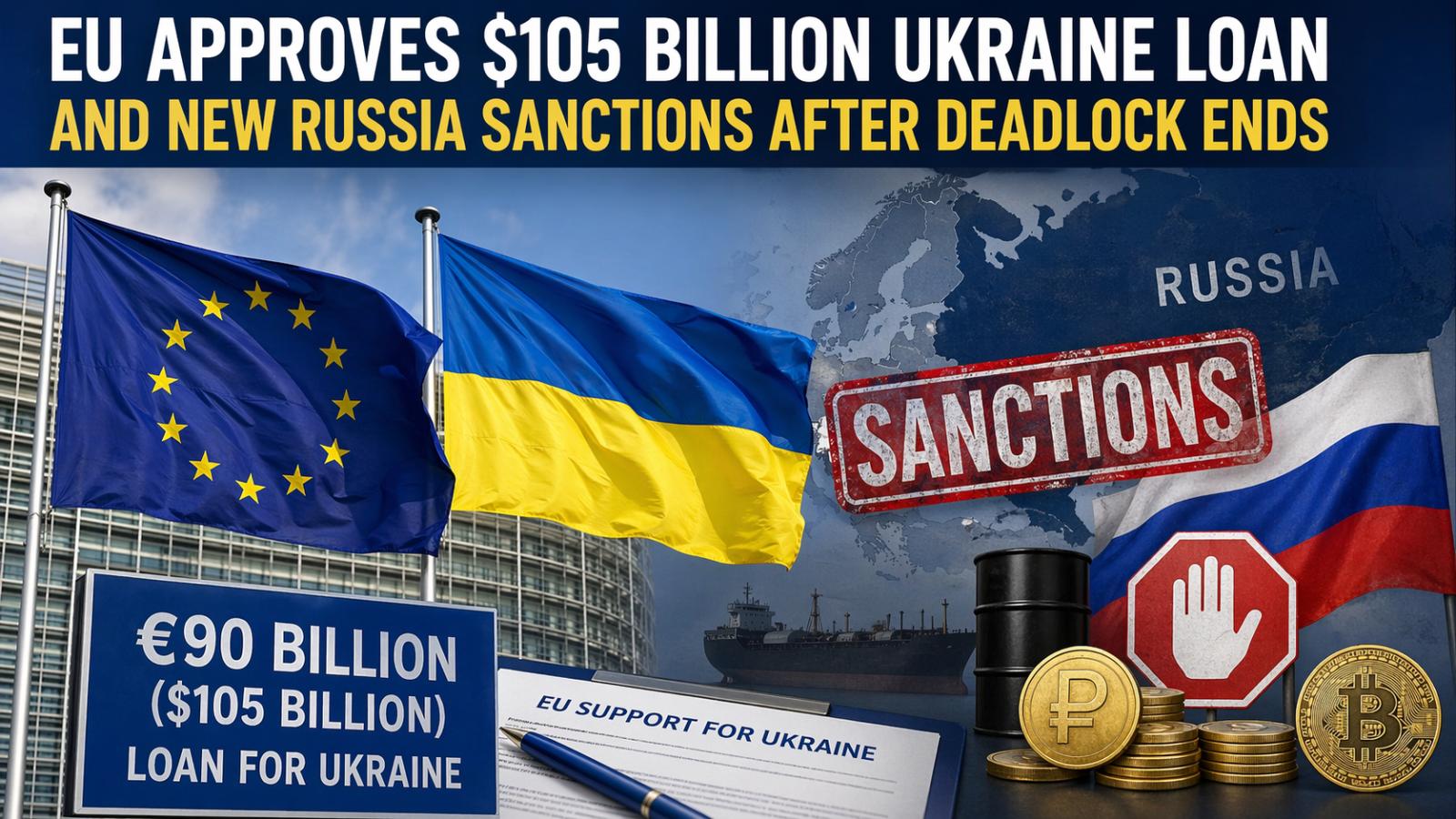
EU approves major Ukraine aid and new Russia sanctions after resolving internal disputes, strengthening Kyiv’s position and increasing pressure on Moscow amid ongoing war. EU approves $105 billion Ukraine loan and new Russia sanctions after deadlock ends. The European Union on Thursday, April 23, 2026, granted final approval to a €90 billion ($105 billion) loan for Ukraine and endorsed a new round of sanctions against Russia, marking a significant shift
EU approves $105 billion Ukraine loan and new Russia sanctions after deadlock ends
EU approves major Ukraine aid and new Russia sanctions after resolving internal disputes, strengthening Kyiv’s position and increasing pressure on Moscow amid ongoing war. EU approves $105 billion Ukraine loan and new Russia sanctions after deadlock ends. The European Union on Thursday, April 23, 2026, granted final approval to a €90 billion ($105 billion) loan for Ukraine and endorsed a new round of sanctions against Russia, marking a significant shift

Delhi Murder Case: Ex-House Help Arrested After Alwar Assault
A shocking crime has come to light involving a 19-year-old former domestic worker, Rahul, who has been arrested in connection with a murder case in Delhi. The victim, a 22-year-old engineering graduate and UPSC aspirant, was found dead at her residence in East of Kailash, southeast Delhi. According to police, the young woman was allegedly sexually assaulted and later strangled using a mobile phone charger cable. Her family discovered her body at home, after which the police were inf
Delhi Murder Case: Ex-House Help Arrested After Alwar Assault
A shocking crime has come to light involving a 19-year-old former domestic worker, Rahul, who has been arrested in connection with a murder case in Delhi. The victim, a 22-year-old engineering graduate and UPSC aspirant, was found dead at her residence in East of Kailash, southeast Delhi. According to police, the young woman was allegedly sexually assaulted and later strangled using a mobile phone charger cable. Her family discovered her body at home, after which the police were inf
CENTCOM Highlights Military Preparedness Amid Iran Talks
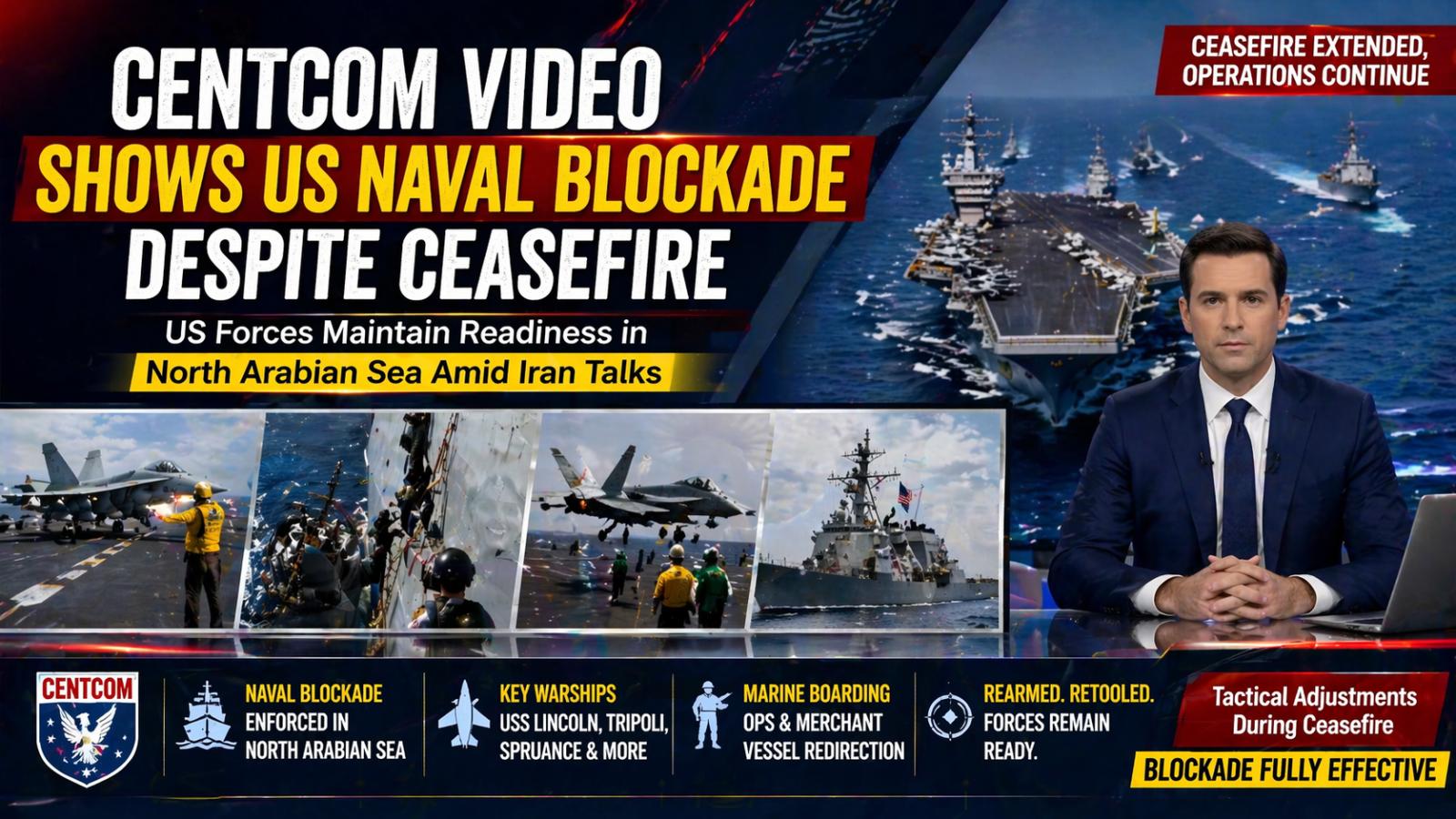
A newly released video by United States Central Command (CENTCOM) has drawn attention to ongoing military operations in the North Arabian Sea, even as a ceasefire extension remains in place. The footage, shared shortly after an announcement by US President Donald Trump, emphasizes that American forces continue to maintain operational readiness and strategic positioning in the region.
CENTCOM Highlights Military Preparedness Amid Iran Talks
A newly released video by United States Central Command (CENTCOM) has drawn attention to ongoing military operations in the North Arabian Sea, even as a ceasefire extension remains in place. The footage, shared shortly after an announcement by US President Donald Trump, emphasizes that American forces continue to maintain operational readiness and strategic positioning in the region.
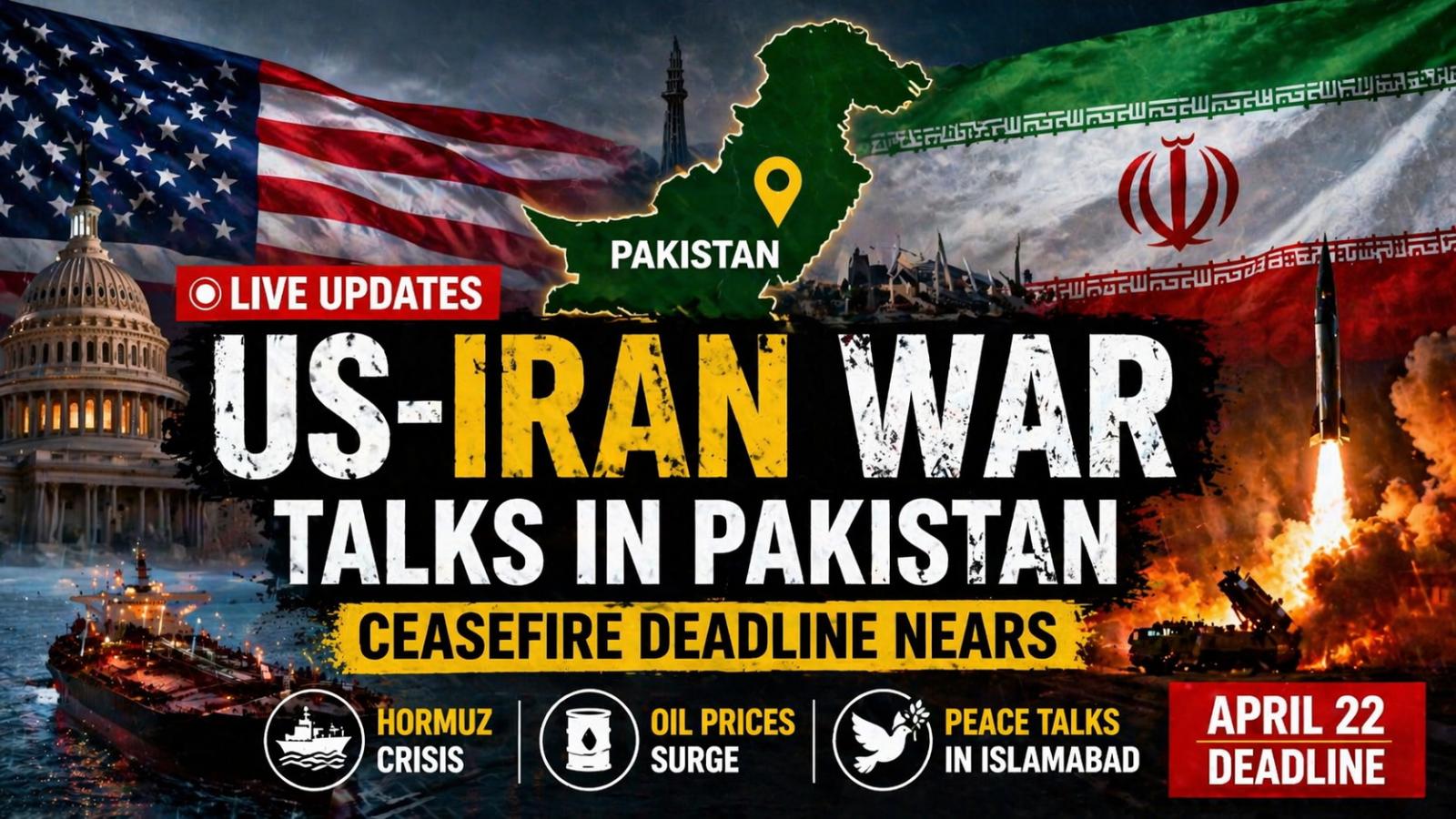
US Iran war talks in Pakistan: Ceasefire deadline nears as tensions rise
The US Iran war talks in Pakistan are drawing global attention as uncertainty continues over Tehran’s participation in upcoming peace negotiations. With the ceasefire deadline just days away, rising tensions are keeping the world on edge. What happened and why it matters On Monday, April 20, 2026, reports suggested that both the United States and Iran h
US Iran war talks in Pakistan: Ceasefire deadline nears as tensions rise
The US Iran war talks in Pakistan are drawing global attention as uncertainty continues over Tehran’s participation in upcoming peace negotiations. With the ceasefire deadline just days away, rising tensions are keeping the world on edge. What happened and why it matters On Monday, April 20, 2026, reports suggested that both the United States and Iran h










