







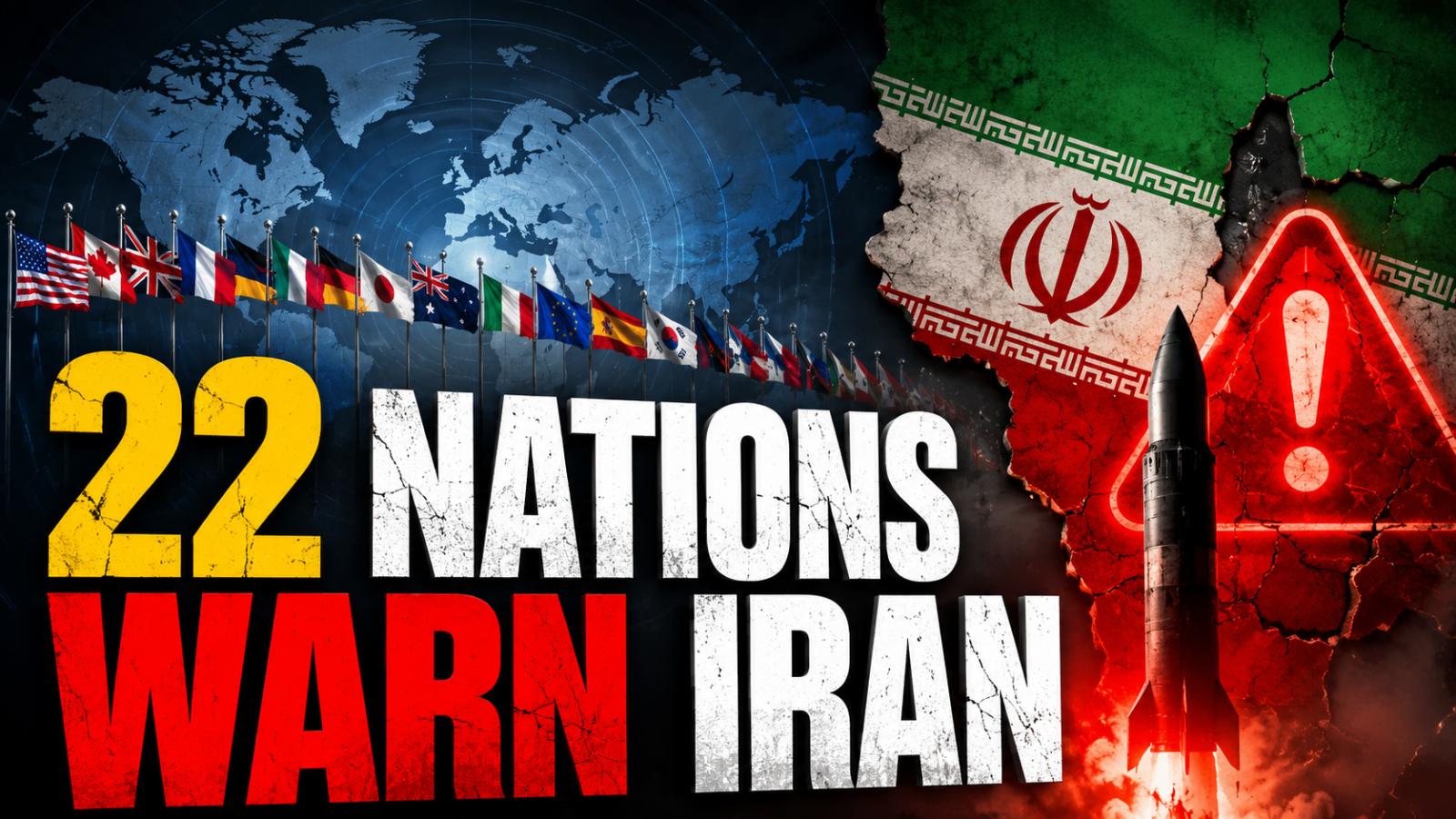
22 nations urge Iran to stop overseas attacks
22 Countries Issue Joint Warning to Iran Twenty-two countries, including the United States, the United Kingdom and several European allies, issued a joint statement on Thursday urging Iran to immediately stop alleged overseas attacks, intimidation campaigns and assassination plots. The statement accused Iranian security agencies of using local and international criminal networks to target dissidents, journalists and Jewish and Israeli communi
22 nations urge Iran to stop overseas attacks
22 Countries Issue Joint Warning to Iran Twenty-two countries, including the United States, the United Kingdom and several European allies, issued a joint statement on Thursday urging Iran to immediately stop alleged overseas attacks, intimidation campaigns and assassination plots. The statement accused Iranian security agencies of using local and international criminal networks to target dissidents, journalists and Jewish and Israeli communi
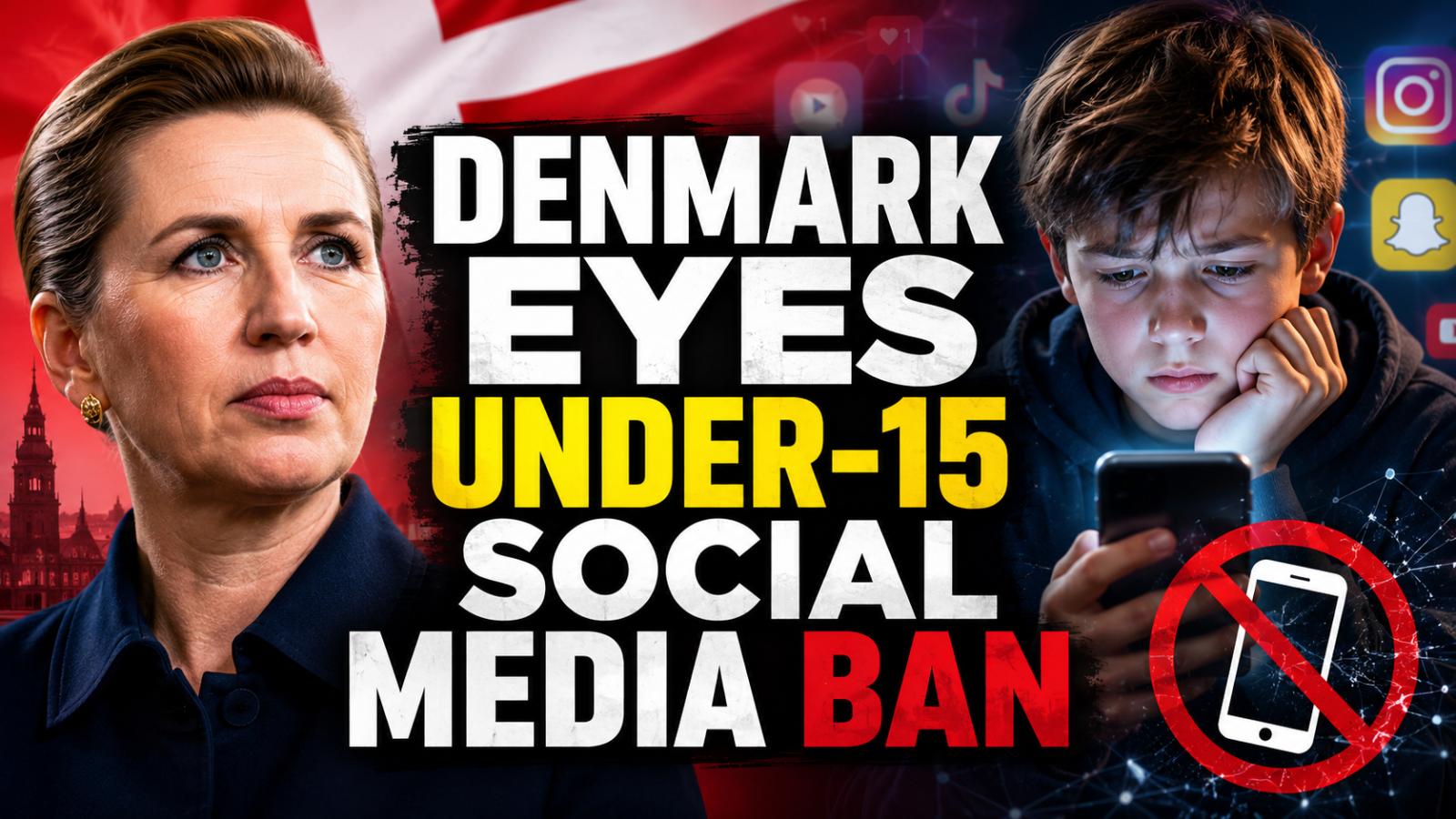
Denmark Child Social Media Ban: Mette Frederiksen’s Smoking Remark Sparks Online Safety Debate
Denmark’s plan to restrict social media access for children has become a major talking point after Prime Minister Mette Frederiksen made a controversial comparison between children’s social media use and smoking. Her remark triggered strong reactions online, but it also pushed an important question into the spotlight: how far should governments go to protect children from harmful digital spaces? The debate is linked to Denmark’s proposal to stop children under 15 from using so
Denmark Child Social Media Ban: Mette Frederiksen’s Smoking Remark Sparks Online Safety Debate
Denmark’s plan to restrict social media access for children has become a major talking point after Prime Minister Mette Frederiksen made a controversial comparison between children’s social media use and smoking. Her remark triggered strong reactions online, but it also pushed an important question into the spotlight: how far should governments go to protect children from harmful digital spaces? The debate is linked to Denmark’s proposal to stop children under 15 from using so
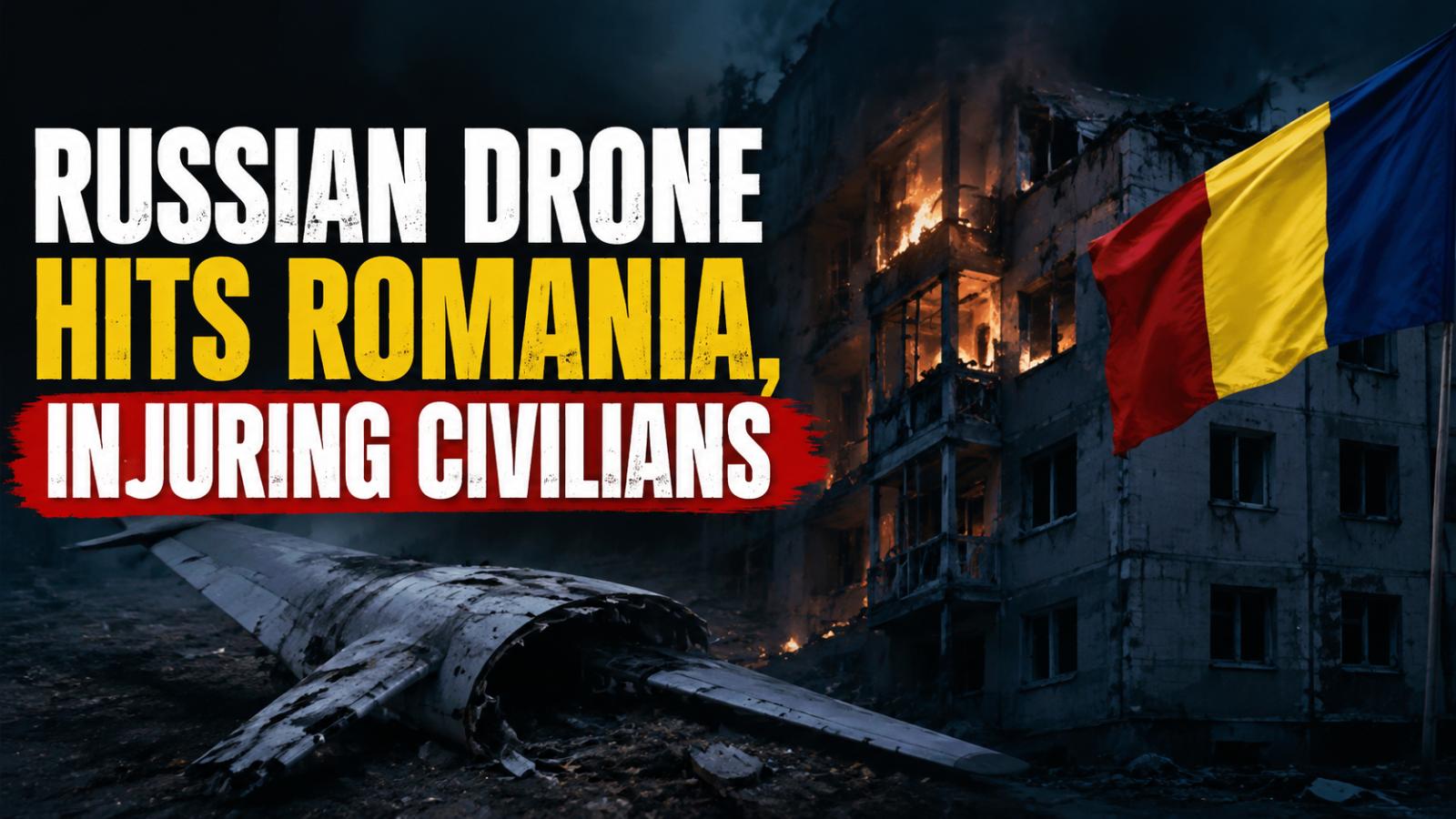
Romanian Residents Injured in Cross-Border Drone Attack
Late on May 28-29, a Russian drone struck a residential building in Galati, Romania, causing a fire and injuring two civilians. Romanian authorities described the event as extremely serious and summoned the Russian ambassador for explanation. The strike marks a notable escalation of regional tensions and highlights risks to civilian areas in Eastern Europe. Romanian Government Response President Nicusor Dan convened the
Romanian Residents Injured in Cross-Border Drone Attack
Late on May 28-29, a Russian drone struck a residential building in Galati, Romania, causing a fire and injuring two civilians. Romanian authorities described the event as extremely serious and summoned the Russian ambassador for explanation. The strike marks a notable escalation of regional tensions and highlights risks to civilian areas in Eastern Europe. Romanian Government Response President Nicusor Dan convened the

UK, Ireland, France Break Temperature Records
Record-Breaking Heat Across Europe A severe heatwave swept across Europe on Monday, May 25, with Britain, Ireland, and France experiencing unprecedented temperatures for May. Meteorologists attributed the extreme heat to a ‘heat dome’, a mass of hot air traveling from northern Africa and trapped beneath a high-pressure system over western Europe. In Spain, temperatures are forecast to reach 38 °C later
UK, Ireland, France Break Temperature Records
Record-Breaking Heat Across Europe A severe heatwave swept across Europe on Monday, May 25, with Britain, Ireland, and France experiencing unprecedented temperatures for May. Meteorologists attributed the extreme heat to a ‘heat dome’, a mass of hot air traveling from northern Africa and trapped beneath a high-pressure system over western Europe. In Spain, temperatures are forecast to reach 38 °C later
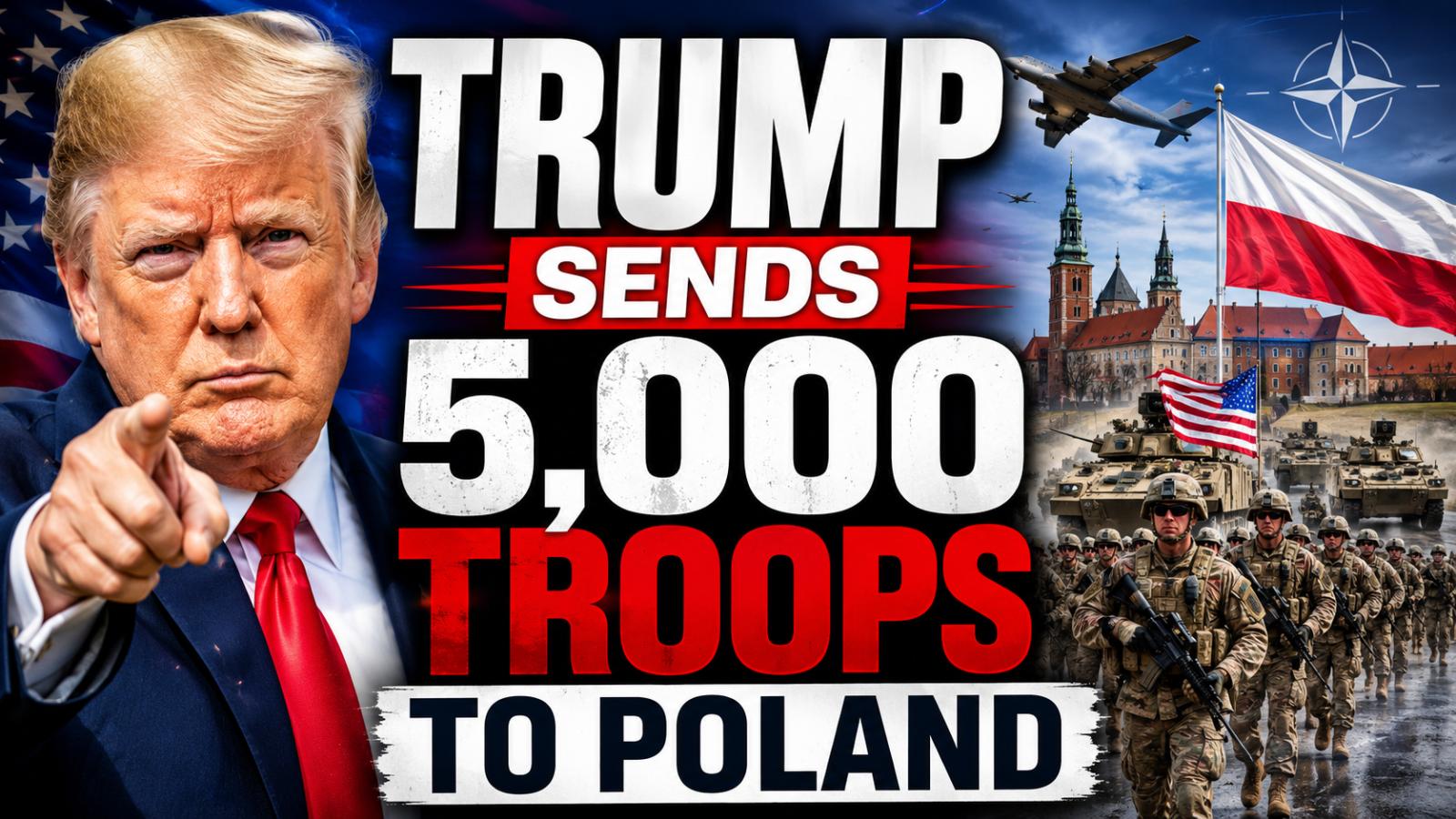
Trump Sends 5,000 More US Troops To Poland Amid NATO Tensions
Trump Announces New Poland Troop Deployment US President Donald Trump said Thursday,May 21,2026 that the United States will deploy 5,000 additional troops to Poland, reversing earlier indications that a planned deployment had been canceled. Trump announced the decision on Truth Social and said it was influenced by his relationship with Polish President Karol Nawrocki, a nationalist ally whom he supported during last year’
Trump Sends 5,000 More US Troops To Poland Amid NATO Tensions
Trump Announces New Poland Troop Deployment US President Donald Trump said Thursday,May 21,2026 that the United States will deploy 5,000 additional troops to Poland, reversing earlier indications that a planned deployment had been canceled. Trump announced the decision on Truth Social and said it was influenced by his relationship with Polish President Karol Nawrocki, a nationalist ally whom he supported during last year’
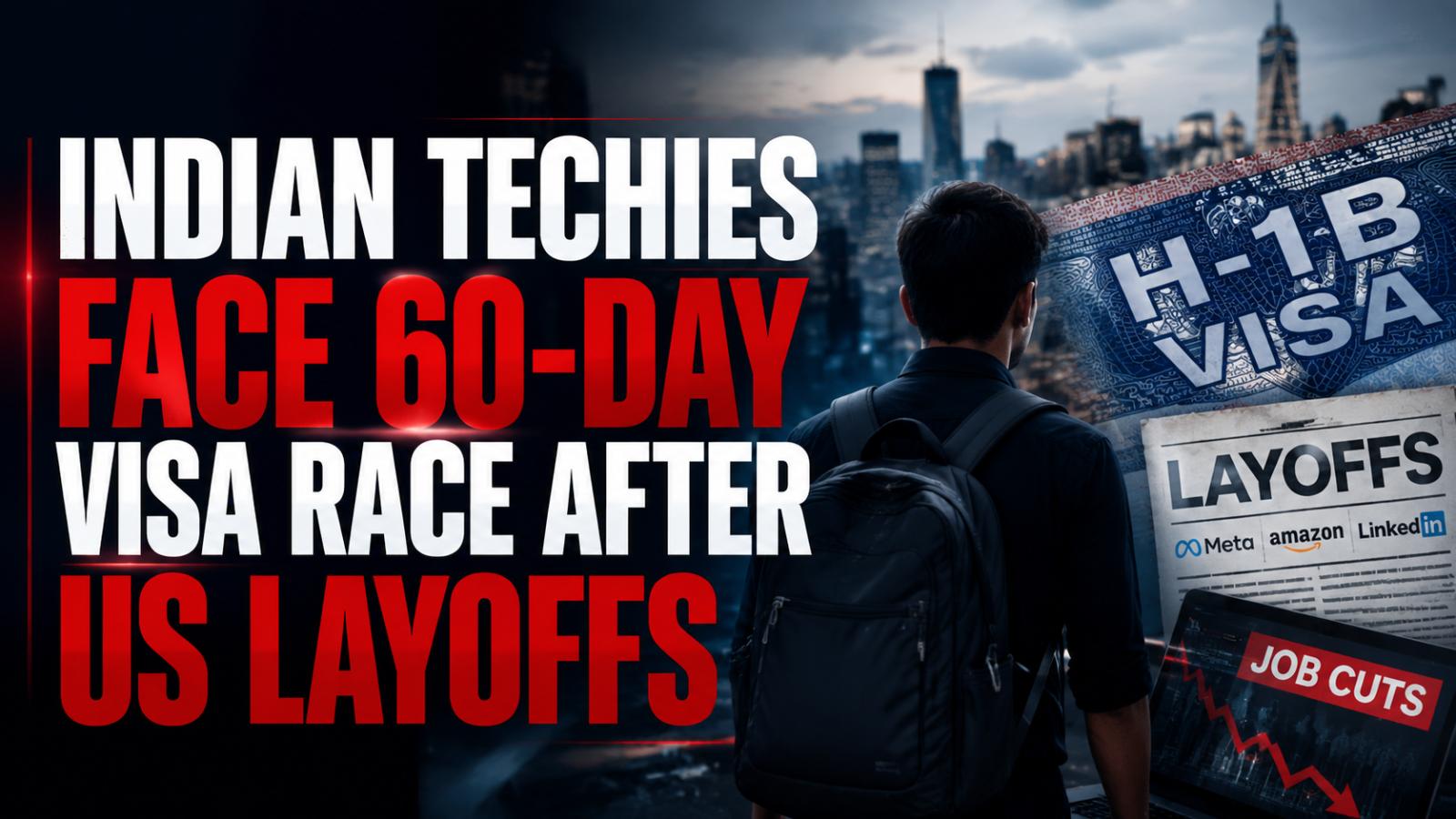
Indian Techies Race Against 60-Day H-1B Visa Deadline Amid US Tech Layoffs
The latest wave of Silicon Valley layoffs affecting Indian H-1B visa holders has put thousands of Indian techies under extreme pressure. Professionals working at major companies like Meta, Amazon, and LinkedIn now face a ticking 60-day clock to either find a new employer willing to sponsor their visa, switch to another legal status, or leave the United States. In today’s slowing US tech job market, securing H-1B visa transfers or completing interviews and background checks within this short
Indian Techies Race Against 60-Day H-1B Visa Deadline Amid US Tech Layoffs
The latest wave of Silicon Valley layoffs affecting Indian H-1B visa holders has put thousands of Indian techies under extreme pressure. Professionals working at major companies like Meta, Amazon, and LinkedIn now face a ticking 60-day clock to either find a new employer willing to sponsor their visa, switch to another legal status, or leave the United States. In today’s slowing US tech job market, securing H-1B visa transfers or completing interviews and background checks within this short
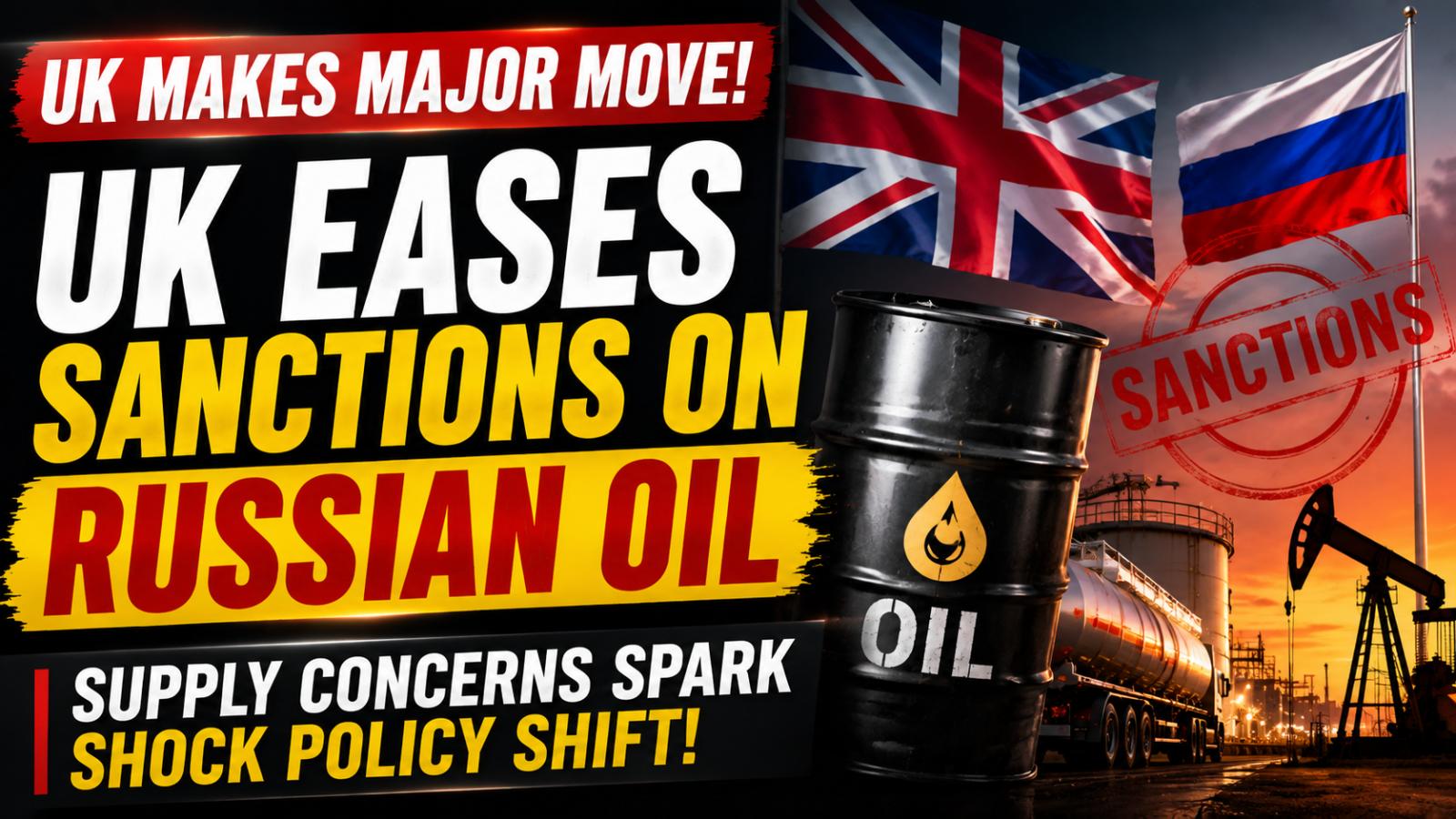
UK Eases Russian Oil Sanctions Amid Fuel Supply Concerns
UK Loosens Russian Oil Restrictions On May 19, the United Kingdom announced it is easing restrictions on importing diesel and jet fuel refined from Russian crude in third countries. The move comes after the G7 reaffirmed commitment to imposing severe costs on Russia for its war in Ukraine. The UK government cited concerns about fuel supply disruptions caused by the closure of the Strait of Hormuz since the US-Israel operations against Iran in late February.
UK Eases Russian Oil Sanctions Amid Fuel Supply Concerns
UK Loosens Russian Oil Restrictions On May 19, the United Kingdom announced it is easing restrictions on importing diesel and jet fuel refined from Russian crude in third countries. The move comes after the G7 reaffirmed commitment to imposing severe costs on Russia for its war in Ukraine. The UK government cited concerns about fuel supply disruptions caused by the closure of the Strait of Hormuz since the US-Israel operations against Iran in late February.

US Charges Kataeb Hezbollah Commander in Jewish Attack Plots
US law enforcement officials announced Friday that Mohammad Baqer Saad Dawood Al-Saadi, 32, a senior operative of the Iran-backed militia Kataeb Hezbollah, has been charged for plotting attacks targeting Jewish communities in Europe, Canada, and the United States. Prosecutors described Al-Saadi as a “high-value target” responsible for multiple international terrorism incidents, directing assaults on US and Israeli interests in retaliation for ongoing Middle East conflicts involving Iran.
US Charges Kataeb Hezbollah Commander in Jewish Attack Plots
US law enforcement officials announced Friday that Mohammad Baqer Saad Dawood Al-Saadi, 32, a senior operative of the Iran-backed militia Kataeb Hezbollah, has been charged for plotting attacks targeting Jewish communities in Europe, Canada, and the United States. Prosecutors described Al-Saadi as a “high-value target” responsible for multiple international terrorism incidents, directing assaults on US and Israeli interests in retaliation for ongoing Middle East conflicts involving Iran.
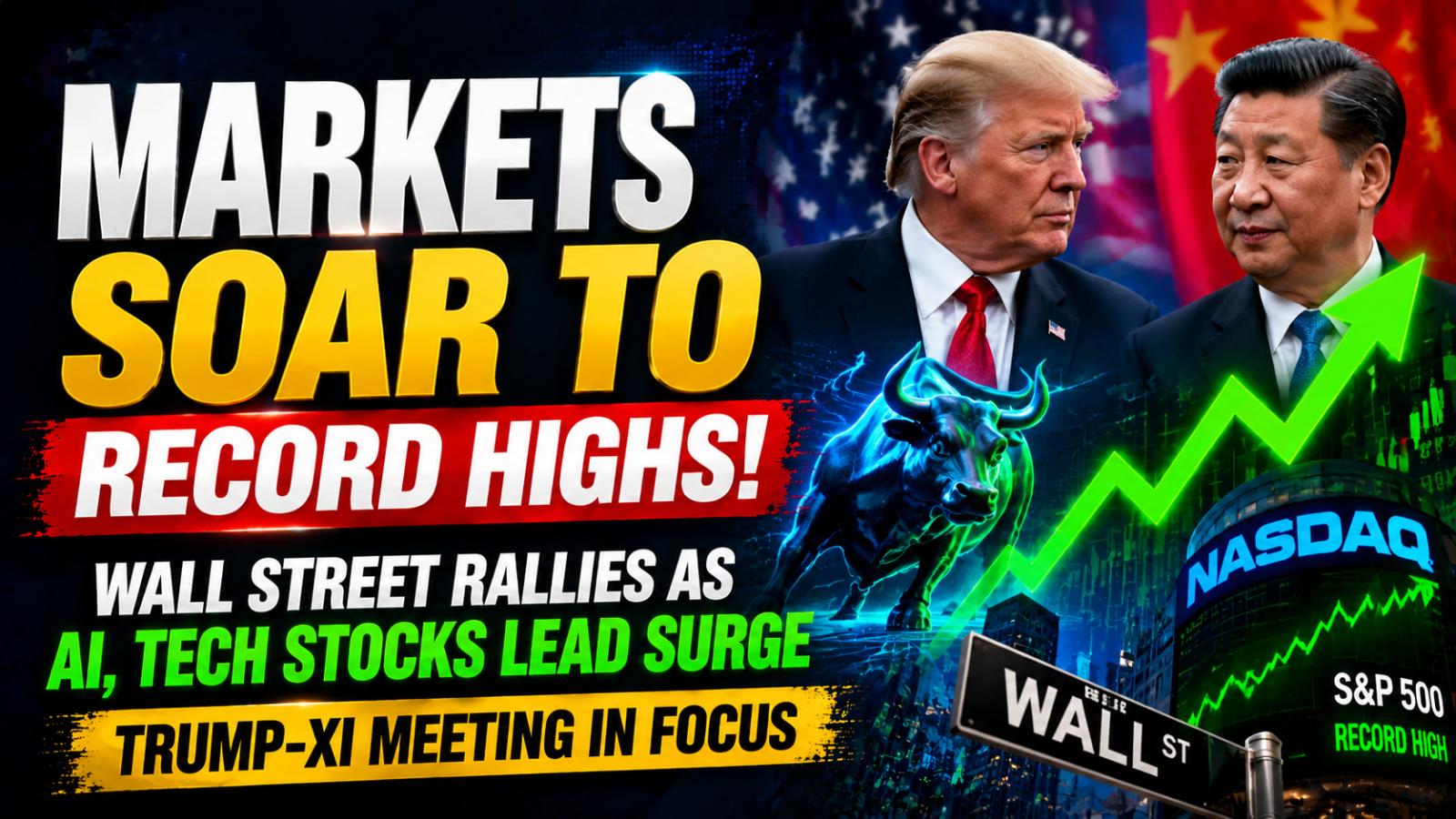
Global Stocks Rally on Tech Gains
Wall Street Surges on Tech Strength Global stock markets climbed on Thursday, May 14, 2026, with major Wall Street indices reaching new record highs. Investor enthusiasm centered on technology shares, including Cisco Systems, which soared 13.4 percent following an upward earnings revision. Semiconductor startup Cerebras Systems made a strong Nasdaq debut, rising 68.2 percent on its first day of trading. The S&P 500 and N
Global Stocks Rally on Tech Gains
Wall Street Surges on Tech Strength Global stock markets climbed on Thursday, May 14, 2026, with major Wall Street indices reaching new record highs. Investor enthusiasm centered on technology shares, including Cisco Systems, which soared 13.4 percent following an upward earnings revision. Semiconductor startup Cerebras Systems made a strong Nasdaq debut, rising 68.2 percent on its first day of trading. The S&P 500 and N
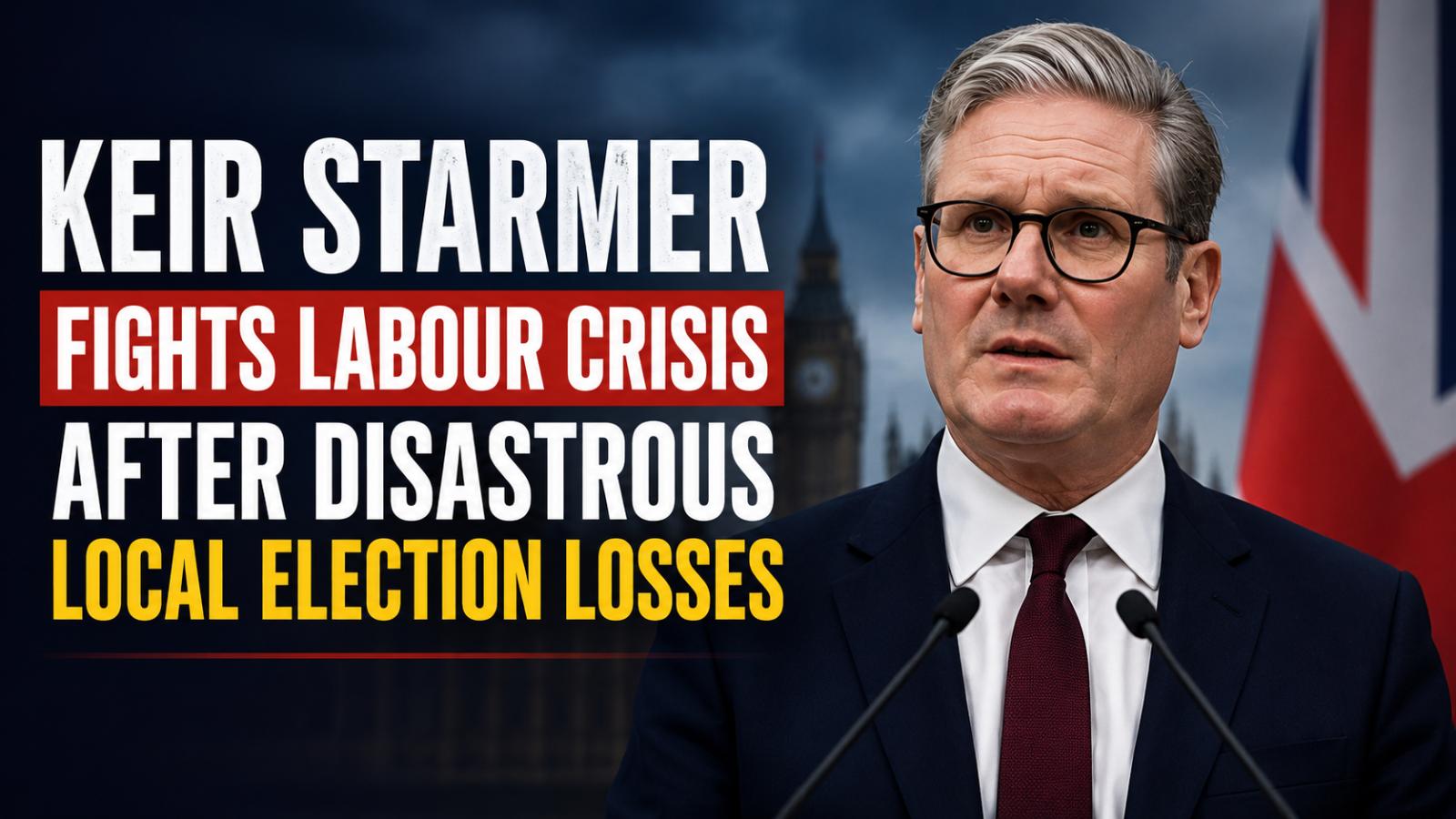
UK PM Keir Starmer announces British Steel plan during Labour revolt
United Kingdom Prime Minister Keir Starmer is facing one of the toughest moments of his political career after Labour suffered major defeats in local elections across England and Wales. In a major speech aimed at calming angry Labour MPs, Starmer admitted the election results were “tough” and accepted responsibility for the setback. At the same time, he promised to rebuild trust, strengthen the UK economy, improve ties with Europe, and protect Britain from being pulled into a war with Ira
UK PM Keir Starmer announces British Steel plan during Labour revolt
United Kingdom Prime Minister Keir Starmer is facing one of the toughest moments of his political career after Labour suffered major defeats in local elections across England and Wales. In a major speech aimed at calming angry Labour MPs, Starmer admitted the election results were “tough” and accepted responsibility for the setback. At the same time, he promised to rebuild trust, strengthen the UK economy, improve ties with Europe, and protect Britain from being pulled into a war with Ira
Peter Magyar Sworn In as Hungary PM, Ending Viktor Orban’s 16-Year Rule
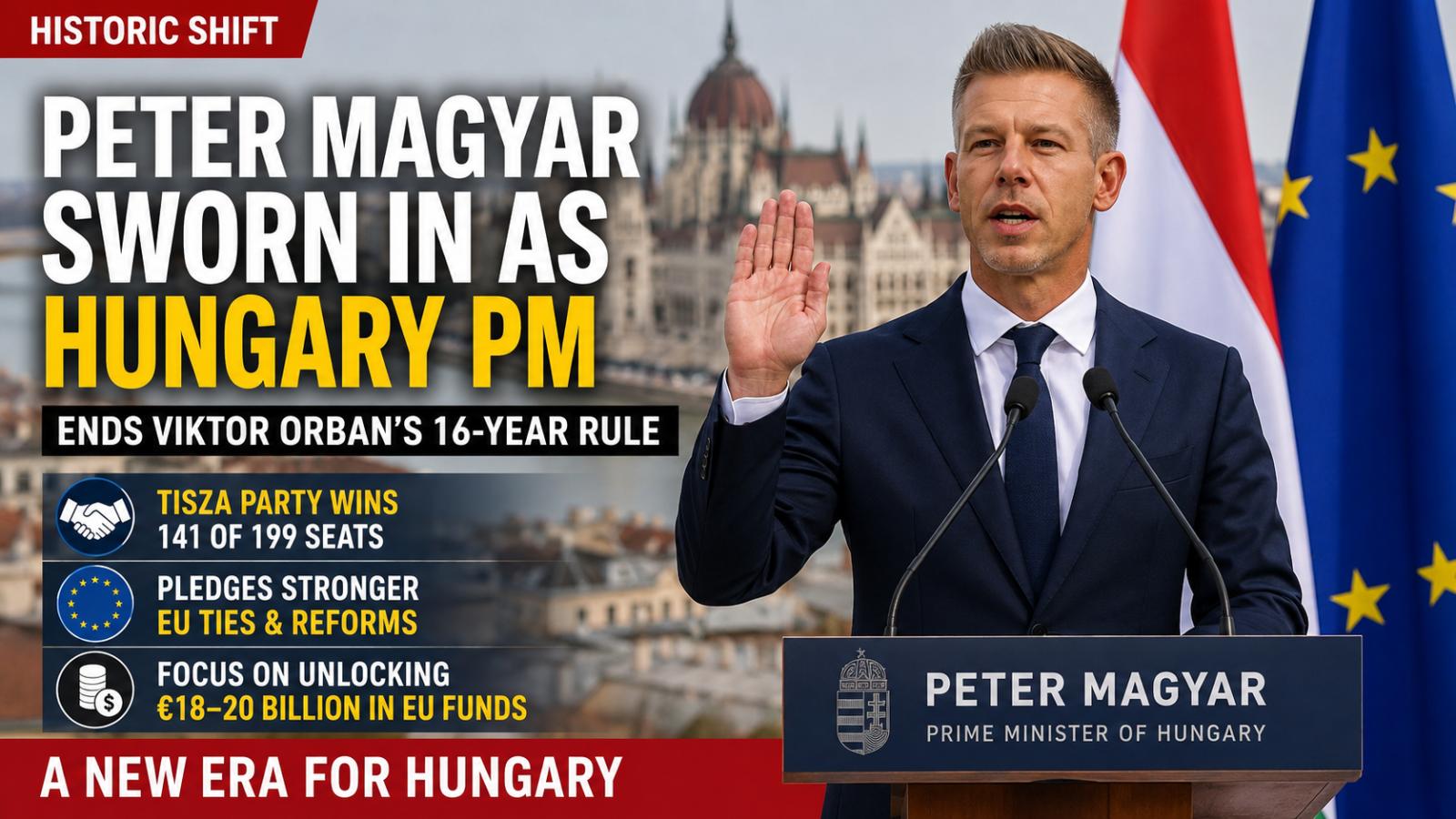
Peter Magyar Becomes Hungary PM After Historic Orban Defeat Peter Magyar was sworn in as Hungary’s new prime minister in Budapest on Saturday, May 9, 2026, ending Viktor Orban’s 16-year rule and opening one of Hungary’s biggest political shifts since the fall of communism. Magyar’s centre-right Tisza Party won 141 of 199 parliamentary seats, giving it a powerful two-thirds majority and a mandate to reshape Hungary’s political system. Why Magyar’s Victory Matters The result marks a sharp turn for Hungary after years of tension with the European Union over rule of law, corruption concerns and democratic checks. Magyar has pledged to rebuild trust with Brussels, strengthen institutions and unlock billions in frozen EU funds. The EU flag’s return inside Hungary’s parliament added symbolic weight to the transition, signaling a possible reset in Budapest’s relationship with Europe. Major Challenges Ahead Magyar inherits a strained economy, a widening budget deficit and deep political divisions after the Orban era. He has also urged several Orban-appointed officials, including President Tamás Sulyok, to resign before the end of May 2026. In his inaugural message, Magyar framed the election as more than a change of government, calling it a public demand for reform, accountability and a more hopeful future for Hungary.
Peter Magyar Sworn In as Hungary PM, Ending Viktor Orban’s 16-Year Rule
Peter Magyar Becomes Hungary PM After Historic Orban Defeat Peter Magyar was sworn in as Hungary’s new prime minister in Budapest on Saturday, May 9, 2026, ending Viktor Orban’s 16-year rule and opening one of Hungary’s biggest political shifts since the fall of communism. Magyar’s centre-right Tisza Party won 141 of 199 parliamentary seats, giving it a powerful two-thirds majority and a mandate to reshape Hungary’s political system. Why Magyar’s Victory Matters The result marks a sharp turn for Hungary after years of tension with the European Union over rule of law, corruption concerns and democratic checks. Magyar has pledged to rebuild trust with Brussels, strengthen institutions and unlock billions in frozen EU funds. The EU flag’s return inside Hungary’s parliament added symbolic weight to the transition, signaling a possible reset in Budapest’s relationship with Europe. Major Challenges Ahead Magyar inherits a strained economy, a widening budget deficit and deep political divisions after the Orban era. He has also urged several Orban-appointed officials, including President Tamás Sulyok, to resign before the end of May 2026. In his inaugural message, Magyar framed the election as more than a change of government, calling it a public demand for reform, accountability and a more hopeful future for Hungary.
Trump Warns EU of Higher Tariffs if Trade Agreement Isn't Finalized by July 4
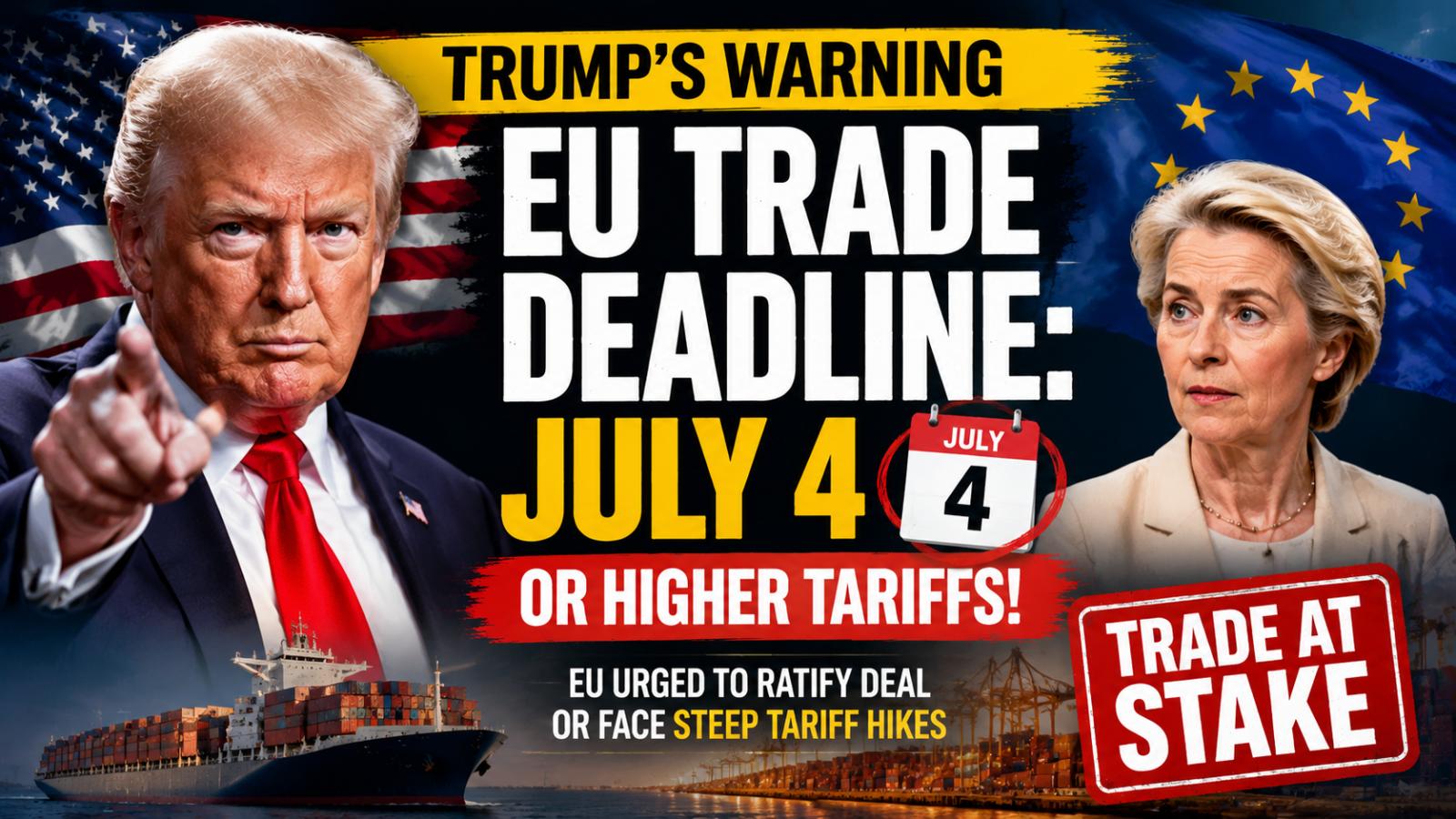
President Donald Trump issued a firm ultimatum on Thursday (May 7) to the European Union (EU), demanding that the 27-member bloc finalize and ratify its trade agreement with the United States by July 4, or face significantly higher tariffs. Trump’s statement followed a recent conversation with European Commission President Ursula von der Leyen, during which they discussed delays in approving the trade agreement. Trump set a deadline for the deal to be finalized by the U.S. Independenc
Trump Warns EU of Higher Tariffs if Trade Agreement Isn't Finalized by July 4
President Donald Trump issued a firm ultimatum on Thursday (May 7) to the European Union (EU), demanding that the 27-member bloc finalize and ratify its trade agreement with the United States by July 4, or face significantly higher tariffs. Trump’s statement followed a recent conversation with European Commission President Ursula von der Leyen, during which they discussed delays in approving the trade agreement. Trump set a deadline for the deal to be finalized by the U.S. Independenc
Three dead in shooting outside restaurant in Linz, Austria; police recover weapon
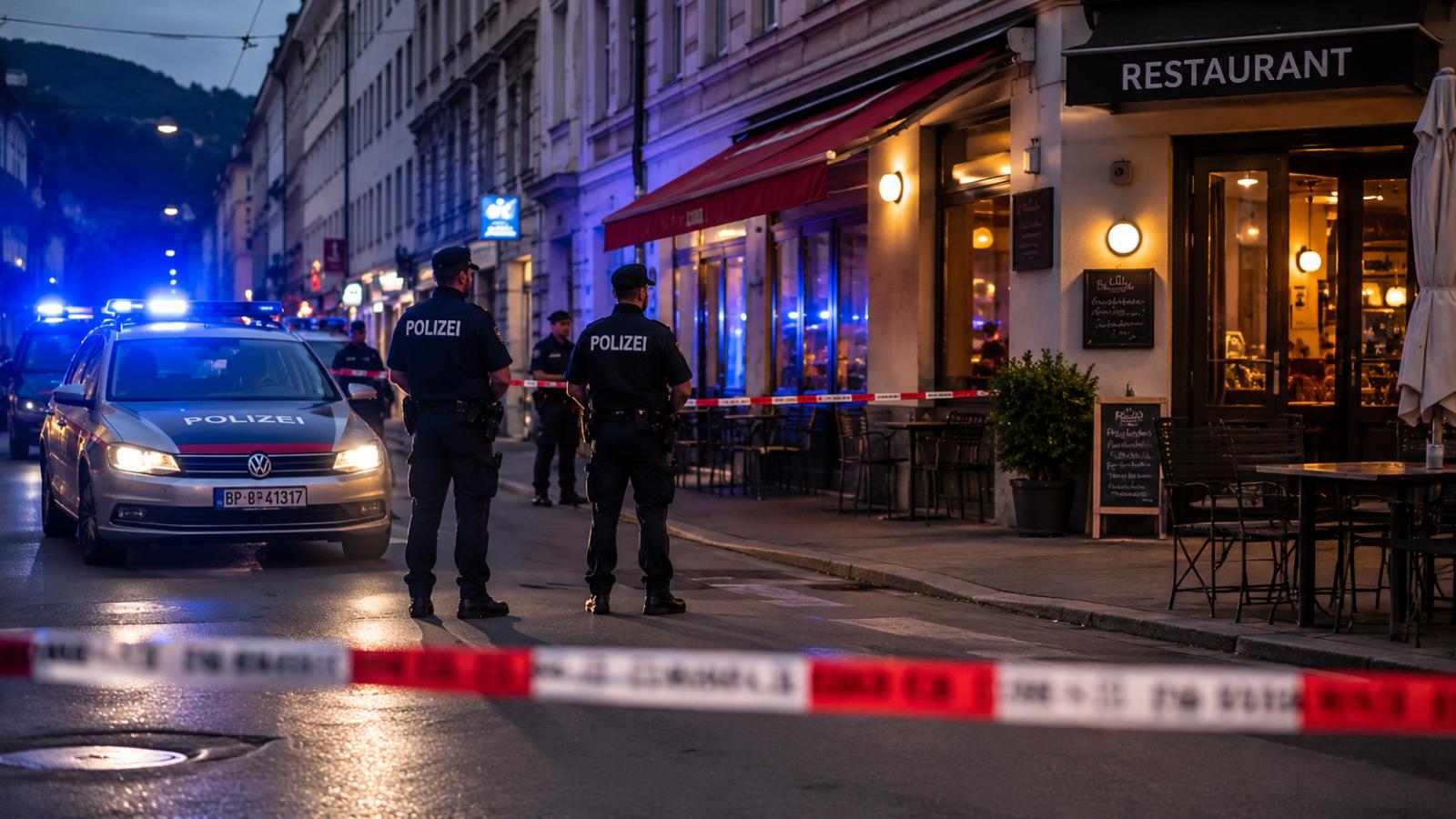
LINZ, Austria, May 7 — Three people were killed in a shooting outside a restaurant in the Austrian city of Linz on Thursday, police said, adding that the weapon used has been recovered. Emergency services responded shortly after the incident was reported in a public area, where multiple fatalities were confirmed at the scene, a police spokesperson said. Authorities have not released full details of how the shooting unfolded. Local media, including Kronen Zeitung, reported that a man shot two women before killing himself. Police said the suspected attacker is among the dead but have not fully confirmed the sequence of events. The area was secured as officers began investigations to identify those involved and determine the circumstances surrounding the incident. Officials said there is no indication of an ongoing threat to the public. Police have urged witnesses to come forward as inquiries continue.
Three dead in shooting outside restaurant in Linz, Austria; police recover weapon
LINZ, Austria, May 7 — Three people were killed in a shooting outside a restaurant in the Austrian city of Linz on Thursday, police said, adding that the weapon used has been recovered. Emergency services responded shortly after the incident was reported in a public area, where multiple fatalities were confirmed at the scene, a police spokesperson said. Authorities have not released full details of how the shooting unfolded. Local media, including Kronen Zeitung, reported that a man shot two women before killing himself. Police said the suspected attacker is among the dead but have not fully confirmed the sequence of events. The area was secured as officers began investigations to identify those involved and determine the circumstances surrounding the incident. Officials said there is no indication of an ongoing threat to the public. Police have urged witnesses to come forward as inquiries continue.
French President Macron performs with Armenian Prime Minister at state dinner
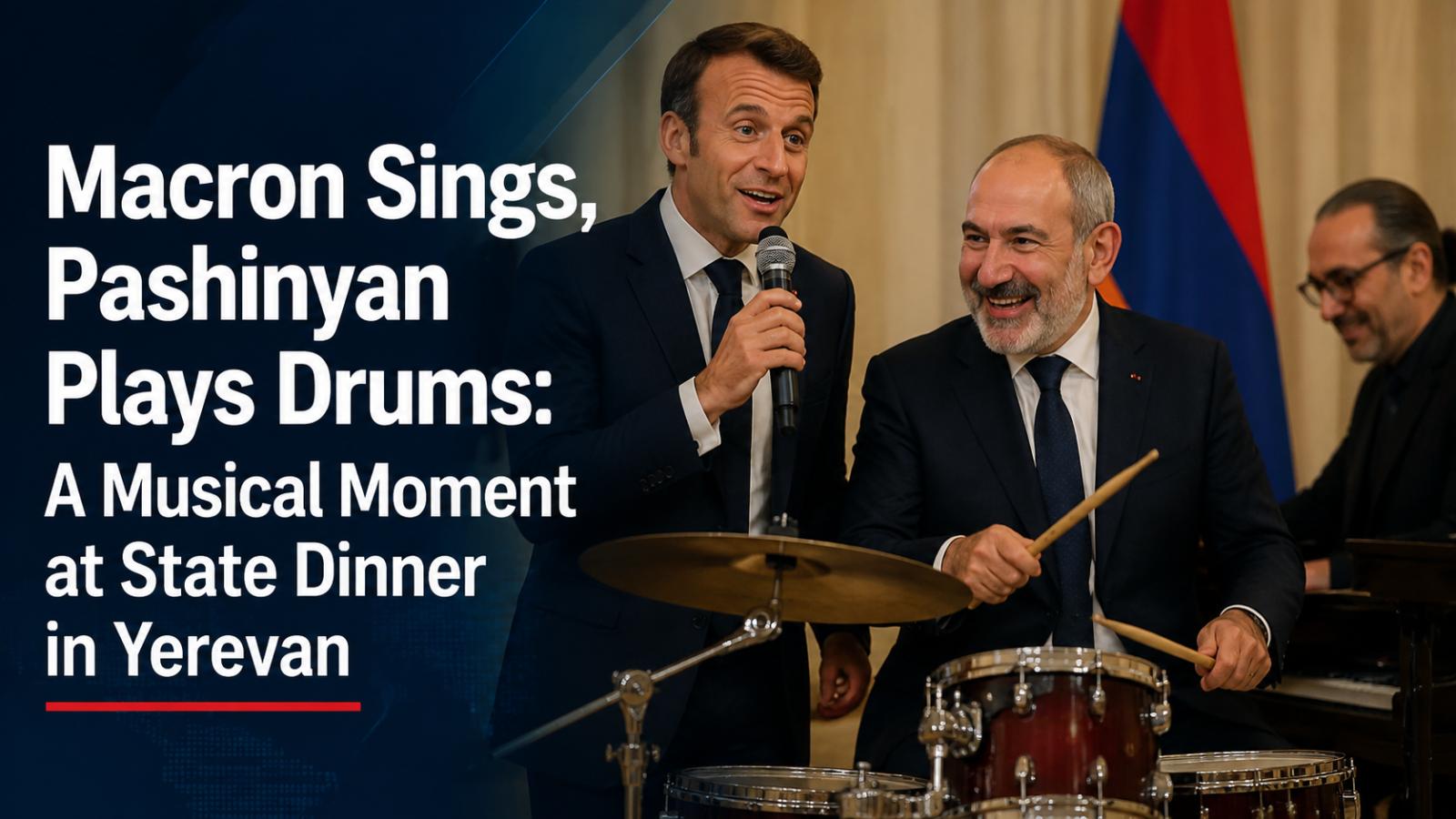
At the state dinner in Armenia’s capital, Yerevan, French President Emmanuel Macron and Armenian Prime Minister Nikol Pashinyan captured the world’s attention with an impromptu musical duet. The performance took place on Monday at Armenia’s presidential residence, where Macron’s heartfelt renditions of classic French songs, including "La Bohème" and "Les Feuilles Mortes," were accompanied by Pashinyan on drums and jazz pianist Vahagn Hayrapetyan. The crowd was captivated as Macron no
French President Macron performs with Armenian Prime Minister at state dinner
At the state dinner in Armenia’s capital, Yerevan, French President Emmanuel Macron and Armenian Prime Minister Nikol Pashinyan captured the world’s attention with an impromptu musical duet. The performance took place on Monday at Armenia’s presidential residence, where Macron’s heartfelt renditions of classic French songs, including "La Bohème" and "Les Feuilles Mortes," were accompanied by Pashinyan on drums and jazz pianist Vahagn Hayrapetyan. The crowd was captivated as Macron no

Oscar statuette recovered after going missing on flight from New York to Frankfurt
An Oscar statuette belonging to Russian director Pavel Talankin was recovered after going missing on a Lufthansa flight from New York to Frankfurt. The incident followed a TSA security check that required the award to be placed in checked luggage, prompting an internal review. Oscar statuette recovered after going missing on flight from New York to Frankfurt blends into a broader aviation and security incident that raised concerns over airport screeni
Oscar statuette recovered after going missing on flight from New York to Frankfurt
An Oscar statuette belonging to Russian director Pavel Talankin was recovered after going missing on a Lufthansa flight from New York to Frankfurt. The incident followed a TSA security check that required the award to be placed in checked luggage, prompting an internal review. Oscar statuette recovered after going missing on flight from New York to Frankfurt blends into a broader aviation and security incident that raised concerns over airport screeni
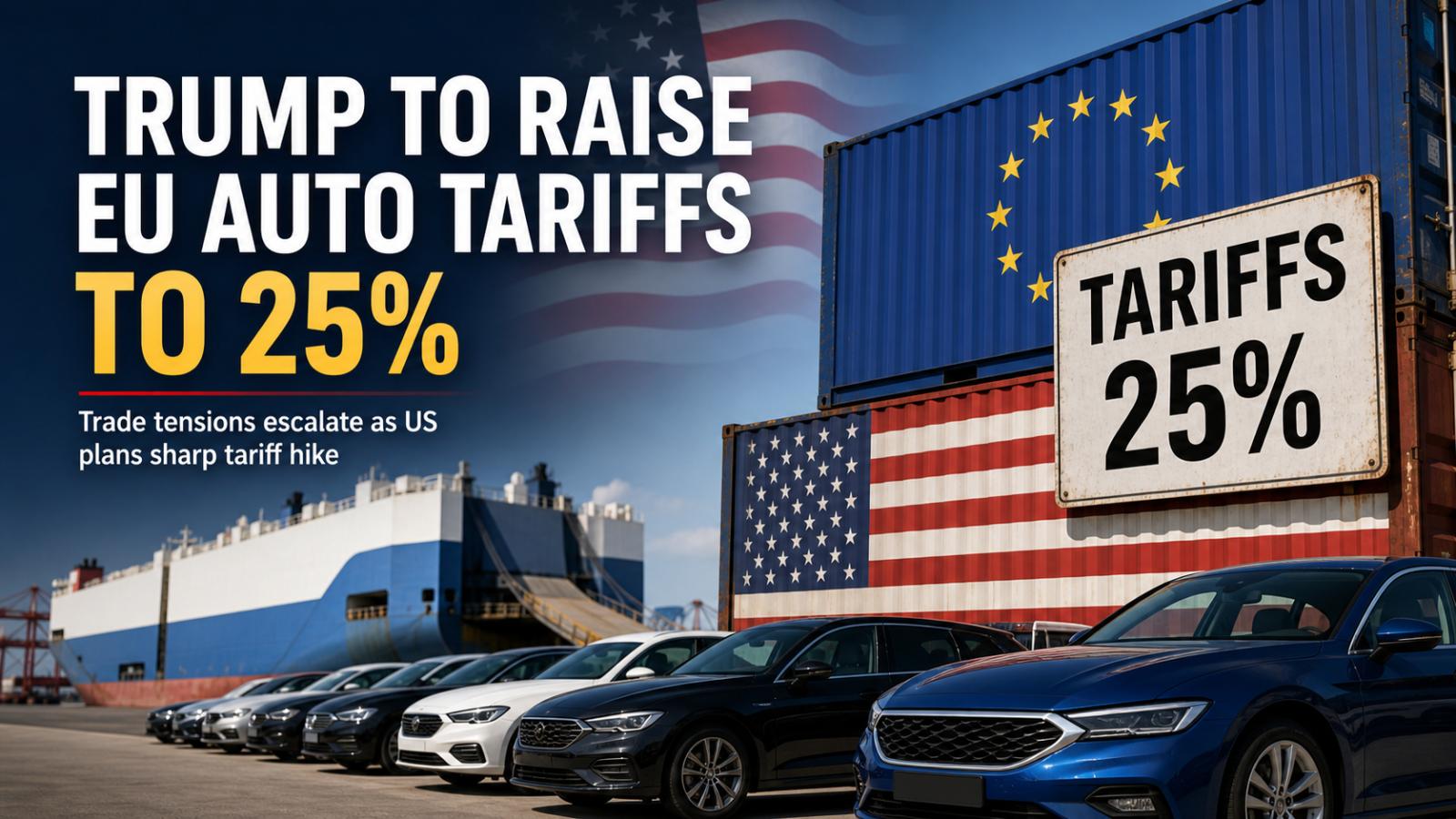
Will Trump raise EU auto tariffs to 25%? Yes, escalation risks trade tensions
Trump signals sharp increase in tariffs on EU vehicles WASHINGTON — On Friday, May 1, 2026, U.S. President Donald Trump announced plans to raise tariffs on cars and trucks imported from the European Union to 25%, signaling a significant shift in U.S.-EU trade policy. The move, shared publicly in a statement, comes at a time when global markets remain sensitive to policy changes and could trigger broader economic repercussions. Trump stated that the European Union was “not complying” with the previously agreed trade deal, though he did not provide specific details regarding the alleged violations. The announcement marks a departure from the earlier tariff framework negotiated between both sides. Background of the US-EU Turnberry trade framework The current dispute traces back to a bilateral agreement reached in July 2025 between Trump and Ursula von der Leyen, which set a 15% tariff ceiling on most traded goods. Known as the Turnberry Agreement, the arrangement aimed to stabilize trade relations and reduce uncertainty for industries on both sides of the Atlantic. Both the United States and the European Union had reaffirmed their commitment to maintaining this framework even after legal and policy challenges emerged earlier in 2026. Legal challenges reshape tariff authority The agreement’s stability was called into question after a ruling by the U.S. Supreme Court, which determined that the president lacked authority to impose tariffs under an economic emergency declaration. Following the ruling, tariff limits were effectively reduced, prompting the administration to explore alternative legal pathways to implement new import taxes. Ongoing investigations into trade imbalances and national security concerns have since been cited by the administration as justification for a revised tariff strategy, potentially putting the original agreement at risk. Economic stakes for EU and global markets The European Union has consistently emphasized the importance of maintaining agreed tariff limits, noting that the deal was expected to save its automotive sector between €500 million and €600 million monthly. Trade between the U.S. and EU reached approximately €1.7 trillion ($2 trillion) in 2024, highlighting the scale of economic interdependence. European officials have reiterated that commitments under the agreement should be upheld, stressing that EU exports must continue to benefit from competitive tariff treatment without unexpected increases. Rising tensions threaten trade stability The proposed tariff increase introduces fresh uncertainty into one of the world’s largest trading relationships. Analysts warn that such measures could disrupt supply chains, increase costs for manufacturers and consumers, and strain diplomatic ties. As the administration moves forward with its trade investigations, the future of the U.S.-EU trade framework remains uncertain, with potential implications extending beyond the automotive sector into the broader global economy.
Will Trump raise EU auto tariffs to 25%? Yes, escalation risks trade tensions
Trump signals sharp increase in tariffs on EU vehicles WASHINGTON — On Friday, May 1, 2026, U.S. President Donald Trump announced plans to raise tariffs on cars and trucks imported from the European Union to 25%, signaling a significant shift in U.S.-EU trade policy. The move, shared publicly in a statement, comes at a time when global markets remain sensitive to policy changes and could trigger broader economic repercussions. Trump stated that the European Union was “not complying” with the previously agreed trade deal, though he did not provide specific details regarding the alleged violations. The announcement marks a departure from the earlier tariff framework negotiated between both sides. Background of the US-EU Turnberry trade framework The current dispute traces back to a bilateral agreement reached in July 2025 between Trump and Ursula von der Leyen, which set a 15% tariff ceiling on most traded goods. Known as the Turnberry Agreement, the arrangement aimed to stabilize trade relations and reduce uncertainty for industries on both sides of the Atlantic. Both the United States and the European Union had reaffirmed their commitment to maintaining this framework even after legal and policy challenges emerged earlier in 2026. Legal challenges reshape tariff authority The agreement’s stability was called into question after a ruling by the U.S. Supreme Court, which determined that the president lacked authority to impose tariffs under an economic emergency declaration. Following the ruling, tariff limits were effectively reduced, prompting the administration to explore alternative legal pathways to implement new import taxes. Ongoing investigations into trade imbalances and national security concerns have since been cited by the administration as justification for a revised tariff strategy, potentially putting the original agreement at risk. Economic stakes for EU and global markets The European Union has consistently emphasized the importance of maintaining agreed tariff limits, noting that the deal was expected to save its automotive sector between €500 million and €600 million monthly. Trade between the U.S. and EU reached approximately €1.7 trillion ($2 trillion) in 2024, highlighting the scale of economic interdependence. European officials have reiterated that commitments under the agreement should be upheld, stressing that EU exports must continue to benefit from competitive tariff treatment without unexpected increases. Rising tensions threaten trade stability The proposed tariff increase introduces fresh uncertainty into one of the world’s largest trading relationships. Analysts warn that such measures could disrupt supply chains, increase costs for manufacturers and consumers, and strain diplomatic ties. As the administration moves forward with its trade investigations, the future of the U.S.-EU trade framework remains uncertain, with potential implications extending beyond the automotive sector into the broader global economy.
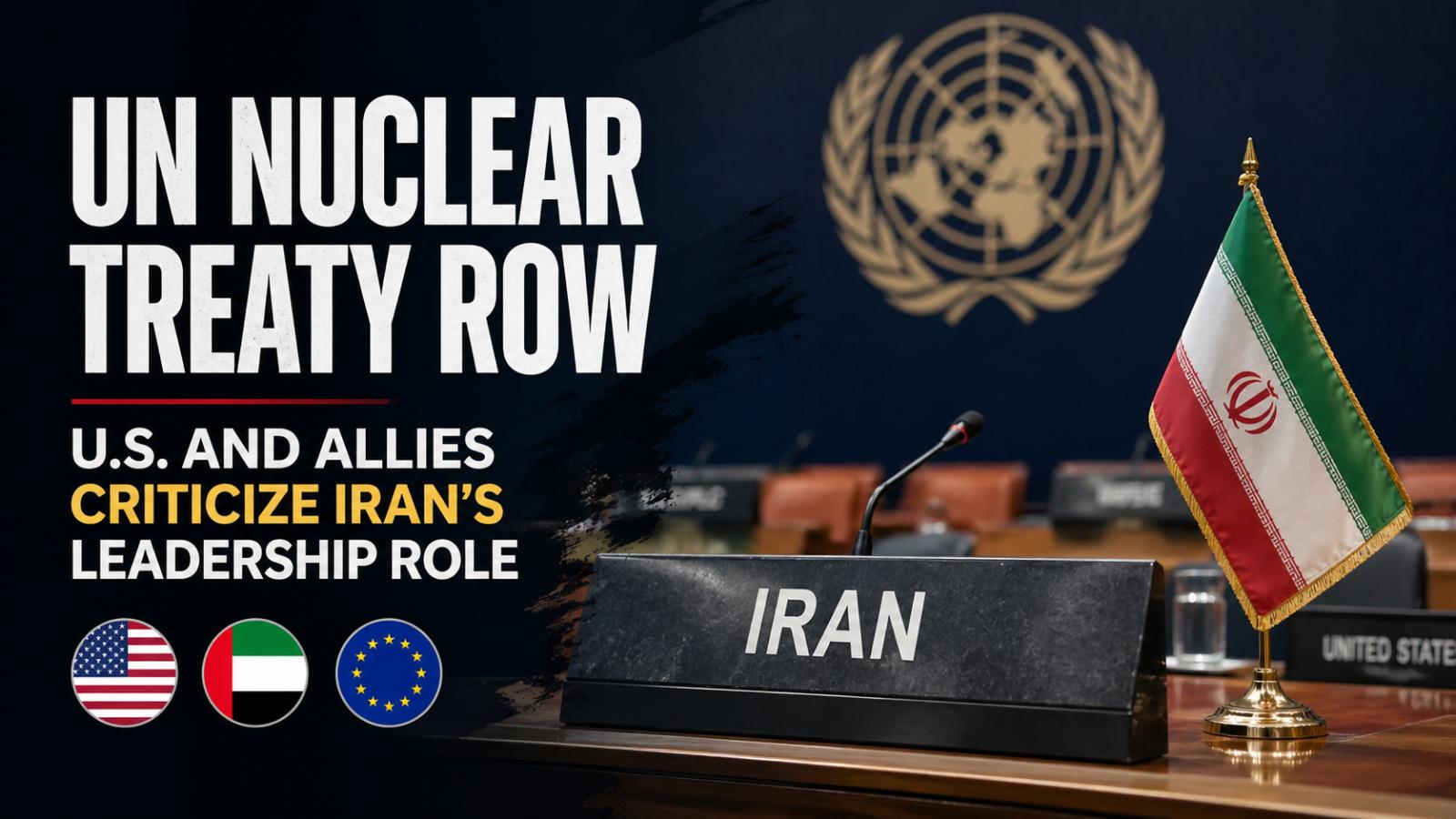
Why did the UN grant Iran a leadership role? It reflects procedural voting dynamics despite criticism
It reflects procedural voting dynamics despite criticism The United States, joined by the United Arab Emirates and supported by several European governments, condemned a United Nations decision made on Monday, April 28, 2026, to appoint Iran as one of the vice presidents at a major nuclear treaty conference in New York. Iran’s appointment through Non-Aligned Movement voting bloc The controversy emerged as the 11th Review Conference of
Why did the UN grant Iran a leadership role? It reflects procedural voting dynamics despite criticism
It reflects procedural voting dynamics despite criticism The United States, joined by the United Arab Emirates and supported by several European governments, condemned a United Nations decision made on Monday, April 28, 2026, to appoint Iran as one of the vice presidents at a major nuclear treaty conference in New York. Iran’s appointment through Non-Aligned Movement voting bloc The controversy emerged as the 11th Review Conference of
India Enters Top Five as Global Defense Spending Surge
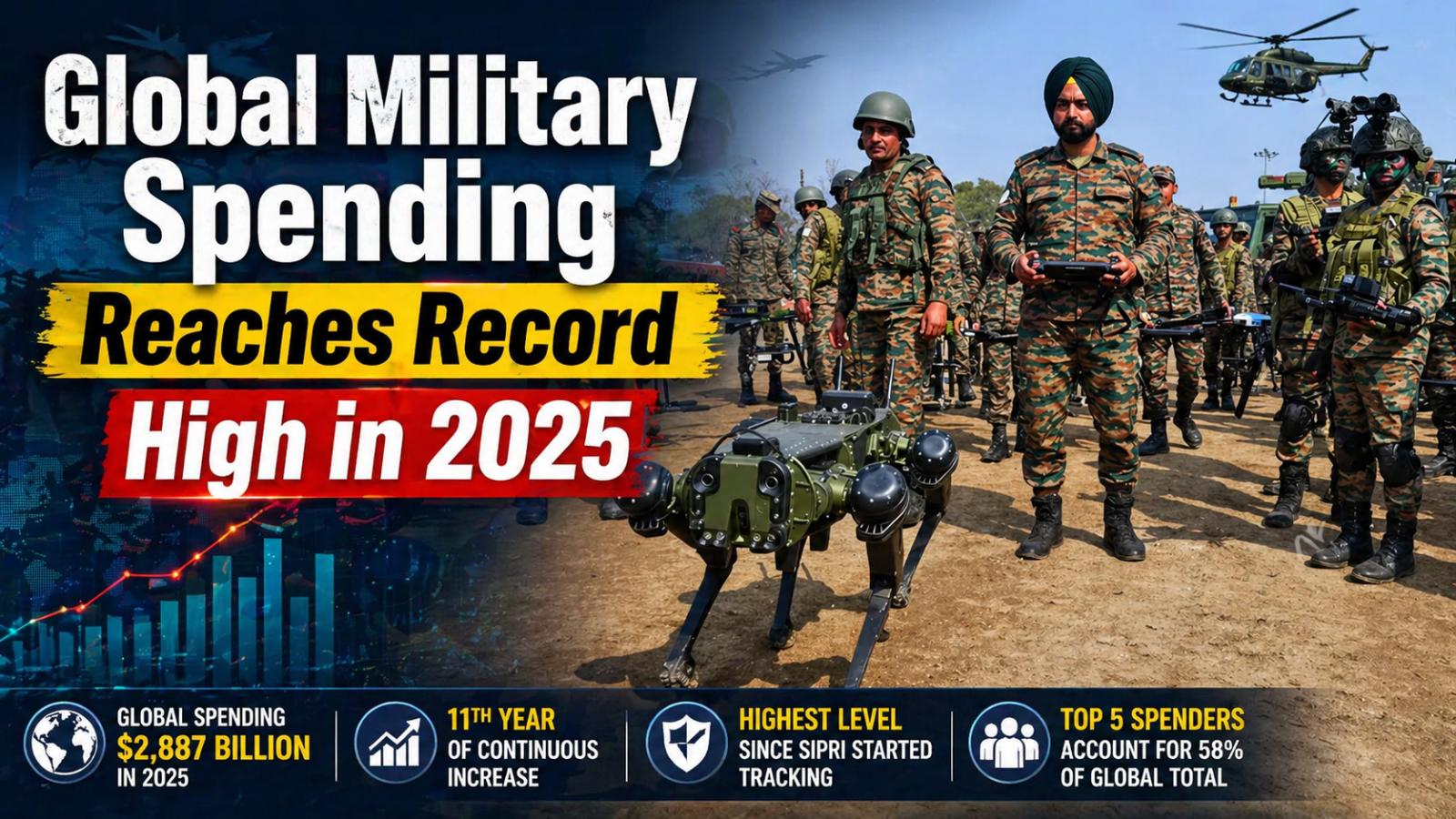
Global military spending reached a record $2,887 billion in 2025, marking the eleventh consecutive year of growth and the highest level ever recorded. According to the latest SIPRI report, the increase reflects rising geopolitical tensions, ongoing conflicts, and a shifting global security environment that has prompted governments to expand their defense budgets. India emerged as one of the world’s top military spenders, entering the top five for the first time with total expenditure of $92.1 billion. The country’s defense spending rose by 8.9 percent, reflecting heightened security concerns and operational demands. The report noted that this increase coincided with armed tensions involving Pakistan in May 2025, during which India deployed a range of military assets including aircraft, drones, and missile systems. The five largest spenders—the United States, China, Russia, Germany, and India—collectively accounted for 58 percent of global military expenditure, totaling $1,686 billion. Pakistan also increased its defense budget by 11 percent to $11.9 billion, driven largely by procurement activities and ongoing modernization efforts following regional tensions. Europe was identified as the primary contributor to the global rise in military spending, with a 14 percent increase bringing the region’s total to $864 billion. This marked the fastest growth in Central and Western Europe since the Cold War, as countries accelerated rearmament programs in response to security concerns, particularly the ongoing conflict involving Russia and Ukraine. The United States remained the largest military spender globally, allocating $954 billion in 2025. However, this represented a 7.5 percent decline compared to the previous year. The decrease was attributed mainly to reduced financial assistance to Ukraine, contrasting with higher levels of support in earlier years. Overall, the data highlights a continued global trend toward increased defense investment, driven by evolving security challenges and shifting geopolitical dynamics.
India Enters Top Five as Global Defense Spending Surge
Global military spending reached a record $2,887 billion in 2025, marking the eleventh consecutive year of growth and the highest level ever recorded. According to the latest SIPRI report, the increase reflects rising geopolitical tensions, ongoing conflicts, and a shifting global security environment that has prompted governments to expand their defense budgets. India emerged as one of the world’s top military spenders, entering the top five for the first time with total expenditure of $92.1 billion. The country’s defense spending rose by 8.9 percent, reflecting heightened security concerns and operational demands. The report noted that this increase coincided with armed tensions involving Pakistan in May 2025, during which India deployed a range of military assets including aircraft, drones, and missile systems. The five largest spenders—the United States, China, Russia, Germany, and India—collectively accounted for 58 percent of global military expenditure, totaling $1,686 billion. Pakistan also increased its defense budget by 11 percent to $11.9 billion, driven largely by procurement activities and ongoing modernization efforts following regional tensions. Europe was identified as the primary contributor to the global rise in military spending, with a 14 percent increase bringing the region’s total to $864 billion. This marked the fastest growth in Central and Western Europe since the Cold War, as countries accelerated rearmament programs in response to security concerns, particularly the ongoing conflict involving Russia and Ukraine. The United States remained the largest military spender globally, allocating $954 billion in 2025. However, this represented a 7.5 percent decline compared to the previous year. The decrease was attributed mainly to reduced financial assistance to Ukraine, contrasting with higher levels of support in earlier years. Overall, the data highlights a continued global trend toward increased defense investment, driven by evolving security challenges and shifting geopolitical dynamics.
Global military spending hits $2.9 trillion in 2025 amid rising tensions
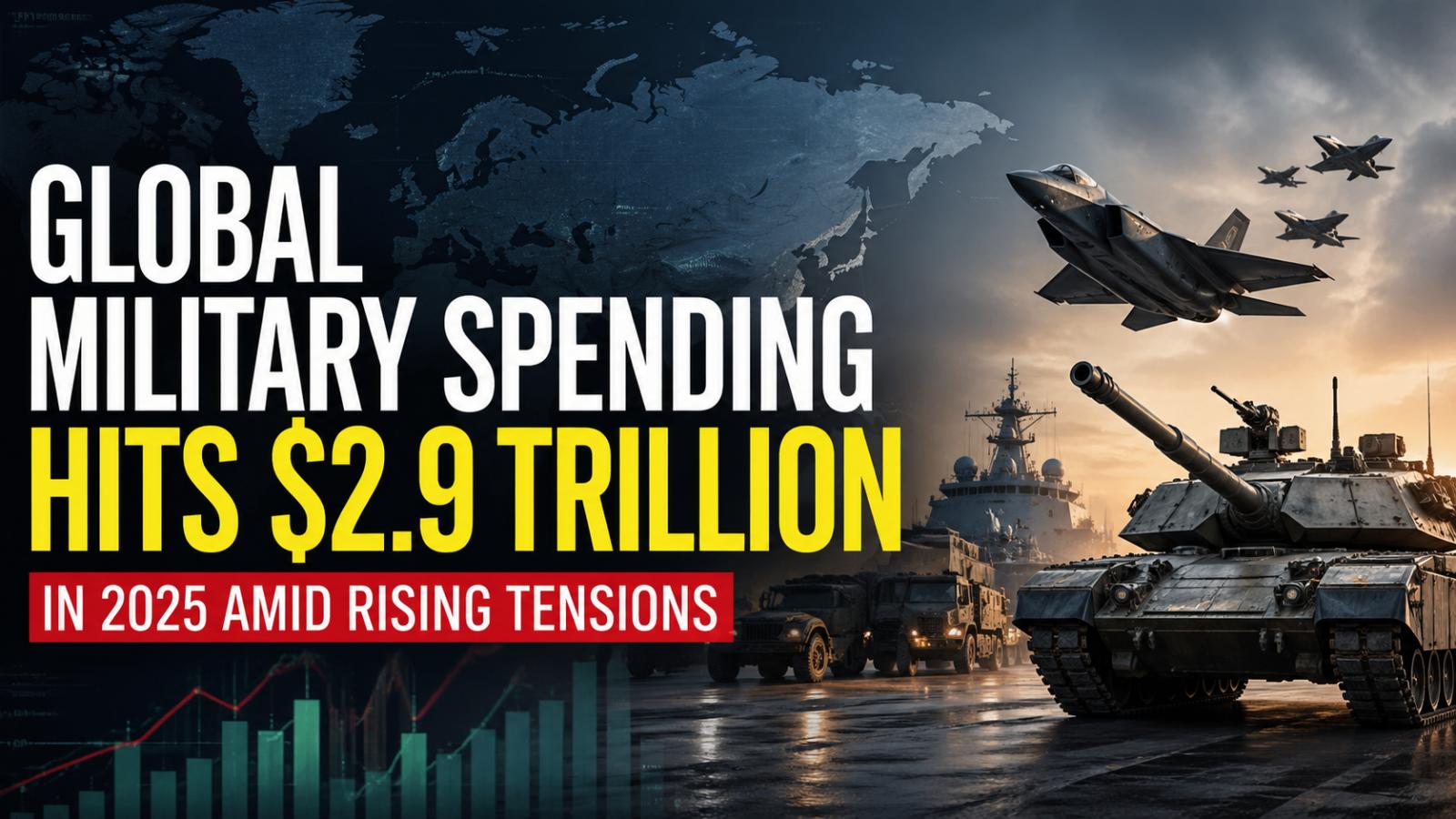
Global military spending 2025 overview Global military spending in 2025 has reached nearly $2.9 trillion, clearly showing how countries are increasing defence budgets as global tensions continue to rise. The total spending stood at $2887 billion in 2025, marking a 2.9 per cent increase from 2024, highlighting a steady rise in military expenditure trends worldwide. This reflects a world becoming less secure, with nations investing more in defence to protect themselves. The United States, Russia, and China remained the top three military spenders, with a combined total of $1.48 trillion. These nations continue to dominate global defence spending, shaping international security dynamics. Experts say this rise in defence budget growth shows that countries are preparing for both current conflicts and future uncertainties. Europe witnessed a major surge, with military spending increasing by 14 per cent to $864 billion in 2025. This sharp rise is mainly driven by the ongoing Russia-Ukraine war and reduced dependence on the United States for security. Countries like Germany increased spending by 24 per cent to $114 billion, while Spain recorded a significant 50 per cent jump to $40.2 billion, crossing two per cent of GDP for the first time in decades. The United States remained the largest spender despite a decline of 7.5 per cent, bringing its total to $954 billion in 2025. The decrease is linked to reduced financial aid approvals for Ukraine, although future budgets suggest spending could exceed $1 trillion in 2026, indicating a possible rebound. In Eastern Europe, Russia increased its military expenditure by 5.9 per cent to $190 billion, while Ukraine saw a sharp rise of 20 per cent to $84.1 billion. Ukraine’s defence spending now accounts for a large share of its GDP, showing the intensity of the ongoing conflict. Asia and Oceania recorded one of the fastest growth rates, with spending reaching $681 billion in 2025, an 8.5 per cent increase. China led the region with $336 billion, followed by Japan and India. India increased its defence budget by 8.9 per cent to $92.1 billion, making it the fifth-largest military spender globally. This growth highlights rising security concerns across the region. In the Middle East, spending patterns were mixed. Iran’s defence expenditure fell by 5.6 per cent to $7.4 billion, mainly due to high inflation. Israel also saw a decline of 4.9 per cent to $48.3 billion after reducing military operations following a ceasefire in early 2025, although its spending remains significantly higher compared to earlier years. Regional tensions continue to influence defence strategies across the Middle East. Overall, the SIPRI report shows that global military spending is steadily increasing as countries respond to rising geopolitical tensions and conflicts. The trend highlights a shift toward stronger military preparedness, reflecting uncertainty in the global security environment.
Global military spending hits $2.9 trillion in 2025 amid rising tensions
Global military spending 2025 overview Global military spending in 2025 has reached nearly $2.9 trillion, clearly showing how countries are increasing defence budgets as global tensions continue to rise. The total spending stood at $2887 billion in 2025, marking a 2.9 per cent increase from 2024, highlighting a steady rise in military expenditure trends worldwide. This reflects a world becoming less secure, with nations investing more in defence to protect themselves. The United States, Russia, and China remained the top three military spenders, with a combined total of $1.48 trillion. These nations continue to dominate global defence spending, shaping international security dynamics. Experts say this rise in defence budget growth shows that countries are preparing for both current conflicts and future uncertainties. Europe witnessed a major surge, with military spending increasing by 14 per cent to $864 billion in 2025. This sharp rise is mainly driven by the ongoing Russia-Ukraine war and reduced dependence on the United States for security. Countries like Germany increased spending by 24 per cent to $114 billion, while Spain recorded a significant 50 per cent jump to $40.2 billion, crossing two per cent of GDP for the first time in decades. The United States remained the largest spender despite a decline of 7.5 per cent, bringing its total to $954 billion in 2025. The decrease is linked to reduced financial aid approvals for Ukraine, although future budgets suggest spending could exceed $1 trillion in 2026, indicating a possible rebound. In Eastern Europe, Russia increased its military expenditure by 5.9 per cent to $190 billion, while Ukraine saw a sharp rise of 20 per cent to $84.1 billion. Ukraine’s defence spending now accounts for a large share of its GDP, showing the intensity of the ongoing conflict. Asia and Oceania recorded one of the fastest growth rates, with spending reaching $681 billion in 2025, an 8.5 per cent increase. China led the region with $336 billion, followed by Japan and India. India increased its defence budget by 8.9 per cent to $92.1 billion, making it the fifth-largest military spender globally. This growth highlights rising security concerns across the region. In the Middle East, spending patterns were mixed. Iran’s defence expenditure fell by 5.6 per cent to $7.4 billion, mainly due to high inflation. Israel also saw a decline of 4.9 per cent to $48.3 billion after reducing military operations following a ceasefire in early 2025, although its spending remains significantly higher compared to earlier years. Regional tensions continue to influence defence strategies across the Middle East. Overall, the SIPRI report shows that global military spending is steadily increasing as countries respond to rising geopolitical tensions and conflicts. The trend highlights a shift toward stronger military preparedness, reflecting uncertainty in the global security environment.
Trump criticizes NATO support amid tensions over Iran conflict
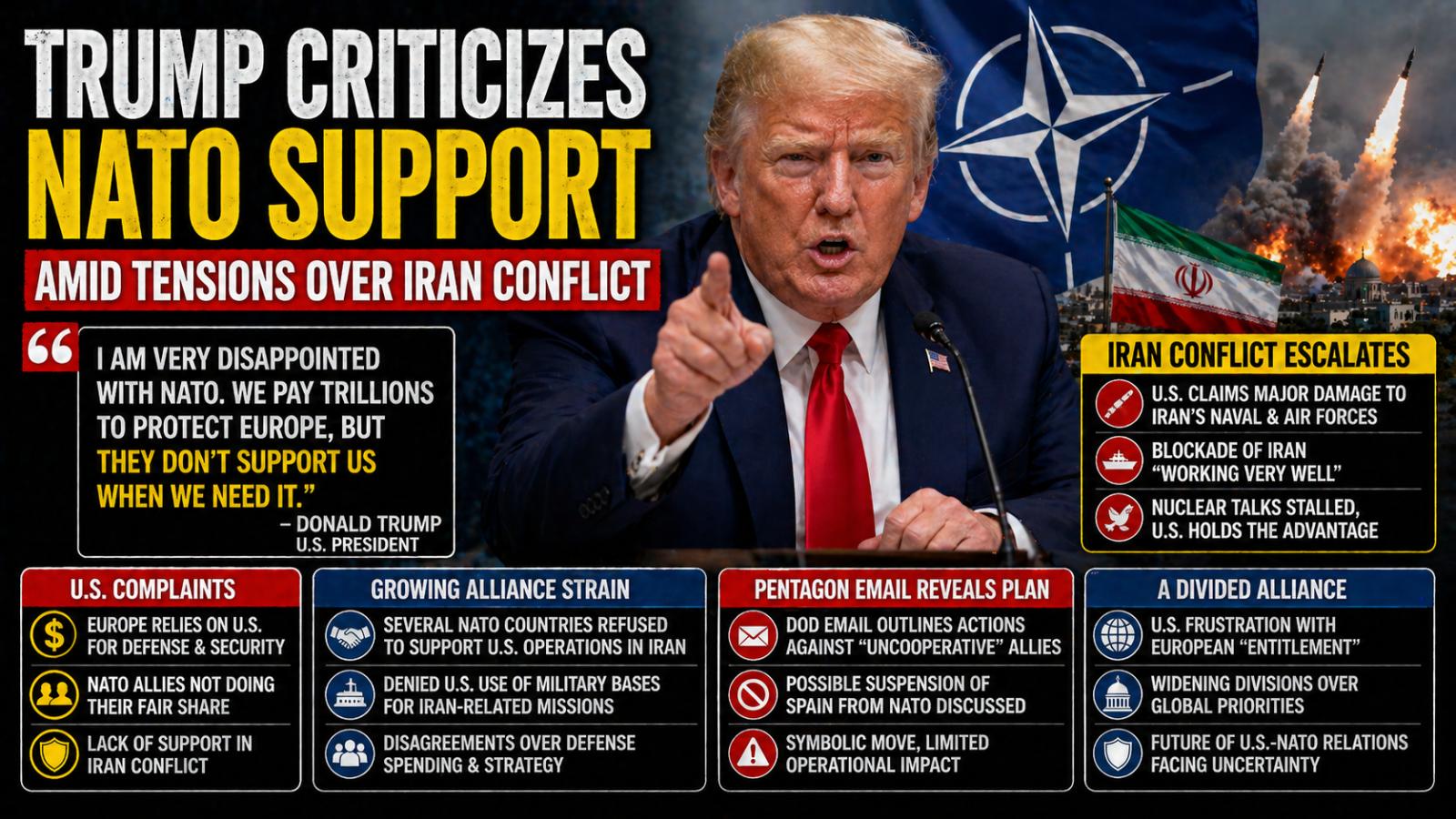
Trump criticized NATO for lack of support during the Iran conflict, highlighting growing US-alliance tensions and potential policy consequences for member states. A growing rift between the United States and NATO allies intensified after President Donald Trump voiced disappointment over support during the Iran conflict and broader security concerns. Amid escalating tensions between the United States and its allies, Donald Trump said on Sunday April 26, 2026 that he was “very disappointed” with NATO, accusing the alliance of failing to support Washington during a critical period. His remarks followed heightened security concerns earlier that day at the White House Correspondents’ Dinner. In an interview with Fox News, Trump emphasized the scale of US financial contributions to NATO, arguing that the alliance depends heavily on American resources. He said the United States has invested trillions of dollars to protect Europe from threats such as Russia and suggested that NATO members have not reciprocated adequately. The comments come as the Trump administration faces frustration with Western allies over their reluctance to back US actions in the ongoing Iran conflict. During the same interview, Trump shifted focus to Iran, asserting that the United States holds a strategic advantage despite stalled negotiations. He claimed US forces had significantly weakened Iran’s naval and air capabilities and described a blockade as highly effective. Tensions with NATO have been building since Trump returned to office, particularly as he has pushed member nations to increase defense spending. Disagreements intensified after several NATO countries declined to support US military operations in Iran or allow the use of their bases. The strain deepened further after a controversial email from the United States Department of Defense outlined potential actions against NATO allies perceived as unsupportive. Among the measures discussed was the possible suspension of Spain from NATO, a move officials indicated would carry symbolic significance but limited operational impact. Officials said the communication reflected growing frustration within the US government, describing what it characterized as a sense of entitlement among European partners. The developments underscore widening divisions within the alliance as geopolitical and military priorities diverge.
Trump criticizes NATO support amid tensions over Iran conflict
Trump criticized NATO for lack of support during the Iran conflict, highlighting growing US-alliance tensions and potential policy consequences for member states. A growing rift between the United States and NATO allies intensified after President Donald Trump voiced disappointment over support during the Iran conflict and broader security concerns. Amid escalating tensions between the United States and its allies, Donald Trump said on Sunday April 26, 2026 that he was “very disappointed” with NATO, accusing the alliance of failing to support Washington during a critical period. His remarks followed heightened security concerns earlier that day at the White House Correspondents’ Dinner. In an interview with Fox News, Trump emphasized the scale of US financial contributions to NATO, arguing that the alliance depends heavily on American resources. He said the United States has invested trillions of dollars to protect Europe from threats such as Russia and suggested that NATO members have not reciprocated adequately. The comments come as the Trump administration faces frustration with Western allies over their reluctance to back US actions in the ongoing Iran conflict. During the same interview, Trump shifted focus to Iran, asserting that the United States holds a strategic advantage despite stalled negotiations. He claimed US forces had significantly weakened Iran’s naval and air capabilities and described a blockade as highly effective. Tensions with NATO have been building since Trump returned to office, particularly as he has pushed member nations to increase defense spending. Disagreements intensified after several NATO countries declined to support US military operations in Iran or allow the use of their bases. The strain deepened further after a controversial email from the United States Department of Defense outlined potential actions against NATO allies perceived as unsupportive. Among the measures discussed was the possible suspension of Spain from NATO, a move officials indicated would carry symbolic significance but limited operational impact. Officials said the communication reflected growing frustration within the US government, describing what it characterized as a sense of entitlement among European partners. The developments underscore widening divisions within the alliance as geopolitical and military priorities diverge.










