


US deploys three aircraft carriers to Middle East amid Iran tensions
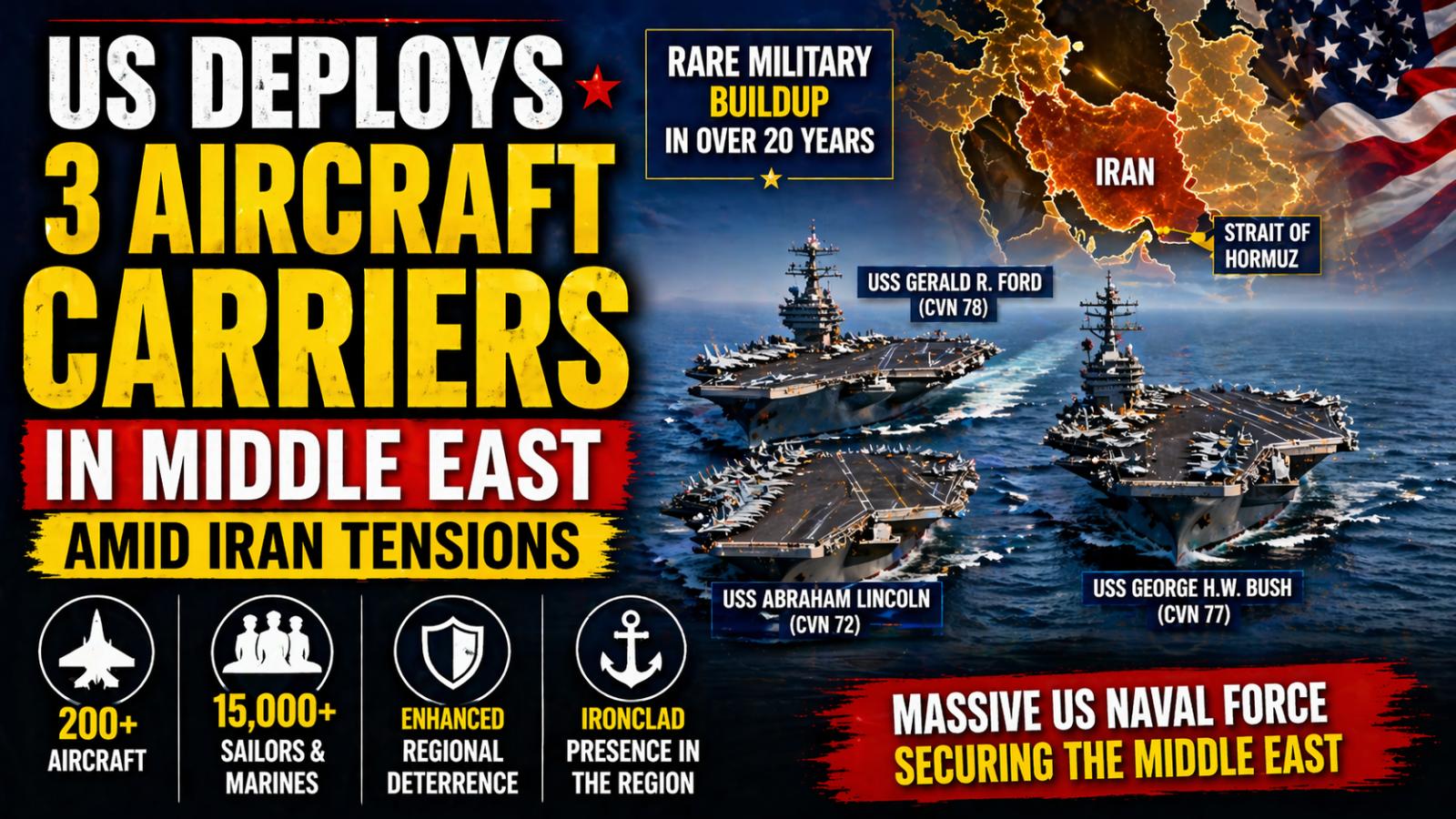
US deploys three aircraft carriers to the Middle East amid Iran tensions, expanding naval operations and reinforcing security in key maritime routes including the Strait of Hormuz. US deploys three aircraft carriers to Middle East amid Iran tensions as Washington significantly expands its military footprint across the region, marking one of the largest naval concentrations in more than two decades. Officials confirmed that three carrier strike groups—the USS Abraham Lincoln, USS Gerald R. Ford, and USS George H.W. Bush—are operating simultaneously, supported by more than 200 aircraft and approximately 15,000 sailors and Marines. A statement from US Central Command on Thursday confirmed the rare deployment, describing it as a significant concentration of naval power aimed at maintaining operational readiness amid rising tensions involving Iran. The carrier groups and their air wings are conducting coordinated missions, underscoring the strategic importance of key maritime routes in the Middle East and reinforcing a broader posture of deterrence. The announcement coincided with remarks from Donald Trump on Thursday, who declined to provide a timeline for a potential resolution to the Iran conflict. He indicated that any agreement would depend on conditions favorable to US interests, highlighting ongoing uncertainty surrounding diplomatic efforts. The absence of a clear timeline has aligned with increased military activity and messaging focused on regional stability. Defense officials stated on Friday that the US blockade of Iranian vessels in the Strait of Hormuz remains “ironclad,” with additional naval assets expected to join the operation in the coming days. The expanding mission signals a broader enforcement effort in one of the world’s most critical shipping corridors. The USS George H.W. Bush, commissioned in 2009, is among the newest Nimitz-class carriers involved, measuring nearly 1,000 feet in length and powered by two nuclear reactors, with the capacity to carry more than 80 aircraft and support a crew exceeding 5,500 personnel.
US deploys three aircraft carriers to Middle East amid Iran tensions
US deploys three aircraft carriers to the Middle East amid Iran tensions, expanding naval operations and reinforcing security in key maritime routes including the Strait of Hormuz. US deploys three aircraft carriers to Middle East amid Iran tensions as Washington significantly expands its military footprint across the region, marking one of the largest naval concentrations in more than two decades. Officials confirmed that three carrier strike groups—the USS Abraham Lincoln, USS Gerald R. Ford, and USS George H.W. Bush—are operating simultaneously, supported by more than 200 aircraft and approximately 15,000 sailors and Marines. A statement from US Central Command on Thursday confirmed the rare deployment, describing it as a significant concentration of naval power aimed at maintaining operational readiness amid rising tensions involving Iran. The carrier groups and their air wings are conducting coordinated missions, underscoring the strategic importance of key maritime routes in the Middle East and reinforcing a broader posture of deterrence. The announcement coincided with remarks from Donald Trump on Thursday, who declined to provide a timeline for a potential resolution to the Iran conflict. He indicated that any agreement would depend on conditions favorable to US interests, highlighting ongoing uncertainty surrounding diplomatic efforts. The absence of a clear timeline has aligned with increased military activity and messaging focused on regional stability. Defense officials stated on Friday that the US blockade of Iranian vessels in the Strait of Hormuz remains “ironclad,” with additional naval assets expected to join the operation in the coming days. The expanding mission signals a broader enforcement effort in one of the world’s most critical shipping corridors. The USS George H.W. Bush, commissioned in 2009, is among the newest Nimitz-class carriers involved, measuring nearly 1,000 feet in length and powered by two nuclear reactors, with the capacity to carry more than 80 aircraft and support a crew exceeding 5,500 personnel.
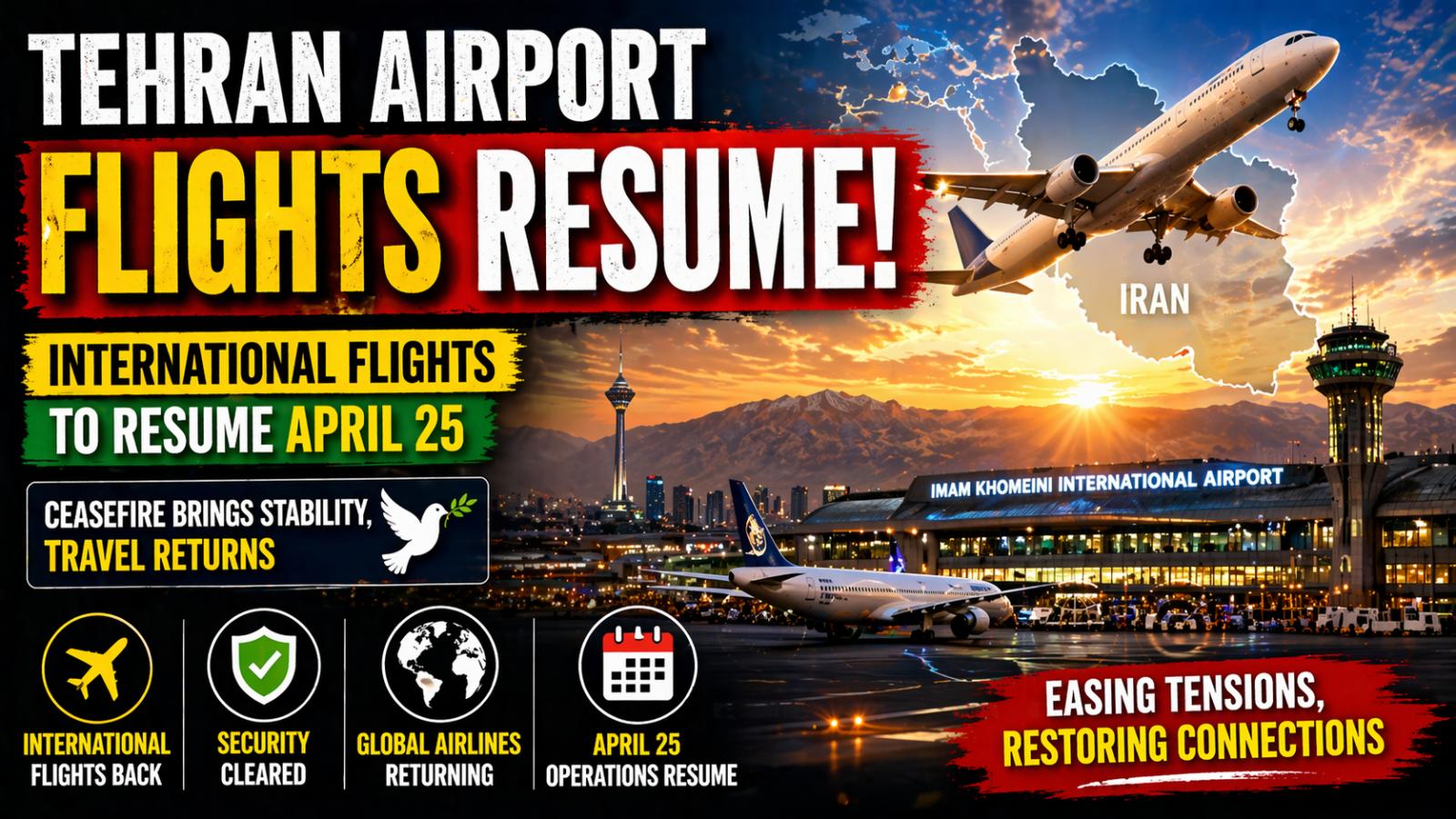
What does Tehran airport reopening signal? It marks easing regional tensions
What does Tehran airport reopening signal? It marks easing regional tensions, Tehran’s primary international gateway is preparing to resume global flight operations on Saturday, April 25, 2026, according to Iranian aviation authorities, marking a significant step toward restoring stability after a week-long suspension tied to heightened regional tensions. Airport reopening follows week-long aviation shutdown Imam Khomeini International
What does Tehran airport reopening signal? It marks easing regional tensions
What does Tehran airport reopening signal? It marks easing regional tensions, Tehran’s primary international gateway is preparing to resume global flight operations on Saturday, April 25, 2026, according to Iranian aviation authorities, marking a significant step toward restoring stability after a week-long suspension tied to heightened regional tensions. Airport reopening follows week-long aviation shutdown Imam Khomeini International
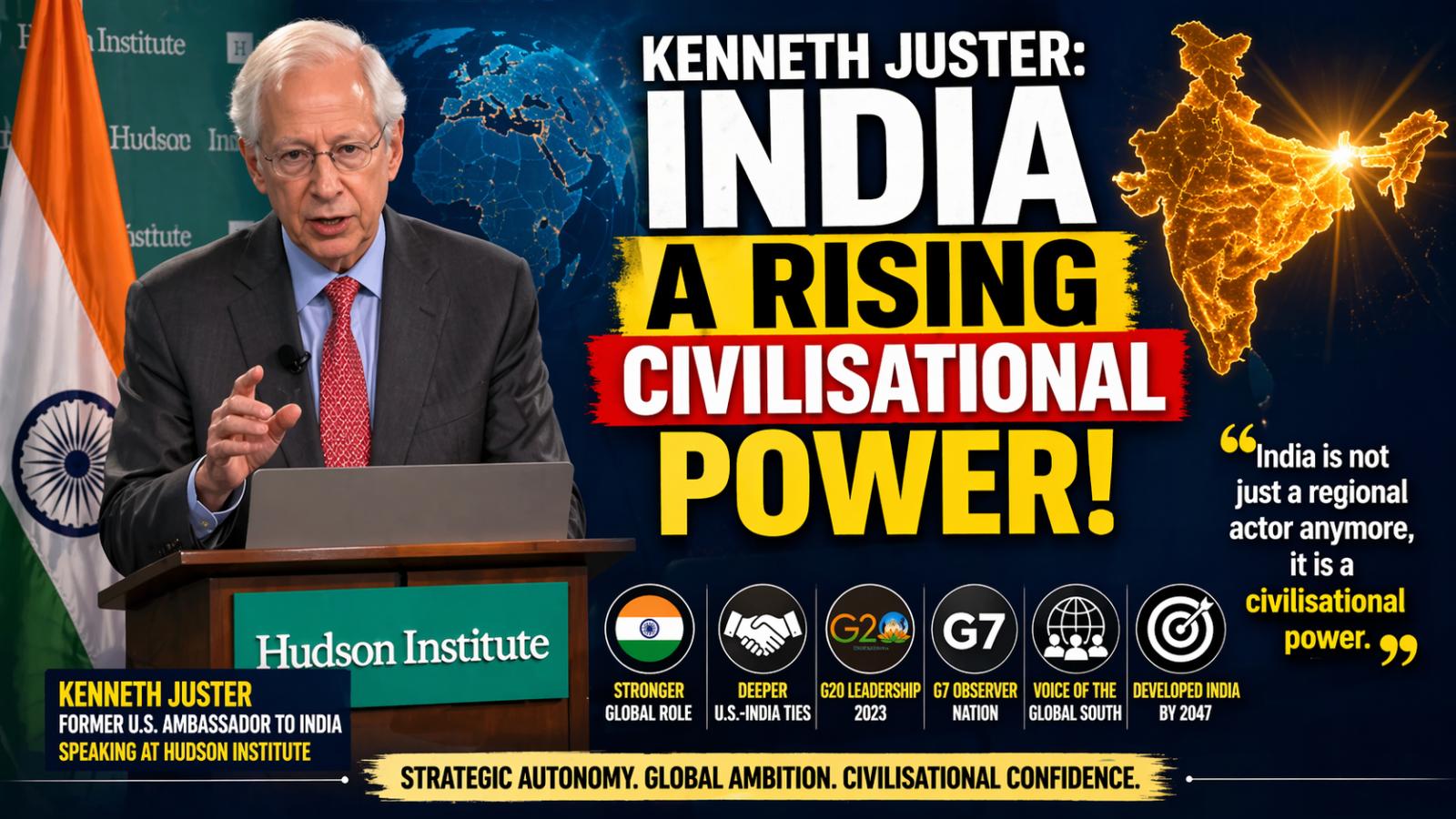
What did Kenneth Juster say about India’s global role? He called it a rising civilisational power
India’s emergence as a civilisational power in global affairs What did Kenneth Juster say about India’s global role? He called it a rising civilisational power, underscoring a major shift in how the country positions itself internationally. Former U.S. Ambassador to India Kenneth Juster said on Thursday, April 23, 2026, that India has evolved into a “civilisational power” under Prime Minister Narendra Modi, reflecting a more assertive and confident global posture. Speaking at an event hosted by the Hudson Institute, Juster identified Modi’s 2014 election as a turning point that accelerated India’s transformation in foreign policy and international engagement. Expanding diplomatic reach and global engagement Juster emphasized that India’s approach to global affairs has shifted significantly over the past decade, with New Delhi demonstrating greater confidence and a willingness to engage broadly with countries across regions. He noted that India no longer views itself as limited to a regional role but instead positions itself as a major global force with a distinct civilizational identity. This evolution has enabled India to expand its diplomatic outreach and pursue strategic ambitions with increased clarity and purpose. Navigating U.S.-China competition with strategic autonomy According to Juster, India’s foreign policy reflects a careful balance between deeper global engagement and maintaining strategic autonomy, particularly in the context of U.S.-China competition. While India shares concerns with other middle powers about preserving independence in decision-making, it has simultaneously strengthened ties with the United States. This dual approach allows India to navigate geopolitical tensions while safeguarding its national interests. Growing influence in global governance platforms Juster also highlighted India’s increasing role in global governance, including its active participation in G7 discussions as a regular observer and its leadership during the G20 presidency in 2023. He pointed to India’s ambition of becoming a developed nation by 2047 as a key driver of its international strategy. Additionally, India has sought to position itself as a leading voice for the Global South, shaping conversations on development, equity, and governance. Washington’s perspective on India’s rising global role Juster’s remarks reflect a broader consensus in Washington that India is emerging as a confident and influential actor on the world stage. By combining strategic independence with proactive diplomacy, India is increasingly seen as a country intent on shaping the global order in the 21st century while advancing its long-term national objectives.
What did Kenneth Juster say about India’s global role? He called it a rising civilisational power
India’s emergence as a civilisational power in global affairs What did Kenneth Juster say about India’s global role? He called it a rising civilisational power, underscoring a major shift in how the country positions itself internationally. Former U.S. Ambassador to India Kenneth Juster said on Thursday, April 23, 2026, that India has evolved into a “civilisational power” under Prime Minister Narendra Modi, reflecting a more assertive and confident global posture. Speaking at an event hosted by the Hudson Institute, Juster identified Modi’s 2014 election as a turning point that accelerated India’s transformation in foreign policy and international engagement. Expanding diplomatic reach and global engagement Juster emphasized that India’s approach to global affairs has shifted significantly over the past decade, with New Delhi demonstrating greater confidence and a willingness to engage broadly with countries across regions. He noted that India no longer views itself as limited to a regional role but instead positions itself as a major global force with a distinct civilizational identity. This evolution has enabled India to expand its diplomatic outreach and pursue strategic ambitions with increased clarity and purpose. Navigating U.S.-China competition with strategic autonomy According to Juster, India’s foreign policy reflects a careful balance between deeper global engagement and maintaining strategic autonomy, particularly in the context of U.S.-China competition. While India shares concerns with other middle powers about preserving independence in decision-making, it has simultaneously strengthened ties with the United States. This dual approach allows India to navigate geopolitical tensions while safeguarding its national interests. Growing influence in global governance platforms Juster also highlighted India’s increasing role in global governance, including its active participation in G7 discussions as a regular observer and its leadership during the G20 presidency in 2023. He pointed to India’s ambition of becoming a developed nation by 2047 as a key driver of its international strategy. Additionally, India has sought to position itself as a leading voice for the Global South, shaping conversations on development, equity, and governance. Washington’s perspective on India’s rising global role Juster’s remarks reflect a broader consensus in Washington that India is emerging as a confident and influential actor on the world stage. By combining strategic independence with proactive diplomacy, India is increasingly seen as a country intent on shaping the global order in the 21st century while advancing its long-term national objectives.
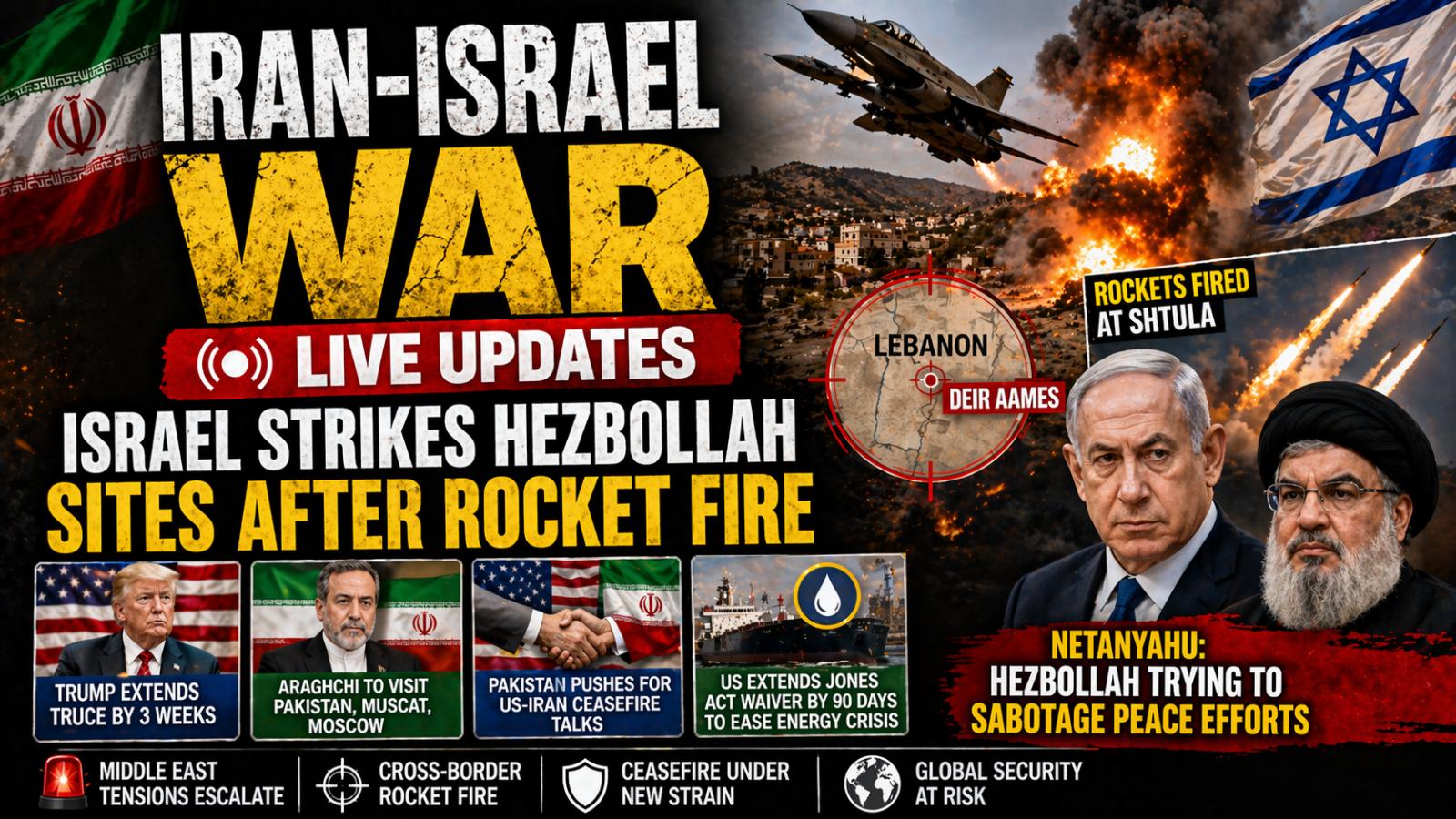
Netanyahu accuses Hezbollah of sabotaging Israel-Lebanon peace efforts
Israel strikes Hezbollah targets after rocket fire from Lebanon as tensions persist despite a truce extension, while diplomatic efforts and US energy measures reflect widening regional impact. Iran-Israel war live updates: Israel strikes Hezbollah sites after rocket fire as regional tensions escalated on Friday, April 24, 2026, with the Israeli military confirming strikes on Hezbollah-linked locations in southern Lebanon following cross-border rocket launches. The Israeli military stated that it targeted sites near the town of Deir Aames after rockets were fired toward the Israeli town of Shtula a day earlier. Deir Aames lies outside the designated border buffer zone that Israeli forces have continued to occupy even after a 10-day ceasefire agreement implemented the previous week. Earlier on Friday, April 24, 2026, the military issued evacuation warnings urging residents to leave the area before the strikes. The renewed hostilities come despite diplomatic efforts to maintain calm. U.S. President Donald Trump announced on Thursday, April 23, 2026, a three-week extension of the Israel-Hezbollah truce. However, both sides have continued intermittent exchanges of fire, raising concerns about the durability of the ceasefire. Israeli Prime Minister Benjamin Netanyahu accused Hezbollah of undermining peace efforts, stating on Friday, April 24, 2026, that the group was attempting to “sabotage” negotiations aimed at reaching a long-term agreement between Israel and Lebanon. His remarks marked his first public comments following the truce extension. Meanwhile, diplomatic activity continued across the region. Iranian Foreign Minister Abbas Araghchi said his upcoming visits to Islamabad, Muscat, and Moscow are intended to coordinate with regional partners and discuss evolving developments. While he did not directly address potential talks with the United States, officials in Pakistan have recently intensified efforts to facilitate renewed ceasefire negotiations between Washington and Tehran. In Washington, the White House announced an extension of a waiver to the Jones Act by 90 days on Friday, April 24, 2026. The measure is designed to ease domestic energy supply pressures amid disruptions linked to the broader West Asia conflict. Officials said the extension would help maintain the flow of oil and natural gas within the United States by allowing greater flexibility in maritime transport. The combination of military actions, diplomatic outreach, and economic measures underscores the widening impact of the conflict, with regional instability continuing to influence global security and energy markets.
Netanyahu accuses Hezbollah of sabotaging Israel-Lebanon peace efforts
Israel strikes Hezbollah targets after rocket fire from Lebanon as tensions persist despite a truce extension, while diplomatic efforts and US energy measures reflect widening regional impact. Iran-Israel war live updates: Israel strikes Hezbollah sites after rocket fire as regional tensions escalated on Friday, April 24, 2026, with the Israeli military confirming strikes on Hezbollah-linked locations in southern Lebanon following cross-border rocket launches. The Israeli military stated that it targeted sites near the town of Deir Aames after rockets were fired toward the Israeli town of Shtula a day earlier. Deir Aames lies outside the designated border buffer zone that Israeli forces have continued to occupy even after a 10-day ceasefire agreement implemented the previous week. Earlier on Friday, April 24, 2026, the military issued evacuation warnings urging residents to leave the area before the strikes. The renewed hostilities come despite diplomatic efforts to maintain calm. U.S. President Donald Trump announced on Thursday, April 23, 2026, a three-week extension of the Israel-Hezbollah truce. However, both sides have continued intermittent exchanges of fire, raising concerns about the durability of the ceasefire. Israeli Prime Minister Benjamin Netanyahu accused Hezbollah of undermining peace efforts, stating on Friday, April 24, 2026, that the group was attempting to “sabotage” negotiations aimed at reaching a long-term agreement between Israel and Lebanon. His remarks marked his first public comments following the truce extension. Meanwhile, diplomatic activity continued across the region. Iranian Foreign Minister Abbas Araghchi said his upcoming visits to Islamabad, Muscat, and Moscow are intended to coordinate with regional partners and discuss evolving developments. While he did not directly address potential talks with the United States, officials in Pakistan have recently intensified efforts to facilitate renewed ceasefire negotiations between Washington and Tehran. In Washington, the White House announced an extension of a waiver to the Jones Act by 90 days on Friday, April 24, 2026. The measure is designed to ease domestic energy supply pressures amid disruptions linked to the broader West Asia conflict. Officials said the extension would help maintain the flow of oil and natural gas within the United States by allowing greater flexibility in maritime transport. The combination of military actions, diplomatic outreach, and economic measures underscores the widening impact of the conflict, with regional instability continuing to influence global security and energy markets.
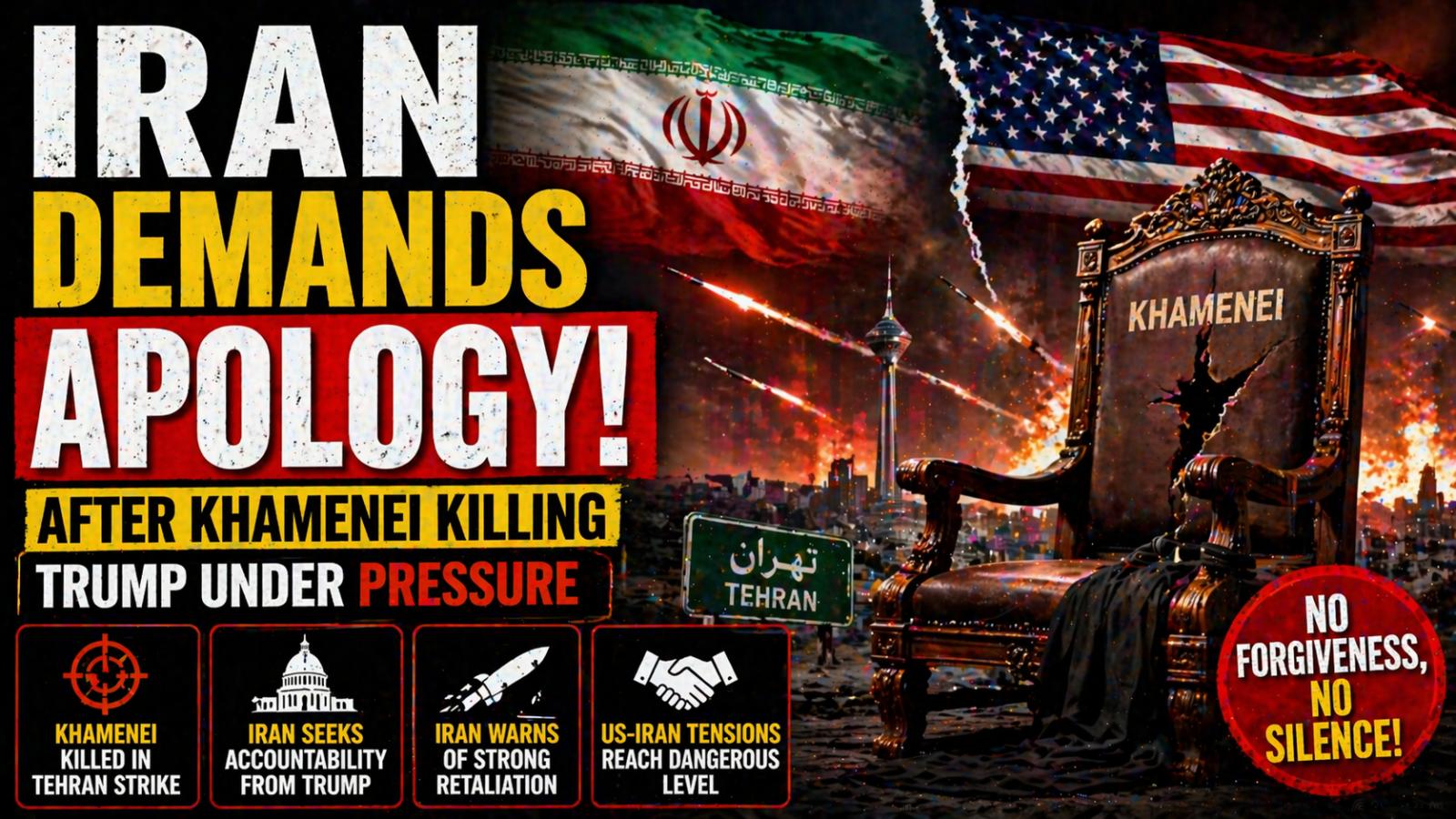
Why did Ali Shirazi demand an apology from Donald Trump? Iran seeks accountability after Khamenei killing
Escalating diplomatic tensions after Tehran strike Why did Ali Shirazi demand an apology from Donald Trump? Iran seeks accountability after Khamenei killing, as senior Iranian cleric Ali Shirazi called on U.S. President Donald Trump to publicly acknowledge wrongdoing following t
Why did Ali Shirazi demand an apology from Donald Trump? Iran seeks accountability after Khamenei killing
Escalating diplomatic tensions after Tehran strike Why did Ali Shirazi demand an apology from Donald Trump? Iran seeks accountability after Khamenei killing, as senior Iranian cleric Ali Shirazi called on U.S. President Donald Trump to publicly acknowledge wrongdoing following t
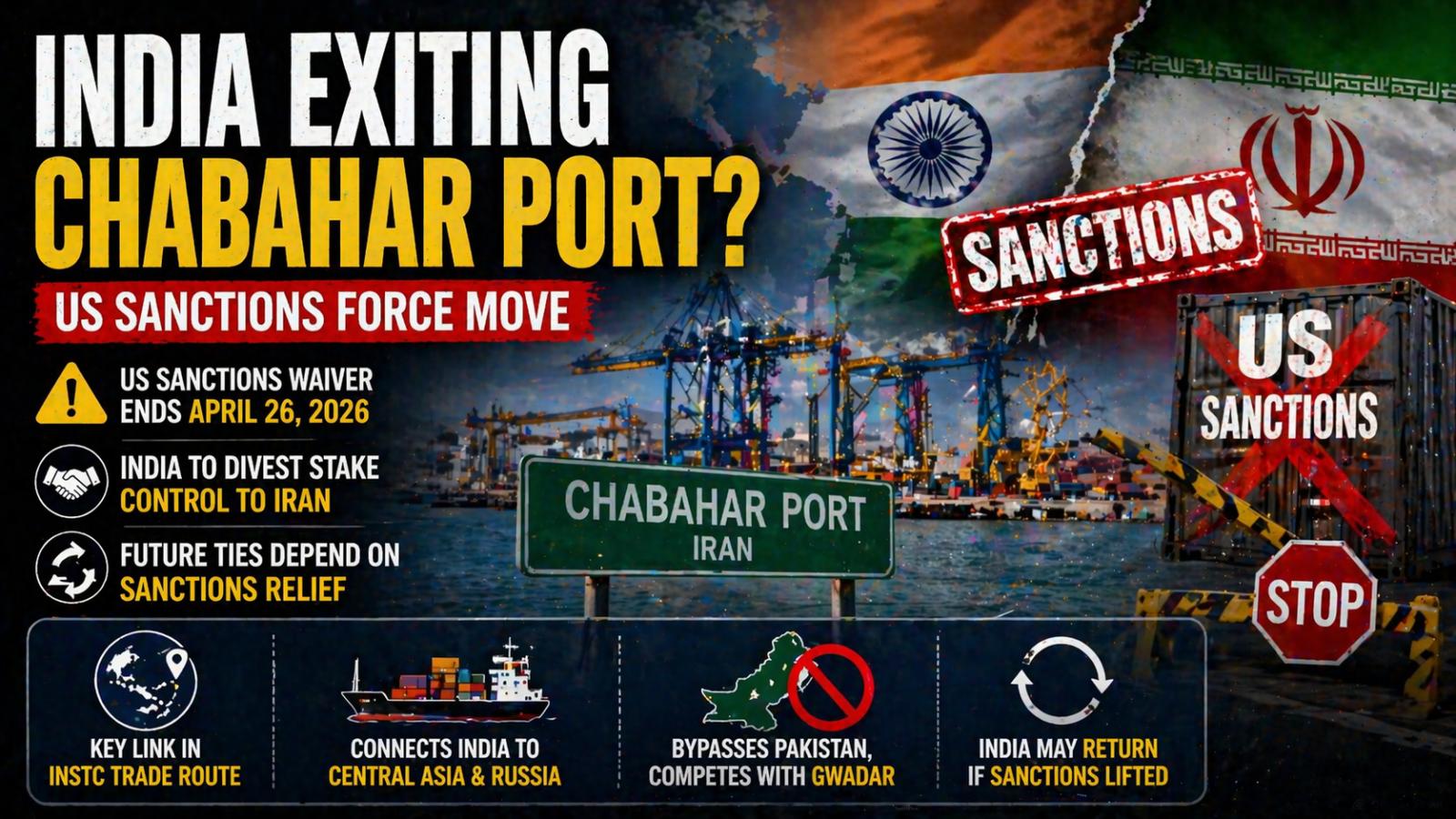
Why is India exiting Chabahar port? Government plans divestment amid US sanctions
Sanctions pressure drives India’s planned exit from Chabahar port Why is India exiting Chabahar port? Government plans divestment amid US sanctions as New Delhi prepares to step back from the strategic Iranian port ahead of the expiration of a US sanctions waiver on Sunday, April 26, 2026. The move is expected to transfer operational control to a local Iranian entity while preserving the possibility of India’s return if sanctions are lifted or a new waiver is g
Why is India exiting Chabahar port? Government plans divestment amid US sanctions
Sanctions pressure drives India’s planned exit from Chabahar port Why is India exiting Chabahar port? Government plans divestment amid US sanctions as New Delhi prepares to step back from the strategic Iranian port ahead of the expiration of a US sanctions waiver on Sunday, April 26, 2026. The move is expected to transfer operational control to a local Iranian entity while preserving the possibility of India’s return if sanctions are lifted or a new waiver is g

Porsche exits Bugatti Rimac joint venture in strategic stake sale
Porsche sells its Bugatti Rimac stake, marking a full exit and shift toward core operations amid global market challenges. Porsche exits Bugatti Rimac joint venture in strategic stake sale — Porsche AG has agreed to sell its 45% stake in the Bugatti Rimac joint venture, marking a full withdrawal from the high-performance electric hypercar venture as it sharpens focus on
Porsche exits Bugatti Rimac joint venture in strategic stake sale
Porsche sells its Bugatti Rimac stake, marking a full exit and shift toward core operations amid global market challenges. Porsche exits Bugatti Rimac joint venture in strategic stake sale — Porsche AG has agreed to sell its 45% stake in the Bugatti Rimac joint venture, marking a full withdrawal from the high-performance electric hypercar venture as it sharpens focus on
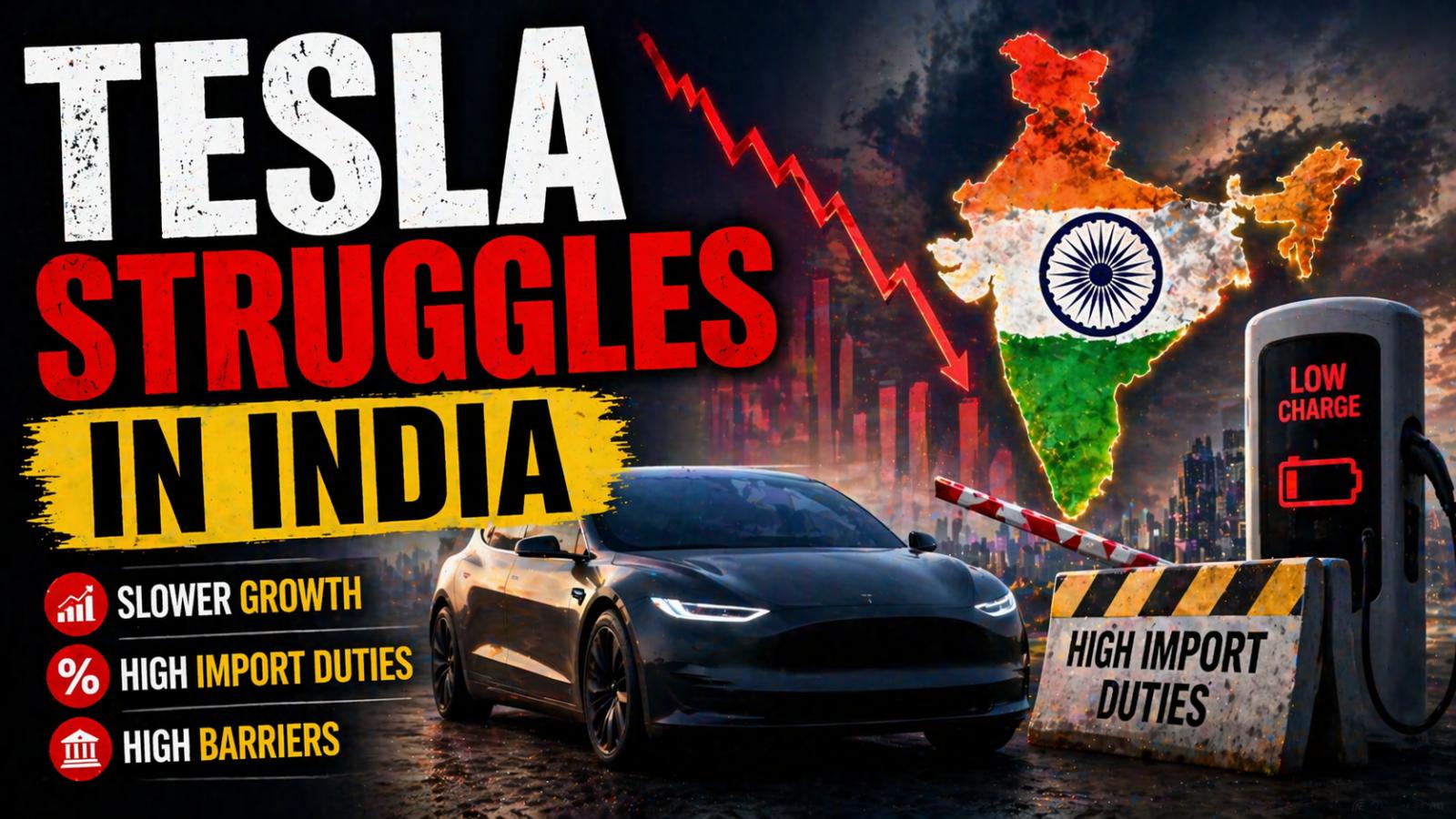
What challenges is Tesla facing in India? Market hurdles limit EV expansion
What challenges is Tesla facing in India? Market hurdles limit EV expansion India has emerged as the weakest new market globally for Tesla Inc, underscoring the structural and policy challenges facing the automaker led by Elon Musk despite rising demand for electric vehicles in
What challenges is Tesla facing in India? Market hurdles limit EV expansion
What challenges is Tesla facing in India? Market hurdles limit EV expansion India has emerged as the weakest new market globally for Tesla Inc, underscoring the structural and policy challenges facing the automaker led by Elon Musk despite rising demand for electric vehicles in
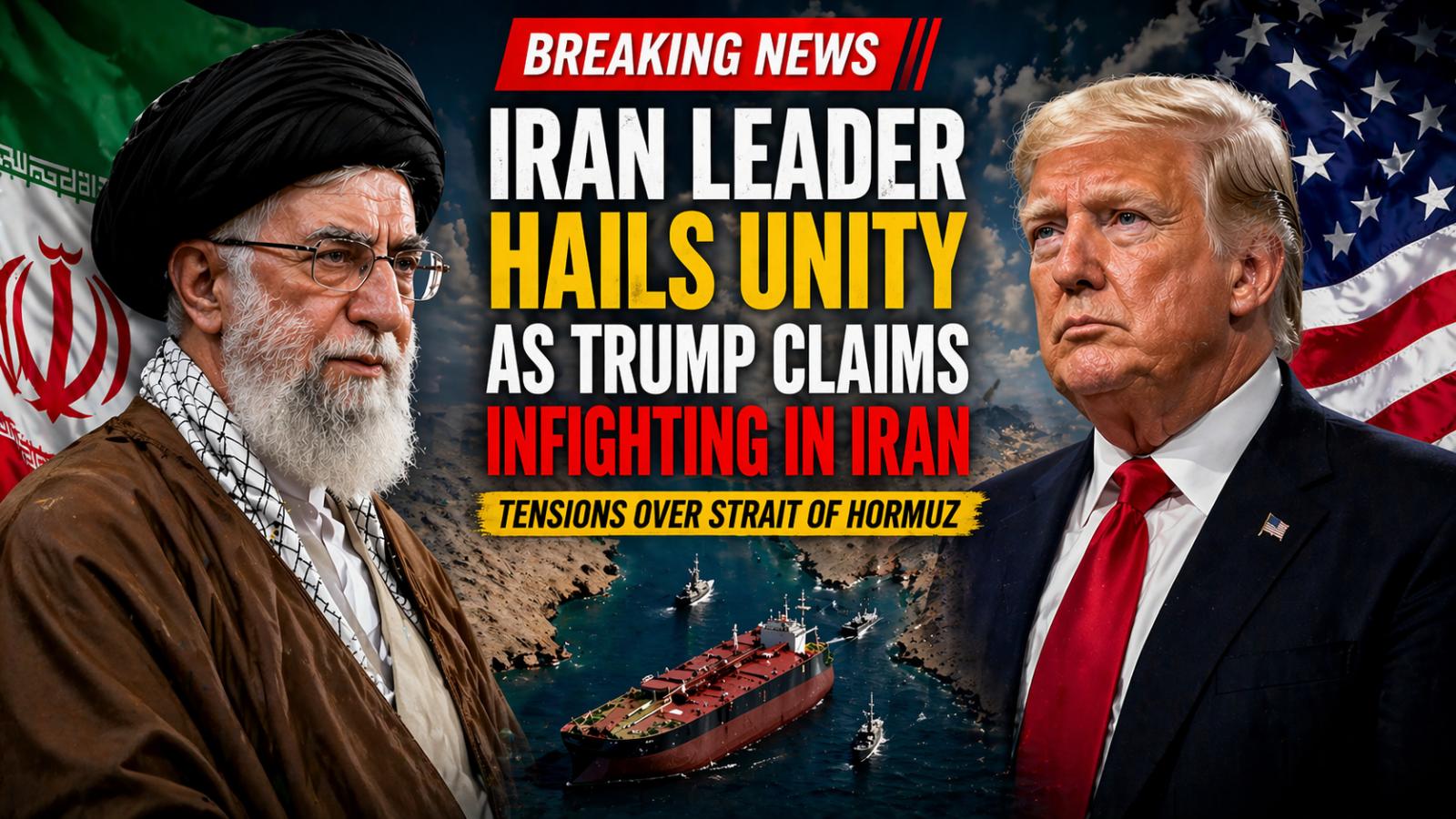
Khamenei Praises National Cohesion Amid Rising US-Iran Tensions
Mojtaba Khamenei has emphasized national unity in Iran, stating that collective cohesion among citizens has strengthened the country’s position amid ongoing tensions with the United States. In a public message, he described unity as a decisive factor in countering external pressure, urging continued commitment to national solidarity. Khamenei’s remarks come as
Khamenei Praises National Cohesion Amid Rising US-Iran Tensions
Mojtaba Khamenei has emphasized national unity in Iran, stating that collective cohesion among citizens has strengthened the country’s position amid ongoing tensions with the United States. In a public message, he described unity as a decisive factor in countering external pressure, urging continued commitment to national solidarity. Khamenei’s remarks come as
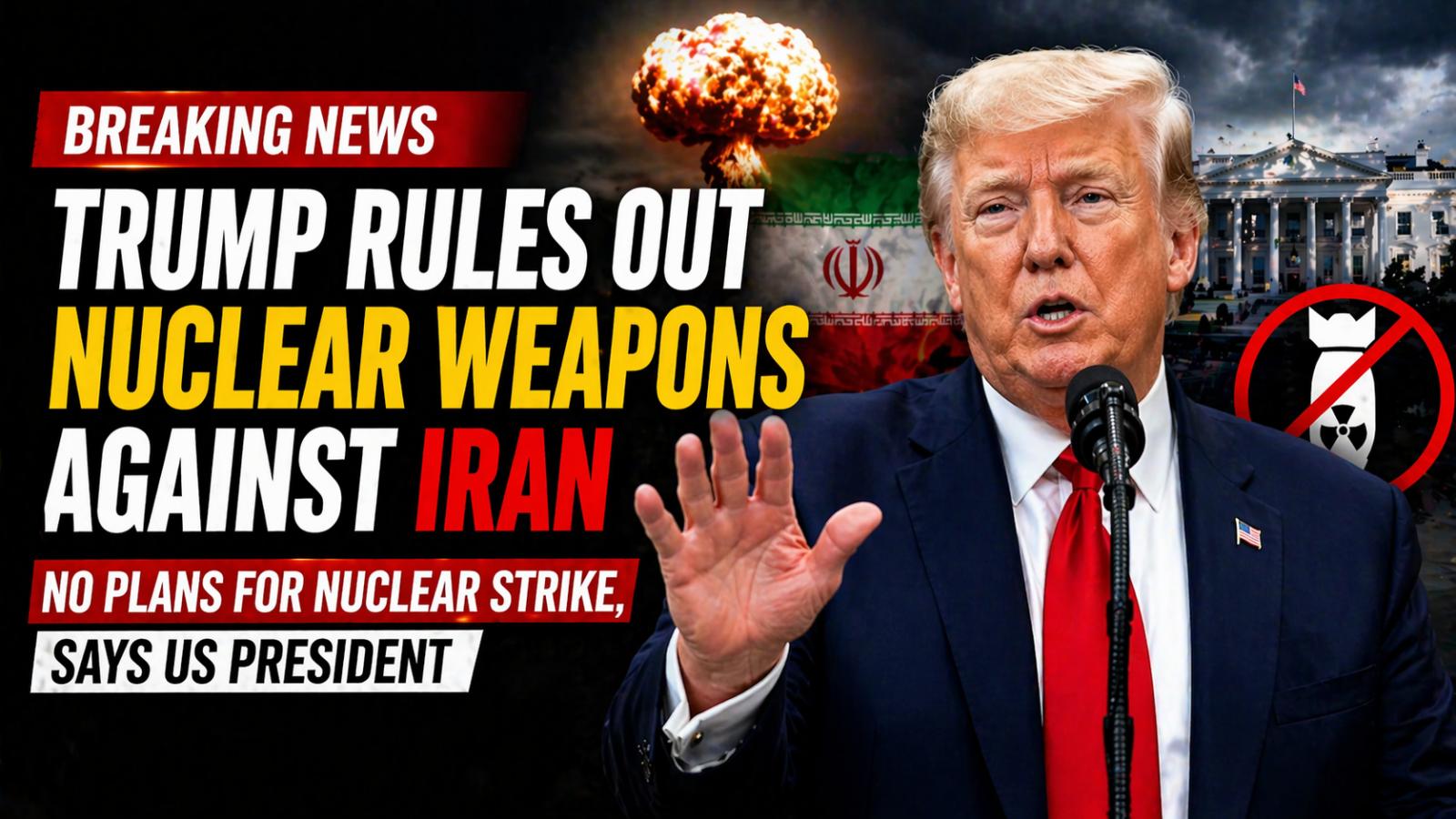
US President Says No Plans for Nuclear Strike on Iran
Donald Trump stated that the United States currently has no intention of using nuclear weapons against Iran, offering clarity on a key concern amid ongoing geopolitical tensions. Speaking to reporters at the White House, Trump emphasized that conventional military actions had already achieved significant results without the need for nuclear escalation. Addressing recent speculation, Trump said there was no justification for deploying nuclear weapons, noting that existing strategies had been effective. His remarks come after earlier statements that had drawn international attention, where strong rhetoric raised concerns about the potential use of extreme measures during the conflict that began earlier this year. The president reiterated that nuclear weapons should not be used by any nation, signaling a shift toward a more restrained public stance. At the same time, he underscored the administration’s objective of preventing Iran from developing nuclear capabilities that could pose a threat to regional and global security. Comments from senior officials have also contributed to the broader discussion. JD Vance had previously indicated that the United States was prepared to escalate its response if necessary, though the White House clarified that such remarks did not imply nuclear action. Trump’s latest statement appears to balance deterrence with reassurance, highlighting a focus on maintaining pressure through conventional means while avoiding the risks associated with nuclear engagement. As tensions persist, the administration continues to stress its commitment to preventing further escalation while safeguarding national interests and stability in the region.
US President Says No Plans for Nuclear Strike on Iran
Donald Trump stated that the United States currently has no intention of using nuclear weapons against Iran, offering clarity on a key concern amid ongoing geopolitical tensions. Speaking to reporters at the White House, Trump emphasized that conventional military actions had already achieved significant results without the need for nuclear escalation. Addressing recent speculation, Trump said there was no justification for deploying nuclear weapons, noting that existing strategies had been effective. His remarks come after earlier statements that had drawn international attention, where strong rhetoric raised concerns about the potential use of extreme measures during the conflict that began earlier this year. The president reiterated that nuclear weapons should not be used by any nation, signaling a shift toward a more restrained public stance. At the same time, he underscored the administration’s objective of preventing Iran from developing nuclear capabilities that could pose a threat to regional and global security. Comments from senior officials have also contributed to the broader discussion. JD Vance had previously indicated that the United States was prepared to escalate its response if necessary, though the White House clarified that such remarks did not imply nuclear action. Trump’s latest statement appears to balance deterrence with reassurance, highlighting a focus on maintaining pressure through conventional means while avoiding the risks associated with nuclear engagement. As tensions persist, the administration continues to stress its commitment to preventing further escalation while safeguarding national interests and stability in the region.
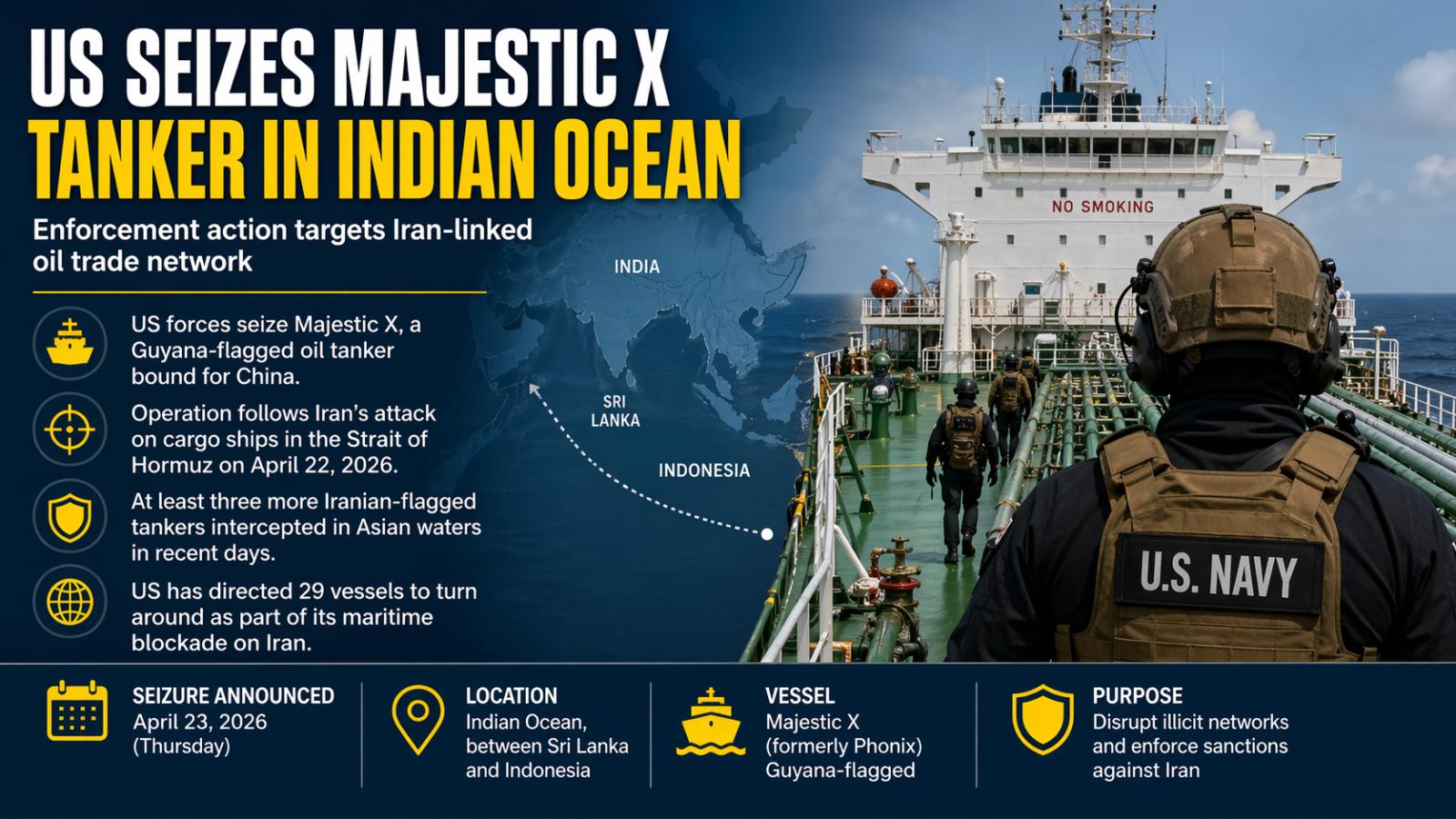
Why did the US intercept oil tankers? Enforcement targets Iran-linked shipping network
Seizure of Majestic X in Indian Ocean amid rising tensions The U.S. Department of Defense announced on Thursday, April 23, 2026, that it seized the oil tanker Majestic X in the Indian Ocean while it was en route to Zhoushan, China. Officials said the operation is part of ongoing maritime enforcement aimed at disrupting networks linked to Iranian oil exports in violation of U.S. sanctions. The Pentagon released video footage showing U.S. troops boarding a
Why did the US intercept oil tankers? Enforcement targets Iran-linked shipping network
Seizure of Majestic X in Indian Ocean amid rising tensions The U.S. Department of Defense announced on Thursday, April 23, 2026, that it seized the oil tanker Majestic X in the Indian Ocean while it was en route to Zhoushan, China. Officials said the operation is part of ongoing maritime enforcement aimed at disrupting networks linked to Iranian oil exports in violation of U.S. sanctions. The Pentagon released video footage showing U.S. troops boarding a
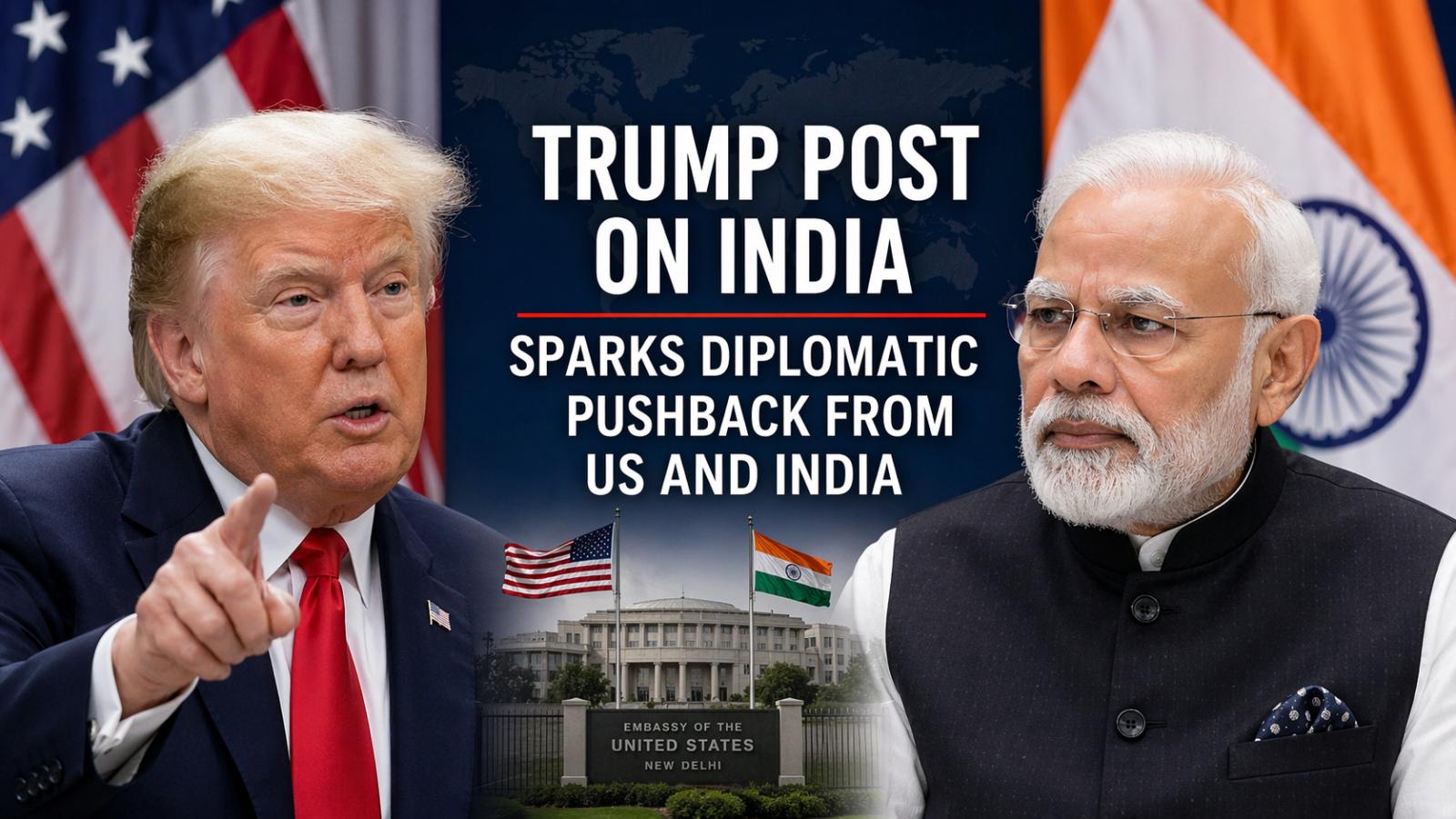
Trump post on India sparks diplomatic pushback from US and India
A controversial Trump post on India triggered diplomatic reactions from US and Indian officials, prompting efforts to reaffirm strong bilateral ties and address global political concerns. Trump post on India sparks diplomatic pushback from US and India — Hours after Donald Trump shared a social media post containing derogatory language about India, US officials moved sw
Trump post on India sparks diplomatic pushback from US and India
A controversial Trump post on India triggered diplomatic reactions from US and Indian officials, prompting efforts to reaffirm strong bilateral ties and address global political concerns. Trump post on India sparks diplomatic pushback from US and India — Hours after Donald Trump shared a social media post containing derogatory language about India, US officials moved sw
What does the Warner-Paramount merger approval mean? It moves a $111B deal closer to closing
Shareholder vote advances historic media consolidation Warner Bros. Discovery shareholders voted on Thursday, April 23, 2026, to approve a proposed sale of the company to Paramount, marking a major step toward finalizing one of the largest media mergers in recent history. According to preliminary results released the same day, a strong majority supported the $31-per-share offer, placing the total transaction value at nearly $111 billion, including debt. The vote signals significant investor backing for a deal that would reshape the structure of the global entertainment industry. Combined assets could redefine streaming and legacy media If completed, the merger would unite Warner’s portfolio — including HBO Max, CNN, and the Harry Potter franchise — with Paramount’s holdings such as CBS, Paramount+, and major film properties like Top Gun. The combined entity would bring together two of Hollywood’s remaining major studios while consolidating major streaming platforms under one corporate umbrella. Executives argue that the integration could deliver expanded content libraries and potentially streamline consumer offerings through unified services. Rival bids and shifting alliances shaped the outcome The path to shareholder approval followed months of intense competition and shifting strategies. Warner had previously rejected Paramount’s initial approach in favor of a $72 billion proposal from Netflix focused on studio and streaming assets. Paramount later pursued a direct appeal to shareholders with a broader acquisition plan, eventually increasing its bid. Netflix ultimately withdrew, allowing Paramount to secure board support and shareholder approval. Industry backlash and political scrutiny intensify Despite corporate backing, the merger has drawn strong opposition from industry professionals and policymakers. Thousands of actors, writers, and directors have warned that further consolidation could reduce job opportunities and limit creative diversity. U.S. Senator Cory Booker raised concerns during a recent hearing in Washington, questioning the broader implications for control over news and entertainment content. Regulatory agencies, including the Department of Justice, are continuing their review, with additional scrutiny expected from state and international authorities. Uncertainty remains over jobs, pricing, and editorial direction Paramount leadership has pledged to maintain theatrical releases and invest in film production, while also acknowledging the likelihood of cost-cutting measures, including layoffs. Analysts and critics caution that consolidation could lead to higher subscription costs and fewer content choices over time. Questions have also emerged regarding editorial direction at major news outlets like CNN and CBS, particularly as ownership changes intersect with political and financial influences. Warner has indicated the deal could close in the third fiscal quarter of 2026, pending regulatory approvals.
What does the Warner-Paramount merger approval mean? It moves a $111B deal closer to closing
Shareholder vote advances historic media consolidation Warner Bros. Discovery shareholders voted on Thursday, April 23, 2026, to approve a proposed sale of the company to Paramount, marking a major step toward finalizing one of the largest media mergers in recent history. According to preliminary results released the same day, a strong majority supported the $31-per-share offer, placing the total transaction value at nearly $111 billion, including debt. The vote signals significant investor backing for a deal that would reshape the structure of the global entertainment industry. Combined assets could redefine streaming and legacy media If completed, the merger would unite Warner’s portfolio — including HBO Max, CNN, and the Harry Potter franchise — with Paramount’s holdings such as CBS, Paramount+, and major film properties like Top Gun. The combined entity would bring together two of Hollywood’s remaining major studios while consolidating major streaming platforms under one corporate umbrella. Executives argue that the integration could deliver expanded content libraries and potentially streamline consumer offerings through unified services. Rival bids and shifting alliances shaped the outcome The path to shareholder approval followed months of intense competition and shifting strategies. Warner had previously rejected Paramount’s initial approach in favor of a $72 billion proposal from Netflix focused on studio and streaming assets. Paramount later pursued a direct appeal to shareholders with a broader acquisition plan, eventually increasing its bid. Netflix ultimately withdrew, allowing Paramount to secure board support and shareholder approval. Industry backlash and political scrutiny intensify Despite corporate backing, the merger has drawn strong opposition from industry professionals and policymakers. Thousands of actors, writers, and directors have warned that further consolidation could reduce job opportunities and limit creative diversity. U.S. Senator Cory Booker raised concerns during a recent hearing in Washington, questioning the broader implications for control over news and entertainment content. Regulatory agencies, including the Department of Justice, are continuing their review, with additional scrutiny expected from state and international authorities. Uncertainty remains over jobs, pricing, and editorial direction Paramount leadership has pledged to maintain theatrical releases and invest in film production, while also acknowledging the likelihood of cost-cutting measures, including layoffs. Analysts and critics caution that consolidation could lead to higher subscription costs and fewer content choices over time. Questions have also emerged regarding editorial direction at major news outlets like CNN and CBS, particularly as ownership changes intersect with political and financial influences. Warner has indicated the deal could close in the third fiscal quarter of 2026, pending regulatory approvals.
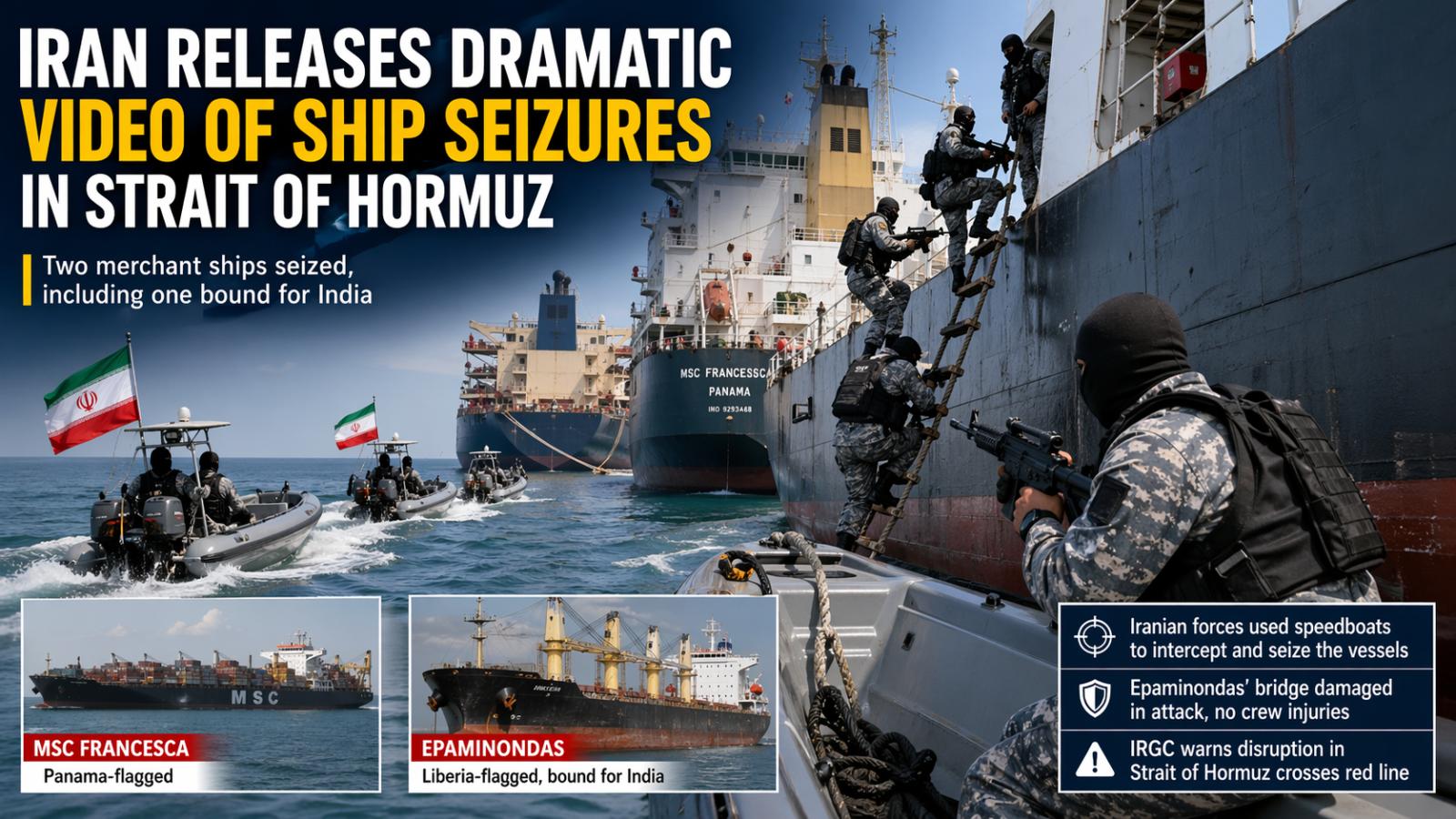
Iran releases dramatic video of ship seizures in Strait of Hormuz
Iran released footage of naval forces seizing two merchant ships in the Strait of Hormuz, including an India-bound vessel, intensifying regional tensions and raising global shipping concerns. Iranian authorities released a dramatic video on Thursday, April 23, 2026, a day after naval forces seized two merchant vessels in the strategically critical Strait of Hormuz, including one ship bound for India. The footage shows masked commandos in speedboats pursuing the vessels, boarding them, and taking control in an operation that underscores escalating tensions in the region. The seizures occurred on Wednesday, April 22, 2026, shortly after U.S. President Donald Trump announced an extension of a ceasefire. Iranian naval units intercepted the Panama-flagged MSC Francesca and the Liberia-flagged Epaminondas, the latter traveling from Dubai to Mundra Port in Gujarat, India. Both ships were escorted to Iranian waters, marking Tehran’s first such action since the latest conflict began. The released footage shows fast-moving boats approaching the vessels, with armed personnel boarding and conducting searches. U.S. officials attributed the operation to Iran’s “mosquito fleet,” small, agile craft associated with the Islamic Revolutionary Guard Corps. Commandos are seen climbing ladders, sweeping through decks, and entering critical areas such as engine rooms to secure control. The Epaminondas sustained damage to its bridge after Iranian forces reportedly opened fire and used grenades during the boarding. Despite the intensity of the operation, no crew injuries were reported. The MSC Francesca, located about six miles off Iran’s coast, also came under heavy fire during the seizure. Iranian officials stated the vessels lacked proper authorization and had interfered with navigation systems, posing a threat to maritime safety in the Strait of Hormuz. Authorities warned that disruptions in the waterway would be treated as a serious violation.The incident follows a recent U.S. operation targeting an Iranian-linked vessel accused of breaching a maritime blockade. Analysts view the seizures as a potential retaliatory move, raising concerns about further escalation in one of the world’s most vital shipping corridors. The involvement of an India-bound vessel may also complicate diplomatic relations between Tehran and New Delhi as tensions continue to rise.
Iran releases dramatic video of ship seizures in Strait of Hormuz
Iran released footage of naval forces seizing two merchant ships in the Strait of Hormuz, including an India-bound vessel, intensifying regional tensions and raising global shipping concerns. Iranian authorities released a dramatic video on Thursday, April 23, 2026, a day after naval forces seized two merchant vessels in the strategically critical Strait of Hormuz, including one ship bound for India. The footage shows masked commandos in speedboats pursuing the vessels, boarding them, and taking control in an operation that underscores escalating tensions in the region. The seizures occurred on Wednesday, April 22, 2026, shortly after U.S. President Donald Trump announced an extension of a ceasefire. Iranian naval units intercepted the Panama-flagged MSC Francesca and the Liberia-flagged Epaminondas, the latter traveling from Dubai to Mundra Port in Gujarat, India. Both ships were escorted to Iranian waters, marking Tehran’s first such action since the latest conflict began. The released footage shows fast-moving boats approaching the vessels, with armed personnel boarding and conducting searches. U.S. officials attributed the operation to Iran’s “mosquito fleet,” small, agile craft associated with the Islamic Revolutionary Guard Corps. Commandos are seen climbing ladders, sweeping through decks, and entering critical areas such as engine rooms to secure control. The Epaminondas sustained damage to its bridge after Iranian forces reportedly opened fire and used grenades during the boarding. Despite the intensity of the operation, no crew injuries were reported. The MSC Francesca, located about six miles off Iran’s coast, also came under heavy fire during the seizure. Iranian officials stated the vessels lacked proper authorization and had interfered with navigation systems, posing a threat to maritime safety in the Strait of Hormuz. Authorities warned that disruptions in the waterway would be treated as a serious violation.The incident follows a recent U.S. operation targeting an Iranian-linked vessel accused of breaching a maritime blockade. Analysts view the seizures as a potential retaliatory move, raising concerns about further escalation in one of the world’s most vital shipping corridors. The involvement of an India-bound vessel may also complicate diplomatic relations between Tehran and New Delhi as tensions continue to rise.
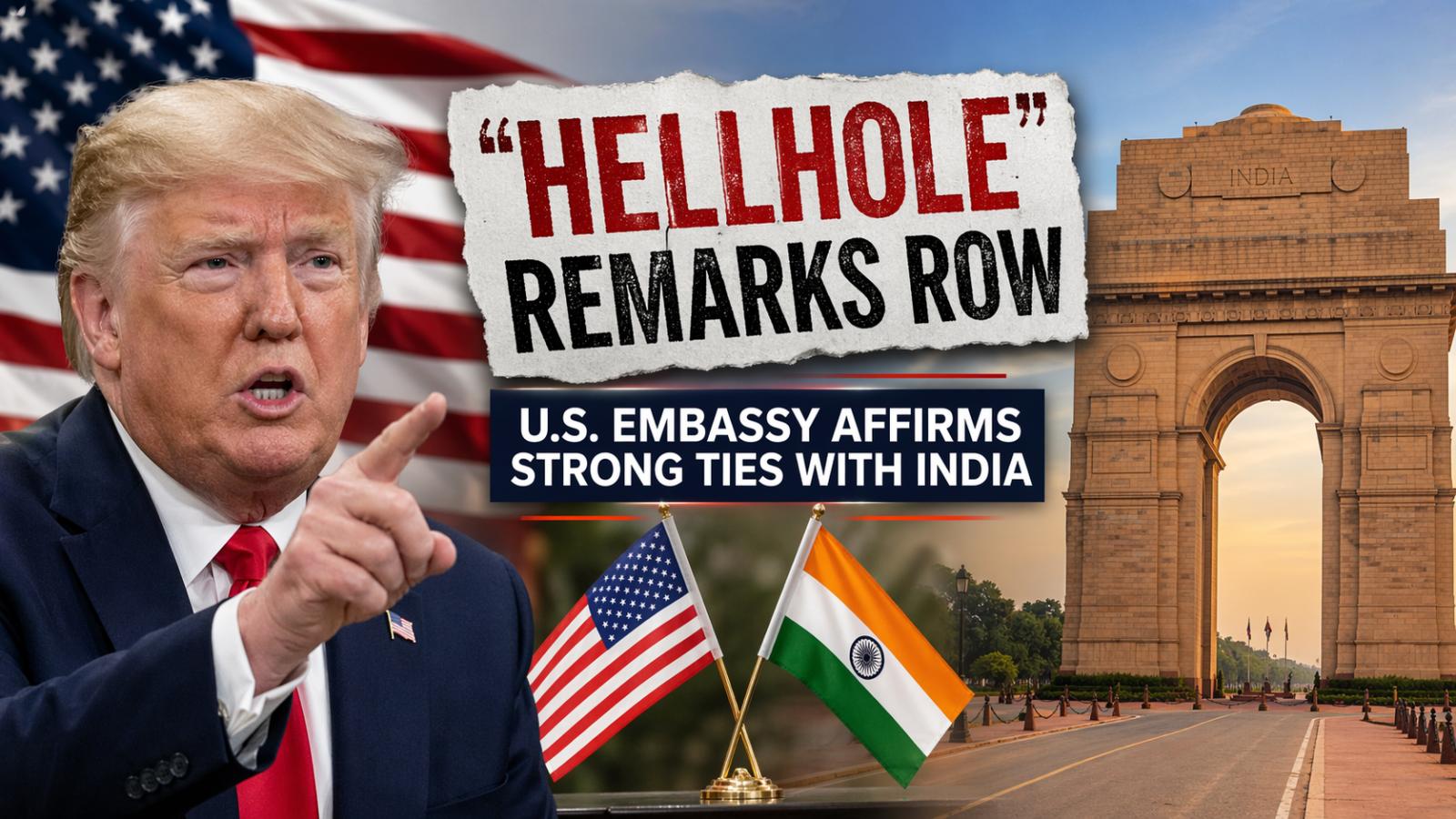
How did Washington respond to Trump controversy? Embassy reaffirmed India ties
Trump repost triggers diplomatic unease between US and India A social media post by Donald Trump has drawn criticism in India after he amplified remarks from a podcast that described the country in derogatory terms. The controversy prompted a swift response from U.S. officials seeking to stabilize diplomatic messaging and reaffirm bilateral ties. Podcast remarks by Michael Savage ignite backlash The controversy stems from comments made by American radio host Michael Savage, who, during an episode of his “Savage Nation” podcast, criticized U.S. birthright citizenship policies. In his remarks, Savage grouped India and China among nations he labeled negatively while arguing that immigration policies are being exploited. Trump reposted both a transcript and video clip of the segment, bringing wider attention to the remarks. The repost quickly circulated online, triggering criticism in India and raising concerns about its potential impact on U.S.-India relations. US Embassy reiterates strong bilateral partnership In response, the U.S. Embassy in India issued a statement emphasizing the strength of ties between Washington and New Delhi. A spokesperson clarified that Trump has previously described India as “a great country” and referred to its leadership in positive terms, signaling an effort to contain diplomatic fallout. India responds cautiously through official channels India’s Ministry of External Affairs reacted with measured restraint. Spokesperson Randhir Jaiswal acknowledged awareness of the reports but declined to elaborate further, reflecting a cautious diplomatic approach while avoiding escalation. Broader debate on immigration fuels controversy Savage’s podcast remarks were part of a broader critique of U.S. immigration law, particularly the principle of granting citizenship to children born in the country regardless of parental status. He argued that the system is vulnerable to misuse, specifically referencing immigrants from Asian countries. The episode also included criticism of the U.S. Supreme Court’s role in shaping birthright citizenship policy and called for a national referendum on the issue. However, the language used in describing immigrants and foreign nations drew widespread condemnation, shifting focus from policy debate to diplomatic sensitivity. The incident highlights how political messaging and media amplification can quickly influence international relations, particularly between longstanding partners like the United States and India.
How did Washington respond to Trump controversy? Embassy reaffirmed India ties
Trump repost triggers diplomatic unease between US and India A social media post by Donald Trump has drawn criticism in India after he amplified remarks from a podcast that described the country in derogatory terms. The controversy prompted a swift response from U.S. officials seeking to stabilize diplomatic messaging and reaffirm bilateral ties. Podcast remarks by Michael Savage ignite backlash The controversy stems from comments made by American radio host Michael Savage, who, during an episode of his “Savage Nation” podcast, criticized U.S. birthright citizenship policies. In his remarks, Savage grouped India and China among nations he labeled negatively while arguing that immigration policies are being exploited. Trump reposted both a transcript and video clip of the segment, bringing wider attention to the remarks. The repost quickly circulated online, triggering criticism in India and raising concerns about its potential impact on U.S.-India relations. US Embassy reiterates strong bilateral partnership In response, the U.S. Embassy in India issued a statement emphasizing the strength of ties between Washington and New Delhi. A spokesperson clarified that Trump has previously described India as “a great country” and referred to its leadership in positive terms, signaling an effort to contain diplomatic fallout. India responds cautiously through official channels India’s Ministry of External Affairs reacted with measured restraint. Spokesperson Randhir Jaiswal acknowledged awareness of the reports but declined to elaborate further, reflecting a cautious diplomatic approach while avoiding escalation. Broader debate on immigration fuels controversy Savage’s podcast remarks were part of a broader critique of U.S. immigration law, particularly the principle of granting citizenship to children born in the country regardless of parental status. He argued that the system is vulnerable to misuse, specifically referencing immigrants from Asian countries. The episode also included criticism of the U.S. Supreme Court’s role in shaping birthright citizenship policy and called for a national referendum on the issue. However, the language used in describing immigrants and foreign nations drew widespread condemnation, shifting focus from policy debate to diplomatic sensitivity. The incident highlights how political messaging and media amplification can quickly influence international relations, particularly between longstanding partners like the United States and India.
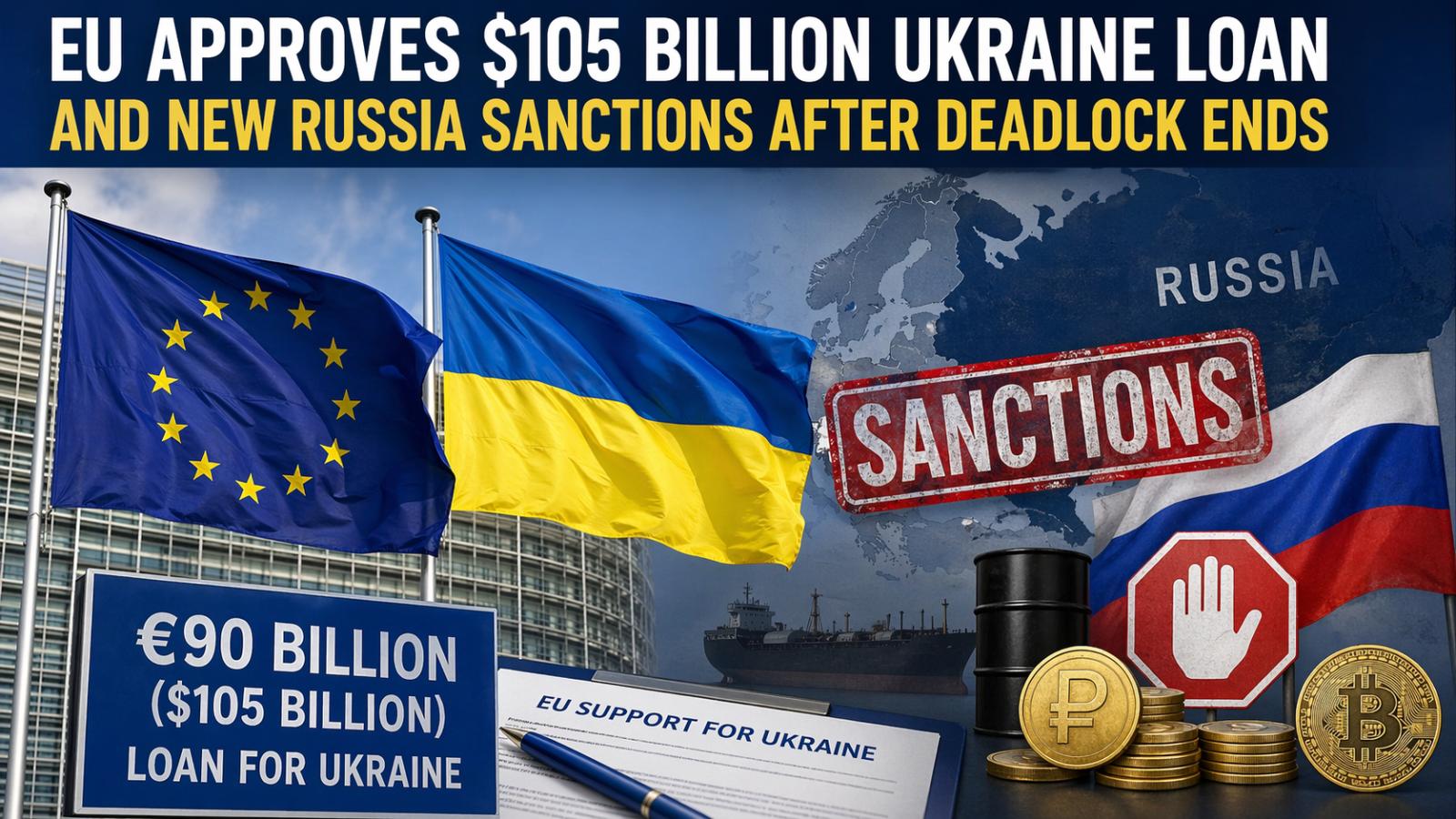
EU approves $105 billion Ukraine loan and new Russia sanctions after deadlock ends
EU approves major Ukraine aid and new Russia sanctions after resolving internal disputes, strengthening Kyiv’s position and increasing pressure on Moscow amid ongoing war. EU approves $105 billion Ukraine loan and new Russia sanctions after deadlock ends. The European Union on Thursday, April 23, 2026, granted final approval to a €90 billion ($105 billion) loan for Ukraine and endorsed a new round of sanctions against Russia, marking a significant shift
EU approves $105 billion Ukraine loan and new Russia sanctions after deadlock ends
EU approves major Ukraine aid and new Russia sanctions after resolving internal disputes, strengthening Kyiv’s position and increasing pressure on Moscow amid ongoing war. EU approves $105 billion Ukraine loan and new Russia sanctions after deadlock ends. The European Union on Thursday, April 23, 2026, granted final approval to a €90 billion ($105 billion) loan for Ukraine and endorsed a new round of sanctions against Russia, marking a significant shift
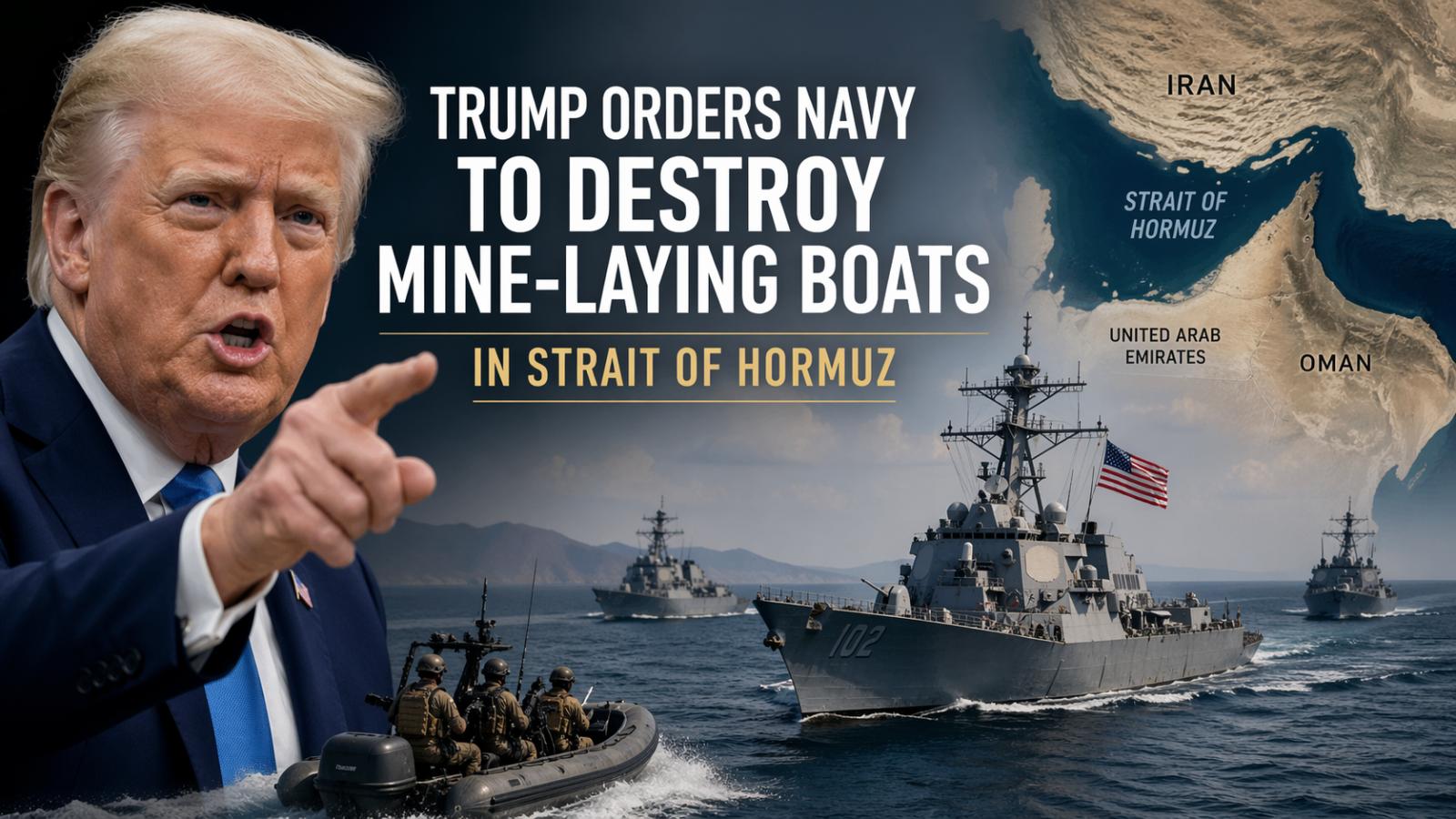
Trump orders Navy to destroy mine-laying boats in Strait of Hormuz
President Trump orders US Navy to target mine-laying boats in Strait of Hormuz, escalating Gulf tensions and raising concerns over maritime security and global oil shipping stability.
Trump orders Navy to destroy mine-laying boats in Strait of Hormuz
President Trump orders US Navy to target mine-laying boats in Strait of Hormuz, escalating Gulf tensions and raising concerns over maritime security and global oil shipping stability.
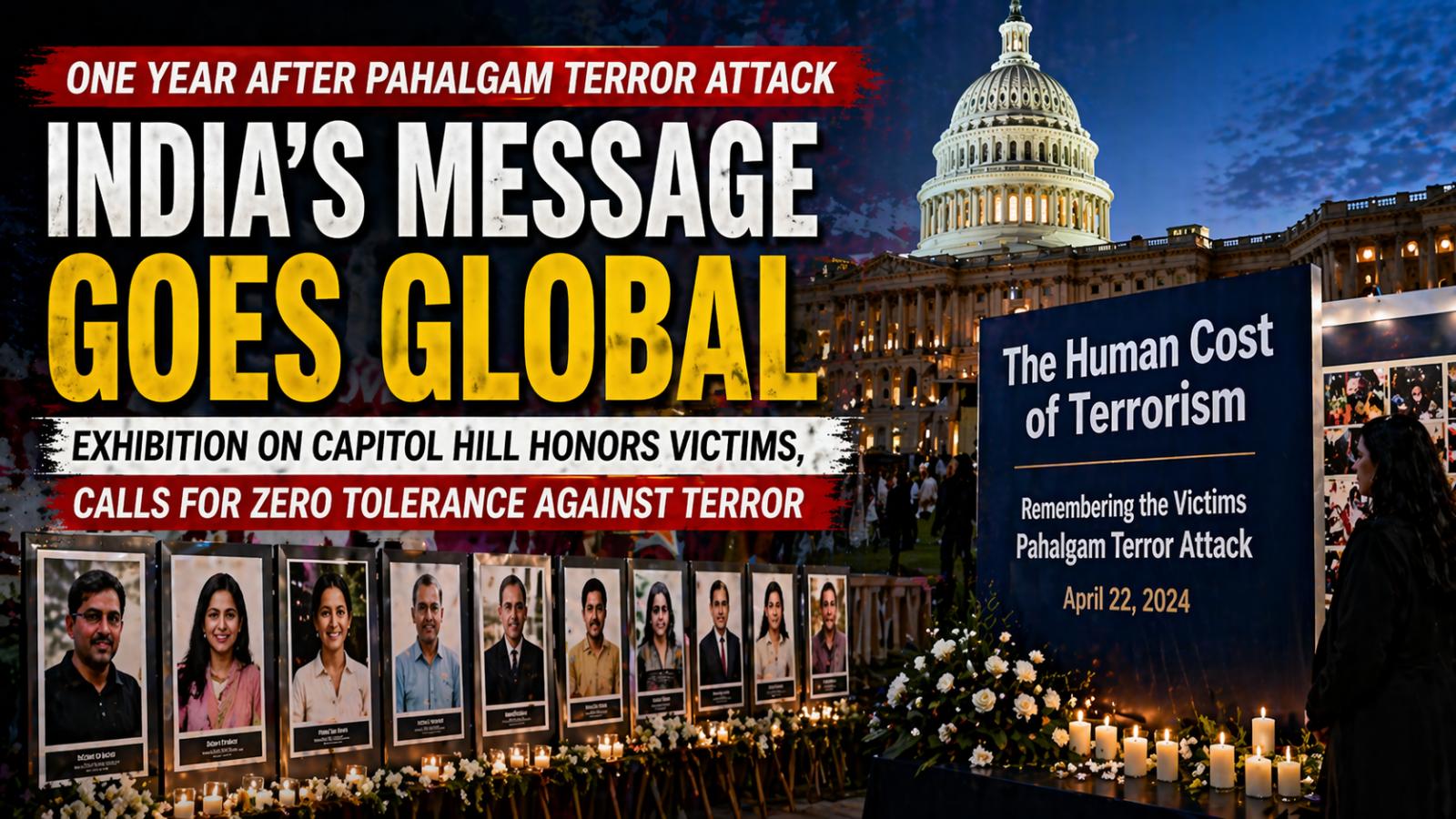
Pahalgam Victims Honored at Capitol Hill Exhibition on Terror Impact
One year after the deadly attack in Pahalgam, India has taken its message on terrorism to a global stage through an exhibition at Capitol Hill in Washington, organized by the Embassy of India, Washington, D.C.. The event, titled “The Human Cost of Terrorism,” was held to commemorate the victims and highlight the lasting impact of violence on civilians. The attack, which took place on Ap
Pahalgam Victims Honored at Capitol Hill Exhibition on Terror Impact
One year after the deadly attack in Pahalgam, India has taken its message on terrorism to a global stage through an exhibition at Capitol Hill in Washington, organized by the Embassy of India, Washington, D.C.. The event, titled “The Human Cost of Terrorism,” was held to commemorate the victims and highlight the lasting impact of violence on civilians. The attack, which took place on Ap
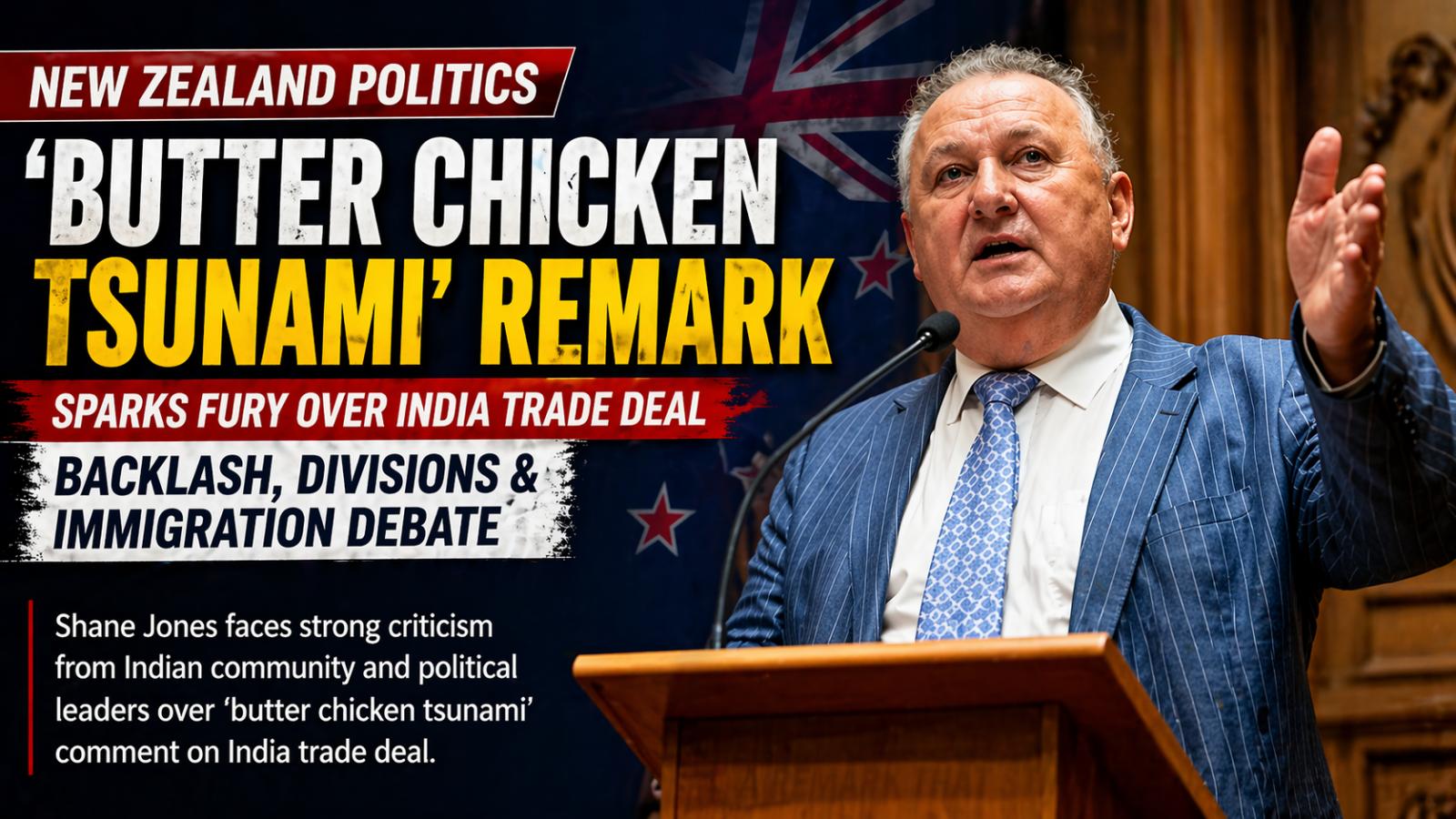
“Butter Chicken Tsunami” Comment Triggers Debate Over Immigration and Trade
Comments by New Zealand lawmaker Shane Jones have sparked criticism from the Indian community and political leaders, highlighting tensions within the ruling coalition over immigration and a proposed trade agreement with India. Jones referred to the potential deal as a “butter chicken tsunami” during a radio interview, a remark that quickly drew backlash across political and community circles. Prime Minister Christopher Luxon described the statement as unhelpful but stopped short of labeling it discriminatory. The proposed agreement between New Zealand and India is already facing political hurdles, as Jones’s party, New Zealand First, has voiced opposition. This stance could force the governing party to seek support from the opposition Labour Party to secure parliamentary approval. Jones defended his position by raising concerns about immigration, arguing that unrestricted inflows could impact wages, infrastructure, and public services. His remarks have reignited broader debates about immigration policy and economic priorities, especially as the country navigates its trade relationships. Community leaders expressed strong concern over the tone of the comments. Representatives from Indian associations emphasized the contributions of Indians, who form one of the largest ethnic groups in the country. They argued that such rhetoric risks undermining social cohesion and creating unnecessary divisions within a multicultural society. The controversy has also drawn reactions from political opponents. Labour leader Chris Hipkins criticized the remarks, calling for more responsible discourse from public officials. Business representatives echoed similar sentiments, suggesting that policymakers should focus on constructive dialogue rather than rhetoric that could damage bilateral ties. Jones later acknowledged that colleagues had advised him to moderate his language, though he maintained that his comments were intended to emphasize concerns. As debate continues, the episode underscores the challenges facing New Zealand’s leadership in balancing trade ambitions, immigration policy, and maintaining unity within a diverse population.
“Butter Chicken Tsunami” Comment Triggers Debate Over Immigration and Trade
Comments by New Zealand lawmaker Shane Jones have sparked criticism from the Indian community and political leaders, highlighting tensions within the ruling coalition over immigration and a proposed trade agreement with India. Jones referred to the potential deal as a “butter chicken tsunami” during a radio interview, a remark that quickly drew backlash across political and community circles. Prime Minister Christopher Luxon described the statement as unhelpful but stopped short of labeling it discriminatory. The proposed agreement between New Zealand and India is already facing political hurdles, as Jones’s party, New Zealand First, has voiced opposition. This stance could force the governing party to seek support from the opposition Labour Party to secure parliamentary approval. Jones defended his position by raising concerns about immigration, arguing that unrestricted inflows could impact wages, infrastructure, and public services. His remarks have reignited broader debates about immigration policy and economic priorities, especially as the country navigates its trade relationships. Community leaders expressed strong concern over the tone of the comments. Representatives from Indian associations emphasized the contributions of Indians, who form one of the largest ethnic groups in the country. They argued that such rhetoric risks undermining social cohesion and creating unnecessary divisions within a multicultural society. The controversy has also drawn reactions from political opponents. Labour leader Chris Hipkins criticized the remarks, calling for more responsible discourse from public officials. Business representatives echoed similar sentiments, suggesting that policymakers should focus on constructive dialogue rather than rhetoric that could damage bilateral ties. Jones later acknowledged that colleagues had advised him to moderate his language, though he maintained that his comments were intended to emphasize concerns. As debate continues, the episode underscores the challenges facing New Zealand’s leadership in balancing trade ambitions, immigration policy, and maintaining unity within a diverse population.
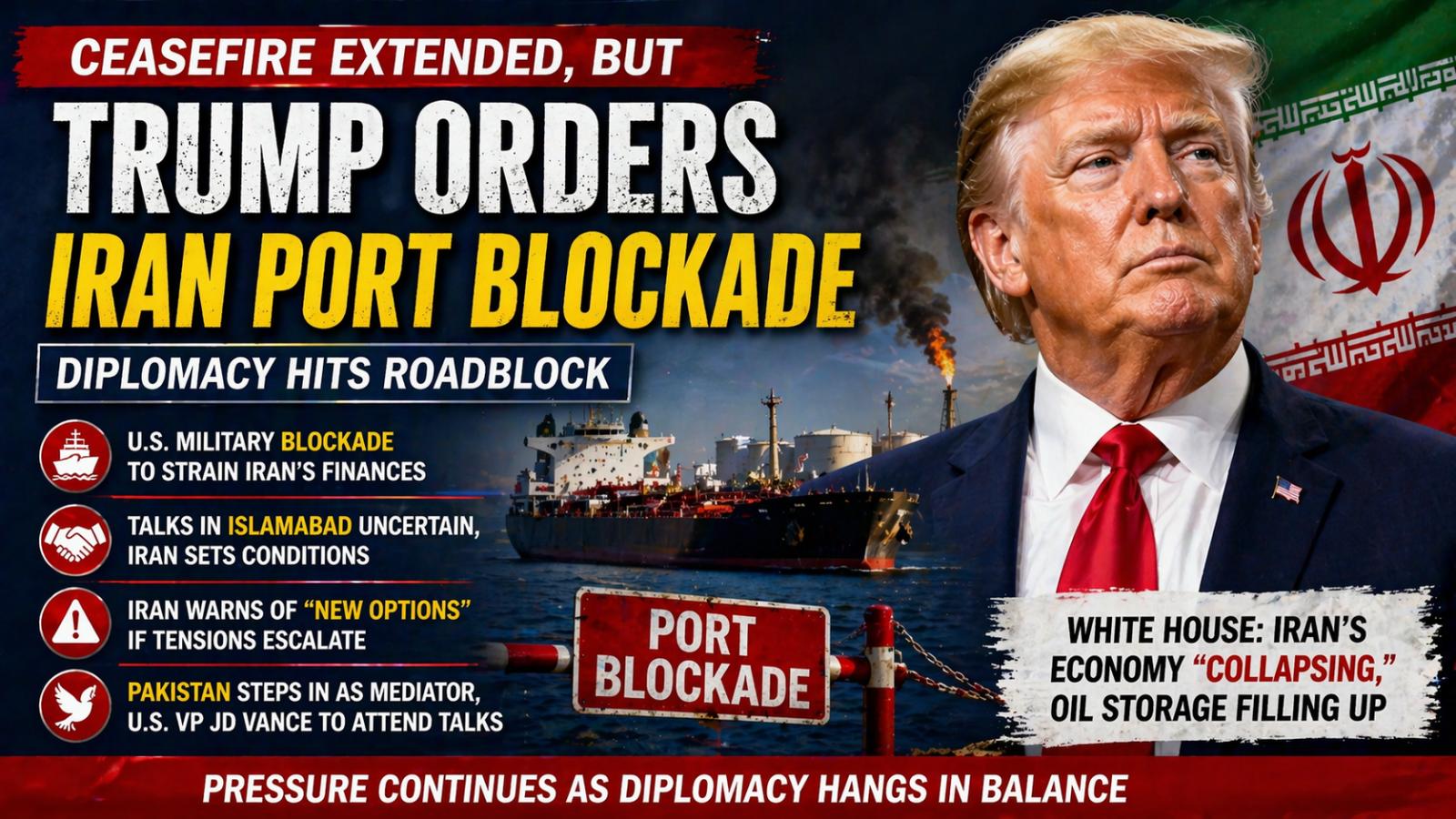
US Maintains Pressure on Iran as Talks Remain Uncertain Amid Ceasefire
The United States has maintained pressure on Iran despite a formal agreement to extend a ceasefire aimed at creating space for diplomacy. President Donald Trump has ordered the continuation of a military blockade targeting Iranian ports, a move designed to restrict Tehran’s financial resources. The administration has indicated that Iran’s economy is under significant strain, citing limited cash reserves and increasing pressure on oil storage facilities, particularly at Kharg Island. While the ceasefire extension was initially viewed as an opportunity to advance negotiations, diplomatic progress remains uncertain. Reports of a possible summit in Islamabad have been challenged by Iranian officials, who state that no delegation has departed for Pakistan. Iranian state authorities have dismissed claims of imminent talks, emphasizing that key preconditions have not been met. Tehran has maintained that any formal negotiations would require a complete halt to Israeli military actions in Lebanon. Without such assurances, Iranian leaders have expressed reluctance to engage in further discussions. Officials have also accused the United States of pursuing a strategy focused on coercion rather than constructive dialogue, raising concerns about the credibility of ongoing diplomatic efforts. Senior Iranian figures have issued strong warnings about the potential consequences of continued pressure. Parliamentary speaker Mohammad Baqer Ghalibaf suggested that Iran could explore alternative responses if tensions escalate further. Foreign Minister Abbas Araghchi criticized what he described as repeated violations of the ceasefire, while President Masoud Pezeshkian underscored the importance of trust and consistency in any negotiation process. Pakistan has emerged as a potential mediator, preparing to host talks in Islamabad in an effort to bridge differences between the two sides. The United States is expected to send Vice President JD Vance to participate in discussions, although Iran has yet to confirm its involvement. As both diplomatic and military dynamics continue to unfold, the path toward resolution remains uncertain.
US Maintains Pressure on Iran as Talks Remain Uncertain Amid Ceasefire
The United States has maintained pressure on Iran despite a formal agreement to extend a ceasefire aimed at creating space for diplomacy. President Donald Trump has ordered the continuation of a military blockade targeting Iranian ports, a move designed to restrict Tehran’s financial resources. The administration has indicated that Iran’s economy is under significant strain, citing limited cash reserves and increasing pressure on oil storage facilities, particularly at Kharg Island. While the ceasefire extension was initially viewed as an opportunity to advance negotiations, diplomatic progress remains uncertain. Reports of a possible summit in Islamabad have been challenged by Iranian officials, who state that no delegation has departed for Pakistan. Iranian state authorities have dismissed claims of imminent talks, emphasizing that key preconditions have not been met. Tehran has maintained that any formal negotiations would require a complete halt to Israeli military actions in Lebanon. Without such assurances, Iranian leaders have expressed reluctance to engage in further discussions. Officials have also accused the United States of pursuing a strategy focused on coercion rather than constructive dialogue, raising concerns about the credibility of ongoing diplomatic efforts. Senior Iranian figures have issued strong warnings about the potential consequences of continued pressure. Parliamentary speaker Mohammad Baqer Ghalibaf suggested that Iran could explore alternative responses if tensions escalate further. Foreign Minister Abbas Araghchi criticized what he described as repeated violations of the ceasefire, while President Masoud Pezeshkian underscored the importance of trust and consistency in any negotiation process. Pakistan has emerged as a potential mediator, preparing to host talks in Islamabad in an effort to bridge differences between the two sides. The United States is expected to send Vice President JD Vance to participate in discussions, although Iran has yet to confirm its involvement. As both diplomatic and military dynamics continue to unfold, the path toward resolution remains uncertain.