India Japan summit 2026 reshapes Indo Pacific alignment
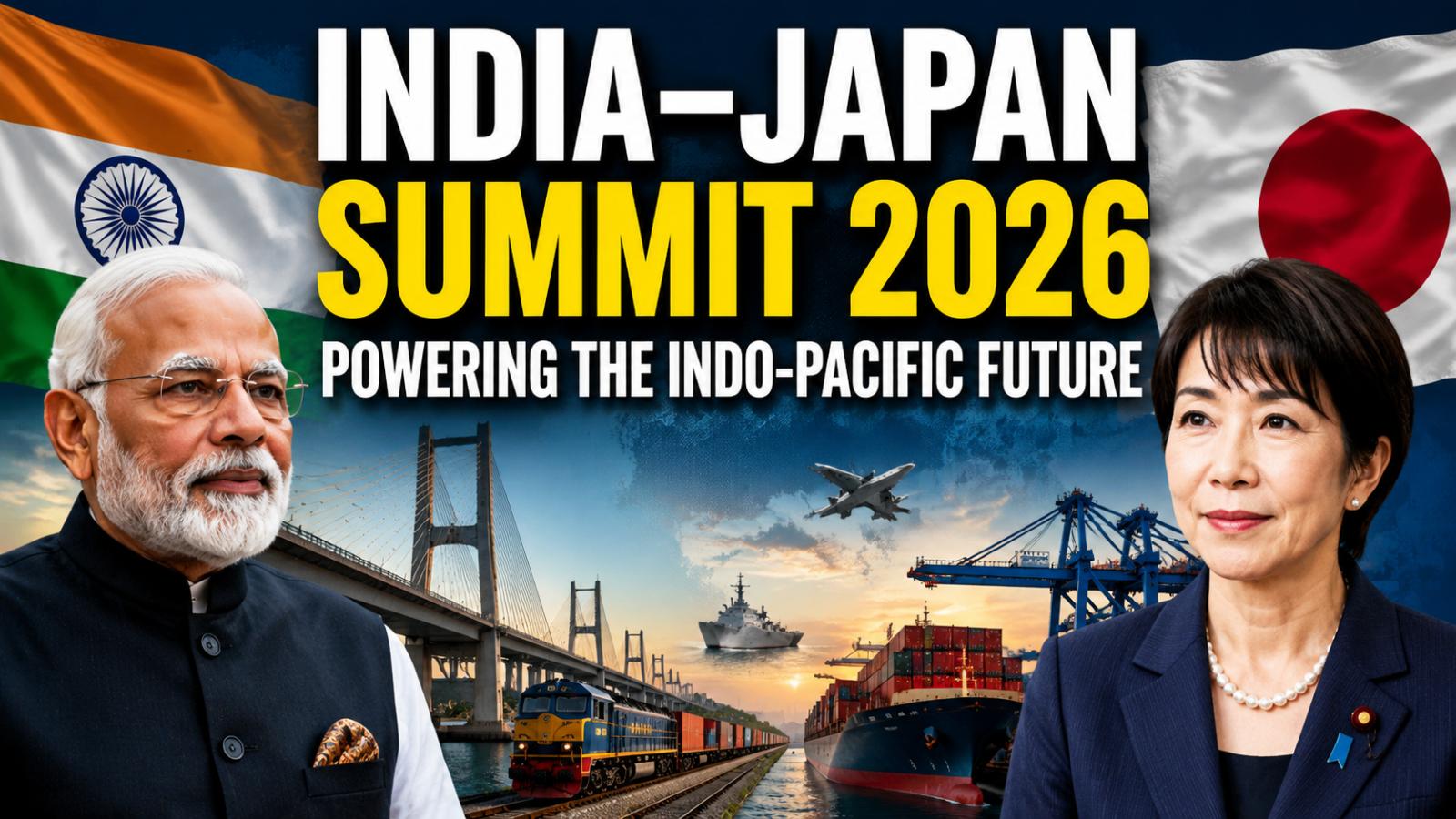
The latest round of strategic talks between India and Japan signals a shift from broad diplomatic alignment to project-driven cooperation. The visit by Japanese Prime Minister Sanae Takaichi marks a renewed focus on infrastructure delivery, supply chain redesign, and
India Japan summit 2026 reshapes Indo Pacific alignment
The latest round of strategic talks between India and Japan signals a shift from broad diplomatic alignment to project-driven cooperation. The visit by Japanese Prime Minister Sanae Takaichi marks a renewed focus on infrastructure delivery, supply chain redesign, and
India Japan summit to review 10-year joint vision roadmap cooperation
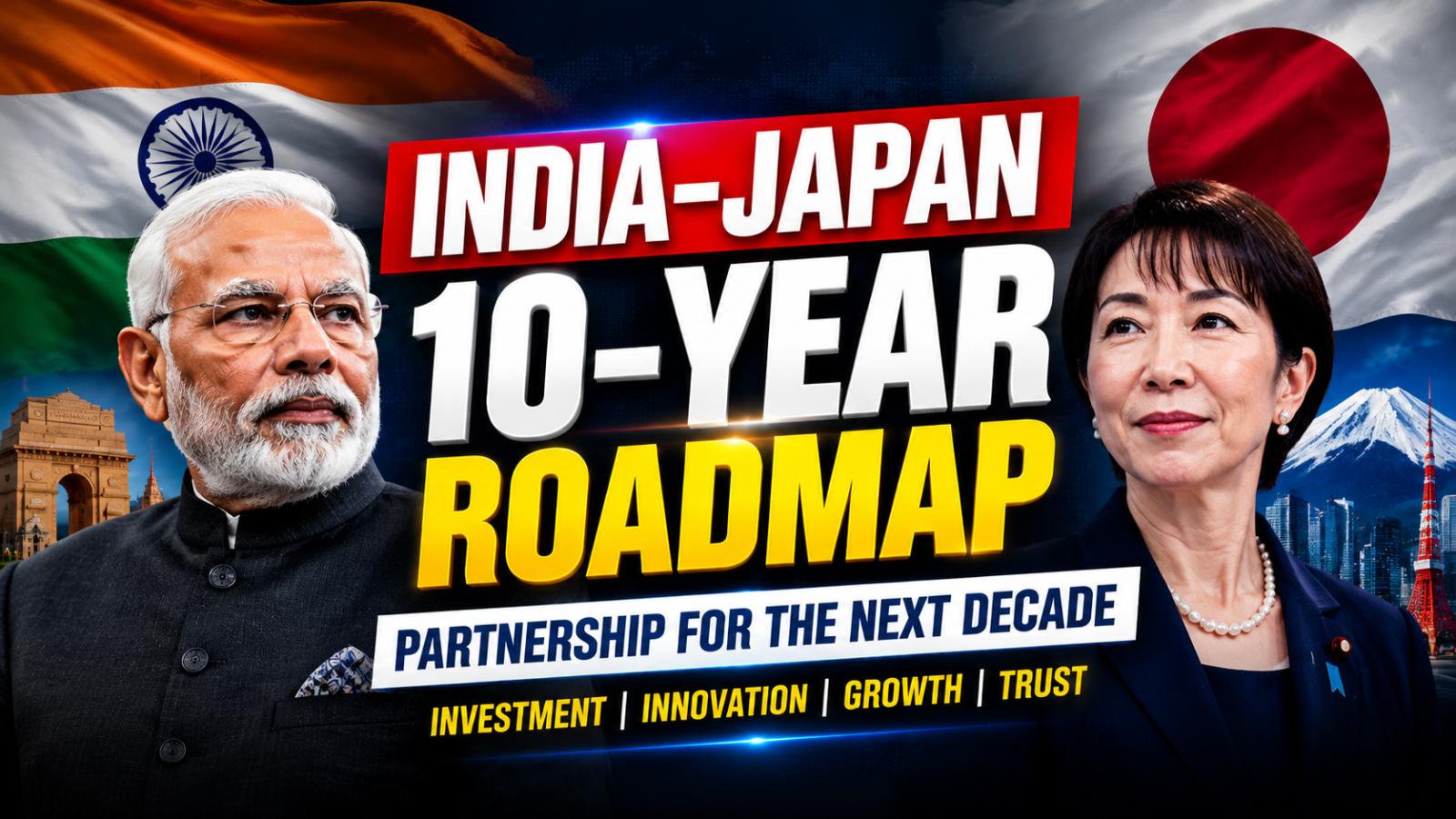
India-Japan Summit to Review Long-Term Strategic Roadmap India is set to host Japanese Prime Minister Sanae Takaichi from July 1 to 3 for the 16th India-Japan Annual Summit, where both sides are expected to review progress under the Japan-India Joint Vision for the Next Decade. The framework, signed in Tokyo in August 2025, outlines a long-term roadmap aimed at streng
India Japan summit to review 10-year joint vision roadmap cooperation
India-Japan Summit to Review Long-Term Strategic Roadmap India is set to host Japanese Prime Minister Sanae Takaichi from July 1 to 3 for the 16th India-Japan Annual Summit, where both sides are expected to review progress under the Japan-India Joint Vision for the Next Decade. The framework, signed in Tokyo in August 2025, outlines a long-term roadmap aimed at streng
India-US defence ties remain stable amid Indo-Pacific changes
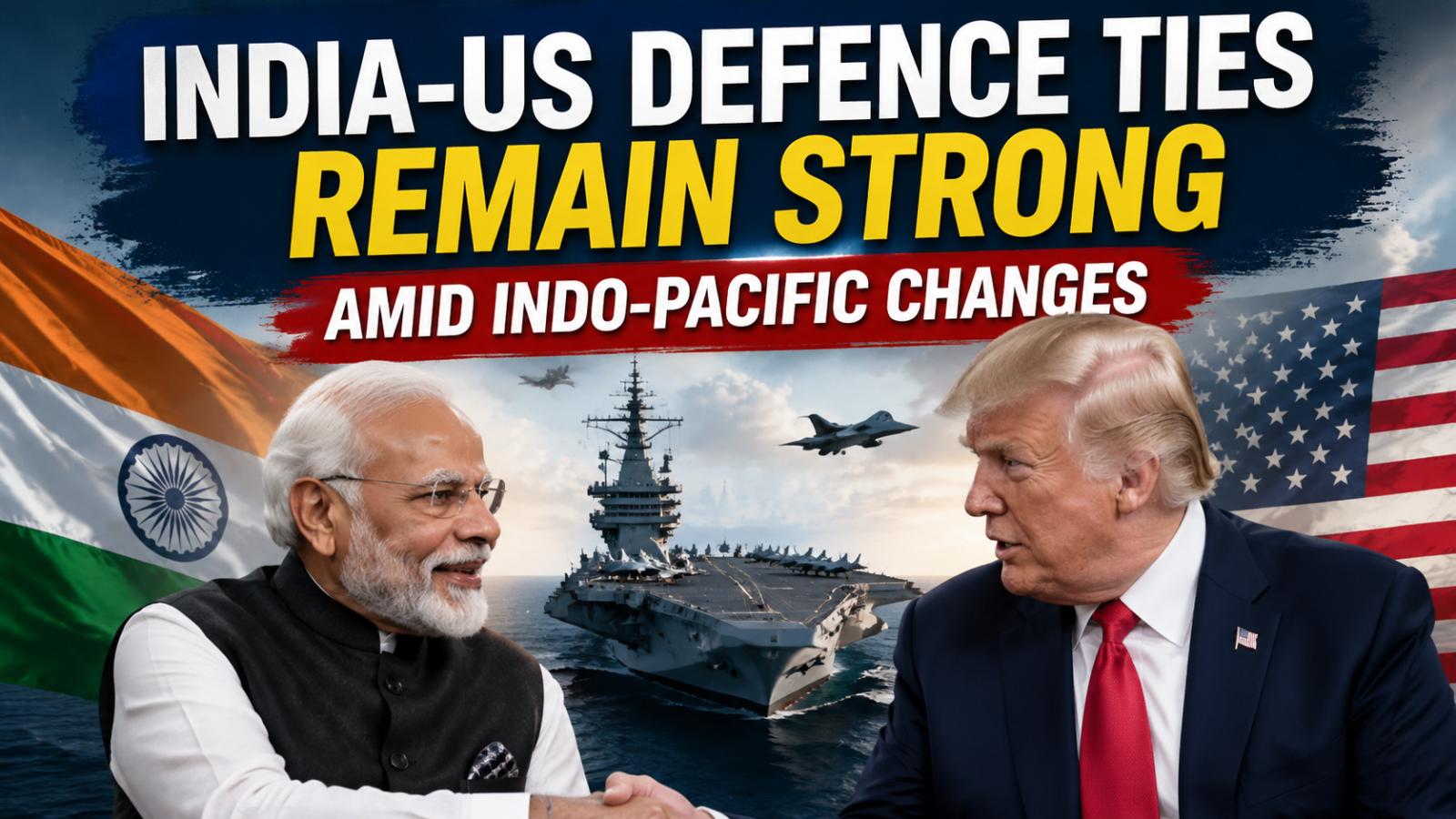
India and the United States continue to maintain stable defence cooperation despite recent adjustments in how Washington refers to its Indo-Pacific military structure. US Ambassador Sergio Gor reiterated that operational collaboration between the two countries is unaffected by the change in terminology, stressing continuity over symbolism. Military engagement remains active According to Gor, defence interaction between both nations is not only ongoing but expanding. Joint exercises, training programs, and coordinated operational planning continue across multiple domains. He noted that India remains one of the most frequently engaged partners in US military exercises globally, reflecting long-term strategic alignment rather than short-term political messaging. Indo-Pacific command terminology shift The discussion gained attention after the US reverted from the “Indo-Pacific Command” branding to its earlier designation. While the naming change sparked speculation about shifting priorities, officials clarified that command responsibilities and regional engagement remain unchanged. The operational scope still spans a vast area covering key maritime and security corridors in Asia-Pacific. Interpretation and political reactions The naming adjustment has been interpreted in different ways across policy circles, with some viewing it as symbolic recalibration. However, US officials have consistently pushed back on that narrative, arguing that defence cooperation with India is driven by shared strategic interests rather than administrative labels. Leadership relations and diplomatic tone Gor also highlighted the working relationship between former US President Donald Trump and Indian Prime Minister Narendra Modi, describing it as direct and pragmatic. He pointed to informal diplomatic interactions as evidence of sustained trust and coordination between leadership levels, which continues to influence broader strategic engagement. Long-term partnership outlook Despite periodic debates over terminology and diplomatic optics, both nations continue to prioritize defence, technology collaboration, and regional security coordination. The emphasis remains on sustained engagement in the Indo-Pacific region, where shared concerns over maritime security and strategic balance continue to drive cooperation rather than divergence.
India-US defence ties remain stable amid Indo-Pacific changes
India and the United States continue to maintain stable defence cooperation despite recent adjustments in how Washington refers to its Indo-Pacific military structure. US Ambassador Sergio Gor reiterated that operational collaboration between the two countries is unaffected by the change in terminology, stressing continuity over symbolism. Military engagement remains active According to Gor, defence interaction between both nations is not only ongoing but expanding. Joint exercises, training programs, and coordinated operational planning continue across multiple domains. He noted that India remains one of the most frequently engaged partners in US military exercises globally, reflecting long-term strategic alignment rather than short-term political messaging. Indo-Pacific command terminology shift The discussion gained attention after the US reverted from the “Indo-Pacific Command” branding to its earlier designation. While the naming change sparked speculation about shifting priorities, officials clarified that command responsibilities and regional engagement remain unchanged. The operational scope still spans a vast area covering key maritime and security corridors in Asia-Pacific. Interpretation and political reactions The naming adjustment has been interpreted in different ways across policy circles, with some viewing it as symbolic recalibration. However, US officials have consistently pushed back on that narrative, arguing that defence cooperation with India is driven by shared strategic interests rather than administrative labels. Leadership relations and diplomatic tone Gor also highlighted the working relationship between former US President Donald Trump and Indian Prime Minister Narendra Modi, describing it as direct and pragmatic. He pointed to informal diplomatic interactions as evidence of sustained trust and coordination between leadership levels, which continues to influence broader strategic engagement. Long-term partnership outlook Despite periodic debates over terminology and diplomatic optics, both nations continue to prioritize defence, technology collaboration, and regional security coordination. The emphasis remains on sustained engagement in the Indo-Pacific region, where shared concerns over maritime security and strategic balance continue to drive cooperation rather than divergence.
Japan PM visit pushes India Japan tech and defence cooperation
India and Japan have taken another step toward strengthening their long-term strategic relationship as high-level discussions were held in New Delhi focused on expanding cooperation across trade, defence, technology, and infrastructure. The engagement reflects a broader effort by both nations to build resilience in supply chains and increase coordination in the Indo-Pacific region amid shifting global economic and security dynamics. Rather than treating the relationship as routine diplomacy, both sides are increasingly positioning it as a structured partnership tied to economic security, innovation, and regional stability. Trade and investment becoming the core growth driver Economic cooperation continues to act as the backbone of the relationship. Japan remains one of India’s key foreign investors, with long-term commitments spread across manufacturing, transport, and urban development sectors. Japanese companies continue to expand their presence in India, particularly in automotive, electronics, and industrial technology. Infrastructure development remains a central pillar, with ongoing support for metro systems, freight corridors, and high-speed rail projects. Financial and institutional backing through Japanese development agencies has played a major role in shaping large-scale connectivity projects across Indian cities. However, both sides still face structural challenges such as slow project execution timelines and regulatory bottlenecks, which limit the speed of capital deployment despite strong political alignment. Defence cooperation expands beyond symbolic engagement Security collaboration between India and Japan has gradually shifted from occasional exercises to more consistent operational coordination. Joint drills such as maritime exercises and regional security training programs have strengthened interoperability between the two defence forces. The focus is increasingly on maritime domain awareness, especially in the Indo-Pacific region where strategic sea lanes remain critical for global trade. Both countries are also exploring ways to improve defence technology exchange, although this area remains sensitive due to regulatory and strategic constraints. Despite progress, defence cooperation is still relatively cautious compared to economic engagement, reflecting differing strategic thresholds and domestic policy considerations. Northeast India emerges as a strategic connectivity zone One of the most notable areas of cooperation is India’s northeastern region, which has gained attention as a key connectivity and development corridor. Japanese-supported infrastructure projects have contributed to road development, bridge construction, and logistics improvement in the region. Beyond physical infrastructure, skill development initiatives are also being introduced to improve employment readiness and cross-border workforce mobility. The region is increasingly being viewed as a bridge between South Asia and Southeast Asia, aligning with broader Indo-Pacific connectivity goals. Still, the region continues to face challenges including terrain constraints, limited industrial base, and slower private sector participation. Technology, AI and future-oriented collaboration Both countries are expanding cooperation in advanced technologies including artificial intelligence, clean energy systems, and digital infrastructure. Joint initiatives are being explored in areas such as smart manufacturing, automation, and next-generation communication systems. There is also growing interest in building more resilient supply chains for critical sectors like semiconductors and green energy technologies. This reflects a shared concern over global supply disruptions and overdependence on concentrated manufacturing hubs. While ambitions are high, actual implementation will depend on regulatory alignment and private sector participation, which remain uneven across sectors. Strategic outlook for the partnership The India–Japan relationship is increasingly being shaped by long-term geopolitical and economic considerations rather than short-term diplomatic exchanges. Both countries appear aligned on maintaining stability in the Indo-Pacific while expanding economic integration. However, the partnership is still evolving and remains uneven across sectors—strong in trade and infrastructure, moderate in defence, and still developing in advanced technology cooperation. The next phase will depend on execution efficiency and the ability to convert policy agreements into large-scale operational outcomes.
Japan PM visit pushes India Japan tech and defence cooperation
India and Japan have taken another step toward strengthening their long-term strategic relationship as high-level discussions were held in New Delhi focused on expanding cooperation across trade, defence, technology, and infrastructure. The engagement reflects a broader effort by both nations to build resilience in supply chains and increase coordination in the Indo-Pacific region amid shifting global economic and security dynamics. Rather than treating the relationship as routine diplomacy, both sides are increasingly positioning it as a structured partnership tied to economic security, innovation, and regional stability. Trade and investment becoming the core growth driver Economic cooperation continues to act as the backbone of the relationship. Japan remains one of India’s key foreign investors, with long-term commitments spread across manufacturing, transport, and urban development sectors. Japanese companies continue to expand their presence in India, particularly in automotive, electronics, and industrial technology. Infrastructure development remains a central pillar, with ongoing support for metro systems, freight corridors, and high-speed rail projects. Financial and institutional backing through Japanese development agencies has played a major role in shaping large-scale connectivity projects across Indian cities. However, both sides still face structural challenges such as slow project execution timelines and regulatory bottlenecks, which limit the speed of capital deployment despite strong political alignment. Defence cooperation expands beyond symbolic engagement Security collaboration between India and Japan has gradually shifted from occasional exercises to more consistent operational coordination. Joint drills such as maritime exercises and regional security training programs have strengthened interoperability between the two defence forces. The focus is increasingly on maritime domain awareness, especially in the Indo-Pacific region where strategic sea lanes remain critical for global trade. Both countries are also exploring ways to improve defence technology exchange, although this area remains sensitive due to regulatory and strategic constraints. Despite progress, defence cooperation is still relatively cautious compared to economic engagement, reflecting differing strategic thresholds and domestic policy considerations. Northeast India emerges as a strategic connectivity zone One of the most notable areas of cooperation is India’s northeastern region, which has gained attention as a key connectivity and development corridor. Japanese-supported infrastructure projects have contributed to road development, bridge construction, and logistics improvement in the region. Beyond physical infrastructure, skill development initiatives are also being introduced to improve employment readiness and cross-border workforce mobility. The region is increasingly being viewed as a bridge between South Asia and Southeast Asia, aligning with broader Indo-Pacific connectivity goals. Still, the region continues to face challenges including terrain constraints, limited industrial base, and slower private sector participation. Technology, AI and future-oriented collaboration Both countries are expanding cooperation in advanced technologies including artificial intelligence, clean energy systems, and digital infrastructure. Joint initiatives are being explored in areas such as smart manufacturing, automation, and next-generation communication systems. There is also growing interest in building more resilient supply chains for critical sectors like semiconductors and green energy technologies. This reflects a shared concern over global supply disruptions and overdependence on concentrated manufacturing hubs. While ambitions are high, actual implementation will depend on regulatory alignment and private sector participation, which remain uneven across sectors. Strategic outlook for the partnership The India–Japan relationship is increasingly being shaped by long-term geopolitical and economic considerations rather than short-term diplomatic exchanges. Both countries appear aligned on maintaining stability in the Indo-Pacific while expanding economic integration. However, the partnership is still evolving and remains uneven across sectors—strong in trade and infrastructure, moderate in defence, and still developing in advanced technology cooperation. The next phase will depend on execution efficiency and the ability to convert policy agreements into large-scale operational outcomes.
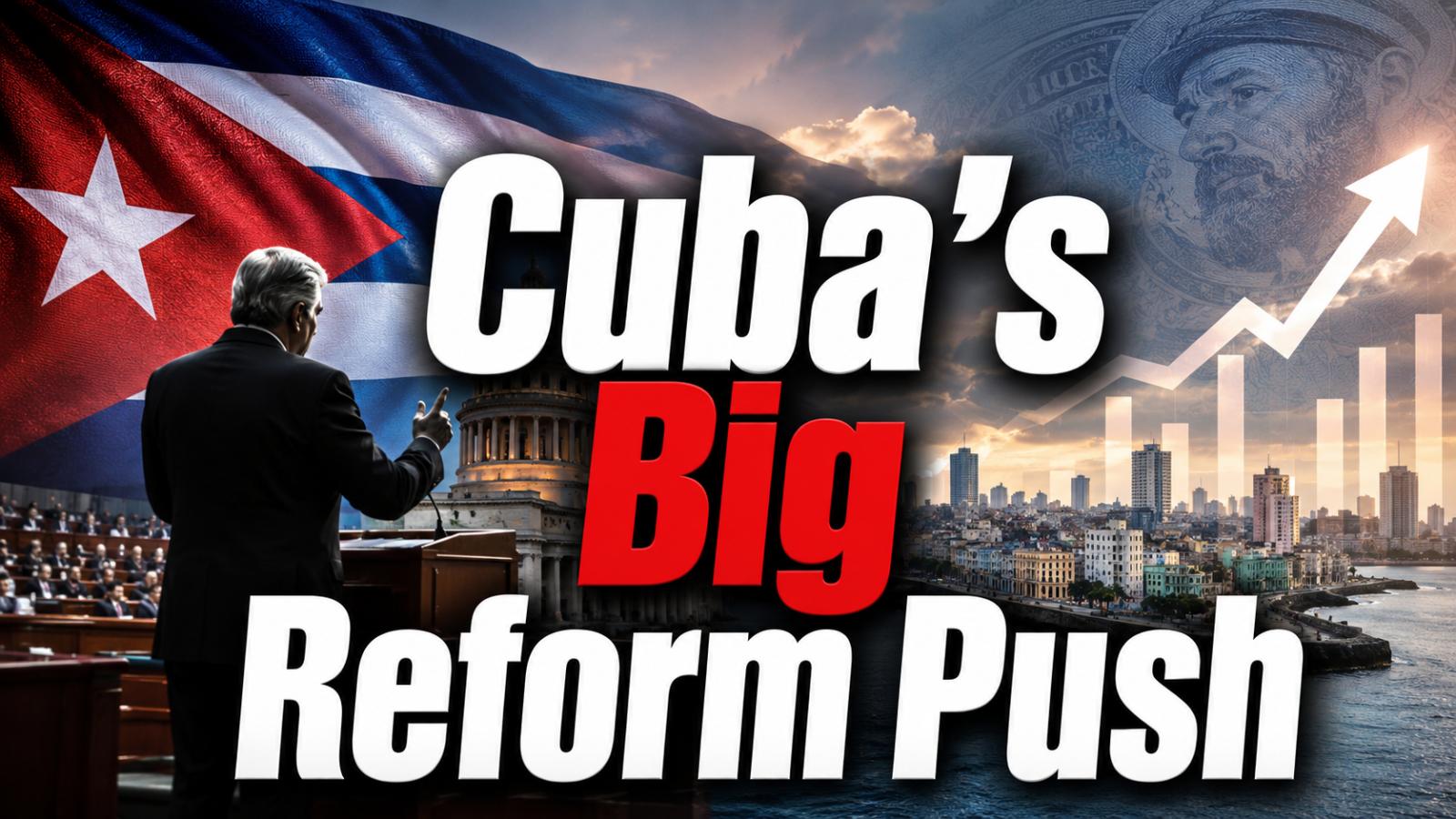
Cuba unveils major reforms to expand private sector
Cuba proposes major shift in economic policy Cuban Prime Minister Manuel Marrero has presented lawmakers with a sweeping economic reform package aimed at reshaping parts of the island’s tightly controlled economy. The proposals, backed by the Communist Party and former leader Raúl Castro, come as Cuba faces rising pressure from US sanctions, a fuel blockade and worsening shortages of basic goods. The package still requires approval from th
Cuba unveils major reforms to expand private sector
Cuba proposes major shift in economic policy Cuban Prime Minister Manuel Marrero has presented lawmakers with a sweeping economic reform package aimed at reshaping parts of the island’s tightly controlled economy. The proposals, backed by the Communist Party and former leader Raúl Castro, come as Cuba faces rising pressure from US sanctions, a fuel blockade and worsening shortages of basic goods. The package still requires approval from th
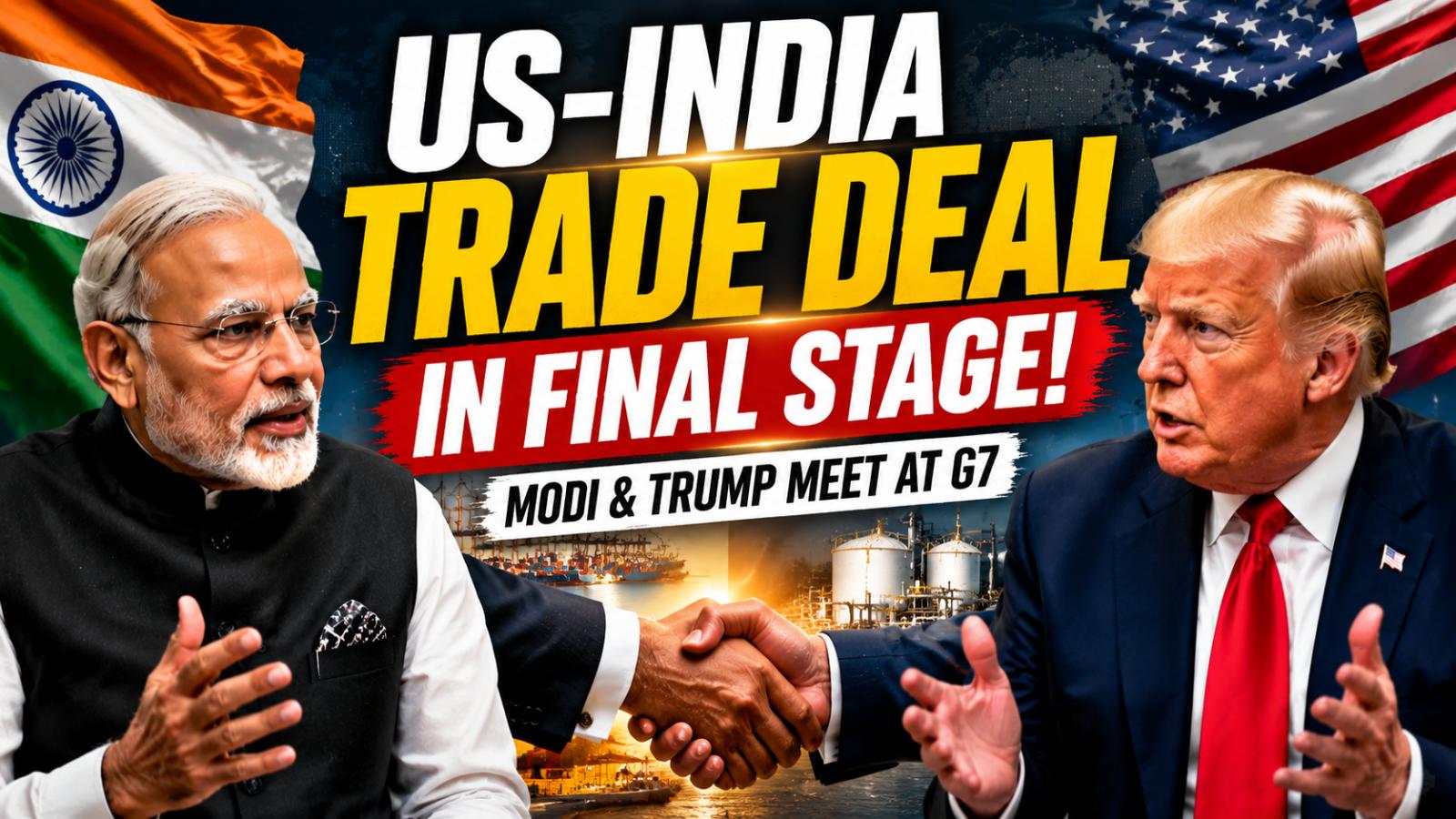
US-India trade deal enters final stage ahead of Modi-Trump meeting
US-India Trade Deal Nears Final Stage The United States and India are approaching the final phase of a long-anticipated trade agreement, with officials indicating that negotiations are now in their “last mile” and could conclude within weeks. The development comes just ahead of a high-profile bilateral meeting between Prime Minister Narendra Modi and US President Donald Trump on the sidelines of the G7 s
US-India trade deal enters final stage ahead of Modi-Trump meeting
US-India Trade Deal Nears Final Stage The United States and India are approaching the final phase of a long-anticipated trade agreement, with officials indicating that negotiations are now in their “last mile” and could conclude within weeks. The development comes just ahead of a high-profile bilateral meeting between Prime Minister Narendra Modi and US President Donald Trump on the sidelines of the G7 s
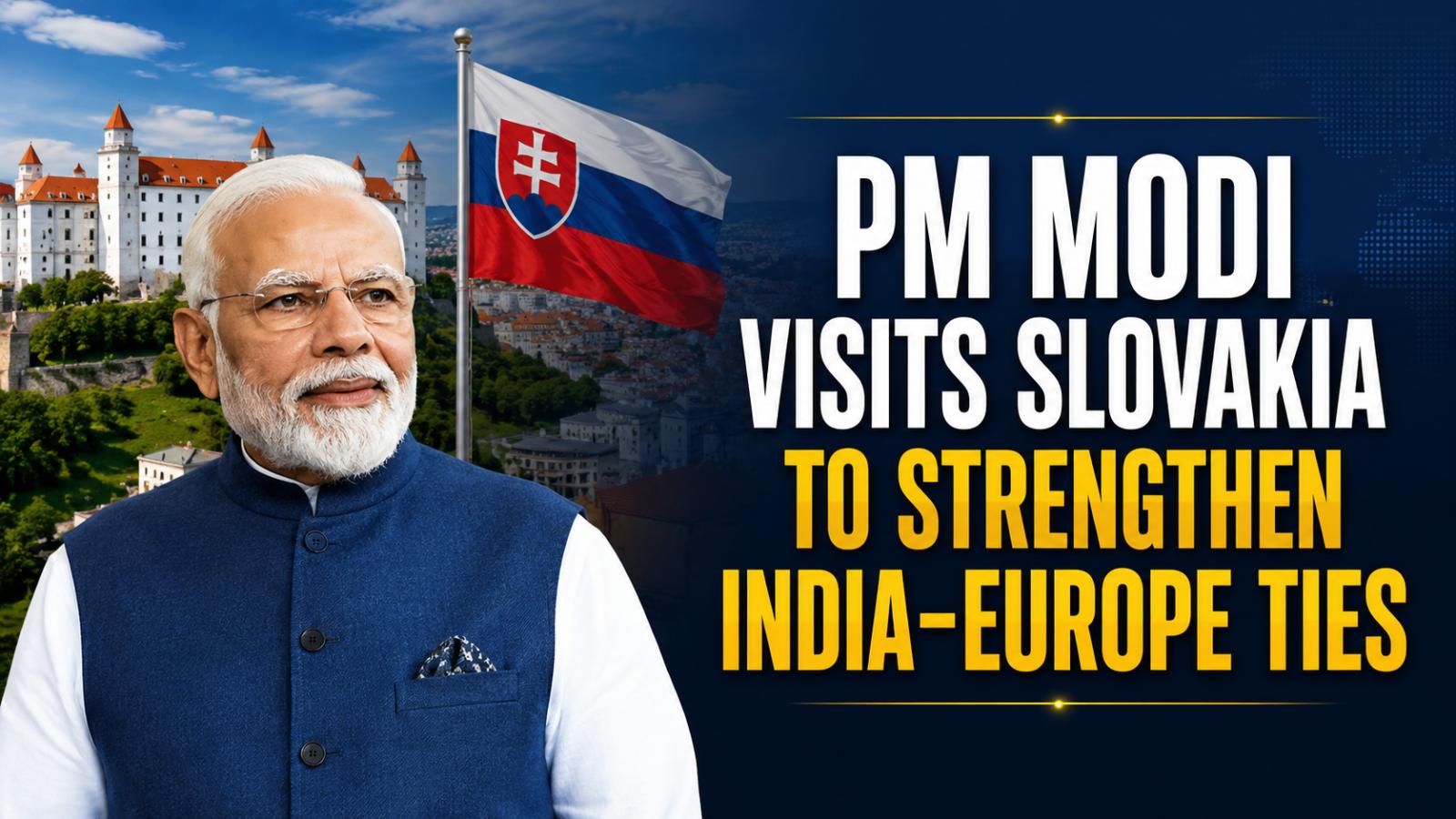
PM Modi Visits Slovakia To Strengthen India-Europe Ties
Prime Minister Narendra Modi arrived in Bratislava on a landmark visit to Slovakia, becoming the first Indian prime minister to travel to the country since it became independent in 1993. The visit is part of his three-nation European tour and comes at a time when India is working to deepen its political, economic and technology partnerships across Europe. During his two-day stay, Modi is scheduled to hold bilateral meetings with Slovak Pre
PM Modi Visits Slovakia To Strengthen India-Europe Ties
Prime Minister Narendra Modi arrived in Bratislava on a landmark visit to Slovakia, becoming the first Indian prime minister to travel to the country since it became independent in 1993. The visit is part of his three-nation European tour and comes at a time when India is working to deepen its political, economic and technology partnerships across Europe. During his two-day stay, Modi is scheduled to hold bilateral meetings with Slovak Pre
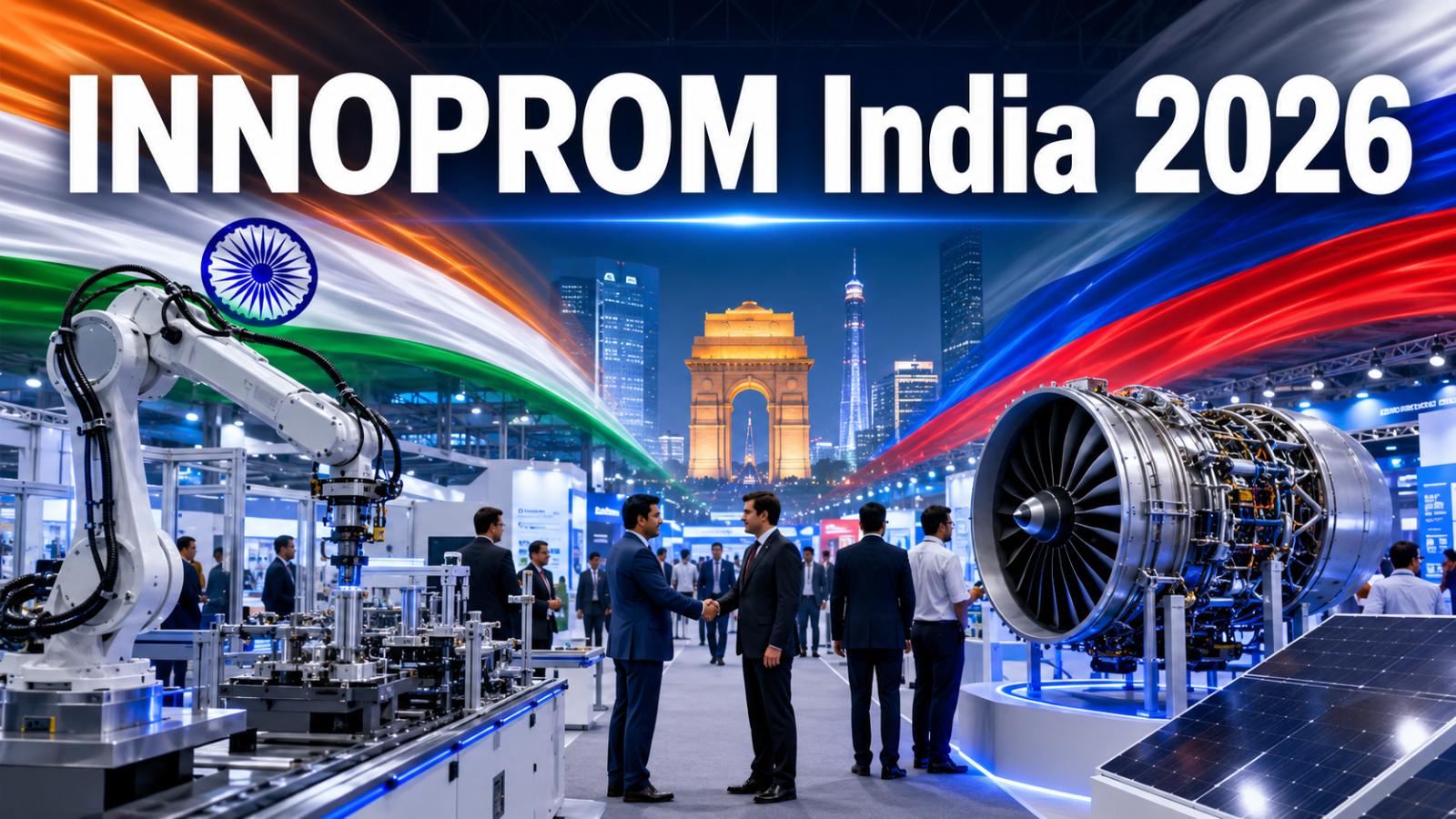
INNOPROM India 2026 to boost Russia-India trade ties
India and Russia are preparing to host the first INNOPROM International Industrial Technology Exhibition in India, marking a fresh push in their expanding economic and industrial partnership. The event is scheduled to take place from September 9 to 11 at Bharat Mandapam Exhibition and Convention Centre in New Delhi, bringing together manufacturers, investors, technology companies, industrial buyers and government representatives. The exhib

INNOPROM India 2026 to boost Russia-India trade ties
India and Russia are preparing to host the first INNOPROM International Industrial Technology Exhibition in India, marking a fresh push in their expanding economic and industrial partnership. The event is scheduled to take place from September 9 to 11 at Bharat Mandapam Exhibition and Convention Centre in New Delhi, bringing together manufacturers, investors, technology companies, industrial buyers and government representatives. The exhib

PM Modi Meets Venezuela Acting President to Boost Bilateral Ties
Strengthening India-Venezuela Relations Prime Minister Narendra Modi held a high-level meeting with Venezuela's Acting President Delcy Rodriguez in New Delhi on Thursday. The meeting took place at Hyderabad House, where both leaders discussed the full spectrum of India-Venezuela relations. Key focus areas included energy security, trade and investment, pharmaceuticals, healthcare, transportation, and renewabl

PM Modi Meets Venezuela Acting President to Boost Bilateral Ties
Strengthening India-Venezuela Relations Prime Minister Narendra Modi held a high-level meeting with Venezuela's Acting President Delcy Rodriguez in New Delhi on Thursday. The meeting took place at Hyderabad House, where both leaders discussed the full spectrum of India-Venezuela relations. Key focus areas included energy security, trade and investment, pharmaceuticals, healthcare, transportation, and renewabl
India-South Africa trade ties deepen as Mashatile courts firms
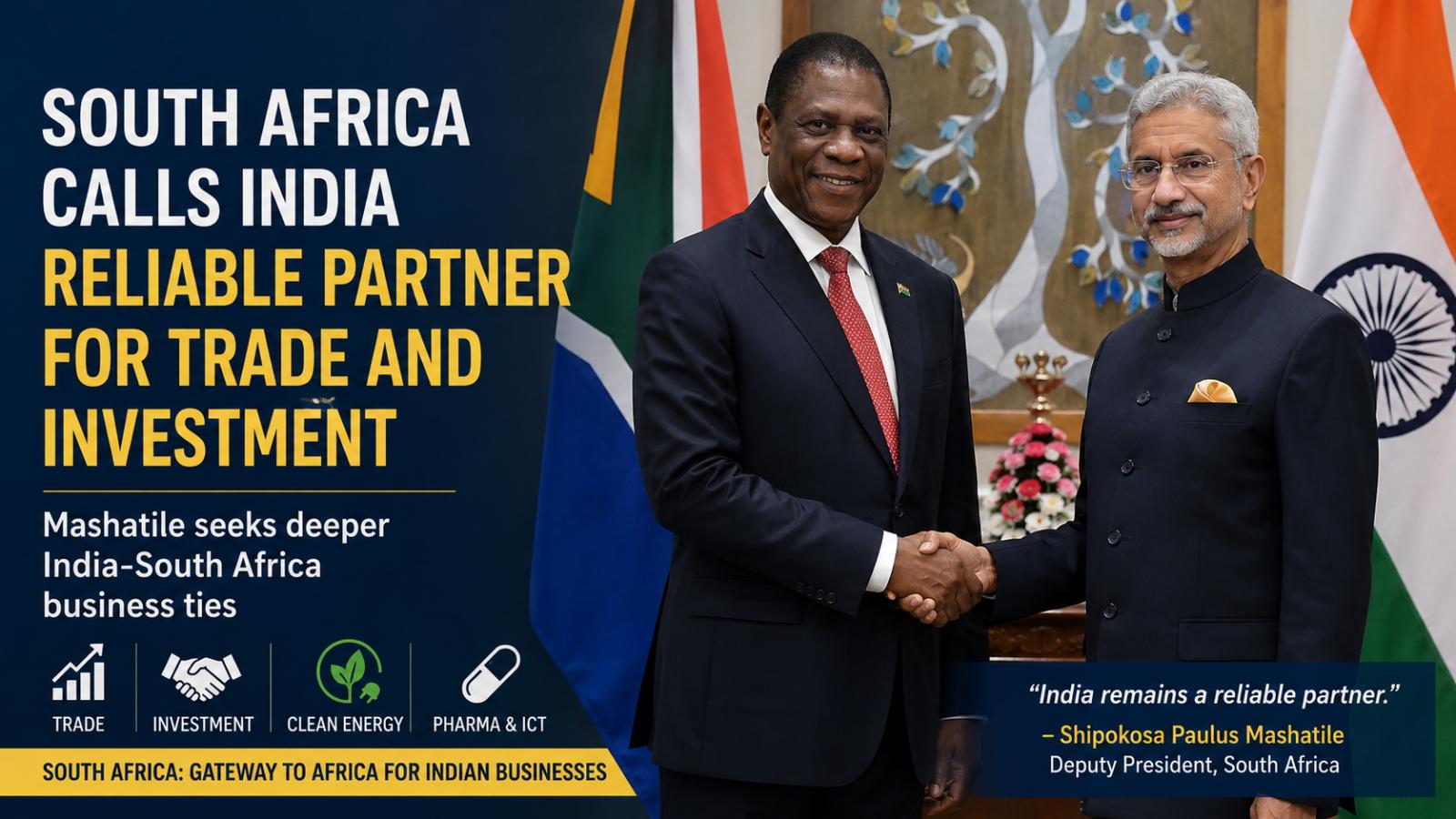
South Africa’s Deputy President Shipokosa Paulus Mashatile said India remains a reliable partner as he pushed for deeper India-South Africa trade ties during a working visit to New Delhi. Mashatile used the New Delhi leg of his six-day visit to invite Indian companies to expand investment in South Africa, especially in clean energy, pharmaceuticals, ICT, automotive components, infrastructure, agriculture and agro-processing. Mashatile seeks stronger India-South
India-South Africa trade ties deepen as Mashatile courts firms
South Africa’s Deputy President Shipokosa Paulus Mashatile said India remains a reliable partner as he pushed for deeper India-South Africa trade ties during a working visit to New Delhi. Mashatile used the New Delhi leg of his six-day visit to invite Indian companies to expand investment in South Africa, especially in clean energy, pharmaceuticals, ICT, automotive components, infrastructure, agriculture and agro-processing. Mashatile seeks stronger India-South
Yogi Adityanath UP Model Explained: Law, Development and Economic Growth Strategy in Uttar Pradesh
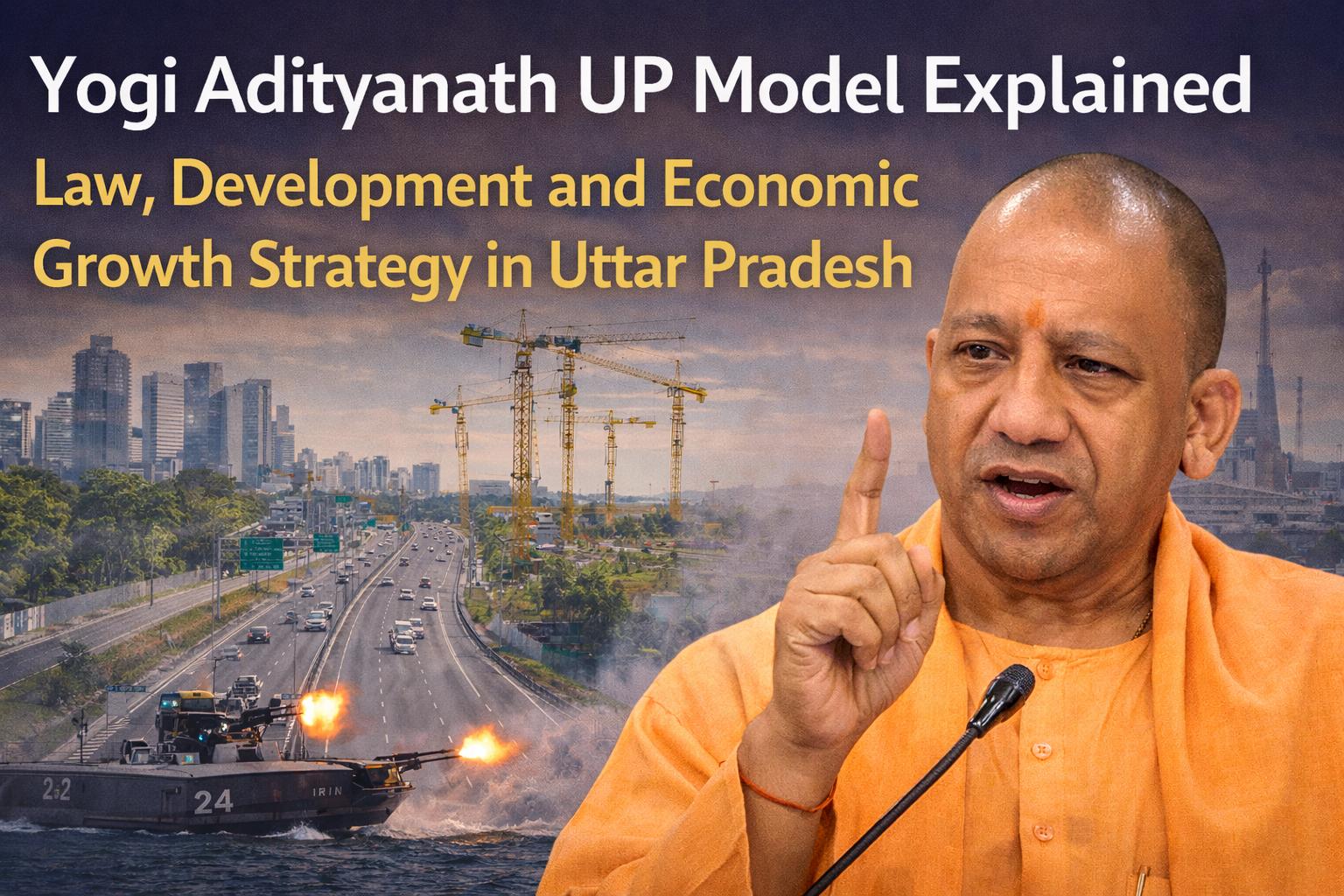
Yogi Adityanath UP model explained: A transformation strategy for India’s largest state The Yogi Adityanath UP model has emerged as a major topic in India’s political and economic discussions. Focused on law and order, infrastructure expansion, and investment growth, the model aims to transform Uttar Pradesh into a key economic hub. Since taking office, Yogi Adityanath has posi
Yogi Adityanath UP Model Explained: Law, Development and Economic Growth Strategy in Uttar Pradesh
Yogi Adityanath UP model explained: A transformation strategy for India’s largest state The Yogi Adityanath UP model has emerged as a major topic in India’s political and economic discussions. Focused on law and order, infrastructure expansion, and investment growth, the model aims to transform Uttar Pradesh into a key economic hub. Since taking office, Yogi Adityanath has posi
India, New Zealand to sign free trade agreement on April 24
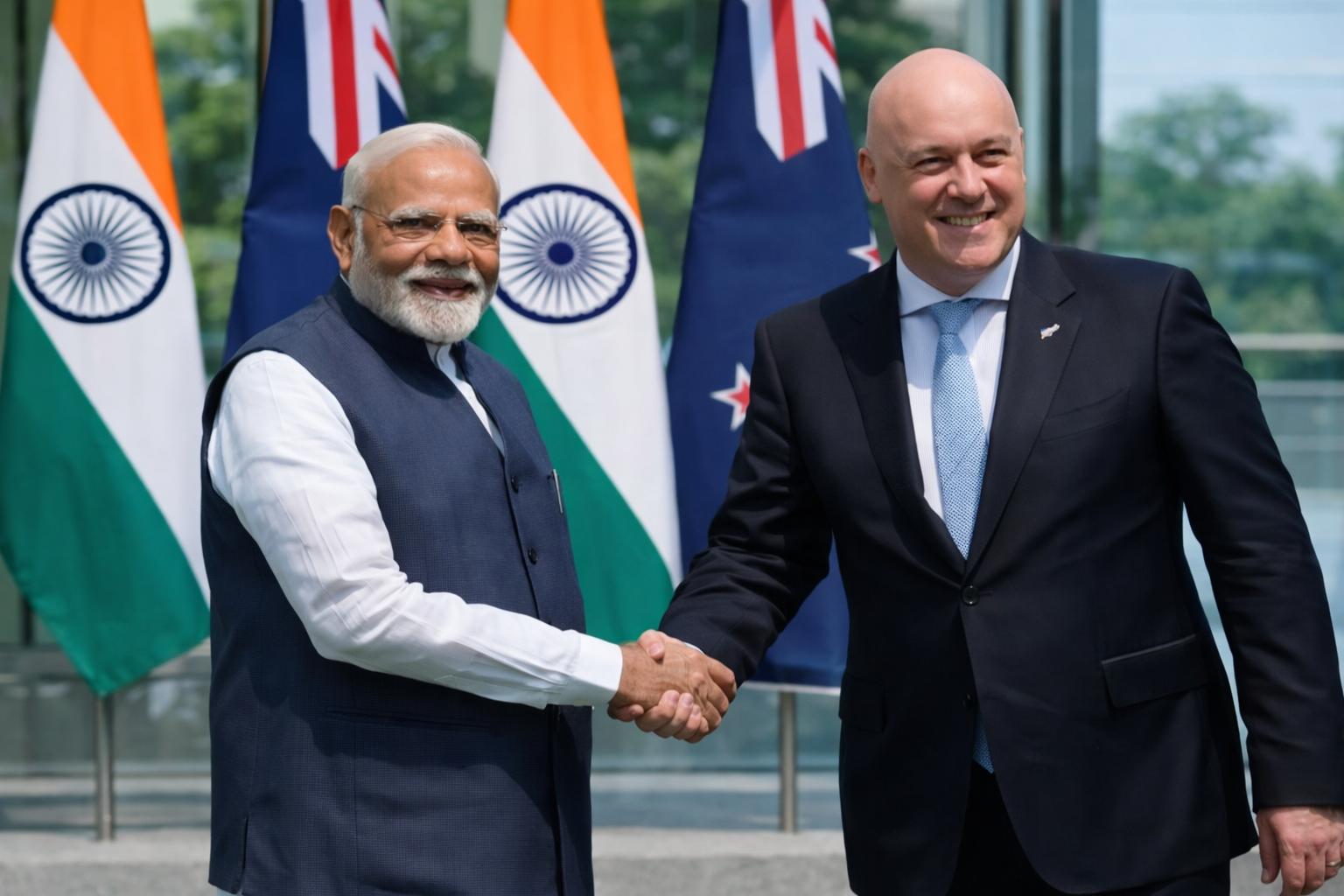
India and New Zealand are expected to sign a Free Trade Agreement (FTA) on Thursday, April 24, 2026, in India, marking a significant step toward strengthening bilateral trade and economic cooperation. The agreement, which follows the conclusion of negotiations announced on Sunday, December 22, 2025, is expected to provide tariff-free access for Indian exporters to the New Zealand market while attracting an estimated $20 billion in investment over the next 15 years. According to offi
India, New Zealand to sign free trade agreement on April 24
India and New Zealand are expected to sign a Free Trade Agreement (FTA) on Thursday, April 24, 2026, in India, marking a significant step toward strengthening bilateral trade and economic cooperation. The agreement, which follows the conclusion of negotiations announced on Sunday, December 22, 2025, is expected to provide tariff-free access for Indian exporters to the New Zealand market while attracting an estimated $20 billion in investment over the next 15 years. According to offi
Telangana Signs Key Global Partnerships at Davos Summit to Boost Economy and Innovation
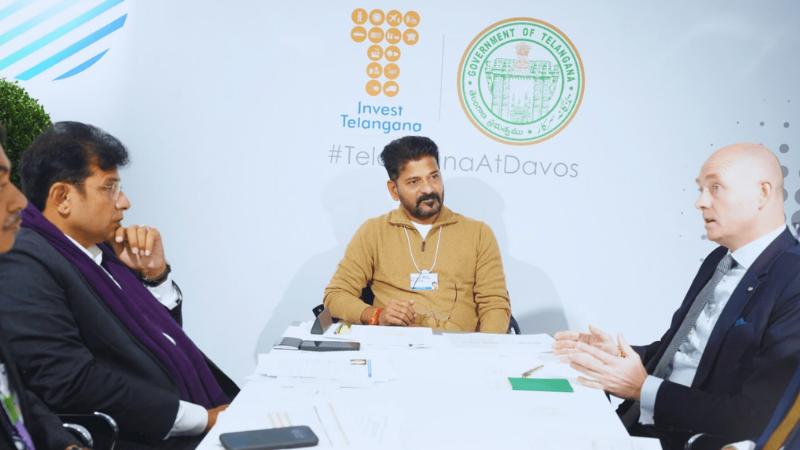
Telangana made a significant splash at the 2026 World Economic Forum (WEF) in Davos, Switzerland, showcasing its ambition to become a global hub for innovation, technology, and sustainable development. Led by Chief Minister A. Revanth Reddy, the Telangana delegation secured several key partnerships and investments aimed at propelling the state’s economy to new heights. One of the most notable agreements was with Blaize, a US-based company specializing in energy-efficient AI hardware and sof
Telangana Signs Key Global Partnerships at Davos Summit to Boost Economy and Innovation
Telangana made a significant splash at the 2026 World Economic Forum (WEF) in Davos, Switzerland, showcasing its ambition to become a global hub for innovation, technology, and sustainable development. Led by Chief Minister A. Revanth Reddy, the Telangana delegation secured several key partnerships and investments aimed at propelling the state’s economy to new heights. One of the most notable agreements was with Blaize, a US-based company specializing in energy-efficient AI hardware and sof
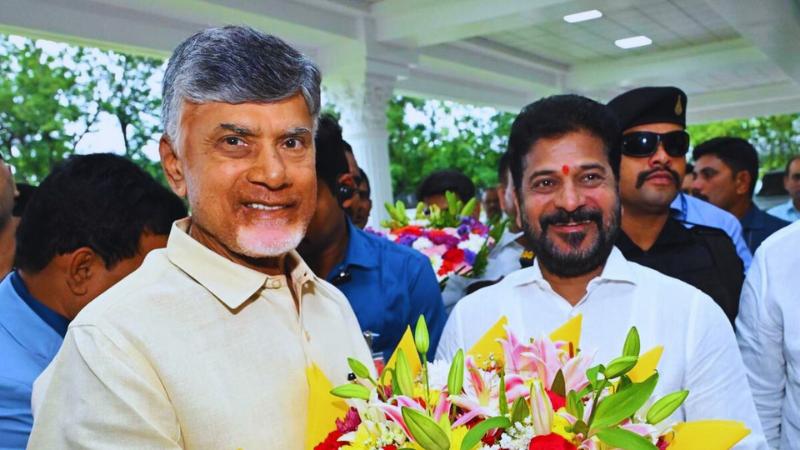
Telangana Rising Summit: CBN And Revanth Reddy Display Unity As Global Event Begins
The Telangana Rising Global Summit 2025 has set the stage in Hyderabad, marking a significant moment for the state as it steps into a larger global investment arena. The summit aims to bring together industry leaders, international investors, and global representatives to explore projects and opportunities that can transform Telangana into a key international business hub. With preparations in full swing, the event is expected to highlight Telangana’s potential in sectors such as technology
Telangana Rising Summit: CBN And Revanth Reddy Display Unity As Global Event Begins
The Telangana Rising Global Summit 2025 has set the stage in Hyderabad, marking a significant moment for the state as it steps into a larger global investment arena. The summit aims to bring together industry leaders, international investors, and global representatives to explore projects and opportunities that can transform Telangana into a key international business hub. With preparations in full swing, the event is expected to highlight Telangana’s potential in sectors such as technology
PPF account guidelines for NRIs: Key rules, tax benefits, and maturity terms
Many Indians who migrate abroad continue to maintain strong financial ties with their home country through various savings and investment instruments, including the Public Provident Fund (PPF). However, once an individual’s residential status changes under the Foreign Exchange Management Act (FEMA), different rules come into play. The guidelines determine whether Non-Resident Indians (NRIs) can hold or operate PPF accounts and how the proceeds are managed upon maturity. Under exis
PPF account guidelines for NRIs: Key rules, tax benefits, and maturity terms
Many Indians who migrate abroad continue to maintain strong financial ties with their home country through various savings and investment instruments, including the Public Provident Fund (PPF). However, once an individual’s residential status changes under the Foreign Exchange Management Act (FEMA), different rules come into play. The guidelines determine whether Non-Resident Indians (NRIs) can hold or operate PPF accounts and how the proceeds are managed upon maturity. Under exis
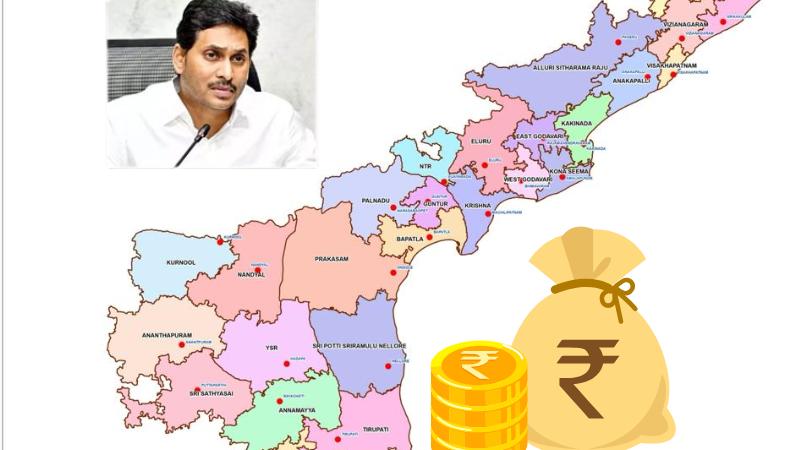
YCP's Continued Obstruction Puts Andhra Pradesh’s Financial Recovery at Risk
Andhra Pradesh experienced a significant economic downturn between 2019 and 2024 under the YS Jagan Mohan Reddy-led YSRCP government. Several major companies, including Lulu Group and Renew Energy, withdrew from the state, citing administrative hurdles and lack of cooperation. The period was marked by stalled projects, declining investor confidence, and policy paralysis that hindered growth and job creation. Following a
YCP's Continued Obstruction Puts Andhra Pradesh’s Financial Recovery at Risk
Andhra Pradesh experienced a significant economic downturn between 2019 and 2024 under the YS Jagan Mohan Reddy-led YSRCP government. Several major companies, including Lulu Group and Renew Energy, withdrew from the state, citing administrative hurdles and lack of cooperation. The period was marked by stalled projects, declining investor confidence, and policy paralysis that hindered growth and job creation. Following a
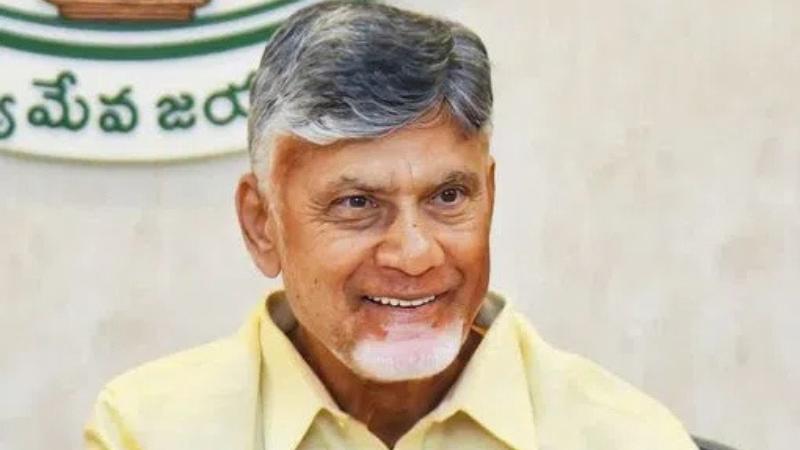
Chandrababu Naidu Approves ₹33,000 Cr Projects, 35,000 Jobs Coming
In a decisive move to boost economic development and job creation, Andhra Pradesh Chief Minister N. Chandrababu Naidu has approved investment proposals worth ₹33,000 crore during the sixth meeting of the State Investment Promotion Board (SIPB). The approvals span across 19 major projects and are expected to generate 35,000 new jobs in key sectors such as energy, tourism, IT, and electronics. The meeting, held at the Secretariat, marks a strategic continuation of the government's push fo
Chandrababu Naidu Approves ₹33,000 Cr Projects, 35,000 Jobs Coming
In a decisive move to boost economic development and job creation, Andhra Pradesh Chief Minister N. Chandrababu Naidu has approved investment proposals worth ₹33,000 crore during the sixth meeting of the State Investment Promotion Board (SIPB). The approvals span across 19 major projects and are expected to generate 35,000 new jobs in key sectors such as energy, tourism, IT, and electronics. The meeting, held at the Secretariat, marks a strategic continuation of the government's push fo
No Fee for Updating Nominee in PPF Account, Confirms FM Nirmala Sitharaman
In a move that offers much-needed relief to Public Provident Fund (PPF) account holders across India, Finance Minister Nirmala Sitharaman has officially announced that individuals will no longer have to pay any fees to add, update, or remove nominee details in their PPF accounts. The announcement was made via a post on social media platform X and follows a recent government notification that amends the applicable savings rules. Through Gazette Notification 02/4/25, changes have been introduce
No Fee for Updating Nominee in PPF Account, Confirms FM Nirmala Sitharaman
In a move that offers much-needed relief to Public Provident Fund (PPF) account holders across India, Finance Minister Nirmala Sitharaman has officially announced that individuals will no longer have to pay any fees to add, update, or remove nominee details in their PPF accounts. The announcement was made via a post on social media platform X and follows a recent government notification that amends the applicable savings rules. Through Gazette Notification 02/4/25, changes have been introduce
Asian Automakers React to U.S. Tariffs: Toyota, Nissan, Hyundai Face Major Challenges
This month, the announcement of sweeping 25% tariffs on cars “not made in the U.S.” has sent ripples through the global automotive industry, especially affecting Asian car manufacturers. U.S. President Donald Trump’s decision has put significant pressure on automakers ahead of the implementation of the new duties, which are set to take effect later this week. The move has particularly shaken Japanese and South Korean carmakers, many of whom rely heavily on the U.S. market. S
Asian Automakers React to U.S. Tariffs: Toyota, Nissan, Hyundai Face Major Challenges
This month, the announcement of sweeping 25% tariffs on cars “not made in the U.S.” has sent ripples through the global automotive industry, especially affecting Asian car manufacturers. U.S. President Donald Trump’s decision has put significant pressure on automakers ahead of the implementation of the new duties, which are set to take effect later this week. The move has particularly shaken Japanese and South Korean carmakers, many of whom rely heavily on the U.S. market. S
Tencent Increases Stake in Kadokawa, Strengthening Its Influence in Gaming Industry
Tencent Holdings has expanded its stake in Kadokawa, the parent company of FromSoftware, acquiring an additional 1.11 percent of shares. This move increases Tencent’s ownership in the Japanese publishing giant from 6.86 percent to 7.97 percent. The transaction was made through Tencent’s subsidiary, SixJoy Hong Kong Limited, and was disclosed in a large shareholding report submitted to the Kanto Finance Bureau. Tencent initially invested JPY 30 billion (appr
Tencent Increases Stake in Kadokawa, Strengthening Its Influence in Gaming Industry
Tencent Holdings has expanded its stake in Kadokawa, the parent company of FromSoftware, acquiring an additional 1.11 percent of shares. This move increases Tencent’s ownership in the Japanese publishing giant from 6.86 percent to 7.97 percent. The transaction was made through Tencent’s subsidiary, SixJoy Hong Kong Limited, and was disclosed in a large shareholding report submitted to the Kanto Finance Bureau. Tencent initially invested JPY 30 billion (appr