








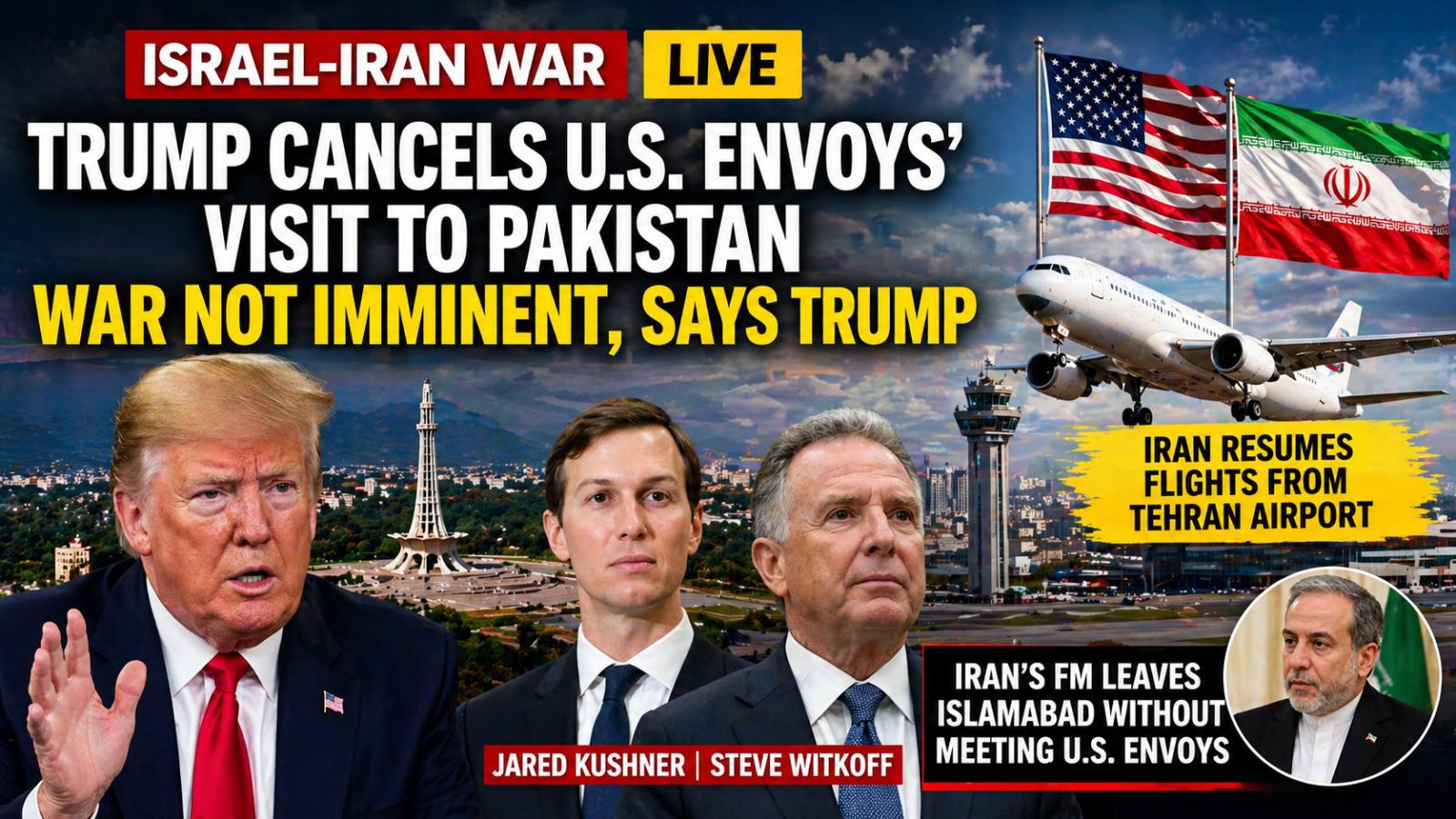
Israel-Iran War LIVE: Trump Cancels Pakistan Talks, Says War Not Imminent
U.S. President Donald Trump has cancelled a planned visit by American envoys to Pakistan for talks with Iran, in a move that raises fresh uncertainty around ongoing diplomatic efforts tied to the Israel-Iran conflict. According to reports , the cancelled trip would have involved senior envoys
Israel-Iran War LIVE: Trump Cancels Pakistan Talks, Says War Not Imminent
U.S. President Donald Trump has cancelled a planned visit by American envoys to Pakistan for talks with Iran, in a move that raises fresh uncertainty around ongoing diplomatic efforts tied to the Israel-Iran conflict. According to reports , the cancelled trip would have involved senior envoys
Russia’s Lavrov accuses US of targeting oil resources in foreign policy
Russia’s foreign minister accuses the US of pursuing oil-driven interventions in Iran and Venezuela, raising concerns over global energy dominance and geopolitical tensions. Russian Foreign Minister Sergei Lavrov has accused the United States of pursuing foreign interventions to secure control over global oil and energy resources, escalating rhetoric between Moscow and
Russia’s Lavrov accuses US of targeting oil resources in foreign policy
Russia’s foreign minister accuses the US of pursuing oil-driven interventions in Iran and Venezuela, raising concerns over global energy dominance and geopolitical tensions. Russian Foreign Minister Sergei Lavrov has accused the United States of pursuing foreign interventions to secure control over global oil and energy resources, escalating rhetoric between Moscow and
How is U.S. pressure on Iran intensifying? It combines sanctions, blockade, and enforcement
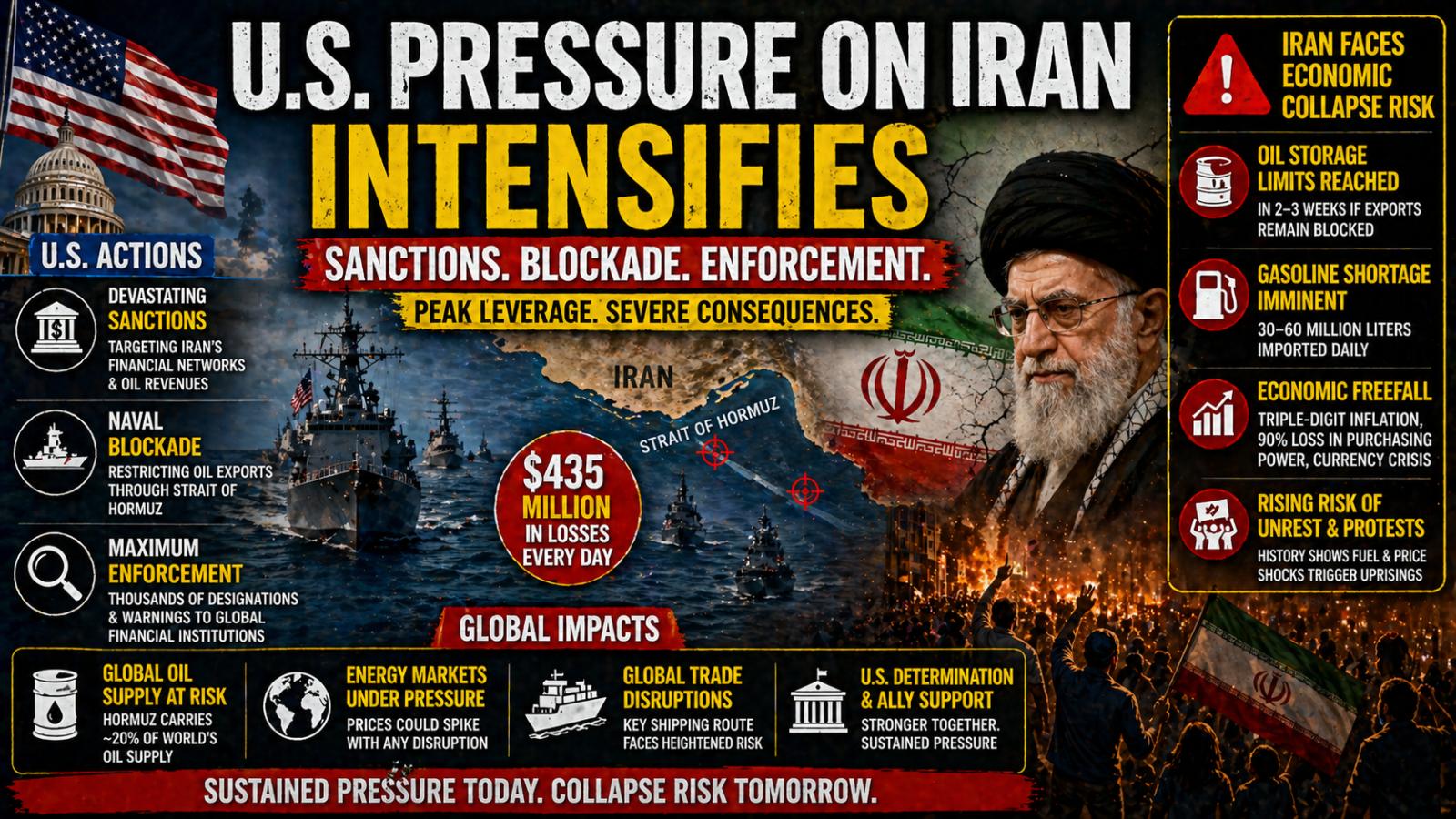
How is U.S. pressure on Iran intensifying? It combines sanctions, blockade, and enforcement as economic and geopolitical forces converge to place unprecedented strain on Tehran, according to a former U.S. Treasury sanctions expert who described the current moment as a rare alignment of leverage. Converging tools create peak economic pressure Miad Maleki, a former Treasury Department sanctions specialist, said the United States is applying multiple pressu
How is U.S. pressure on Iran intensifying? It combines sanctions, blockade, and enforcement
How is U.S. pressure on Iran intensifying? It combines sanctions, blockade, and enforcement as economic and geopolitical forces converge to place unprecedented strain on Tehran, according to a former U.S. Treasury sanctions expert who described the current moment as a rare alignment of leverage. Converging tools create peak economic pressure Miad Maleki, a former Treasury Department sanctions specialist, said the United States is applying multiple pressu
US maintains Hormuz blockade as Iran warns of military response
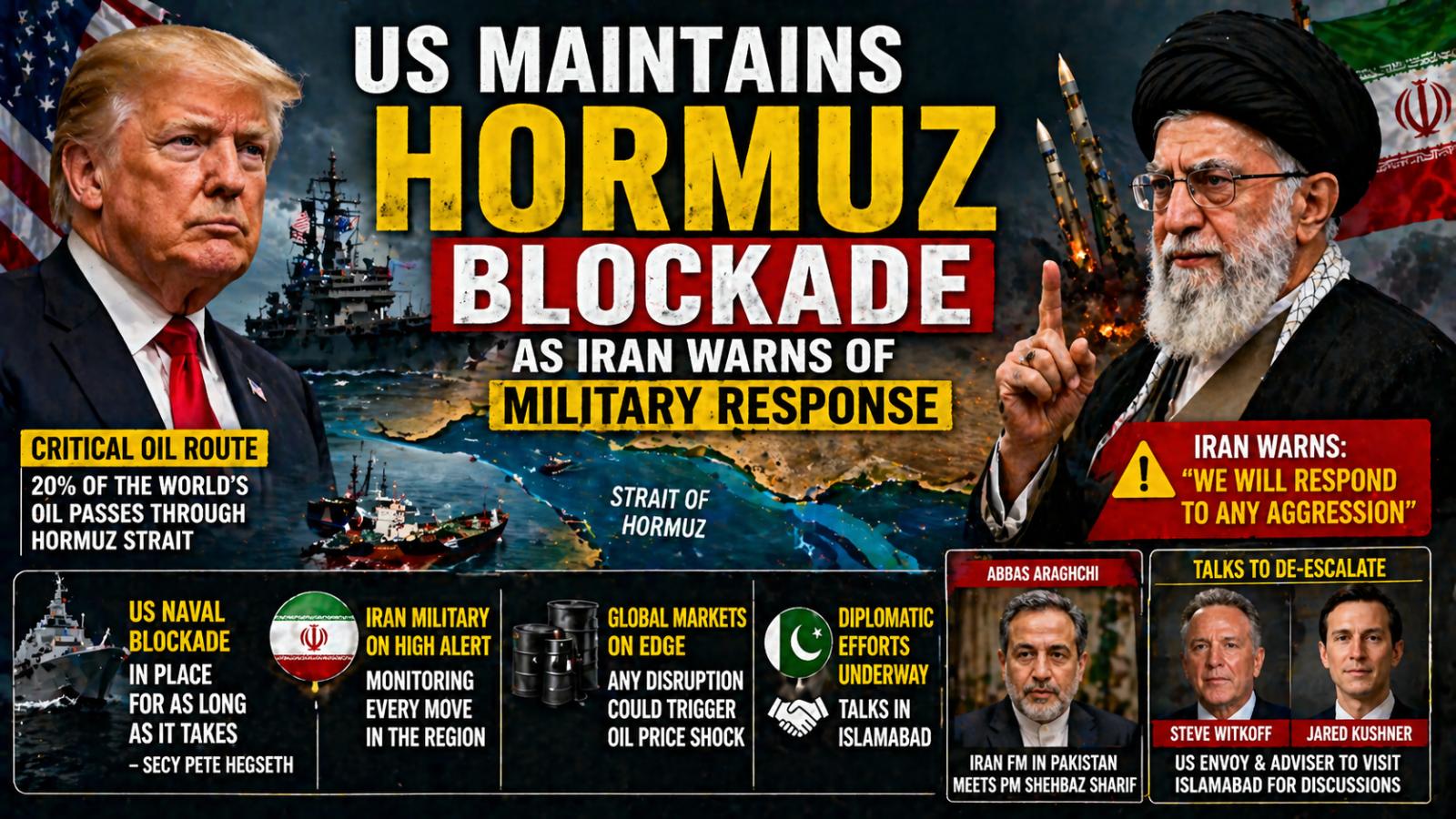
US maintains Hormuz blockade as Iran warns of retaliation, escalating tensions over a key global oil route while both sides pursue parallel diplomatic talks in Pakistan. US maintains Hormuz blockade as Iran warns of military response as tensions escalated on Saturday, April 25, 2026, when Iranian officials warned they would respond if U.S. naval actions targeting Iranian ports continue. The statement, issued through state-run media, described the U.S. presence in t
US maintains Hormuz blockade as Iran warns of military response
US maintains Hormuz blockade as Iran warns of retaliation, escalating tensions over a key global oil route while both sides pursue parallel diplomatic talks in Pakistan. US maintains Hormuz blockade as Iran warns of military response as tensions escalated on Saturday, April 25, 2026, when Iranian officials warned they would respond if U.S. naval actions targeting Iranian ports continue. The statement, issued through state-run media, described the U.S. presence in t
Lavrov criticizes US foreign policy over oil and energy dominance
Russian Foreign Minister Sergei Lavrov has accused the United States of pursuing oil-driven policies in Iran and Venezuela, claiming that control over global energy resources is a central goal of Washington’s foreign strategy. Speaking in a televised interview, Lavrov said the US focuses primarily on its own interests and is willing to use extreme methods to secure access to oil and energy assets in resource-rich nations. Lavrov alleged that US actions in countries such as Iran and Venezuela are not hidden, but openly tied to securing influence over energy markets. According to him, Washington’s approach reflects a broader ambition to dominate global energy supply chains. He argued that such policies show a shift away from international legal norms, suggesting that decisions are increasingly shaped by power rather than agreed rules. The Russian minister also criticized the US for what he described as inconsistent diplomacy. He urged Washington to prioritize dialogue, stating that the US has a pattern of withdrawing from agreements instead of maintaining stable international commitments. His remarks come as American envoys prepare for discussions in Pakistan, signaling ongoing diplomatic engagement in the region. The White House has indicated openness to negotiations with Iran, while maintaining that it will not act under pressure. Meanwhile, Iran’s Foreign Minister Abbas Araghchi has begun a regional visit, adding to the ongoing diplomatic activity surrounding the issue. Lavrov further linked US foreign policy to developments in Europe, particularly in the context of the Ukraine conflict. He accused Washington of encouraging European nations to reduce dependence on Russian gas, framing this as part of a broader geopolitical strategy. According to Lavrov, such moves resemble attempts to reshape global energy dynamics in a way that benefits US interests, raising concerns about a return to power-based international relations.
Lavrov criticizes US foreign policy over oil and energy dominance
Russian Foreign Minister Sergei Lavrov has accused the United States of pursuing oil-driven policies in Iran and Venezuela, claiming that control over global energy resources is a central goal of Washington’s foreign strategy. Speaking in a televised interview, Lavrov said the US focuses primarily on its own interests and is willing to use extreme methods to secure access to oil and energy assets in resource-rich nations. Lavrov alleged that US actions in countries such as Iran and Venezuela are not hidden, but openly tied to securing influence over energy markets. According to him, Washington’s approach reflects a broader ambition to dominate global energy supply chains. He argued that such policies show a shift away from international legal norms, suggesting that decisions are increasingly shaped by power rather than agreed rules. The Russian minister also criticized the US for what he described as inconsistent diplomacy. He urged Washington to prioritize dialogue, stating that the US has a pattern of withdrawing from agreements instead of maintaining stable international commitments. His remarks come as American envoys prepare for discussions in Pakistan, signaling ongoing diplomatic engagement in the region. The White House has indicated openness to negotiations with Iran, while maintaining that it will not act under pressure. Meanwhile, Iran’s Foreign Minister Abbas Araghchi has begun a regional visit, adding to the ongoing diplomatic activity surrounding the issue. Lavrov further linked US foreign policy to developments in Europe, particularly in the context of the Ukraine conflict. He accused Washington of encouraging European nations to reduce dependence on Russian gas, framing this as part of a broader geopolitical strategy. According to Lavrov, such moves resemble attempts to reshape global energy dynamics in a way that benefits US interests, raising concerns about a return to power-based international relations.
Iran airspace resumes operations amid ongoing US-Iran conflict tensions
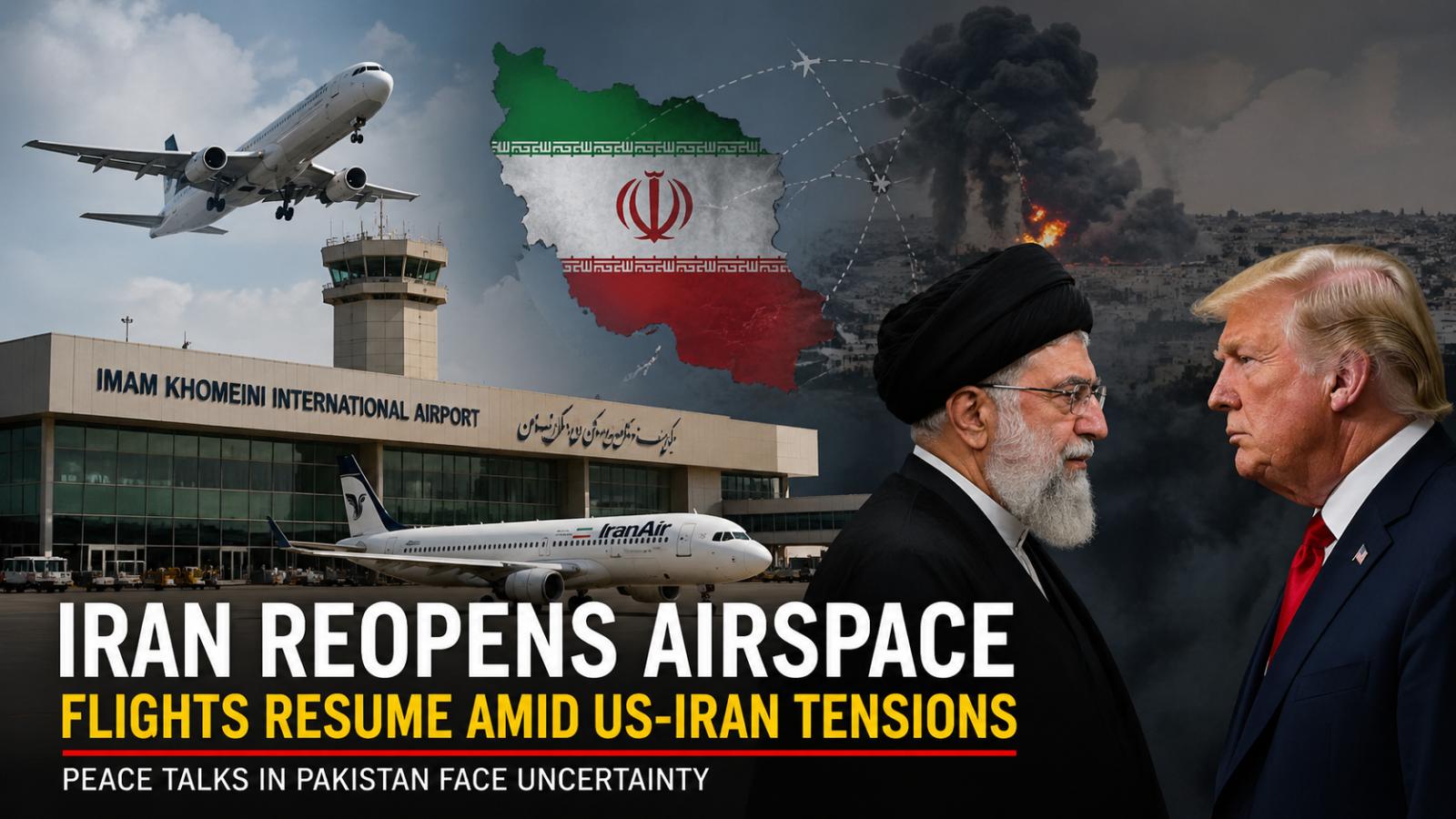
Iran airspace has resumed operations nearly two months after being shut down following joint airstrikes by the United States and Israel, marking a cautious step toward normalcy amid ongoing regional tensions. The reopening of Imam Khomeini International Airport on April 25 signals a gradual recovery in Iran’s aviation sector, even as diplomatic uncertainty continues to cloud the broader US-Iran conflict. The airspace closure was enforced on February 28 after coordinated military action escalated into a wider confrontation, forcing Iran to halt civilian aviation across the country. With security assessments and operational preparations now underway, authorities have begun restoring flight services in phases. Initial departures from Tehran include routes to Medina, Muscat, and Istanbul, reflecting limited but significant progress in reconnecting international travel corridors. Iran’s Civil Aviation Authority has indicated that full restoration of aviation services will depend on continued coordination between military and civilian agencies. Earlier, on April 18, Iran reopened its eastern airspace to international flights, allowing transit operations to resume and easing pressure on regional air traffic routes. Officials emphasize that passenger safety remains the top priority during this phased reopening. At the same time, diplomatic efforts to de-escalate the US-Iran war have encountered fresh complications. A delegation linked to former US President Donald Trump, including envoy Steve Witkoff and adviser Jared Kushner, is currently in Pakistan for a second round of peace talks. However, Iran has clearly denied any direct engagement with US representatives during this visit, raising doubts about the progress of negotiations. Iran’s Foreign Ministry has clarified that its position will be conveyed through Pakistani intermediaries, with Foreign Minister Abbas Araghchi actively involved in discussions aimed at reducing tensions. Tehran continues to describe the conflict as “an externally imposed war of aggression”, stressing the importance of restoring regional stability and easing sanctions pressure. Previous negotiations collapsed after Iran strongly objected to US demands to maintain sanctions and naval restrictions during talks. As both sides remain firm in their positions, the reopening of Iran airspace stands as a significant operational step, even as broader geopolitical challenges remain unresolved.
Iran airspace resumes operations amid ongoing US-Iran conflict tensions
Iran airspace has resumed operations nearly two months after being shut down following joint airstrikes by the United States and Israel, marking a cautious step toward normalcy amid ongoing regional tensions. The reopening of Imam Khomeini International Airport on April 25 signals a gradual recovery in Iran’s aviation sector, even as diplomatic uncertainty continues to cloud the broader US-Iran conflict. The airspace closure was enforced on February 28 after coordinated military action escalated into a wider confrontation, forcing Iran to halt civilian aviation across the country. With security assessments and operational preparations now underway, authorities have begun restoring flight services in phases. Initial departures from Tehran include routes to Medina, Muscat, and Istanbul, reflecting limited but significant progress in reconnecting international travel corridors. Iran’s Civil Aviation Authority has indicated that full restoration of aviation services will depend on continued coordination between military and civilian agencies. Earlier, on April 18, Iran reopened its eastern airspace to international flights, allowing transit operations to resume and easing pressure on regional air traffic routes. Officials emphasize that passenger safety remains the top priority during this phased reopening. At the same time, diplomatic efforts to de-escalate the US-Iran war have encountered fresh complications. A delegation linked to former US President Donald Trump, including envoy Steve Witkoff and adviser Jared Kushner, is currently in Pakistan for a second round of peace talks. However, Iran has clearly denied any direct engagement with US representatives during this visit, raising doubts about the progress of negotiations. Iran’s Foreign Ministry has clarified that its position will be conveyed through Pakistani intermediaries, with Foreign Minister Abbas Araghchi actively involved in discussions aimed at reducing tensions. Tehran continues to describe the conflict as “an externally imposed war of aggression”, stressing the importance of restoring regional stability and easing sanctions pressure. Previous negotiations collapsed after Iran strongly objected to US demands to maintain sanctions and naval restrictions during talks. As both sides remain firm in their positions, the reopening of Iran airspace stands as a significant operational step, even as broader geopolitical challenges remain unresolved.
West Asia tensions rise as US envoys head to Pakistan for Iran talks
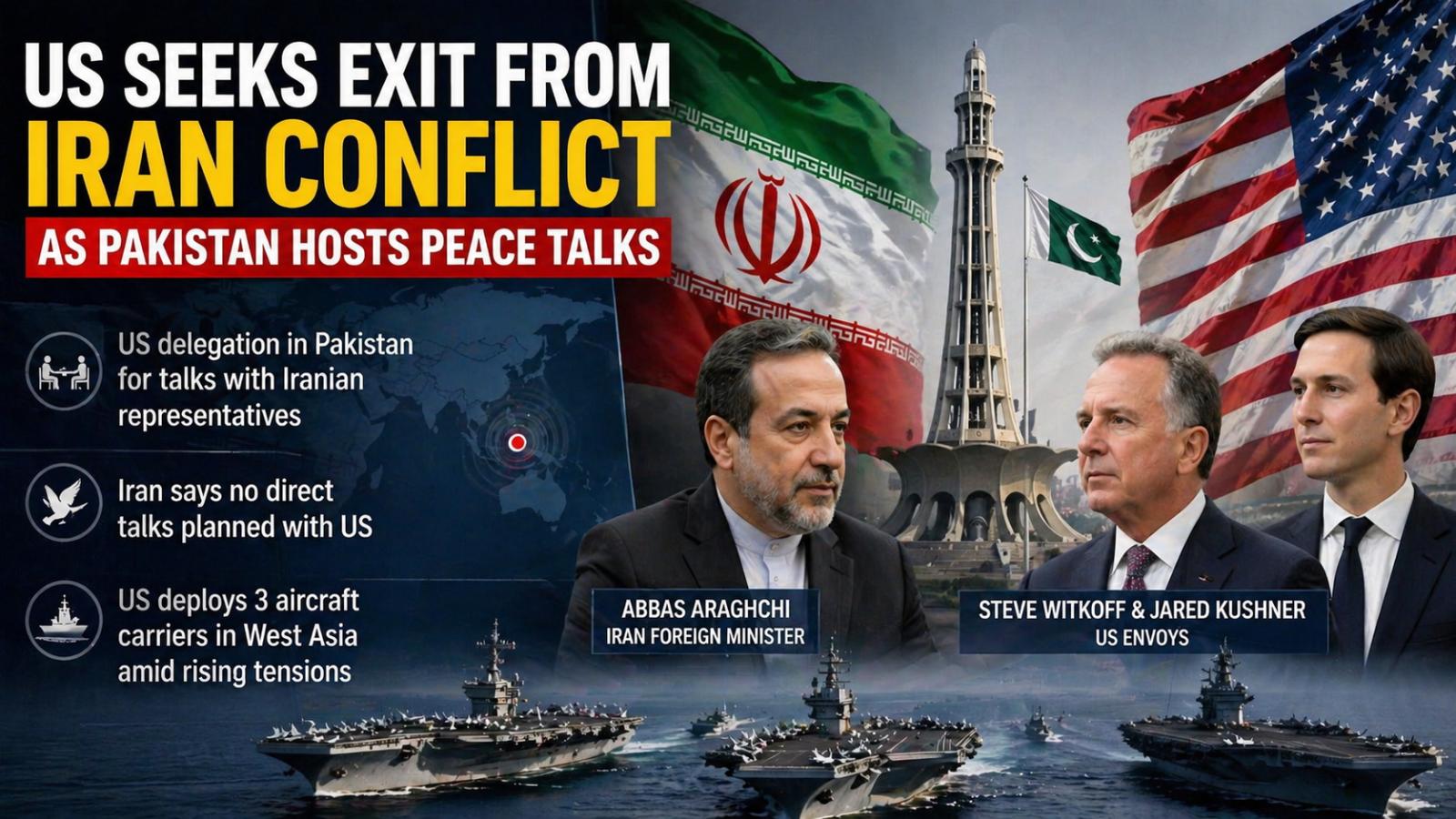
The US Iran conflict has entered a critical phase as Iran’s Defence Ministry claimed that the United States is seeking a “face-saving” way to exit the war, even as Washington sends a delegation to Pakistan for peace talks. The statement highlights growing diplomatic activity alongside rising military tensions in West Asia, with Pakistan emerging as a key mediator in the crisis. According to Iranian media reports, a defence ministry spokesperson said that Iran’s military strength has become dominant in the region, forcing the United States to look for a way out of what it described as a prolonged and difficult conflict. The remarks come at a time when US envoys Steve Witkoff and Jared Kushner are heading to Pakistan for discussions that the White House said would include talks with Iranian representatives. However, Iran has publicly denied plans for direct negotiations with the United States. Iranian Foreign Minister Abbas Araghchi arrived in Islamabad for an official visit and is scheduled to meet senior Pakistani officials. Iranian Foreign Ministry spokesperson Esmaeil Baqaei clarified that the visit is focused on consultations with Pakistan as part of its mediation efforts and not on direct dialogue with the US. He added that Iran’s position would be communicated through Pakistani channels. The diplomatic developments unfold against a backdrop of intensifying West Asia tensions, particularly around the Strait of Hormuz, a vital global oil route. The United States has significantly increased its military presence in the region, deploying three aircraft carrier strike groups, marking the largest such deployment since the Iraq war in 2003. According to US Central Command, the deployment includes more than 200 aircraft and around 15,000 personnel. As both diplomatic and military activities escalate, uncertainty remains over whether meaningful progress toward de-escalation can be achieved. While Pakistan continues its mediation role, the absence of direct Iran-US talks suggests that a resolution may still be distant, keeping the region on edge.
West Asia tensions rise as US envoys head to Pakistan for Iran talks
The US Iran conflict has entered a critical phase as Iran’s Defence Ministry claimed that the United States is seeking a “face-saving” way to exit the war, even as Washington sends a delegation to Pakistan for peace talks. The statement highlights growing diplomatic activity alongside rising military tensions in West Asia, with Pakistan emerging as a key mediator in the crisis. According to Iranian media reports, a defence ministry spokesperson said that Iran’s military strength has become dominant in the region, forcing the United States to look for a way out of what it described as a prolonged and difficult conflict. The remarks come at a time when US envoys Steve Witkoff and Jared Kushner are heading to Pakistan for discussions that the White House said would include talks with Iranian representatives. However, Iran has publicly denied plans for direct negotiations with the United States. Iranian Foreign Minister Abbas Araghchi arrived in Islamabad for an official visit and is scheduled to meet senior Pakistani officials. Iranian Foreign Ministry spokesperson Esmaeil Baqaei clarified that the visit is focused on consultations with Pakistan as part of its mediation efforts and not on direct dialogue with the US. He added that Iran’s position would be communicated through Pakistani channels. The diplomatic developments unfold against a backdrop of intensifying West Asia tensions, particularly around the Strait of Hormuz, a vital global oil route. The United States has significantly increased its military presence in the region, deploying three aircraft carrier strike groups, marking the largest such deployment since the Iraq war in 2003. According to US Central Command, the deployment includes more than 200 aircraft and around 15,000 personnel. As both diplomatic and military activities escalate, uncertainty remains over whether meaningful progress toward de-escalation can be achieved. While Pakistan continues its mediation role, the absence of direct Iran-US talks suggests that a resolution may still be distant, keeping the region on edge.
US envoys to visit Pakistan for renewed Iran talks amid ongoing tensions
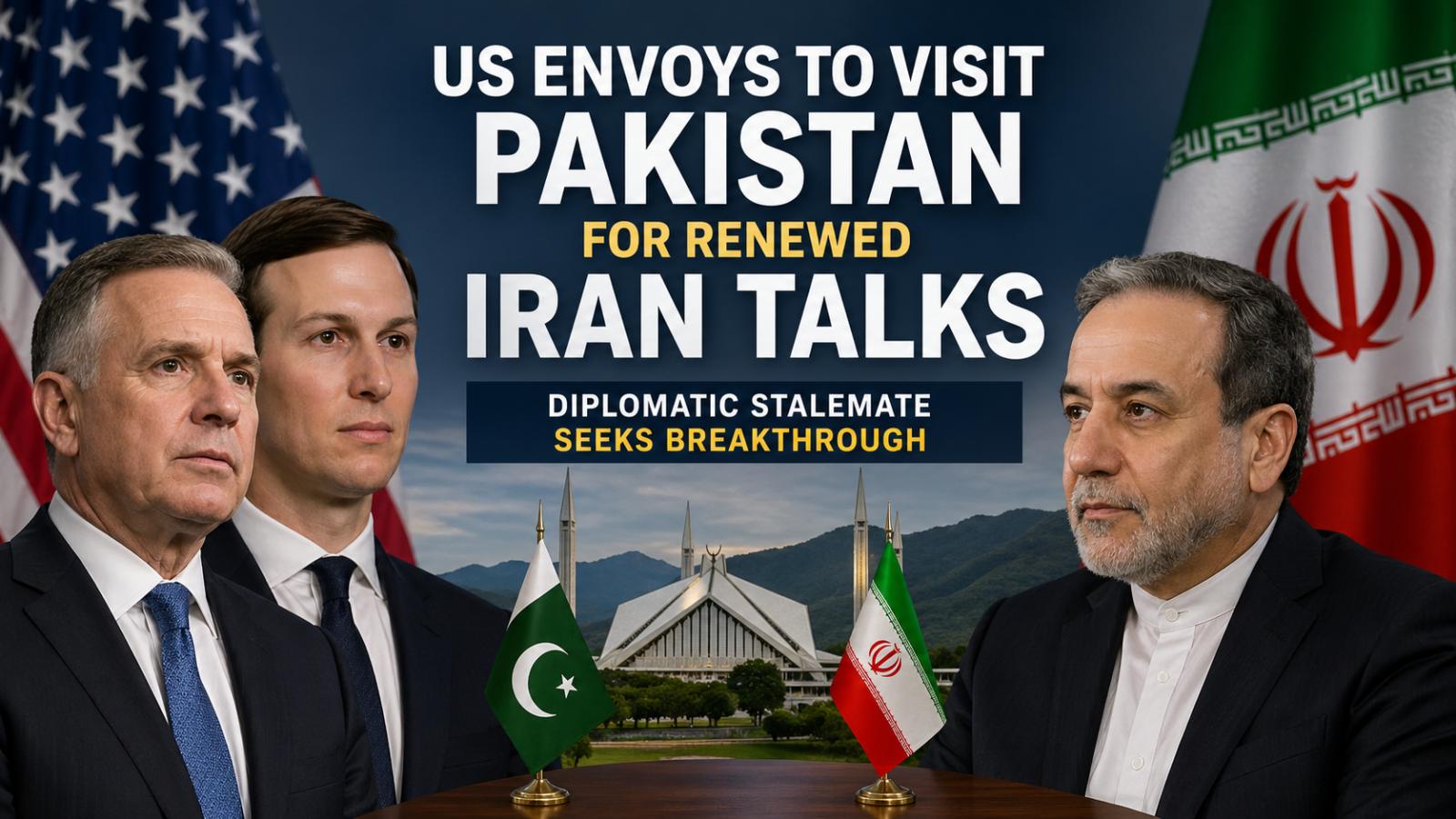
After several days of diplomatic deadlock, the United States has confirmed that senior envoys Steve Witkoff and Jared Kushner will travel to Pakistan for a fresh round of negotiations with Iran, signaling a renewed effort to address escalating tensions between the two nations. The visit is scheduled for Saturday and follows Iran’s request for direct, in-person discussions. White House Press Secretary Karoline Leavitt stated that the move comes after Iran reached out for dialogue, aligning with earlier calls from US leadership to reopen communication channels. She emphasized that the envoys will assess the situation on the ground and report back to President Donald Trump and Vice President JD Vance, while additional officials remain on standby if required. The upcoming talks mark the second round of discussions in Pakistan, following initial meetings held earlier this month. However, notable figures such as Vice President Vance and Iranian parliamentary leader Mohammad Bagher Ghalibaf, who were involved previously, will not participate in this phase. Their absence highlights a shift in the structure of the negotiations. Iran’s Foreign Minister Abbas Araghchi recently announced a regional diplomatic tour that includes Pakistan, Oman, and Russia. His stated objective is to strengthen coordination with key partners on bilateral and regional issues, underlining Iran’s strategic engagement with neighboring countries during a period of heightened geopolitical tension. What are the main sticking points in the talks? The primary disagreements revolve around Iran’s nuclear program and control over the Strait of Hormuz. Iran has insisted it will not proceed with negotiations unless the United States lifts its blockade in the strategic waterway. In contrast, the US is demanding verifiable guarantees that Iran will halt its nuclear ambitions and ease its own restrictions in the region. At a recent Pentagon briefing, US Defense Secretary Pete Hegseth reiterated that the United States is not under pressure to finalize an agreement quickly. He indicated that Washington is prepared for prolonged negotiations, while also stressing that Iran has an opportunity to secure a favorable and pragmatic deal if it chooses to engage constructively. The renewed diplomatic effort in Pakistan reflects a cautious but significant step toward resolving one of the most critical international disputes, with both sides maintaining firm positions as negotiations resume.
US envoys to visit Pakistan for renewed Iran talks amid ongoing tensions
After several days of diplomatic deadlock, the United States has confirmed that senior envoys Steve Witkoff and Jared Kushner will travel to Pakistan for a fresh round of negotiations with Iran, signaling a renewed effort to address escalating tensions between the two nations. The visit is scheduled for Saturday and follows Iran’s request for direct, in-person discussions. White House Press Secretary Karoline Leavitt stated that the move comes after Iran reached out for dialogue, aligning with earlier calls from US leadership to reopen communication channels. She emphasized that the envoys will assess the situation on the ground and report back to President Donald Trump and Vice President JD Vance, while additional officials remain on standby if required. The upcoming talks mark the second round of discussions in Pakistan, following initial meetings held earlier this month. However, notable figures such as Vice President Vance and Iranian parliamentary leader Mohammad Bagher Ghalibaf, who were involved previously, will not participate in this phase. Their absence highlights a shift in the structure of the negotiations. Iran’s Foreign Minister Abbas Araghchi recently announced a regional diplomatic tour that includes Pakistan, Oman, and Russia. His stated objective is to strengthen coordination with key partners on bilateral and regional issues, underlining Iran’s strategic engagement with neighboring countries during a period of heightened geopolitical tension. What are the main sticking points in the talks? The primary disagreements revolve around Iran’s nuclear program and control over the Strait of Hormuz. Iran has insisted it will not proceed with negotiations unless the United States lifts its blockade in the strategic waterway. In contrast, the US is demanding verifiable guarantees that Iran will halt its nuclear ambitions and ease its own restrictions in the region. At a recent Pentagon briefing, US Defense Secretary Pete Hegseth reiterated that the United States is not under pressure to finalize an agreement quickly. He indicated that Washington is prepared for prolonged negotiations, while also stressing that Iran has an opportunity to secure a favorable and pragmatic deal if it chooses to engage constructively. The renewed diplomatic effort in Pakistan reflects a cautious but significant step toward resolving one of the most critical international disputes, with both sides maintaining firm positions as negotiations resume.
US deploys three aircraft carriers to Middle East amid Iran tensions
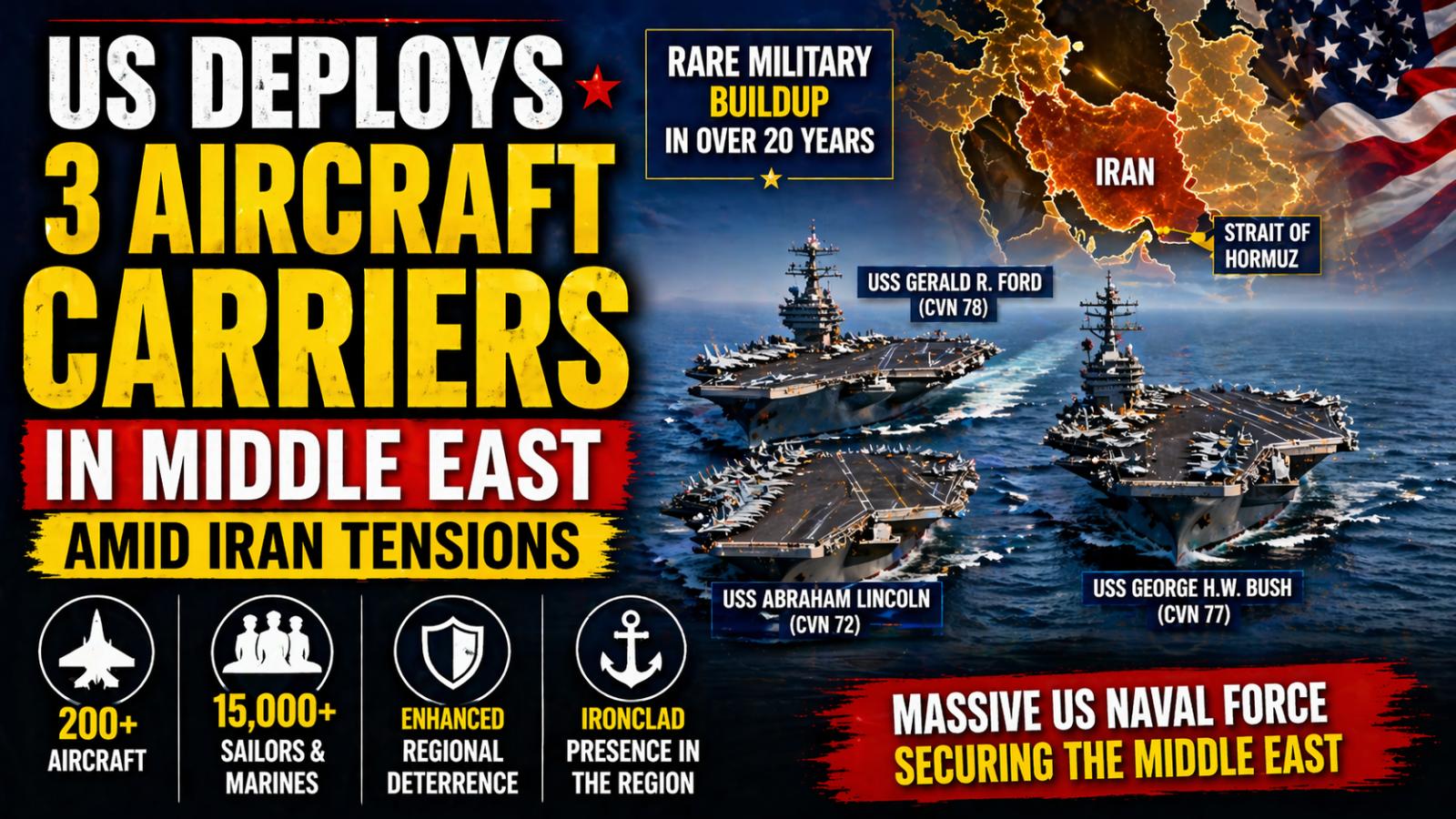
US deploys three aircraft carriers to the Middle East amid Iran tensions, expanding naval operations and reinforcing security in key maritime routes including the Strait of Hormuz. US deploys three aircraft carriers to Middle East amid Iran tensions as Washington significantly expands its military footprint across the region, marking one of the largest naval concentrations in more than two decades. Officials confirmed that three carrier strike groups—the USS Abraham Lincoln, USS Gerald R. Ford, and USS George H.W. Bush—are operating simultaneously, supported by more than 200 aircraft and approximately 15,000 sailors and Marines. A statement from US Central Command on Thursday confirmed the rare deployment, describing it as a significant concentration of naval power aimed at maintaining operational readiness amid rising tensions involving Iran. The carrier groups and their air wings are conducting coordinated missions, underscoring the strategic importance of key maritime routes in the Middle East and reinforcing a broader posture of deterrence. The announcement coincided with remarks from Donald Trump on Thursday, who declined to provide a timeline for a potential resolution to the Iran conflict. He indicated that any agreement would depend on conditions favorable to US interests, highlighting ongoing uncertainty surrounding diplomatic efforts. The absence of a clear timeline has aligned with increased military activity and messaging focused on regional stability. Defense officials stated on Friday that the US blockade of Iranian vessels in the Strait of Hormuz remains “ironclad,” with additional naval assets expected to join the operation in the coming days. The expanding mission signals a broader enforcement effort in one of the world’s most critical shipping corridors. The USS George H.W. Bush, commissioned in 2009, is among the newest Nimitz-class carriers involved, measuring nearly 1,000 feet in length and powered by two nuclear reactors, with the capacity to carry more than 80 aircraft and support a crew exceeding 5,500 personnel.
US deploys three aircraft carriers to Middle East amid Iran tensions
US deploys three aircraft carriers to the Middle East amid Iran tensions, expanding naval operations and reinforcing security in key maritime routes including the Strait of Hormuz. US deploys three aircraft carriers to Middle East amid Iran tensions as Washington significantly expands its military footprint across the region, marking one of the largest naval concentrations in more than two decades. Officials confirmed that three carrier strike groups—the USS Abraham Lincoln, USS Gerald R. Ford, and USS George H.W. Bush—are operating simultaneously, supported by more than 200 aircraft and approximately 15,000 sailors and Marines. A statement from US Central Command on Thursday confirmed the rare deployment, describing it as a significant concentration of naval power aimed at maintaining operational readiness amid rising tensions involving Iran. The carrier groups and their air wings are conducting coordinated missions, underscoring the strategic importance of key maritime routes in the Middle East and reinforcing a broader posture of deterrence. The announcement coincided with remarks from Donald Trump on Thursday, who declined to provide a timeline for a potential resolution to the Iran conflict. He indicated that any agreement would depend on conditions favorable to US interests, highlighting ongoing uncertainty surrounding diplomatic efforts. The absence of a clear timeline has aligned with increased military activity and messaging focused on regional stability. Defense officials stated on Friday that the US blockade of Iranian vessels in the Strait of Hormuz remains “ironclad,” with additional naval assets expected to join the operation in the coming days. The expanding mission signals a broader enforcement effort in one of the world’s most critical shipping corridors. The USS George H.W. Bush, commissioned in 2009, is among the newest Nimitz-class carriers involved, measuring nearly 1,000 feet in length and powered by two nuclear reactors, with the capacity to carry more than 80 aircraft and support a crew exceeding 5,500 personnel.
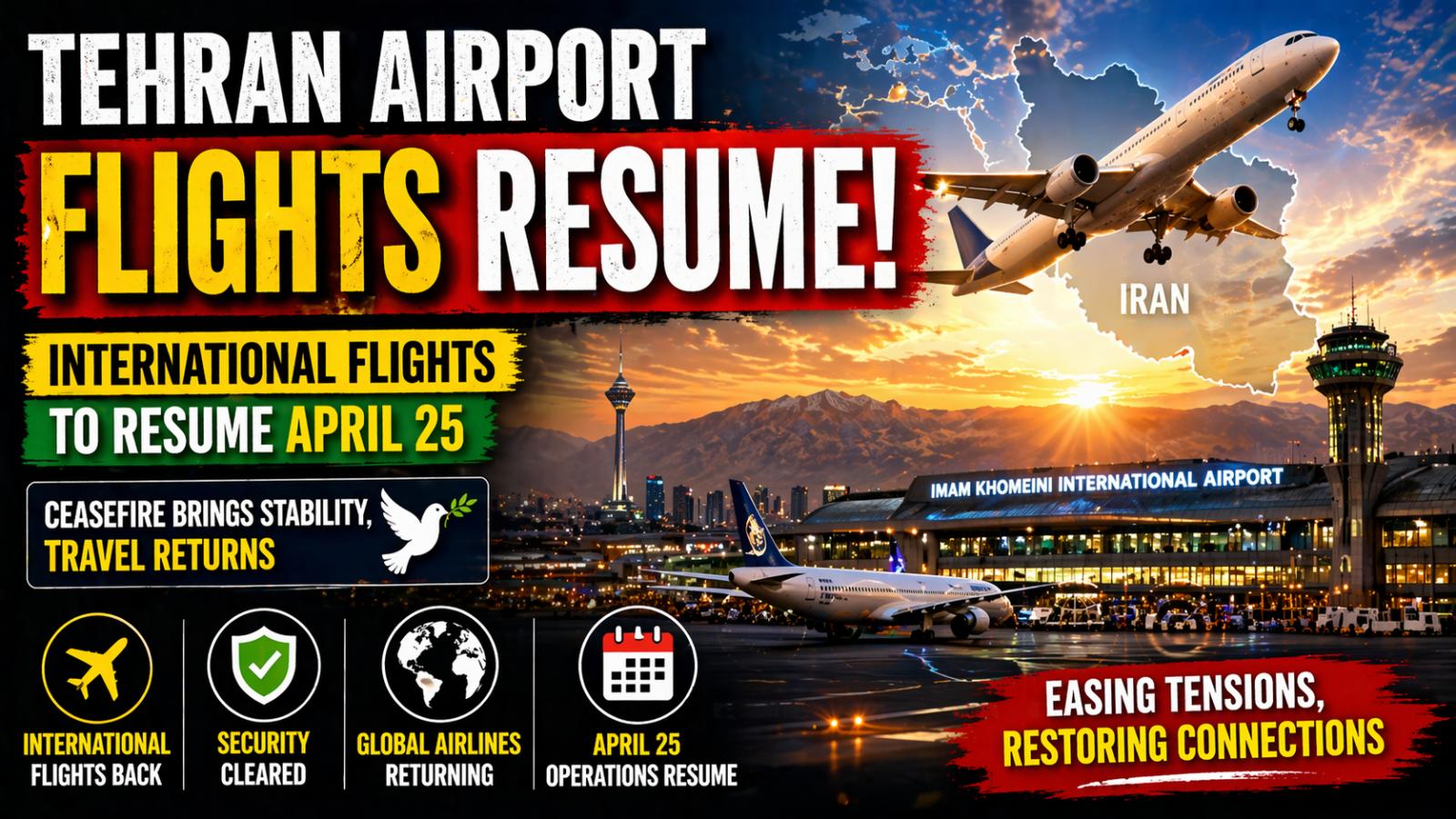
What does Tehran airport reopening signal? It marks easing regional tensions
What does Tehran airport reopening signal? It marks easing regional tensions, Tehran’s primary international gateway is preparing to resume global flight operations on Saturday, April 25, 2026, according to Iranian aviation authorities, marking a significant step toward restoring stability after a week-long suspension tied to heightened regional tensions. Airport reopening follows week-long aviation shutdown Imam Khomeini International
What does Tehran airport reopening signal? It marks easing regional tensions
What does Tehran airport reopening signal? It marks easing regional tensions, Tehran’s primary international gateway is preparing to resume global flight operations on Saturday, April 25, 2026, according to Iranian aviation authorities, marking a significant step toward restoring stability after a week-long suspension tied to heightened regional tensions. Airport reopening follows week-long aviation shutdown Imam Khomeini International
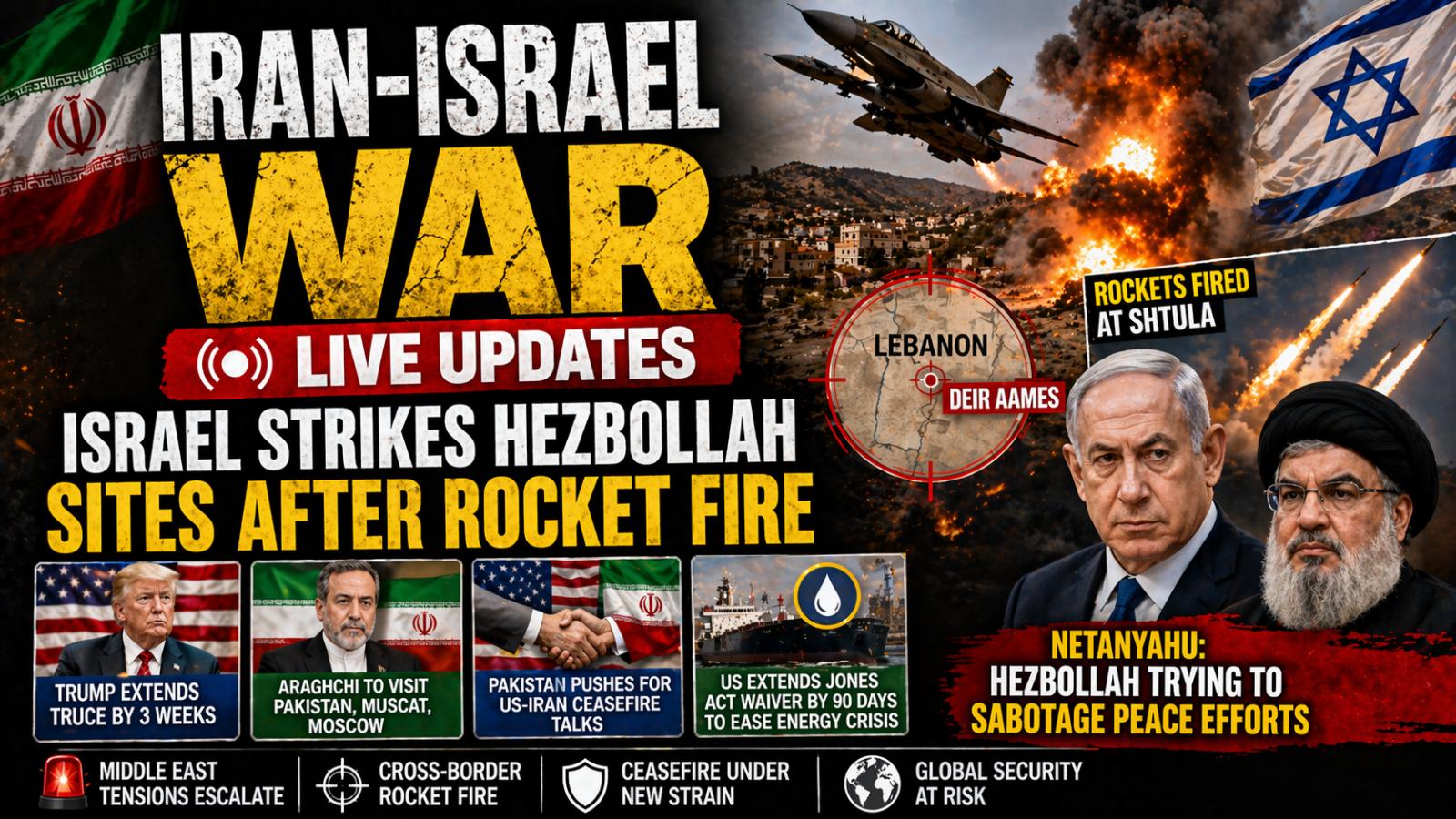
Netanyahu accuses Hezbollah of sabotaging Israel-Lebanon peace efforts
Israel strikes Hezbollah targets after rocket fire from Lebanon as tensions persist despite a truce extension, while diplomatic efforts and US energy measures reflect widening regional impact. Iran-Israel war live updates: Israel strikes Hezbollah sites after rocket fire as regional tensions escalated on Friday, April 24, 2026, with the Israeli military confirming strikes on Hezbollah-linked locations in southern Lebanon following cross-border rocket launches. The Israeli military stated that it targeted sites near the town of Deir Aames after rockets were fired toward the Israeli town of Shtula a day earlier. Deir Aames lies outside the designated border buffer zone that Israeli forces have continued to occupy even after a 10-day ceasefire agreement implemented the previous week. Earlier on Friday, April 24, 2026, the military issued evacuation warnings urging residents to leave the area before the strikes. The renewed hostilities come despite diplomatic efforts to maintain calm. U.S. President Donald Trump announced on Thursday, April 23, 2026, a three-week extension of the Israel-Hezbollah truce. However, both sides have continued intermittent exchanges of fire, raising concerns about the durability of the ceasefire. Israeli Prime Minister Benjamin Netanyahu accused Hezbollah of undermining peace efforts, stating on Friday, April 24, 2026, that the group was attempting to “sabotage” negotiations aimed at reaching a long-term agreement between Israel and Lebanon. His remarks marked his first public comments following the truce extension. Meanwhile, diplomatic activity continued across the region. Iranian Foreign Minister Abbas Araghchi said his upcoming visits to Islamabad, Muscat, and Moscow are intended to coordinate with regional partners and discuss evolving developments. While he did not directly address potential talks with the United States, officials in Pakistan have recently intensified efforts to facilitate renewed ceasefire negotiations between Washington and Tehran. In Washington, the White House announced an extension of a waiver to the Jones Act by 90 days on Friday, April 24, 2026. The measure is designed to ease domestic energy supply pressures amid disruptions linked to the broader West Asia conflict. Officials said the extension would help maintain the flow of oil and natural gas within the United States by allowing greater flexibility in maritime transport. The combination of military actions, diplomatic outreach, and economic measures underscores the widening impact of the conflict, with regional instability continuing to influence global security and energy markets.
Netanyahu accuses Hezbollah of sabotaging Israel-Lebanon peace efforts
Israel strikes Hezbollah targets after rocket fire from Lebanon as tensions persist despite a truce extension, while diplomatic efforts and US energy measures reflect widening regional impact. Iran-Israel war live updates: Israel strikes Hezbollah sites after rocket fire as regional tensions escalated on Friday, April 24, 2026, with the Israeli military confirming strikes on Hezbollah-linked locations in southern Lebanon following cross-border rocket launches. The Israeli military stated that it targeted sites near the town of Deir Aames after rockets were fired toward the Israeli town of Shtula a day earlier. Deir Aames lies outside the designated border buffer zone that Israeli forces have continued to occupy even after a 10-day ceasefire agreement implemented the previous week. Earlier on Friday, April 24, 2026, the military issued evacuation warnings urging residents to leave the area before the strikes. The renewed hostilities come despite diplomatic efforts to maintain calm. U.S. President Donald Trump announced on Thursday, April 23, 2026, a three-week extension of the Israel-Hezbollah truce. However, both sides have continued intermittent exchanges of fire, raising concerns about the durability of the ceasefire. Israeli Prime Minister Benjamin Netanyahu accused Hezbollah of undermining peace efforts, stating on Friday, April 24, 2026, that the group was attempting to “sabotage” negotiations aimed at reaching a long-term agreement between Israel and Lebanon. His remarks marked his first public comments following the truce extension. Meanwhile, diplomatic activity continued across the region. Iranian Foreign Minister Abbas Araghchi said his upcoming visits to Islamabad, Muscat, and Moscow are intended to coordinate with regional partners and discuss evolving developments. While he did not directly address potential talks with the United States, officials in Pakistan have recently intensified efforts to facilitate renewed ceasefire negotiations between Washington and Tehran. In Washington, the White House announced an extension of a waiver to the Jones Act by 90 days on Friday, April 24, 2026. The measure is designed to ease domestic energy supply pressures amid disruptions linked to the broader West Asia conflict. Officials said the extension would help maintain the flow of oil and natural gas within the United States by allowing greater flexibility in maritime transport. The combination of military actions, diplomatic outreach, and economic measures underscores the widening impact of the conflict, with regional instability continuing to influence global security and energy markets.

How did Dr. Rajkumar influence Kannada cinema and earn top honors?
How did Dr. Rajkumar influence Kannada cinema and earn top honors? remains a defining question in understanding Indian cinema, particularly in southern India. Dr. Rajkumar, born on April 24, 1929, in Karnataka, India, rose from a theater background to become one of the most respected actors in Kannada cinema. Raised in a family of stage performers, his early exposure to acting shaped a disciplined and values-driven career that spanned decades. Early life and rise in Kannada cinema Rajkumar’s upbringing in rural Karnataka and his work in traveling theater troupes laid the foundation for his entry into films. He made his cinematic debut in the 1950s with Bedara Kannappa, a mythological film where he portrayed a devoted follower of Lord Shiva. The film marked a turning point in Kannada cinema and established him as a leading actor. Over time, he went on to act in more than 200 films, earning widespread recognition Film career success and lasting impact Over the course of his career, Rajkumar became synonymous with Kannada cinema, often referred to as “Annavru.” His films consistently performed well at the box office and carried strong social messages. One of his most influential works, Bangarada Manushya, portrayed a man returning to agriculture, inspiring many toward rural development and farming. Decades later, Jeevana Chaitra highlighted his enduring appeal, where he played an elderly villager reflecting on changing societal values. Contributions as a playback singer In addition to acting, Rajkumar was an accomplished playback singer. His songs, often rooted in classical traditions, gained widespread popularity. His performance in “Nadamaya” from Jeevana Chaitra earned him national recognition, further establishing his versatility in Indian cinema. Awards, honors, and public recognition Rajkumar received numerous prestigious honors for his contributions to cinema and culture. He was awarded the Dadasaheb Phalke Award in 1995, India’s highest recognition in film. He also received the Padma Bhushan in 1983, one of the country’s top civilian honors. In 1992, he was conferred the Karnataka Ratna, recognizing his profound influence on the state’s cultural identity. Role in Gokak protest and personal principles During the Gokak agitation in the 1980s, Rajkumar played an active role in advocating for the primacy of the Kannada language in education. His involvement brought widespread attention to the movement and reinforced his position as a cultural leader. Strict on-screen rule against smoking and alcohol portrayal One of his most defining personal principles was his conscious decision to never smoke or consume alcohol in his on-screen roles. Given his immense popularity and influence, he believed audiences—especially younger fans—might imitate his behavior. This deliberate choice reflected his sense of responsibility as a public figure and strengthened his reputation as a disciplined and value-driven icon. Rajkumar’s legacy continues to influence Indian cinema and cultural identity, making his life and career a lasting point of reference for artists and audiences alike.
How did Dr. Rajkumar influence Kannada cinema and earn top honors?
How did Dr. Rajkumar influence Kannada cinema and earn top honors? remains a defining question in understanding Indian cinema, particularly in southern India. Dr. Rajkumar, born on April 24, 1929, in Karnataka, India, rose from a theater background to become one of the most respected actors in Kannada cinema. Raised in a family of stage performers, his early exposure to acting shaped a disciplined and values-driven career that spanned decades. Early life and rise in Kannada cinema Rajkumar’s upbringing in rural Karnataka and his work in traveling theater troupes laid the foundation for his entry into films. He made his cinematic debut in the 1950s with Bedara Kannappa, a mythological film where he portrayed a devoted follower of Lord Shiva. The film marked a turning point in Kannada cinema and established him as a leading actor. Over time, he went on to act in more than 200 films, earning widespread recognition Film career success and lasting impact Over the course of his career, Rajkumar became synonymous with Kannada cinema, often referred to as “Annavru.” His films consistently performed well at the box office and carried strong social messages. One of his most influential works, Bangarada Manushya, portrayed a man returning to agriculture, inspiring many toward rural development and farming. Decades later, Jeevana Chaitra highlighted his enduring appeal, where he played an elderly villager reflecting on changing societal values. Contributions as a playback singer In addition to acting, Rajkumar was an accomplished playback singer. His songs, often rooted in classical traditions, gained widespread popularity. His performance in “Nadamaya” from Jeevana Chaitra earned him national recognition, further establishing his versatility in Indian cinema. Awards, honors, and public recognition Rajkumar received numerous prestigious honors for his contributions to cinema and culture. He was awarded the Dadasaheb Phalke Award in 1995, India’s highest recognition in film. He also received the Padma Bhushan in 1983, one of the country’s top civilian honors. In 1992, he was conferred the Karnataka Ratna, recognizing his profound influence on the state’s cultural identity. Role in Gokak protest and personal principles During the Gokak agitation in the 1980s, Rajkumar played an active role in advocating for the primacy of the Kannada language in education. His involvement brought widespread attention to the movement and reinforced his position as a cultural leader. Strict on-screen rule against smoking and alcohol portrayal One of his most defining personal principles was his conscious decision to never smoke or consume alcohol in his on-screen roles. Given his immense popularity and influence, he believed audiences—especially younger fans—might imitate his behavior. This deliberate choice reflected his sense of responsibility as a public figure and strengthened his reputation as a disciplined and value-driven icon. Rajkumar’s legacy continues to influence Indian cinema and cultural identity, making his life and career a lasting point of reference for artists and audiences alike.
Why did Ali Shirazi demand an apology from Donald Trump? Iran seeks accountability after Khamenei killing
Escalating diplomatic tensions after Tehran strike Why did Ali Shirazi demand an apology from Donald Trump? Iran seeks accountability after Khamenei killing, as senior Iranian cleric Ali Shirazi called on U.S. President Donald Trump to publicly acknowledge wrongdoing following t
Why did Ali Shirazi demand an apology from Donald Trump? Iran seeks accountability after Khamenei killing
Escalating diplomatic tensions after Tehran strike Why did Ali Shirazi demand an apology from Donald Trump? Iran seeks accountability after Khamenei killing, as senior Iranian cleric Ali Shirazi called on U.S. President Donald Trump to publicly acknowledge wrongdoing following t
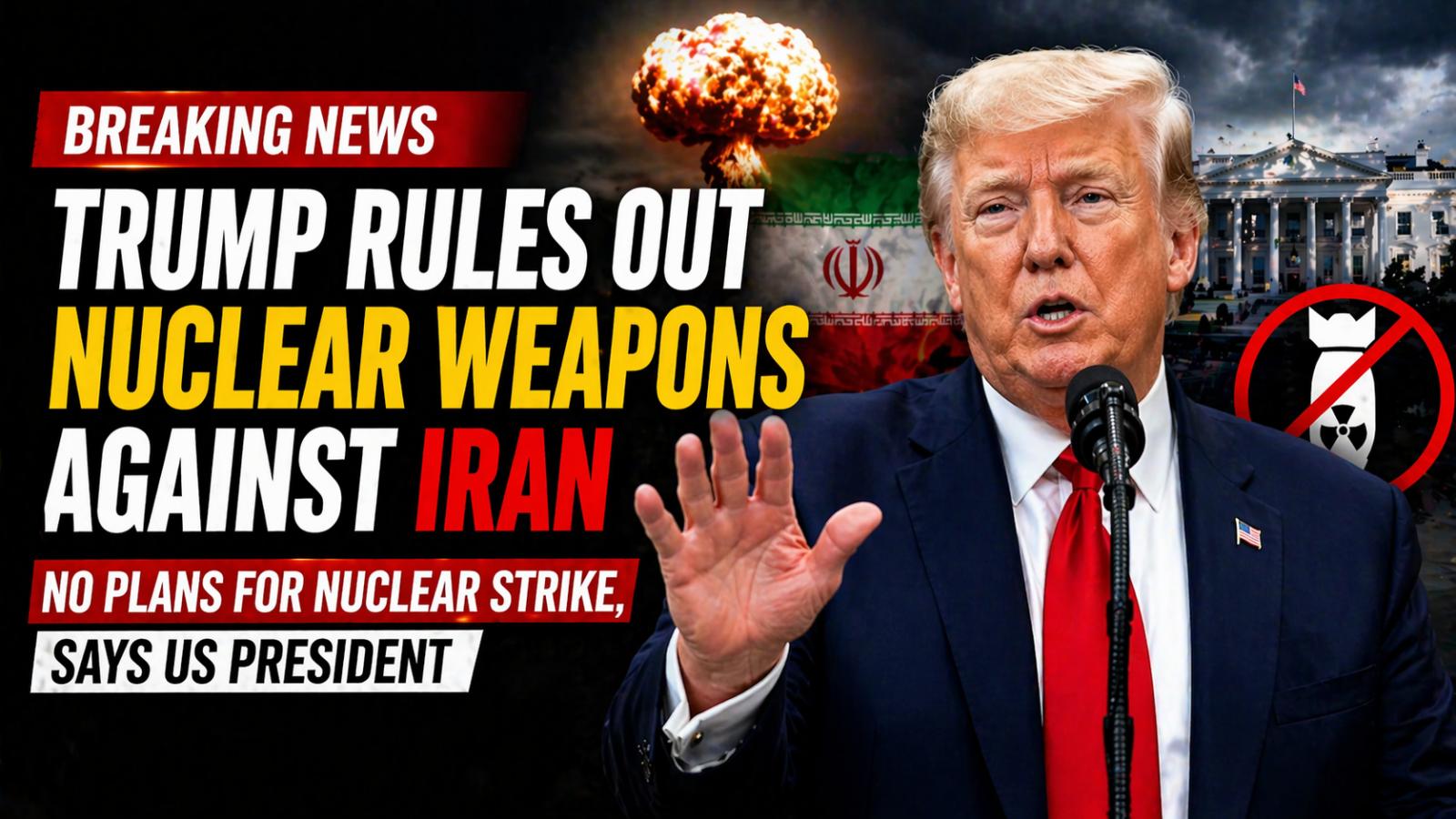
US President Says No Plans for Nuclear Strike on Iran
Donald Trump stated that the United States currently has no intention of using nuclear weapons against Iran, offering clarity on a key concern amid ongoing geopolitical tensions. Speaking to reporters at the White House, Trump emphasized that conventional military actions had already achieved significant results without the need for nuclear escalation. Addressing recent speculation, Trump said there was no justification for deploying nuclear weapons, noting that existing strategies had been effective. His remarks come after earlier statements that had drawn international attention, where strong rhetoric raised concerns about the potential use of extreme measures during the conflict that began earlier this year. The president reiterated that nuclear weapons should not be used by any nation, signaling a shift toward a more restrained public stance. At the same time, he underscored the administration’s objective of preventing Iran from developing nuclear capabilities that could pose a threat to regional and global security. Comments from senior officials have also contributed to the broader discussion. JD Vance had previously indicated that the United States was prepared to escalate its response if necessary, though the White House clarified that such remarks did not imply nuclear action. Trump’s latest statement appears to balance deterrence with reassurance, highlighting a focus on maintaining pressure through conventional means while avoiding the risks associated with nuclear engagement. As tensions persist, the administration continues to stress its commitment to preventing further escalation while safeguarding national interests and stability in the region.
US President Says No Plans for Nuclear Strike on Iran
Donald Trump stated that the United States currently has no intention of using nuclear weapons against Iran, offering clarity on a key concern amid ongoing geopolitical tensions. Speaking to reporters at the White House, Trump emphasized that conventional military actions had already achieved significant results without the need for nuclear escalation. Addressing recent speculation, Trump said there was no justification for deploying nuclear weapons, noting that existing strategies had been effective. His remarks come after earlier statements that had drawn international attention, where strong rhetoric raised concerns about the potential use of extreme measures during the conflict that began earlier this year. The president reiterated that nuclear weapons should not be used by any nation, signaling a shift toward a more restrained public stance. At the same time, he underscored the administration’s objective of preventing Iran from developing nuclear capabilities that could pose a threat to regional and global security. Comments from senior officials have also contributed to the broader discussion. JD Vance had previously indicated that the United States was prepared to escalate its response if necessary, though the White House clarified that such remarks did not imply nuclear action. Trump’s latest statement appears to balance deterrence with reassurance, highlighting a focus on maintaining pressure through conventional means while avoiding the risks associated with nuclear engagement. As tensions persist, the administration continues to stress its commitment to preventing further escalation while safeguarding national interests and stability in the region.
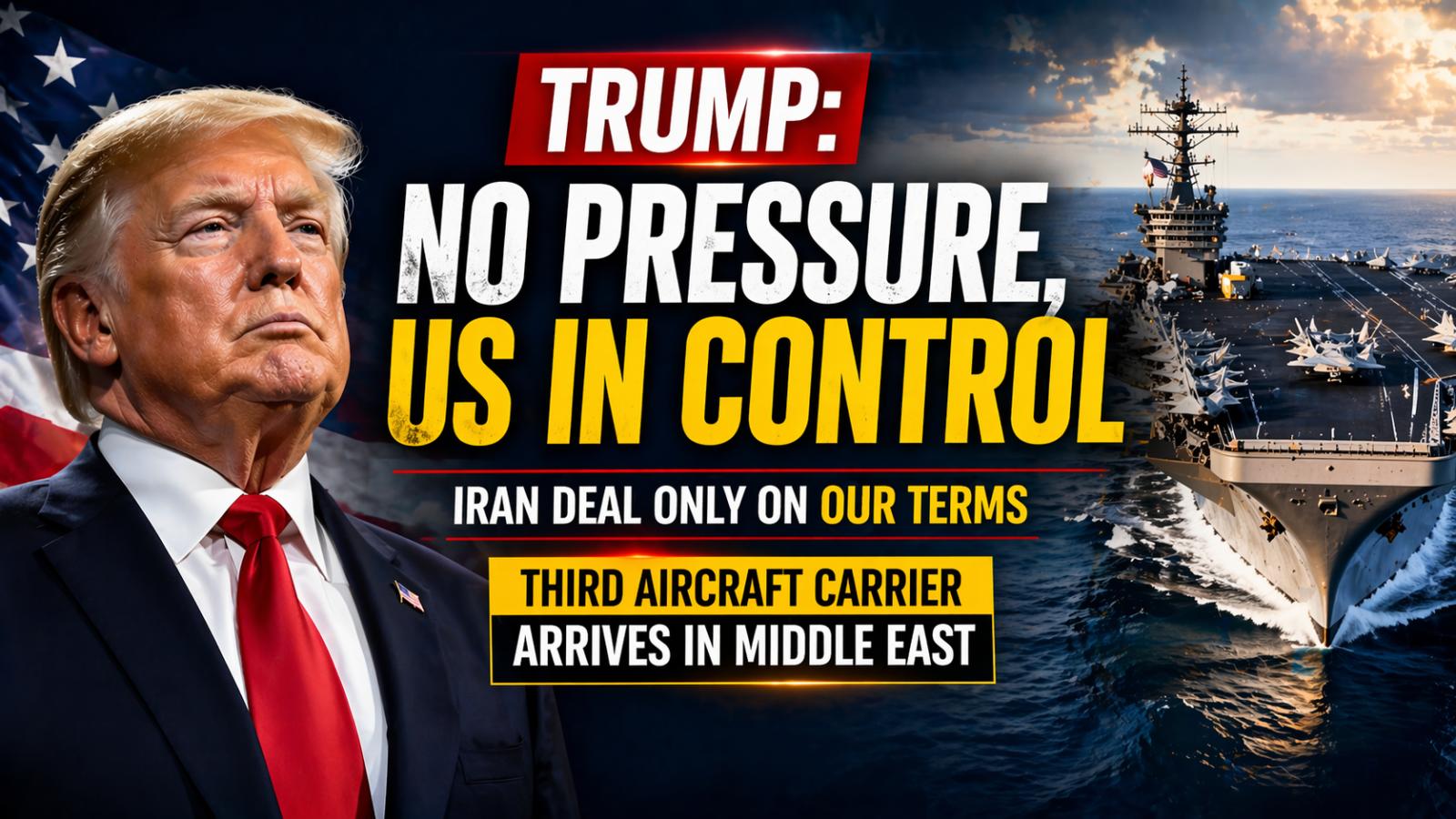
US Deploys Third Aircraft Carrier as Trump Signals No Urgency for Iran Deal
US President Donald Trump has dismissed speculation that Washington is under pressure to secure a deal with Iran, stating that the United States is in no rush to negotiate amid ongoing tensions. In a recent statement, Trump emphasized that while the US has the flexibility to wait, Iran faces increasing urgency as conditions evolve. He asserted that recent developments have significantly weakened Iran’s military capabilities, pointing to setbacks across its naval and air forces as well as the degradation of its defense systems. Trump also highlighted what he described as a tightening blockade, suggesting that the strategic balance currently favors the United States and its allies. He reiterated that any agreement would only move forward if it aligns with American interests and broader global stability, rejecting claims that his administration is eager to conclude talks quickly. At the same time, the US military has reinforced its presence in the region. United States Central Command confirmed the arrival of a third aircraft carrier, the USS George H.W. Bush, into its operational zone. The carrier is currently positioned in the Indian Ocean, joining the USS Abraham Lincoln in the Arabian Sea and the USS Gerald R. Ford in the Red Sea. The deployment marks a notable expansion of US naval strength in the Middle East during a fragile ceasefire period. The USS George H.W. Bush followed an unusual route, traveling around the Horn of Africa before entering the region, underscoring the strategic importance of its positioning. These developments reflect a continued emphasis on military readiness while diplomatic uncertainty persists, with Washington signaling that timing and terms of any agreement will remain firmly under its control.
US Deploys Third Aircraft Carrier as Trump Signals No Urgency for Iran Deal
US President Donald Trump has dismissed speculation that Washington is under pressure to secure a deal with Iran, stating that the United States is in no rush to negotiate amid ongoing tensions. In a recent statement, Trump emphasized that while the US has the flexibility to wait, Iran faces increasing urgency as conditions evolve. He asserted that recent developments have significantly weakened Iran’s military capabilities, pointing to setbacks across its naval and air forces as well as the degradation of its defense systems. Trump also highlighted what he described as a tightening blockade, suggesting that the strategic balance currently favors the United States and its allies. He reiterated that any agreement would only move forward if it aligns with American interests and broader global stability, rejecting claims that his administration is eager to conclude talks quickly. At the same time, the US military has reinforced its presence in the region. United States Central Command confirmed the arrival of a third aircraft carrier, the USS George H.W. Bush, into its operational zone. The carrier is currently positioned in the Indian Ocean, joining the USS Abraham Lincoln in the Arabian Sea and the USS Gerald R. Ford in the Red Sea. The deployment marks a notable expansion of US naval strength in the Middle East during a fragile ceasefire period. The USS George H.W. Bush followed an unusual route, traveling around the Horn of Africa before entering the region, underscoring the strategic importance of its positioning. These developments reflect a continued emphasis on military readiness while diplomatic uncertainty persists, with Washington signaling that timing and terms of any agreement will remain firmly under its control.

Will teams trade up early in the 2026 NFL Draft? Yes, movement is expected in the top 10
Will teams trade up early in the 2026 NFL Draft? Yes, movement is expected in the top 10 As the 2026 NFL Draft approaches, teams across the league are actively evaluating trade opportunities that could reshape the first round. League insiders indicate that movement within the top 10 picks is increasingly likely, driven by demand for elite prospects and strategic positioning. Early picks could trigger a chain reaction of trades
Will teams trade up early in the 2026 NFL Draft? Yes, movement is expected in the top 10
Will teams trade up early in the 2026 NFL Draft? Yes, movement is expected in the top 10 As the 2026 NFL Draft approaches, teams across the league are actively evaluating trade opportunities that could reshape the first round. League insiders indicate that movement within the top 10 picks is increasingly likely, driven by demand for elite prospects and strategic positioning. Early picks could trigger a chain reaction of trades
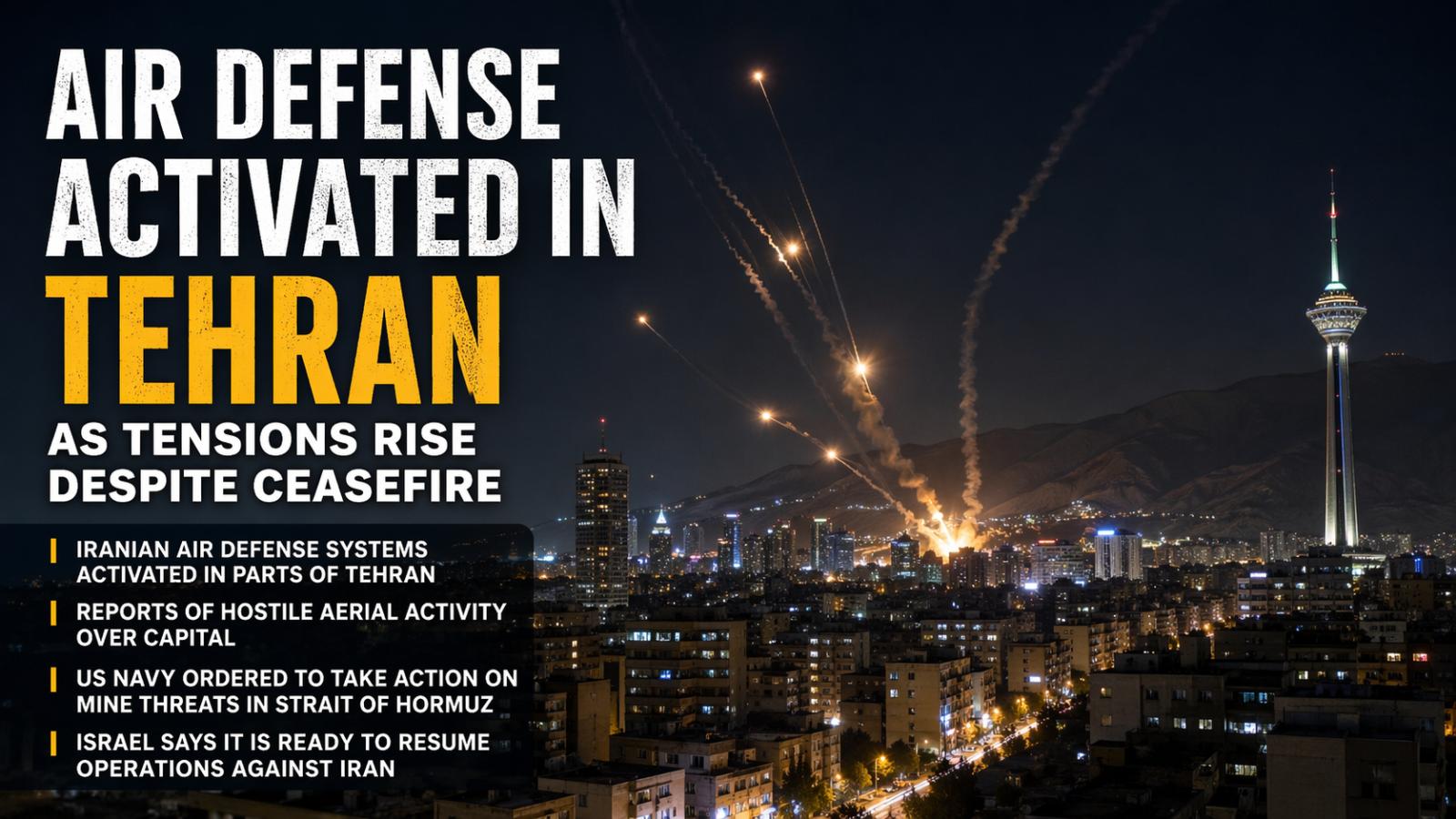
Air defense activated in Tehran as tensions rise despite ceasefire
Air defense systems light up Tehran’s night sky as tensions escalate despite a ceasefire, with U.S. naval warnings and Israel signaling readiness for possible renewed conflict. Air defense activated in Tehran as tensions rise despite ceasefire as Iran’s capital experienced renewed military alert activity on Thursday, April 23, 2026, according to state media reports, marking the first such incident since a ceasefire was announced in the region. The developments
Air defense activated in Tehran as tensions rise despite ceasefire
Air defense systems light up Tehran’s night sky as tensions escalate despite a ceasefire, with U.S. naval warnings and Israel signaling readiness for possible renewed conflict. Air defense activated in Tehran as tensions rise despite ceasefire as Iran’s capital experienced renewed military alert activity on Thursday, April 23, 2026, according to state media reports, marking the first such incident since a ceasefire was announced in the region. The developments
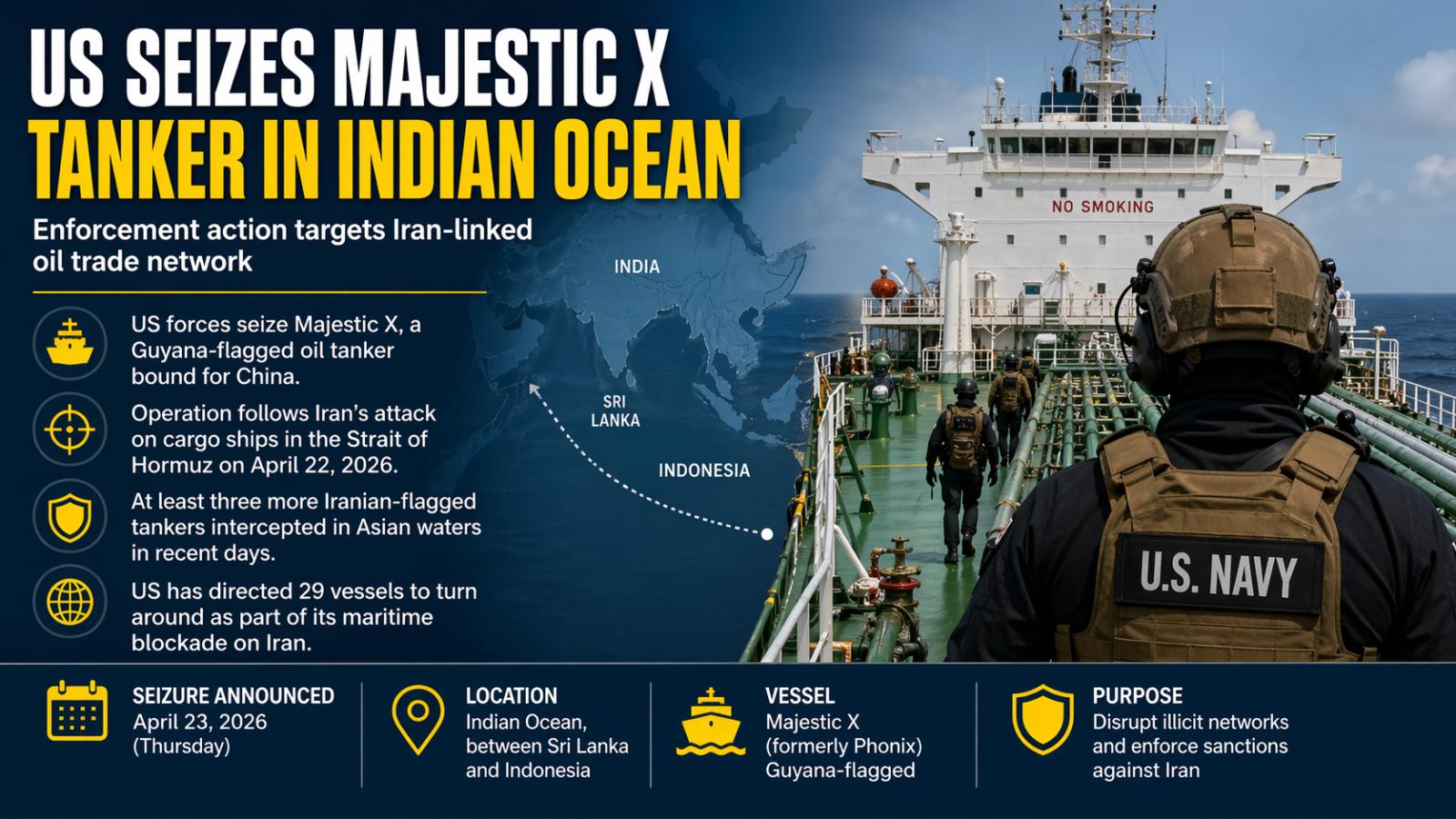
Why did the US intercept oil tankers? Enforcement targets Iran-linked shipping network
Seizure of Majestic X in Indian Ocean amid rising tensions The U.S. Department of Defense announced on Thursday, April 23, 2026, that it seized the oil tanker Majestic X in the Indian Ocean while it was en route to Zhoushan, China. Officials said the operation is part of ongoing maritime enforcement aimed at disrupting networks linked to Iranian oil exports in violation of U.S. sanctions. The Pentagon released video footage showing U.S. troops boarding a
Why did the US intercept oil tankers? Enforcement targets Iran-linked shipping network
Seizure of Majestic X in Indian Ocean amid rising tensions The U.S. Department of Defense announced on Thursday, April 23, 2026, that it seized the oil tanker Majestic X in the Indian Ocean while it was en route to Zhoushan, China. Officials said the operation is part of ongoing maritime enforcement aimed at disrupting networks linked to Iranian oil exports in violation of U.S. sanctions. The Pentagon released video footage showing U.S. troops boarding a
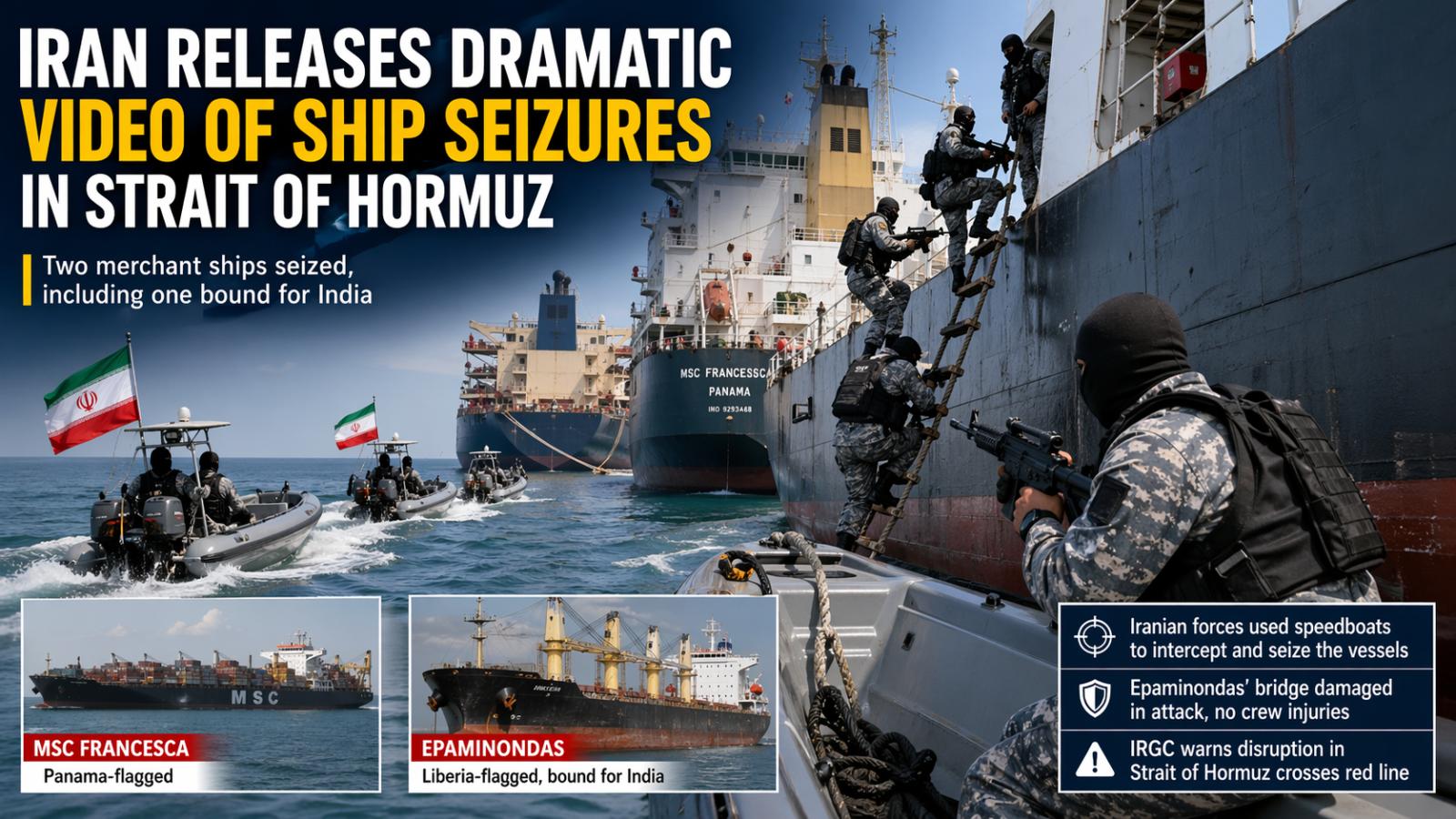
Iran releases dramatic video of ship seizures in Strait of Hormuz
Iran released footage of naval forces seizing two merchant ships in the Strait of Hormuz, including an India-bound vessel, intensifying regional tensions and raising global shipping concerns. Iranian authorities released a dramatic video on Thursday, April 23, 2026, a day after naval forces seized two merchant vessels in the strategically critical Strait of Hormuz, including one ship bound for India. The footage shows masked commandos in speedboats pursuing the vessels, boarding them, and taking control in an operation that underscores escalating tensions in the region. The seizures occurred on Wednesday, April 22, 2026, shortly after U.S. President Donald Trump announced an extension of a ceasefire. Iranian naval units intercepted the Panama-flagged MSC Francesca and the Liberia-flagged Epaminondas, the latter traveling from Dubai to Mundra Port in Gujarat, India. Both ships were escorted to Iranian waters, marking Tehran’s first such action since the latest conflict began. The released footage shows fast-moving boats approaching the vessels, with armed personnel boarding and conducting searches. U.S. officials attributed the operation to Iran’s “mosquito fleet,” small, agile craft associated with the Islamic Revolutionary Guard Corps. Commandos are seen climbing ladders, sweeping through decks, and entering critical areas such as engine rooms to secure control. The Epaminondas sustained damage to its bridge after Iranian forces reportedly opened fire and used grenades during the boarding. Despite the intensity of the operation, no crew injuries were reported. The MSC Francesca, located about six miles off Iran’s coast, also came under heavy fire during the seizure. Iranian officials stated the vessels lacked proper authorization and had interfered with navigation systems, posing a threat to maritime safety in the Strait of Hormuz. Authorities warned that disruptions in the waterway would be treated as a serious violation.The incident follows a recent U.S. operation targeting an Iranian-linked vessel accused of breaching a maritime blockade. Analysts view the seizures as a potential retaliatory move, raising concerns about further escalation in one of the world’s most vital shipping corridors. The involvement of an India-bound vessel may also complicate diplomatic relations between Tehran and New Delhi as tensions continue to rise.
Iran releases dramatic video of ship seizures in Strait of Hormuz
Iran released footage of naval forces seizing two merchant ships in the Strait of Hormuz, including an India-bound vessel, intensifying regional tensions and raising global shipping concerns. Iranian authorities released a dramatic video on Thursday, April 23, 2026, a day after naval forces seized two merchant vessels in the strategically critical Strait of Hormuz, including one ship bound for India. The footage shows masked commandos in speedboats pursuing the vessels, boarding them, and taking control in an operation that underscores escalating tensions in the region. The seizures occurred on Wednesday, April 22, 2026, shortly after U.S. President Donald Trump announced an extension of a ceasefire. Iranian naval units intercepted the Panama-flagged MSC Francesca and the Liberia-flagged Epaminondas, the latter traveling from Dubai to Mundra Port in Gujarat, India. Both ships were escorted to Iranian waters, marking Tehran’s first such action since the latest conflict began. The released footage shows fast-moving boats approaching the vessels, with armed personnel boarding and conducting searches. U.S. officials attributed the operation to Iran’s “mosquito fleet,” small, agile craft associated with the Islamic Revolutionary Guard Corps. Commandos are seen climbing ladders, sweeping through decks, and entering critical areas such as engine rooms to secure control. The Epaminondas sustained damage to its bridge after Iranian forces reportedly opened fire and used grenades during the boarding. Despite the intensity of the operation, no crew injuries were reported. The MSC Francesca, located about six miles off Iran’s coast, also came under heavy fire during the seizure. Iranian officials stated the vessels lacked proper authorization and had interfered with navigation systems, posing a threat to maritime safety in the Strait of Hormuz. Authorities warned that disruptions in the waterway would be treated as a serious violation.The incident follows a recent U.S. operation targeting an Iranian-linked vessel accused of breaching a maritime blockade. Analysts view the seizures as a potential retaliatory move, raising concerns about further escalation in one of the world’s most vital shipping corridors. The involvement of an India-bound vessel may also complicate diplomatic relations between Tehran and New Delhi as tensions continue to rise.
EU approves $105 billion Ukraine loan and new Russia sanctions after deadlock ends
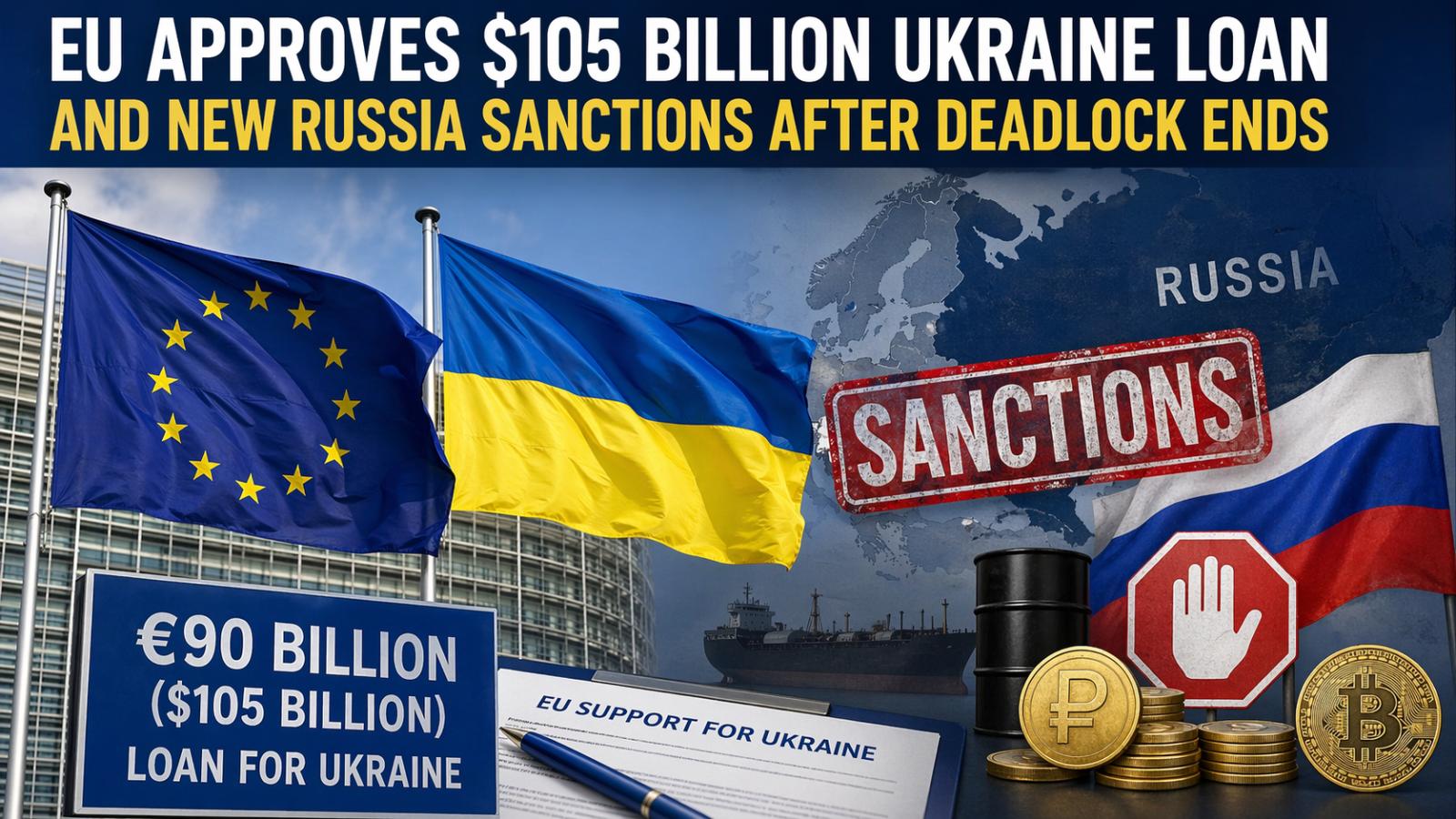
EU approves major Ukraine aid and new Russia sanctions after resolving internal disputes, strengthening Kyiv’s position and increasing pressure on Moscow amid ongoing war. EU approves $105 billion Ukraine loan and new Russia sanctions after deadlock ends. The European Union on Thursday, April 23, 2026, granted final approval to a €90 billion ($105 billion) loan for Ukraine and endorsed a new round of sanctions against Russia, marking a significant shift
EU approves $105 billion Ukraine loan and new Russia sanctions after deadlock ends
EU approves major Ukraine aid and new Russia sanctions after resolving internal disputes, strengthening Kyiv’s position and increasing pressure on Moscow amid ongoing war. EU approves $105 billion Ukraine loan and new Russia sanctions after deadlock ends. The European Union on Thursday, April 23, 2026, granted final approval to a €90 billion ($105 billion) loan for Ukraine and endorsed a new round of sanctions against Russia, marking a significant shift










