




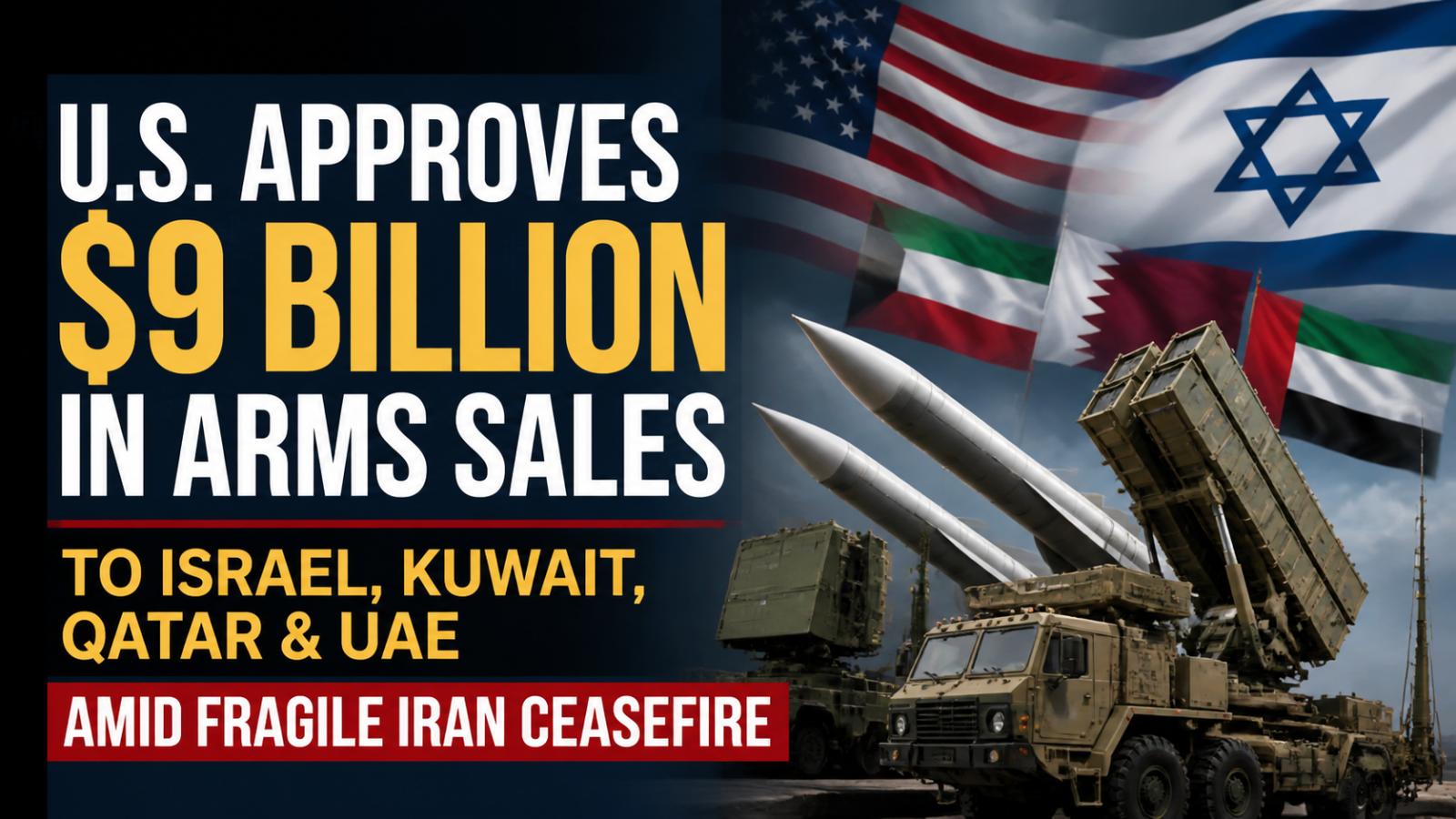
US fast-tracks $9 billion arms deals to Middle East allies
US Authorizes $9 Billion in Arms Sales to Middle East Allies The United States has authorized the expedited sale of arms to Israel, Kuwait, Qatar, and the UAE, totaling nearly $9 billion. This decision, approved by Secretary of State Marco Rubio, bypasses the standard congressional review process and is designed t
US fast-tracks $9 billion arms deals to Middle East allies
US Authorizes $9 Billion in Arms Sales to Middle East Allies The United States has authorized the expedited sale of arms to Israel, Kuwait, Qatar, and the UAE, totaling nearly $9 billion. This decision, approved by Secretary of State Marco Rubio, bypasses the standard congressional review process and is designed t

India Tests Emergency Cell Broadcast Alert System With Loud Phone Sirens
In a major step toward enhancing disaster preparedness, the Indian government is carrying out a nationwide simulation of its Cell Broadcast Alert System. Managed by the National Disaster Management Authority, the system is designed to send instant emergency notifications directly to mobile phones, even if they are on silent mode or set to do not disturb. This ensures that critical alerts can reach people without delay, potentially saving lives during natural or man-made disasters. C
India Tests Emergency Cell Broadcast Alert System With Loud Phone Sirens
In a major step toward enhancing disaster preparedness, the Indian government is carrying out a nationwide simulation of its Cell Broadcast Alert System. Managed by the National Disaster Management Authority, the system is designed to send instant emergency notifications directly to mobile phones, even if they are on silent mode or set to do not disturb. This ensures that critical alerts can reach people without delay, potentially saving lives during natural or man-made disasters. C

Repolling Underway In West Bengal Assembly Elections; Mamata Banerjee To Meet Counting Agents
Repolling is currently underway at 15 polling booths across two Assembly constituencies in South 24 Parganas, West Bengal. The Election Commission had ordered the repolls after reports of electoral malpractices in these regions. The voting process began at 7 AM and will continue until 6 PM today, May 2, 2026. The 11 polling stations in Magrahat Paschim and four in Diamond Harbour will undergo the repoll process. The original voting for these constituencies was held on April 29, 2026, during t
Repolling Underway In West Bengal Assembly Elections; Mamata Banerjee To Meet Counting Agents
Repolling is currently underway at 15 polling booths across two Assembly constituencies in South 24 Parganas, West Bengal. The Election Commission had ordered the repolls after reports of electoral malpractices in these regions. The voting process began at 7 AM and will continue until 6 PM today, May 2, 2026. The 11 polling stations in Magrahat Paschim and four in Diamond Harbour will undergo the repoll process. The original voting for these constituencies was held on April 29, 2026, during t
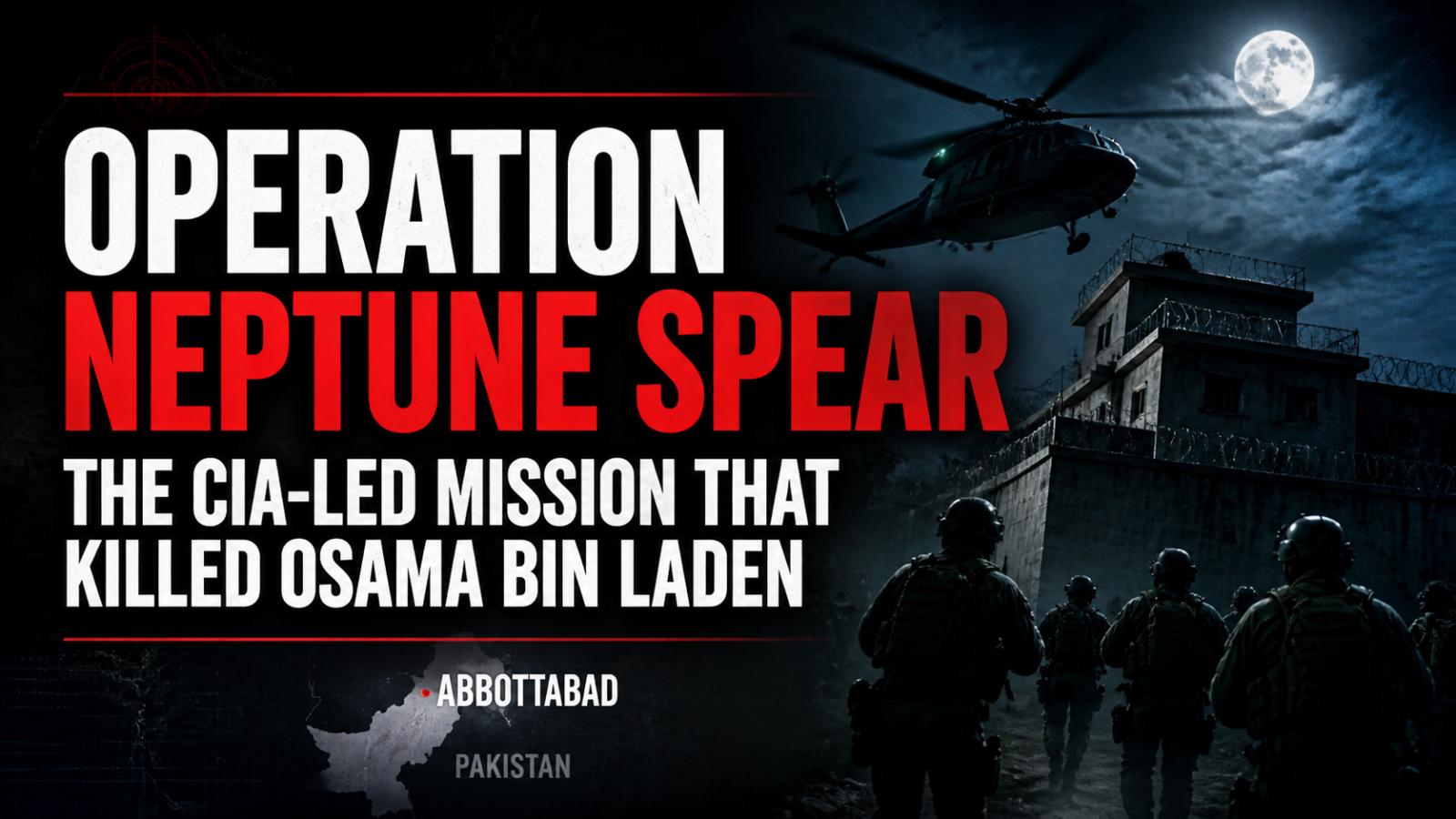
Operation Neptune Spear: Inside the raid that killed Osama bin Laden
The world’s most wanted man: Osama bin Laden On May 2, 2011, Osama bin Laden, the world’s most wanted terrorist, was killed in a CIA-led operation called Operation Neptune Spear. After nearly a decade of intensive intelligence work, Bin Laden’s hideout in Abbottabad, Pakistan, was pinpointed, marking a major victory in the war on terror. The mission, involving a covert night
Operation Neptune Spear: Inside the raid that killed Osama bin Laden
The world’s most wanted man: Osama bin Laden On May 2, 2011, Osama bin Laden, the world’s most wanted terrorist, was killed in a CIA-led operation called Operation Neptune Spear. After nearly a decade of intensive intelligence work, Bin Laden’s hideout in Abbottabad, Pakistan, was pinpointed, marking a major victory in the war on terror. The mission, involving a covert night
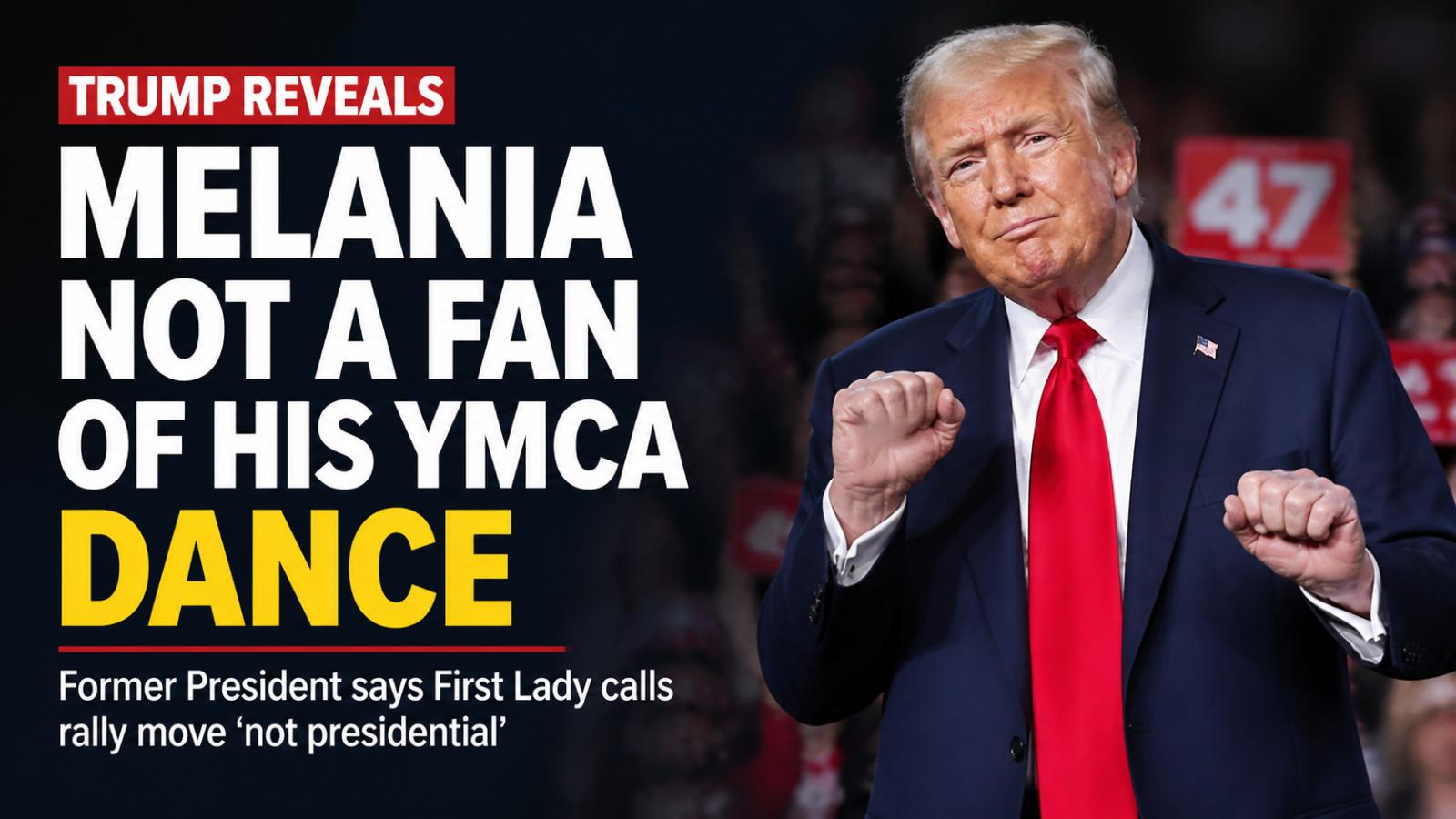
Donald Trump jokes about his YMCA dance routine at Florida rally
Trump shares Melania's disapproval of his YMCA dance move Donald Trump recently offered a humorous confession at a rally in The Villages, Florida, revealing that Melania Trump is not a fan of his signature post-rally YMCA dance move. Speaking to a cheering crowd, the former president disclosed that his wife often objects to this routine, which has become synonymous with his rallies. Melania says the dance is "not presidential"
Donald Trump jokes about his YMCA dance routine at Florida rally
Trump shares Melania's disapproval of his YMCA dance move Donald Trump recently offered a humorous confession at a rally in The Villages, Florida, revealing that Melania Trump is not a fan of his signature post-rally YMCA dance move. Speaking to a cheering crowd, the former president disclosed that his wife often objects to this routine, which has become synonymous with his rallies. Melania says the dance is "not presidential"
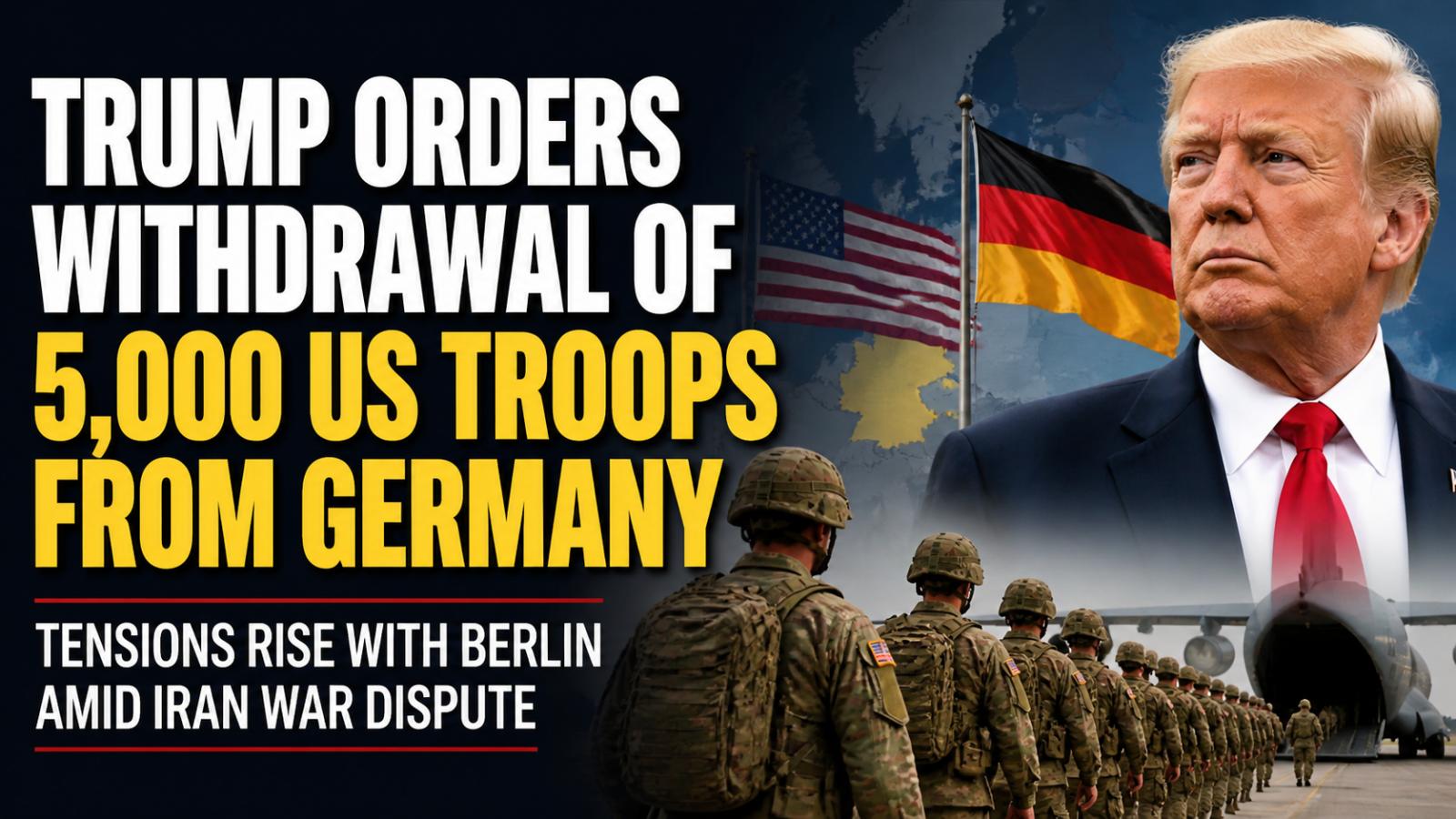
Trump orders the withdrawal of 5,000 US troops from Germany amid rising tensions
Trump Orders US Troops Withdrawal From Germany President Donald Trump has ordered the withdrawal of 5,000 US troops from Germany, escalating tensions with Berlin and NATO allies. This decision comes amid ongoing disagreements over the Iran conflict and US military operations in the Middle East. The Pentagon confirmed the move on Friday, May 1, as part of a broader shift in US military strategy, which seeks to reduce America's pres
Trump orders the withdrawal of 5,000 US troops from Germany amid rising tensions
Trump Orders US Troops Withdrawal From Germany President Donald Trump has ordered the withdrawal of 5,000 US troops from Germany, escalating tensions with Berlin and NATO allies. This decision comes amid ongoing disagreements over the Iran conflict and US military operations in the Middle East. The Pentagon confirmed the move on Friday, May 1, as part of a broader shift in US military strategy, which seeks to reduce America's pres
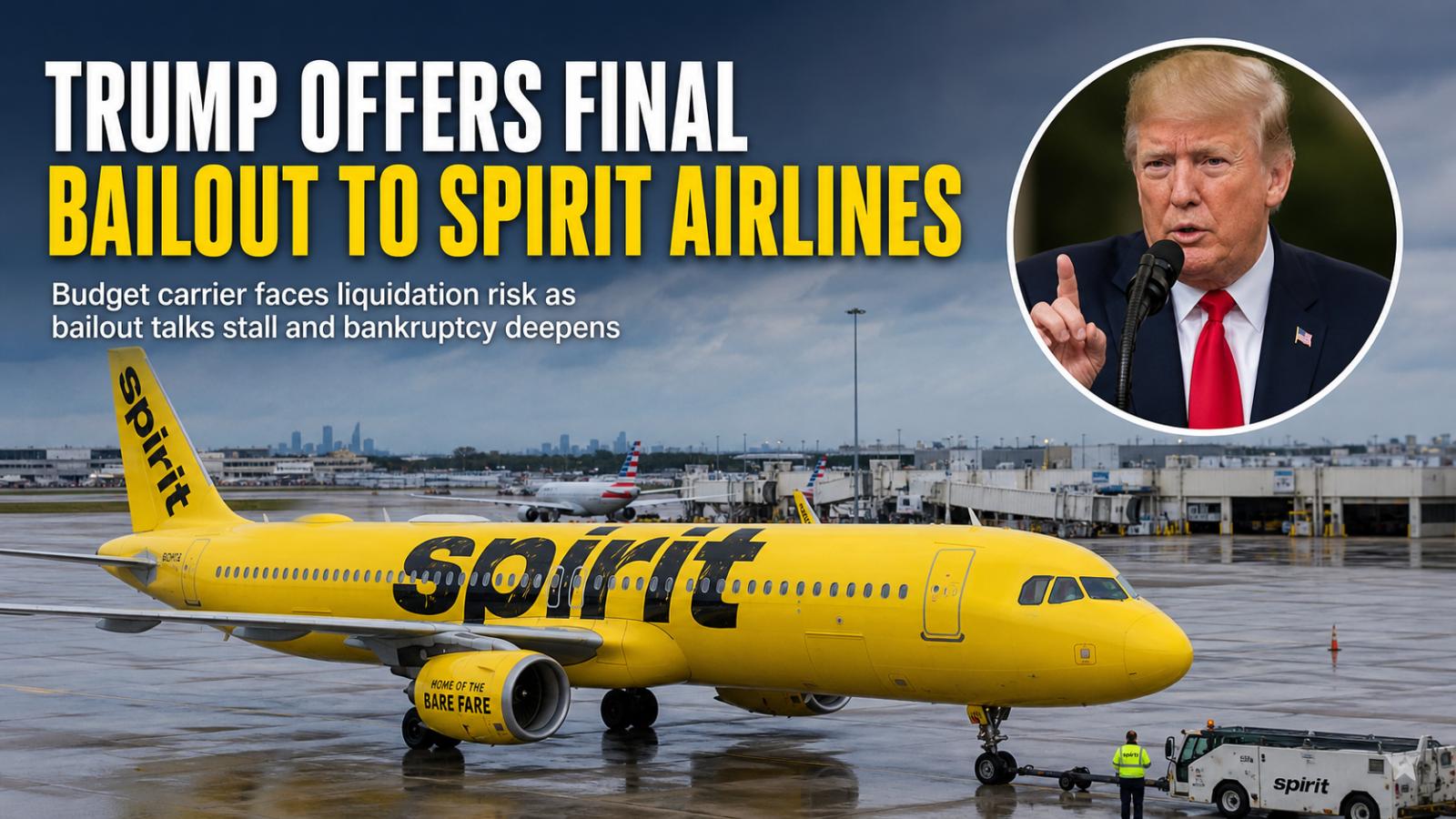
What is Trump’s final bailout plan for Spirit Airlines? It could prevent liquidation
President Donald Trump said on Friday, May 1, 2026, that his administration had delivered a “final” bailout proposal to Spirit Airlines as the budget airline faces the possibility of liquidation without immediate financial su
What is Trump’s final bailout plan for Spirit Airlines? It could prevent liquidation
President Donald Trump said on Friday, May 1, 2026, that his administration had delivered a “final” bailout proposal to Spirit Airlines as the budget airline faces the possibility of liquidation without immediate financial su
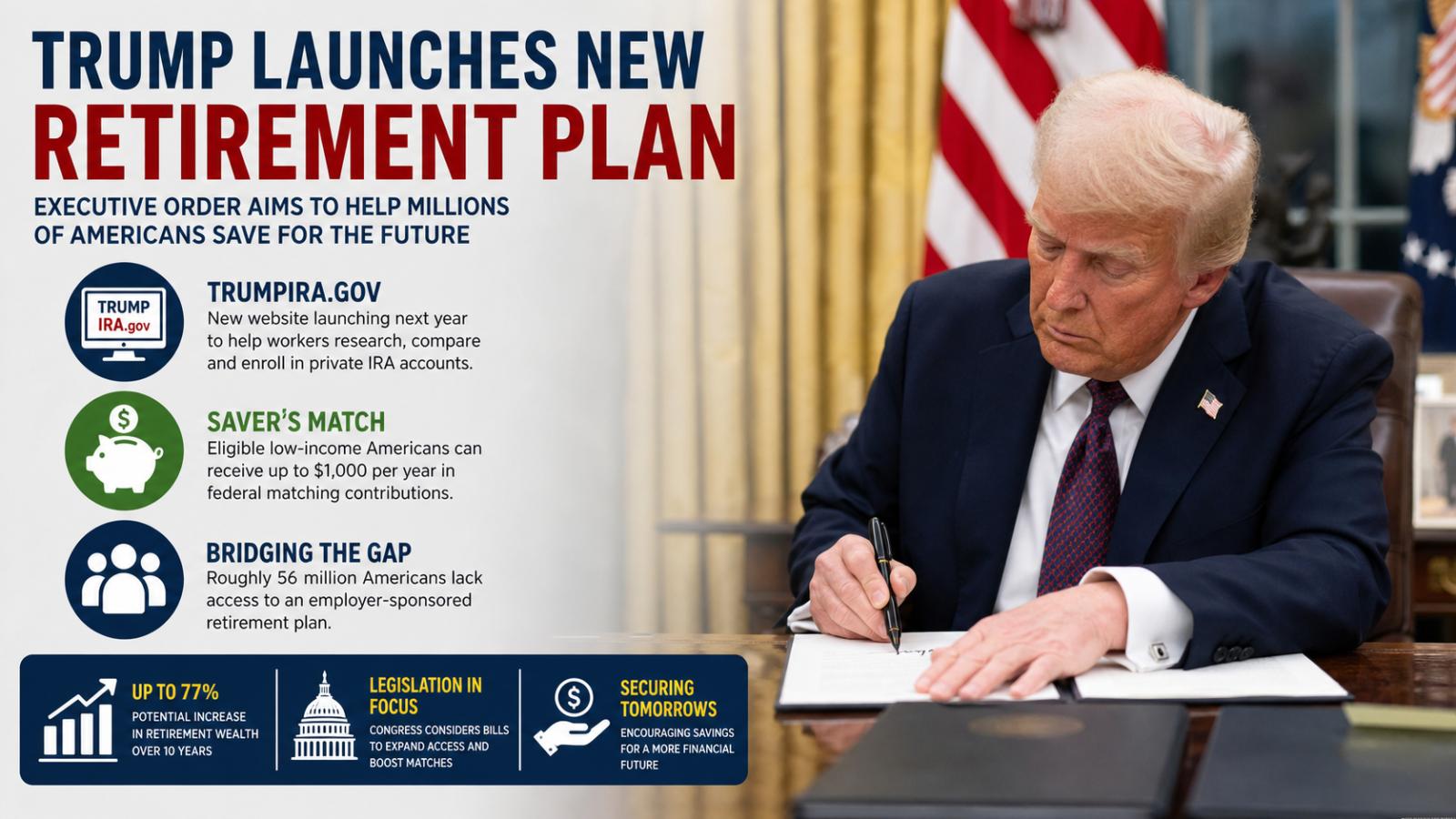
What is Trump’s new retirement plan? It expands savings access for millions
Expanding retirement access for underserved workers What is Trump’s new retirement plan? It expands savings access for millions, as a new executive order introduces a federal initiative aimed at workers without employer-sponsored retirement options. According to details outlined in the policy , tens of millions of Americans currently lack access to plans such as 401(k)s, creating long-term financial vulnerability. The initiative proposes a centralized platform, T
What is Trump’s new retirement plan? It expands savings access for millions
Expanding retirement access for underserved workers What is Trump’s new retirement plan? It expands savings access for millions, as a new executive order introduces a federal initiative aimed at workers without employer-sponsored retirement options. According to details outlined in the policy , tens of millions of Americans currently lack access to plans such as 401(k)s, creating long-term financial vulnerability. The initiative proposes a centralized platform, T
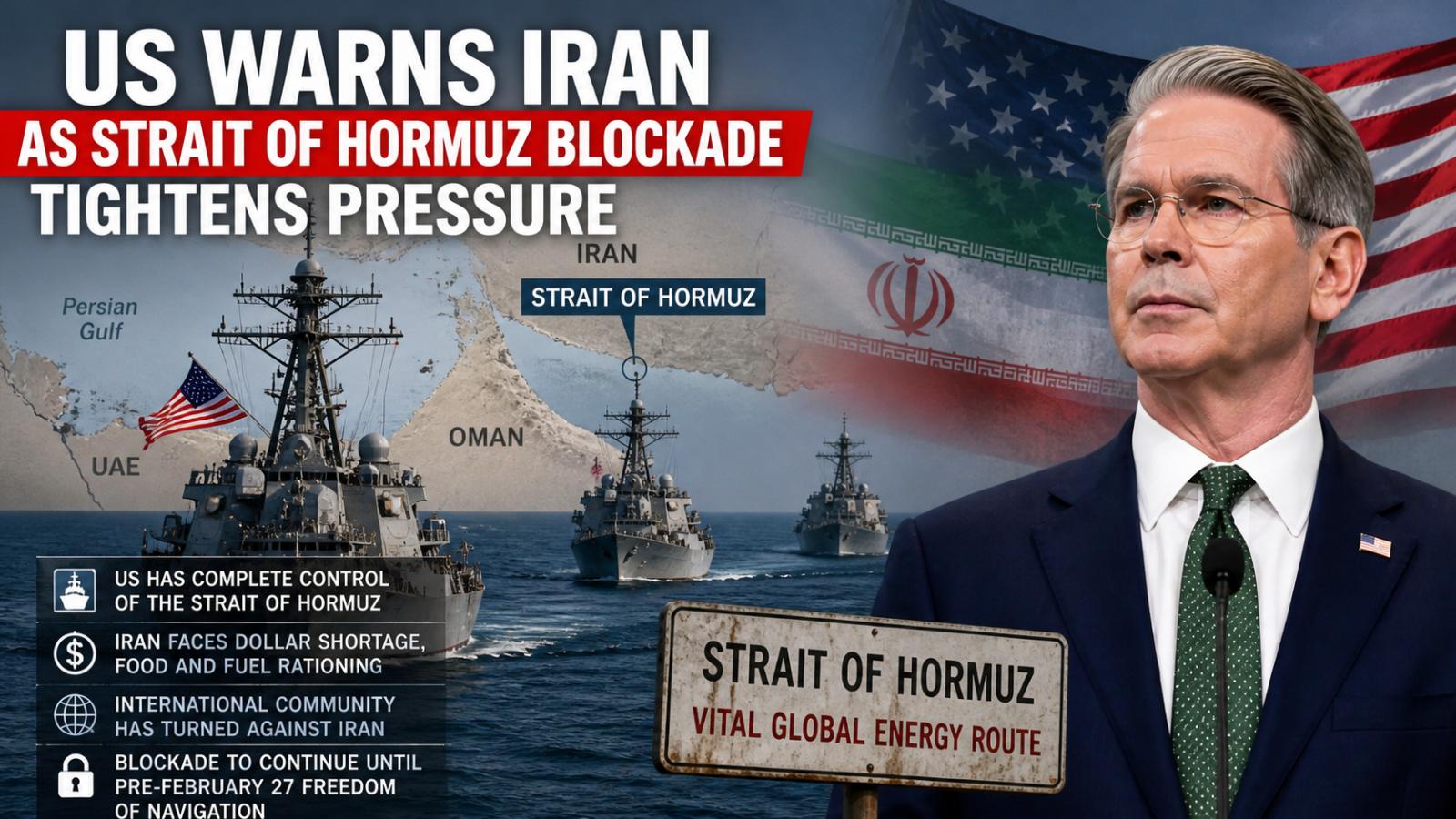
US warns Iran as Strait of Hormuz blockade tightens pressure
The US tightened pressure on Iran with a Strait of Hormuz blockade, disrupting oil trade and worsening Iran’s economic crisis, while internal political divisions grow and tensions with Washington escalate. US warns Iran as Strait of Hormuz blockade tightens pressure as tensions escalated following a sharply worded statement by U.S. Treasury Secretary Scott Bessent on Friday, in which he criticized Iran’s leadership and outlined the United States’ strategic position in the ongoing standoff. In a public post, Bessent asserted that the United States maintains full control over the Strait of Hormuz, a critical global energy transit route, and emphasized that a naval blockade would remain in effect until freedom of navigation conditions are restored to levels seen before February 27. The remarks come amid heightened geopolitical tensions involving Iran and the United States, with Bessent also pointing to economic strain within Iran, including a shortage of U.S. dollars and the implementation of food and gasoline rationing. He further stated that international sentiment has increasingly turned against Tehran, underscoring Washington’s broader diplomatic stance. The blockade represents a significant shift in pressure tactics. For years, Iran had managed to navigate sanctions by exporting oil through informal channels, particularly to China, using a network of so-called shadow vessels. However, U.S. naval operations have disrupted these routes, preventing tankers from bypassing enforcement measures and, in some cases, pursuing them beyond the Persian Gulf into the Indian Ocean. The situation escalated after Iran targeted commercial vessels and restricted maritime traffic through the Hormuz corridor, a move that disrupted global oil and liquefied natural gas shipments. In response, the United States deployed naval forces to secure the passage, effectively limiting Iran’s ability to continue its covert export operations. Internally, the crisis has exposed divisions within Iran’s leadership. President Masoud Pezeshkian is reportedly aligned with moderate factions seeking negotiations, while hardline figures such as Saeed Jalili advocate a more confrontational approach. The divergence reflects broader concerns about the sustainability of the conflict, particularly as economic conditions deteriorate. President Donald Trump has indicated support for maintaining the blockade, describing it as highly effective and signaling preparedness for a prolonged standoff. According to statements made to reporters, the administration is considering extending the measure until Iran meets specific nuclear-related demands. The economic impact on Iran has been severe. Reports indicate that unemployment has surged, food prices have risen sharply, and widespread internet disruptions have affected digital commerce. The national currency has weakened significantly over the past year, with the exchange rate reaching approximately 1.81 million rials per U.S. dollar, intensifying concerns about potential economic collapse.
US warns Iran as Strait of Hormuz blockade tightens pressure
The US tightened pressure on Iran with a Strait of Hormuz blockade, disrupting oil trade and worsening Iran’s economic crisis, while internal political divisions grow and tensions with Washington escalate. US warns Iran as Strait of Hormuz blockade tightens pressure as tensions escalated following a sharply worded statement by U.S. Treasury Secretary Scott Bessent on Friday, in which he criticized Iran’s leadership and outlined the United States’ strategic position in the ongoing standoff. In a public post, Bessent asserted that the United States maintains full control over the Strait of Hormuz, a critical global energy transit route, and emphasized that a naval blockade would remain in effect until freedom of navigation conditions are restored to levels seen before February 27. The remarks come amid heightened geopolitical tensions involving Iran and the United States, with Bessent also pointing to economic strain within Iran, including a shortage of U.S. dollars and the implementation of food and gasoline rationing. He further stated that international sentiment has increasingly turned against Tehran, underscoring Washington’s broader diplomatic stance. The blockade represents a significant shift in pressure tactics. For years, Iran had managed to navigate sanctions by exporting oil through informal channels, particularly to China, using a network of so-called shadow vessels. However, U.S. naval operations have disrupted these routes, preventing tankers from bypassing enforcement measures and, in some cases, pursuing them beyond the Persian Gulf into the Indian Ocean. The situation escalated after Iran targeted commercial vessels and restricted maritime traffic through the Hormuz corridor, a move that disrupted global oil and liquefied natural gas shipments. In response, the United States deployed naval forces to secure the passage, effectively limiting Iran’s ability to continue its covert export operations. Internally, the crisis has exposed divisions within Iran’s leadership. President Masoud Pezeshkian is reportedly aligned with moderate factions seeking negotiations, while hardline figures such as Saeed Jalili advocate a more confrontational approach. The divergence reflects broader concerns about the sustainability of the conflict, particularly as economic conditions deteriorate. President Donald Trump has indicated support for maintaining the blockade, describing it as highly effective and signaling preparedness for a prolonged standoff. According to statements made to reporters, the administration is considering extending the measure until Iran meets specific nuclear-related demands. The economic impact on Iran has been severe. Reports indicate that unemployment has surged, food prices have risen sharply, and widespread internet disruptions have affected digital commerce. The national currency has weakened significantly over the past year, with the exchange rate reaching approximately 1.81 million rials per U.S. dollar, intensifying concerns about potential economic collapse.

Oscar statuette recovered after going missing on flight from New York to Frankfurt
An Oscar statuette belonging to Russian director Pavel Talankin was recovered after going missing on a Lufthansa flight from New York to Frankfurt. The incident followed a TSA security check that required the award to be placed in checked luggage, prompting an internal review. Oscar statuette recovered after going missing on flight from New York to Frankfurt blends into a broader aviation and security incident that raised concerns over airport screeni
Oscar statuette recovered after going missing on flight from New York to Frankfurt
An Oscar statuette belonging to Russian director Pavel Talankin was recovered after going missing on a Lufthansa flight from New York to Frankfurt. The incident followed a TSA security check that required the award to be placed in checked luggage, prompting an internal review. Oscar statuette recovered after going missing on flight from New York to Frankfurt blends into a broader aviation and security incident that raised concerns over airport screeni
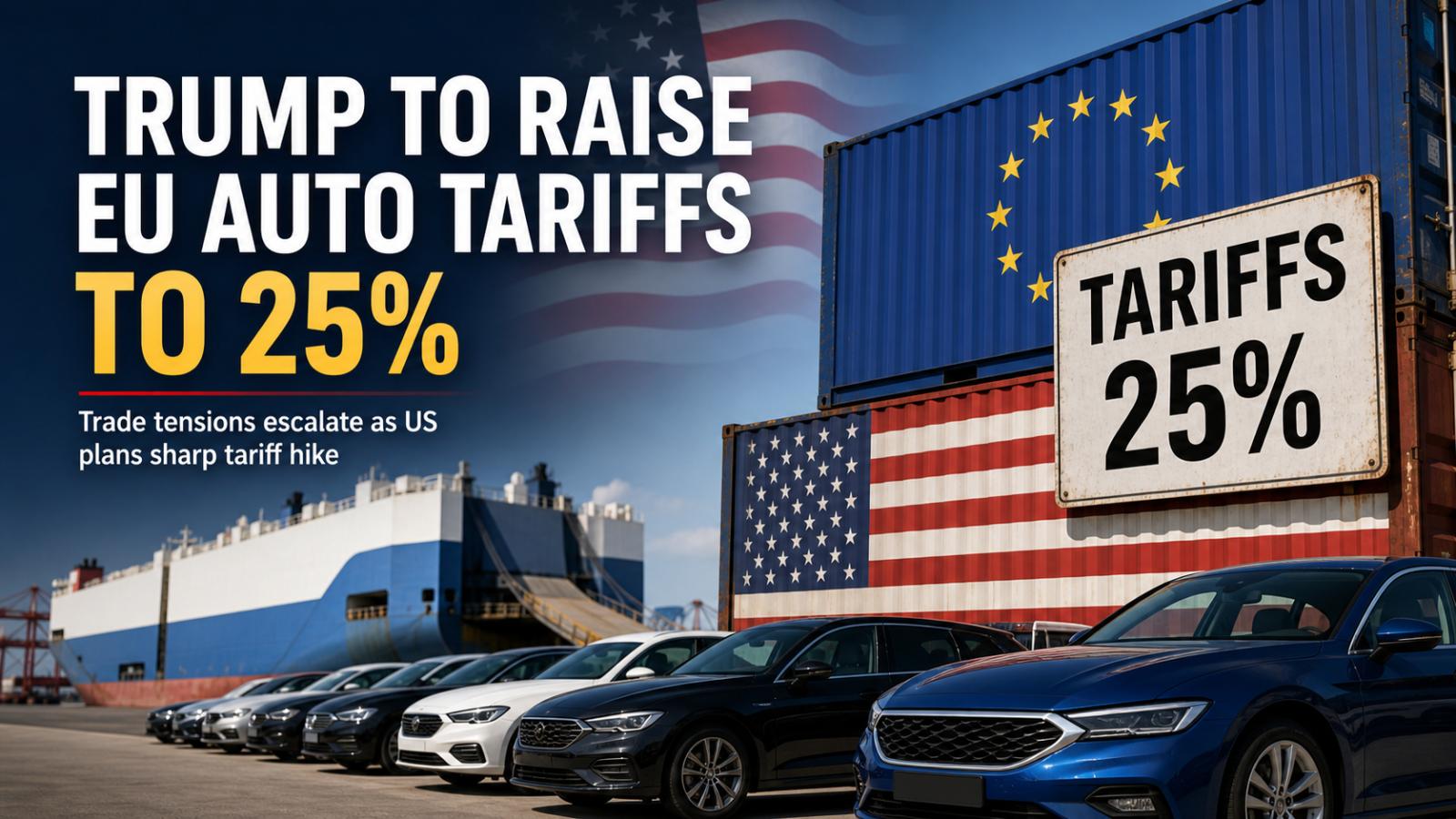
Will Trump raise EU auto tariffs to 25%? Yes, escalation risks trade tensions
Trump signals sharp increase in tariffs on EU vehicles WASHINGTON — On Friday, May 1, 2026, U.S. President Donald Trump announced plans to raise tariffs on cars and trucks imported from the European Union to 25%, signaling a significant shift in U.S.-EU trade policy. The move, shared publicly in a statement, comes at a time when global markets remain sensitive to policy changes and could trigger broader economic repercussions. Trump stated that the European Union was “not complying” with the previously agreed trade deal, though he did not provide specific details regarding the alleged violations. The announcement marks a departure from the earlier tariff framework negotiated between both sides. Background of the US-EU Turnberry trade framework The current dispute traces back to a bilateral agreement reached in July 2025 between Trump and Ursula von der Leyen, which set a 15% tariff ceiling on most traded goods. Known as the Turnberry Agreement, the arrangement aimed to stabilize trade relations and reduce uncertainty for industries on both sides of the Atlantic. Both the United States and the European Union had reaffirmed their commitment to maintaining this framework even after legal and policy challenges emerged earlier in 2026. Legal challenges reshape tariff authority The agreement’s stability was called into question after a ruling by the U.S. Supreme Court, which determined that the president lacked authority to impose tariffs under an economic emergency declaration. Following the ruling, tariff limits were effectively reduced, prompting the administration to explore alternative legal pathways to implement new import taxes. Ongoing investigations into trade imbalances and national security concerns have since been cited by the administration as justification for a revised tariff strategy, potentially putting the original agreement at risk. Economic stakes for EU and global markets The European Union has consistently emphasized the importance of maintaining agreed tariff limits, noting that the deal was expected to save its automotive sector between €500 million and €600 million monthly. Trade between the U.S. and EU reached approximately €1.7 trillion ($2 trillion) in 2024, highlighting the scale of economic interdependence. European officials have reiterated that commitments under the agreement should be upheld, stressing that EU exports must continue to benefit from competitive tariff treatment without unexpected increases. Rising tensions threaten trade stability The proposed tariff increase introduces fresh uncertainty into one of the world’s largest trading relationships. Analysts warn that such measures could disrupt supply chains, increase costs for manufacturers and consumers, and strain diplomatic ties. As the administration moves forward with its trade investigations, the future of the U.S.-EU trade framework remains uncertain, with potential implications extending beyond the automotive sector into the broader global economy.
Will Trump raise EU auto tariffs to 25%? Yes, escalation risks trade tensions
Trump signals sharp increase in tariffs on EU vehicles WASHINGTON — On Friday, May 1, 2026, U.S. President Donald Trump announced plans to raise tariffs on cars and trucks imported from the European Union to 25%, signaling a significant shift in U.S.-EU trade policy. The move, shared publicly in a statement, comes at a time when global markets remain sensitive to policy changes and could trigger broader economic repercussions. Trump stated that the European Union was “not complying” with the previously agreed trade deal, though he did not provide specific details regarding the alleged violations. The announcement marks a departure from the earlier tariff framework negotiated between both sides. Background of the US-EU Turnberry trade framework The current dispute traces back to a bilateral agreement reached in July 2025 between Trump and Ursula von der Leyen, which set a 15% tariff ceiling on most traded goods. Known as the Turnberry Agreement, the arrangement aimed to stabilize trade relations and reduce uncertainty for industries on both sides of the Atlantic. Both the United States and the European Union had reaffirmed their commitment to maintaining this framework even after legal and policy challenges emerged earlier in 2026. Legal challenges reshape tariff authority The agreement’s stability was called into question after a ruling by the U.S. Supreme Court, which determined that the president lacked authority to impose tariffs under an economic emergency declaration. Following the ruling, tariff limits were effectively reduced, prompting the administration to explore alternative legal pathways to implement new import taxes. Ongoing investigations into trade imbalances and national security concerns have since been cited by the administration as justification for a revised tariff strategy, potentially putting the original agreement at risk. Economic stakes for EU and global markets The European Union has consistently emphasized the importance of maintaining agreed tariff limits, noting that the deal was expected to save its automotive sector between €500 million and €600 million monthly. Trade between the U.S. and EU reached approximately €1.7 trillion ($2 trillion) in 2024, highlighting the scale of economic interdependence. European officials have reiterated that commitments under the agreement should be upheld, stressing that EU exports must continue to benefit from competitive tariff treatment without unexpected increases. Rising tensions threaten trade stability The proposed tariff increase introduces fresh uncertainty into one of the world’s largest trading relationships. Analysts warn that such measures could disrupt supply chains, increase costs for manufacturers and consumers, and strain diplomatic ties. As the administration moves forward with its trade investigations, the future of the U.S.-EU trade framework remains uncertain, with potential implications extending beyond the automotive sector into the broader global economy.
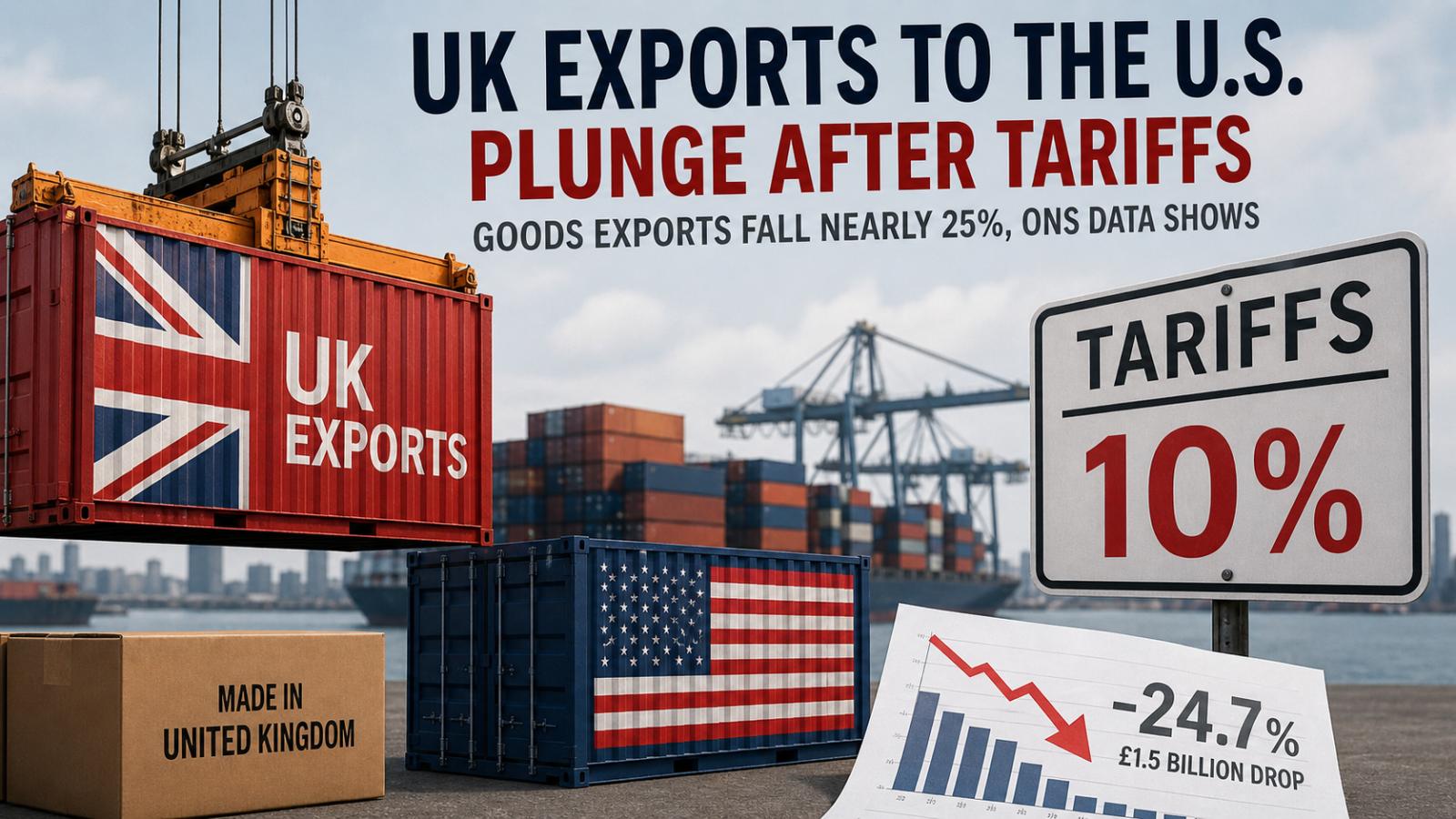
What caused U.K. exports to the U.S. to fall? Tariffs cut goods by nearly 25%
Tariffs trigger sharp decline in U.K. exports to the U.S. What caused U.K. exports to the U.S. to fall? Tariffs cut goods by nearly 25% as official data shows a steep decline in trade flows following sweeping tariff measures. According to figures released Friday by the Office for National Statistics, goods exports from the United Kingdom to the United States dropped by £1.5 billion, marking a 24.7% decrease after tariffs were introduced. The data, which excludes precious metals, highlights the immediate and sustained impact of trade policy changes initiated under Donald Trump. The tariffs, introduced as part of a broader “liberation day” strategy, disrupted established trading patterns between the two countries, which had previously benefited from largely tariff-free exchanges. Automotive and key sectors remain below pre-tariff levels The downturn has been particularly evident in the automotive sector, where U.K. car exports to the U.S. have remained below pre-tariff levels for the 12 months since April 2025. Analysts note that the continued weakness reflects both higher costs and reduced competitiveness in the American market. While exports have struggled, imports from the United States into the U.K. increased at the beginning of 2026. This imbalance has resulted in a trade deficit for three consecutive months, underscoring the broader economic consequences of the tariff regime on bilateral trade. Trade deal reshapes transatlantic economic ties The United Kingdom was the first nation to secure a post-tariff trade agreement with the U.S., following the introduction of the new measures. The deal included a 10% blanket tariff on goods entering the American market, effectively ending the previous zero-tariff environment that had benefited exporters on both sides. The new framework also imposed duties on key British exports, including Scotch whisky and other spirits. However, in a recent development, Trump announced plans to remove tariffs on Scotch whisky “in honor” of King Charles III and Queen Camilla following their state visit. Despite this move, industry experts caution that relief in one sector is unlikely to offset broader trade declines. Economic pressures weigh on exporters and growth outlook Economists warn that the sustained drop in exports could have wider implications for the U.K. economy. The United States remains the country’s largest export market, making the scale of the downturn particularly significant. Samuel Edwards, head of client portfolio management at Ebury, said exporters are facing mounting challenges. He pointed to a combination of higher trading costs from tariffs, increased employment expenses, and rising input prices, all of which are squeezing profit margins. These overlapping pressures are making it more difficult for U.K. businesses to remain competitive internationally, raising concerns about long-term growth and stability in the evolving global trade environment.
What caused U.K. exports to the U.S. to fall? Tariffs cut goods by nearly 25%
Tariffs trigger sharp decline in U.K. exports to the U.S. What caused U.K. exports to the U.S. to fall? Tariffs cut goods by nearly 25% as official data shows a steep decline in trade flows following sweeping tariff measures. According to figures released Friday by the Office for National Statistics, goods exports from the United Kingdom to the United States dropped by £1.5 billion, marking a 24.7% decrease after tariffs were introduced. The data, which excludes precious metals, highlights the immediate and sustained impact of trade policy changes initiated under Donald Trump. The tariffs, introduced as part of a broader “liberation day” strategy, disrupted established trading patterns between the two countries, which had previously benefited from largely tariff-free exchanges. Automotive and key sectors remain below pre-tariff levels The downturn has been particularly evident in the automotive sector, where U.K. car exports to the U.S. have remained below pre-tariff levels for the 12 months since April 2025. Analysts note that the continued weakness reflects both higher costs and reduced competitiveness in the American market. While exports have struggled, imports from the United States into the U.K. increased at the beginning of 2026. This imbalance has resulted in a trade deficit for three consecutive months, underscoring the broader economic consequences of the tariff regime on bilateral trade. Trade deal reshapes transatlantic economic ties The United Kingdom was the first nation to secure a post-tariff trade agreement with the U.S., following the introduction of the new measures. The deal included a 10% blanket tariff on goods entering the American market, effectively ending the previous zero-tariff environment that had benefited exporters on both sides. The new framework also imposed duties on key British exports, including Scotch whisky and other spirits. However, in a recent development, Trump announced plans to remove tariffs on Scotch whisky “in honor” of King Charles III and Queen Camilla following their state visit. Despite this move, industry experts caution that relief in one sector is unlikely to offset broader trade declines. Economic pressures weigh on exporters and growth outlook Economists warn that the sustained drop in exports could have wider implications for the U.K. economy. The United States remains the country’s largest export market, making the scale of the downturn particularly significant. Samuel Edwards, head of client portfolio management at Ebury, said exporters are facing mounting challenges. He pointed to a combination of higher trading costs from tariffs, increased employment expenses, and rising input prices, all of which are squeezing profit margins. These overlapping pressures are making it more difficult for U.K. businesses to remain competitive internationally, raising concerns about long-term growth and stability in the evolving global trade environment.

Narmada River boat accident kills mother and child near Bargi Dam
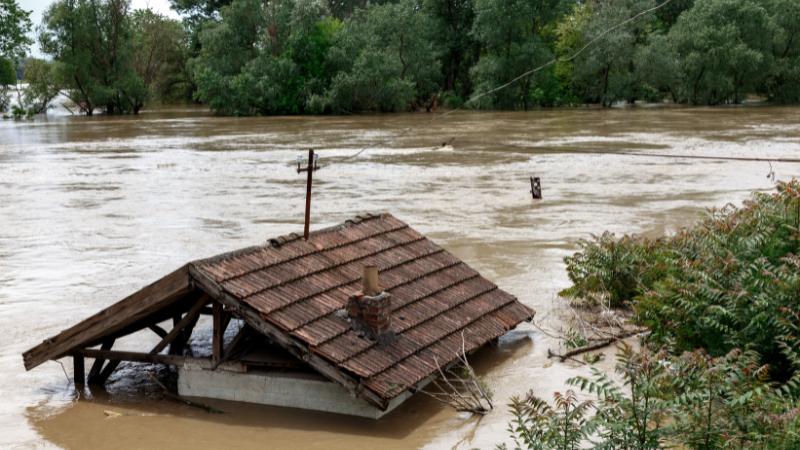
A boat accident in the Narmada River near Bargi Dam in Madhya Pradesh killed nine people, including a mother and child. Sudden bad weather caused the vessel to capsize. Rescue teams saved 24 people, while search operations continue for several missing passengers. A deadly boat accident in the Narmada River near Bargi Dam in the central Indian state of Madhya Pradesh has claimed the lives of a mother and her four-year-old son, highlighting the human toll of the tragedy that has left multiple families devastated. The incident occurred when a tourist vessel overturned in turbulent waters, reportedly after sudden adverse weather conditions disrupted the journey. Rescue teams recovered the bodies of the woman and her child on Friday morning, a day after the accident. Officials said the mother was found holding her son tightly, underscoring a final attempt to protect him as the boat sank. The victims were part of a family of four visiting from Delhi; the father and daughter survived the incident. Authorities confirmed that the death toll has risen to nine, while several individuals remain unaccounted for. According to officials, 24 people have been rescued so far, with 17 hospitalized for injuries and trauma. Nine others, including five children, are still missing as search operations continue. Survivors described moments of panic as the situation escalated rapidly. One passenger recounted that the weather worsened without warning, causing the boat to lose balance and take on water within minutes. Passengers were unable to comprehend the unfolding emergency as screams filled the air and people struggled to stay afloat. Another survivor, Syed Riyaz Hussain, described a prolonged fight for survival after being trapped in the water for nearly two hours. He said he managed to keep his head above water while surrounded by debris and victims drifting past, until rescue teams eventually located him. Members of his family are still missing. Local police, district authorities, and personnel from the State Disaster Response Force have been deployed to the site, conducting coordinated search efforts in challenging river conditions. Officials confirmed that the boat’s captain, Mahesh Patel, survived the incident as he was wearing a life jacket. The cause of the accident remains under investigation as authorities focus on rescue and recovery operations in the region.
Narmada River boat accident kills mother and child near Bargi Dam
A boat accident in the Narmada River near Bargi Dam in Madhya Pradesh killed nine people, including a mother and child. Sudden bad weather caused the vessel to capsize. Rescue teams saved 24 people, while search operations continue for several missing passengers. A deadly boat accident in the Narmada River near Bargi Dam in the central Indian state of Madhya Pradesh has claimed the lives of a mother and her four-year-old son, highlighting the human toll of the tragedy that has left multiple families devastated. The incident occurred when a tourist vessel overturned in turbulent waters, reportedly after sudden adverse weather conditions disrupted the journey. Rescue teams recovered the bodies of the woman and her child on Friday morning, a day after the accident. Officials said the mother was found holding her son tightly, underscoring a final attempt to protect him as the boat sank. The victims were part of a family of four visiting from Delhi; the father and daughter survived the incident. Authorities confirmed that the death toll has risen to nine, while several individuals remain unaccounted for. According to officials, 24 people have been rescued so far, with 17 hospitalized for injuries and trauma. Nine others, including five children, are still missing as search operations continue. Survivors described moments of panic as the situation escalated rapidly. One passenger recounted that the weather worsened without warning, causing the boat to lose balance and take on water within minutes. Passengers were unable to comprehend the unfolding emergency as screams filled the air and people struggled to stay afloat. Another survivor, Syed Riyaz Hussain, described a prolonged fight for survival after being trapped in the water for nearly two hours. He said he managed to keep his head above water while surrounded by debris and victims drifting past, until rescue teams eventually located him. Members of his family are still missing. Local police, district authorities, and personnel from the State Disaster Response Force have been deployed to the site, conducting coordinated search efforts in challenging river conditions. Officials confirmed that the boat’s captain, Mahesh Patel, survived the incident as he was wearing a life jacket. The cause of the accident remains under investigation as authorities focus on rescue and recovery operations in the region.
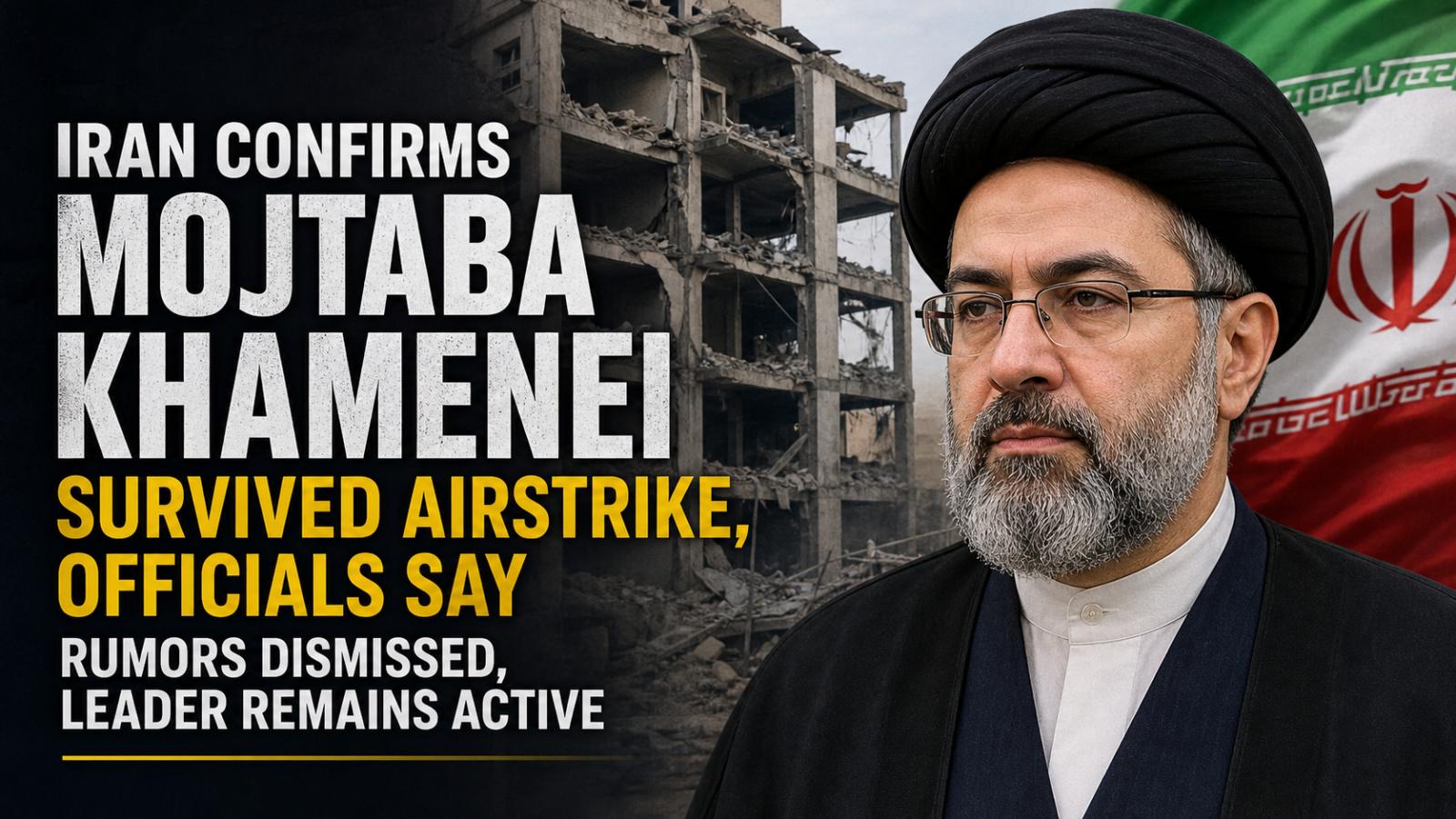
What happened to Mojtaba Khamenei during the Iran conflict? He survived an airstrike, officials say
Iranian authorities on Friday, May 1, confirmed that Mojtaba Khamenei was present in a building that was later destroyed in an airstrike during the ongoing Iran conflict, which began on February 28. Officials stated that he survived the attack and remains in active control of key state matters, while also dismissing widespread speculation about his health and absence from public appearances. Senior official details narrow escape during bombing Ayatollah Mohsen Qomi, a senior member of Iran’s Assembly of Experts and Deputy for International Affairs in the Supreme Leader’s office, said that Mojtaba Khamenei had been inside the targeted building shortly before it was struck. According to Qomi, Khamenei moved into the courtyard just minutes before the explosion, avoiding the fatal impact that reportedly killed others inside. Qomi described the survival as a matter of timing, emphasizing that the leader’s presence in the building had been confirmed but that his movement moments before the strike ultimately ensured his safety. The airstrike was part of ongoing hostilities that have escalated since late February. Officials assert leader remains in control of national affairs Despite rumors circulating internationally, Iranian officials maintained that Mojtaba Khamenei is in good health and continues to oversee both diplomatic and operational matters. Qomi stated that Khamenei is directly supervising negotiations and military-related decisions, including providing guidance to negotiating teams under varying conditions. The comments appear aimed at reinforcing internal stability and projecting continuity in leadership during a period of heightened geopolitical tension. Iranian officials emphasized that decision-making authority remains firmly centralized under Khamenei’s direction. Iran dismisses Western speculation as strategic pressure Qomi also addressed claims from Western sources regarding the leader’s health, characterizing them as deliberate attempts to provoke a response from Tehran. He suggested that questions about Khamenei’s public absence are part of a broader strategy to create uncertainty and apply psychological pressure. According to Qomi, such narratives are intended to push Iranian officials into reactive communication, which could be leveraged for strategic advantage by adversaries. Acknowledgment of injuries and focus on protection While firmly denying claims of serious health concerns, Qomi indicated that Mojtaba Khamenei may have sustained injuries during the incident. He stated that ensuring the leader’s safety has become a top priority for Iranian authorities, underscoring the importance of preserving leadership continuity amid the conflict. Officials reiterated that despite any injuries, Khamenei remains active and engaged in directing national policy, reinforcing the government’s position that leadership stability has not been compromised.
What happened to Mojtaba Khamenei during the Iran conflict? He survived an airstrike, officials say
Iranian authorities on Friday, May 1, confirmed that Mojtaba Khamenei was present in a building that was later destroyed in an airstrike during the ongoing Iran conflict, which began on February 28. Officials stated that he survived the attack and remains in active control of key state matters, while also dismissing widespread speculation about his health and absence from public appearances. Senior official details narrow escape during bombing Ayatollah Mohsen Qomi, a senior member of Iran’s Assembly of Experts and Deputy for International Affairs in the Supreme Leader’s office, said that Mojtaba Khamenei had been inside the targeted building shortly before it was struck. According to Qomi, Khamenei moved into the courtyard just minutes before the explosion, avoiding the fatal impact that reportedly killed others inside. Qomi described the survival as a matter of timing, emphasizing that the leader’s presence in the building had been confirmed but that his movement moments before the strike ultimately ensured his safety. The airstrike was part of ongoing hostilities that have escalated since late February. Officials assert leader remains in control of national affairs Despite rumors circulating internationally, Iranian officials maintained that Mojtaba Khamenei is in good health and continues to oversee both diplomatic and operational matters. Qomi stated that Khamenei is directly supervising negotiations and military-related decisions, including providing guidance to negotiating teams under varying conditions. The comments appear aimed at reinforcing internal stability and projecting continuity in leadership during a period of heightened geopolitical tension. Iranian officials emphasized that decision-making authority remains firmly centralized under Khamenei’s direction. Iran dismisses Western speculation as strategic pressure Qomi also addressed claims from Western sources regarding the leader’s health, characterizing them as deliberate attempts to provoke a response from Tehran. He suggested that questions about Khamenei’s public absence are part of a broader strategy to create uncertainty and apply psychological pressure. According to Qomi, such narratives are intended to push Iranian officials into reactive communication, which could be leveraged for strategic advantage by adversaries. Acknowledgment of injuries and focus on protection While firmly denying claims of serious health concerns, Qomi indicated that Mojtaba Khamenei may have sustained injuries during the incident. He stated that ensuring the leader’s safety has become a top priority for Iranian authorities, underscoring the importance of preserving leadership continuity amid the conflict. Officials reiterated that despite any injuries, Khamenei remains active and engaged in directing national policy, reinforcing the government’s position that leadership stability has not been compromised.

Indian student’s death in Chicago highlights mental health and visa stress
A 26-year-old Indian student from Andhra Pradesh died by suicide in Chicago after struggling to find a job post-graduation. Facing financial pressure and emotional stress, he left messages before his death. A fundraiser is underway to support repatriation and assist his family. Indian student’s death in Chicago highlights mental health and visa stress as Iraganaboyina Chandu, a 26-year-old graduate from Andhra Pradesh, died by suicide at his residence in Chicago
Indian student’s death in Chicago highlights mental health and visa stress
A 26-year-old Indian student from Andhra Pradesh died by suicide in Chicago after struggling to find a job post-graduation. Facing financial pressure and emotional stress, he left messages before his death. A fundraiser is underway to support repatriation and assist his family. Indian student’s death in Chicago highlights mental health and visa stress as Iraganaboyina Chandu, a 26-year-old graduate from Andhra Pradesh, died by suicide at his residence in Chicago
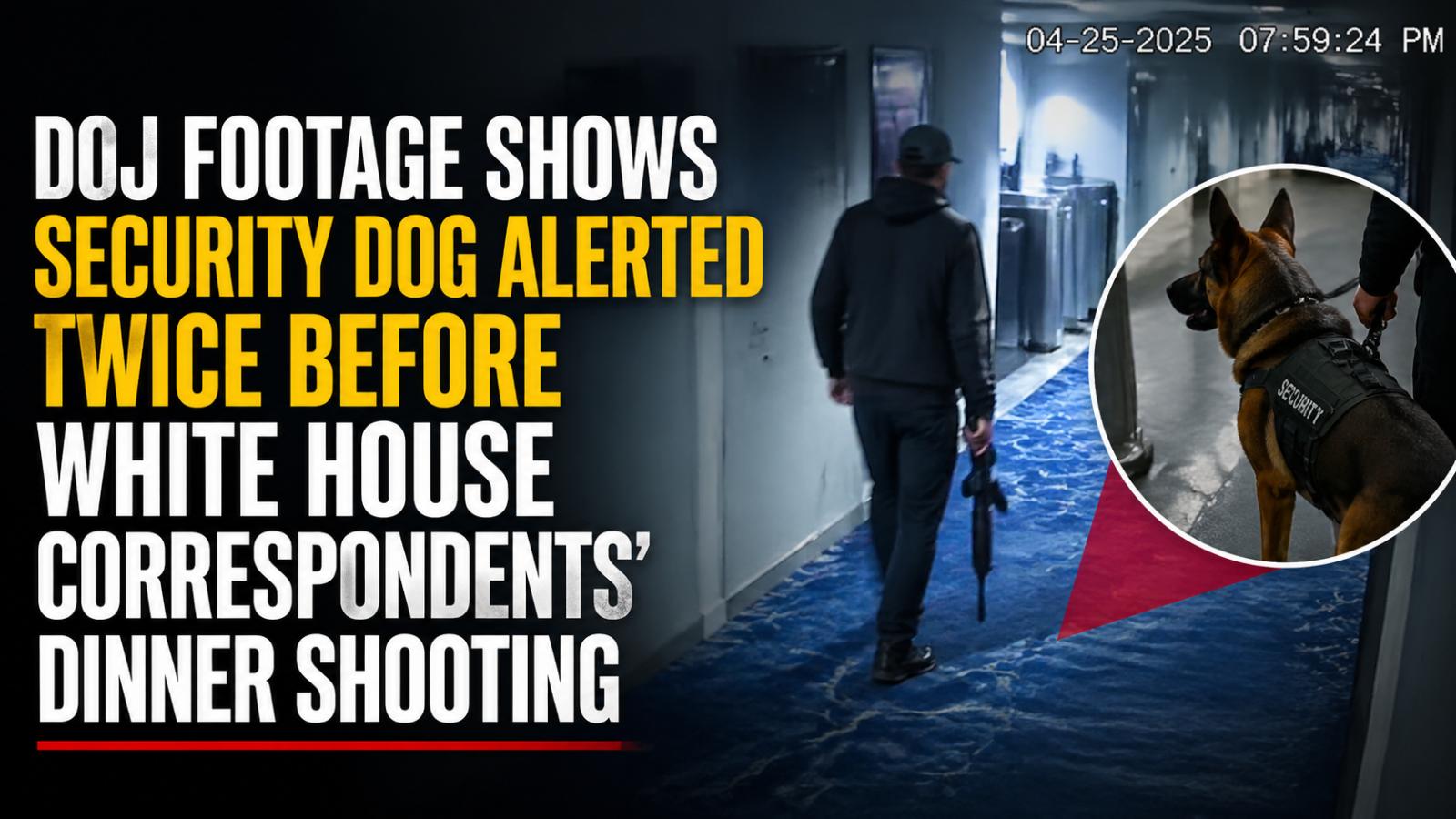
Security footage shows missed dog alerts before White House shooting
DOJ footage shows missed security dog alerts before shooting at WHCD A newly released video from the Justice Department has uncovered crucial details about the attempted shooting at the White House Correspondents' Dinner (WHCD). The footage reveals that a security dog alerted to Cole Tomas Allen’s presence twice, but these warnings went unnoticed, allowing the suspect to fire at a Secret Service officer before being detained. The video, shared by US Attorney Jeanine Pirro on social media platform X, shows Allen walking through the Hilton Hotel the night before the attack. In a chilling moment, the security dog reacts to Allen as he passes, signaling potential danger. However, despite these two distinct alerts, the handler fails to acknowledge the dog's warning, allowing Allen to continue his movement through the hotel. The footage captures the suspect armed with a shotgun, heading toward a security checkpoint where he shoots a Secret Service officer. The video highlights how Allen was moving through the hotel, appearing to “case the area” before the shooting. He can be seen walking through corridors and even passing through a gym in the hours before the more dramatic scene. The footage reveals Allen approaching the magnetometer checkpoint, where he charges past uniformed officers and agents, carrying a long-barrelled firearm. In a slow-motion clip of the video, a Secret Service agent fires three times at Allen, although police have confirmed that Allen was not shot. Instead, Allen was tackled and detained after a brief struggle with security personnel. The officer who was shot survived the attack, thanks to the protection provided by his ballistic vest. Pirro, in her statement, clarified that there is no evidence that friendly fire caused the shooting. She emphasized that the footage had already been provided to the US District Court for further legal action. Allen, a 31-year-old from California, has been charged with attempting to assassinate the president. If convicted, he faces up to life in prison. This latest video offers crucial insight into the incident, showing the missed warnings and the sequence of events that allowed the shooter to carry out the attack.
Security footage shows missed dog alerts before White House shooting
DOJ footage shows missed security dog alerts before shooting at WHCD A newly released video from the Justice Department has uncovered crucial details about the attempted shooting at the White House Correspondents' Dinner (WHCD). The footage reveals that a security dog alerted to Cole Tomas Allen’s presence twice, but these warnings went unnoticed, allowing the suspect to fire at a Secret Service officer before being detained. The video, shared by US Attorney Jeanine Pirro on social media platform X, shows Allen walking through the Hilton Hotel the night before the attack. In a chilling moment, the security dog reacts to Allen as he passes, signaling potential danger. However, despite these two distinct alerts, the handler fails to acknowledge the dog's warning, allowing Allen to continue his movement through the hotel. The footage captures the suspect armed with a shotgun, heading toward a security checkpoint where he shoots a Secret Service officer. The video highlights how Allen was moving through the hotel, appearing to “case the area” before the shooting. He can be seen walking through corridors and even passing through a gym in the hours before the more dramatic scene. The footage reveals Allen approaching the magnetometer checkpoint, where he charges past uniformed officers and agents, carrying a long-barrelled firearm. In a slow-motion clip of the video, a Secret Service agent fires three times at Allen, although police have confirmed that Allen was not shot. Instead, Allen was tackled and detained after a brief struggle with security personnel. The officer who was shot survived the attack, thanks to the protection provided by his ballistic vest. Pirro, in her statement, clarified that there is no evidence that friendly fire caused the shooting. She emphasized that the footage had already been provided to the US District Court for further legal action. Allen, a 31-year-old from California, has been charged with attempting to assassinate the president. If convicted, he faces up to life in prison. This latest video offers crucial insight into the incident, showing the missed warnings and the sequence of events that allowed the shooter to carry out the attack.
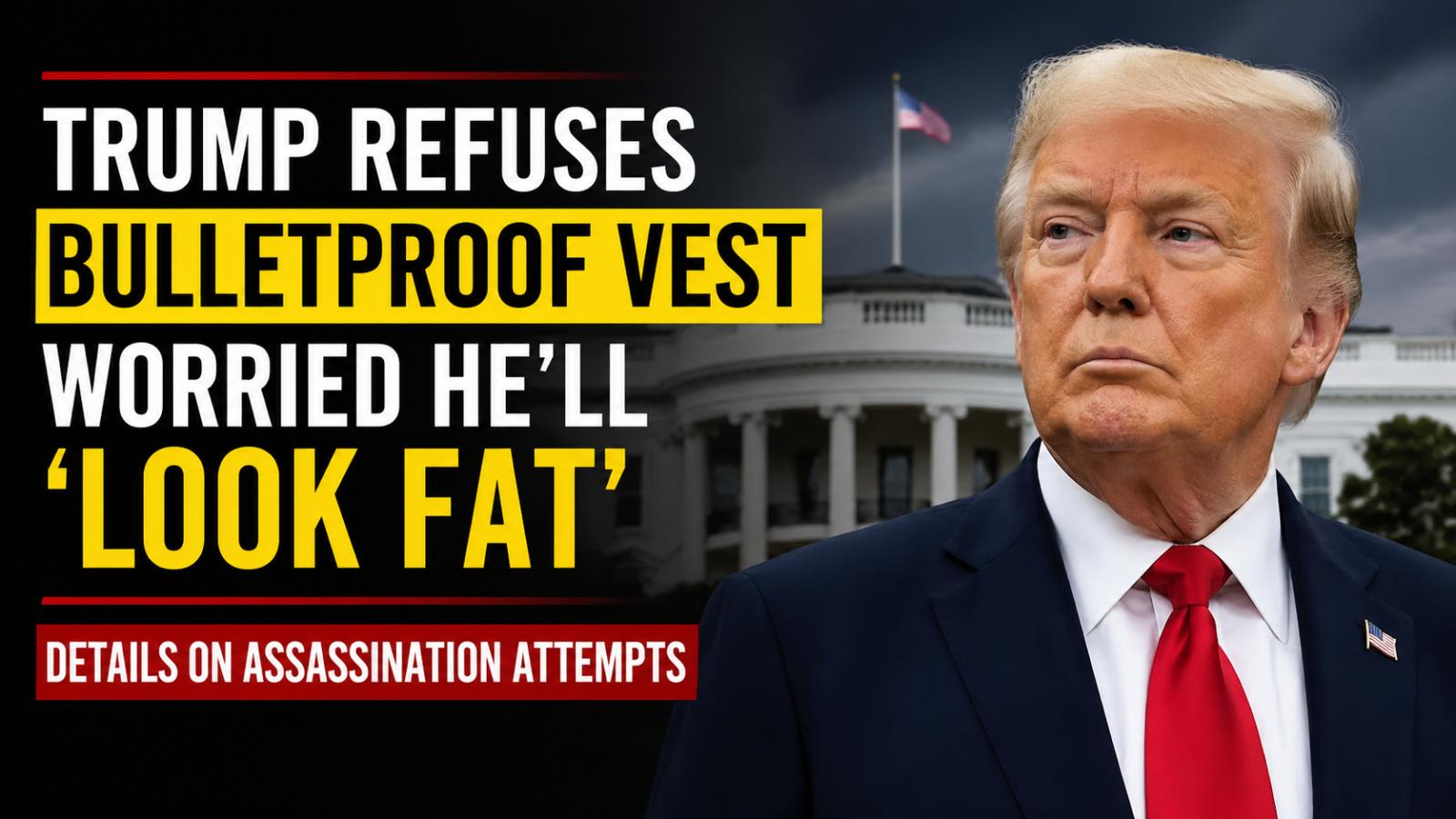
Trump avoids bulletproof vest citing appearance concerns after shooting at WHCA dinner
Trump discusses concerns about wearing bulletproof vest On April 30, 2026, U.S. President Donald Trump opened up about his hesitations regarding the use of a bulletproof vest following the shooting incident at the White House Correspondent’s Association (WHCA) dinner. "Would you wear a bulletproof vest at future events?" asked a reporter. Trump responded with his usual candidness: “I don’t know if I can handle looking 20 pounds heavier.” His concern stemmed not just from practicality but also from the image of surrendering to a threat. He continued, “It’s something you consider, but you don’t want to give in to a bad element.” These remarks came in light of recent security concerns regarding the WHCA shooting, where Trump and his team were the intended targets. Assassination attempts on Trump The suspect in the WHCA shooting has been identified as Cole Tomas Allen. He has been charged with attempting to assassinate the president. Secret Service agents prevented the assailant from reaching the ballroom during the gala event. This shooting marked another terrifying moment in a series of major assassination attempts against President Trump. Trump has faced three major assassination attempts during his time in office. Besides the WHCA attack, Trump was also targeted during a golfing trip at the Trump International Golf Club in Florida. The suspect, Ryan Wesley Routh, was observed by a Secret Service agent who saw a rifle barrel poking through a fence. After a quick response, the agent fired at Routh, who fled but was apprehended shortly after during a traffic stop. Routh was convicted of attempted assassination and other related charges, and was sentenced to life in prison in September 2025. Trump survives gunshot at campaign rally Another close call occurred in July 2024, when Trump was campaigning for president. Thomas Matthew Crooks fired multiple shots from a rooftop, one of which grazed Trump’s right ear, causing visible bleeding. Crooks was quickly neutralized by a Secret Service sniper, who killed him seconds after the shooting began. This assassination attempt reinforced the need for heightened security around the president. With Trump’s life under constant threat, security protocols have grown increasingly strict. However, his reluctance to wear a bulletproof vest highlights the complex balance between presidential safety and public image. While Trump’s safety is paramount, his concern about the perception of vulnerability speaks volumes about his approach to leadership and his struggle with the idea of appearing weak in front of the public. In conclusion, Trump continues to weigh the risks to his personal appearance versus the potential life-threatening risks posed by ongoing assassination attempts. Despite being advised about protective measures, he remains conflicted about whether to let public perception influence his security decisions.
Trump avoids bulletproof vest citing appearance concerns after shooting at WHCA dinner
Trump discusses concerns about wearing bulletproof vest On April 30, 2026, U.S. President Donald Trump opened up about his hesitations regarding the use of a bulletproof vest following the shooting incident at the White House Correspondent’s Association (WHCA) dinner. "Would you wear a bulletproof vest at future events?" asked a reporter. Trump responded with his usual candidness: “I don’t know if I can handle looking 20 pounds heavier.” His concern stemmed not just from practicality but also from the image of surrendering to a threat. He continued, “It’s something you consider, but you don’t want to give in to a bad element.” These remarks came in light of recent security concerns regarding the WHCA shooting, where Trump and his team were the intended targets. Assassination attempts on Trump The suspect in the WHCA shooting has been identified as Cole Tomas Allen. He has been charged with attempting to assassinate the president. Secret Service agents prevented the assailant from reaching the ballroom during the gala event. This shooting marked another terrifying moment in a series of major assassination attempts against President Trump. Trump has faced three major assassination attempts during his time in office. Besides the WHCA attack, Trump was also targeted during a golfing trip at the Trump International Golf Club in Florida. The suspect, Ryan Wesley Routh, was observed by a Secret Service agent who saw a rifle barrel poking through a fence. After a quick response, the agent fired at Routh, who fled but was apprehended shortly after during a traffic stop. Routh was convicted of attempted assassination and other related charges, and was sentenced to life in prison in September 2025. Trump survives gunshot at campaign rally Another close call occurred in July 2024, when Trump was campaigning for president. Thomas Matthew Crooks fired multiple shots from a rooftop, one of which grazed Trump’s right ear, causing visible bleeding. Crooks was quickly neutralized by a Secret Service sniper, who killed him seconds after the shooting began. This assassination attempt reinforced the need for heightened security around the president. With Trump’s life under constant threat, security protocols have grown increasingly strict. However, his reluctance to wear a bulletproof vest highlights the complex balance between presidential safety and public image. While Trump’s safety is paramount, his concern about the perception of vulnerability speaks volumes about his approach to leadership and his struggle with the idea of appearing weak in front of the public. In conclusion, Trump continues to weigh the risks to his personal appearance versus the potential life-threatening risks posed by ongoing assassination attempts. Despite being advised about protective measures, he remains conflicted about whether to let public perception influence his security decisions.
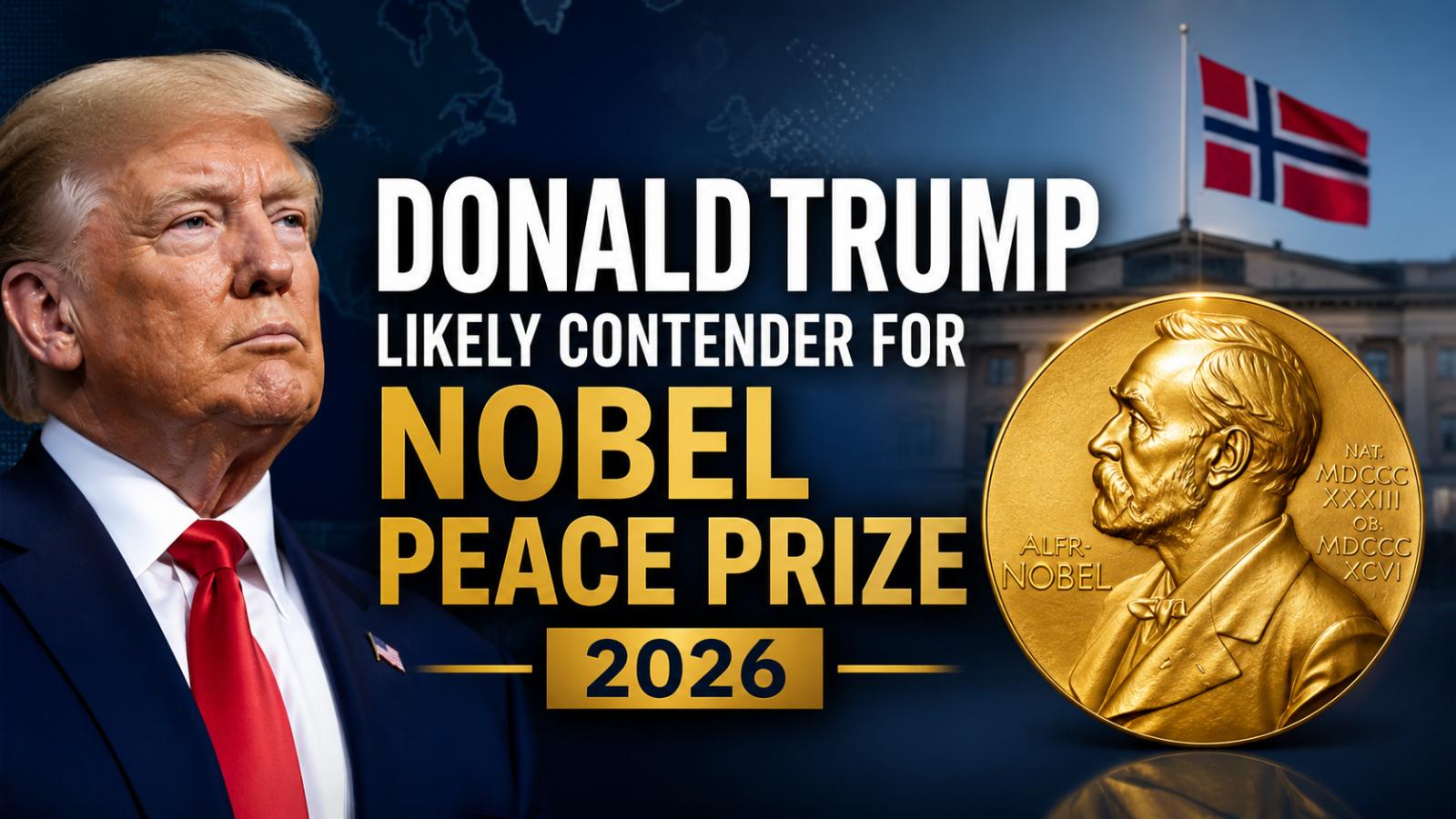
Will Donald Trump win Nobel Peace Prize 2026? Key facts and timeline
Nobel Peace Prize 2026: Trump emerges as likely contender Donald Trump is being seen as a likely contender for the Nobel Peace Prize 2026, with 287 candidates under review, but the final list remains strictly confidential. Kristian Berg Harpviken, secretary of the Norwegian Nobel Committee, confirmed that the total nominations include 208 individuals and 79 organisations, highlighting strong global participation despite ongoing conf
Will Donald Trump win Nobel Peace Prize 2026? Key facts and timeline
Nobel Peace Prize 2026: Trump emerges as likely contender Donald Trump is being seen as a likely contender for the Nobel Peace Prize 2026, with 287 candidates under review, but the final list remains strictly confidential. Kristian Berg Harpviken, secretary of the Norwegian Nobel Committee, confirmed that the total nominations include 208 individuals and 79 organisations, highlighting strong global participation despite ongoing conf
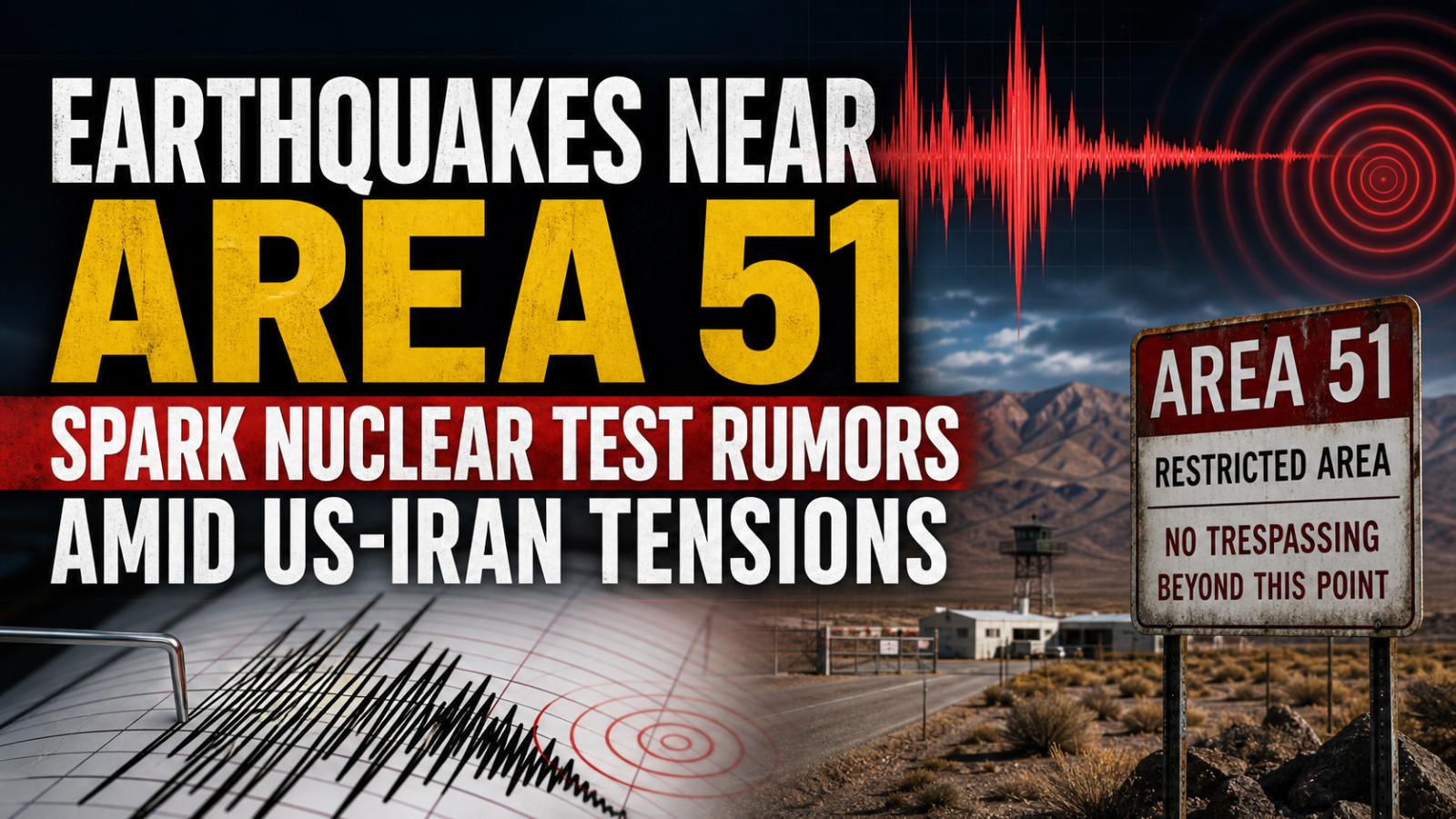
Earthquakes near Area 51 spark nuclear test rumors amid US-Iran tensions
Earthquakes near Area 51 raise questions amid rising tensions A series of earthquakes near Area 51 in Nevada between April 29 and April 30, 2026, has sparked widespread attention, with at least 17 tremors recorded within a 24 to 48-hour window, most around magnitude 4.4. The seismic activity occurred during this short time frame and has dr
Earthquakes near Area 51 spark nuclear test rumors amid US-Iran tensions
Earthquakes near Area 51 raise questions amid rising tensions A series of earthquakes near Area 51 in Nevada between April 29 and April 30, 2026, has sparked widespread attention, with at least 17 tremors recorded within a 24 to 48-hour window, most around magnitude 4.4. The seismic activity occurred during this short time frame and has dr
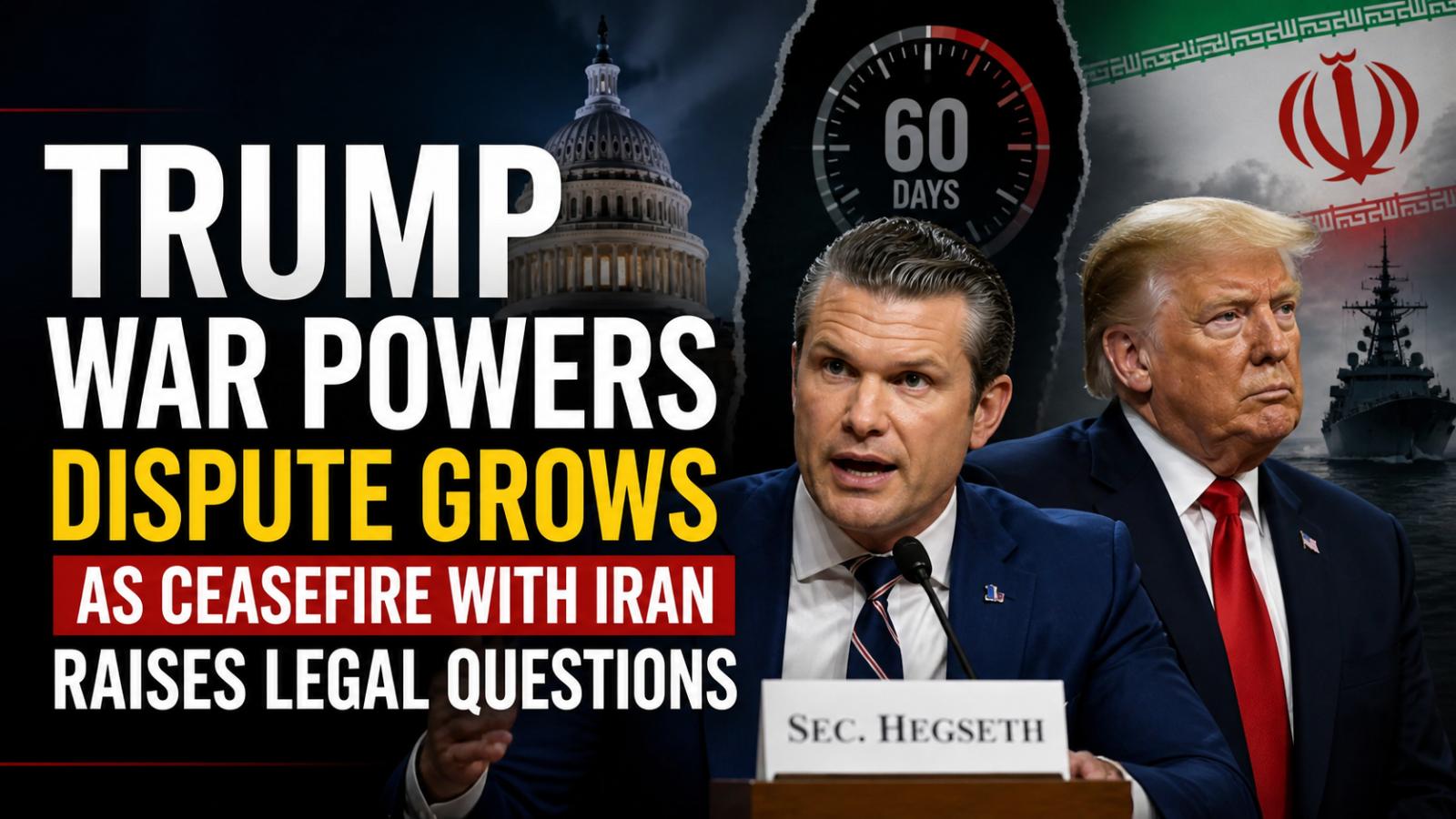
Hegseth says Iran ceasefire pauses war powers clock amid congressional concerns
The Trump war powers debate took center stage in Washington as Defense Secretary Pete Hegseth told lawmakers that a ceasefire with Iran pauses the legal clock under the War Powers Resolution, a claim that has triggered strong political and legal reactions. The dispute comes just before the 60-day deadline that typically requires the president to seek approval from Congress to continue military action, raising questions about how the law should be applied during a ceasefire. Speaking before the Senate Armed Services Committee, Hegseth argued that ongoing ceasefire conditions mean the countdown does not apply in the usual way. Under the War Powers Resolution, introduced in 1973, presidents must inform Congress within 48 hours of military action and must withdraw troops within 60 days unless lawmakers approve continued engagement. Lawmakers had expected this deadline to expire on May 1, but Hegseth’s interpretation suggests otherwise. Hegseth avoided giving a clear answer when asked if the administration of Donald Trump would seek formal authorization. Instead, he defended the administration’s actions and criticized opponents, saying that internal political disagreements weaken the country’s position. His remarks came during discussions on the Pentagon’s proposed $1.45 trillion budget, though much of the focus shifted to the Iran conflict and its legal implications. Several lawmakers from both parties expressed concern. Senator Tim Kaine warned that the situation raises serious constitutional questions, while some Republicans also indicated they may oppose continuing military operations without approval. Others supported a more flexible interpretation, especially during active negotiations or ceasefire periods. Legal experts, however, strongly rejected the argument that a ceasefire pauses the law. Analysts pointed out that US naval forces remain active in the region, including operations in the Strait of Hormuz, suggesting that hostilities have not fully stopped. Scholars emphasized that the law does not include any provision for pausing the timeline. The conflict has already had wider consequences, including rising energy prices and increased tensions in the region. Critics have also accused the administration of starting the conflict without a clear immediate threat. During the hearing, Senator Elissa Slotkin questioned whether the administration could truly claim progress while key trade routes remain unstable. The exchange grew tense at times, reflecting deep divisions over the handling of the situation. While military officials maintained a more measured tone, political leaders continued to clash over strategy, legality, and communication with the public. As the deadline passes, the debate over war powers, presidential authority, and congressional oversight is expected to intensify further.
Hegseth says Iran ceasefire pauses war powers clock amid congressional concerns
The Trump war powers debate took center stage in Washington as Defense Secretary Pete Hegseth told lawmakers that a ceasefire with Iran pauses the legal clock under the War Powers Resolution, a claim that has triggered strong political and legal reactions. The dispute comes just before the 60-day deadline that typically requires the president to seek approval from Congress to continue military action, raising questions about how the law should be applied during a ceasefire. Speaking before the Senate Armed Services Committee, Hegseth argued that ongoing ceasefire conditions mean the countdown does not apply in the usual way. Under the War Powers Resolution, introduced in 1973, presidents must inform Congress within 48 hours of military action and must withdraw troops within 60 days unless lawmakers approve continued engagement. Lawmakers had expected this deadline to expire on May 1, but Hegseth’s interpretation suggests otherwise. Hegseth avoided giving a clear answer when asked if the administration of Donald Trump would seek formal authorization. Instead, he defended the administration’s actions and criticized opponents, saying that internal political disagreements weaken the country’s position. His remarks came during discussions on the Pentagon’s proposed $1.45 trillion budget, though much of the focus shifted to the Iran conflict and its legal implications. Several lawmakers from both parties expressed concern. Senator Tim Kaine warned that the situation raises serious constitutional questions, while some Republicans also indicated they may oppose continuing military operations without approval. Others supported a more flexible interpretation, especially during active negotiations or ceasefire periods. Legal experts, however, strongly rejected the argument that a ceasefire pauses the law. Analysts pointed out that US naval forces remain active in the region, including operations in the Strait of Hormuz, suggesting that hostilities have not fully stopped. Scholars emphasized that the law does not include any provision for pausing the timeline. The conflict has already had wider consequences, including rising energy prices and increased tensions in the region. Critics have also accused the administration of starting the conflict without a clear immediate threat. During the hearing, Senator Elissa Slotkin questioned whether the administration could truly claim progress while key trade routes remain unstable. The exchange grew tense at times, reflecting deep divisions over the handling of the situation. While military officials maintained a more measured tone, political leaders continued to clash over strategy, legality, and communication with the public. As the deadline passes, the debate over war powers, presidential authority, and congressional oversight is expected to intensify further.