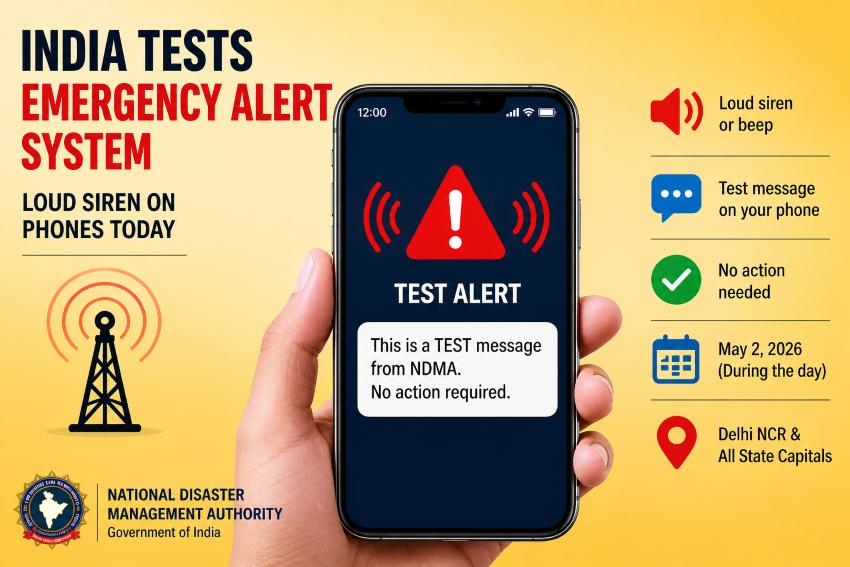
In a major step toward enhancing disaster preparedness, the Indian government is carrying out a nationwide simulation of its Cell Broadcast Alert System. Managed by the National Disaster Management Authority, the system is designed to send instant emergency notifications directly to mobile phones, even if they are on silent mode or set to do not disturb. This ensures that critical alerts can reach people without delay, potentially saving lives during natural or man-made disasters.
Citizens across regions, including major urban centers like Delhi NCR and various state capitals, may experience a sudden loud siren sound or strong vibration on their mobile devices during the day. This will be followed by a message clearly indicating that it is a test alert issued by the NDMA. Authorities have emphasized that this is only a simulation and does not signal any real emergency situation. People are advised not to panic, call emergency services, or take unnecessary action upon receiving the alert. Simply reading and dismissing the message is sufficient.
What to Expect During the Alert Test
During the test, mobile users may notice a sharp, attention-grabbing siren tone that overrides existing phone settings. This includes silent mode, muted notifications, or even do not disturb configurations. The alert message will typically read that it is a test broadcast sent by the National Disaster Management Authority as part of a system check. The purpose of using such a loud and unavoidable notification is to ensure that, in real emergencies, alerts are noticed immediately and not missed due to phone settings or environmental noise.
Why This Test Matters for Public Safety
The primary objective of this nationwide drill is to evaluate the reach, speed, and effectiveness of the Cell Broadcast Alert System. In disaster scenarios, every second counts, and timely communication can significantly reduce risks and casualties. By conducting these tests, authorities can identify technical gaps, improve system performance, and ensure seamless delivery of alerts across different mobile networks and regions. As climate-related events and urban risks continue to grow, having a reliable alert mechanism becomes increasingly critical.
Officials encourage the public to stay informed and cooperate during such tests, as they play a vital role in building a resilient emergency response framework. This initiative reflects the government’s commitment to leveraging technology for citizen safety, ensuring that people receive immediate warnings and can take appropriate action when real emergencies occur.