Andhra Pradesh has emerged as a hotspot for fresh investments, as evidenced by the announcements made during the 17th State Investment Promotion Board (SIPB) meeting. The state continues to attract national and international investors across various sectors, such as renewable energy, green hydrogen, bio CNG, manufacturing, and data infrastructure, bringing an unprecedented boost to its industrial and employment landscape.
Andhra Pradesh has emerged as a hotspot for fresh investments, as evidenced by the announcements made during the 17th State Investment Promotion Board (SIPB) meeting. The state continues to attract national and international investors across various sectors, such as renewable energy, green hydrogen, bio CNG, manufacturing, and data infrastructure, bringing an unprecedented boost to its industrial and employment landscape.
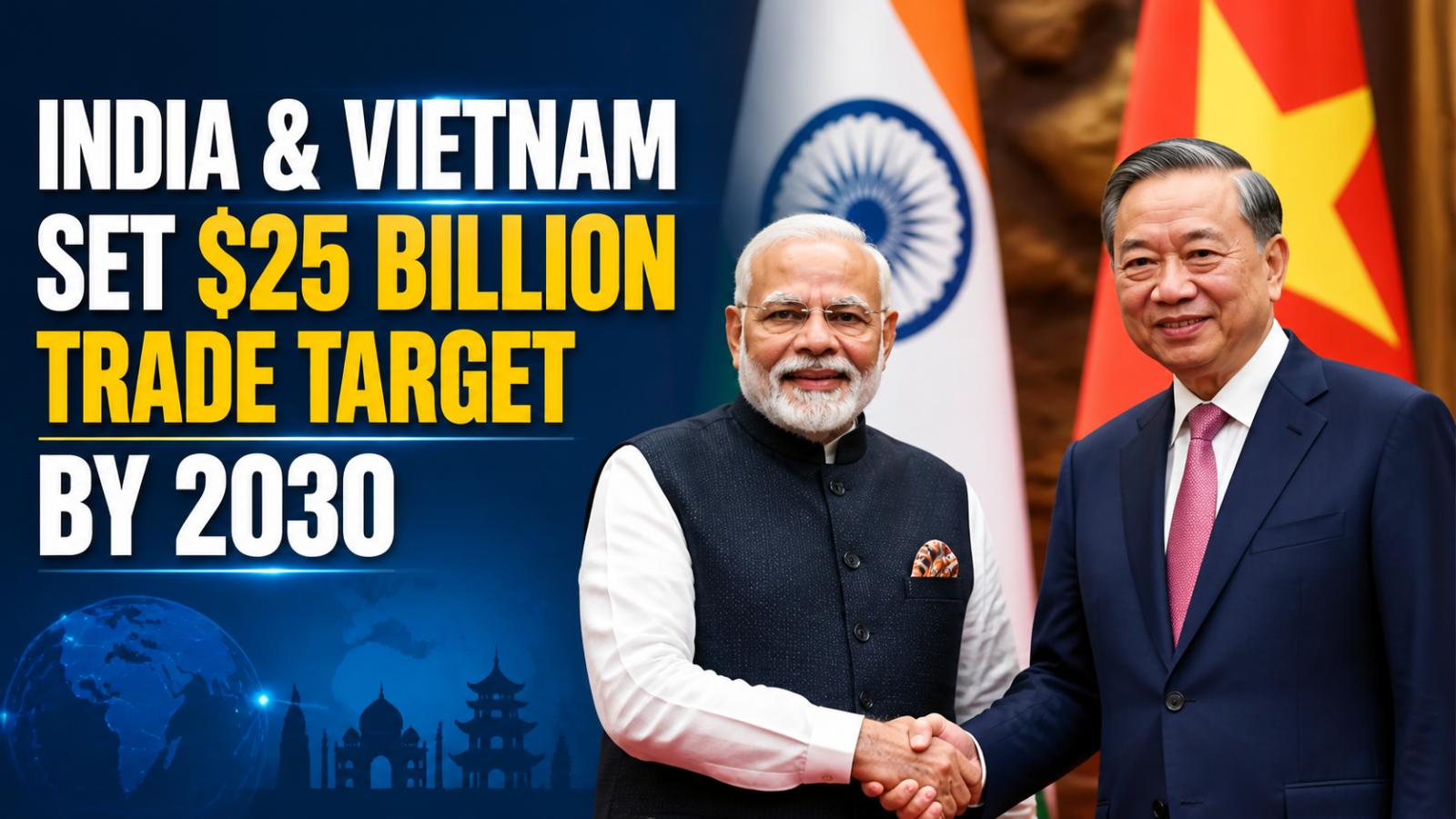
India and Vietnam have agreed to strengthen their economic ties with an ambitious goal of increasing bilateral trade to USD 25 billion by 2030. This announcement, made by Prime Minister Narendra Modi on May 6, 2026, is part of a new strategic roadmap designed to expand economic and sector-specific cooperation between the two countries. The announcement was made following the signing of several Memoranda of Understanding (MoUs) at Hyderabad House in Delhi by PM Modi and Vietnam's President To
India and Vietnam have agreed to strengthen their economic ties with an ambitious goal of increasing bilateral trade to USD 25 billion by 2030. This announcement, made by Prime Minister Narendra Modi on May 6, 2026, is part of a new strategic roadmap designed to expand economic and sector-specific cooperation between the two countries. The announcement was made following the signing of several Memoranda of Understanding (MoUs) at Hyderabad House in Delhi by PM Modi and Vietnam's President To
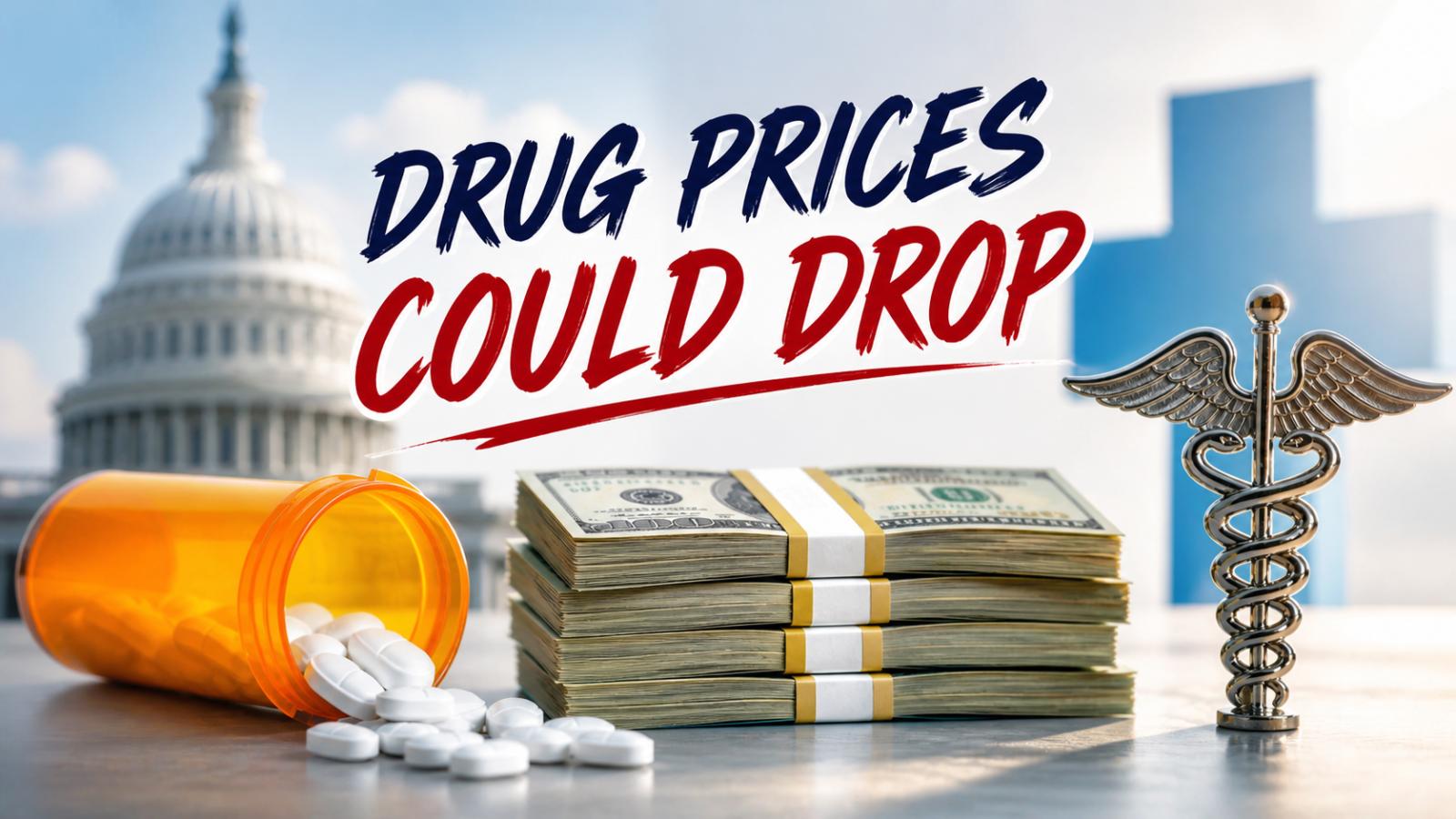
The White House says aligning U.S. drug prices with global rates may slash costs—but experts remain divided.
What the $529 Billion Savings Really Means
According to White House economists, Trump’s drug pricing strategy—often called the “most favored nation” model—could reduce prescription drug costs by up to $529 billion over 10 years. The idea is simple: Americans s
The White House says aligning U.S. drug prices with global rates may slash costs—but experts remain divided.
What the $529 Billion Savings Really Means
According to White House economists, Trump’s drug pricing strategy—often called the “most favored nation” model—could reduce prescription drug costs by up to $529 billion over 10 years. The idea is simple: Americans s
Student Loan Forgiveness Update: What’s Changing?
A new student loan forgiveness bill in 2026 could significantly shorten repayment timelines for millions of Americans. The proposal would allow unemployed borrowers to count jobless months toward loan forgiveness, even when they make $0 payments.
Can Unemployment Count Toward Forgiveness?
Yes — under the proposed law, borrowers in income-driven repayment (
Student Loan Forgiveness Update: What’s Changing?
A new student loan forgiveness bill in 2026 could significantly shorten repayment timelines for millions of Americans. The proposal would allow unemployed borrowers to count jobless months toward loan forgiveness, even when they make $0 payments.
Can Unemployment Count Toward Forgiveness?
Yes — under the proposed law, borrowers in income-driven repayment (
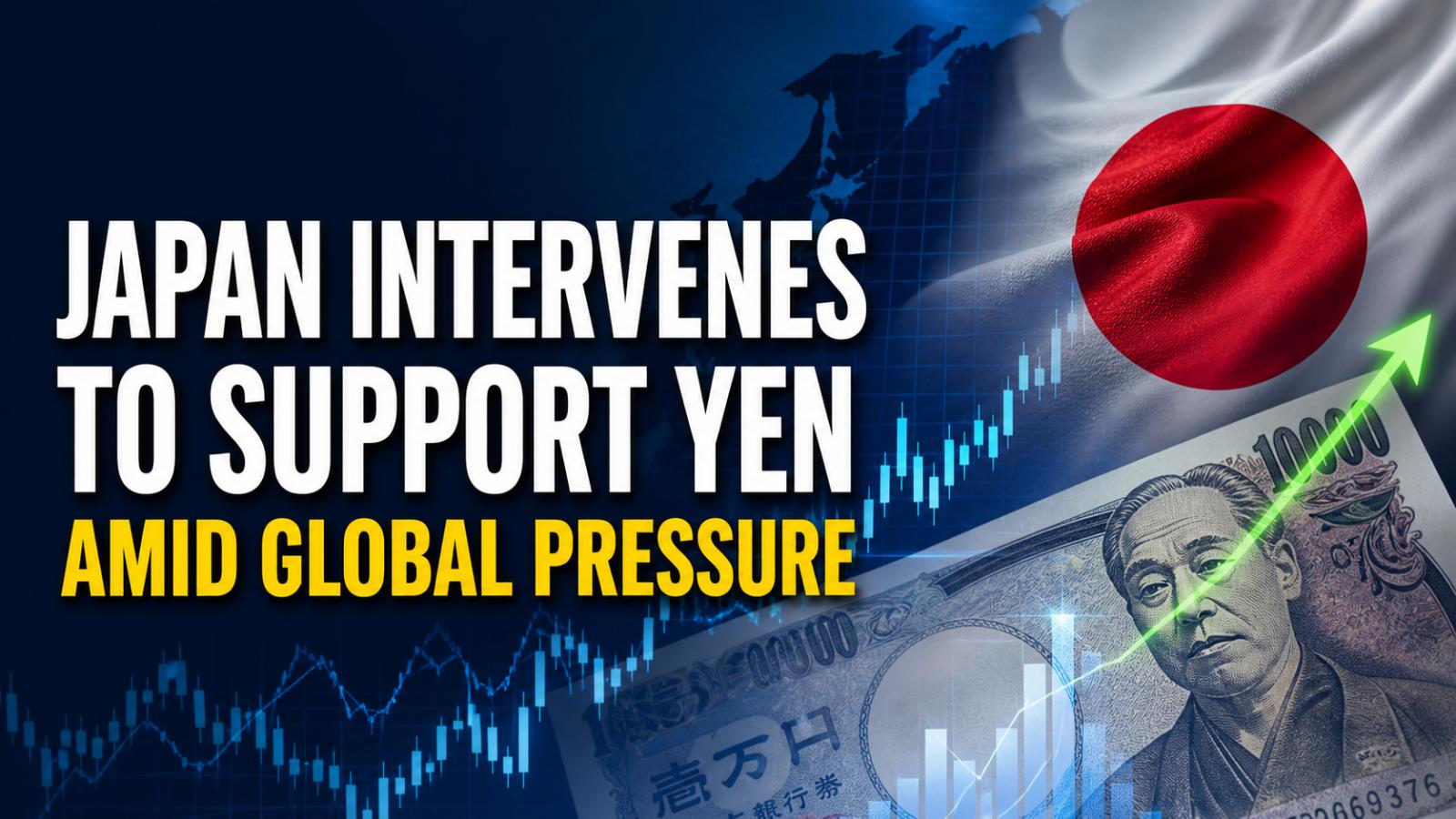
The Japanese yen recorded a sharp rise against the US dollar for the second consecutive day, drawing significant attention from global financial markets already focused on geopolitical tensions and rising oil prices. In early Asian trading on Monday, the yen surged nearly 0.9 percent within minutes of market opening, suggesting strong intervention signals from Japanese authorities.
Market reports indicate that Japan may have injected approximately 5.48 trillion yen, equivalent to ab
The Japanese yen recorded a sharp rise against the US dollar for the second consecutive day, drawing significant attention from global financial markets already focused on geopolitical tensions and rising oil prices. In early Asian trading on Monday, the yen surged nearly 0.9 percent within minutes of market opening, suggesting strong intervention signals from Japanese authorities.
Market reports indicate that Japan may have injected approximately 5.48 trillion yen, equivalent to ab
Oil prices jumped over 6% after President Donald Trump confirmed the U.S. will maintain its blockade on Iran, raising concerns over disrupted supply and escalating tensions in the Strait of Hormuz.
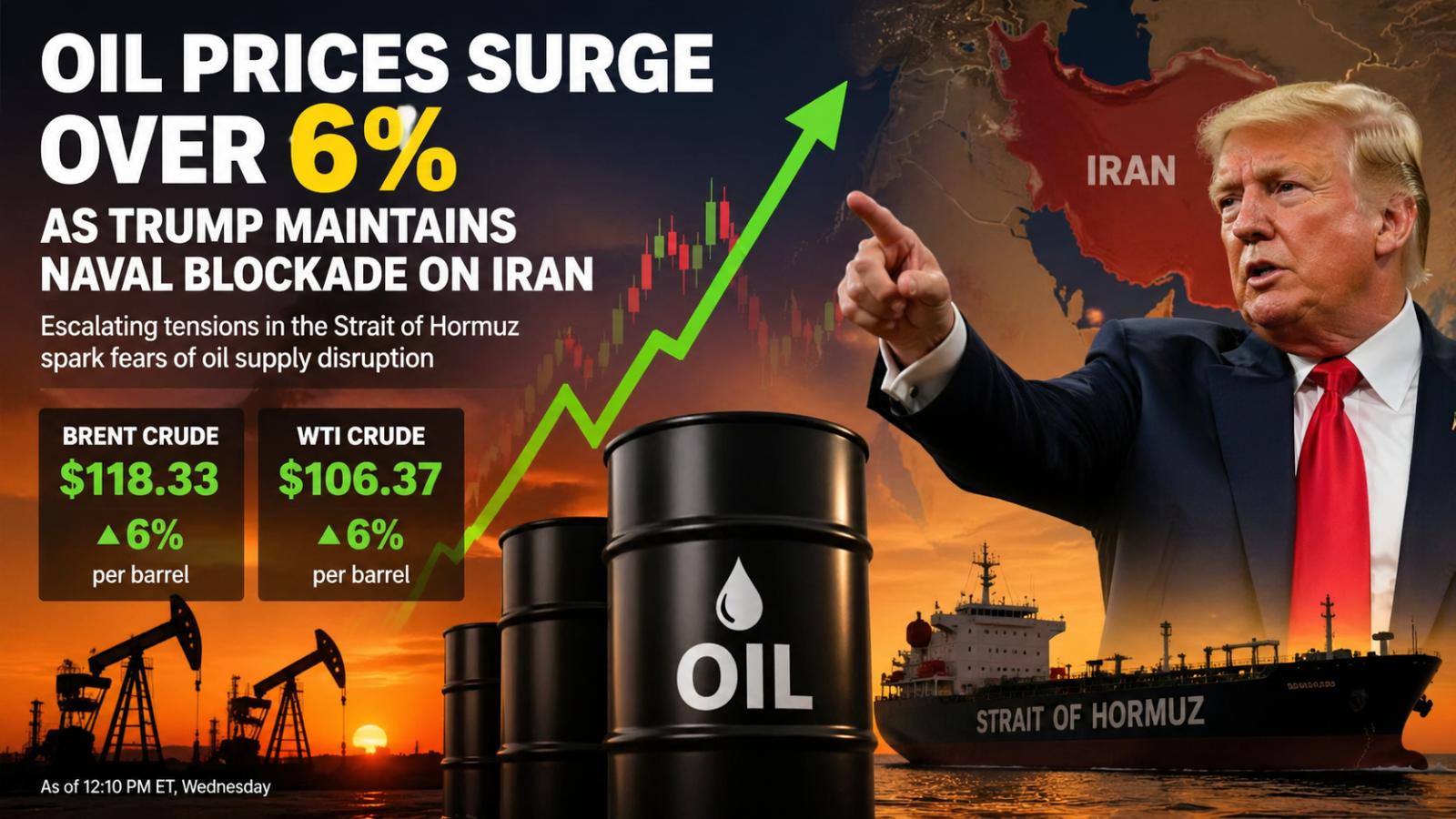
Oil prices surge over 6% as Trump maintains naval blockade on Iran, sending shockwaves through global energy markets and intensifying concerns about supply disruptions in the Middle East. By 12:10 PM Eastern Time on Wednesday April 29, 2026, international benchmark Brent crude futures climbed more than 6% to $118.33 per barrel, while U.S. West Texas Intermediate futures rose over 6% to $106.37 per barrel.
The sharp increase followed comments from Donald Trump, who confirmed that the United States would continue its naval blockade against Iran until a nuclear agreement is reached. Trump described the blockade as highly effective, signaling a firm stance amid stalled diplomatic efforts. Negotiations aimed at easing tensions have made little progress in recent days, further escalating uncertainty in global markets.
Iran has refused to reopen the Strait of Hormuz—a critical passage for global oil shipments—unless the United States lifts its blockade. Tehran’s control over the strait has significantly restricted oil exports from the region, tightening supply and driving prices higher. Market analysts note that developments in the Persian Gulf remain the dominant factor influencing oil price volatility.
Adding to market complexity, the United Arab Emirates recently announced its decision to exit OPEC. While strategists at ING described the move as a substantial setback for the producer alliance, they indicated its immediate impact on prices would likely be limited compared to ongoing geopolitical tensions.
Analysts suggest that while the UAE’s departure could weaken OPEC’s long-term influence, the near-term trajectory of oil markets will depend largely on whether oil flows resume through the Strait of Hormuz. Until then, geopolitical risks and supply constraints are expected to keep prices elevated and markets volatile.
Oil prices jumped over 6% after President Donald Trump confirmed the U.S. will maintain its blockade on Iran, raising concerns over disrupted supply and escalating tensions in the Strait of Hormuz.
Oil prices surge over 6% as Trump maintains naval blockade on Iran, sending shockwaves through global energy markets and intensifying concerns about supply disruptions in the Middle East. By 12:10 PM Eastern Time on Wednesday April 29, 2026, international benchmark Brent crude futures climbed more than 6% to $118.33 per barrel, while U.S. West Texas Intermediate futures rose over 6% to $106.37 per barrel.
The sharp increase followed comments from Donald Trump, who confirmed that the United States would continue its naval blockade against Iran until a nuclear agreement is reached. Trump described the blockade as highly effective, signaling a firm stance amid stalled diplomatic efforts. Negotiations aimed at easing tensions have made little progress in recent days, further escalating uncertainty in global markets.
Iran has refused to reopen the Strait of Hormuz—a critical passage for global oil shipments—unless the United States lifts its blockade. Tehran’s control over the strait has significantly restricted oil exports from the region, tightening supply and driving prices higher. Market analysts note that developments in the Persian Gulf remain the dominant factor influencing oil price volatility.
Adding to market complexity, the United Arab Emirates recently announced its decision to exit OPEC. While strategists at ING described the move as a substantial setback for the producer alliance, they indicated its immediate impact on prices would likely be limited compared to ongoing geopolitical tensions.
Analysts suggest that while the UAE’s departure could weaken OPEC’s long-term influence, the near-term trajectory of oil markets will depend largely on whether oil flows resume through the Strait of Hormuz. Until then, geopolitical risks and supply constraints are expected to keep prices elevated and markets volatile.
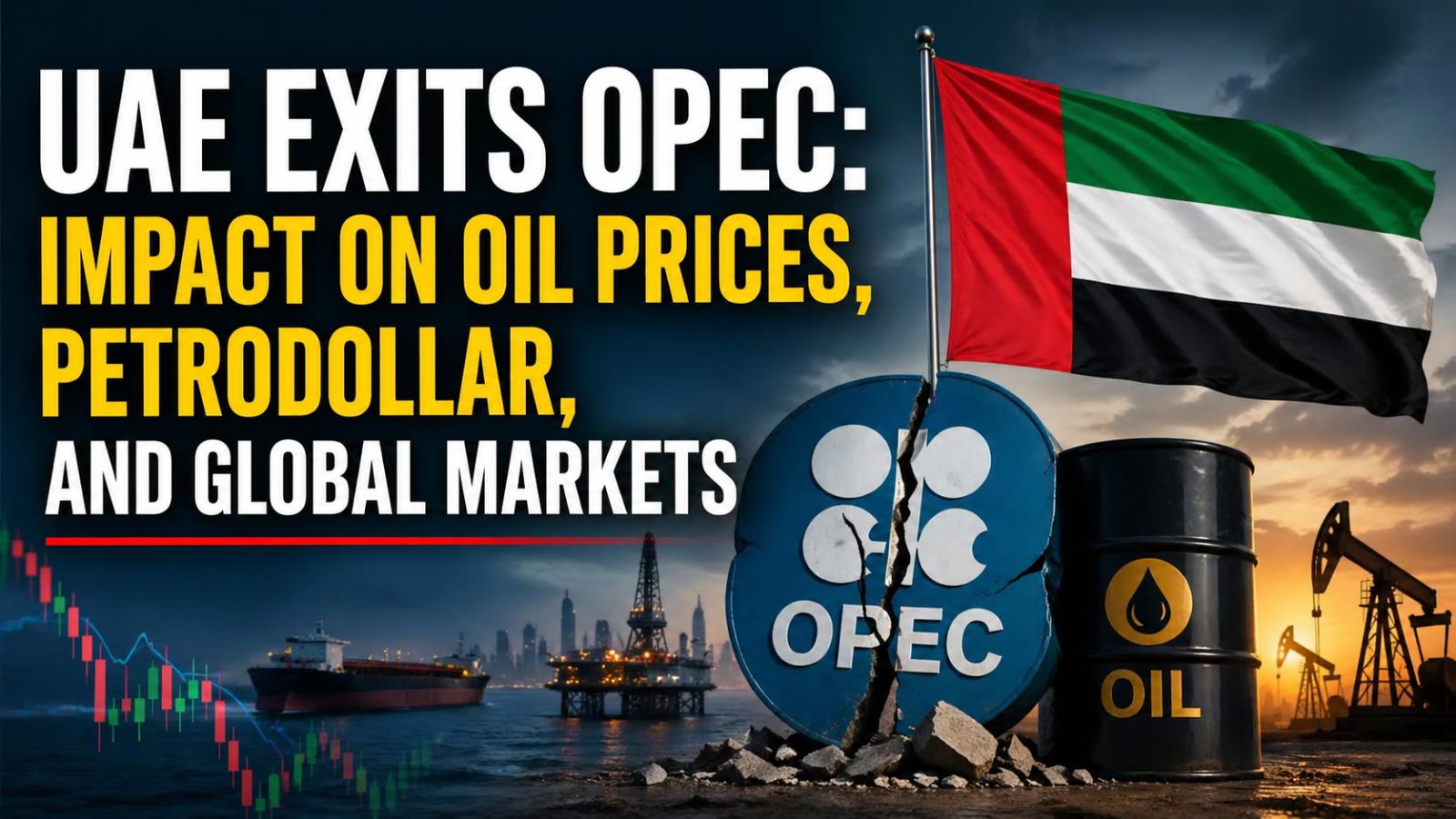
UAE exits OPEC and reshapes global oil and currency dynamics
The decision by the United Arab Emirates to exit OPEC and OPEC+ marks a major shift in global energy markets. This move could increase oil price volatility, weaken OPEC’s control, and challenge the dominance of the US dollar in global oil trade. The timing is critical, coming amid rising oil prices, a growing dollar shortage in Gulf countries, and escalating tensions around the Strait of Hormuz.
What does thi
UAE exits OPEC and reshapes global oil and currency dynamics
The decision by the United Arab Emirates to exit OPEC and OPEC+ marks a major shift in global energy markets. This move could increase oil price volatility, weaken OPEC’s control, and challenge the dominance of the US dollar in global oil trade. The timing is critical, coming amid rising oil prices, a growing dollar shortage in Gulf countries, and escalating tensions around the Strait of Hormuz.
What does thi
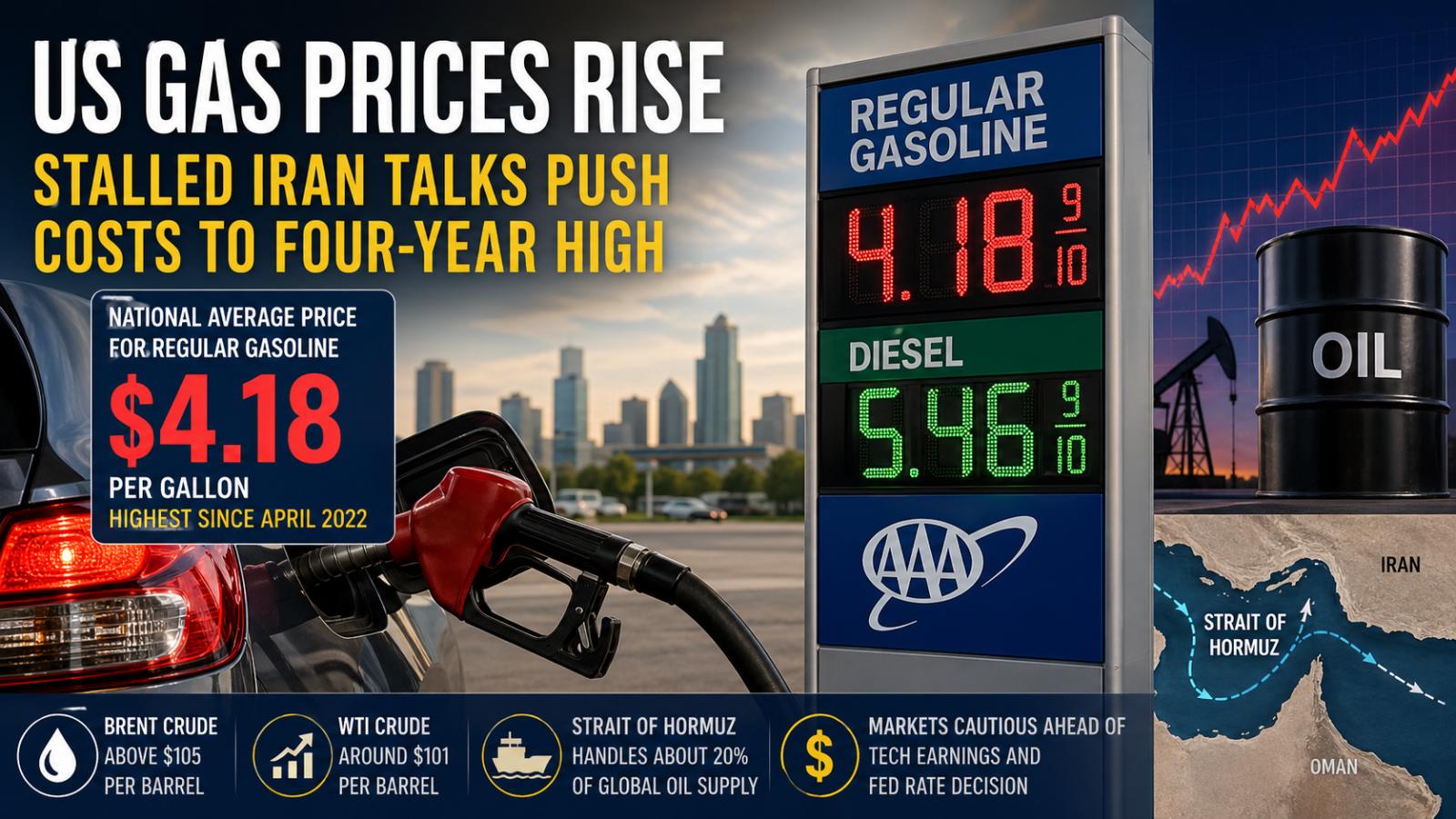
Stalled Iran talks push costs to four-year high
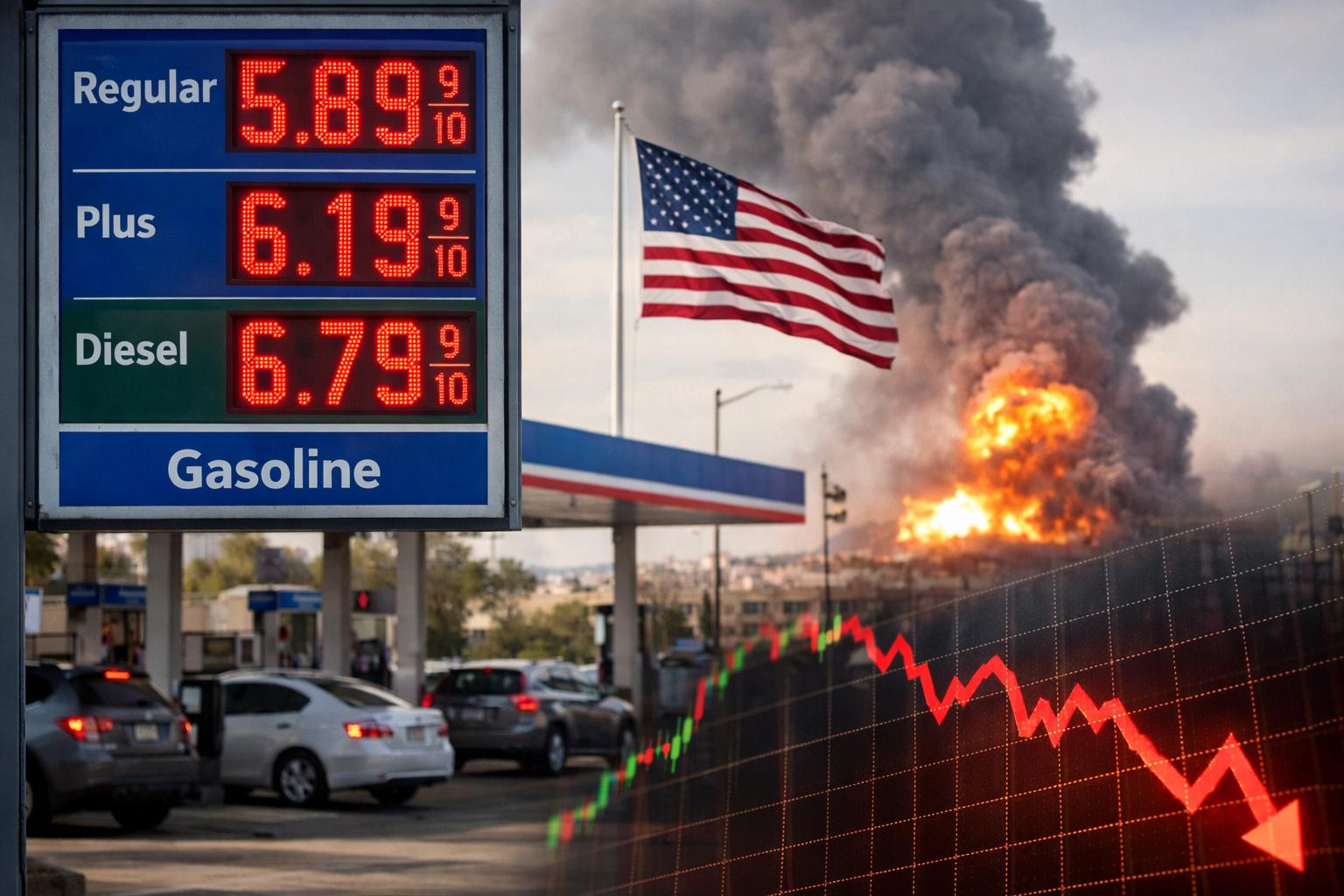
Gasoline prices across the United States climbed sharply on Tuesday, April 28, 2026, reaching their highest level in four years as stalled negotiations between Washington and Tehran fueled a surge in global oil markets. According to AAA, the national average price for a gallon of regular gasoline rose to $4.18, marking the h
Stalled Iran talks push costs to four-year high
Gasoline prices across the United States climbed sharply on Tuesday, April 28, 2026, reaching their highest level in four years as stalled negotiations between Washington and Tehran fueled a surge in global oil markets. According to AAA, the national average price for a gallon of regular gasoline rose to $4.18, marking the h
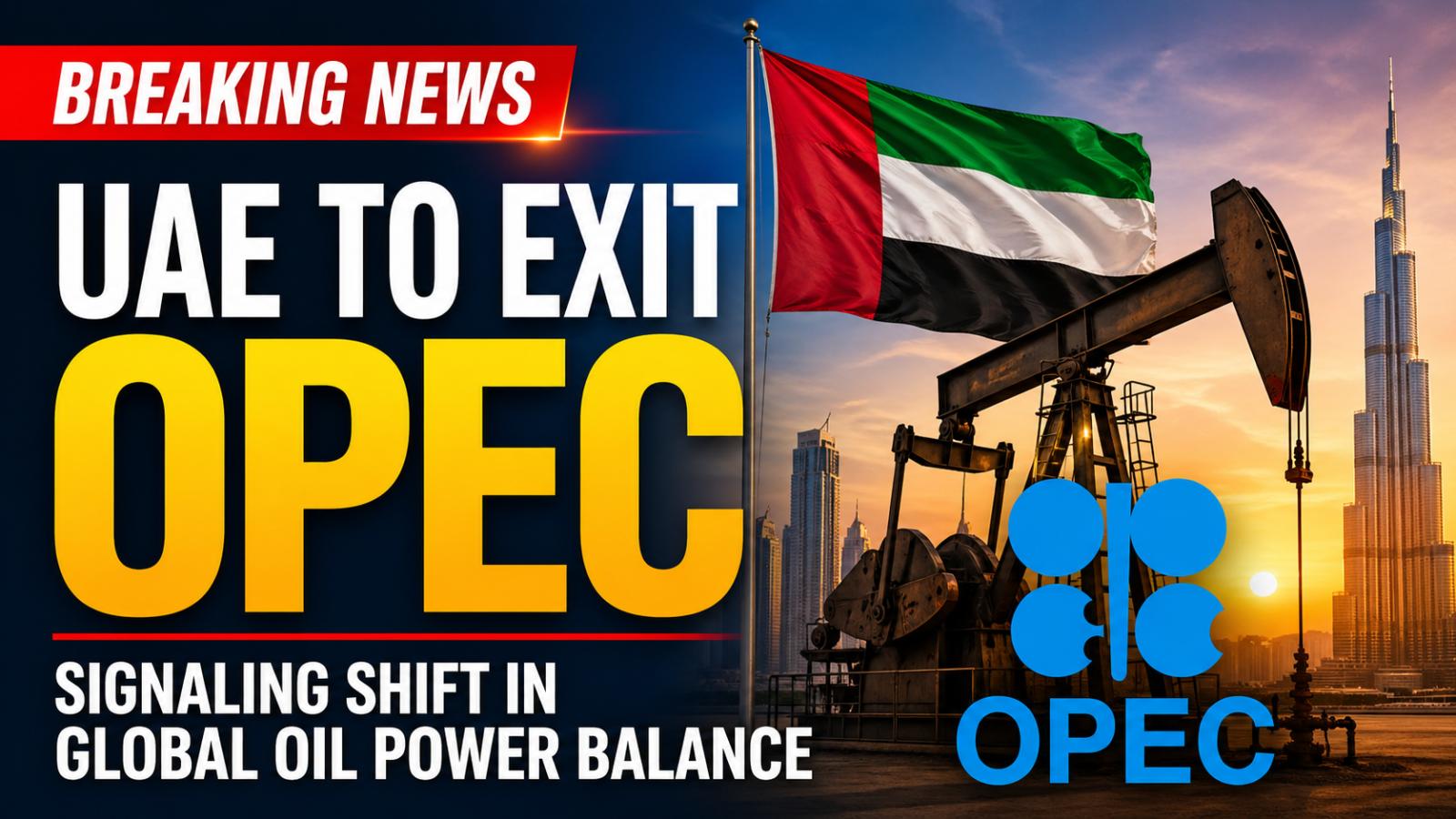
The UAE will exit OPEC on May 1 after nearly six decades, aiming for greater control over oil production and energy strategy. The move may weaken OPEC’s influence, raise concerns about supply coordination, and reshape global oil market dynamics.
UAE to exit OPEC, signaling shift in global oil power balance is set to take effect May 1, marking a major change in the structure of global energy coordination. The decision reflects Abu Dhabi’s broader strategy to gai
The UAE will exit OPEC on May 1 after nearly six decades, aiming for greater control over oil production and energy strategy. The move may weaken OPEC’s influence, raise concerns about supply coordination, and reshape global oil market dynamics.
UAE to exit OPEC, signaling shift in global oil power balance is set to take effect May 1, marking a major change in the structure of global energy coordination. The decision reflects Abu Dhabi’s broader strategy to gai
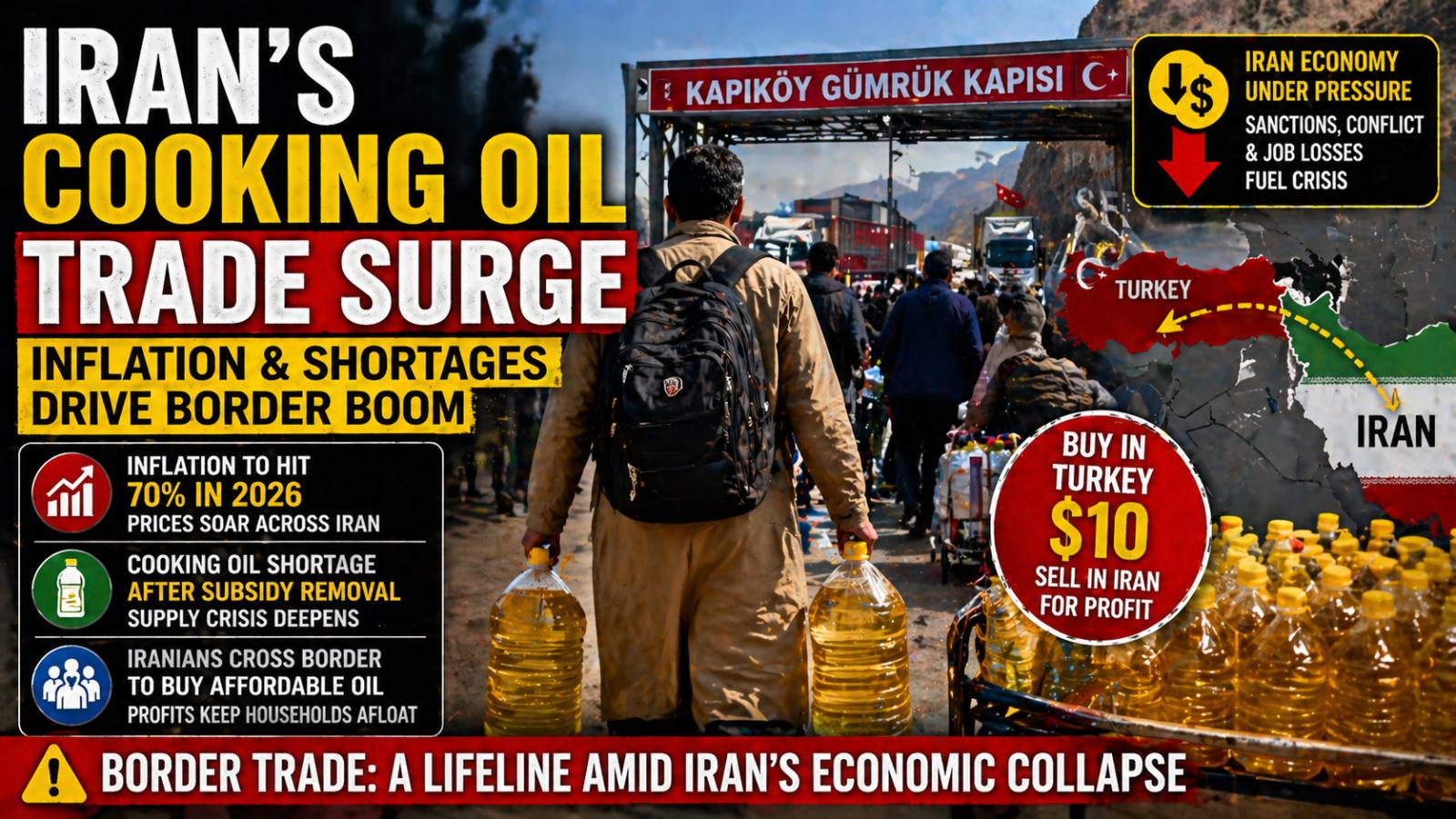
On Turkey’s bustling border crossing with Iran, inflation and shortages are driving a surge in cooking oil trade as economic pressures deepen inside Iran. At the Kapikoy crossing near Van in eastern Turkey, merchants and travelers described a growing demand for basic goods, particularly cooking oil, as Iranian consumers grapple with soaring prices and limited supply.
Shopkeepers at the crossing said demand has risen sharply in recent days, with dozens of individuals carrying multiple large bottles of oil back into Iran. The trade has become a small but vital source of income for both Turkish vendors and Iranian buyers seeking to resell or use the goods domestically.
Rising food prices and subsidy reforms reshape consumer behavior
Iran’s inflation crisis, projected by the International Monetary Fund to approach 70 percent in 2026, has significantly eroded purchasing power. Cooking oil prices surged after the government removed subsidies on certain essential imports in January, a move intended to reduce state spending amid ongoing sanctions.
Iranian officials, including President Masoud Pezeshkian, have defended the policy, arguing that subsidies were being exploited without effectively lowering prices. However, many consumers report difficulty finding affordable cooking oil in local markets, forcing them to look beyond the country’s borders.
Border trade becomes a lifeline for struggling households
For some Iranians, cross-border trade offers a modest financial cushion. Individuals interviewed at the crossing described buying cooking oil in Turkey for just over $10 per five-liter bottle and reselling it in Iran at slightly lower prices than domestic shops, earning small profits.
The Kapikoy crossing has remained one of the few consistent links between Iran and the outside world during recent disruptions, including airspace closures and an ongoing internet shutdown that has limited access to information within the country.
Economic strain intensifies amid conflict and job losses
Beyond inflation, Iran’s economy is facing additional strain from conflict-related disruptions and layoffs. The country’s minimum wage, roughly $108 per month, has failed to keep pace with rising living costs, leaving many households under severe financial pressure.
Recent protests driven by economic discontent have been met with government crackdowns, adding to an atmosphere of uncertainty. While the government has introduced monthly cash payments equivalent to about $7 to offset rising costs, analysts say the measure is unlikely to significantly ease the burden on most families.
Limited relief despite growing cross-border activity
Although the increase in cross-border trade highlights the resilience of individuals adapting to economic hardship, the overall impact remains limited. The modest profits generated by transporting goods like cooking oil do little to offset the broader challenges posed by inflation, unemployment, and supply shortages.
For many Iranians, the scenes at the Turkey-Iran border underscore a deeper economic crisis, where even basic necessities require creative—and often difficult—solutions to obtain.
On Turkey’s bustling border crossing with Iran, inflation and shortages are driving a surge in cooking oil trade as economic pressures deepen inside Iran. At the Kapikoy crossing near Van in eastern Turkey, merchants and travelers described a growing demand for basic goods, particularly cooking oil, as Iranian consumers grapple with soaring prices and limited supply.
Shopkeepers at the crossing said demand has risen sharply in recent days, with dozens of individuals carrying multiple large bottles of oil back into Iran. The trade has become a small but vital source of income for both Turkish vendors and Iranian buyers seeking to resell or use the goods domestically.
Rising food prices and subsidy reforms reshape consumer behavior
Iran’s inflation crisis, projected by the International Monetary Fund to approach 70 percent in 2026, has significantly eroded purchasing power. Cooking oil prices surged after the government removed subsidies on certain essential imports in January, a move intended to reduce state spending amid ongoing sanctions.
Iranian officials, including President Masoud Pezeshkian, have defended the policy, arguing that subsidies were being exploited without effectively lowering prices. However, many consumers report difficulty finding affordable cooking oil in local markets, forcing them to look beyond the country’s borders.
Border trade becomes a lifeline for struggling households
For some Iranians, cross-border trade offers a modest financial cushion. Individuals interviewed at the crossing described buying cooking oil in Turkey for just over $10 per five-liter bottle and reselling it in Iran at slightly lower prices than domestic shops, earning small profits.
The Kapikoy crossing has remained one of the few consistent links between Iran and the outside world during recent disruptions, including airspace closures and an ongoing internet shutdown that has limited access to information within the country.
Economic strain intensifies amid conflict and job losses
Beyond inflation, Iran’s economy is facing additional strain from conflict-related disruptions and layoffs. The country’s minimum wage, roughly $108 per month, has failed to keep pace with rising living costs, leaving many households under severe financial pressure.
Recent protests driven by economic discontent have been met with government crackdowns, adding to an atmosphere of uncertainty. While the government has introduced monthly cash payments equivalent to about $7 to offset rising costs, analysts say the measure is unlikely to significantly ease the burden on most families.
Limited relief despite growing cross-border activity
Although the increase in cross-border trade highlights the resilience of individuals adapting to economic hardship, the overall impact remains limited. The modest profits generated by transporting goods like cooking oil do little to offset the broader challenges posed by inflation, unemployment, and supply shortages.
For many Iranians, the scenes at the Turkey-Iran border underscore a deeper economic crisis, where even basic necessities require creative—and often difficult—solutions to obtain.
Long-term infrastructure upgrades drive rising utility costs
San Francisco officials have approved a series of water and sewer rate increases set to begin in the summer of 2026, with additional adjustments planned through 2036. The increases are tied to a long-term capital improvement strategy led by the San Francisco Public Utilities Commission, aimed at modernizing aging infrastructure and maintaining system reliability. City data shows that portions of the water
Long-term infrastructure upgrades drive rising utility costs
San Francisco officials have approved a series of water and sewer rate increases set to begin in the summer of 2026, with additional adjustments planned through 2036. The increases are tied to a long-term capital improvement strategy led by the San Francisco Public Utilities Commission, aimed at modernizing aging infrastructure and maintaining system reliability. City data shows that portions of the water
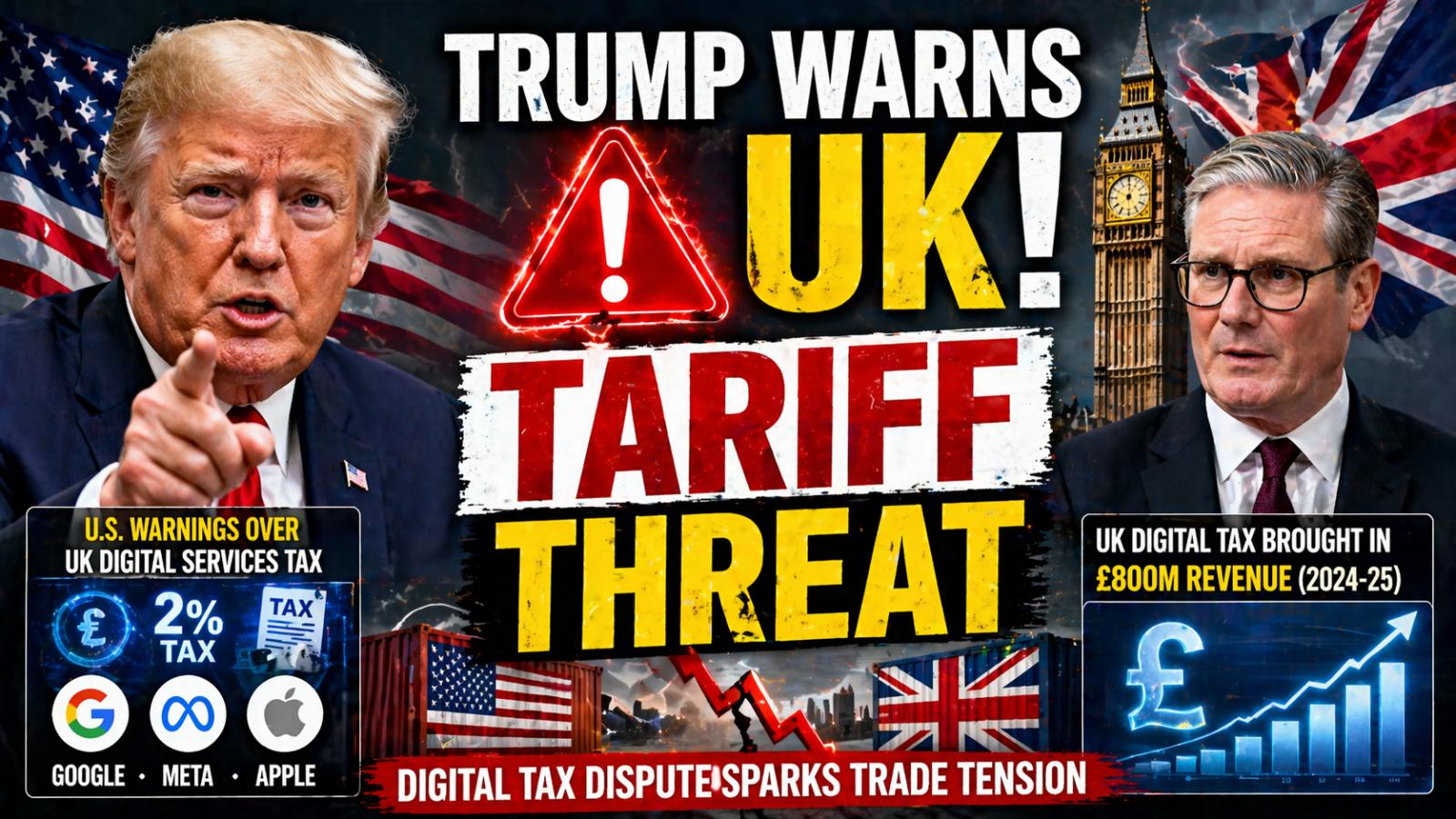
Why did Donald Trump warn the U.K. about tariffs? He cites digital tax concerns — U.S. President Donald Trump issued a strong warning to the United Kingdom, signaling potential tariffs if Britain does not eliminate its digital services tax targeting major American technology firms. Speaking from the Oval Office on Thursday, Trump criticized the policy as an unfair attempt to profit from U.S. companies operating abroad.
The digital services tax, introduced by the
Why did Donald Trump warn the U.K. about tariffs? He cites digital tax concerns — U.S. President Donald Trump issued a strong warning to the United Kingdom, signaling potential tariffs if Britain does not eliminate its digital services tax targeting major American technology firms. Speaking from the Oval Office on Thursday, Trump criticized the policy as an unfair attempt to profit from U.S. companies operating abroad.
The digital services tax, introduced by the
Union Finance Minister Nirmala Sitharaman on Thursday, April 24, 2026, raised serious concerns over emerging cybersecurity risks posed by advanced artificial intelligence systems, particularly Claude Mythos developed by
Union Finance Minister Nirmala Sitharaman on Thursday, April 24, 2026, raised serious concerns over emerging cybersecurity risks posed by advanced artificial intelligence systems, particularly Claude Mythos developed by
As geopolitical tensions in West Asia continue to disrupt global oil and gas markets, India is showing greater structural resilience compared with past crises, driven by a steady shift in how it produces and consumes energy.
Data published in the Reserve Bank of India’s March Bulletin indicates that renewable sources accounted for 26.4 percent of India’s total electricity generation as of January 2026, rising from 22.1 percent in January 2025. This increase reflects a broader tran
As geopolitical tensions in West Asia continue to disrupt global oil and gas markets, India is showing greater structural resilience compared with past crises, driven by a steady shift in how it produces and consumes energy.
Data published in the Reserve Bank of India’s March Bulletin indicates that renewable sources accounted for 26.4 percent of India’s total electricity generation as of January 2026, rising from 22.1 percent in January 2025. This increase reflects a broader tran
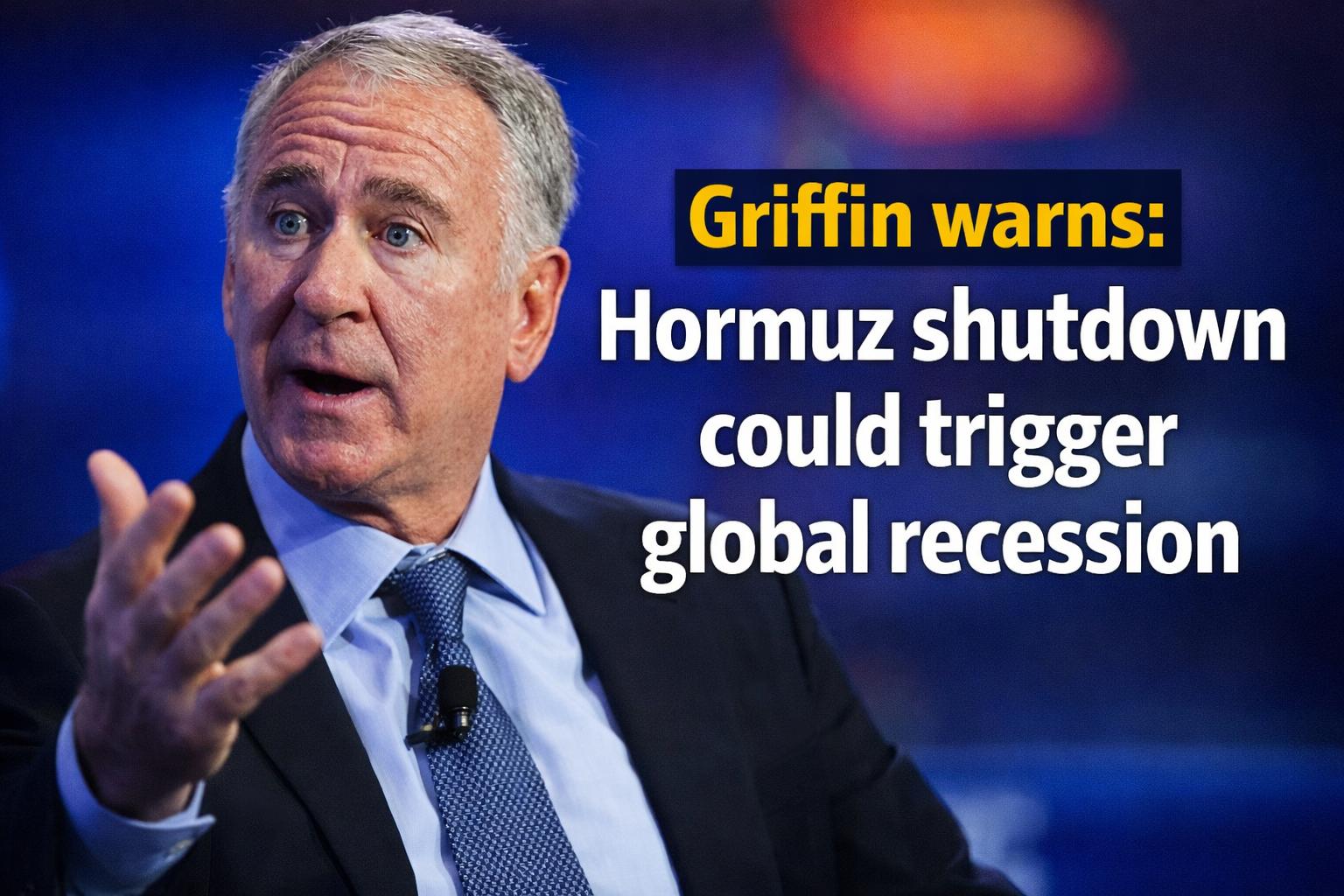
Ken Griffin, founder and chief executive of Citadel, warned that a prolonged closure of the Strait of Hormuz could push the global economy into a recession, underscoring the fragile balance of energy markets and geopolitical stability.
Speaking at the Semafor World Economy conference in Washington, D.C., on Tuesday, April 14, 2026, Griffin said that if the critical shipping route remains shut for an extended period, the economic consequences would be unavoidable. He noted that a disruption lasting between six and 12 months would almost certainly result in a global downturn, given the strait’s importance as a key transit point for oil shipments.
The Strait of Hormuz handles a significant portion of the world’s crude oil supply, and any sustained blockage would likely drive oil prices higher, intensifying inflationary pressures across major economies. While oil prices have eased slightly from peak levels reached during recent tensions, they remain elevated at around $100 per barrel, compared to under $70 before the conflict began.
Griffin emphasized that global markets have so far shown resilience, with stock prices recovering to levels seen prior to earlier U.S. military actions in the region. However, he cautioned that investor confidence remains highly dependent on the duration and scope of the conflict. Many market participants, he said, may be underestimating the risk of further escalation and its potential impact on global growth.
He also pointed to heightened vulnerability in Asian economies, which rely heavily on energy imports and are particularly sensitive to oil price fluctuations. A sustained increase in fuel costs could slow industrial output and consumer demand across the region.
At the same time, Griffin suggested that prolonged disruption could accelerate a structural shift toward alternative energy sources, including wind, solar, and nuclear power, as countries seek to reduce reliance on volatile supply routes.
His remarks highlight growing concerns among financial leaders that geopolitical instability in critical energy corridors could have far-reaching consequences for global economic stability.
Ken Griffin, founder and chief executive of Citadel, warned that a prolonged closure of the Strait of Hormuz could push the global economy into a recession, underscoring the fragile balance of energy markets and geopolitical stability.
Speaking at the Semafor World Economy conference in Washington, D.C., on Tuesday, April 14, 2026, Griffin said that if the critical shipping route remains shut for an extended period, the economic consequences would be unavoidable. He noted that a disruption lasting between six and 12 months would almost certainly result in a global downturn, given the strait’s importance as a key transit point for oil shipments.
The Strait of Hormuz handles a significant portion of the world’s crude oil supply, and any sustained blockage would likely drive oil prices higher, intensifying inflationary pressures across major economies. While oil prices have eased slightly from peak levels reached during recent tensions, they remain elevated at around $100 per barrel, compared to under $70 before the conflict began.
Griffin emphasized that global markets have so far shown resilience, with stock prices recovering to levels seen prior to earlier U.S. military actions in the region. However, he cautioned that investor confidence remains highly dependent on the duration and scope of the conflict. Many market participants, he said, may be underestimating the risk of further escalation and its potential impact on global growth.
He also pointed to heightened vulnerability in Asian economies, which rely heavily on energy imports and are particularly sensitive to oil price fluctuations. A sustained increase in fuel costs could slow industrial output and consumer demand across the region.
At the same time, Griffin suggested that prolonged disruption could accelerate a structural shift toward alternative energy sources, including wind, solar, and nuclear power, as countries seek to reduce reliance on volatile supply routes.
His remarks highlight growing concerns among financial leaders that geopolitical instability in critical energy corridors could have far-reaching consequences for global economic stability.
Tirumala Tirupati Devasthanams (TTD) has reported a significant rise in its Hundi collections for the financial year 2025-26, with total donations reaching an impressive ₹1420 crore. This marks an increase of ₹75 crore compared to the previous financial year 2024-25, reflecting a steady upward trend in temple contributions. The growth highlights the continued faith of devotees visiting Tirumala and making offerings, reinforcing the temple’s position as one of the r
Tirumala Tirupati Devasthanams (TTD) has reported a significant rise in its Hundi collections for the financial year 2025-26, with total donations reaching an impressive ₹1420 crore. This marks an increase of ₹75 crore compared to the previous financial year 2024-25, reflecting a steady upward trend in temple contributions. The growth highlights the continued faith of devotees visiting Tirumala and making offerings, reinforcing the temple’s position as one of the r
A key provision in President Donald Trump’s recent tax legislation introduced significant federal deductions on tips and overtime pay, but the changes do not fully eliminate taxation for millions of American workers. As taxpayers finalize their 2025 returns ahead of the federal filing deadline on Wednesday, April 15, 2026, state governments are emphasizing that these earnings may still be subject
A key provision in President Donald Trump’s recent tax legislation introduced significant federal deductions on tips and overtime pay, but the changes do not fully eliminate taxation for millions of American workers. As taxpayers finalize their 2025 returns ahead of the federal filing deadline on Wednesday, April 15, 2026, state governments are emphasizing that these earnings may still be subject
Consumer confidence in the United States fell sharply in April, reaching its lowest level on record as concerns over rising energy prices and the economic impact of the Iran conflict intensified, according to survey data released on Friday, April 11, 2026.
The University of Michigan’s closely watched consumer sentiment index dropped to 47.6, marking a 10.7% decline from March and setting a new historic low. Both the current economic conditions index and the expectations index also p
Consumer confidence in the United States fell sharply in April, reaching its lowest level on record as concerns over rising energy prices and the economic impact of the Iran conflict intensified, according to survey data released on Friday, April 11, 2026.
The University of Michigan’s closely watched consumer sentiment index dropped to 47.6, marking a 10.7% decline from March and setting a new historic low. Both the current economic conditions index and the expectations index also p
Married couples across the United States face an important decision each tax season: whether to file taxes jointly or separately. That choice could have new implications for the 2025 tax year following recent policy changes introduced under former President Donald Trump’s legislation.
In most cases, the tax system favors married filing jointly, which allows couples to combine income, deductions, and credits into a single return. This approach typically results in lower overall incom
Married couples across the United States face an important decision each tax season: whether to file taxes jointly or separately. That choice could have new implications for the 2025 tax year following recent policy changes introduced under former President Donald Trump’s legislation.
In most cases, the tax system favors married filing jointly, which allows couples to combine income, deductions, and credits into a single return. This approach typically results in lower overall incom
A California lawmaker is seeking federal action to reverse recent labor policy changes that could significantly reduce wages for seasonal agricultural workers across the United States. On Wednesday, March 26, 2026, Representative Zoe Lofgren introduced a resolution aimed at blocking new wage rules implemented by the
A California lawmaker is seeking federal action to reverse recent labor policy changes that could significantly reduce wages for seasonal agricultural workers across the United States. On Wednesday, March 26, 2026, Representative Zoe Lofgren introduced a resolution aimed at blocking new wage rules implemented by the