Stalled Iran talks push costs to four-year high
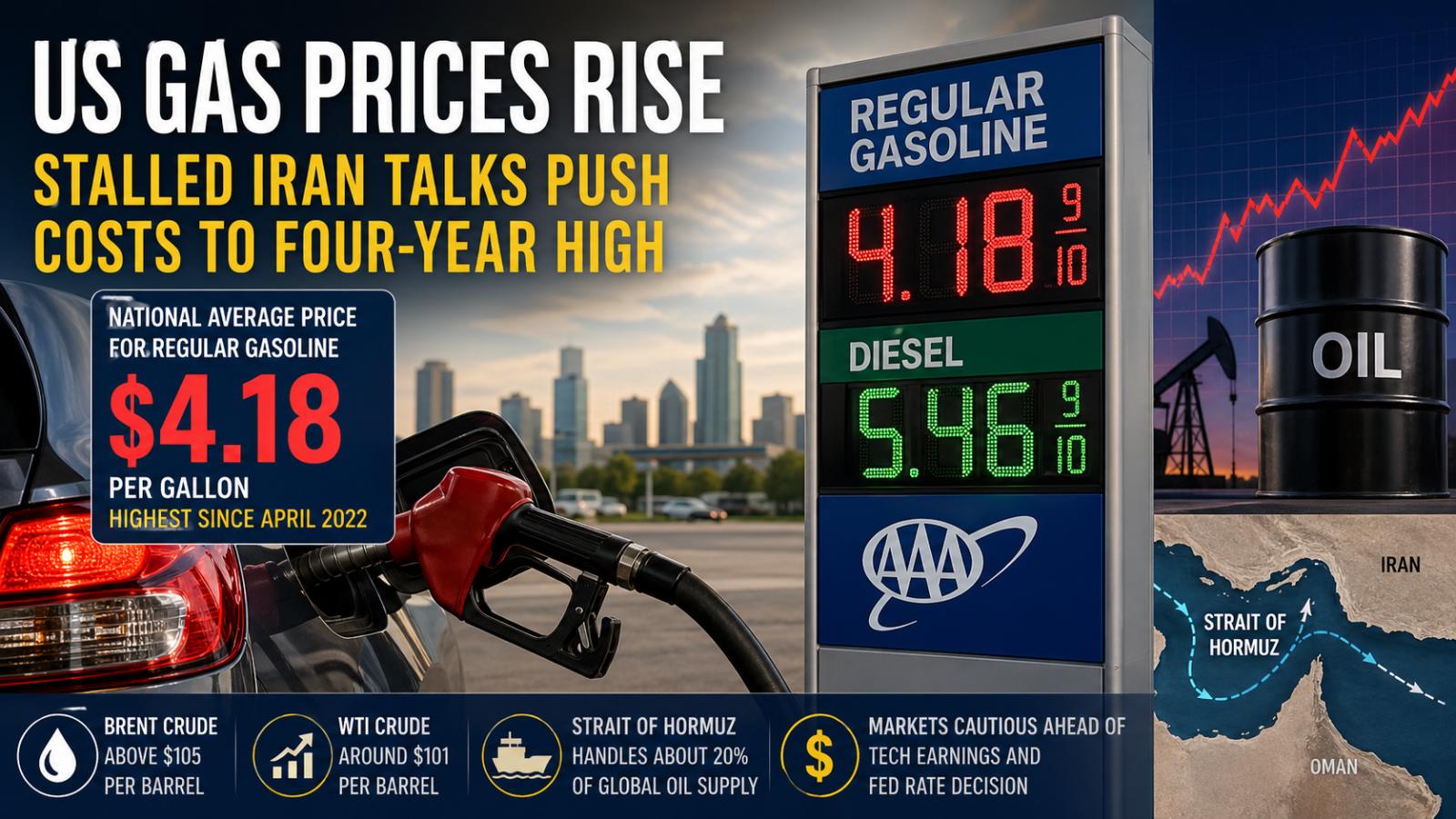
Gasoline prices across the United States climbed sharply on Tuesday, April 28, 2026, reaching their highest level in four years as stalled negotiations between Washington and Tehran fueled a surge in global oil markets. According to AAA, the national average price for a gallon of regular gasoline rose to $4.18, marking the highest level since April 2022 and reflecting mounting pressure on consumers.
Oil market volatility tied to geopolitical tensions
Crude oil prices continued to rise as talks over reopening the Strait of Hormuz and limiting Iran’s nuclear activities showed little progress. Brent crude, the global benchmark, climbed more than 40 percent compared to levels before U.S.-Israeli strikes on Iran in late February. On Tuesday, April 28, 2026, Brent briefly surged above $105 per barrel for July delivery before easing slightly after the United Arab Emirates signaled plans to exit OPEC.
West Texas Intermediate crude also gained momentum, rising about 5 percent to approximately $101 per barrel for June delivery. Over the past week, oil prices have steadily increased, with Brent climbing roughly $10 per barrel and briefly exceeding $110 for near-term contracts.
Impact on US fuel costs and consumer prices
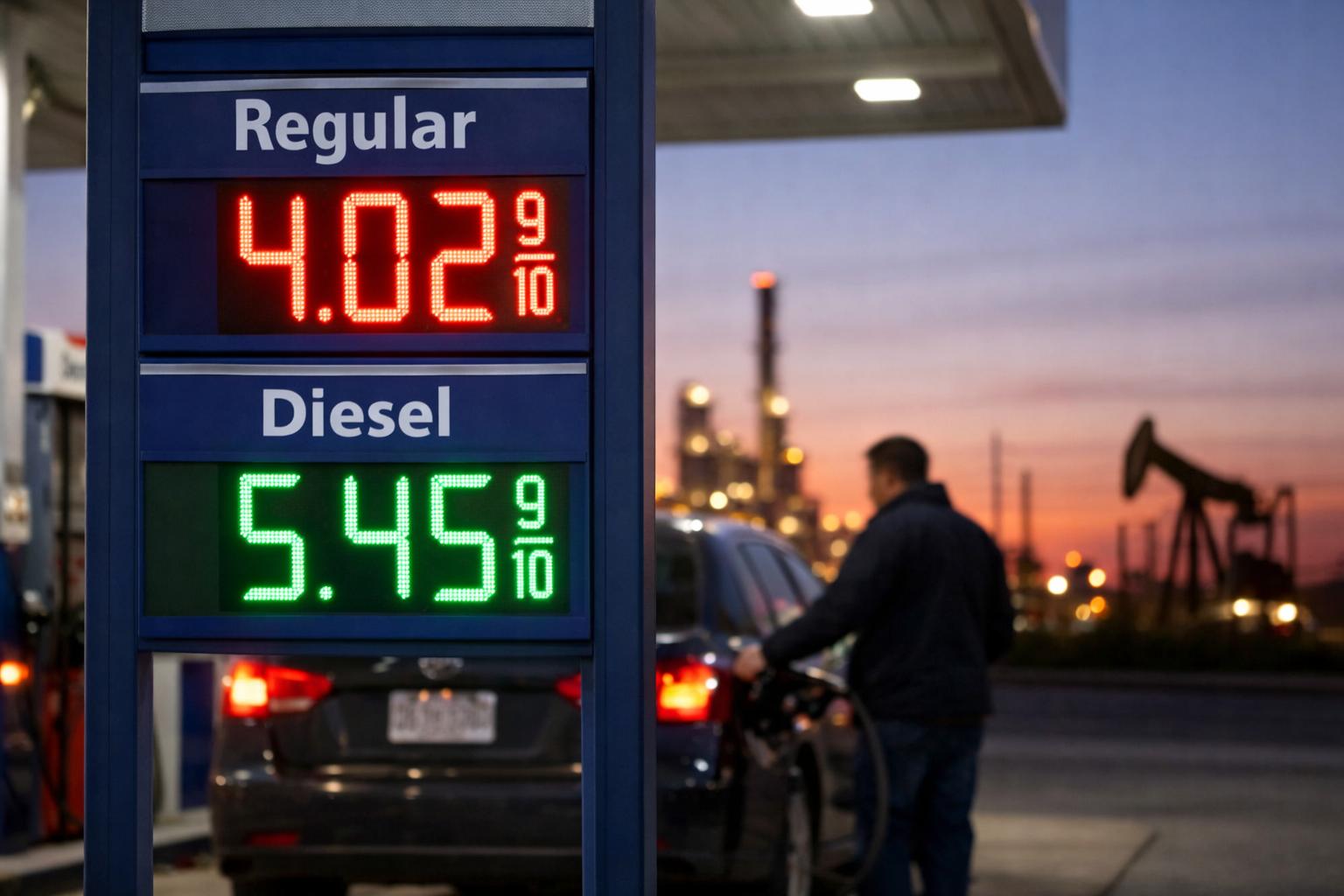
The rise in crude oil has translated into higher fuel costs nationwide, though gasoline prices typically lag behind oil movements. Diesel prices have climbed even faster, reaching $5.46 per gallon, a roughly 45 percent increase since the conflict escalated. Gasoline prices have risen about 40 percent over the same period, reflecting sustained supply concerns tied to disruptions in key shipping routes.
Financial markets react to energy and policy uncertainty
Despite the spike in energy prices, U.S. stock markets remain near record highs, supported by strong corporate earnings. However, investors showed caution on Tuesday, April 28, 2026, as the S&P 500 declined 0.6 percent ahead of major technology earnings reports and the Federal Reserve’s upcoming interest rate decision.
Global markets reflected mixed sentiment. Asian indices posted uneven results, while European markets edged lower, with the Stoxx 600 slipping 0.5 percent. Policymakers in Japan maintained interest rates but expressed concern about inflation risks linked to rising energy costs.
Strategic chokepoints and global supply concerns
Market participants are closely monitoring potential disruptions in the Strait of Hormuz, a critical passage that handles roughly one-fifth of global oil supply. Any prolonged instability in the region could further tighten supply and sustain upward pressure on oil and fuel prices, keeping U.S. consumers exposed to continued volatility in energy costs.