ISRO rules out sabotage amid repeated strategic mission failures
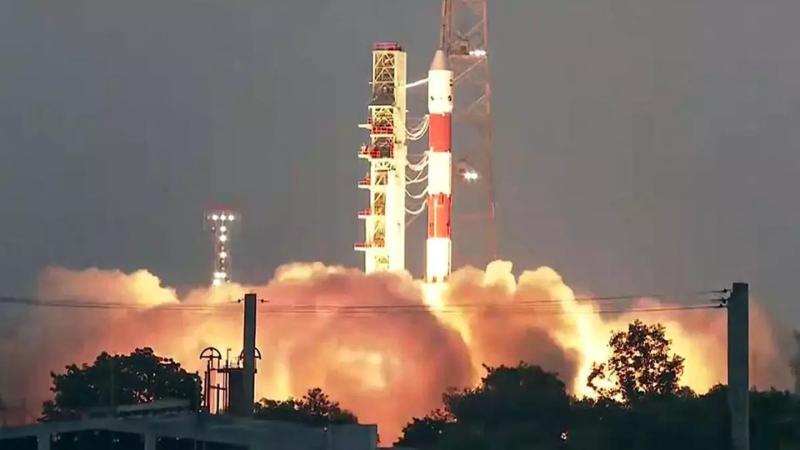
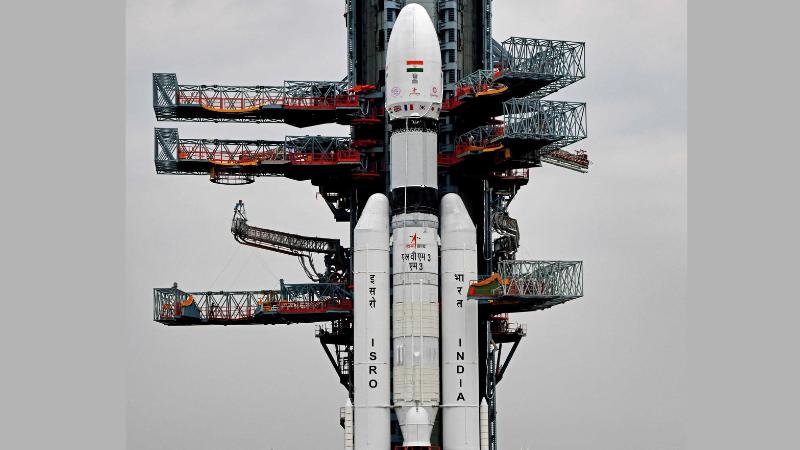
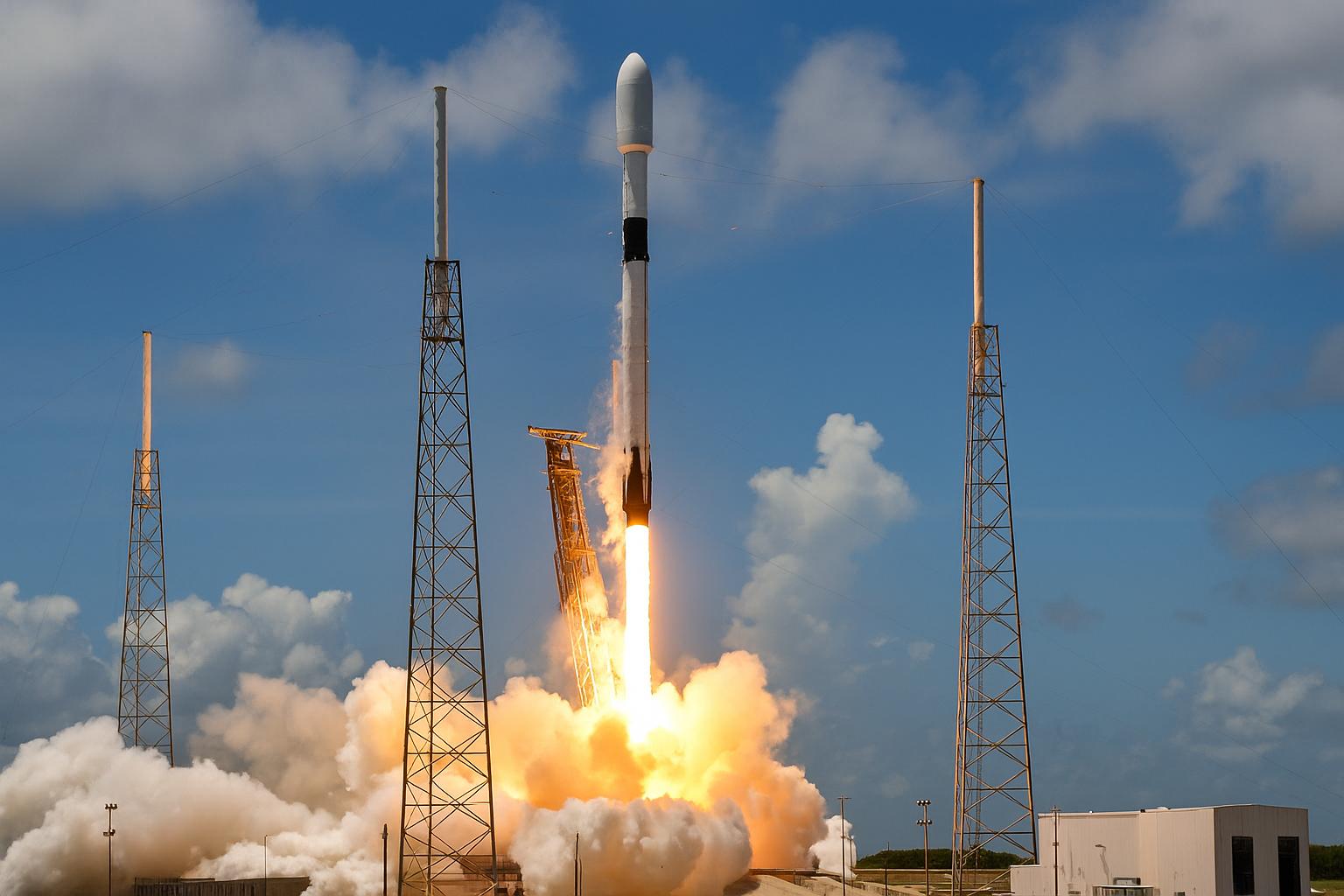
India’s Space Minister Dr. Jitendra Singh has said that there is no indication of sabotage behind a series of recent failures involving the Indian Space Research Organisation, even as repeated setbacks to strategic missions have triggered concern within policy and defence circles. The remarks come after three out of six ISRO missions launched from Indian soil over the past year failed, all of them linked to national security and strategic objectives. Speaking at a press briefing in New Delhi, Dr. Singh said that no report pointing to sabotage has been received so far. He clarified that while he is responsible for overseeing space launches, investigations related to sabotage or hostile interference fall under the purview of other ministries such as defence, home affairs, or external affairs. The minister added that, as of now, there is no information to suggest external interference in the recent launch failures. The comments follow two rare back-to-back mid-flight failures of ISRO’s Polar Satellite Launch Vehicle, a rocket that has long been considered the agency’s most dependable platform. Over a 33-year operational history, the PSLV had suffered only four major failures prior to 2025. The failures in May 2025 and January 2026, both occurring during the third stage of flight, have therefore raised serious questions about reliability and corrective action. Dr. Singh addressed public speculation that ISRO may have failed to rectify earlier faults, stating that the two PSLV failures had different technical causes despite occurring at the same stage. He expressed confidence in ISRO’s internal failure appraisal process, describing it as thorough and analytical. Traditionally, ISRO has publicly released summaries of mission failure analyses, contributing to its image as a transparent space agency. However, in recent cases, that practice has not been consistently followed. The failure analysis report of the PSLV-C61 mission in May 2025 was submitted to the Prime Minister’s Office but not released publicly. Similarly, no detailed technical update has been shared regarding the PSLV-C62 failure in January 2026 beyond ministerial statements. January 2026 – PSLV-C62 / EOS-N1 The PSLV-C62 mission on January 12, 2026, was ISRO’s first launch of the year and marked the PSLV’s return to flight after a setback in May 2025. The primary payload was EOS-N1, also known as Anvesha, a hyperspectral Earth observation satellite developed by the Defence Research and Development Organisation. The satellite was designed to operate at an altitude of 511 kilometres and provide advanced material identification capabilities by analysing reflected light across multiple wavelengths. The mission also carried 15 co-passenger satellites. A mid-flight failure during the third stage of the PSLV resulted in the loss of the rocket and all onboard satellites, ending the mission prematurely. May 2025 – PSLV-C61 / EOS-09 On May 18, 2025, ISRO’s PSLV-C61 mission failed approximately six minutes after liftoff. According to ISRO officials, performance was normal up to the second stage before an anomaly was observed during third-stage operation. The EOS-09 satellite, a radar imaging platform capable of all-weather, day-and-night surveillance, was lost along with the launch vehicle. Despite the strategic importance of the mission, ISRO did not release a public failure analysis, a departure from past practice. January 2025 – GSLV-F15 / NVS-02 On January 29, 2025, ISRO launched the NVS-02 navigation satellite aboard the GSLV-F15 rocket during the 100th launch from the Sriharikota spaceport. While the rocket successfully placed the satellite into its initial orbit, the satellite failed to fire its onboard engines, preventing it from reaching its designated operational orbit. The failure rendered NVS-02 unusable for its intended role within India’s NAVIC regional navigation system, which serves both civilian agencies and the armed forces. August 2021 – GSLV-F10 / EOS-03 In August 2021, ISRO launched the EOS-03 satellite, previously known as GISAT-1, aboard the GSLV-F10 rocket. Designed for near real-time Earth observation and disaster monitoring, the mission failed due to a malfunction in the cryogenic upper stage. ISRO later identified a valve leak in the liquid hydrogen tank as the cause of the failure. August 2017 – PSLV-C39 / IRNSS-1H The PSLV-C39 mission in August 2017 failed after the satellite remained trapped inside the rocket’s heat shield due to a separation failure. Although all other flight events proceeded as planned, the navigation satellite could not be deployed, resulting in the loss of a critical component of the Indian Regional Navigation Satellite System. The cumulative impact of these strategic mission failures over the past nine years is significant. Financial estimates suggest losses amounting to several hundred million dollars, excluding the cost of rebuilding and relaunching replacement missions. Beyond monetary loss, delays in deploying indigenous navigation and surveillance satellites force greater reliance on foreign systems, affecting strategic autonomy. ISRO has indicated that each failure was caused by a different subsystem or component, reinforcing the reality that spaceflight is a zero-error domain where even minor defects can have catastrophic consequences. While each failure contributes valuable lessons, the repeated setbacks have slowed the deployment of key space-based capabilities developed by Indian scientists, placing renewed focus on reliability, transparency, and long-term mission planning.
ISRO rules out sabotage amid repeated strategic mission failures
India’s Space Minister Dr. Jitendra Singh has said that there is no indication of sabotage behind a series of recent failures involving the Indian Space Research Organisation, even as repeated setbacks to strategic missions have triggered concern within policy and defence circles. The remarks come after three out of six ISRO missions launched from Indian soil over the past year failed, all of them linked to national security and strategic objectives. Speaking at a press briefing in New Delhi, Dr. Singh said that no report pointing to sabotage has been received so far. He clarified that while he is responsible for overseeing space launches, investigations related to sabotage or hostile interference fall under the purview of other ministries such as defence, home affairs, or external affairs. The minister added that, as of now, there is no information to suggest external interference in the recent launch failures. The comments follow two rare back-to-back mid-flight failures of ISRO’s Polar Satellite Launch Vehicle, a rocket that has long been considered the agency’s most dependable platform. Over a 33-year operational history, the PSLV had suffered only four major failures prior to 2025. The failures in May 2025 and January 2026, both occurring during the third stage of flight, have therefore raised serious questions about reliability and corrective action. Dr. Singh addressed public speculation that ISRO may have failed to rectify earlier faults, stating that the two PSLV failures had different technical causes despite occurring at the same stage. He expressed confidence in ISRO’s internal failure appraisal process, describing it as thorough and analytical. Traditionally, ISRO has publicly released summaries of mission failure analyses, contributing to its image as a transparent space agency. However, in recent cases, that practice has not been consistently followed. The failure analysis report of the PSLV-C61 mission in May 2025 was submitted to the Prime Minister’s Office but not released publicly. Similarly, no detailed technical update has been shared regarding the PSLV-C62 failure in January 2026 beyond ministerial statements. January 2026 – PSLV-C62 / EOS-N1 The PSLV-C62 mission on January 12, 2026, was ISRO’s first launch of the year and marked the PSLV’s return to flight after a setback in May 2025. The primary payload was EOS-N1, also known as Anvesha, a hyperspectral Earth observation satellite developed by the Defence Research and Development Organisation. The satellite was designed to operate at an altitude of 511 kilometres and provide advanced material identification capabilities by analysing reflected light across multiple wavelengths. The mission also carried 15 co-passenger satellites. A mid-flight failure during the third stage of the PSLV resulted in the loss of the rocket and all onboard satellites, ending the mission prematurely. May 2025 – PSLV-C61 / EOS-09 On May 18, 2025, ISRO’s PSLV-C61 mission failed approximately six minutes after liftoff. According to ISRO officials, performance was normal up to the second stage before an anomaly was observed during third-stage operation. The EOS-09 satellite, a radar imaging platform capable of all-weather, day-and-night surveillance, was lost along with the launch vehicle. Despite the strategic importance of the mission, ISRO did not release a public failure analysis, a departure from past practice. January 2025 – GSLV-F15 / NVS-02 On January 29, 2025, ISRO launched the NVS-02 navigation satellite aboard the GSLV-F15 rocket during the 100th launch from the Sriharikota spaceport. While the rocket successfully placed the satellite into its initial orbit, the satellite failed to fire its onboard engines, preventing it from reaching its designated operational orbit. The failure rendered NVS-02 unusable for its intended role within India’s NAVIC regional navigation system, which serves both civilian agencies and the armed forces. August 2021 – GSLV-F10 / EOS-03 In August 2021, ISRO launched the EOS-03 satellite, previously known as GISAT-1, aboard the GSLV-F10 rocket. Designed for near real-time Earth observation and disaster monitoring, the mission failed due to a malfunction in the cryogenic upper stage. ISRO later identified a valve leak in the liquid hydrogen tank as the cause of the failure. August 2017 – PSLV-C39 / IRNSS-1H The PSLV-C39 mission in August 2017 failed after the satellite remained trapped inside the rocket’s heat shield due to a separation failure. Although all other flight events proceeded as planned, the navigation satellite could not be deployed, resulting in the loss of a critical component of the Indian Regional Navigation Satellite System. The cumulative impact of these strategic mission failures over the past nine years is significant. Financial estimates suggest losses amounting to several hundred million dollars, excluding the cost of rebuilding and relaunching replacement missions. Beyond monetary loss, delays in deploying indigenous navigation and surveillance satellites force greater reliance on foreign systems, affecting strategic autonomy. ISRO has indicated that each failure was caused by a different subsystem or component, reinforcing the reality that spaceflight is a zero-error domain where even minor defects can have catastrophic consequences. While each failure contributes valuable lessons, the repeated setbacks have slowed the deployment of key space-based capabilities developed by Indian scientists, placing renewed focus on reliability, transparency, and long-term mission planning.
India speeds up Samudrayaan as first manned dive planned for May 2026
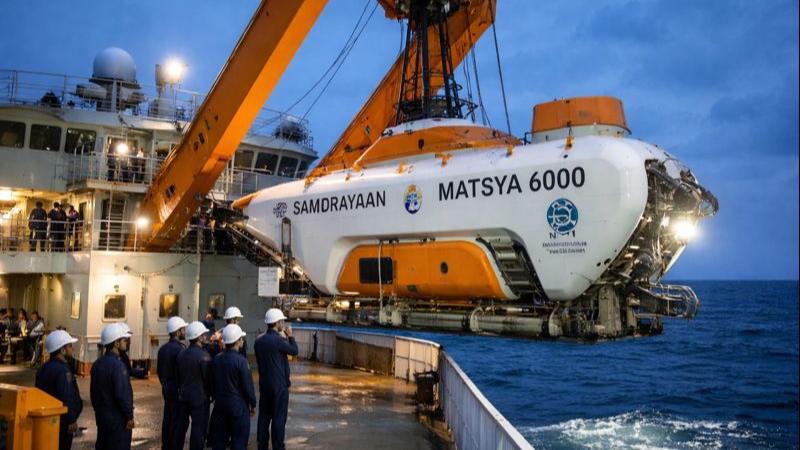
India is rapidly advancing its deep sea exploration ambitions as the Samudrayaan mission prepares for its first manned trial dive in May 2026. The National Institute of Ocean Technology in Chennai is currently completing final integration work on the Matsya 6000 submersible, a 25 tonne vehicle designed to carry three aquanauts into the deep ocean. The upcoming dive, planned at a depth of 500 meters, is considered a critical milestone toward India’s long term goal of reaching 6,000 meters un
India speeds up Samudrayaan as first manned dive planned for May 2026
India is rapidly advancing its deep sea exploration ambitions as the Samudrayaan mission prepares for its first manned trial dive in May 2026. The National Institute of Ocean Technology in Chennai is currently completing final integration work on the Matsya 6000 submersible, a 25 tonne vehicle designed to carry three aquanauts into the deep ocean. The upcoming dive, planned at a depth of 500 meters, is considered a critical milestone toward India’s long term goal of reaching 6,000 meters un
PSLV-C62 launch faces anomaly in third stage, ISRO begins detailed analysis
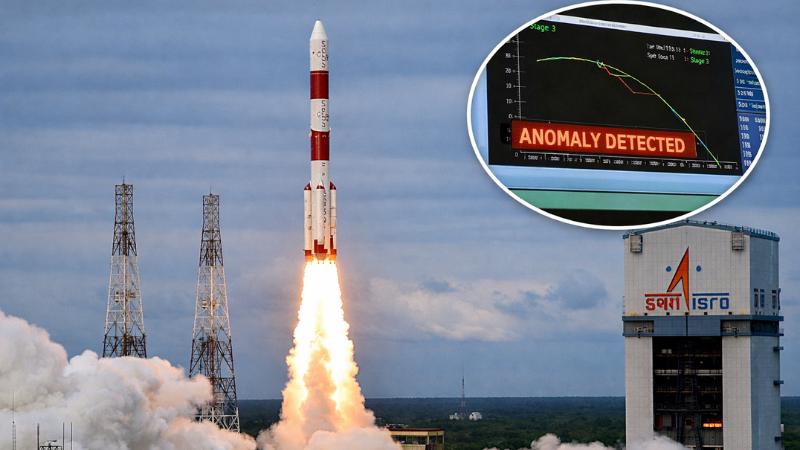
The Indian Space Research Organisation experienced a tense morning on Tuesday after the Polar Satellite Launch Vehicle C62 lifted off from the Satish Dhawan Space Centre in Sriharikota at 10.18 am carrying a total of 16 satellites. The mission initially appeared to progress as planned, with scientists closely monitoring each phase of the flight. However, around 30 minutes after liftoff, ISRO confirmed that the mission had encountered an anomaly during the third stage of the launch sequence, r
PSLV-C62 launch faces anomaly in third stage, ISRO begins detailed analysis
The Indian Space Research Organisation experienced a tense morning on Tuesday after the Polar Satellite Launch Vehicle C62 lifted off from the Satish Dhawan Space Centre in Sriharikota at 10.18 am carrying a total of 16 satellites. The mission initially appeared to progress as planned, with scientists closely monitoring each phase of the flight. However, around 30 minutes after liftoff, ISRO confirmed that the mission had encountered an anomaly during the third stage of the launch sequence, r
How science breakthroughs in 2025 reshaped medicine, space research, and climate reality
A century ago, the notion of restoring lost senses or detecting ancient life beyond Earth belonged firmly to science fiction. In 2025, such ideas moved decisively into reality as a series of scientific breakthroughs reshaped long-standing assumptions across medicine, space science, climate research, and artificial intelligence. These advances did not arrive as distant promises or speculative theories, but as working solutions that delivered measurable results and altered how science interacts
How science breakthroughs in 2025 reshaped medicine, space research, and climate reality
A century ago, the notion of restoring lost senses or detecting ancient life beyond Earth belonged firmly to science fiction. In 2025, such ideas moved decisively into reality as a series of scientific breakthroughs reshaped long-standing assumptions across medicine, space science, climate research, and artificial intelligence. These advances did not arrive as distant promises or speculative theories, but as working solutions that delivered measurable results and altered how science interacts
Astronauts aboard space station to welcome new year 16 times in orbit
As people across the globe prepare to welcome the New Year with countdowns, fireworks, and celebrations across different time zones, a small group of astronauts orbiting far above Earth will experience the arrival of the new year in a way unlike anyone on the planet. Aboard the International Space Station, astronauts currently in orbit will celebrate the New Year an astonishing 16 times, highlighting the extraordinary reality of life in space and the unique way time is experienced beyond Earth.
Astronauts aboard space station to welcome new year 16 times in orbit
As people across the globe prepare to welcome the New Year with countdowns, fireworks, and celebrations across different time zones, a small group of astronauts orbiting far above Earth will experience the arrival of the new year in a way unlike anyone on the planet. Aboard the International Space Station, astronauts currently in orbit will celebrate the New Year an astonishing 16 times, highlighting the extraordinary reality of life in space and the unique way time is experienced beyond Earth.
China sets world record with 700 km/h superconducting maglev train test
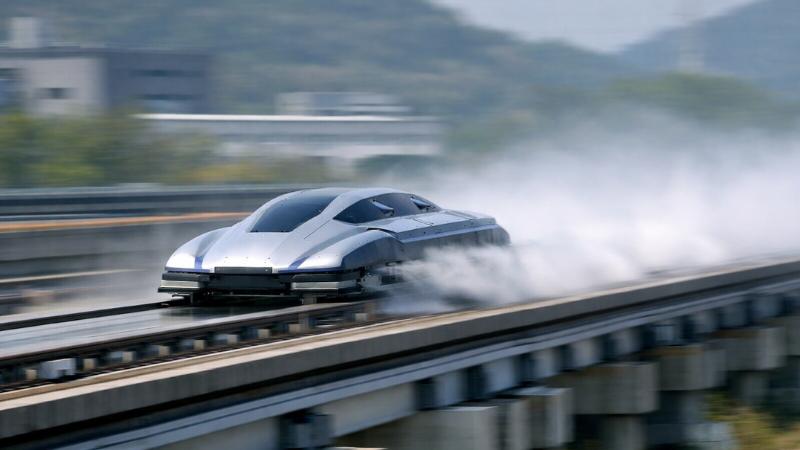
China has set a new global benchmark in rail transportation technology after successfully accelerating a superconducting magnetic levitation train to a speed of 700 kilometres per hour in just two seconds. The achievement marks the fastest acceleration ever recorded for a maglev system and positions China as the first country to demonstrate this capability using superconducting electric maglev technology. The experiment was conducted by researchers at the National University of Defe
China sets world record with 700 km/h superconducting maglev train test
China has set a new global benchmark in rail transportation technology after successfully accelerating a superconducting magnetic levitation train to a speed of 700 kilometres per hour in just two seconds. The achievement marks the fastest acceleration ever recorded for a maglev system and positions China as the first country to demonstrate this capability using superconducting electric maglev technology. The experiment was conducted by researchers at the National University of Defe
India’s Bahubali Lvm3 blasts off with heaviest-ever satellite BlueBird 6
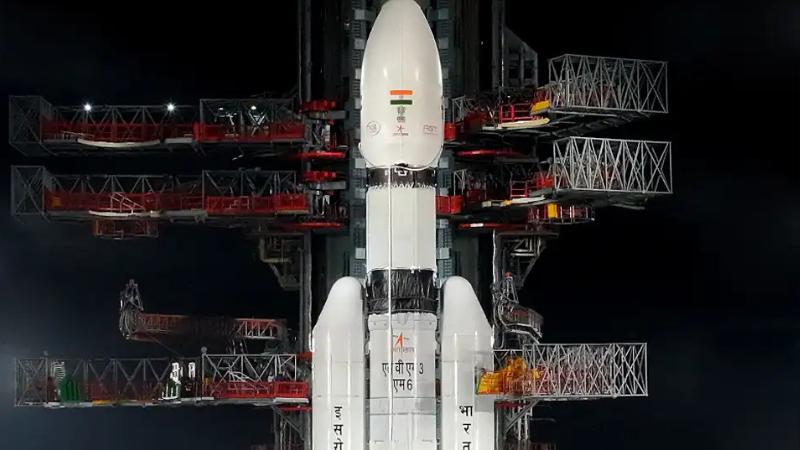
India marked another defining moment in its space journey as the powerful Bahubali rocket successfully blasted off carrying the heaviest satellite ever launched by the country. The Launch Vehicle Mark-3 M6 mission lifted off from the second launch pad at the Satish Dhawan Space Centre in Sriharikota, Andhra Pradesh, showcasing India’s growing dominance in heavy-lift and commercial space missions. The 43.5-metre-tall LVM3 rocket, supported by two massive S200 solid boosters, took t
India’s Bahubali Lvm3 blasts off with heaviest-ever satellite BlueBird 6
India marked another defining moment in its space journey as the powerful Bahubali rocket successfully blasted off carrying the heaviest satellite ever launched by the country. The Launch Vehicle Mark-3 M6 mission lifted off from the second launch pad at the Satish Dhawan Space Centre in Sriharikota, Andhra Pradesh, showcasing India’s growing dominance in heavy-lift and commercial space missions. The 43.5-metre-tall LVM3 rocket, supported by two massive S200 solid boosters, took t
Isro launches heaviest foreign satellite from Indian soil aboard Lvm3
India’s space journey reached another landmark moment as Indian Space Research Organisation successfully launched the heaviest foreign satellite ever placed into orbit from Indian soil. The mission was carried out using the powerful LVM3 launch vehicle from the Satish Dhawan Space Centre in Sriharikota, reinforcing India’s growing reputation as a reliable and competitive space launch destination
Isro launches heaviest foreign satellite from Indian soil aboard Lvm3
India’s space journey reached another landmark moment as Indian Space Research Organisation successfully launched the heaviest foreign satellite ever placed into orbit from Indian soil. The mission was carried out using the powerful LVM3 launch vehicle from the Satish Dhawan Space Centre in Sriharikota, reinforcing India’s growing reputation as a reliable and competitive space launch destination
US Time Fell Behind World By 4.8 Microseconds After Colorado Storm Disrupted Atomic Clocks
The United States briefly slipped behind the rest of the world in timekeeping after a powerful storm struck Colorado last week, disrupting operations at the country’s official timekeeping facility. Following the incident, American time was recorded as lagging by 4.8 microseconds compared to the global standard, a tiny difference that nevertheless raised serious concerns about the resilience of critical infrastructure systems. The disruption occurred at the National Institute of St
US Time Fell Behind World By 4.8 Microseconds After Colorado Storm Disrupted Atomic Clocks
The United States briefly slipped behind the rest of the world in timekeeping after a powerful storm struck Colorado last week, disrupting operations at the country’s official timekeeping facility. Following the incident, American time was recorded as lagging by 4.8 microseconds compared to the global standard, a tiny difference that nevertheless raised serious concerns about the resilience of critical infrastructure systems. The disruption occurred at the National Institute of St
Medical Miracle: DNA Base Editing Cures Previously Incurable Blood Cancer
Scientists have achieved a historic medical breakthrough by successfully curing a form of blood cancer that was long considered incurable. Researchers from University College London and Great Ormond Street Hospital have used a revolutionary technology known as DNA base editing to treat T-cell acute lymphoblastic leukaemia, a rare and aggressive cancer that primarily affects children and young adults. This marks the first time base-edited cells have been used in humans to achieve long-term can
Medical Miracle: DNA Base Editing Cures Previously Incurable Blood Cancer
Scientists have achieved a historic medical breakthrough by successfully curing a form of blood cancer that was long considered incurable. Researchers from University College London and Great Ormond Street Hospital have used a revolutionary technology known as DNA base editing to treat T-cell acute lymphoblastic leukaemia, a rare and aggressive cancer that primarily affects children and young adults. This marks the first time base-edited cells have been used in humans to achieve long-term can
Nobel Prize 2025 Ceremony Today: Why It Is Always Held On December 10 Explained
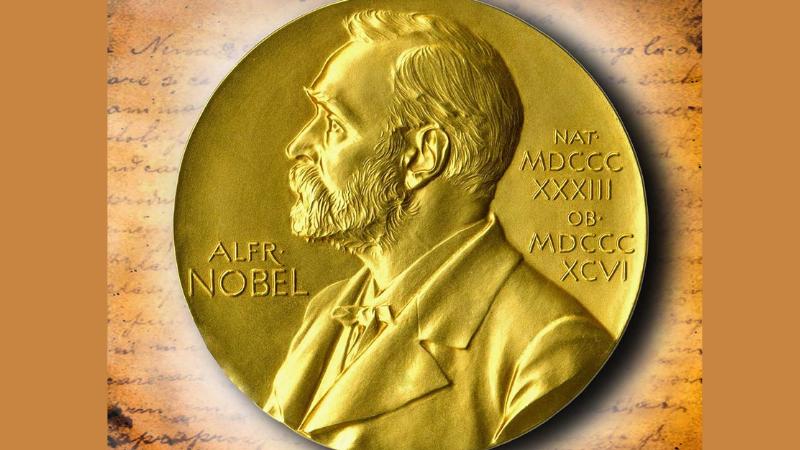
The world’s attention turns once again to Stockholm and Oslo as the Nobel Prize 2025 ceremony takes place today, December 10. This day holds special significance, marking the death anniversary of Alfred Nobel, the Swedish inventor of dynamite who dedicated most of his wealth to honouring those who make the greatest contribution to humankind. The tradition of presenting the awards on this date has continued since the very first ceremony in 1901. Nobel passed away in 1896, and in his will he
Nobel Prize 2025 Ceremony Today: Why It Is Always Held On December 10 Explained
The world’s attention turns once again to Stockholm and Oslo as the Nobel Prize 2025 ceremony takes place today, December 10. This day holds special significance, marking the death anniversary of Alfred Nobel, the Swedish inventor of dynamite who dedicated most of his wealth to honouring those who make the greatest contribution to humankind. The tradition of presenting the awards on this date has continued since the very first ceremony in 1901. Nobel passed away in 1896, and in his will he
Volcanoes Quakes Solar Storms Why 2025 Is Testing Earth’s Limits
The year 2025 has become one of the most turbulent in recent memory as Earth experiences a wave of overlapping natural crises. A rare volcanic eruption in Ethiopia sent ash drifting thousands of kilometres toward Asia, Indonesia recorded more than 1,400 earthquakes in just 30 days, and California battled massive wildfires that claimed hundreds of lives. Severe monsoon flooding washed through India and Pakistan, and the planet was struck by the strongest solar storm in over twenty years. These
Volcanoes Quakes Solar Storms Why 2025 Is Testing Earth’s Limits
The year 2025 has become one of the most turbulent in recent memory as Earth experiences a wave of overlapping natural crises. A rare volcanic eruption in Ethiopia sent ash drifting thousands of kilometres toward Asia, Indonesia recorded more than 1,400 earthquakes in just 30 days, and California battled massive wildfires that claimed hundreds of lives. Severe monsoon flooding washed through India and Pakistan, and the planet was struck by the strongest solar storm in over twenty years. These
SpaceX Booster 18 suffers damage after test anomaly at South Texas site
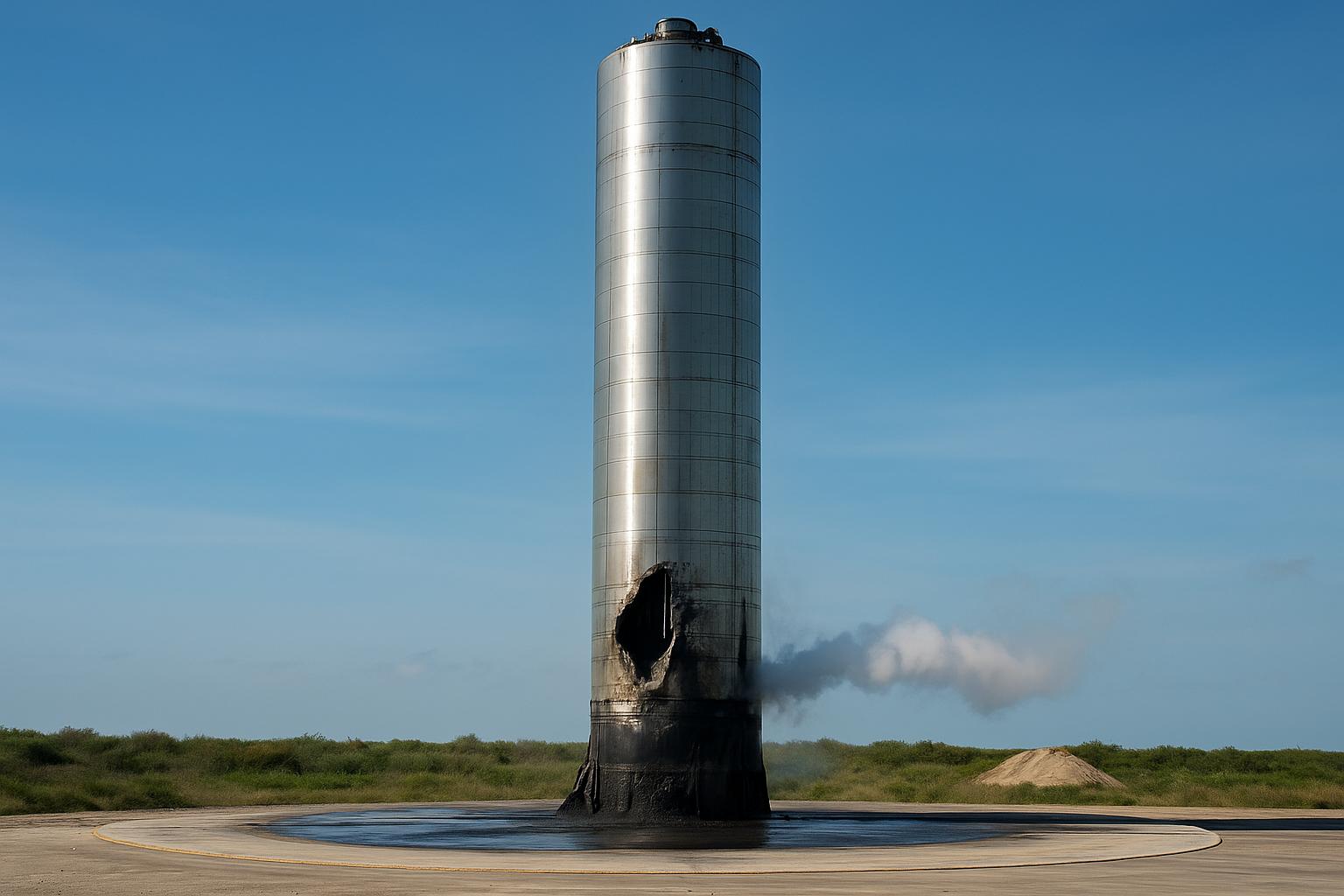
A major phase in SpaceX’s Starship test program faced an unexpected setback on Friday when Booster 18, the company’s first next-generation Block 3 Super Heavy booster, sustained significant structural damage during a ground test in South Texas. The incident occurred at SpaceX’s Massey test facility near Starbase, where the vehicle was undergoing routine gas-system pressure checks ahead of more rigorous structural proofing. Shortly after 4 a.m. local time, livestream footage captured the

SpaceX Booster 18 suffers damage after test anomaly at South Texas site
A major phase in SpaceX’s Starship test program faced an unexpected setback on Friday when Booster 18, the company’s first next-generation Block 3 Super Heavy booster, sustained significant structural damage during a ground test in South Texas. The incident occurred at SpaceX’s Massey test facility near Starbase, where the vehicle was undergoing routine gas-system pressure checks ahead of more rigorous structural proofing. Shortly after 4 a.m. local time, livestream footage captured the

Hemvati Nandan Bahuguna University scientist selected for ISRO’s Shukrayaan-1 mission
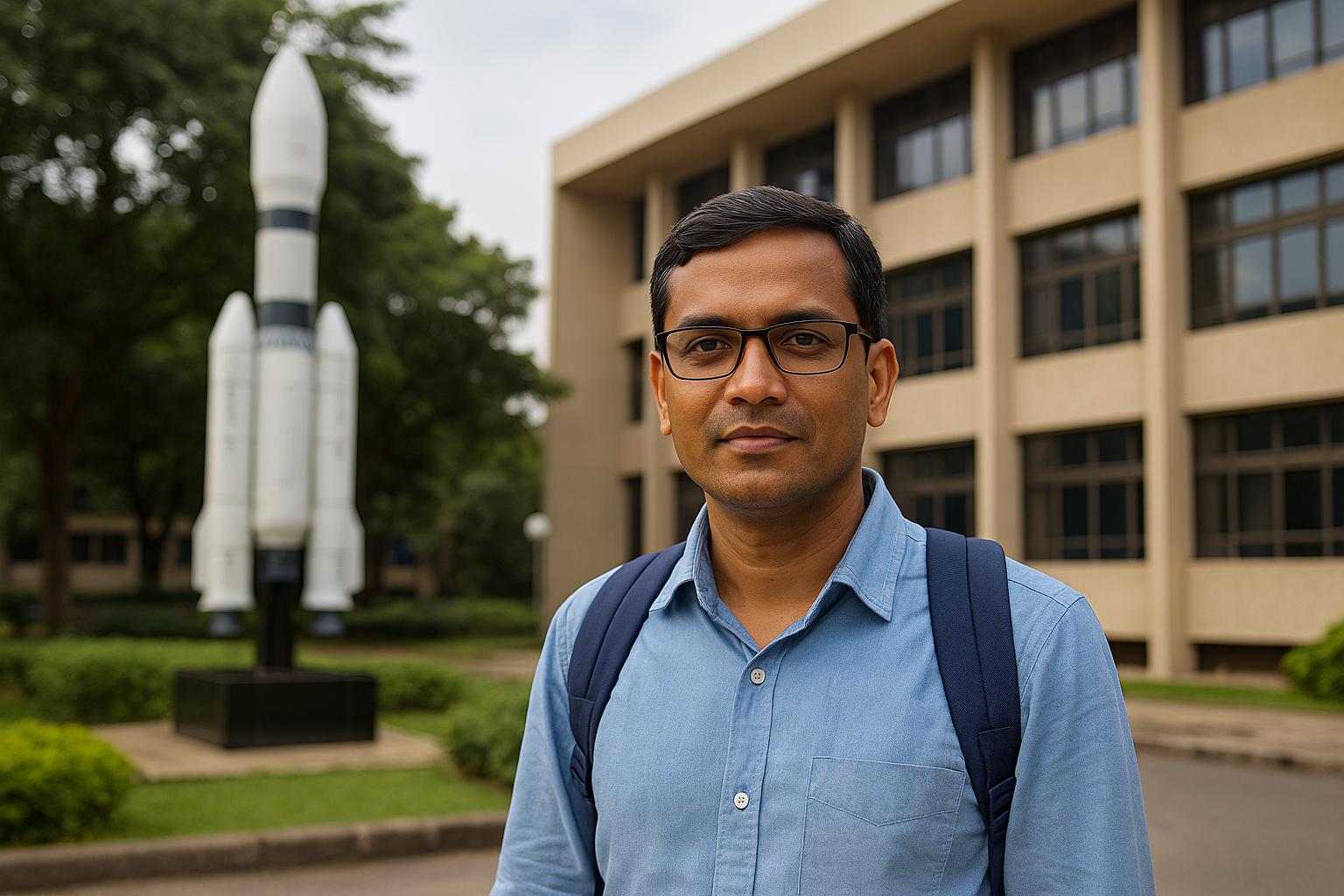
In a remarkable achievement for Indian academia and space research, Assistant Professor Alok Sagar Gautam from the Department of Physics at Hemvati Nandan Bahuguna Garhwal University has been selected to join the Indian Space Research Organisation’s upcoming Venus Orbiter Mission, officially known as Shukrayaan-1. This marks a significant moment in India’s pursuit of interplanetary exploration, as the mission represents the nation’s first dedicated effort to study Venus, often referred
Hemvati Nandan Bahuguna University scientist selected for ISRO’s Shukrayaan-1 mission
In a remarkable achievement for Indian academia and space research, Assistant Professor Alok Sagar Gautam from the Department of Physics at Hemvati Nandan Bahuguna Garhwal University has been selected to join the Indian Space Research Organisation’s upcoming Venus Orbiter Mission, officially known as Shukrayaan-1. This marks a significant moment in India’s pursuit of interplanetary exploration, as the mission represents the nation’s first dedicated effort to study Venus, often referred
SpaceX sets 2025 launch record with over 2,500 Starlink satellites
SpaceX has achieved a record-breaking milestone in 2025, marking one of the most prolific years in the history of spaceflight. The company’s unparalleled launch cadence, coupled with rapid rocket turnaround times, has redefined modern rocketry. With more than two months remaining in the year, SpaceX has already surpassed its 2024 total of 138 missions, setting a new benchmark for global orbital launches and solidifying its position as the dominant force in the commercial space sector.
SpaceX sets 2025 launch record with over 2,500 Starlink satellites
SpaceX has achieved a record-breaking milestone in 2025, marking one of the most prolific years in the history of spaceflight. The company’s unparalleled launch cadence, coupled with rapid rocket turnaround times, has redefined modern rocketry. With more than two months remaining in the year, SpaceX has already surpassed its 2024 total of 138 missions, setting a new benchmark for global orbital launches and solidifying its position as the dominant force in the commercial space sector.
7 Reasons Harvard Scientist Thinks Interstellar Comet 3I/ATLAS Could Be Alien Technology
NASA’s discovery of interstellar comet 3I/ATLAS has sparked global interest after Harvard astrophysicist Avi Loeb suggested it could be a form of alien technology. Detected on July 1, 2025, the comet is only the third known interstellar object to pass through our solar system. While NASA confirmed that 3I/ATLAS poses no threat to Earth, Loeb and other researchers argue that its unique chemical and physical properties set it apart from natural space objects, warranting a deeper investigation
7 Reasons Harvard Scientist Thinks Interstellar Comet 3I/ATLAS Could Be Alien Technology
NASA’s discovery of interstellar comet 3I/ATLAS has sparked global interest after Harvard astrophysicist Avi Loeb suggested it could be a form of alien technology. Detected on July 1, 2025, the comet is only the third known interstellar object to pass through our solar system. While NASA confirmed that 3I/ATLAS poses no threat to Earth, Loeb and other researchers argue that its unique chemical and physical properties set it apart from natural space objects, warranting a deeper investigation
From Einstein to Card: Nobel laureates who broke classroom rules
Not every Nobel laureate began as a model student. Some were expelled, others barely passed exams, and a few were told they would never amount to anything. Yet their names now stand among history’s greatest thinkers. From Einstein’s rebellious intellect to David Card’s quiet brilliance on a Canadian farm, these laureates show that unconventional paths often lead to extraordinary destinations. Their stories remind us that curiosity, not conformity, is the true hallmark of genius.


From Einstein to Card: Nobel laureates who broke classroom rules
Not every Nobel laureate began as a model student. Some were expelled, others barely passed exams, and a few were told they would never amount to anything. Yet their names now stand among history’s greatest thinkers. From Einstein’s rebellious intellect to David Card’s quiet brilliance on a Canadian farm, these laureates show that unconventional paths often lead to extraordinary destinations. Their stories remind us that curiosity, not conformity, is the true hallmark of genius.
UC Berkeley professor wins Nobel Prize for groundbreaking quantum research
A UC Berkeley physicist has joined the ranks of Nobel laureates after being recognized for groundbreaking work that expanded the frontiers of quantum mechanics. John Clarke, an emeritus professor of physics at the University of California, Berkeley, has been awarded the Nobel Prize in Physics for his pioneering experiments that reshaped the scientific understanding of how particles behave on a macroscopic level. Clarke shares the honor with Michel H. Devoret and John M. Martinis of the Univer
UC Berkeley professor wins Nobel Prize for groundbreaking quantum research
A UC Berkeley physicist has joined the ranks of Nobel laureates after being recognized for groundbreaking work that expanded the frontiers of quantum mechanics. John Clarke, an emeritus professor of physics at the University of California, Berkeley, has been awarded the Nobel Prize in Physics for his pioneering experiments that reshaped the scientific understanding of how particles behave on a macroscopic level. Clarke shares the honor with Michel H. Devoret and John M. Martinis of the Univer
Livermore Loses $1B Nuclear Fusion Research Hub To Albuquerque, Eyes Future Innovation
Livermore, California, has lost out to Albuquerque, New Mexico, in its ambitious bid to host Pacific Fusion’s $1 billion nuclear fusion research facility. The Livermore City Council had earlier approved a proposal packed with financial and tax incentives, but despite the effort, Pacific Fusion selected Albuquerque as the home for its new 225,000-square-foot research center. What Livermore Offered
Livermore Loses $1B Nuclear Fusion Research Hub To Albuquerque, Eyes Future Innovation
Livermore, California, has lost out to Albuquerque, New Mexico, in its ambitious bid to host Pacific Fusion’s $1 billion nuclear fusion research facility. The Livermore City Council had earlier approved a proposal packed with financial and tax incentives, but despite the effort, Pacific Fusion selected Albuquerque as the home for its new 225,000-square-foot research center. What Livermore Offered
President Trump attends Ryder Cup at Bethpage Black with heightened security
President Donald Trump made an appearance at the Ryder Cup held at Bethpage Black on Long Island, creating a mix of excitement, protest, and logistical challenges for those in attendance. His visit drew large crowds of both supporters and opponents, each eager to make their voices heard during the high-profile golf event. While the Ryder Cup was already expected to attract thousands of spectators, the added presence of the President amplified the atmosphere, particularly in terms of security and
President Trump attends Ryder Cup at Bethpage Black with heightened security
President Donald Trump made an appearance at the Ryder Cup held at Bethpage Black on Long Island, creating a mix of excitement, protest, and logistical challenges for those in attendance. His visit drew large crowds of both supporters and opponents, each eager to make their voices heard during the high-profile golf event. While the Ryder Cup was already expected to attract thousands of spectators, the added presence of the President amplified the atmosphere, particularly in terms of security and