Strait of Hormuz tensions rise after renewed ship attacks
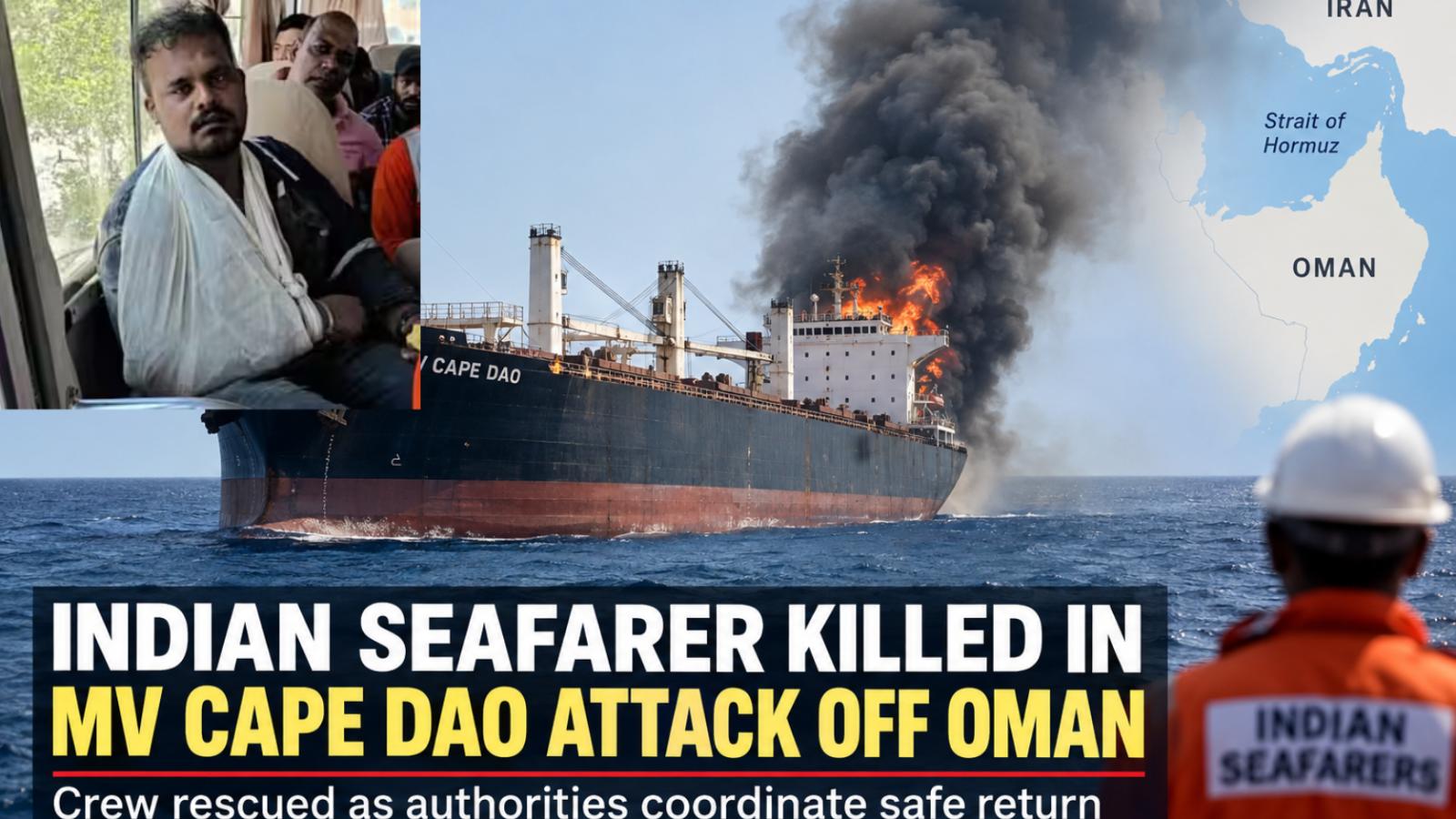
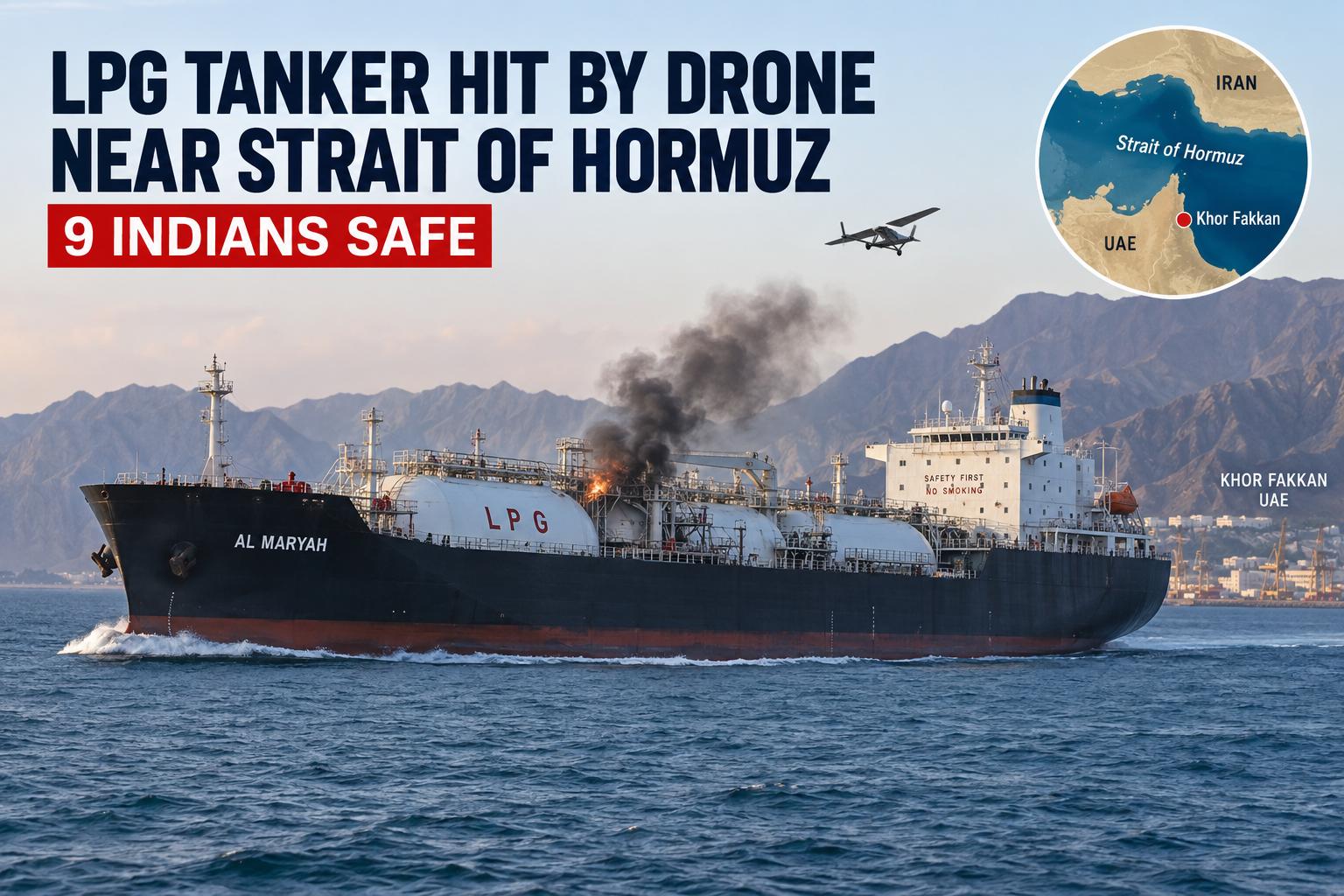
Tensions around the Strait of Hormuz have increased again after a mix of political remarks and renewed security incidents in the Gulf region. The strategic waterway, which carries a significant share of global oil shipments, has once again become a focal point as diplomatic relations between the United States and Iran remain unstable. Recent political commentary from US circles, including remarks linked to Hunter Biden on social media, has add

Strait of Hormuz tensions rise after renewed ship attacks
Tensions around the Strait of Hormuz have increased again after a mix of political remarks and renewed security incidents in the Gulf region. The strategic waterway, which carries a significant share of global oil shipments, has once again become a focal point as diplomatic relations between the United States and Iran remain unstable. Recent political commentary from US circles, including remarks linked to Hunter Biden on social media, has add
India Japan unveil 16 point roadmap to expand strategic partnership
India Japan expand strategic partnership framework India and Japan have announced a 16-point roadmap aimed at significantly expanding their Special Strategic and Global Partnership, marking a shift toward deeper cooperation in economic security, advanced technology and energy resilience. The initiative was unveiled following the 16th India-Japan Annual Summit held in
India Japan unveil 16 point roadmap to expand strategic partnership
India Japan expand strategic partnership framework India and Japan have announced a 16-point roadmap aimed at significantly expanding their Special Strategic and Global Partnership, marking a shift toward deeper cooperation in economic security, advanced technology and energy resilience. The initiative was unveiled following the 16th India-Japan Annual Summit held in
Iran rejects CENTCOM role after Bahrain security summit
Iran challenges US CENTCOM role in West Asia security framework Iran has criticised the role of the United States Central Command in West Asia after a regional security conference in Bahrain brought together senior military officials from 12 countries to discuss air defence cooperation and maritime security. Iranian Foreign Minister Abbas Araghchi said peace in the region
Iran rejects CENTCOM role after Bahrain security summit
Iran challenges US CENTCOM role in West Asia security framework Iran has criticised the role of the United States Central Command in West Asia after a regional security conference in Bahrain brought together senior military officials from 12 countries to discuss air defence cooperation and maritime security. Iranian Foreign Minister Abbas Araghchi said peace in the region
India Japan expand military drills across land sea air
India and Japan are steadily widening their defence partnership with a stronger focus on Indo Pacific stability. The cooperation is no longer limited to symbolic diplomacy and now includes structured military coordination, regular exercises and operational level engagement between the armed forces of both countries. The shared objective is improving readiness and ensuring secure maritime routes across a region that is becoming increasingly contested. Defence dialogue moves into operational coordination High level defence talks between the two countries have evolved into practical coordination mechanisms. Regular 2+2 ministerial meetings have helped align security priorities, especially around regional stability, maritime surveillance and disaster response readiness. This structured engagement has created a foundation for long term interoperability between Indian and Japanese defence forces. Army level training under Dharma Guardian framework The joint Army exercise Dharma Guardian has become a key pillar of land based cooperation. It focuses on counter insurgency operations, jungle warfare and high altitude combat readiness. These drills are designed to improve tactical coordination between the Indian Army and the Japan Ground Self Defence Force, especially in complex terrain scenarios where joint response capability is critical. Naval cooperation through Malabar, JIMEX and MILAN Maritime collaboration remains the strongest pillar of this partnership. Exercises like Malabar, JIMEX and MILAN bring together naval forces to train in anti submarine warfare, sea lane protection and coordinated fleet operations. These drills improve communication and operational compatibility between navies, while also strengthening surveillance across key Indo Pacific shipping routes. Air force integration under Veer Guardian exercises Air cooperation has also expanded through joint training activities such as Veer Guardian. These exercises involve fighter aircraft operations, tactical missions and coordinated aerial drills between the Indian Air Force and the Japan Air Self Defence Force. The focus is on improving mission readiness and developing shared operational understanding in air combat scenarios. Defence technology and industrial cooperation Beyond field exercises, both countries are deepening collaboration in defence technology. Areas such as maritime surveillance systems, sensors and advanced naval equipment are gaining attention. Technology transfer initiatives and joint development discussions are gradually shaping a more integrated defence industrial partnership. Long term Indo Pacific security outlook The India Japan defence partnership is expected to grow further as regional security dynamics continue to evolve. Both countries are increasingly aligned on maintaining freedom of navigation, securing trade routes and responding to emerging maritime threats. This cooperation is positioning them as important contributors to Indo Pacific stability rather than passive regional players.
India Japan expand military drills across land sea air
India and Japan are steadily widening their defence partnership with a stronger focus on Indo Pacific stability. The cooperation is no longer limited to symbolic diplomacy and now includes structured military coordination, regular exercises and operational level engagement between the armed forces of both countries. The shared objective is improving readiness and ensuring secure maritime routes across a region that is becoming increasingly contested. Defence dialogue moves into operational coordination High level defence talks between the two countries have evolved into practical coordination mechanisms. Regular 2+2 ministerial meetings have helped align security priorities, especially around regional stability, maritime surveillance and disaster response readiness. This structured engagement has created a foundation for long term interoperability between Indian and Japanese defence forces. Army level training under Dharma Guardian framework The joint Army exercise Dharma Guardian has become a key pillar of land based cooperation. It focuses on counter insurgency operations, jungle warfare and high altitude combat readiness. These drills are designed to improve tactical coordination between the Indian Army and the Japan Ground Self Defence Force, especially in complex terrain scenarios where joint response capability is critical. Naval cooperation through Malabar, JIMEX and MILAN Maritime collaboration remains the strongest pillar of this partnership. Exercises like Malabar, JIMEX and MILAN bring together naval forces to train in anti submarine warfare, sea lane protection and coordinated fleet operations. These drills improve communication and operational compatibility between navies, while also strengthening surveillance across key Indo Pacific shipping routes. Air force integration under Veer Guardian exercises Air cooperation has also expanded through joint training activities such as Veer Guardian. These exercises involve fighter aircraft operations, tactical missions and coordinated aerial drills between the Indian Air Force and the Japan Air Self Defence Force. The focus is on improving mission readiness and developing shared operational understanding in air combat scenarios. Defence technology and industrial cooperation Beyond field exercises, both countries are deepening collaboration in defence technology. Areas such as maritime surveillance systems, sensors and advanced naval equipment are gaining attention. Technology transfer initiatives and joint development discussions are gradually shaping a more integrated defence industrial partnership. Long term Indo Pacific security outlook The India Japan defence partnership is expected to grow further as regional security dynamics continue to evolve. Both countries are increasingly aligned on maintaining freedom of navigation, securing trade routes and responding to emerging maritime threats. This cooperation is positioning them as important contributors to Indo Pacific stability rather than passive regional players.
India Japan cooperation expands into AI and energy pact
India and Japan have moved to broaden their strategic cooperation with a new framework focused on technology, energy security and resilient supply chains. The latest engagement signals a shift from traditional diplomatic alignment toward deeper economic and innovation-driven collaboration aimed at long-term stability in the Indo-Pacific region. Focus shifts toward AI and digit
India Japan cooperation expands into AI and energy pact
India and Japan have moved to broaden their strategic cooperation with a new framework focused on technology, energy security and resilient supply chains. The latest engagement signals a shift from traditional diplomatic alignment toward deeper economic and innovation-driven collaboration aimed at long-term stability in the Indo-Pacific region. Focus shifts toward AI and digit
WhatsApp usernames rollout: privacy boost or new cyber risk in India
WhatsApp usernames and how the system changes WhatsApp is introducing usernames that allow users to connect without sharing their phone number directly. This is a major shift for India, where mobile numbers are deeply tied to UPI payments, Aadhaar-linked verification, banking access, and other digital identity systems. The feature does not remove phone numbers from acc
WhatsApp usernames rollout: privacy boost or new cyber risk in India
WhatsApp usernames and how the system changes WhatsApp is introducing usernames that allow users to connect without sharing their phone number directly. This is a major shift for India, where mobile numbers are deeply tied to UPI payments, Aadhaar-linked verification, banking access, and other digital identity systems. The feature does not remove phone numbers from acc
Japan India digital pact reshapes Indo Pacific tech routes
The Indo-Pacific strategy is increasingly moving away from traditional security frameworks toward digital infrastructure control. Japan and India are emerging as key drivers in this transition, focusing on secure data movement, resilient communication systems, and long-term technological independence from concentrated global networks. The shift reflects a broader attempt to reduce vulnerabilities in cross-border data flows and critical digital assets.
Japan India digital pact reshapes Indo Pacific tech routes
The Indo-Pacific strategy is increasingly moving away from traditional security frameworks toward digital infrastructure control. Japan and India are emerging as key drivers in this transition, focusing on secure data movement, resilient communication systems, and long-term technological independence from concentrated global networks. The shift reflects a broader attempt to reduce vulnerabilities in cross-border data flows and critical digital assets.
India Japan summit 2026 boosts FOIP rare earth strategy
The India Japan Summit 2026 is emerging as more than diplomatic engagement, shifting toward a structured economic alignment under the Free and Open Indo-Pacific (FOIP) framework. Japan is positioning India as a long-term partner in building alternative production networks outside China’s dominant supply ecosystem. The focus is no longer symbolic cooperation but measurable industrial integration across energy, technology, and critical materials. Rare Earth Dependency and Strategic Diversification A major driver of the summit is global concern over rare earth concentration in China. These materials are essential for electric vehicles, defence systems, and semiconductor manufacturing. Japan has been actively seeking diversification, and India is being viewed as a viable partner due to its untapped mineral reserves and growing extraction capability. However, this shift is not immediate. India still faces infrastructure gaps in refining and processing, which limits its ability to fully replace existing supply chains. The partnership therefore focuses on joint development rather than replacement. Northeast India as an Emerging Industrial Bridge Northeast India is increasingly being integrated into strategic planning as a logistics and manufacturing connector between South Asia and Southeast Asia. Its geographical position near the Bay of Bengal makes it relevant for regional trade routes, especially under Japan-backed connectivity initiatives. The long-term expectation is the development of corridors linking manufacturing zones, ports, and resource hubs. But execution remains a challenge due to terrain, infrastructure bottlenecks, and slow industrial scaling. EV Batteries and Semiconductor Collaboration Expands The summit is expected to accelerate cooperation in electric mobility and chip production. Japan’s technology strength in precision manufacturing complements India’s expanding industrial base and domestic demand growth. Instead of simple export-import trade, both countries are moving toward localized production ecosystems. This includes battery supply chains, semiconductor assembly, and joint research in advanced materials. The real shift here is from consumption-driven trade to production-sharing models. Investment Flow and Industrial Integration Japanese investment in India continues to grow steadily, with a strong presence in automobiles, electronics, and infrastructure. The partnership now appears to be entering a deeper phase where investment is tied to strategic supply chain redesign rather than isolated projects. This creates a long-term dependency loop where both economies benefit from shared manufacturing ecosystems, but also become more structurally linked to global market fluctuations. Strategic Outcome: A Competing Supply Chain Bloc The broader outcome of the India Japan Summit 2026 is the gradual formation of an alternative industrial network in Asia. It does not replace existing systems overnight but creates parallel pathways in critical sectors like energy storage, semiconductors, and defence manufacturing. The key question going forward is execution speed. Policy alignment is strong, but infrastructure readiness and capital deployment will decide how quickly this partnership moves from strategy to reality.
India Japan summit 2026 boosts FOIP rare earth strategy
The India Japan Summit 2026 is emerging as more than diplomatic engagement, shifting toward a structured economic alignment under the Free and Open Indo-Pacific (FOIP) framework. Japan is positioning India as a long-term partner in building alternative production networks outside China’s dominant supply ecosystem. The focus is no longer symbolic cooperation but measurable industrial integration across energy, technology, and critical materials. Rare Earth Dependency and Strategic Diversification A major driver of the summit is global concern over rare earth concentration in China. These materials are essential for electric vehicles, defence systems, and semiconductor manufacturing. Japan has been actively seeking diversification, and India is being viewed as a viable partner due to its untapped mineral reserves and growing extraction capability. However, this shift is not immediate. India still faces infrastructure gaps in refining and processing, which limits its ability to fully replace existing supply chains. The partnership therefore focuses on joint development rather than replacement. Northeast India as an Emerging Industrial Bridge Northeast India is increasingly being integrated into strategic planning as a logistics and manufacturing connector between South Asia and Southeast Asia. Its geographical position near the Bay of Bengal makes it relevant for regional trade routes, especially under Japan-backed connectivity initiatives. The long-term expectation is the development of corridors linking manufacturing zones, ports, and resource hubs. But execution remains a challenge due to terrain, infrastructure bottlenecks, and slow industrial scaling. EV Batteries and Semiconductor Collaboration Expands The summit is expected to accelerate cooperation in electric mobility and chip production. Japan’s technology strength in precision manufacturing complements India’s expanding industrial base and domestic demand growth. Instead of simple export-import trade, both countries are moving toward localized production ecosystems. This includes battery supply chains, semiconductor assembly, and joint research in advanced materials. The real shift here is from consumption-driven trade to production-sharing models. Investment Flow and Industrial Integration Japanese investment in India continues to grow steadily, with a strong presence in automobiles, electronics, and infrastructure. The partnership now appears to be entering a deeper phase where investment is tied to strategic supply chain redesign rather than isolated projects. This creates a long-term dependency loop where both economies benefit from shared manufacturing ecosystems, but also become more structurally linked to global market fluctuations. Strategic Outcome: A Competing Supply Chain Bloc The broader outcome of the India Japan Summit 2026 is the gradual formation of an alternative industrial network in Asia. It does not replace existing systems overnight but creates parallel pathways in critical sectors like energy storage, semiconductors, and defence manufacturing. The key question going forward is execution speed. Policy alignment is strong, but infrastructure readiness and capital deployment will decide how quickly this partnership moves from strategy to reality.
New reel trend highlights risks of sharing gestures in social media photos
Social Media Privacy Concerns Gain Attention Through Viral Content A new social media reel concept is drawing attention to how everyday photo habits may expose more information than users realize. The content focuses on common posing gestures, particularly hand signs used in selfies, and raises broader questions about digital privacy awareness in online sharing culture
New reel trend highlights risks of sharing gestures in social media photos
Social Media Privacy Concerns Gain Attention Through Viral Content A new social media reel concept is drawing attention to how everyday photo habits may expose more information than users realize. The content focuses on common posing gestures, particularly hand signs used in selfies, and raises broader questions about digital privacy awareness in online sharing culture
US lifts restrictions on Anthropic advanced AI models after security review
US Eases Restrictions on Advanced AI Models The United States government has lifted export restrictions on Anthropic’s most advanced artificial intelligence systems, reversing limitations imposed just weeks earlier over national security concerns. The decision allows the company to restore global access to its flagship AI models, Fable 5 and Mythos 5, marking a nota
US lifts restrictions on Anthropic advanced AI models after security review
US Eases Restrictions on Advanced AI Models The United States government has lifted export restrictions on Anthropic’s most advanced artificial intelligence systems, reversing limitations imposed just weeks earlier over national security concerns. The decision allows the company to restore global access to its flagship AI models, Fable 5 and Mythos 5, marking a nota
JD Vance says Iran-US relations at critical turning point
Washington Signals Uncertain Phase in Iran Relations US Vice President JD Vance has suggested that the coming weeks could play a decisive role in shaping future relations between Washington and Tehran, while emphasizing that outcomes remain highly uncertain. Speaking on a media program, he described the current situation as a potentially significant turning point in l
JD Vance says Iran-US relations at critical turning point
Washington Signals Uncertain Phase in Iran Relations US Vice President JD Vance has suggested that the coming weeks could play a decisive role in shaping future relations between Washington and Tehran, while emphasizing that outcomes remain highly uncertain. Speaking on a media program, he described the current situation as a potentially significant turning point in l
Afghan Air Force conducts strikes inside Pakistan targeting ISIS bases
Cross-border military strikes reported The Afghan Air Force has carried out airstrikes inside Pakistan, targeting what it described as ISIS-linked centres allegedly used to plan and coordinate attacks against civilians in Afghanistan. According to the Taliban-run Defence Ministry and reports cited by Tolo News, the strikes were aimed at dismantling operational hubs connected to cross-border militant activity. T
Afghan Air Force conducts strikes inside Pakistan targeting ISIS bases
Cross-border military strikes reported The Afghan Air Force has carried out airstrikes inside Pakistan, targeting what it described as ISIS-linked centres allegedly used to plan and coordinate attacks against civilians in Afghanistan. According to the Taliban-run Defence Ministry and reports cited by Tolo News, the strikes were aimed at dismantling operational hubs connected to cross-border militant activity. T
India-US defence ties remain stable amid Indo-Pacific changes
India and the United States continue to maintain stable defence cooperation despite recent adjustments in how Washington refers to its Indo-Pacific military structure. US Ambassador Sergio Gor reiterated that operational collaboration between the two countries is unaffected by the change in terminology, stressing continuity over symbolism. Military engagement remains active According to Gor, defence interaction between both nations is not only ongoing but expanding. Joint exercises, training programs, and coordinated operational planning continue across multiple domains. He noted that India remains one of the most frequently engaged partners in US military exercises globally, reflecting long-term strategic alignment rather than short-term political messaging. Indo-Pacific command terminology shift The discussion gained attention after the US reverted from the “Indo-Pacific Command” branding to its earlier designation. While the naming change sparked speculation about shifting priorities, officials clarified that command responsibilities and regional engagement remain unchanged. The operational scope still spans a vast area covering key maritime and security corridors in Asia-Pacific. Interpretation and political reactions The naming adjustment has been interpreted in different ways across policy circles, with some viewing it as symbolic recalibration. However, US officials have consistently pushed back on that narrative, arguing that defence cooperation with India is driven by shared strategic interests rather than administrative labels. Leadership relations and diplomatic tone Gor also highlighted the working relationship between former US President Donald Trump and Indian Prime Minister Narendra Modi, describing it as direct and pragmatic. He pointed to informal diplomatic interactions as evidence of sustained trust and coordination between leadership levels, which continues to influence broader strategic engagement. Long-term partnership outlook Despite periodic debates over terminology and diplomatic optics, both nations continue to prioritize defence, technology collaboration, and regional security coordination. The emphasis remains on sustained engagement in the Indo-Pacific region, where shared concerns over maritime security and strategic balance continue to drive cooperation rather than divergence.
India-US defence ties remain stable amid Indo-Pacific changes
India and the United States continue to maintain stable defence cooperation despite recent adjustments in how Washington refers to its Indo-Pacific military structure. US Ambassador Sergio Gor reiterated that operational collaboration between the two countries is unaffected by the change in terminology, stressing continuity over symbolism. Military engagement remains active According to Gor, defence interaction between both nations is not only ongoing but expanding. Joint exercises, training programs, and coordinated operational planning continue across multiple domains. He noted that India remains one of the most frequently engaged partners in US military exercises globally, reflecting long-term strategic alignment rather than short-term political messaging. Indo-Pacific command terminology shift The discussion gained attention after the US reverted from the “Indo-Pacific Command” branding to its earlier designation. While the naming change sparked speculation about shifting priorities, officials clarified that command responsibilities and regional engagement remain unchanged. The operational scope still spans a vast area covering key maritime and security corridors in Asia-Pacific. Interpretation and political reactions The naming adjustment has been interpreted in different ways across policy circles, with some viewing it as symbolic recalibration. However, US officials have consistently pushed back on that narrative, arguing that defence cooperation with India is driven by shared strategic interests rather than administrative labels. Leadership relations and diplomatic tone Gor also highlighted the working relationship between former US President Donald Trump and Indian Prime Minister Narendra Modi, describing it as direct and pragmatic. He pointed to informal diplomatic interactions as evidence of sustained trust and coordination between leadership levels, which continues to influence broader strategic engagement. Long-term partnership outlook Despite periodic debates over terminology and diplomatic optics, both nations continue to prioritize defence, technology collaboration, and regional security coordination. The emphasis remains on sustained engagement in the Indo-Pacific region, where shared concerns over maritime security and strategic balance continue to drive cooperation rather than divergence.
Indian Army refutes claims of PLA presence in Arunachal sector
The Indian Army has firmly rejected recent reports suggesting any presence of Chinese PLA forces inside the Taksing sector of Arunachal Pradesh. Officials clarified that routine surveillance along the India-China border continues without interruption and no unusual movement or establishment of camps has been detected within Indian territory. Ground monitoring confirms stable situation Security personnel engaged in border management confirmed that the Upper Subansiri region, including forward areas near Taksing, remains under continuous observation. According to defence inputs, patrol patterns and monitoring systems have shown no indicators of encroachment or escalation. The Army emphasized that operational readiness in the region remains unchanged and fully active. Local concerns over land access claims Separate concerns were raised by local community representatives regarding traditional grazing areas and access to ancestral land in parts of the border belt. These concerns include regions such as Oying, Paniar, Marpan, Potrang Lake, and Tindingtang. While these issues reflect long-standing livelihood sensitivities in remote tribal zones, officials have not confirmed any link between these claims and cross-border military activity. Authorities urge caution over unverified reports Officials have urged restraint in circulating unverified information related to sensitive border zones. Defence sources noted that misinformation can easily create unnecessary tension in strategically important areas like Arunachal Pradesh, where geography and accessibility already complicate communication and verification. Citizens have been advised to rely on authenticated updates from official defence channels. Border status remains unchanged At present, there is no verified evidence supporting claims of PLA encroachment or permanent presence in the reported areas. The Army reiterated that the situation along the eastern frontier remains stable, with established protocols in place for surveillance and response. Continuous monitoring and coordination with civil administration continue to ensure security across the region.
Indian Army refutes claims of PLA presence in Arunachal sector
The Indian Army has firmly rejected recent reports suggesting any presence of Chinese PLA forces inside the Taksing sector of Arunachal Pradesh. Officials clarified that routine surveillance along the India-China border continues without interruption and no unusual movement or establishment of camps has been detected within Indian territory. Ground monitoring confirms stable situation Security personnel engaged in border management confirmed that the Upper Subansiri region, including forward areas near Taksing, remains under continuous observation. According to defence inputs, patrol patterns and monitoring systems have shown no indicators of encroachment or escalation. The Army emphasized that operational readiness in the region remains unchanged and fully active. Local concerns over land access claims Separate concerns were raised by local community representatives regarding traditional grazing areas and access to ancestral land in parts of the border belt. These concerns include regions such as Oying, Paniar, Marpan, Potrang Lake, and Tindingtang. While these issues reflect long-standing livelihood sensitivities in remote tribal zones, officials have not confirmed any link between these claims and cross-border military activity. Authorities urge caution over unverified reports Officials have urged restraint in circulating unverified information related to sensitive border zones. Defence sources noted that misinformation can easily create unnecessary tension in strategically important areas like Arunachal Pradesh, where geography and accessibility already complicate communication and verification. Citizens have been advised to rely on authenticated updates from official defence channels. Border status remains unchanged At present, there is no verified evidence supporting claims of PLA encroachment or permanent presence in the reported areas. The Army reiterated that the situation along the eastern frontier remains stable, with established protocols in place for surveillance and response. Continuous monitoring and coordination with civil administration continue to ensure security across the region.
Why Are Pakistan and Afghanistan in Conflict Despite Shared Islamic Ties?
Pakistan and Afghanistan are both Muslim-majority countries with deep cultural, religious and economic connections. However, their escalating conflict is not primarily about religion. It is driven by border disputes, militant violence, sovereignty and competing national-security interests. The latest tensions intensified after Pakistan carried out military operations and airstrikes targeting what it described as militant positions inside Afghanistan. Afghan authorities disputed that
Why Are Pakistan and Afghanistan in Conflict Despite Shared Islamic Ties?
Pakistan and Afghanistan are both Muslim-majority countries with deep cultural, religious and economic connections. However, their escalating conflict is not primarily about religion. It is driven by border disputes, militant violence, sovereignty and competing national-security interests. The latest tensions intensified after Pakistan carried out military operations and airstrikes targeting what it described as militant positions inside Afghanistan. Afghan authorities disputed that
India Condemns Pakistan Airstrikes After Afghan Civilian Deaths
India’s Ministry of External Affairs said the military action violated Afghanistan’s sovereignty and territorial integrity and threatened regional peace. New Delhi also expressed condolences to the victims’ families, wished the injured a quick recovery and reaffirmed its support for Afghanistan’s sovereignty. The ministry accused Pakistan of using force outside its borders to divert attention from domestic security failures. Kabul and Islamabad Dispute the
India Condemns Pakistan Airstrikes After Afghan Civilian Deaths
India’s Ministry of External Affairs said the military action violated Afghanistan’s sovereignty and territorial integrity and threatened regional peace. New Delhi also expressed condolences to the victims’ families, wished the injured a quick recovery and reaffirmed its support for Afghanistan’s sovereignty. The ministry accused Pakistan of using force outside its borders to divert attention from domestic security failures. Kabul and Islamabad Dispute the
India Immigration Delays Face Scrutiny After Singapore Comparison
An Indian executive’s account of India immigration delays has renewed debate over airport staffing, manual document checks and the use of automated border technology. Venkat Patakota, group chief financial officer of A-Sunmarine Engineering, said in a post on X that one immigration process in India took about 45 minutes, compared with less than a minute in Singapore. India immigration delays prompt traveler debate Patakota sa
India Immigration Delays Face Scrutiny After Singapore Comparison
An Indian executive’s account of India immigration delays has renewed debate over airport staffing, manual document checks and the use of automated border technology. Venkat Patakota, group chief financial officer of A-Sunmarine Engineering, said in a post on X that one immigration process in India took about 45 minutes, compared with less than a minute in Singapore. India immigration delays prompt traveler debate Patakota sa
Iran frozen funds begin transfer via Qatar under deal talks
A phased release of long-restricted Iranian financial assets has begun under a monitored arrangement involving Qatar and the United States, marking a cautious shift in ongoing diplomatic engagement. Nearly $6 billion in previously inaccessible funds are being routed through controlled channels in Doha as part of a broader effort to ease financial pressure while maintaining oversight on compliance mechanisms. The development comes after months of indirect discussions aimed at stabilising tensions around energy exports, banking restrictions, and regional security concerns that have shaped Iran’s access to global markets. Structured financial transfer mechanism Officials familiar with the arrangement say the funds are not being released in a single transaction. Instead, they are being moved in stages through designated banking pathways in Qatar under strict monitoring conditions. The approach is designed to reduce systemic risk in international financial networks while allowing gradual access to blocked reserves. Qatar’s role as intermediary has been central due to its established diplomatic communication channels with both Tehran and Washington. The structure reflects an attempt to balance economic relief with regulatory safeguards, particularly in sectors linked to oil and petrochemical revenues that remain under sanctions pressure. Doha’s role in ongoing negotiations The latest financial movement is tied to continuing discussions in Doha, where technical teams are expected to refine implementation details of earlier understandings between involved parties. Qatari mediators have maintained active coordination to ensure communication remains open and to prevent breakdowns in the negotiation process. The talks are viewed as part of a wider diplomatic track that has periodically resurfaced amid regional tensions and shifting geopolitical priorities. While no final settlement has been confirmed, the current phase signals that both sides are still engaging through indirect channels rather than moving toward confrontation. Economic implications remain limited for now The partial release of funds may provide short-term liquidity support for Iran, but analysts caution that it does not represent a full resolution of broader economic constraints. Long-standing sanctions, limited access to global banking systems, and uncertainty in energy trade continue to shape the country’s financial outlook. Any meaningful improvement would depend on sustained diplomatic progress and longer-term policy alignment across negotiating parties. Outlook Qatar’s increasing role as a financial and diplomatic bridge highlights its growing influence in regional mediation efforts. However, the situation remains fluid, with outcomes dependent on how upcoming discussions in Doha evolve and whether trust between negotiating sides can be maintained through successive stages of implementation.
Iran frozen funds begin transfer via Qatar under deal talks
A phased release of long-restricted Iranian financial assets has begun under a monitored arrangement involving Qatar and the United States, marking a cautious shift in ongoing diplomatic engagement. Nearly $6 billion in previously inaccessible funds are being routed through controlled channels in Doha as part of a broader effort to ease financial pressure while maintaining oversight on compliance mechanisms. The development comes after months of indirect discussions aimed at stabilising tensions around energy exports, banking restrictions, and regional security concerns that have shaped Iran’s access to global markets. Structured financial transfer mechanism Officials familiar with the arrangement say the funds are not being released in a single transaction. Instead, they are being moved in stages through designated banking pathways in Qatar under strict monitoring conditions. The approach is designed to reduce systemic risk in international financial networks while allowing gradual access to blocked reserves. Qatar’s role as intermediary has been central due to its established diplomatic communication channels with both Tehran and Washington. The structure reflects an attempt to balance economic relief with regulatory safeguards, particularly in sectors linked to oil and petrochemical revenues that remain under sanctions pressure. Doha’s role in ongoing negotiations The latest financial movement is tied to continuing discussions in Doha, where technical teams are expected to refine implementation details of earlier understandings between involved parties. Qatari mediators have maintained active coordination to ensure communication remains open and to prevent breakdowns in the negotiation process. The talks are viewed as part of a wider diplomatic track that has periodically resurfaced amid regional tensions and shifting geopolitical priorities. While no final settlement has been confirmed, the current phase signals that both sides are still engaging through indirect channels rather than moving toward confrontation. Economic implications remain limited for now The partial release of funds may provide short-term liquidity support for Iran, but analysts caution that it does not represent a full resolution of broader economic constraints. Long-standing sanctions, limited access to global banking systems, and uncertainty in energy trade continue to shape the country’s financial outlook. Any meaningful improvement would depend on sustained diplomatic progress and longer-term policy alignment across negotiating parties. Outlook Qatar’s increasing role as a financial and diplomatic bridge highlights its growing influence in regional mediation efforts. However, the situation remains fluid, with outcomes dependent on how upcoming discussions in Doha evolve and whether trust between negotiating sides can be maintained through successive stages of implementation.
Pattaya teen death case: Australian man arrested in Thailand
The death of a 17-year-old Thai girl in Pattaya has led to the arrest of an Australian man after police said her body was found inside a suitcase. The case has drawn attention in Thailand because of the CCTV trail, the suspect’s alleged attempt to leave the country, and the serious charges now filed against him. Police identified the teenager as Tunchanok Donhomla. She was reportedly last seen entering a condominium in Bang Lamung distri
Pattaya teen death case: Australian man arrested in Thailand
The death of a 17-year-old Thai girl in Pattaya has led to the arrest of an Australian man after police said her body was found inside a suitcase. The case has drawn attention in Thailand because of the CCTV trail, the suspect’s alleged attempt to leave the country, and the serious charges now filed against him. Police identified the teenager as Tunchanok Donhomla. She was reportedly last seen entering a condominium in Bang Lamung distri
Nihang Sikh group vacates Uttarakhand gurdwara after mediation
Standoff ends after mediation A three-day standoff involving a group of Nihang Sikhs at a gurdwara in Nagrasu, Rudraprayag district of Uttarakhand, ended peacefully after talks involving officials and delegations from Punjab and Paonta Sahib. The resolution brought relief to the area after days of tension around the religious premises, where authorities had maintained a close watch to prevent the situation from escalating.
Nihang Sikh group vacates Uttarakhand gurdwara after mediation
Standoff ends after mediation A three-day standoff involving a group of Nihang Sikhs at a gurdwara in Nagrasu, Rudraprayag district of Uttarakhand, ended peacefully after talks involving officials and delegations from Punjab and Paonta Sahib. The resolution brought relief to the area after days of tension around the religious premises, where authorities had maintained a close watch to prevent the situation from escalating.