Interstellar comet 3I/ATLAS reveals origins in an alien solar system
Interstellar comet 3I/ATLAS reveals origins in an alien solar system as astronomers analyzing the rare celestial object have uncovered evidence suggesting it formed in conditions vastly different from those that shaped our own planetary system. The comet, known as 3I/ATLAS, was first detected passing through our solar system in July and is only the third known interstellar object ever observed in such a trajectory. New findings, published on Wednesday, April 23, 2026, in the journal Nature Astronomy, indicate that the comet likely originated in an extremely cold and distant region of another planetary system. Researchers used the Atacama Large Millimeter/submillimeter Array (ALMA) in Chile to observe the comet in early November, shortly after it made its closest approach to the sun. The study marks the first time scientists have detected deuterium, a heavier isotope of hydrogen, in an interstellar object. This form of hydrogen is typically found in deuterated water, also known as semi-heavy water. According to lead researcher Luis Eduardo Salazar Manzano of the University of Michigan, the concentration of deuterium in 3I/ATLAS is more than 40 times higher than levels found in Earth’s oceans and over 30 times higher than in comets within our solar system. Such unusually high levels suggest that the comet formed in an environment with extremely low temperatures—below 30 Kelvin, or approximately minus 405 degrees Fahrenheit. Scientists believe this indicates formation in the outer regions of a protoplanetary disk, far from its host star, where icy materials can preserve their original chemical signatures for billions of years. Further analysis suggests that 3I/ATLAS may be up to 11 billion years old, making it significantly older than our solar system, which formed about 4.5 billion years ago. The preserved water within the comet likely dates back to the early stages of the Milky Way, offering a rare glimpse into the galaxy’s ancient conditions. Researchers also noted that standard water (H₂O) was not directly detected during observations, likely due to instrument sensitivity limits. However, the clear detection of deuterated water underscores the comet’s unusual composition and reinforces its value as a scientific “time capsule.” Experts say interstellar objects like 3I/ATLAS provide unique insights into how planetary systems form and evolve across the universe. Future observations from facilities such as the Vera C. Rubin Observatory are expected to identify more such objects, potentially helping scientists determine whether 3I/ATLAS is an anomaly or part of a broader population of chemically distinct comets. By studying these rare visitors, astronomers hope to better understand how the composition of planets—and even the building blocks of life—may differ across the galaxy, offering new perspectives on the origins of planetary systems beyond our own.
Interstellar comet 3I/ATLAS reveals origins in an alien solar system
Interstellar comet 3I/ATLAS reveals origins in an alien solar system as astronomers analyzing the rare celestial object have uncovered evidence suggesting it formed in conditions vastly different from those that shaped our own planetary system. The comet, known as 3I/ATLAS, was first detected passing through our solar system in July and is only the third known interstellar object ever observed in such a trajectory. New findings, published on Wednesday, April 23, 2026, in the journal Nature Astronomy, indicate that the comet likely originated in an extremely cold and distant region of another planetary system. Researchers used the Atacama Large Millimeter/submillimeter Array (ALMA) in Chile to observe the comet in early November, shortly after it made its closest approach to the sun. The study marks the first time scientists have detected deuterium, a heavier isotope of hydrogen, in an interstellar object. This form of hydrogen is typically found in deuterated water, also known as semi-heavy water. According to lead researcher Luis Eduardo Salazar Manzano of the University of Michigan, the concentration of deuterium in 3I/ATLAS is more than 40 times higher than levels found in Earth’s oceans and over 30 times higher than in comets within our solar system. Such unusually high levels suggest that the comet formed in an environment with extremely low temperatures—below 30 Kelvin, or approximately minus 405 degrees Fahrenheit. Scientists believe this indicates formation in the outer regions of a protoplanetary disk, far from its host star, where icy materials can preserve their original chemical signatures for billions of years. Further analysis suggests that 3I/ATLAS may be up to 11 billion years old, making it significantly older than our solar system, which formed about 4.5 billion years ago. The preserved water within the comet likely dates back to the early stages of the Milky Way, offering a rare glimpse into the galaxy’s ancient conditions. Researchers also noted that standard water (H₂O) was not directly detected during observations, likely due to instrument sensitivity limits. However, the clear detection of deuterated water underscores the comet’s unusual composition and reinforces its value as a scientific “time capsule.” Experts say interstellar objects like 3I/ATLAS provide unique insights into how planetary systems form and evolve across the universe. Future observations from facilities such as the Vera C. Rubin Observatory are expected to identify more such objects, potentially helping scientists determine whether 3I/ATLAS is an anomaly or part of a broader population of chemically distinct comets. By studying these rare visitors, astronomers hope to better understand how the composition of planets—and even the building blocks of life—may differ across the galaxy, offering new perspectives on the origins of planetary systems beyond our own.
Science Snapshots April 19 2026 Three Breakthroughs You Can Read In A Minute
In a world where scientific progress moves at lightning speed, staying updated can feel overwhelming. Science Snapshots for April 19, 2026 brings together three important research developments that are shaping the future across health, technology, and space. These quick updates are designed to give readers a clear and engaging overview of what is happening in the world of science without diving into overly complex details. The first major development comes from the field of healthcare, where researchers have made promising progress in early disease detection. A new diagnostic approach uses advanced data modeling and biomarkers to identify illnesses at a much earlier stage than traditional methods. This could significantly improve survival rates for conditions that depend on early intervention. The research highlights how artificial intelligence and medical science are increasingly working together to provide faster and more accurate results, potentially transforming how healthcare systems operate worldwide. Another breakthrough is emerging from the technology sector, where scientists are exploring new materials that could redefine energy efficiency. These materials are designed to store and transfer energy more effectively, which could lead to longer-lasting batteries and more sustainable power solutions. As the global demand for clean energy rises, innovations like these are critical in reducing reliance on traditional energy sources. Experts believe that such advancements could play a key role in addressing climate challenges while also powering the next generation of electronic devices. Quick Insights That Matter The third update comes from space research, where new observations are shedding light on distant cosmic phenomena. Scientists have captured detailed data that may help explain the formation of galaxies and the behavior of mysterious cosmic forces. These findings not only deepen our understanding of the universe but also open the door to future exploration and discovery. Space agencies and research institutions are continuing to collaborate on projects that aim to push the boundaries of human knowledge. What makes these developments significant is not just their individual impact but their collective influence on the future. From improving healthcare outcomes to advancing sustainable technology and expanding our understanding of space, each breakthrough represents a step forward for humanity. The ability to condense such complex information into quick, accessible updates ensures that more people can stay informed and engaged with scientific progress. Why These Breakthroughs Matter Scientific research often unfolds over years, but moments of breakthrough can redefine entire fields. These snapshots provide a glimpse into the direction in which science is heading. They also highlight the importance of continued investment in research and innovation, as well as the need for collaboration across disciplines and borders. As new discoveries continue to emerge, keeping track of them in a simple and digestible format becomes increasingly valuable. Science Snapshots aims to bridge the gap between complex research and everyday understanding, ensuring that important developments reach a wider audience. Whether it is advancements in medicine, technology, or space exploration, these updates remind us that science is constantly evolving and shaping the world around us.
Science Snapshots April 19 2026 Three Breakthroughs You Can Read In A Minute
In a world where scientific progress moves at lightning speed, staying updated can feel overwhelming. Science Snapshots for April 19, 2026 brings together three important research developments that are shaping the future across health, technology, and space. These quick updates are designed to give readers a clear and engaging overview of what is happening in the world of science without diving into overly complex details. The first major development comes from the field of healthcare, where researchers have made promising progress in early disease detection. A new diagnostic approach uses advanced data modeling and biomarkers to identify illnesses at a much earlier stage than traditional methods. This could significantly improve survival rates for conditions that depend on early intervention. The research highlights how artificial intelligence and medical science are increasingly working together to provide faster and more accurate results, potentially transforming how healthcare systems operate worldwide. Another breakthrough is emerging from the technology sector, where scientists are exploring new materials that could redefine energy efficiency. These materials are designed to store and transfer energy more effectively, which could lead to longer-lasting batteries and more sustainable power solutions. As the global demand for clean energy rises, innovations like these are critical in reducing reliance on traditional energy sources. Experts believe that such advancements could play a key role in addressing climate challenges while also powering the next generation of electronic devices. Quick Insights That Matter The third update comes from space research, where new observations are shedding light on distant cosmic phenomena. Scientists have captured detailed data that may help explain the formation of galaxies and the behavior of mysterious cosmic forces. These findings not only deepen our understanding of the universe but also open the door to future exploration and discovery. Space agencies and research institutions are continuing to collaborate on projects that aim to push the boundaries of human knowledge. What makes these developments significant is not just their individual impact but their collective influence on the future. From improving healthcare outcomes to advancing sustainable technology and expanding our understanding of space, each breakthrough represents a step forward for humanity. The ability to condense such complex information into quick, accessible updates ensures that more people can stay informed and engaged with scientific progress. Why These Breakthroughs Matter Scientific research often unfolds over years, but moments of breakthrough can redefine entire fields. These snapshots provide a glimpse into the direction in which science is heading. They also highlight the importance of continued investment in research and innovation, as well as the need for collaboration across disciplines and borders. As new discoveries continue to emerge, keeping track of them in a simple and digestible format becomes increasingly valuable. Science Snapshots aims to bridge the gap between complex research and everyday understanding, ensuring that important developments reach a wider audience. Whether it is advancements in medicine, technology, or space exploration, these updates remind us that science is constantly evolving and shaping the world around us.
Amazon to acquire Globalstar in $11.57 billion satellite internet deal
Amazon has entered into a definitive agreement to acquire Globalstar in a deal valued at $11.57 billion, marking a significant expansion of its satellite internet strategy as it seeks to compete with SpaceX’s Starlink network. The companies formally signed the agreement on Monday, April 13, 2026, with the transaction publicly announced on Tuesday, April 14, 2026. The acquisition represents a major step in Amazon’s broader push into low Earth orbit connectivity under its Amazon Leo
Amazon to acquire Globalstar in $11.57 billion satellite internet deal
Amazon has entered into a definitive agreement to acquire Globalstar in a deal valued at $11.57 billion, marking a significant expansion of its satellite internet strategy as it seeks to compete with SpaceX’s Starlink network. The companies formally signed the agreement on Monday, April 13, 2026, with the transaction publicly announced on Tuesday, April 14, 2026. The acquisition represents a major step in Amazon’s broader push into low Earth orbit connectivity under its Amazon Leo
Artemis II Mission Marks Historic Return of Astronauts from the Moon
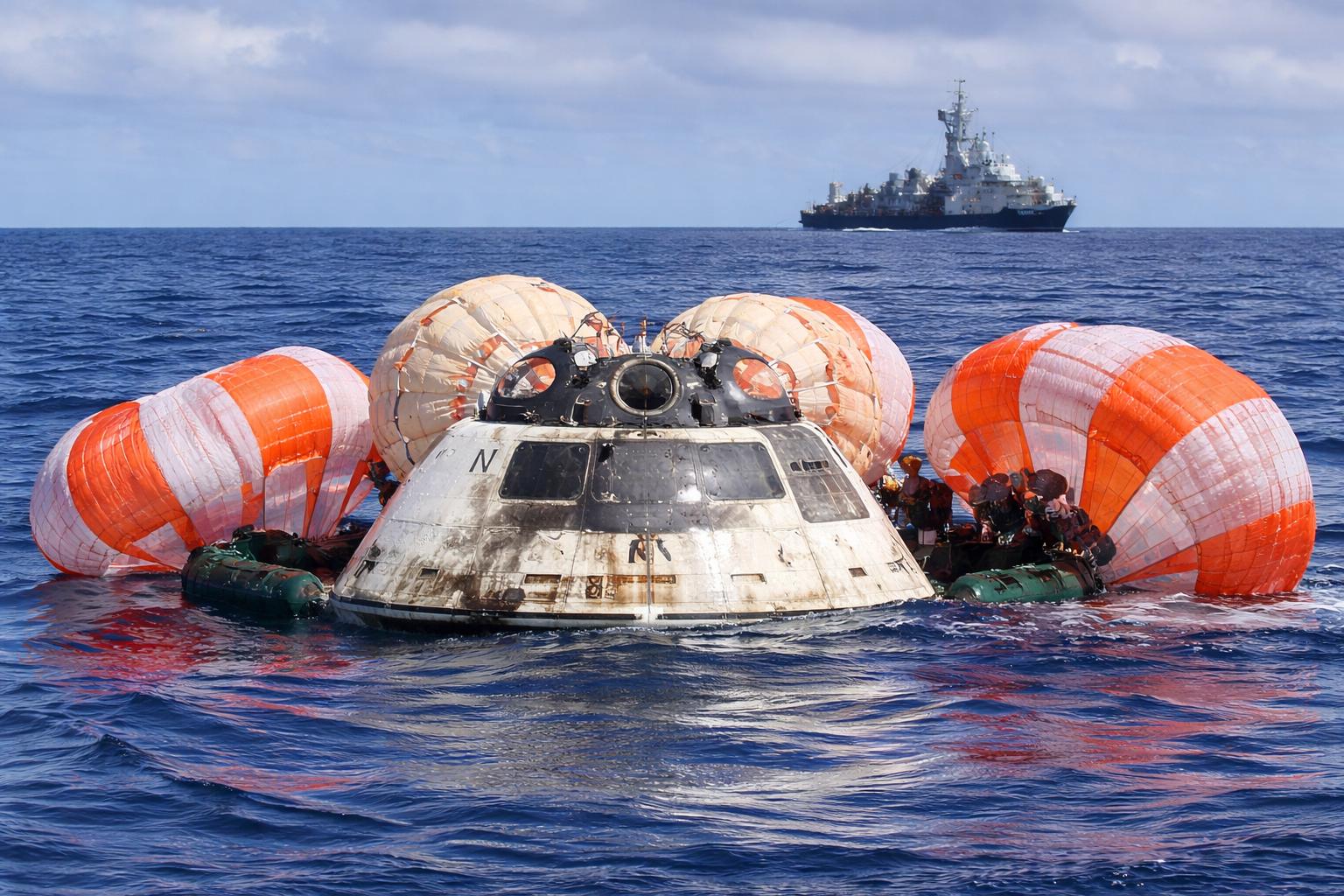
The Artemis II mission, a landmark achievement in human space exploration, has successfully concluded with a dramatic splashdown in the Pacific Ocean. The mission, which took four astronauts farther than any human before, traversed 4,06,778 kilometers from Earth, reaching the vicinity of the Moon. This daring journey marked humanity’s first crewed mission to the Moon since the Apollo program. The crew, consisting of Commander Reid Wiseman, Pilot Victor Glover, and Mission Speciali
Artemis II Mission Marks Historic Return of Astronauts from the Moon
The Artemis II mission, a landmark achievement in human space exploration, has successfully concluded with a dramatic splashdown in the Pacific Ocean. The mission, which took four astronauts farther than any human before, traversed 4,06,778 kilometers from Earth, reaching the vicinity of the Moon. This daring journey marked humanity’s first crewed mission to the Moon since the Apollo program. The crew, consisting of Commander Reid Wiseman, Pilot Victor Glover, and Mission Speciali
NASA Artemis II Mission: Crew Prepares for Pacific Ocean Splashdown
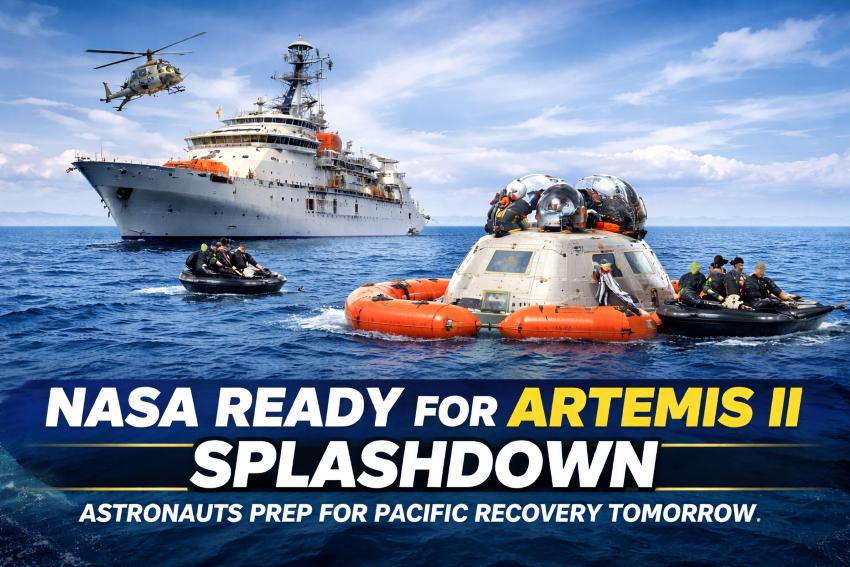
NASA is preparing for the safe return of the Artemis II mission after successfully completing its 10-day journey around the Moon. The spacecraft is expected to splash down in the Pacific Ocean, off the coast of California, on Friday, April 10 at around 8 PM EDT (5:37 AM IST, April 11). NASA officials have confirmed that all mission operations are going smoothly and are on track.
NASA Artemis II Mission: Crew Prepares for Pacific Ocean Splashdown
NASA is preparing for the safe return of the Artemis II mission after successfully completing its 10-day journey around the Moon. The spacecraft is expected to splash down in the Pacific Ocean, off the coast of California, on Friday, April 10 at around 8 PM EDT (5:37 AM IST, April 11). NASA officials have confirmed that all mission operations are going smoothly and are on track.
Artemis II Crew Captures Stunning Views of Moon's Far Side in Historic Flyby
The Artemis II crew has made history by capturing breathtaking views of the far side of the Moon during a record-setting flyby. This landmark achievement in space exploration comes as part of NASA's Artemis program, which aims to return humans to the Moon and ultimately send astronauts to Mars. The crew of Artemis II, aboard the Orion spacecraft, achieved a rare and remarkable perspective of the lunar surface, providing viewers with never-before-seen imagery of the Moon’s far side.
Artemis II Crew Captures Stunning Views of Moon's Far Side in Historic Flyby
The Artemis II crew has made history by capturing breathtaking views of the far side of the Moon during a record-setting flyby. This landmark achievement in space exploration comes as part of NASA's Artemis program, which aims to return humans to the Moon and ultimately send astronauts to Mars. The crew of Artemis II, aboard the Orion spacecraft, achieved a rare and remarkable perspective of the lunar surface, providing viewers with never-before-seen imagery of the Moon’s far side.
Artemis II: NASA Regains Contact with Astronauts Following Moon Flyby
On April 7, 2026, the crew set a new record for the farthest human spaceflight, surpassing the distance achieved during the Apollo 13 mission in 1970. During the lunar flyby, astronauts Reid Wiseman,
Artemis II: NASA Regains Contact with Astronauts Following Moon Flyby
On April 7, 2026, the crew set a new record for the farthest human spaceflight, surpassing the distance achieved during the Apollo 13 mission in 1970. During the lunar flyby, astronauts Reid Wiseman,
How Artemis II prepares humans for future lunar and Mars missions
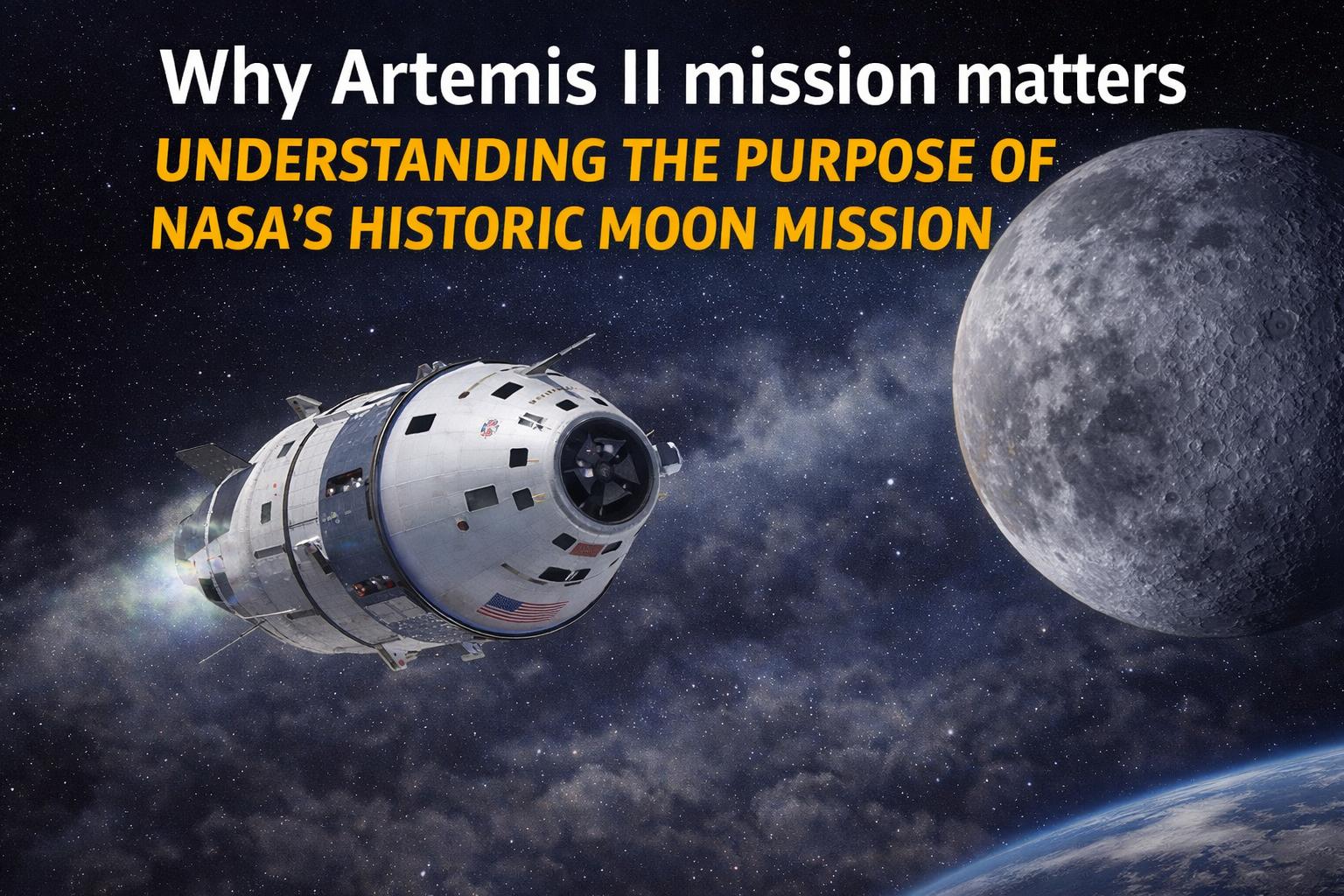
NASA’s Artemis II mission marks a major step in the United States’ return to deep space exploration, serving as a critical test before astronauts attempt to land on the moon again. While the mission does not include a lunar landing, its primary purpose is to validate systems and operations required for future crewed missions. Artemis II will carry astronauts beyond Earth’s orbit for the first time in more than 50 years, testing the Orion spacecraft and Space Launch System unde
How Artemis II prepares humans for future lunar and Mars missions
NASA’s Artemis II mission marks a major step in the United States’ return to deep space exploration, serving as a critical test before astronauts attempt to land on the moon again. While the mission does not include a lunar landing, its primary purpose is to validate systems and operations required for future crewed missions. Artemis II will carry astronauts beyond Earth’s orbit for the first time in more than 50 years, testing the Orion spacecraft and Space Launch System unde
Artemis II astronauts begin historic moon flyby mission
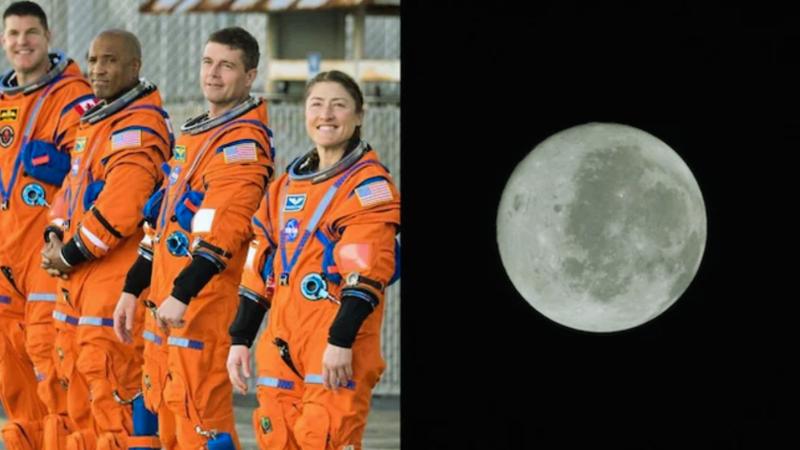
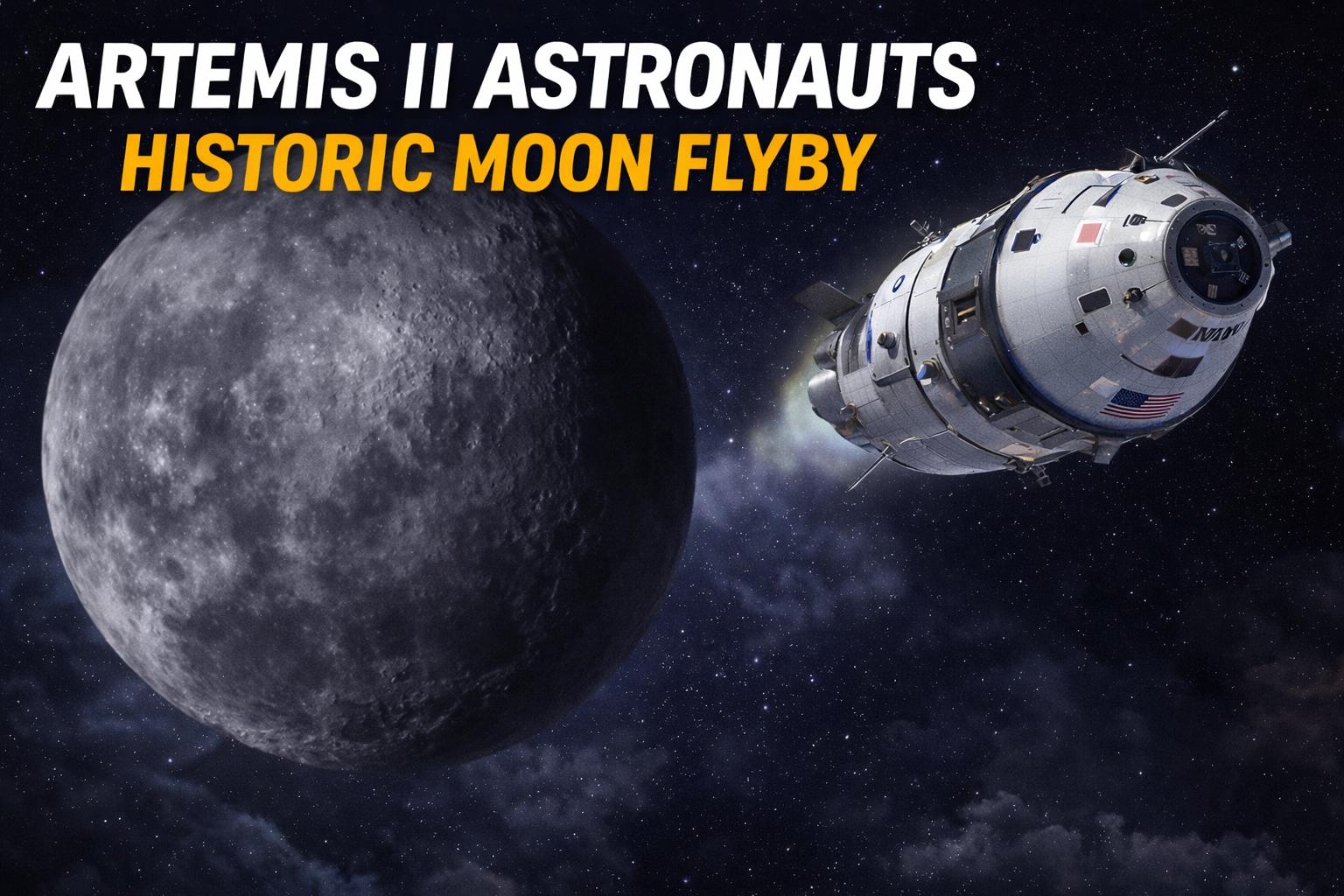
The NASA-led Artemis II mission is marking a historic milestone as four astronauts conduct a seven-hour flyby of the moon, traveling farther into space than any humans have before. The flyby operations are scheduled to begin at 2:45 PM ET and conclude at 9:20 PM ET on the same day (full date not specified in the official report), representing a key phase of the mission. The crew includes NASA astronauts Reid Wiseman, Victor Glover, and Christina Koch, along with Canadian Space Agenc
Artemis II astronauts begin historic moon flyby mission
The NASA-led Artemis II mission is marking a historic milestone as four astronauts conduct a seven-hour flyby of the moon, traveling farther into space than any humans have before. The flyby operations are scheduled to begin at 2:45 PM ET and conclude at 9:20 PM ET on the same day (full date not specified in the official report), representing a key phase of the mission. The crew includes NASA astronauts Reid Wiseman, Victor Glover, and Christina Koch, along with Canadian Space Agenc
Elon Musk pushes SpaceX IPO banks to subscribe to Grok AI ahead of public listing
In a surprising development that has sparked debate across the tech and financial sectors, Elon Musk has reportedly asked banks involved in a potential SpaceX IPO to subscribe to Grok AI, the chatbot developed by his artificial intelligence venture xAI. The move is being seen as an unusual blending of financial negotiations with technology adoption, raising questions about influence, strategy, and ethics. According to reports, Musk has encouraged major financial institutions that are expected to play a role in SpaceX’s much-anticipated public offering to purchase subscriptions to Grok AI. Grok, integrated into the platform of X, is positioned as a competitor to other leading AI chatbots, aiming to provide real-time, conversational intelligence with a unique personality. By pushing Grok subscriptions, Musk appears to be leveraging his business relationships to expand the reach and adoption of his AI ecosystem. Industry analysts believe this strategy could serve multiple purposes. On one hand, it helps boost early enterprise adoption of Grok, potentially strengthening xAI’s valuation and credibility in the rapidly evolving artificial intelligence market. On the other hand, it may also create synergies between Musk’s ventures, aligning financial partners with his broader technological vision. Why this move is gaining attention The reported request has drawn scrutiny because it blurs the lines between separate business interests. While it is not uncommon for business leaders to promote their products, tying such expectations to high-stakes financial deals like an IPO is relatively rare. Experts suggest that this could raise concerns among regulators and investors, especially regarding fairness and transparency in financial negotiations. At the same time, some supporters argue that banks and institutions often adopt new technologies as part of strategic partnerships. If Grok AI proves to be a valuable tool for financial analysis, communication, or data processing, its adoption could be seen as a logical step rather than an obligation. Impact on SpaceX IPO and AI competition The potential SpaceX IPO is already one of the most anticipated events in global markets, given the company’s dominant position in private space exploration and satellite technology. Any additional layer of complexity, such as this reported push for AI subscriptions, could influence how investors and stakeholders perceive the deal. Meanwhile, the move highlights the intensifying competition in the AI space. With major players racing to capture market share, enterprise adoption is becoming a key battleground. By integrating Grok into financial institutions, Musk may be attempting to position xAI as a serious contender alongside other established AI platforms. As the story continues to unfold, it remains to be seen whether this strategy will accelerate Grok’s growth or invite regulatory attention. What is clear, however, is that Musk’s approach once again demonstrates his willingness to challenge conventional boundaries between industries, reshaping how technology and finance intersect in the modern era.
Elon Musk pushes SpaceX IPO banks to subscribe to Grok AI ahead of public listing
In a surprising development that has sparked debate across the tech and financial sectors, Elon Musk has reportedly asked banks involved in a potential SpaceX IPO to subscribe to Grok AI, the chatbot developed by his artificial intelligence venture xAI. The move is being seen as an unusual blending of financial negotiations with technology adoption, raising questions about influence, strategy, and ethics. According to reports, Musk has encouraged major financial institutions that are expected to play a role in SpaceX’s much-anticipated public offering to purchase subscriptions to Grok AI. Grok, integrated into the platform of X, is positioned as a competitor to other leading AI chatbots, aiming to provide real-time, conversational intelligence with a unique personality. By pushing Grok subscriptions, Musk appears to be leveraging his business relationships to expand the reach and adoption of his AI ecosystem. Industry analysts believe this strategy could serve multiple purposes. On one hand, it helps boost early enterprise adoption of Grok, potentially strengthening xAI’s valuation and credibility in the rapidly evolving artificial intelligence market. On the other hand, it may also create synergies between Musk’s ventures, aligning financial partners with his broader technological vision. Why this move is gaining attention The reported request has drawn scrutiny because it blurs the lines between separate business interests. While it is not uncommon for business leaders to promote their products, tying such expectations to high-stakes financial deals like an IPO is relatively rare. Experts suggest that this could raise concerns among regulators and investors, especially regarding fairness and transparency in financial negotiations. At the same time, some supporters argue that banks and institutions often adopt new technologies as part of strategic partnerships. If Grok AI proves to be a valuable tool for financial analysis, communication, or data processing, its adoption could be seen as a logical step rather than an obligation. Impact on SpaceX IPO and AI competition The potential SpaceX IPO is already one of the most anticipated events in global markets, given the company’s dominant position in private space exploration and satellite technology. Any additional layer of complexity, such as this reported push for AI subscriptions, could influence how investors and stakeholders perceive the deal. Meanwhile, the move highlights the intensifying competition in the AI space. With major players racing to capture market share, enterprise adoption is becoming a key battleground. By integrating Grok into financial institutions, Musk may be attempting to position xAI as a serious contender alongside other established AI platforms. As the story continues to unfold, it remains to be seen whether this strategy will accelerate Grok’s growth or invite regulatory attention. What is clear, however, is that Musk’s approach once again demonstrates his willingness to challenge conventional boundaries between industries, reshaping how technology and finance intersect in the modern era.
NASA Reveals First Stunning Earth Images from Artemis II Crew
NASA’s Artemis 2 mission is advancing as the agency prepares to send astronauts on a historic journey around the moon, marking the first crewed lunar mission in decades. The mission represents a major milestone in the broader Artemis program, which aims to establish a sustained human presence on the lunar surface and eventually support deeper space exploration. The Artemis 2 crew is expected to travel aboard the Orion spacecraf

NASA Reveals First Stunning Earth Images from Artemis II Crew
NASA’s Artemis 2 mission is advancing as the agency prepares to send astronauts on a historic journey around the moon, marking the first crewed lunar mission in decades. The mission represents a major milestone in the broader Artemis program, which aims to establish a sustained human presence on the lunar surface and eventually support deeper space exploration. The Artemis 2 crew is expected to travel aboard the Orion spacecraf
SpaceX plans $1 trillion IPO in historic public listing move
Elon Musk’s SpaceX has taken a major step toward becoming a publicly traded company, filing confidentially for an initial public offering on Wednesday, April 1, 2026. The move could position the aerospace and technology firm among the most valuable companies globally, with an expected valuation exceeding $1 trillion. The IPO filing allows SpaceX to begin discussions with regulators while keeping detailed financial disclosures private during the early stages. Reports indicate the c
SpaceX plans $1 trillion IPO in historic public listing move
Elon Musk’s SpaceX has taken a major step toward becoming a publicly traded company, filing confidentially for an initial public offering on Wednesday, April 1, 2026. The move could position the aerospace and technology firm among the most valuable companies globally, with an expected valuation exceeding $1 trillion. The IPO filing allows SpaceX to begin discussions with regulators while keeping detailed financial disclosures private during the early stages. Reports indicate the c
NASA Artemis II mission set to take astronauts around the Moon after 50 years
The world is once again looking at the Moon with excitement. After more than 50 years, humans are preparing to travel around the Moon again, and the NASA Artemis II mission is ready to make history. This mission will send four astronauts into space, taking them around the Moon and back to Earth. It is not just a space journey—it is the beginning of a new era of space exploration. What is Artemis II Mission?
NASA Artemis II mission set to take astronauts around the Moon after 50 years
The world is once again looking at the Moon with excitement. After more than 50 years, humans are preparing to travel around the Moon again, and the NASA Artemis II mission is ready to make history. This mission will send four astronauts into space, taking them around the Moon and back to Earth. It is not just a space journey—it is the beginning of a new era of space exploration. What is Artemis II Mission?
NASA satellite Van Allen Probe A expected to reenter Earth’s atmosphere Tuesday
A decommissioned NASA satellite that once helped scientists understand how Earth’s magnetic field protects the planet from harmful cosmic radiation is expected to reenter Earth’s atmosphere on Tuesday evening. According to NASA, the spacecraft known as Van Allen Probe A could make atmospheric reentry around 7:45 p.m. Eastern Time, though officials note that predicting the exact moment remains difficult. Space agencies say the timing of the event carries uncertainty, with the act
NASA satellite Van Allen Probe A expected to reenter Earth’s atmosphere Tuesday
A decommissioned NASA satellite that once helped scientists understand how Earth’s magnetic field protects the planet from harmful cosmic radiation is expected to reenter Earth’s atmosphere on Tuesday evening. According to NASA, the spacecraft known as Van Allen Probe A could make atmospheric reentry around 7:45 p.m. Eastern Time, though officials note that predicting the exact moment remains difficult. Space agencies say the timing of the event carries uncertainty, with the act
Elon Musk proposes space-based AI data centres powered by solar energy
Elon Musk’s long-standing reputation for advancing unconventional technological ideas has taken another ambitious turn, with SpaceX formally proposing to build an orbital network of artificial intelligence data centres powered by solar energy. What initially appeared to be an eccentric concept has quickly moved into the regulatory phase, supported by official filings and public statements that suggest the company is serious about relocating a significant share of AI computing capacity beyon
Elon Musk proposes space-based AI data centres powered by solar energy
Elon Musk’s long-standing reputation for advancing unconventional technological ideas has taken another ambitious turn, with SpaceX formally proposing to build an orbital network of artificial intelligence data centres powered by solar energy. What initially appeared to be an eccentric concept has quickly moved into the regulatory phase, supported by official filings and public statements that suggest the company is serious about relocating a significant share of AI computing capacity beyon
ISRO rules out sabotage amid repeated strategic mission failures
India’s Space Minister Dr. Jitendra Singh has said that there is no indication of sabotage behind a series of recent failures involving the Indian Space Research Organisation, even as repeated setbacks to strategic missions have triggered concern within policy and defence circles. The remarks come after three out of six ISRO missions launched from Indian soil over the past year failed, all of them linked to national security and strategic objectives. Speaking at a press briefing in New Delhi, Dr. Singh said that no report pointing to sabotage has been received so far. He clarified that while he is responsible for overseeing space launches, investigations related to sabotage or hostile interference fall under the purview of other ministries such as defence, home affairs, or external affairs. The minister added that, as of now, there is no information to suggest external interference in the recent launch failures. The comments follow two rare back-to-back mid-flight failures of ISRO’s Polar Satellite Launch Vehicle, a rocket that has long been considered the agency’s most dependable platform. Over a 33-year operational history, the PSLV had suffered only four major failures prior to 2025. The failures in May 2025 and January 2026, both occurring during the third stage of flight, have therefore raised serious questions about reliability and corrective action. Dr. Singh addressed public speculation that ISRO may have failed to rectify earlier faults, stating that the two PSLV failures had different technical causes despite occurring at the same stage. He expressed confidence in ISRO’s internal failure appraisal process, describing it as thorough and analytical. Traditionally, ISRO has publicly released summaries of mission failure analyses, contributing to its image as a transparent space agency. However, in recent cases, that practice has not been consistently followed. The failure analysis report of the PSLV-C61 mission in May 2025 was submitted to the Prime Minister’s Office but not released publicly. Similarly, no detailed technical update has been shared regarding the PSLV-C62 failure in January 2026 beyond ministerial statements. January 2026 – PSLV-C62 / EOS-N1 The PSLV-C62 mission on January 12, 2026, was ISRO’s first launch of the year and marked the PSLV’s return to flight after a setback in May 2025. The primary payload was EOS-N1, also known as Anvesha, a hyperspectral Earth observation satellite developed by the Defence Research and Development Organisation. The satellite was designed to operate at an altitude of 511 kilometres and provide advanced material identification capabilities by analysing reflected light across multiple wavelengths. The mission also carried 15 co-passenger satellites. A mid-flight failure during the third stage of the PSLV resulted in the loss of the rocket and all onboard satellites, ending the mission prematurely. May 2025 – PSLV-C61 / EOS-09 On May 18, 2025, ISRO’s PSLV-C61 mission failed approximately six minutes after liftoff. According to ISRO officials, performance was normal up to the second stage before an anomaly was observed during third-stage operation. The EOS-09 satellite, a radar imaging platform capable of all-weather, day-and-night surveillance, was lost along with the launch vehicle. Despite the strategic importance of the mission, ISRO did not release a public failure analysis, a departure from past practice. January 2025 – GSLV-F15 / NVS-02 On January 29, 2025, ISRO launched the NVS-02 navigation satellite aboard the GSLV-F15 rocket during the 100th launch from the Sriharikota spaceport. While the rocket successfully placed the satellite into its initial orbit, the satellite failed to fire its onboard engines, preventing it from reaching its designated operational orbit. The failure rendered NVS-02 unusable for its intended role within India’s NAVIC regional navigation system, which serves both civilian agencies and the armed forces. August 2021 – GSLV-F10 / EOS-03 In August 2021, ISRO launched the EOS-03 satellite, previously known as GISAT-1, aboard the GSLV-F10 rocket. Designed for near real-time Earth observation and disaster monitoring, the mission failed due to a malfunction in the cryogenic upper stage. ISRO later identified a valve leak in the liquid hydrogen tank as the cause of the failure. August 2017 – PSLV-C39 / IRNSS-1H The PSLV-C39 mission in August 2017 failed after the satellite remained trapped inside the rocket’s heat shield due to a separation failure. Although all other flight events proceeded as planned, the navigation satellite could not be deployed, resulting in the loss of a critical component of the Indian Regional Navigation Satellite System. The cumulative impact of these strategic mission failures over the past nine years is significant. Financial estimates suggest losses amounting to several hundred million dollars, excluding the cost of rebuilding and relaunching replacement missions. Beyond monetary loss, delays in deploying indigenous navigation and surveillance satellites force greater reliance on foreign systems, affecting strategic autonomy. ISRO has indicated that each failure was caused by a different subsystem or component, reinforcing the reality that spaceflight is a zero-error domain where even minor defects can have catastrophic consequences. While each failure contributes valuable lessons, the repeated setbacks have slowed the deployment of key space-based capabilities developed by Indian scientists, placing renewed focus on reliability, transparency, and long-term mission planning.
ISRO rules out sabotage amid repeated strategic mission failures
India’s Space Minister Dr. Jitendra Singh has said that there is no indication of sabotage behind a series of recent failures involving the Indian Space Research Organisation, even as repeated setbacks to strategic missions have triggered concern within policy and defence circles. The remarks come after three out of six ISRO missions launched from Indian soil over the past year failed, all of them linked to national security and strategic objectives. Speaking at a press briefing in New Delhi, Dr. Singh said that no report pointing to sabotage has been received so far. He clarified that while he is responsible for overseeing space launches, investigations related to sabotage or hostile interference fall under the purview of other ministries such as defence, home affairs, or external affairs. The minister added that, as of now, there is no information to suggest external interference in the recent launch failures. The comments follow two rare back-to-back mid-flight failures of ISRO’s Polar Satellite Launch Vehicle, a rocket that has long been considered the agency’s most dependable platform. Over a 33-year operational history, the PSLV had suffered only four major failures prior to 2025. The failures in May 2025 and January 2026, both occurring during the third stage of flight, have therefore raised serious questions about reliability and corrective action. Dr. Singh addressed public speculation that ISRO may have failed to rectify earlier faults, stating that the two PSLV failures had different technical causes despite occurring at the same stage. He expressed confidence in ISRO’s internal failure appraisal process, describing it as thorough and analytical. Traditionally, ISRO has publicly released summaries of mission failure analyses, contributing to its image as a transparent space agency. However, in recent cases, that practice has not been consistently followed. The failure analysis report of the PSLV-C61 mission in May 2025 was submitted to the Prime Minister’s Office but not released publicly. Similarly, no detailed technical update has been shared regarding the PSLV-C62 failure in January 2026 beyond ministerial statements. January 2026 – PSLV-C62 / EOS-N1 The PSLV-C62 mission on January 12, 2026, was ISRO’s first launch of the year and marked the PSLV’s return to flight after a setback in May 2025. The primary payload was EOS-N1, also known as Anvesha, a hyperspectral Earth observation satellite developed by the Defence Research and Development Organisation. The satellite was designed to operate at an altitude of 511 kilometres and provide advanced material identification capabilities by analysing reflected light across multiple wavelengths. The mission also carried 15 co-passenger satellites. A mid-flight failure during the third stage of the PSLV resulted in the loss of the rocket and all onboard satellites, ending the mission prematurely. May 2025 – PSLV-C61 / EOS-09 On May 18, 2025, ISRO’s PSLV-C61 mission failed approximately six minutes after liftoff. According to ISRO officials, performance was normal up to the second stage before an anomaly was observed during third-stage operation. The EOS-09 satellite, a radar imaging platform capable of all-weather, day-and-night surveillance, was lost along with the launch vehicle. Despite the strategic importance of the mission, ISRO did not release a public failure analysis, a departure from past practice. January 2025 – GSLV-F15 / NVS-02 On January 29, 2025, ISRO launched the NVS-02 navigation satellite aboard the GSLV-F15 rocket during the 100th launch from the Sriharikota spaceport. While the rocket successfully placed the satellite into its initial orbit, the satellite failed to fire its onboard engines, preventing it from reaching its designated operational orbit. The failure rendered NVS-02 unusable for its intended role within India’s NAVIC regional navigation system, which serves both civilian agencies and the armed forces. August 2021 – GSLV-F10 / EOS-03 In August 2021, ISRO launched the EOS-03 satellite, previously known as GISAT-1, aboard the GSLV-F10 rocket. Designed for near real-time Earth observation and disaster monitoring, the mission failed due to a malfunction in the cryogenic upper stage. ISRO later identified a valve leak in the liquid hydrogen tank as the cause of the failure. August 2017 – PSLV-C39 / IRNSS-1H The PSLV-C39 mission in August 2017 failed after the satellite remained trapped inside the rocket’s heat shield due to a separation failure. Although all other flight events proceeded as planned, the navigation satellite could not be deployed, resulting in the loss of a critical component of the Indian Regional Navigation Satellite System. The cumulative impact of these strategic mission failures over the past nine years is significant. Financial estimates suggest losses amounting to several hundred million dollars, excluding the cost of rebuilding and relaunching replacement missions. Beyond monetary loss, delays in deploying indigenous navigation and surveillance satellites force greater reliance on foreign systems, affecting strategic autonomy. ISRO has indicated that each failure was caused by a different subsystem or component, reinforcing the reality that spaceflight is a zero-error domain where even minor defects can have catastrophic consequences. While each failure contributes valuable lessons, the repeated setbacks have slowed the deployment of key space-based capabilities developed by Indian scientists, placing renewed focus on reliability, transparency, and long-term mission planning.
2026 Solar Eclipse: Ring of Fire to Occur on February 17, Visible in Southern Hemisphere
The 2026 Solar Eclipse will occur on February 17, and it is set to be a remarkable celestial event. This eclipse will be an annular solar eclipse, often referred to as the Ring of Fire eclipse. Here's everything you need to know about this rare event: Eclipse Type: The eclipse will be an annular solar eclipse. In this type of eclipse, the Moon will cover about 96% of the Sun, but due to the Moon being farther from Earth, it will appear slightly smaller than the Sun. As a
2026 Solar Eclipse: Ring of Fire to Occur on February 17, Visible in Southern Hemisphere
The 2026 Solar Eclipse will occur on February 17, and it is set to be a remarkable celestial event. This eclipse will be an annular solar eclipse, often referred to as the Ring of Fire eclipse. Here's everything you need to know about this rare event: Eclipse Type: The eclipse will be an annular solar eclipse. In this type of eclipse, the Moon will cover about 96% of the Sun, but due to the Moon being farther from Earth, it will appear slightly smaller than the Sun. As a
Iran blocks internet nationwide as military jammers disrupt Starlink satellite access
Iran has once again imposed sweeping restrictions on internet access, escalating its long-standing campaign of digital control by reportedly disrupting even satellite-based connectivity such as Starlink. The latest shutdown marks a significant development, as Starlink has long been considered resistant to conventional censorship and network blocking methods used by state authorities. Digital rights researchers monitoring the situation say the government has deployed military-grade G
Iran blocks internet nationwide as military jammers disrupt Starlink satellite access
Iran has once again imposed sweeping restrictions on internet access, escalating its long-standing campaign of digital control by reportedly disrupting even satellite-based connectivity such as Starlink. The latest shutdown marks a significant development, as Starlink has long been considered resistant to conventional censorship and network blocking methods used by state authorities. Digital rights researchers monitoring the situation say the government has deployed military-grade G
PSLV-C62 launch faces anomaly in third stage, ISRO begins detailed analysis
The Indian Space Research Organisation experienced a tense morning on Tuesday after the Polar Satellite Launch Vehicle C62 lifted off from the Satish Dhawan Space Centre in Sriharikota at 10.18 am carrying a total of 16 satellites. The mission initially appeared to progress as planned, with scientists closely monitoring each phase of the flight. However, around 30 minutes after liftoff, ISRO confirmed that the mission had encountered an anomaly during the third stage of the launch sequence, r
PSLV-C62 launch faces anomaly in third stage, ISRO begins detailed analysis
The Indian Space Research Organisation experienced a tense morning on Tuesday after the Polar Satellite Launch Vehicle C62 lifted off from the Satish Dhawan Space Centre in Sriharikota at 10.18 am carrying a total of 16 satellites. The mission initially appeared to progress as planned, with scientists closely monitoring each phase of the flight. However, around 30 minutes after liftoff, ISRO confirmed that the mission had encountered an anomaly during the third stage of the launch sequence, r
How science breakthroughs in 2025 reshaped medicine, space research, and climate reality
A century ago, the notion of restoring lost senses or detecting ancient life beyond Earth belonged firmly to science fiction. In 2025, such ideas moved decisively into reality as a series of scientific breakthroughs reshaped long-standing assumptions across medicine, space science, climate research, and artificial intelligence. These advances did not arrive as distant promises or speculative theories, but as working solutions that delivered measurable results and altered how science interacts
How science breakthroughs in 2025 reshaped medicine, space research, and climate reality
A century ago, the notion of restoring lost senses or detecting ancient life beyond Earth belonged firmly to science fiction. In 2025, such ideas moved decisively into reality as a series of scientific breakthroughs reshaped long-standing assumptions across medicine, space science, climate research, and artificial intelligence. These advances did not arrive as distant promises or speculative theories, but as working solutions that delivered measurable results and altered how science interacts