#spacetech
Robotic mission aims to lift NASA’s Swift Observatory
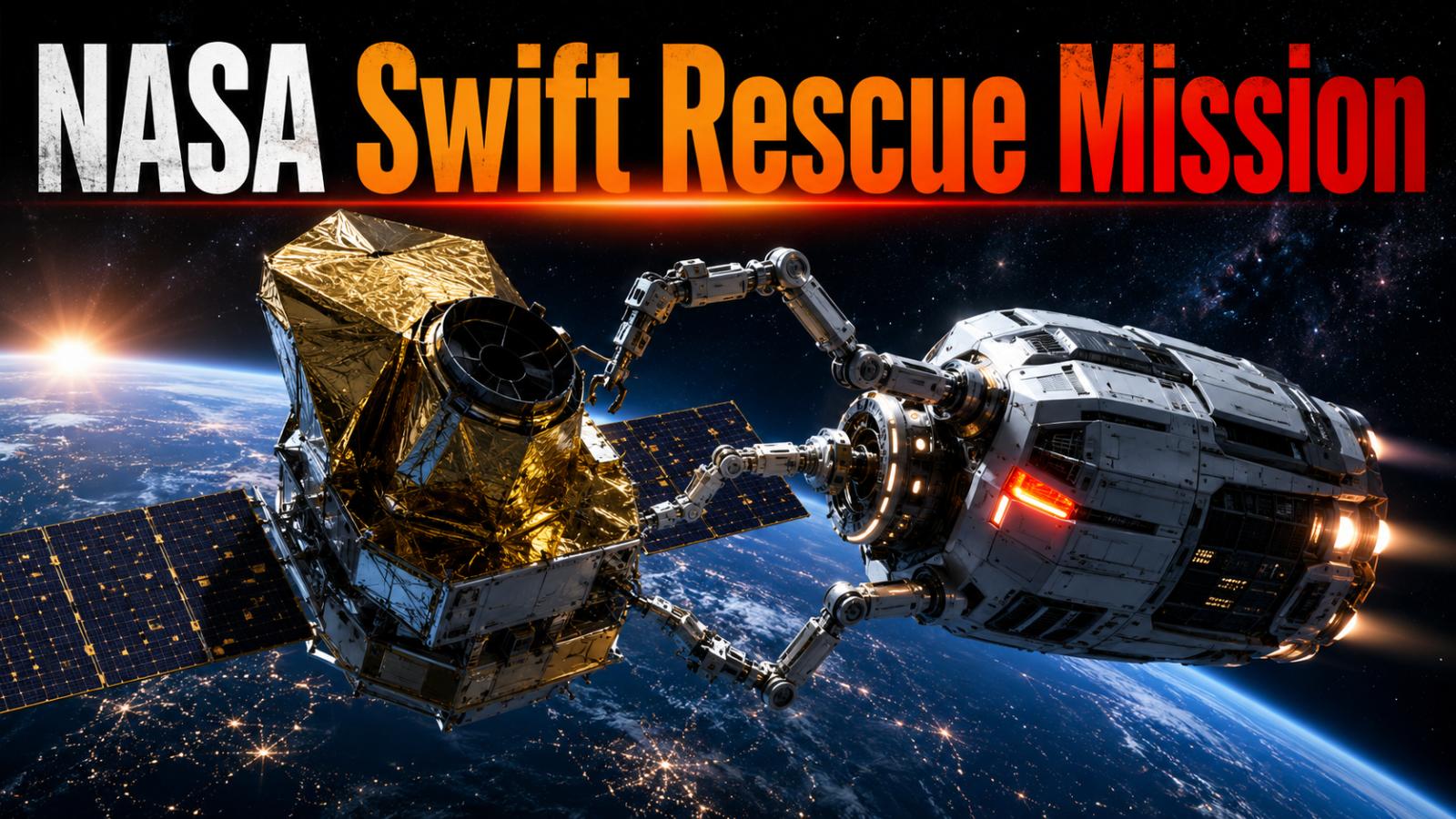
NASA prepares rescue mission for Swift NASA is preparing a $30 million robotic mission to prevent the Neil Gehrels Swift Observatory from re-entering Earth’s atmosphere after two decades of service in space. The agency has described the effort as a race against time and gravity, as the aging telescope continues to lose altitude because of orbital decay. The mission will be led by Katalyst Space Technologies, a startup developing a three-armed spacecra
Robotic mission aims to lift NASA’s Swift Observatory
NASA prepares rescue mission for Swift NASA is preparing a $30 million robotic mission to prevent the Neil Gehrels Swift Observatory from re-entering Earth’s atmosphere after two decades of service in space. The agency has described the effort as a race against time and gravity, as the aging telescope continues to lose altitude because of orbital decay. The mission will be led by Katalyst Space Technologies, a startup developing a three-armed spacecra
China Shenlong mission sparks debate after object release
A Chinese reusable spacecraft linked to the Shenlong program has triggered fresh global scrutiny after tracking data showed a separate object appearing in close proximity during its latest orbital phase. The event, observed in June 2026, has added new uncertainty around the nature of China’s secretive spaceplane operations. Tracking data reveals unexpected separation in orbit Independent space surveillance firm LeoLabs reported detection of a new object near the Shenlong spacecraft during routine orbital monitoring. The timing and proximity suggested a possible release or separation event from the main vehicle. The object was later incorporated into the US Space Force satellite catalog, allowing continued tracking through global space surveillance networks. What the Shenlong spaceplane is designed for Shenlong spaceplane is China’s experimental reusable orbital vehicle designed to launch via rocket and return to Earth like a conventional aircraft. The system is believed to support long-duration missions involving orbital testing, reconnaissance experiments, and reusable spacecraft technologies. It is often compared to the US X-37B program due to its similar operational profile and secrecy surrounding mission objectives. Launch background and mission profile The spacecraft associated with this mission was launched from the Jiuquan Satellite Launch Center aboard a Long March 2F rocket. Since launch, Chinese authorities have released minimal operational details, leaving external analysts to rely heavily on radar tracking, orbital behavior, and third-party observations to interpret mission activity. Why the object detection raised questions The appearance of a separate object in close orbital proximity has led analysts to consider several possibilities, including experimental deployment, satellite servicing tests, or controlled separation of hardware. While none of these scenarios have been confirmed, the pattern aligns with rendezvous and proximity operations (RPO), a capability used for inspecting or interacting with objects in space. Strategic implications and global monitoring The development is being closely monitored because RPO technology has dual-use applications. It can support peaceful maintenance missions but also enable advanced surveillance or counter-space capabilities. As a result, both US and international tracking systems continue to observe Shenlong missions for behavioral patterns that may indicate evolving strategic capabilities. Ongoing uncertainty around mission details Despite growing external analysis, no official clarification has been issued regarding the nature of the detected object. This lack of transparency keeps the mission under active observation, with each new orbital event contributing to broader assessments of China’s reusable spacecraft program and its long-term strategic direction.
China Shenlong mission sparks debate after object release
A Chinese reusable spacecraft linked to the Shenlong program has triggered fresh global scrutiny after tracking data showed a separate object appearing in close proximity during its latest orbital phase. The event, observed in June 2026, has added new uncertainty around the nature of China’s secretive spaceplane operations. Tracking data reveals unexpected separation in orbit Independent space surveillance firm LeoLabs reported detection of a new object near the Shenlong spacecraft during routine orbital monitoring. The timing and proximity suggested a possible release or separation event from the main vehicle. The object was later incorporated into the US Space Force satellite catalog, allowing continued tracking through global space surveillance networks. What the Shenlong spaceplane is designed for Shenlong spaceplane is China’s experimental reusable orbital vehicle designed to launch via rocket and return to Earth like a conventional aircraft. The system is believed to support long-duration missions involving orbital testing, reconnaissance experiments, and reusable spacecraft technologies. It is often compared to the US X-37B program due to its similar operational profile and secrecy surrounding mission objectives. Launch background and mission profile The spacecraft associated with this mission was launched from the Jiuquan Satellite Launch Center aboard a Long March 2F rocket. Since launch, Chinese authorities have released minimal operational details, leaving external analysts to rely heavily on radar tracking, orbital behavior, and third-party observations to interpret mission activity. Why the object detection raised questions The appearance of a separate object in close orbital proximity has led analysts to consider several possibilities, including experimental deployment, satellite servicing tests, or controlled separation of hardware. While none of these scenarios have been confirmed, the pattern aligns with rendezvous and proximity operations (RPO), a capability used for inspecting or interacting with objects in space. Strategic implications and global monitoring The development is being closely monitored because RPO technology has dual-use applications. It can support peaceful maintenance missions but also enable advanced surveillance or counter-space capabilities. As a result, both US and international tracking systems continue to observe Shenlong missions for behavioral patterns that may indicate evolving strategic capabilities. Ongoing uncertainty around mission details Despite growing external analysis, no official clarification has been issued regarding the nature of the detected object. This lack of transparency keeps the mission under active observation, with each new orbital event contributing to broader assessments of China’s reusable spacecraft program and its long-term strategic direction.
NASA satellite Van Allen Probe A expected to reenter Earth’s atmosphere Tuesday
A decommissioned NASA satellite that once helped scientists understand how Earth’s magnetic field protects the planet from harmful cosmic radiation is expected to reenter Earth’s atmosphere on Tuesday evening. According to NASA, the spacecraft known as Van Allen Probe A could make atmospheric reentry around 7:45 p.m. Eastern Time, though officials note that predicting the exact moment remains difficult. Space agencies say the timing of the event carries uncertainty, with the act
NASA satellite Van Allen Probe A expected to reenter Earth’s atmosphere Tuesday
A decommissioned NASA satellite that once helped scientists understand how Earth’s magnetic field protects the planet from harmful cosmic radiation is expected to reenter Earth’s atmosphere on Tuesday evening. According to NASA, the spacecraft known as Van Allen Probe A could make atmospheric reentry around 7:45 p.m. Eastern Time, though officials note that predicting the exact moment remains difficult. Space agencies say the timing of the event carries uncertainty, with the act
Spacex may target $1.5 trillion valuation in potential 2026 ipo
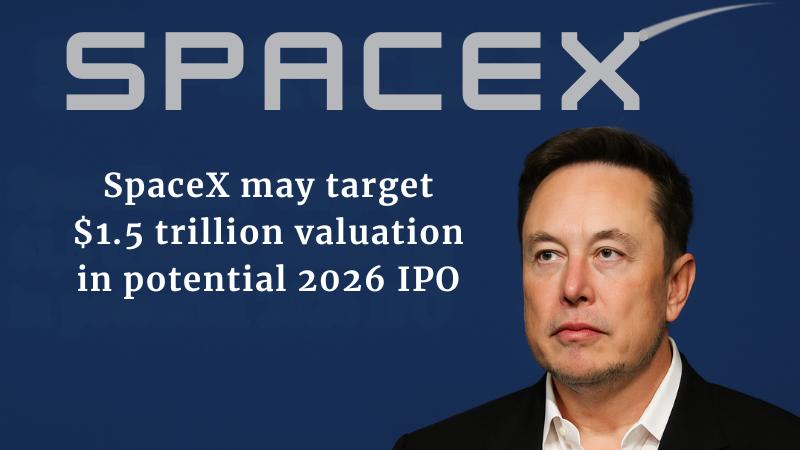
A recent report has indicated that SpaceX, the aerospace company led by Elon Musk, could be poised for one of the largest public listings in history, with a potential valuation approaching $1.5 trillion. The report, based on information attributed to individuals familiar with ongoing internal discussions, suggests that the company may consider launching an initial public offering in 2026, depending on overall market stability and strategic readiness. If pursued at the scale projected, the listing would position SpaceX among the highest-valued companies ever to enter public markets, reflecting widespread investor confidence in the growing commercial space sector and in the company’s expanding operational footprint. The report indicated that SpaceX is exploring the possibility of raising more than $30 billion through the offering, a figure notably higher than earlier expectations. Such a fundraising effort would place the company’s valuation close to levels only seen in a few landmark listings, including major energy and technology offerings of previous years. Sources cited in the report noted that the company may adjust the timeline, potentially moving the offering into 2027, should financial or regulatory conditions make a delay more favourable. The expected proceeds would support the expansion of space-based data centres, a growing area of interest for SpaceX as it works to increase global connectivity and strengthen the infrastructure supporting its satellite-driven services. Financial projections referenced in the report show that SpaceX may generate around $15 billion in revenue during 2025, with estimates rising to between $22 billion and $24 billion in 2026. Much of this anticipated growth is attributed to Starlink, the satellite-internet service that has rapidly expanded its global user base. The company is also conducting a secondary share sale that allows employees to sell stock at a price suggesting a valuation exceeding $800 billion, demonstrating continued private-market demand for SpaceX shares. Previous internal transactions have placed the company’s value near the $800 billion level, but the higher valuation discussed in the latest report reflects expectations tied specifically to an eventual public listing. Musk has commented in the past that some earlier valuation figures were inaccurate, although he acknowledged that employee share sales have occurred periodically. He has not yet addressed the newly reported projections regarding a possible IPO. Musk has often expressed caution about taking SpaceX public, emphasising that the company’s long-term ambitions, including advancing human exploration of Mars, require flexibility that may not always align with public-market demands. Despite this reluctance, the company has maintained strong cash flow, according to Musk’s earlier statements, and has been able to conduct internal share buybacks without seeking external funding. As of now, neither Musk nor SpaceX has confirmed any details related to the potential listing. The timeline, valuation and structure of the offering remain subject to change, and any future decision will likely depend on economic conditions, regulatory considerations and the company’s strategic priorities. Nonetheless, the prospect of a record-setting valuation continues to draw significant attention, underscoring SpaceX’s influence within the global space economy and the broader technology landscape.
Spacex may target $1.5 trillion valuation in potential 2026 ipo
A recent report has indicated that SpaceX, the aerospace company led by Elon Musk, could be poised for one of the largest public listings in history, with a potential valuation approaching $1.5 trillion. The report, based on information attributed to individuals familiar with ongoing internal discussions, suggests that the company may consider launching an initial public offering in 2026, depending on overall market stability and strategic readiness. If pursued at the scale projected, the listing would position SpaceX among the highest-valued companies ever to enter public markets, reflecting widespread investor confidence in the growing commercial space sector and in the company’s expanding operational footprint. The report indicated that SpaceX is exploring the possibility of raising more than $30 billion through the offering, a figure notably higher than earlier expectations. Such a fundraising effort would place the company’s valuation close to levels only seen in a few landmark listings, including major energy and technology offerings of previous years. Sources cited in the report noted that the company may adjust the timeline, potentially moving the offering into 2027, should financial or regulatory conditions make a delay more favourable. The expected proceeds would support the expansion of space-based data centres, a growing area of interest for SpaceX as it works to increase global connectivity and strengthen the infrastructure supporting its satellite-driven services. Financial projections referenced in the report show that SpaceX may generate around $15 billion in revenue during 2025, with estimates rising to between $22 billion and $24 billion in 2026. Much of this anticipated growth is attributed to Starlink, the satellite-internet service that has rapidly expanded its global user base. The company is also conducting a secondary share sale that allows employees to sell stock at a price suggesting a valuation exceeding $800 billion, demonstrating continued private-market demand for SpaceX shares. Previous internal transactions have placed the company’s value near the $800 billion level, but the higher valuation discussed in the latest report reflects expectations tied specifically to an eventual public listing. Musk has commented in the past that some earlier valuation figures were inaccurate, although he acknowledged that employee share sales have occurred periodically. He has not yet addressed the newly reported projections regarding a possible IPO. Musk has often expressed caution about taking SpaceX public, emphasising that the company’s long-term ambitions, including advancing human exploration of Mars, require flexibility that may not always align with public-market demands. Despite this reluctance, the company has maintained strong cash flow, according to Musk’s earlier statements, and has been able to conduct internal share buybacks without seeking external funding. As of now, neither Musk nor SpaceX has confirmed any details related to the potential listing. The timeline, valuation and structure of the offering remain subject to change, and any future decision will likely depend on economic conditions, regulatory considerations and the company’s strategic priorities. Nonetheless, the prospect of a record-setting valuation continues to draw significant attention, underscoring SpaceX’s influence within the global space economy and the broader technology landscape.
SpaceX Booster 18 suffers damage after test anomaly at South Texas site
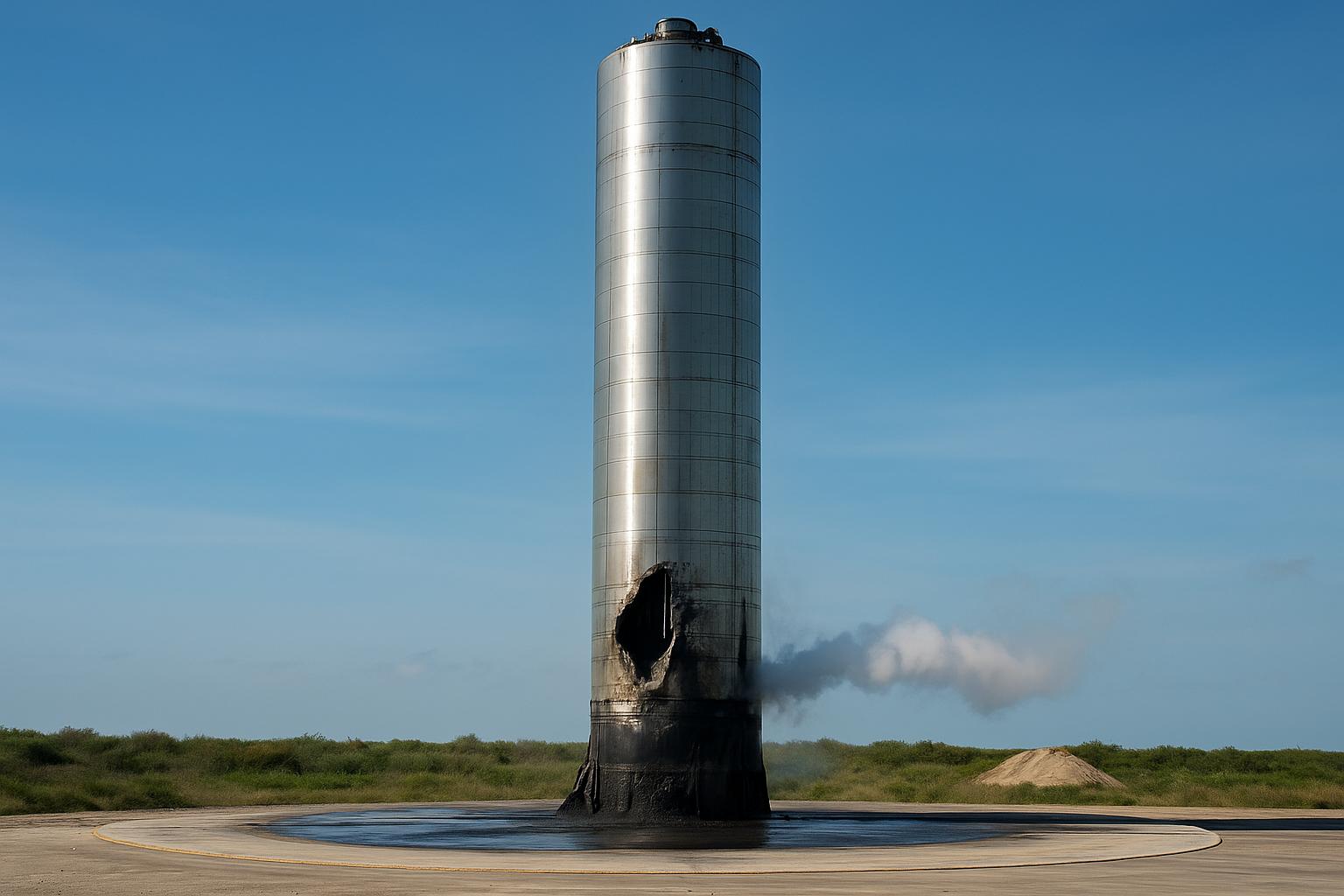
A major phase in SpaceX’s Starship test program faced an unexpected setback on Friday when Booster 18, the company’s first next-generation Block 3 Super Heavy booster, sustained significant structural damage during a ground test in South Texas. The incident occurred at SpaceX’s Massey test facility near Starbase, where the vehicle was undergoing routine gas-system pressure checks ahead of more rigorous structural proofing. Shortly after 4 a.m. local time, livestream footage captured the
SpaceX Booster 18 suffers damage after test anomaly at South Texas site
A major phase in SpaceX’s Starship test program faced an unexpected setback on Friday when Booster 18, the company’s first next-generation Block 3 Super Heavy booster, sustained significant structural damage during a ground test in South Texas. The incident occurred at SpaceX’s Massey test facility near Starbase, where the vehicle was undergoing routine gas-system pressure checks ahead of more rigorous structural proofing. Shortly after 4 a.m. local time, livestream footage captured the
SpaceX sets 2025 launch record with over 2,500 Starlink satellites
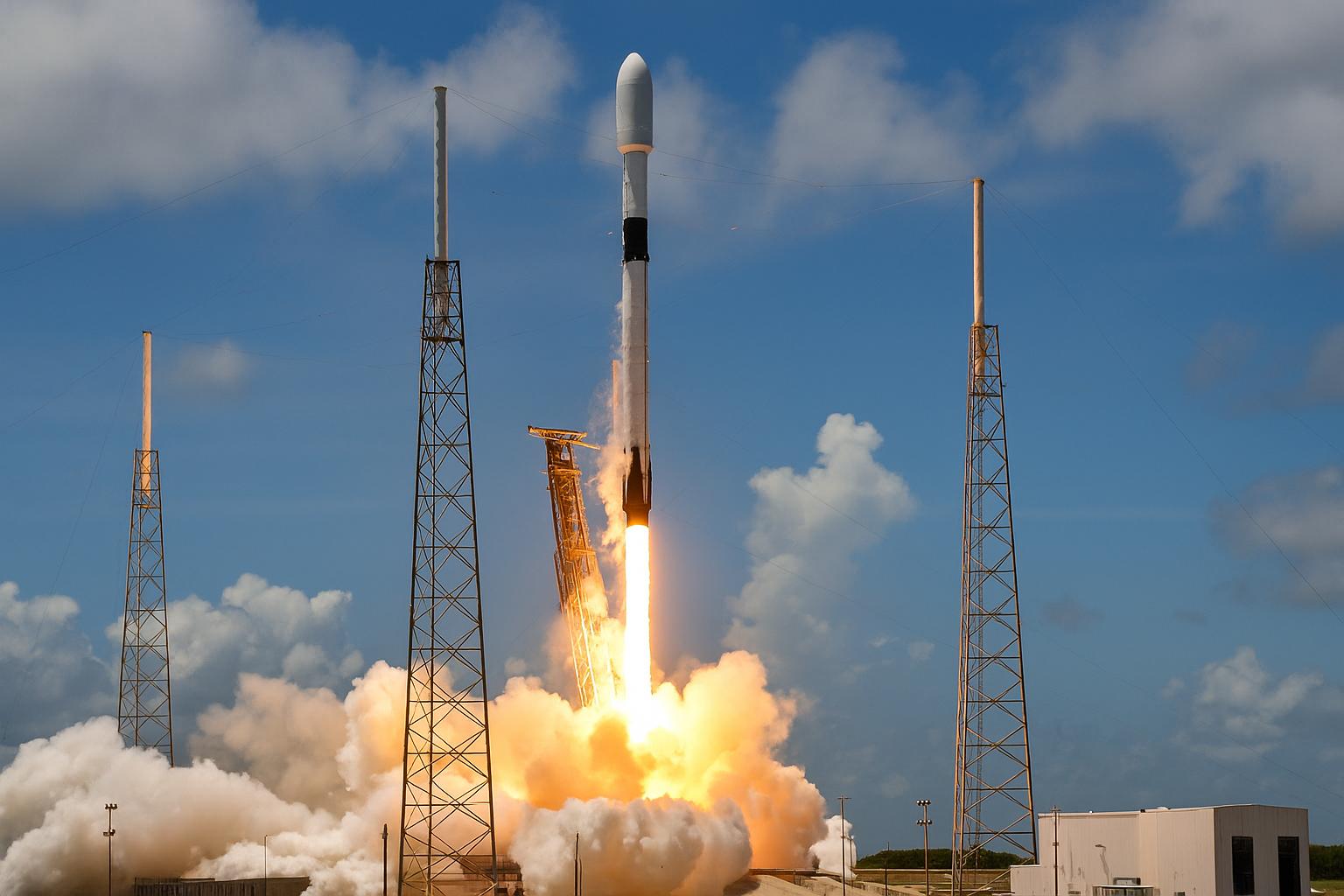
SpaceX has achieved a record-breaking milestone in 2025, marking one of the most prolific years in the history of spaceflight. The company’s unparalleled launch cadence, coupled with rapid rocket turnaround times, has redefined modern rocketry. With more than two months remaining in the year, SpaceX has already surpassed its 2024 total of 138 missions, setting a new benchmark for global orbital launches and solidifying its position as the dominant force in the commercial space sector.
SpaceX sets 2025 launch record with over 2,500 Starlink satellites
SpaceX has achieved a record-breaking milestone in 2025, marking one of the most prolific years in the history of spaceflight. The company’s unparalleled launch cadence, coupled with rapid rocket turnaround times, has redefined modern rocketry. With more than two months remaining in the year, SpaceX has already surpassed its 2024 total of 138 missions, setting a new benchmark for global orbital launches and solidifying its position as the dominant force in the commercial space sector.
Indian astronaut Shubhanshu Shukla begins return to Earth from ISS aboard Dragon capsule
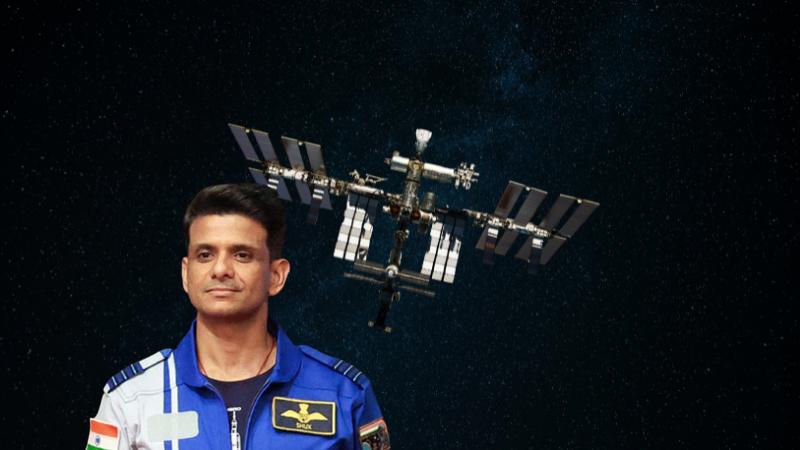
Indian astronaut Shubhanshu Shukla is set to return to Earth after a landmark mission aboard the International Space Station (ISS) as part of the Axiom-4 crew. The mission, which included extensive scientific research, marked several historic firsts for India. Shukla became the first Indian to visit the ISS and only the second Indian astronaut in space, following Wing Commander Rakesh Sharma's 1984 mission. His return, scheduled for July 14 via the Dragon spacecraft, is part of a well-
Indian astronaut Shubhanshu Shukla begins return to Earth from ISS aboard Dragon capsule
Indian astronaut Shubhanshu Shukla is set to return to Earth after a landmark mission aboard the International Space Station (ISS) as part of the Axiom-4 crew. The mission, which included extensive scientific research, marked several historic firsts for India. Shukla became the first Indian to visit the ISS and only the second Indian astronaut in space, following Wing Commander Rakesh Sharma's 1984 mission. His return, scheduled for July 14 via the Dragon spacecraft, is part of a well-
ISRO Successfully Tests 200T Semi-Cryogenic Engine, Boosting India's Future Space Missions
India's growing space capabilities took a decisive leap forward with the successful hot test of the Lox Kerosene 200T thrust semi-cryogenic engine by the Indian Space Research Organisation (ISRO). Conducted at the ISRO Propulsion Complex (IPRC) in Mahendragiri, Tamil Nadu, the test marks a pivotal advancement in India’s space propulsion technology and highlights ISRO's steady progress in developing next-generation launch systems. The newly tested engine i
ISRO Successfully Tests 200T Semi-Cryogenic Engine, Boosting India's Future Space Missions
India's growing space capabilities took a decisive leap forward with the successful hot test of the Lox Kerosene 200T thrust semi-cryogenic engine by the Indian Space Research Organisation (ISRO). Conducted at the ISRO Propulsion Complex (IPRC) in Mahendragiri, Tamil Nadu, the test marks a pivotal advancement in India’s space propulsion technology and highlights ISRO's steady progress in developing next-generation launch systems. The newly tested engine i
NASA’s LEXI Mission to Study Earth’s Magnetic Shield from the Moon
NASA is preparing to launch the Lunar Environment Heliospheric X-ray Imager (LEXI) to the moon to gather groundbreaking data on Earth’s magnetosphere. LEXI will capture high-resolution images of the magnetosphere's movements, offering crucial insights into how it reacts to solar wind and space weather conditions. This mission is designed to enhance our understanding of space weather, which impacts satellites, electronics, and infrastructure on Earth. The LEXI instrument wi
NASA’s LEXI Mission to Study Earth’s Magnetic Shield from the Moon
NASA is preparing to launch the Lunar Environment Heliospheric X-ray Imager (LEXI) to the moon to gather groundbreaking data on Earth’s magnetosphere. LEXI will capture high-resolution images of the magnetosphere's movements, offering crucial insights into how it reacts to solar wind and space weather conditions. This mission is designed to enhance our understanding of space weather, which impacts satellites, electronics, and infrastructure on Earth. The LEXI instrument wi