








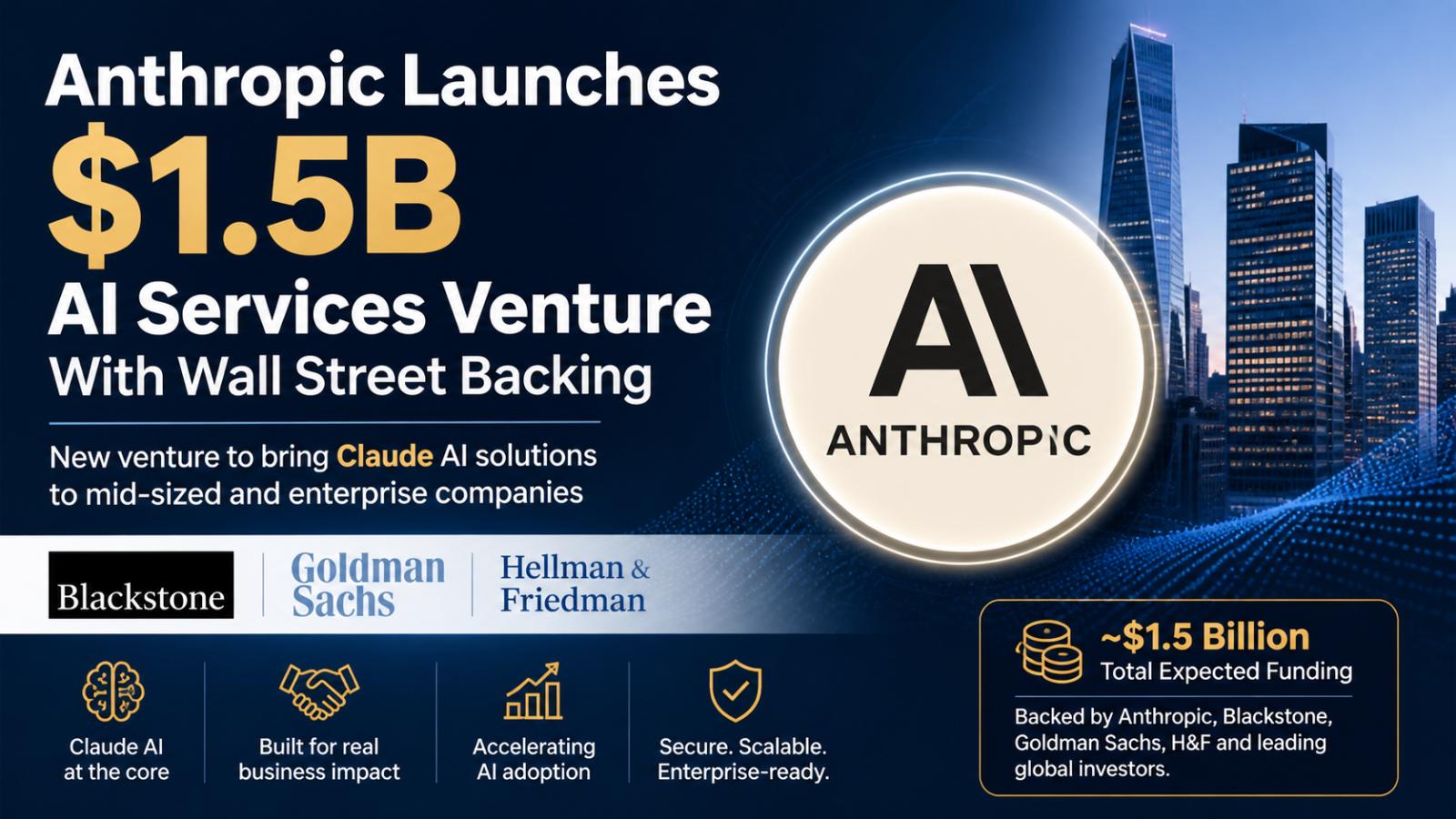
Anthropic Launches $1.5B Claude AI Venture With Wall Street Giants
Anthropic AI Services Venture Targets Enterprise Adoption Anthropic has launched a new AI services venture with Blackstone, Hellman & Friedman and Goldman Sachs to bring Claude deeper into business operations. The Wall Street-backed firm is designed to help mid-sized companies adopt enterprise AI faster, with reported funding expected to reach about $1.5 billion. Claude Moves Beyond Chatbots The new standalone company wil
Anthropic Launches $1.5B Claude AI Venture With Wall Street Giants
Anthropic AI Services Venture Targets Enterprise Adoption Anthropic has launched a new AI services venture with Blackstone, Hellman & Friedman and Goldman Sachs to bring Claude deeper into business operations. The Wall Street-backed firm is designed to help mid-sized companies adopt enterprise AI faster, with reported funding expected to reach about $1.5 billion. Claude Moves Beyond Chatbots The new standalone company wil

Trump administration to implement AI oversight, reversing earlier stance
The Trump administration is reversing its previous stance on artificial intelligence oversight, now planning to introduce government review procedures for AI models before they are released to the public. According to reports, the White House is considering an executive order that would establish a working group consisting of both tech executives and government officials to explore potential review procedures for new AI models. This marks a s
Trump administration to implement AI oversight, reversing earlier stance
The Trump administration is reversing its previous stance on artificial intelligence oversight, now planning to introduce government review procedures for AI models before they are released to the public. According to reports, the White House is considering an executive order that would establish a working group consisting of both tech executives and government officials to explore potential review procedures for new AI models. This marks a s

GLP-1 Weight Loss Drugs Lift Pharma Profits, But Deloitte Warns of Bubble Risk
GLP-1 Drugs Drive Pharma Growth GLP-1 weight loss drugs are powering a sharp rebound in pharma R&D returns, but analysts warn the boom may be creating a risky “bubble effect” across the sector. According to Deloitte’s latest pharma innovation analysis, R&D returns among the world’s top 20 drugmakers have climbed to 7%, driven largely by obesity and diabetes treatments such as GLP-1 drugs. Obesity Drugs Overtake Oncology
GLP-1 Weight Loss Drugs Lift Pharma Profits, But Deloitte Warns of Bubble Risk
GLP-1 Drugs Drive Pharma Growth GLP-1 weight loss drugs are powering a sharp rebound in pharma R&D returns, but analysts warn the boom may be creating a risky “bubble effect” across the sector. According to Deloitte’s latest pharma innovation analysis, R&D returns among the world’s top 20 drugmakers have climbed to 7%, driven largely by obesity and diabetes treatments such as GLP-1 drugs. Obesity Drugs Overtake Oncology

Modern Air Combat: F-35 Sensor Fusion Meets F-15IA Payload Strength
Modern air combat strategy increasingly relies on the complementary strengths of advanced fighter aircraft, particularly the combination of stealth capabilities and high payload capacity. The F-35 and F-15IA represent this dual approach, where each platform fulfills a distinct but interconnected role in complex operations. The F-35 is designed for stealth and precision, enabling it to operate deep within contested airspace while avoiding detection. Its ability to gather and process battlefield data in real time allows it to identify and track threats with high accuracy. This sensor fusion capability creates a comprehensive operational picture, which can be shared seamlessly with other aircraft to improve coordination and targeting efficiency. In contrast, the F-15IA is built for power and endurance. Often described as a high-capacity weapons platform, it can carry a significantly larger payload compared to stealth-focused aircraft. Once air defenses are identified and weakened, the F-15IA can engage multiple targets using a wide range of munitions, including larger weapons that are not compatible with stealth aircraft configurations. Its advanced radar system enhances its ability to detect and engage threats over extended distances. The combination of these aircraft also supports long-range missions. The F-15IA’s extended range and fuel capacity make it well-suited for operations requiring sustained flight over large distances. This allows it to conduct deep strike missions with fewer refueling requirements, complementing the F-35’s forward reconnaissance and targeting role. Operational efficiency is another key factor in this pairing. The F-15IA is designed for durability and rapid turnaround, enabling frequent sorties during extended engagements. Meanwhile, the F-35’s advanced systems provide critical intelligence that enhances the effectiveness of each mission. Together, they form a coordinated system that balances stealth, firepower, and operational flexibility in modern aerial warfare.
Modern Air Combat: F-35 Sensor Fusion Meets F-15IA Payload Strength
Modern air combat strategy increasingly relies on the complementary strengths of advanced fighter aircraft, particularly the combination of stealth capabilities and high payload capacity. The F-35 and F-15IA represent this dual approach, where each platform fulfills a distinct but interconnected role in complex operations. The F-35 is designed for stealth and precision, enabling it to operate deep within contested airspace while avoiding detection. Its ability to gather and process battlefield data in real time allows it to identify and track threats with high accuracy. This sensor fusion capability creates a comprehensive operational picture, which can be shared seamlessly with other aircraft to improve coordination and targeting efficiency. In contrast, the F-15IA is built for power and endurance. Often described as a high-capacity weapons platform, it can carry a significantly larger payload compared to stealth-focused aircraft. Once air defenses are identified and weakened, the F-15IA can engage multiple targets using a wide range of munitions, including larger weapons that are not compatible with stealth aircraft configurations. Its advanced radar system enhances its ability to detect and engage threats over extended distances. The combination of these aircraft also supports long-range missions. The F-15IA’s extended range and fuel capacity make it well-suited for operations requiring sustained flight over large distances. This allows it to conduct deep strike missions with fewer refueling requirements, complementing the F-35’s forward reconnaissance and targeting role. Operational efficiency is another key factor in this pairing. The F-15IA is designed for durability and rapid turnaround, enabling frequent sorties during extended engagements. Meanwhile, the F-35’s advanced systems provide critical intelligence that enhances the effectiveness of each mission. Together, they form a coordinated system that balances stealth, firepower, and operational flexibility in modern aerial warfare.

The Cube Chicago: Inside the High-Tech Gaming Experience Opening This June
Chicago is about to level up its entertainment scene—and not in a small way. Inspired by the hit TV show The Cube, a real-life interactive gaming arena is opening its first-ever U.S. location this June. Called The Cube, this high-t
The Cube Chicago: Inside the High-Tech Gaming Experience Opening This June
Chicago is about to level up its entertainment scene—and not in a small way. Inspired by the hit TV show The Cube, a real-life interactive gaming arena is opening its first-ever U.S. location this June. Called The Cube, this high-t

India Tests Emergency Cell Broadcast Alert System With Loud Phone Sirens
In a major step toward enhancing disaster preparedness, the Indian government is carrying out a nationwide simulation of its Cell Broadcast Alert System. Managed by the National Disaster Management Authority, the system is designed to send instant emergency notifications directly to mobile phones, even if they are on silent mode or set to do not disturb. This ensures that critical alerts can reach people without delay, potentially saving lives during natural or man-made disasters. C
India Tests Emergency Cell Broadcast Alert System With Loud Phone Sirens
In a major step toward enhancing disaster preparedness, the Indian government is carrying out a nationwide simulation of its Cell Broadcast Alert System. Managed by the National Disaster Management Authority, the system is designed to send instant emergency notifications directly to mobile phones, even if they are on silent mode or set to do not disturb. This ensures that critical alerts can reach people without delay, potentially saving lives during natural or man-made disasters. C
Could Alphabet overtake Nvidia as the most valuable company? Yes, analysts say it may happen soon
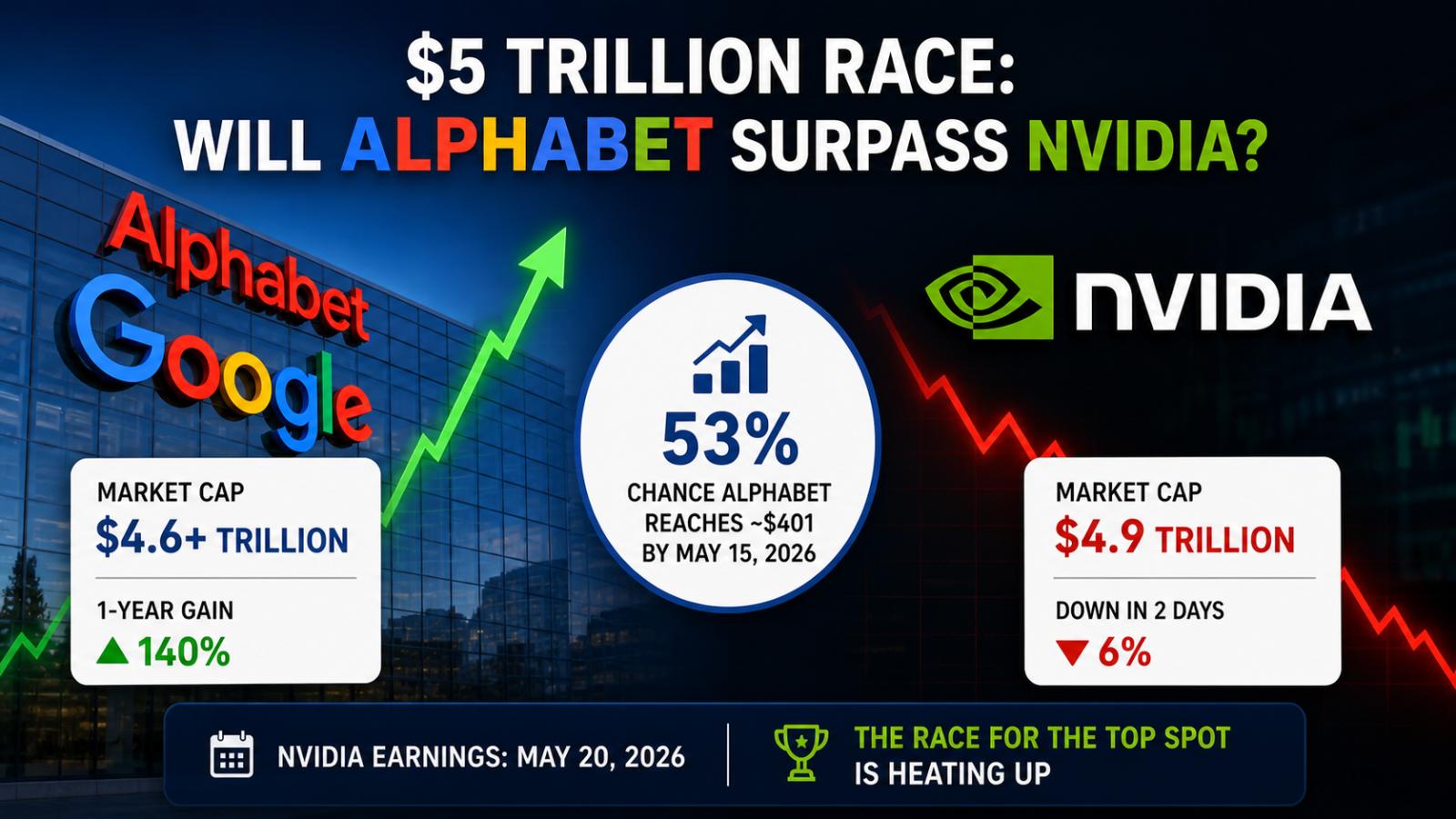
Shares of Alphabet are approaching a historic milestone, with the company nearing a $5 trillion valuation and potentially overtaking Nvidia as the world’s most valuable publicly traded firm. The surge comes after a strong rally in Alphabet’s stock, which climbed 10% on Thursday, extending its one-year gain to approximately 140% and pushing its market capitalization beyond $4.6 trillion. Strong earnings and cloud growth drive Alphabet’s surge The momentum follows a better-than-expected earnings report released on Wednesday, in which Alphabet exceeded analyst forecasts. A key highlight was its Google Cloud division, which generated more than $20 billion in revenue, reinforcing investor confidence in the company’s position within the artificial intelligence and cloud computing sectors. This performance has strengthened Alphabet’s standing among major AI-focused companies and boosted overall investor sentiment. Nvidia faces pressure amid partner concerns and stock decline Meanwhile, Nvidia, currently valued at under $4.9 trillion, has seen its stock decline by more than 6% over two trading sessions. The drop follows a report from The Wall Street Journal indicating that business partner OpenAI missed internal revenue and growth projections. The development has raised concerns about near-term demand and growth expectations in the AI ecosystem, impacting Nvidia’s market performance. Options market signals a potential shift in market leadership Options trading data suggests that Alphabet could soon close the valuation gap. For Alphabet to match Nvidia’s current market capitalization, its stock would need to rise by roughly 4%, reaching about $401 per share. Based on call option premiums around that level, traders estimate a 53% probability that Alphabet could reach that price before Thursday, May 15, 2026. Further projections indicate about a 30% chance that Alphabet will close above $400 on Friday, May 22, 2026, shortly after Nvidia’s upcoming earnings report scheduled for Tuesday, May 20, 2026. Notably, Nvidia’s stock has declined after four of its last five earnings announcements, adding uncertainty to its near-term outlook. Historical context as Alphabet eyes a return to the top Alphabet has previously held the top position among global companies, most recently in 2016 when it briefly surpassed Apple. A renewed rise to the top would mark a significant shift in market leadership, driven largely by advancements in artificial intelligence and cloud infrastructure. As both companies approach key earnings milestones, investors are closely watching whether Alphabet can capitalize on its momentum and reclaim the top spot in global market valuation. Alphabet has previously held the top position among global companies, most recently in 2016 when it briefly surpassed Apple. A renewed rise to the top would mark a significant shift in market leadership, driven largely by advancements in artificial intelligence and cloud infrastructure. As both companies approach key earnings milestones, investors are closely watching whether Alphabet can capitalize on its momentum and reclaim the top spot in global market valuation.
Could Alphabet overtake Nvidia as the most valuable company? Yes, analysts say it may happen soon
Shares of Alphabet are approaching a historic milestone, with the company nearing a $5 trillion valuation and potentially overtaking Nvidia as the world’s most valuable publicly traded firm. The surge comes after a strong rally in Alphabet’s stock, which climbed 10% on Thursday, extending its one-year gain to approximately 140% and pushing its market capitalization beyond $4.6 trillion. Strong earnings and cloud growth drive Alphabet’s surge The momentum follows a better-than-expected earnings report released on Wednesday, in which Alphabet exceeded analyst forecasts. A key highlight was its Google Cloud division, which generated more than $20 billion in revenue, reinforcing investor confidence in the company’s position within the artificial intelligence and cloud computing sectors. This performance has strengthened Alphabet’s standing among major AI-focused companies and boosted overall investor sentiment. Nvidia faces pressure amid partner concerns and stock decline Meanwhile, Nvidia, currently valued at under $4.9 trillion, has seen its stock decline by more than 6% over two trading sessions. The drop follows a report from The Wall Street Journal indicating that business partner OpenAI missed internal revenue and growth projections. The development has raised concerns about near-term demand and growth expectations in the AI ecosystem, impacting Nvidia’s market performance. Options market signals a potential shift in market leadership Options trading data suggests that Alphabet could soon close the valuation gap. For Alphabet to match Nvidia’s current market capitalization, its stock would need to rise by roughly 4%, reaching about $401 per share. Based on call option premiums around that level, traders estimate a 53% probability that Alphabet could reach that price before Thursday, May 15, 2026. Further projections indicate about a 30% chance that Alphabet will close above $400 on Friday, May 22, 2026, shortly after Nvidia’s upcoming earnings report scheduled for Tuesday, May 20, 2026. Notably, Nvidia’s stock has declined after four of its last five earnings announcements, adding uncertainty to its near-term outlook. Historical context as Alphabet eyes a return to the top Alphabet has previously held the top position among global companies, most recently in 2016 when it briefly surpassed Apple. A renewed rise to the top would mark a significant shift in market leadership, driven largely by advancements in artificial intelligence and cloud infrastructure. As both companies approach key earnings milestones, investors are closely watching whether Alphabet can capitalize on its momentum and reclaim the top spot in global market valuation. Alphabet has previously held the top position among global companies, most recently in 2016 when it briefly surpassed Apple. A renewed rise to the top would mark a significant shift in market leadership, driven largely by advancements in artificial intelligence and cloud infrastructure. As both companies approach key earnings milestones, investors are closely watching whether Alphabet can capitalize on its momentum and reclaim the top spot in global market valuation.

Pakistan commissions first Hangor-class submarine built in China
Pakistan submarine induction marks major naval boost Pakistan submarine induction marked a major milestone as the country commissioned its first Hangor-class submarine built in China. The ceremony was held in Sanya and attended by President Asif Ali Zardari and Naval Chief Admiral Naveed Ashraf. This move highlights strong China Pakistan defence cooperation and signals a major expansion in naval fleet capacity.
Pakistan commissions first Hangor-class submarine built in China
Pakistan submarine induction marks major naval boost Pakistan submarine induction marked a major milestone as the country commissioned its first Hangor-class submarine built in China. The ceremony was held in Sanya and attended by President Asif Ali Zardari and Naval Chief Admiral Naveed Ashraf. This move highlights strong China Pakistan defence cooperation and signals a major expansion in naval fleet capacity.
AI spending surge could top $1 trillion by 2027, analysts say
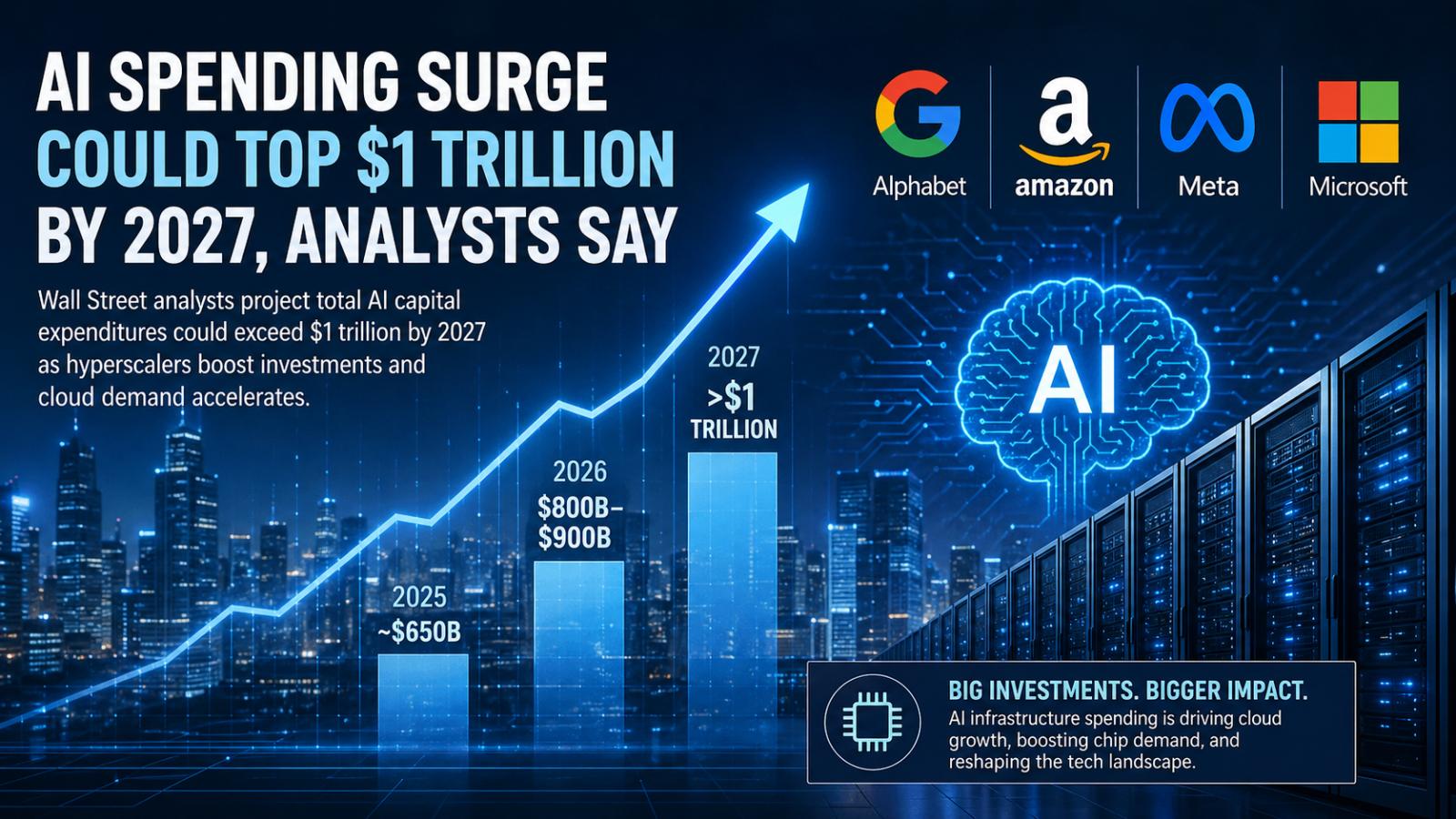
Wall Street analysts project AI spending could exceed $1 trillion by 2027 as major tech firms boost investments. Strong cloud demand and rising revenues support growth, though investor concerns remain over returns and rising infrastructure costs AI spending surge could top $1 trillion by 2027, analysts say is increasingly shaping expectations across the technology sector, as Wall Street analysts project unprecedented capital expenditures driven by artificial intelligence demand. Following recent tech earnings announcements on Wednesday, analysts at firms including Evercore and Bank of America estimate total AI-related capital spending could surpass $1 trillion by 2027, with 2026 projections already rising to between $800 billion and $900 billion. The surge reflects aggressive investment strategies by major technology companies, including Alphabet, Amazon, Meta, and Microsoft. According to analyst estimates, projected capital spending for 2026 includes approximately $200 billion from Amazon, $190 billion from Microsoft, $185 billion from Alphabet, and $135 billion from Meta, reflecting broad increases across the sector. Executives continue to signal confidence in long-term AI investments despite investor concerns about the scale of spending. Amazon CEO Andy Jassy emphasized the company’s commitment to infrastructure expansion, citing strong long-term returns. Similarly, Alphabet reported significant growth in its cloud segment, with revenue increasing sharply year over year, reinforcing expectations that AI-driven services are becoming a major revenue driver. Analysts note that while capital expenditures continue to rise, early signs of return on investment are emerging. Strong cloud demand, expanding contract backlogs, and increasing enterprise adoption of AI tools are contributing to revenue growth. Alphabet, in particular, has seen substantial backlog expansion tied to its cloud platform, with a large portion expected to convert into revenue over the next two years. However, not all companies are receiving equal investor confidence. Meta’s increased spending plans have raised concerns about near-term returns, particularly as its free cash flow has declined significantly compared to the previous year. CEO Mark Zuckerberg acknowledged higher infrastructure costs, including rising component prices, while maintaining confidence in the long-term value of AI investments. The rapid expansion of AI infrastructure is also benefiting semiconductor manufacturers and hardware suppliers. Companies such as Intel are seeing increased demand as AI workloads require a broader range of computing hardware beyond graphics processors. Analysts highlight growing demand for specialized chips and custom silicon solutions, suggesting that AI development could drive sustained growth across the semiconductor industry. Overall, analysts expect improving revenue and cash flow trends across the sector by 2026, supporting continued investment. While skepticism remains about the pace and scale of spending, the combination of strong demand, expanding cloud services, and technological advancements indicates that the AI-driven capital expenditure cycle is likely to continue shaping the global technology landscape.
AI spending surge could top $1 trillion by 2027, analysts say
Wall Street analysts project AI spending could exceed $1 trillion by 2027 as major tech firms boost investments. Strong cloud demand and rising revenues support growth, though investor concerns remain over returns and rising infrastructure costs AI spending surge could top $1 trillion by 2027, analysts say is increasingly shaping expectations across the technology sector, as Wall Street analysts project unprecedented capital expenditures driven by artificial intelligence demand. Following recent tech earnings announcements on Wednesday, analysts at firms including Evercore and Bank of America estimate total AI-related capital spending could surpass $1 trillion by 2027, with 2026 projections already rising to between $800 billion and $900 billion. The surge reflects aggressive investment strategies by major technology companies, including Alphabet, Amazon, Meta, and Microsoft. According to analyst estimates, projected capital spending for 2026 includes approximately $200 billion from Amazon, $190 billion from Microsoft, $185 billion from Alphabet, and $135 billion from Meta, reflecting broad increases across the sector. Executives continue to signal confidence in long-term AI investments despite investor concerns about the scale of spending. Amazon CEO Andy Jassy emphasized the company’s commitment to infrastructure expansion, citing strong long-term returns. Similarly, Alphabet reported significant growth in its cloud segment, with revenue increasing sharply year over year, reinforcing expectations that AI-driven services are becoming a major revenue driver. Analysts note that while capital expenditures continue to rise, early signs of return on investment are emerging. Strong cloud demand, expanding contract backlogs, and increasing enterprise adoption of AI tools are contributing to revenue growth. Alphabet, in particular, has seen substantial backlog expansion tied to its cloud platform, with a large portion expected to convert into revenue over the next two years. However, not all companies are receiving equal investor confidence. Meta’s increased spending plans have raised concerns about near-term returns, particularly as its free cash flow has declined significantly compared to the previous year. CEO Mark Zuckerberg acknowledged higher infrastructure costs, including rising component prices, while maintaining confidence in the long-term value of AI investments. The rapid expansion of AI infrastructure is also benefiting semiconductor manufacturers and hardware suppliers. Companies such as Intel are seeing increased demand as AI workloads require a broader range of computing hardware beyond graphics processors. Analysts highlight growing demand for specialized chips and custom silicon solutions, suggesting that AI development could drive sustained growth across the semiconductor industry. Overall, analysts expect improving revenue and cash flow trends across the sector by 2026, supporting continued investment. While skepticism remains about the pace and scale of spending, the combination of strong demand, expanding cloud services, and technological advancements indicates that the AI-driven capital expenditure cycle is likely to continue shaping the global technology landscape.

What do Apple options trades reveal? Mixed sentiment ahead of earnings
Apple’s stock may have remained largely flat over the past six months, but activity in the options market suggests traders are anticipating significant movement following its latest earnings report. Implied volatility points to a potential 3.5% swing in either direction, notably higher than the average 1.8% move seen after the company’s previous four quarterly earnings announcements. Options pricing reflects heightened expectations The increase in im
What do Apple options trades reveal? Mixed sentiment ahead of earnings
Apple’s stock may have remained largely flat over the past six months, but activity in the options market suggests traders are anticipating significant movement following its latest earnings report. Implied volatility points to a potential 3.5% swing in either direction, notably higher than the average 1.8% move seen after the company’s previous four quarterly earnings announcements. Options pricing reflects heightened expectations The increase in im
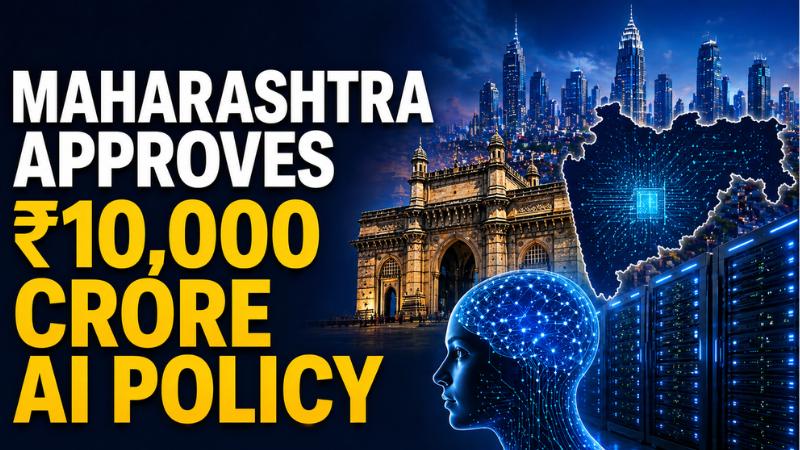
₹10,000 Cr AI Push: Maharashtra Targets Startups, Jobs And Tech Growth
Maharashtra has approved a ₹10,000 crore AI policy to build advanced infrastructure, boost startups, create jobs, and position the state as a leader in ethical artificial intelligence. The Maharashtra government has approved a comprehensive Artificial Intelligence (AI) policy with a proposed investment of ₹10,000 crore, marking a major push toward building advanced digital infrastructure in the state. The policy, cleared on Wednesday, aims to establish 6 AI Exc
₹10,000 Cr AI Push: Maharashtra Targets Startups, Jobs And Tech Growth
Maharashtra has approved a ₹10,000 crore AI policy to build advanced infrastructure, boost startups, create jobs, and position the state as a leader in ethical artificial intelligence. The Maharashtra government has approved a comprehensive Artificial Intelligence (AI) policy with a proposed investment of ₹10,000 crore, marking a major push toward building advanced digital infrastructure in the state. The policy, cleared on Wednesday, aims to establish 6 AI Exc

What is PayPal’s new structure? Venmo becomes standalone segment
PayPal’s Venmo spinoff signals strategic shift to boost growth PayPal’s Venmo spinoff signals strategic shift to boost growth as CEO Enrique Lores informed managers this week that the company is reorganizing its reporting structure, separating Venmo into its own standalone business segment. The move reflects a broader effort to streamline operations and sharpen focus across its fintech portfolio. New reporting structure creates three distinct business units Under the restructuring plan, Venmo will operate independently, allowing clearer performance tracking and potentially positioning it for a future sale. Two additional segments will be formed: a PayPal-branded unit serving merchants and consumers, and a payment services division that includes Braintree along with crypto-related operations. The company is also reportedly seeking a digital banking executive to lead the newly independent Venmo unit. Leadership transition and competitive pressures Lores, who previously led HP Inc. and assumed leadership of PayPal in March, is implementing these changes as the company faces mounting competition from Apple, Google, and Stripe in digital payments. He succeeded Alex Chriss, whose tenure saw a steep decline in PayPal’s stock value following its pandemic-era peak. Investor interest and restructuring implications The company’s declining valuation has drawn attention from potential buyers, including reported interest from Stripe in acquiring parts or all of the business. PayPal has also engaged financial advisers to prepare for possible takeover attempts or activist investor campaigns. Following reports of the restructuring, PayPal shares rose by approximately 3%. Workforce uncertainty and executive departures The restructuring comes amid uncertainty over potential workforce reductions. Earlier in 2026, managers had been tasked with planning a 15% reduction in headcount, though those plans remain unresolved after the leadership transition. At the same time, key executives including Diego Scotti and Michelle Gill are departing as their divisions are restructured or dissolved. PayPal is also establishing a new artificial intelligence transformation group led by Anshu Bhardwaj, formerly of Walmart, and creating a financial services unit under Scott Young of Goldman Sachs. The changes highlight the company’s push to modernize operations and regain momentum in a rapidly evolving digital payments market.
What is PayPal’s new structure? Venmo becomes standalone segment
PayPal’s Venmo spinoff signals strategic shift to boost growth PayPal’s Venmo spinoff signals strategic shift to boost growth as CEO Enrique Lores informed managers this week that the company is reorganizing its reporting structure, separating Venmo into its own standalone business segment. The move reflects a broader effort to streamline operations and sharpen focus across its fintech portfolio. New reporting structure creates three distinct business units Under the restructuring plan, Venmo will operate independently, allowing clearer performance tracking and potentially positioning it for a future sale. Two additional segments will be formed: a PayPal-branded unit serving merchants and consumers, and a payment services division that includes Braintree along with crypto-related operations. The company is also reportedly seeking a digital banking executive to lead the newly independent Venmo unit. Leadership transition and competitive pressures Lores, who previously led HP Inc. and assumed leadership of PayPal in March, is implementing these changes as the company faces mounting competition from Apple, Google, and Stripe in digital payments. He succeeded Alex Chriss, whose tenure saw a steep decline in PayPal’s stock value following its pandemic-era peak. Investor interest and restructuring implications The company’s declining valuation has drawn attention from potential buyers, including reported interest from Stripe in acquiring parts or all of the business. PayPal has also engaged financial advisers to prepare for possible takeover attempts or activist investor campaigns. Following reports of the restructuring, PayPal shares rose by approximately 3%. Workforce uncertainty and executive departures The restructuring comes amid uncertainty over potential workforce reductions. Earlier in 2026, managers had been tasked with planning a 15% reduction in headcount, though those plans remain unresolved after the leadership transition. At the same time, key executives including Diego Scotti and Michelle Gill are departing as their divisions are restructured or dissolved. PayPal is also establishing a new artificial intelligence transformation group led by Anshu Bhardwaj, formerly of Walmart, and creating a financial services unit under Scott Young of Goldman Sachs. The changes highlight the company’s push to modernize operations and regain momentum in a rapidly evolving digital payments market.

CurrentUndo.com: Kerala’s Smart Solution For Real-Time Electricity Outage Tracking
A Kerala-based techie has developed an innovative digital solution to help residents stay informed about power outages in real time. The platform, currentundo.com, has quickly gained attention for its ability to track live outages under the Kerala State Electricity Board, offering a simple and accessible way for users to check electricity disruptions in their area. The tool was introduced as power cuts continue to be a common concern in several parts of Kerala, often leaving residen
CurrentUndo.com: Kerala’s Smart Solution For Real-Time Electricity Outage Tracking
A Kerala-based techie has developed an innovative digital solution to help residents stay informed about power outages in real time. The platform, currentundo.com, has quickly gained attention for its ability to track live outages under the Kerala State Electricity Board, offering a simple and accessible way for users to check electricity disruptions in their area. The tool was introduced as power cuts continue to be a common concern in several parts of Kerala, often leaving residen

What is Manus AI and why did China block its sale to Meta? Strategic concerns explained
What is Manus AI and why did China block its sale to Meta? Strategic concerns explained Manus AI, a fast-rising artificial intelligence startup, has become the center of a geopolitical standoff after Chinese regulators blocked its proposed acquisition by Meta, underscoring intensifying competition in the global AI race between the United States and China. China intervenes to halt high-value AI acquisition deal Chinese authorities, led by the
What is Manus AI and why did China block its sale to Meta? Strategic concerns explained
What is Manus AI and why did China block its sale to Meta? Strategic concerns explained Manus AI, a fast-rising artificial intelligence startup, has become the center of a geopolitical standoff after Chinese regulators blocked its proposed acquisition by Meta, underscoring intensifying competition in the global AI race between the United States and China. China intervenes to halt high-value AI acquisition deal Chinese authorities, led by the
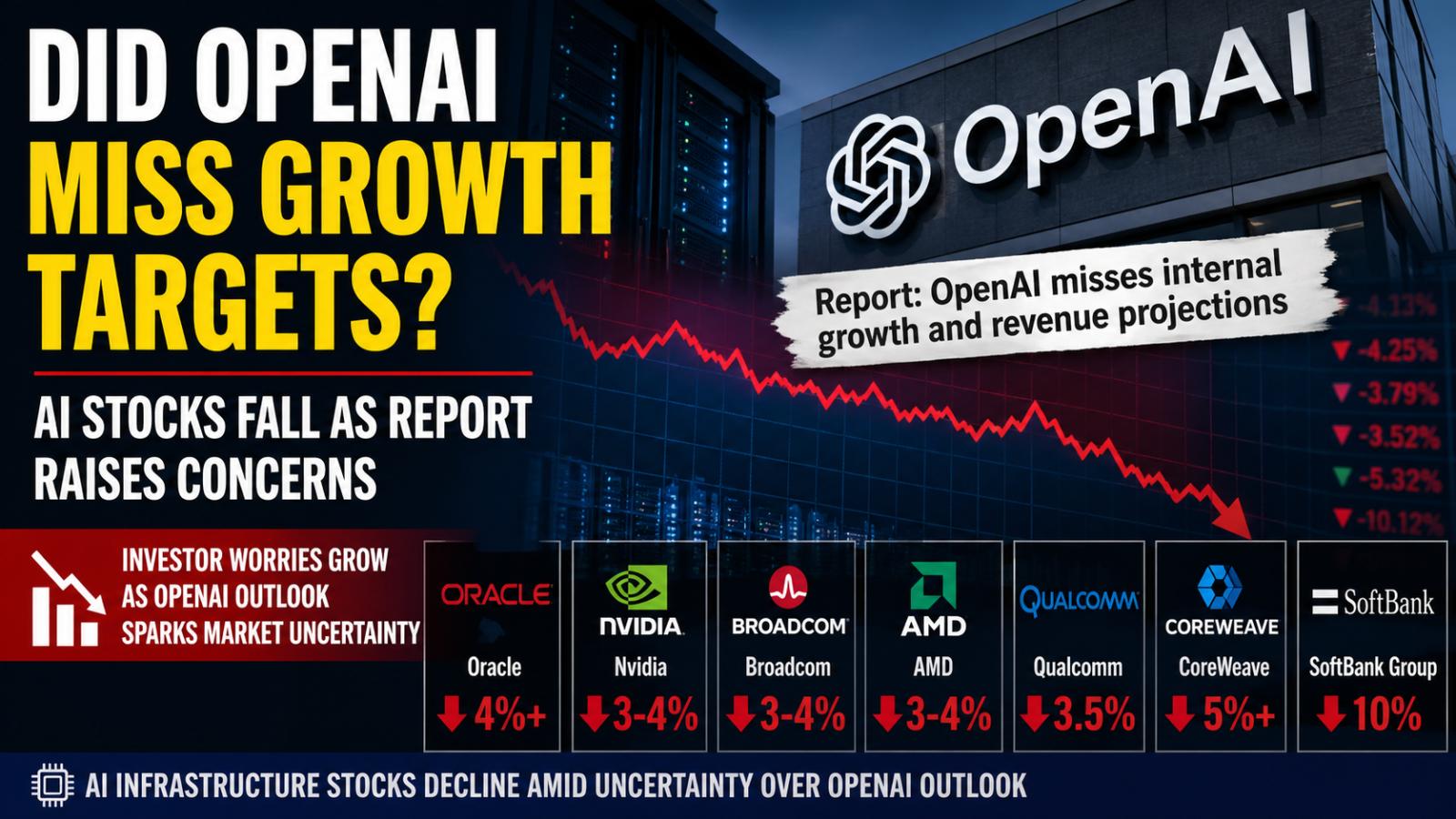
Did OpenAI miss growth targets? AI stocks fall as report raises concerns
Market reaction to OpenAI growth concerns Did OpenAI miss growth targets? AI stocks fall as report raises concerns, triggering a broad pullback across companies tied to artificial intelligence infrastructure on Tuesday. Shares of Oracle fell more than 4% amid its major partnership to provide computing power for OpenAI’s operations. Chipmakers including Nvidia, Broadcom, and Advanced Micro Devices declined between roughly 3% and 4%, while Qualcomm dropped 3.5%. Global impact reflects investor sensitivity Losses extended beyond the United States, with SoftBank Group, a major OpenAI investor, falling about 10% in Asian markets. The declines followed a report that OpenAI has not met internal projections for user growth and revenue, raising concerns about its ability to sustain the heavy spending required for data center expansion and long-term compute agreements. OpenAI response and financial outlook debate OpenAI pushed back against the claims, stating it remains aligned on expanding compute capacity. The company, which launched ChatGPT in 2022 and helped drive the current AI boom, recently secured a $122 billion funding round at an $852 billion valuation. However, internal discussions reportedly highlighted risks if revenue growth does not accelerate as expected. Competitive pressures reshape AI landscape At the same time, competition in enterprise AI continues to intensify. Rivals such as Anthropic and Google’s Gemini models are gaining traction, prompting companies to diversify across multiple providers. Some analysts interpret OpenAI’s slower growth as a shift in market share rather than a broader slowdown in AI adoption. Investors weigh long-term implications Despite the market reaction, several investors remain cautious about drawing firm conclusions. Industry experts note that forecasting revenue and capital expenditures in the rapidly evolving AI sector remains highly uncertain. While short-term volatility has affected tech stocks, many view the report as part of a broader adjustment rather than a fundamental change in the long-term trajectory of AI infrastructure spending.
Did OpenAI miss growth targets? AI stocks fall as report raises concerns
Market reaction to OpenAI growth concerns Did OpenAI miss growth targets? AI stocks fall as report raises concerns, triggering a broad pullback across companies tied to artificial intelligence infrastructure on Tuesday. Shares of Oracle fell more than 4% amid its major partnership to provide computing power for OpenAI’s operations. Chipmakers including Nvidia, Broadcom, and Advanced Micro Devices declined between roughly 3% and 4%, while Qualcomm dropped 3.5%. Global impact reflects investor sensitivity Losses extended beyond the United States, with SoftBank Group, a major OpenAI investor, falling about 10% in Asian markets. The declines followed a report that OpenAI has not met internal projections for user growth and revenue, raising concerns about its ability to sustain the heavy spending required for data center expansion and long-term compute agreements. OpenAI response and financial outlook debate OpenAI pushed back against the claims, stating it remains aligned on expanding compute capacity. The company, which launched ChatGPT in 2022 and helped drive the current AI boom, recently secured a $122 billion funding round at an $852 billion valuation. However, internal discussions reportedly highlighted risks if revenue growth does not accelerate as expected. Competitive pressures reshape AI landscape At the same time, competition in enterprise AI continues to intensify. Rivals such as Anthropic and Google’s Gemini models are gaining traction, prompting companies to diversify across multiple providers. Some analysts interpret OpenAI’s slower growth as a shift in market share rather than a broader slowdown in AI adoption. Investors weigh long-term implications Despite the market reaction, several investors remain cautious about drawing firm conclusions. Industry experts note that forecasting revenue and capital expenditures in the rapidly evolving AI sector remains highly uncertain. While short-term volatility has affected tech stocks, many view the report as part of a broader adjustment rather than a fundamental change in the long-term trajectory of AI infrastructure spending.

Google AI Hub Groundbreaking in Vizag Marks Major Tech Boost for Andhra Pradesh
April 28, 2026 | 9:37 AM | Visakhapatnam — Google AI Hub foundation ceremony held at Tarluvada The Andhra Pradesh government is taking a significant step toward strengthening its position in the technology and artificial intelligence space with the foundation stone laying ceremony of the Google Cloud India AI Hub in Tarluvada, Visakhapatnam district. The event, which
Google AI Hub Groundbreaking in Vizag Marks Major Tech Boost for Andhra Pradesh
April 28, 2026 | 9:37 AM | Visakhapatnam — Google AI Hub foundation ceremony held at Tarluvada The Andhra Pradesh government is taking a significant step toward strengthening its position in the technology and artificial intelligence space with the foundation stone laying ceremony of the Google Cloud India AI Hub in Tarluvada, Visakhapatnam district. The event, which

Are you visiting India? Digi Yatra could change your airport experience
Digi Yatra could change your airport experience India’s push toward seamless air travel is being led by Digi Yatra, a government-backed initiative that uses facial recognition to streamline passenger movement through airports. Developed under the Ministry of Civil Aviation, the system allows travelers to bypass repeated document checks by using biometric verification instead of physical boarding passes and identification. How Digi Yatra is transforming airport travel in India Digi Yatra enables passengers to create a digital identity through the Digi Yatra App by uploading ID credentials and flight details before arriving at the airport. Once enrolled, travelers can pass through entry gates, security checkpoints, and boarding areas using facial scans. The system is currently operational at major hubs such as Kempegowda International Airport and Indira Gandhi International Airport, with plans for wider adoption across the country. The initiative is voluntary and emphasizes speed, convenience, and reduced physical contact in crowded terminals. Biometric travel systems already in use across US airports In the United States, similar biometric technologies are already deployed, primarily for international travel. Agencies such as the Transportation Security Administration and U.S. Customs and Border Protection operate facial recognition systems that match a traveler’s live image with passport or visa databases. These systems are commonly used at immigration checkpoints and boarding gates for international flights, and in some cases at security screening through programs like TSA’s touchless identity verification. Unlike Digi Yatra, enrollment is not typically handled through a consumer-facing app, and the process is largely managed through government databases. Key differences between Digi Yatra and US biometric systems Feature Digi Yatra (India) United States Systems Control User-controlled via app Government-controlled databases Enrollment Voluntary, app-based Mostly automatic or backend Primary Use Domestic travel International travel focus Documents Replaced by facial ID Linked to passport/visa User Role Active participation required Passive participation Data Handling User uploads data Govt retrieves from records Experience Fully contactless journey Partial contactless process What global travelers should know about evolving airport technology As airports worldwide adopt digital identity solutions, the contrast between India’s Digi Yatra and US biometric programs highlights broader questions around privacy, convenience, and control. For US-based travelers heading to India, understanding how Digi Yatra works can help streamline the airport experience, while also offering insight into how biometric travel technology may continue to evolve globally.
Are you visiting India? Digi Yatra could change your airport experience
Digi Yatra could change your airport experience India’s push toward seamless air travel is being led by Digi Yatra, a government-backed initiative that uses facial recognition to streamline passenger movement through airports. Developed under the Ministry of Civil Aviation, the system allows travelers to bypass repeated document checks by using biometric verification instead of physical boarding passes and identification. How Digi Yatra is transforming airport travel in India Digi Yatra enables passengers to create a digital identity through the Digi Yatra App by uploading ID credentials and flight details before arriving at the airport. Once enrolled, travelers can pass through entry gates, security checkpoints, and boarding areas using facial scans. The system is currently operational at major hubs such as Kempegowda International Airport and Indira Gandhi International Airport, with plans for wider adoption across the country. The initiative is voluntary and emphasizes speed, convenience, and reduced physical contact in crowded terminals. Biometric travel systems already in use across US airports In the United States, similar biometric technologies are already deployed, primarily for international travel. Agencies such as the Transportation Security Administration and U.S. Customs and Border Protection operate facial recognition systems that match a traveler’s live image with passport or visa databases. These systems are commonly used at immigration checkpoints and boarding gates for international flights, and in some cases at security screening through programs like TSA’s touchless identity verification. Unlike Digi Yatra, enrollment is not typically handled through a consumer-facing app, and the process is largely managed through government databases. Key differences between Digi Yatra and US biometric systems Feature Digi Yatra (India) United States Systems Control User-controlled via app Government-controlled databases Enrollment Voluntary, app-based Mostly automatic or backend Primary Use Domestic travel International travel focus Documents Replaced by facial ID Linked to passport/visa User Role Active participation required Passive participation Data Handling User uploads data Govt retrieves from records Experience Fully contactless journey Partial contactless process What global travelers should know about evolving airport technology As airports worldwide adopt digital identity solutions, the contrast between India’s Digi Yatra and US biometric programs highlights broader questions around privacy, convenience, and control. For US-based travelers heading to India, understanding how Digi Yatra works can help streamline the airport experience, while also offering insight into how biometric travel technology may continue to evolve globally.
What is Elon Musk alleging against OpenAI? Lawsuit claims mission betrayal
The escalating legal dispute between Elon Musk and Sam Altman has entered a critical discovery phase, intensifying scrutiny over the direction of OpenAI. Musk’s lawsuit, initially filed in early 2024 and recent
What is Elon Musk alleging against OpenAI? Lawsuit claims mission betrayal
The escalating legal dispute between Elon Musk and Sam Altman has entered a critical discovery phase, intensifying scrutiny over the direction of OpenAI. Musk’s lawsuit, initially filed in early 2024 and recent

Meta faces setback as China cancels $2B Manus AI startup acquisition
China’s decision to block the acquisition of Manus AI by Meta marks a major shift in global technology deals, as authorities cited concerns over technology transfer and national interests. The country’s top economic planner, the National Development and Reform Commission, ordered the cancellation of th
Meta faces setback as China cancels $2B Manus AI startup acquisition
China’s decision to block the acquisition of Manus AI by Meta marks a major shift in global technology deals, as authorities cited concerns over technology transfer and national interests. The country’s top economic planner, the National Development and Reform Commission, ordered the cancellation of th

What happened at the London Marathon? Sabastian Sawe breaks two-hour barrier with historic win
What happened at the London Marathon? Sabastian Sawe breaks two-hour barrier with historic win marked a defining moment in endurance running as the Kenyan athlete became the first person to complete a competitive marathon in under two hours. The milestone was achieved during the London Marathon on Sunday, April 26, 2026, under ideal weather conditions, reshaping the limits of human performance in athletics. Historic performance redefines marathon limits Sawe crossed the finish line near Buckingham Palace in 1:59:30, finishing just 11 seconds ahead of Ethiopia’s Yomif Kejelcha, who was competing in his first marathon. Uganda’s Jacob Kiplimo secured third place, with all three runners surpassing the previous world record of 2:00:35 set by Kelvin Kiptum in 2023. The achievement stands apart from Eliud Kipchoge’s 2019 sub-two-hour run, which took place under controlled, non-competitive conditions. Sawe’s record is the first to occur in an official race setting, making it a landmark in marathon history. Women’s race also sees record-breaking performance In the women’s competition, Ethiopia’s Tigst Assefa set a new world record with a time of 2:15:41, surpassing her own previous mark established at the same event. Her performance further highlighted the accelerating pace of elite marathon competition. Role of advanced running technology Recent advances in running shoe technology have played a significant role in these performances. Both Sawe and Assefa wore Adidas Adizero Pro Evo 3, part of the “supershoe” category that has transformed long-distance racing since the debut of Nike Vaporfly in 2017. These ultralight shoes, weighing approximately 97 grams, are designed for maximum efficiency and are typically used only once in elite competition. Growing global interest in marathon running The 2026 London Marathon saw more than 59,000 participants, setting a new participation record and reflecting a continued surge in global interest in endurance sports. Organizers reported over 1.1 million applicants, signaling unprecedented demand. Discussions are underway to expand the event into a two-day format, potentially allowing more than 100,000 runners to take part in future editions.
What happened at the London Marathon? Sabastian Sawe breaks two-hour barrier with historic win
What happened at the London Marathon? Sabastian Sawe breaks two-hour barrier with historic win marked a defining moment in endurance running as the Kenyan athlete became the first person to complete a competitive marathon in under two hours. The milestone was achieved during the London Marathon on Sunday, April 26, 2026, under ideal weather conditions, reshaping the limits of human performance in athletics. Historic performance redefines marathon limits Sawe crossed the finish line near Buckingham Palace in 1:59:30, finishing just 11 seconds ahead of Ethiopia’s Yomif Kejelcha, who was competing in his first marathon. Uganda’s Jacob Kiplimo secured third place, with all three runners surpassing the previous world record of 2:00:35 set by Kelvin Kiptum in 2023. The achievement stands apart from Eliud Kipchoge’s 2019 sub-two-hour run, which took place under controlled, non-competitive conditions. Sawe’s record is the first to occur in an official race setting, making it a landmark in marathon history. Women’s race also sees record-breaking performance In the women’s competition, Ethiopia’s Tigst Assefa set a new world record with a time of 2:15:41, surpassing her own previous mark established at the same event. Her performance further highlighted the accelerating pace of elite marathon competition. Role of advanced running technology Recent advances in running shoe technology have played a significant role in these performances. Both Sawe and Assefa wore Adidas Adizero Pro Evo 3, part of the “supershoe” category that has transformed long-distance racing since the debut of Nike Vaporfly in 2017. These ultralight shoes, weighing approximately 97 grams, are designed for maximum efficiency and are typically used only once in elite competition. Growing global interest in marathon running The 2026 London Marathon saw more than 59,000 participants, setting a new participation record and reflecting a continued surge in global interest in endurance sports. Organizers reported over 1.1 million applicants, signaling unprecedented demand. Discussions are underway to expand the event into a two-day format, potentially allowing more than 100,000 runners to take part in future editions.