








Global Survey Reveals Declining Perception of U.S. Due to Soft Power Loss
The United States’ global perception has seen a dramatic shift in recent years, with a new survey revealing that more people worldwide now view China and Russia more positively than the U.S. The annual survey, conducted by the Alliance of Democracies Foundation, polled over 94,000 people in 85 countries. This year’s results underline the growing dissatisfaction with U.S. foreign policy, with 82 of the surveyed countries holding negative views of America. One of the key themes hi
Global Survey Reveals Declining Perception of U.S. Due to Soft Power Loss
The United States’ global perception has seen a dramatic shift in recent years, with a new survey revealing that more people worldwide now view China and Russia more positively than the U.S. The annual survey, conducted by the Alliance of Democracies Foundation, polled over 94,000 people in 85 countries. This year’s results underline the growing dissatisfaction with U.S. foreign policy, with 82 of the surveyed countries holding negative views of America. One of the key themes hi
Trump dismisses Iran's attacks on US warships as 'a trifle' amid ongoing ceasefire
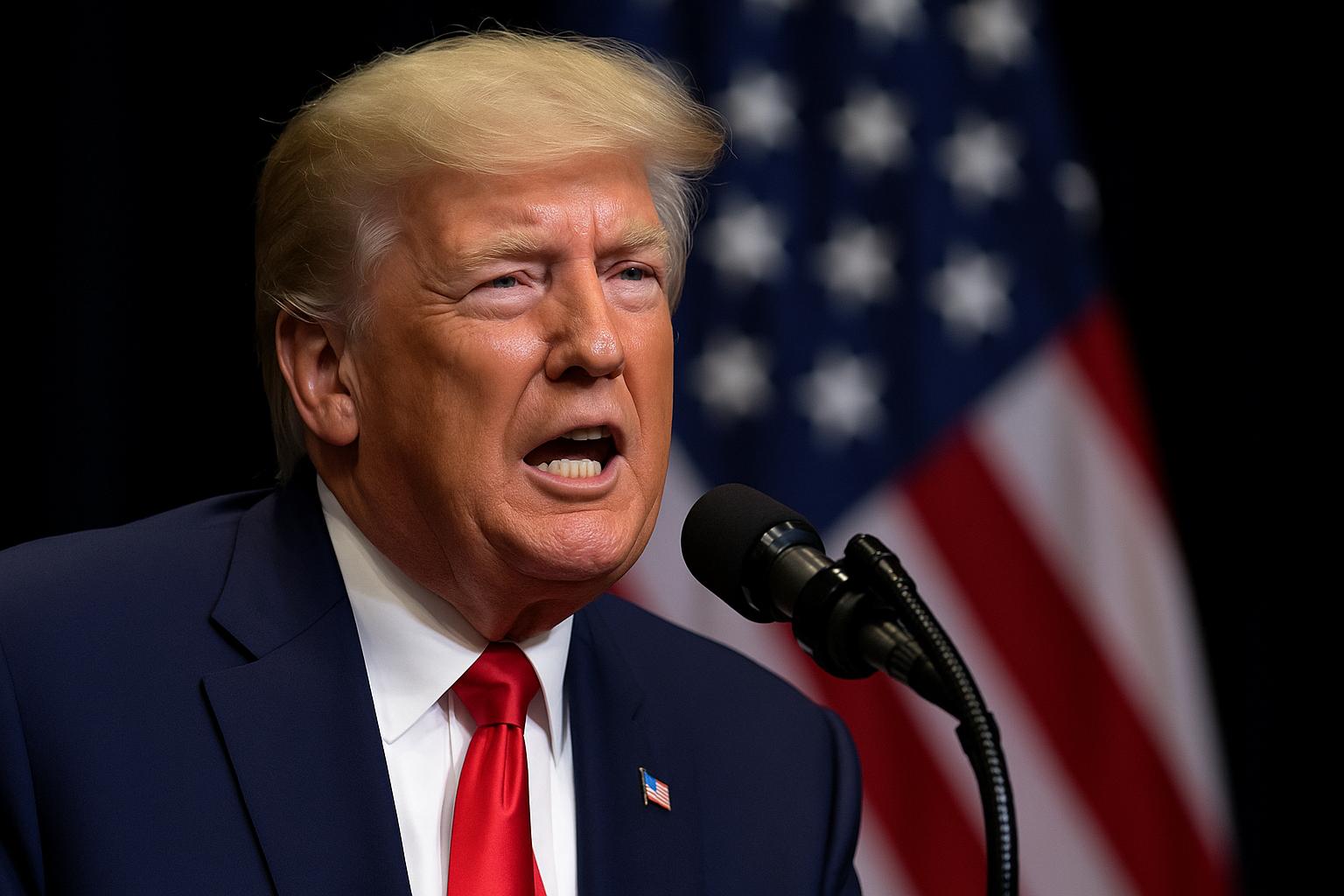
On May 7, 2026, President Donald Trump responded dismissively to recent Iranian attacks on three American warships, calling the incident "a trifle" and maintaining that the ceasefire between the two nations remained intact. During a visit to the Lincoln Memorial Reflecting Pool renovations, Trump told reporters, "They trifled with us today. We blew them away. They trifled. I call that a trifle." Despite the missile and drone strikes launched by Iranian forces, Trump assured the press that the
Trump dismisses Iran's attacks on US warships as 'a trifle' amid ongoing ceasefire
On May 7, 2026, President Donald Trump responded dismissively to recent Iranian attacks on three American warships, calling the incident "a trifle" and maintaining that the ceasefire between the two nations remained intact. During a visit to the Lincoln Memorial Reflecting Pool renovations, Trump told reporters, "They trifled with us today. We blew them away. They trifled. I call that a trifle." Despite the missile and drone strikes launched by Iranian forces, Trump assured the press that the
Trump Claims US Forces Destroy Iranian Attackers in Strait of Hormuz
On May 7, President Donald Trump claimed that U.S. forces successfully destroyed Iranian attackers targeting three U.S. Navy destroyers as they transited the Strait of Hormuz. Trump, in a post on Truth Social, reported that the American destroyers were under fire but sustained no damage. He further stated that the Iranian attackers, along with several small boats used by the attackers, were completely destroyed. According to Trump, Iranian missiles fired at the U.S. destroyers were easi
Trump Claims US Forces Destroy Iranian Attackers in Strait of Hormuz
On May 7, President Donald Trump claimed that U.S. forces successfully destroyed Iranian attackers targeting three U.S. Navy destroyers as they transited the Strait of Hormuz. Trump, in a post on Truth Social, reported that the American destroyers were under fire but sustained no damage. He further stated that the Iranian attackers, along with several small boats used by the attackers, were completely destroyed. According to Trump, Iranian missiles fired at the U.S. destroyers were easi
Iran and US Accuse Each Other of Violating Ceasefire in Strait of Hormuz
In a dramatic escalation of tensions in the Middle East, Iran's central military command has accused the United States of violating a ceasefire agreement by launching attacks on vessels in the Strait of Hormuz. According to a statement from the Khatam Al Anbiya headquarters, Iranian forces retaliated by targeting U.S. military ships. The statement, broadcasted on Iranian state television, claimed that the U.S. had attacked an Iranian oil tanker traveling from Iran's Jask region toward t
Iran and US Accuse Each Other of Violating Ceasefire in Strait of Hormuz
In a dramatic escalation of tensions in the Middle East, Iran's central military command has accused the United States of violating a ceasefire agreement by launching attacks on vessels in the Strait of Hormuz. According to a statement from the Khatam Al Anbiya headquarters, Iranian forces retaliated by targeting U.S. military ships. The statement, broadcasted on Iranian state television, claimed that the U.S. had attacked an Iranian oil tanker traveling from Iran's Jask region toward t
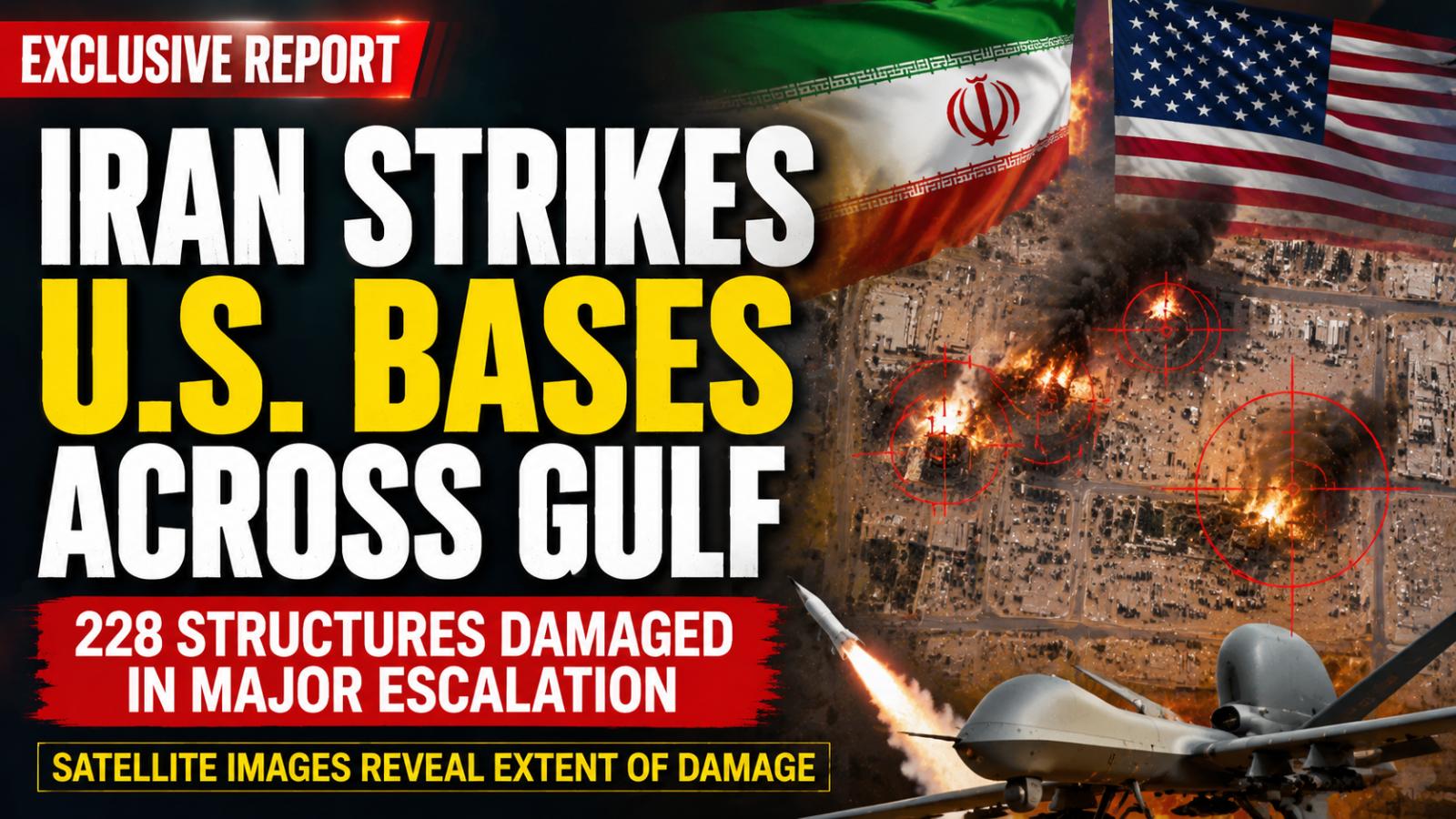
Iranian Airstrikes Damage 228 U.S. Military Sites Across the Gulf
The Washington Post has reported, based on satellite imagery analysis, that Iranian airstrikes have severely damaged or destroyed at least 228 structures and pieces of equipment at U.S. military sites across the Gulf region since the conflict began on February 28. This number far exceeds the figures acknowledged by the U.S. government. The strikes affected 15 U.S. military sites in Kuwait, Bahrain, Qatar, Saudi Arabia, Jordan, and the UAE. Satellite images from Iranian state-affiliated media, along with 109 images from the EU's Copernicus satellite system and commercial sources, provided evidence of the scale of the damage. The investigation uncovered damage to 217 structures and 11 pieces of equipment, including hangars, barracks, fuel depots, aircraft, radar systems, and air defense equipment. In total, seven U.S. service members were killed in attacks on regional bases, six in Kuwait and one in Saudi Arabia, while more than 400 troops were injured by late April. Of the injured, 12 sustained serious injuries. More than half of the documented damage occurred at the U.S. 5th Fleet headquarters in Bahrain and major U.S. facilities in Kuwait. Iranian forces targeted critical infrastructure, including fuel bladders and Patriot missile defense systems at Ali al-Salem Air Base in Kuwait. Attacks also hit barracks, power infrastructure, and operational facilities at Camp Arifjan and Camp Buehring in Kuwait. Other U.S. sites, such as Al-Udeid Air Base in Qatar and naval facilities in Bahrain, saw significant damage to satellite communications infrastructure. Iran’s airstrikes have demonstrated a higher degree of precision than expected. Mark Cancian of the Center for Strategic and International Studies noted that "there are no random craters indicating misses," suggesting that the attacks were highly targeted. This precision has placed considerable strain on U.S.-made defense systems in the Gulf. Between February 28 and April 8, U.S. forces used at least 190 THAAD interceptors, nearly 53% of their pre-war inventory, and 1,060 Patriot interceptors, about 43% of their pre-war stock. Despite these efforts, U.S. air defenses have struggled to cope with modern drone warfare, where one-way attack drones are difficult to intercept yet highly accurate. The strikes have forced U.S. commanders to relocate personnel from bases at risk, with some U.S. officials describing the damage at the Naval Support Activity Bahrain as “extensive.” Personnel from the site have been relocated to MacDill Air Force Base in Tampa, Florida. The U.S. Central Command declined to provide further counter-assessments, citing the need for a complete evaluation after the conflict ends. This extensive damage underscores the ongoing challenges faced by U.S. forces in the Gulf and highlights the evolving nature of modern warfare.
Iranian Airstrikes Damage 228 U.S. Military Sites Across the Gulf
The Washington Post has reported, based on satellite imagery analysis, that Iranian airstrikes have severely damaged or destroyed at least 228 structures and pieces of equipment at U.S. military sites across the Gulf region since the conflict began on February 28. This number far exceeds the figures acknowledged by the U.S. government. The strikes affected 15 U.S. military sites in Kuwait, Bahrain, Qatar, Saudi Arabia, Jordan, and the UAE. Satellite images from Iranian state-affiliated media, along with 109 images from the EU's Copernicus satellite system and commercial sources, provided evidence of the scale of the damage. The investigation uncovered damage to 217 structures and 11 pieces of equipment, including hangars, barracks, fuel depots, aircraft, radar systems, and air defense equipment. In total, seven U.S. service members were killed in attacks on regional bases, six in Kuwait and one in Saudi Arabia, while more than 400 troops were injured by late April. Of the injured, 12 sustained serious injuries. More than half of the documented damage occurred at the U.S. 5th Fleet headquarters in Bahrain and major U.S. facilities in Kuwait. Iranian forces targeted critical infrastructure, including fuel bladders and Patriot missile defense systems at Ali al-Salem Air Base in Kuwait. Attacks also hit barracks, power infrastructure, and operational facilities at Camp Arifjan and Camp Buehring in Kuwait. Other U.S. sites, such as Al-Udeid Air Base in Qatar and naval facilities in Bahrain, saw significant damage to satellite communications infrastructure. Iran’s airstrikes have demonstrated a higher degree of precision than expected. Mark Cancian of the Center for Strategic and International Studies noted that "there are no random craters indicating misses," suggesting that the attacks were highly targeted. This precision has placed considerable strain on U.S.-made defense systems in the Gulf. Between February 28 and April 8, U.S. forces used at least 190 THAAD interceptors, nearly 53% of their pre-war inventory, and 1,060 Patriot interceptors, about 43% of their pre-war stock. Despite these efforts, U.S. air defenses have struggled to cope with modern drone warfare, where one-way attack drones are difficult to intercept yet highly accurate. The strikes have forced U.S. commanders to relocate personnel from bases at risk, with some U.S. officials describing the damage at the Naval Support Activity Bahrain as “extensive.” Personnel from the site have been relocated to MacDill Air Force Base in Tampa, Florida. The U.S. Central Command declined to provide further counter-assessments, citing the need for a complete evaluation after the conflict ends. This extensive damage underscores the ongoing challenges faced by U.S. forces in the Gulf and highlights the evolving nature of modern warfare.
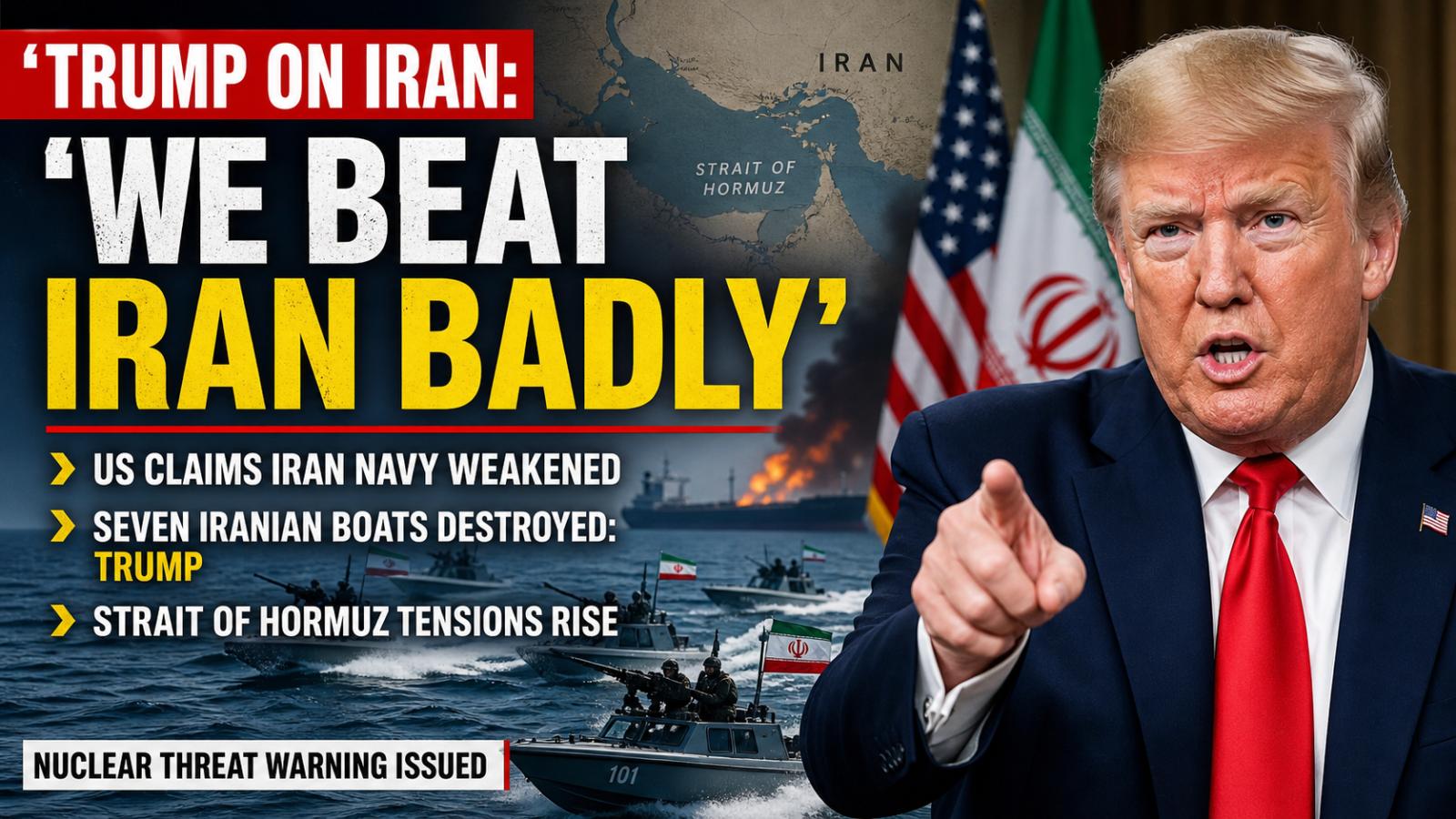
Trump Iran Conflict Escalates as US Claims Iran Navy Crippled
Trump Iran Conflict Deepens After Oval Office Remarks Donald Trump said the United States has “beaten Iran badly,” claiming U.S. military action weakened Iran’s navy and reduced the risk of Tehran developing a nuclear weapon. Speaking from the Oval Office, Trump described the confrontation as a “skirmish,” but his remarks added fresh urgency to rising U.S.-Iran tensions in the Gulf region. US Claims Iran Navy Severely Weakened
Trump Iran Conflict Escalates as US Claims Iran Navy Crippled
Trump Iran Conflict Deepens After Oval Office Remarks Donald Trump said the United States has “beaten Iran badly,” claiming U.S. military action weakened Iran’s navy and reduced the risk of Tehran developing a nuclear weapon. Speaking from the Oval Office, Trump described the confrontation as a “skirmish,” but his remarks added fresh urgency to rising U.S.-Iran tensions in the Gulf region. US Claims Iran Navy Severely Weakened
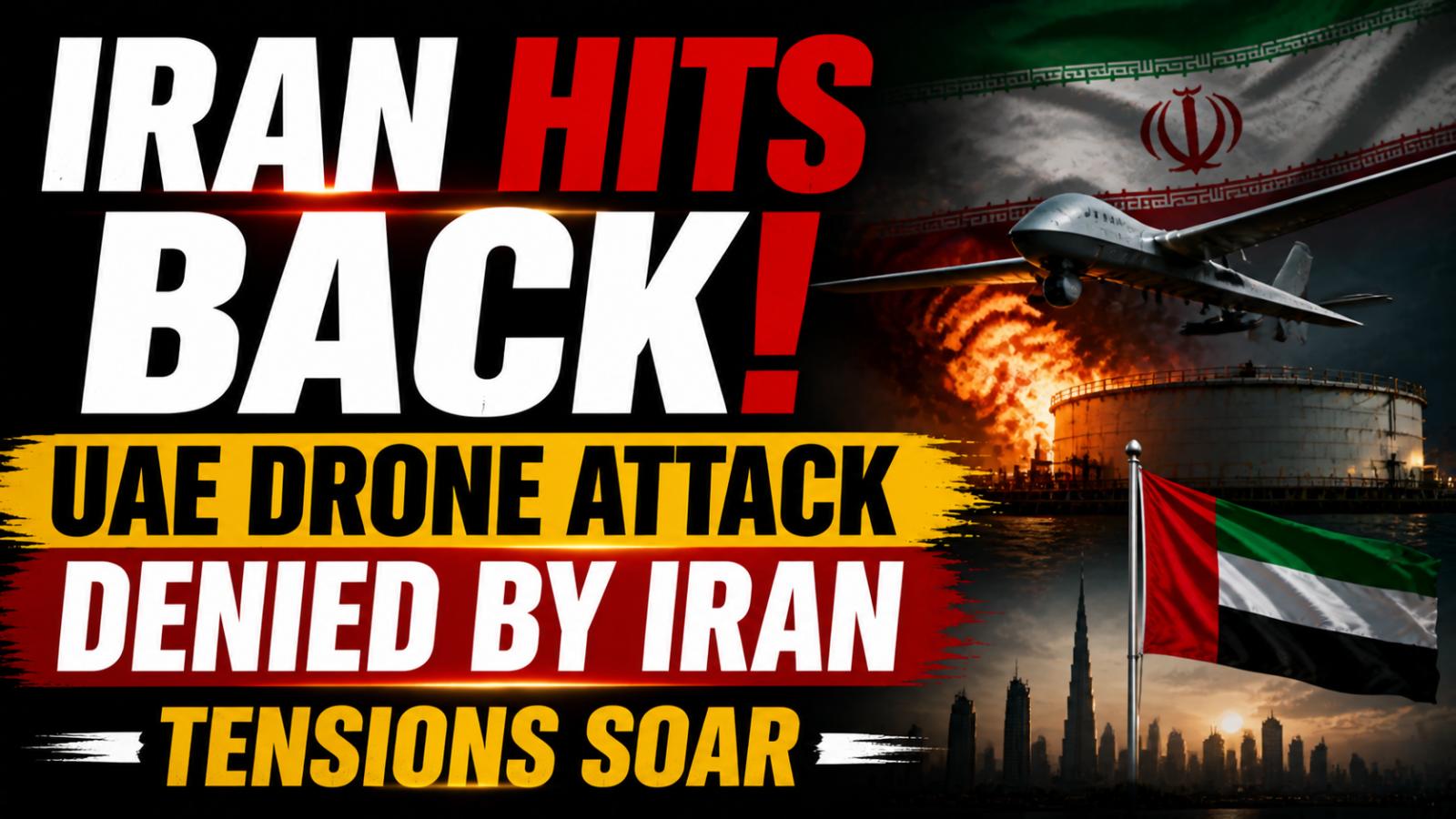
Iran Rejects UAE Drone Strike Accusations, Points to US Adventurism
Iran has strongly denied accusations from the United Arab Emirates that it was behind a drone strike targeting oil facilities in Fujairah, calling the attack a product of US military adventurism. UAE authorities reported the attack on Monday, saying that three Indian nationals were injured in the strike and were hospitalized. The UAE also described the attack as a “dangerous escalation” amid growing tensions in the region. Iran's military officials, speaking on state television, insisted that the Islamic Republic had no plans to target UAE oil infrastructure. They argued that the attack was part of a broader geopolitical game in which the US was attempting to create a passage for ships to unlawfully pass through the Strait of Hormuz, a key oil shipping lane. Iranian officials called on the US to cease its military actions in the region, accusing Washington of destabilizing the area and holding the US accountable for the escalation. In the aftermath of the strike, US President Donald Trump announced a new maritime operation, Project Freedom, aimed at guiding neutral ships safely through the Gulf. The initiative, which Trump described as a humanitarian effort, is seen as a response to the increasing number of incidents in the Strait of Hormuz. US officials reported engaging with Iranian small boats in the Gulf, claiming that US forces had destroyed several Iranian vessels. Iran, however, denied these claims, stating that none of its boats had been sunk. Iran's Foreign Minister, Seyed Abbas Araghchi, emphasized the need for a political resolution to the ongoing tensions, cautioning against further military action. He called for greater diplomatic efforts, including mediation by countries like Pakistan, to prevent a deeper conflict. Araghchi also warned the UAE and other regional actors against further escalation, urging them to avoid external interference that could destabilize the region further. As the situation continues to develop, both Iran and the US remain at odds over their military presence in the vital Strait of Hormuz.
Iran Rejects UAE Drone Strike Accusations, Points to US Adventurism
Iran has strongly denied accusations from the United Arab Emirates that it was behind a drone strike targeting oil facilities in Fujairah, calling the attack a product of US military adventurism. UAE authorities reported the attack on Monday, saying that three Indian nationals were injured in the strike and were hospitalized. The UAE also described the attack as a “dangerous escalation” amid growing tensions in the region. Iran's military officials, speaking on state television, insisted that the Islamic Republic had no plans to target UAE oil infrastructure. They argued that the attack was part of a broader geopolitical game in which the US was attempting to create a passage for ships to unlawfully pass through the Strait of Hormuz, a key oil shipping lane. Iranian officials called on the US to cease its military actions in the region, accusing Washington of destabilizing the area and holding the US accountable for the escalation. In the aftermath of the strike, US President Donald Trump announced a new maritime operation, Project Freedom, aimed at guiding neutral ships safely through the Gulf. The initiative, which Trump described as a humanitarian effort, is seen as a response to the increasing number of incidents in the Strait of Hormuz. US officials reported engaging with Iranian small boats in the Gulf, claiming that US forces had destroyed several Iranian vessels. Iran, however, denied these claims, stating that none of its boats had been sunk. Iran's Foreign Minister, Seyed Abbas Araghchi, emphasized the need for a political resolution to the ongoing tensions, cautioning against further military action. He called for greater diplomatic efforts, including mediation by countries like Pakistan, to prevent a deeper conflict. Araghchi also warned the UAE and other regional actors against further escalation, urging them to avoid external interference that could destabilize the region further. As the situation continues to develop, both Iran and the US remain at odds over their military presence in the vital Strait of Hormuz.
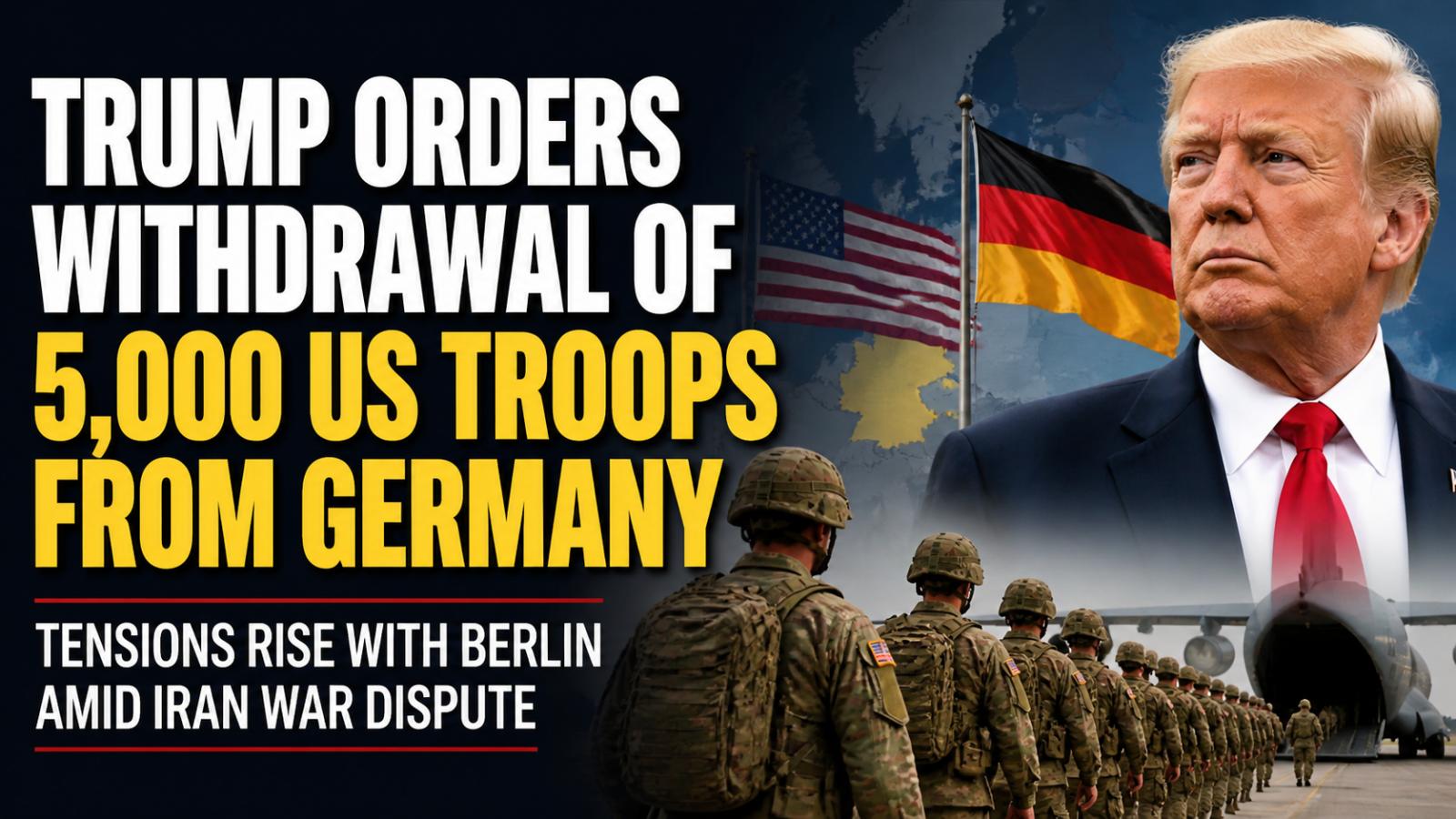
Trump orders the withdrawal of 5,000 US troops from Germany amid rising tensions
Trump Orders US Troops Withdrawal From Germany President Donald Trump has ordered the withdrawal of 5,000 US troops from Germany, escalating tensions with Berlin and NATO allies. This decision comes amid ongoing disagreements over the Iran conflict and US military operations in the Middle East. The Pentagon confirmed the move on Friday, May 1, as part of a broader shift in US military strategy, which seeks to reduce America's pres
Trump orders the withdrawal of 5,000 US troops from Germany amid rising tensions
Trump Orders US Troops Withdrawal From Germany President Donald Trump has ordered the withdrawal of 5,000 US troops from Germany, escalating tensions with Berlin and NATO allies. This decision comes amid ongoing disagreements over the Iran conflict and US military operations in the Middle East. The Pentagon confirmed the move on Friday, May 1, as part of a broader shift in US military strategy, which seeks to reduce America's pres
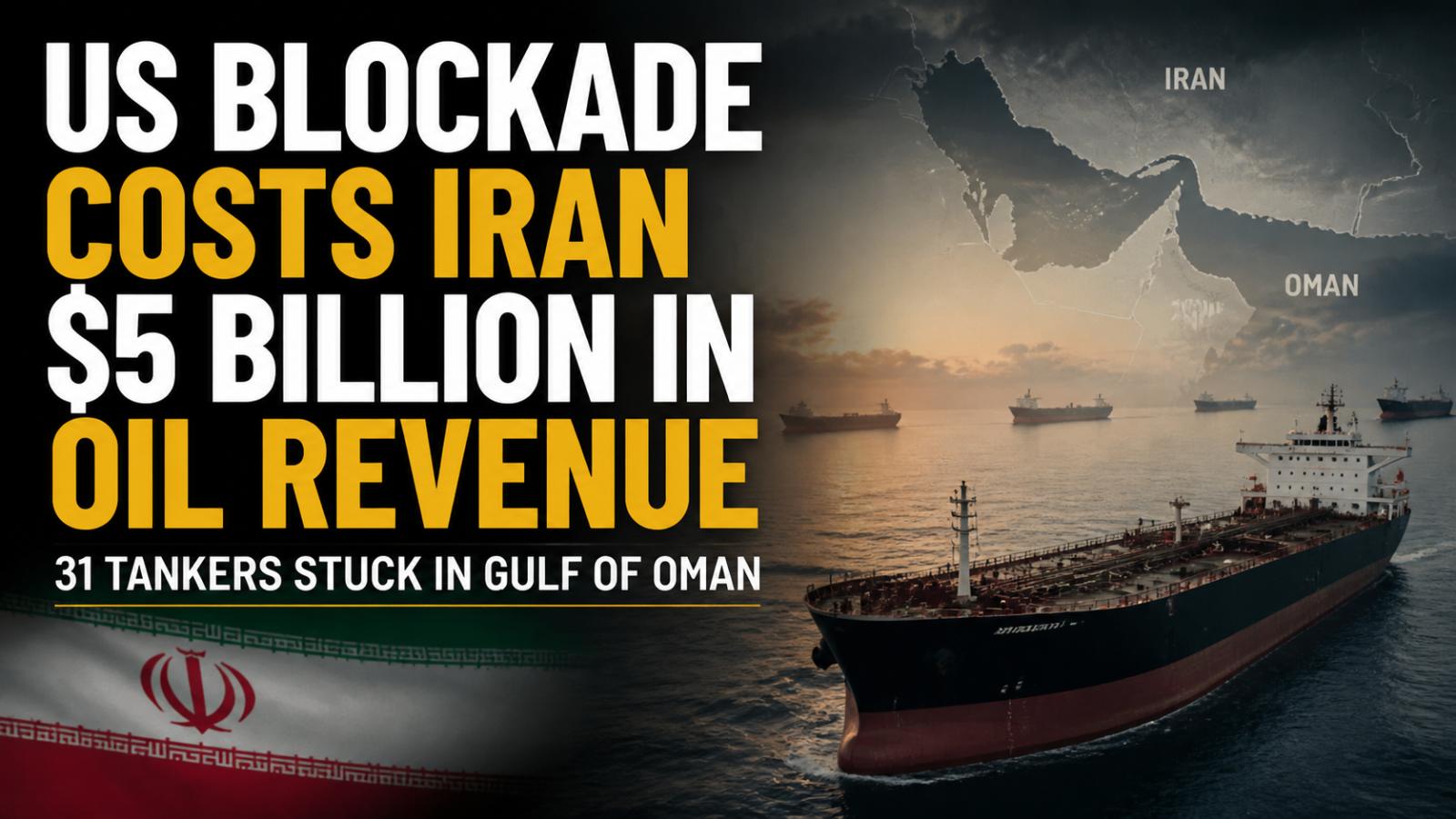
US blockade in Gulf of Oman halts $5 billion in Iranian oil revenue
The ongoing US blockade in the Gulf of Oman has forced Iran to face a massive loss, with the US Defense Department estimating that Tehran has lost nearly $5 billion in oil revenue. This economic setback is the result of a blockade imposed by the US military in an effort to increase pressure on Iran’s economy. The blockade, which began on April 13, 2025, has been described as one of President Donald Trump’s most powerful tools to drive Iran into negotiations that aim to resolve the ongoing conflict. However, diplomatic talks have been repeatedly stalling and restarting, leaving both parties in a stalemate. According to Pentagon officials, more than 40 vessels have been redirected since the operation’s start, as they attempted to smuggle oil and other contraband through the region. In total, 31 tankers carrying approximately 53 million barrels of Iranian crude are now stuck in the Gulf of Oman, and these shipments are valued at around $4.8 billion. Of these, two vessels have already been seized by US forces. With storage capacity on land reaching its limits, Iran has resorted to using older tankers as floating storage units, as reported by analysts. These tankers, which are no longer fit for regular commercial routes, have become temporary storage sites for Iran’s oil. Some shipments are being rerouted along longer and more expensive paths, primarily to avoid interception by US forces. To achieve this, Iranian ships have been following coastlines near Pakistan and India and using safer maritime corridors towards the Strait of Malacca, a key transit point for oil bound for China. Tanker tracking analysts such as Samir Madani, co-founder of TankerTrackers.com, have noted a shift in Iranian shipping patterns. He explained how one Iranian tanker, called “HUGE,” cleverly demonstrated how ships are using stealth routes to evade detection. According to Madani, ships are increasingly relying on hidden paths through regional waters to avoid the US military blockade. Madani also predicted that, in the future, Iran might attempt a large-scale breakout of its tankers. "I think the Iranians will wait for an opportunity to launch an overnight 'Great Escape' once they have built up further storage near the border with Pakistan,” Madani told Axios. This situation is part of a broader economic struggle between Iran and the United States, with both countries resorting to maritime pressure tactics. Iran has previously restricted access to the Strait of Hormuz, a critical shipping route, in retaliation. Meanwhile, the US has been tightening its control over the Gulf of Oman, an entry point to key waterways. According to Gregory Brew, an analyst at Eurasia Group, Iran is just weeks away from running out of storage space for its oil, which could collapse its oil production capacity. "They're probably several weeks, or perhaps as much as a month, away from running out of storage," Brew said. The Pentagon’s spokesperson, Joel Valdez, emphasized the severity of the situation, stating that the blockade is fully active and that the US military is delivering a devastating blow to Iran’s ability to fund terrorism and regional destabilization. “Our armed forces in the region will continue to maintain this unrelenting pressure,” Valdez said. This strategy, although harsh, seems designed to wear down Iran’s ability to sustain itself economically, and possibly force a change in its approach to negotiations.
US blockade in Gulf of Oman halts $5 billion in Iranian oil revenue
The ongoing US blockade in the Gulf of Oman has forced Iran to face a massive loss, with the US Defense Department estimating that Tehran has lost nearly $5 billion in oil revenue. This economic setback is the result of a blockade imposed by the US military in an effort to increase pressure on Iran’s economy. The blockade, which began on April 13, 2025, has been described as one of President Donald Trump’s most powerful tools to drive Iran into negotiations that aim to resolve the ongoing conflict. However, diplomatic talks have been repeatedly stalling and restarting, leaving both parties in a stalemate. According to Pentagon officials, more than 40 vessels have been redirected since the operation’s start, as they attempted to smuggle oil and other contraband through the region. In total, 31 tankers carrying approximately 53 million barrels of Iranian crude are now stuck in the Gulf of Oman, and these shipments are valued at around $4.8 billion. Of these, two vessels have already been seized by US forces. With storage capacity on land reaching its limits, Iran has resorted to using older tankers as floating storage units, as reported by analysts. These tankers, which are no longer fit for regular commercial routes, have become temporary storage sites for Iran’s oil. Some shipments are being rerouted along longer and more expensive paths, primarily to avoid interception by US forces. To achieve this, Iranian ships have been following coastlines near Pakistan and India and using safer maritime corridors towards the Strait of Malacca, a key transit point for oil bound for China. Tanker tracking analysts such as Samir Madani, co-founder of TankerTrackers.com, have noted a shift in Iranian shipping patterns. He explained how one Iranian tanker, called “HUGE,” cleverly demonstrated how ships are using stealth routes to evade detection. According to Madani, ships are increasingly relying on hidden paths through regional waters to avoid the US military blockade. Madani also predicted that, in the future, Iran might attempt a large-scale breakout of its tankers. "I think the Iranians will wait for an opportunity to launch an overnight 'Great Escape' once they have built up further storage near the border with Pakistan,” Madani told Axios. This situation is part of a broader economic struggle between Iran and the United States, with both countries resorting to maritime pressure tactics. Iran has previously restricted access to the Strait of Hormuz, a critical shipping route, in retaliation. Meanwhile, the US has been tightening its control over the Gulf of Oman, an entry point to key waterways. According to Gregory Brew, an analyst at Eurasia Group, Iran is just weeks away from running out of storage space for its oil, which could collapse its oil production capacity. "They're probably several weeks, or perhaps as much as a month, away from running out of storage," Brew said. The Pentagon’s spokesperson, Joel Valdez, emphasized the severity of the situation, stating that the blockade is fully active and that the US military is delivering a devastating blow to Iran’s ability to fund terrorism and regional destabilization. “Our armed forces in the region will continue to maintain this unrelenting pressure,” Valdez said. This strategy, although harsh, seems designed to wear down Iran’s ability to sustain itself economically, and possibly force a change in its approach to negotiations.
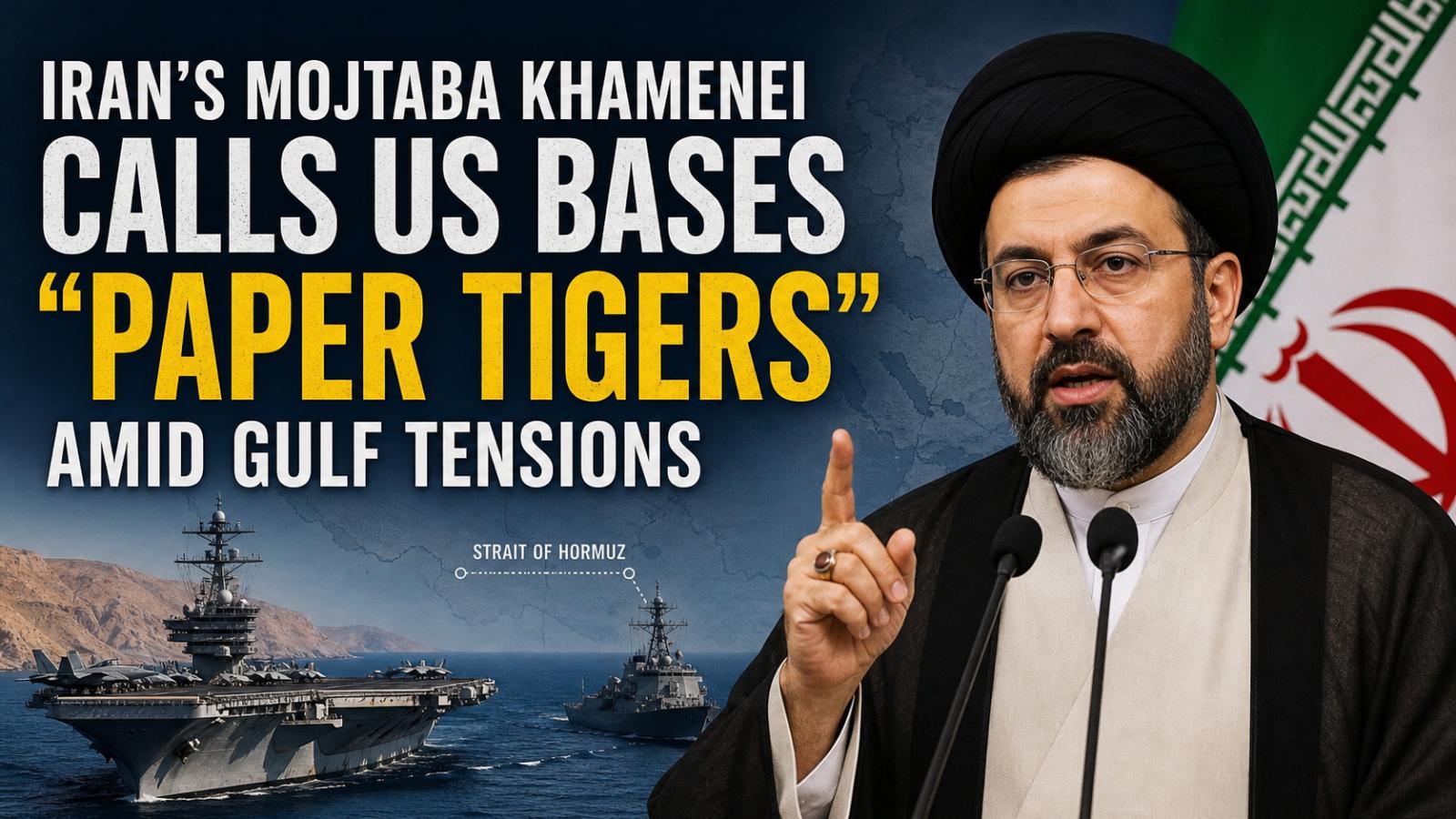
Iran’s Mojtaba Khamenei calls US bases “paper tigers” amid Gulf tensions
Iran’s Mojtaba Khamenei called US bases “paper tigers” on Friday, May 1, 2026, criticizing American presence in the Persian Gulf and linking it to regional insecurity amid rising Strait of Hormuz tensions Iran’s Mojtaba Khamenei calls US bases “paper tigers” amid Gulf tensions as Mojtaba Khamenei sharply criticized the United States’ military presence in the
Iran’s Mojtaba Khamenei calls US bases “paper tigers” amid Gulf tensions
Iran’s Mojtaba Khamenei called US bases “paper tigers” on Friday, May 1, 2026, criticizing American presence in the Persian Gulf and linking it to regional insecurity amid rising Strait of Hormuz tensions Iran’s Mojtaba Khamenei calls US bases “paper tigers” amid Gulf tensions as Mojtaba Khamenei sharply criticized the United States’ military presence in the
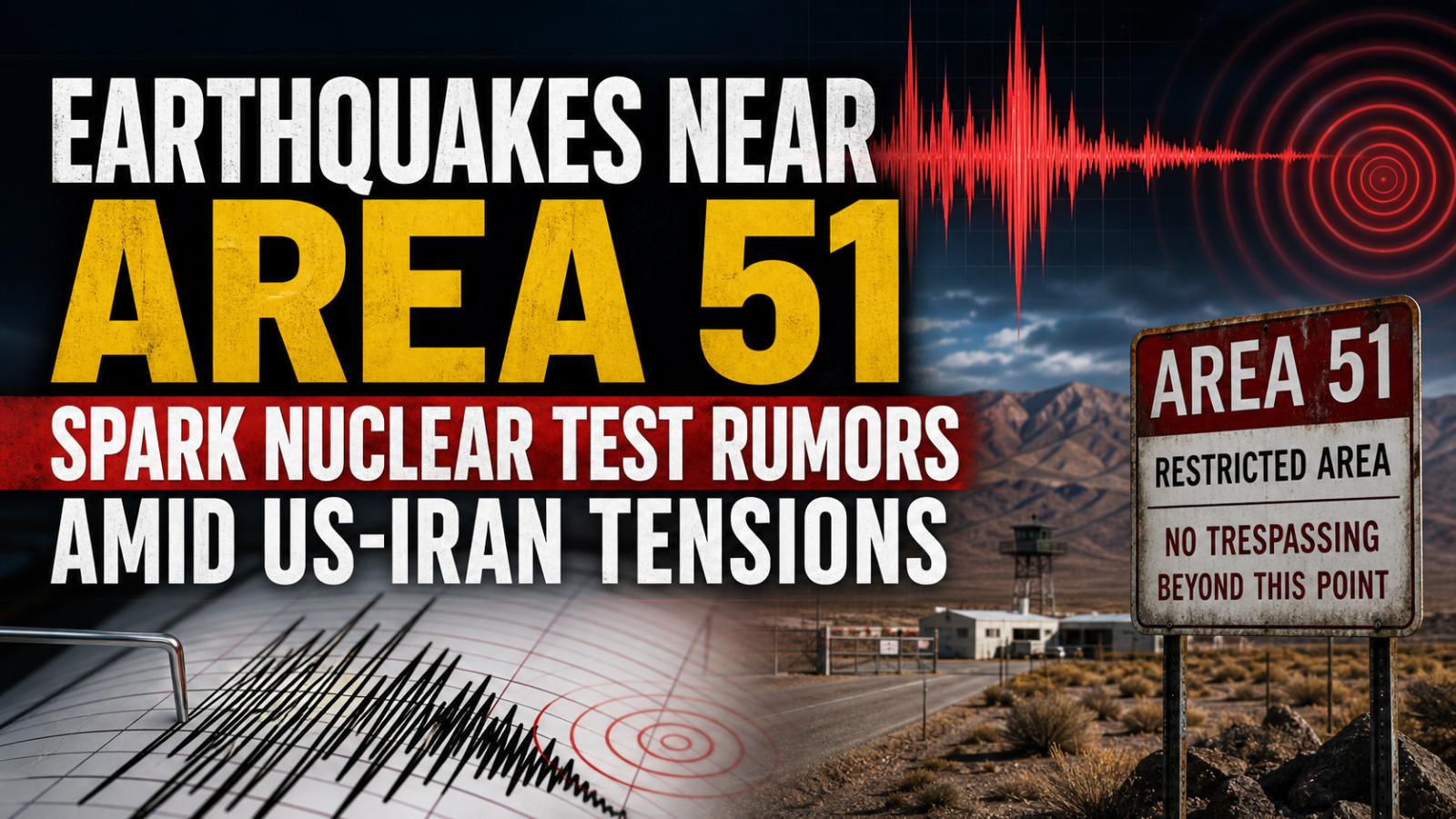
Earthquakes near Area 51 spark nuclear test rumors amid US-Iran tensions
Earthquakes near Area 51 raise questions amid rising tensions A series of earthquakes near Area 51 in Nevada between April 29 and April 30, 2026, has sparked widespread attention, with at least 17 tremors recorded within a 24 to 48-hour window, most around magnitude 4.4. The seismic activity occurred during this short time frame and has dr
Earthquakes near Area 51 spark nuclear test rumors amid US-Iran tensions
Earthquakes near Area 51 raise questions amid rising tensions A series of earthquakes near Area 51 in Nevada between April 29 and April 30, 2026, has sparked widespread attention, with at least 17 tremors recorded within a 24 to 48-hour window, most around magnitude 4.4. The seismic activity occurred during this short time frame and has dr
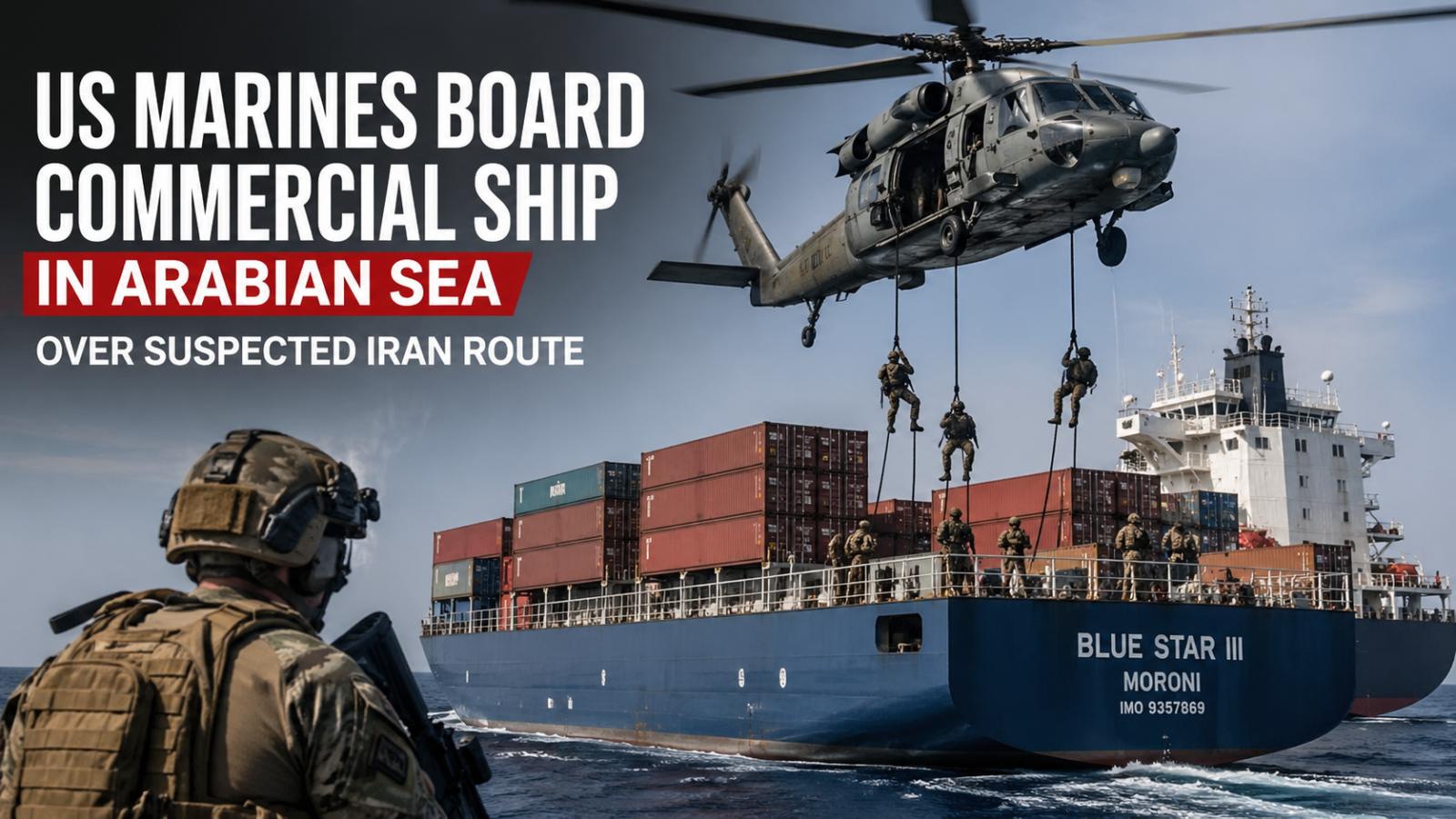
US Marines board commercial vessel in Arabian Sea over suspected Iran route
US Marines boarded a commercial ship in the Arabian Sea over suspected Iran-bound travel but released it after confirming it was headed to Oman, highlighting strict enforcement of the Iran blockade. US Marines board commercial vessel in Arabian Sea over suspected Iran route as forces enforced Washington’s blockade of Iranian ports on Tuesday, April 28, 2026. The vessel, identified as M/V Blue Star III, is a container ship sailing under the flag of Comoros and was
US Marines board commercial vessel in Arabian Sea over suspected Iran route
US Marines boarded a commercial ship in the Arabian Sea over suspected Iran-bound travel but released it after confirming it was headed to Oman, highlighting strict enforcement of the Iran blockade. US Marines board commercial vessel in Arabian Sea over suspected Iran route as forces enforced Washington’s blockade of Iranian ports on Tuesday, April 28, 2026. The vessel, identified as M/V Blue Star III, is a container ship sailing under the flag of Comoros and was

India Enters Top Five as Global Defense Spending Surge
Global military spending reached a record $2,887 billion in 2025, marking the eleventh consecutive year of growth and the highest level ever recorded. According to the latest SIPRI report, the increase reflects rising geopolitical tensions, ongoing conflicts, and a shifting global security environment that has prompted governments to expand their defense budgets. India emerged as one of the world’s top military spenders, entering the top five for the first time with total expenditure of $92.1 billion. The country’s defense spending rose by 8.9 percent, reflecting heightened security concerns and operational demands. The report noted that this increase coincided with armed tensions involving Pakistan in May 2025, during which India deployed a range of military assets including aircraft, drones, and missile systems. The five largest spenders—the United States, China, Russia, Germany, and India—collectively accounted for 58 percent of global military expenditure, totaling $1,686 billion. Pakistan also increased its defense budget by 11 percent to $11.9 billion, driven largely by procurement activities and ongoing modernization efforts following regional tensions. Europe was identified as the primary contributor to the global rise in military spending, with a 14 percent increase bringing the region’s total to $864 billion. This marked the fastest growth in Central and Western Europe since the Cold War, as countries accelerated rearmament programs in response to security concerns, particularly the ongoing conflict involving Russia and Ukraine. The United States remained the largest military spender globally, allocating $954 billion in 2025. However, this represented a 7.5 percent decline compared to the previous year. The decrease was attributed mainly to reduced financial assistance to Ukraine, contrasting with higher levels of support in earlier years. Overall, the data highlights a continued global trend toward increased defense investment, driven by evolving security challenges and shifting geopolitical dynamics.
India Enters Top Five as Global Defense Spending Surge
Global military spending reached a record $2,887 billion in 2025, marking the eleventh consecutive year of growth and the highest level ever recorded. According to the latest SIPRI report, the increase reflects rising geopolitical tensions, ongoing conflicts, and a shifting global security environment that has prompted governments to expand their defense budgets. India emerged as one of the world’s top military spenders, entering the top five for the first time with total expenditure of $92.1 billion. The country’s defense spending rose by 8.9 percent, reflecting heightened security concerns and operational demands. The report noted that this increase coincided with armed tensions involving Pakistan in May 2025, during which India deployed a range of military assets including aircraft, drones, and missile systems. The five largest spenders—the United States, China, Russia, Germany, and India—collectively accounted for 58 percent of global military expenditure, totaling $1,686 billion. Pakistan also increased its defense budget by 11 percent to $11.9 billion, driven largely by procurement activities and ongoing modernization efforts following regional tensions. Europe was identified as the primary contributor to the global rise in military spending, with a 14 percent increase bringing the region’s total to $864 billion. This marked the fastest growth in Central and Western Europe since the Cold War, as countries accelerated rearmament programs in response to security concerns, particularly the ongoing conflict involving Russia and Ukraine. The United States remained the largest military spender globally, allocating $954 billion in 2025. However, this represented a 7.5 percent decline compared to the previous year. The decrease was attributed mainly to reduced financial assistance to Ukraine, contrasting with higher levels of support in earlier years. Overall, the data highlights a continued global trend toward increased defense investment, driven by evolving security challenges and shifting geopolitical dynamics.
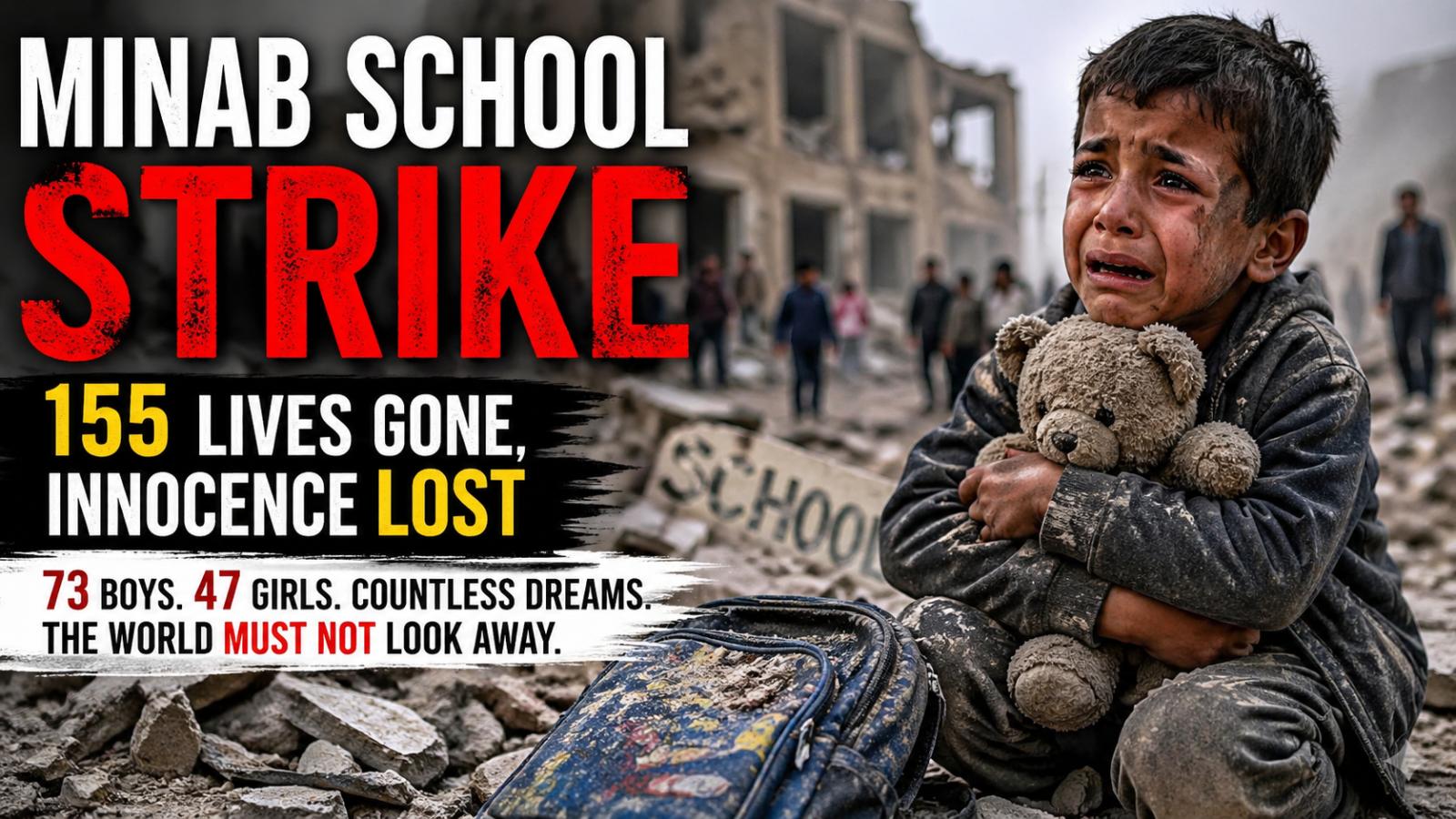
What happened in the Minab school strike? Iran says 155 killed in attack
Iran says 155 killed in attack Iran has released a detailed account of casualties from a strike on an elementary school in Minab on Friday, February 28, 2026, marking the first day of the West Asia war. According to state broadcaster IRIB and local media reports, the attack killed 155 people, including 120 children, and has intensified scrutiny over civilian safety in the escalating conflict. Revised casualty figures highlight scale of civilian d
What happened in the Minab school strike? Iran says 155 killed in attack
Iran says 155 killed in attack Iran has released a detailed account of casualties from a strike on an elementary school in Minab on Friday, February 28, 2026, marking the first day of the West Asia war. According to state broadcaster IRIB and local media reports, the attack killed 155 people, including 120 children, and has intensified scrutiny over civilian safety in the escalating conflict. Revised casualty figures highlight scale of civilian d
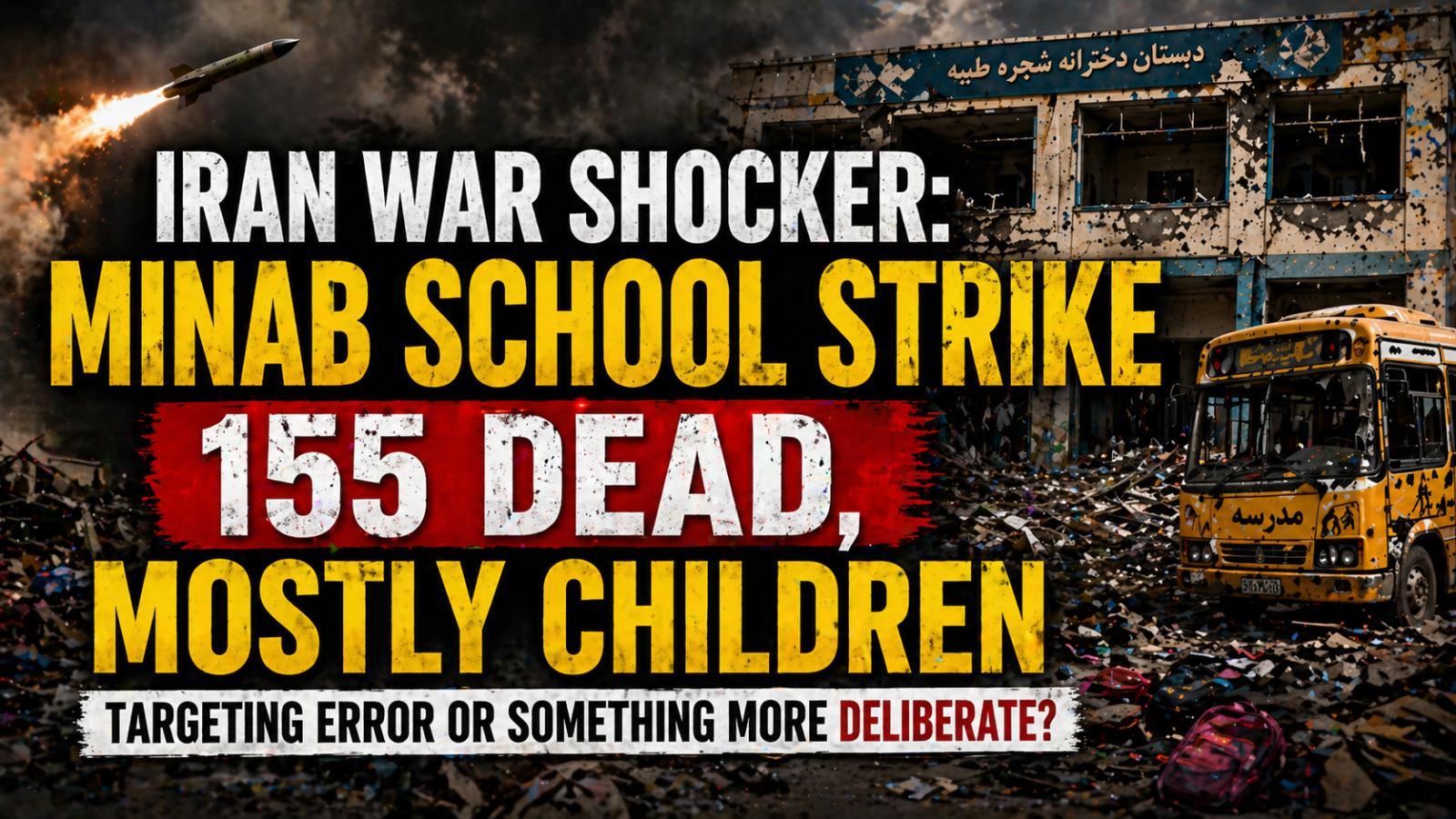
Iran War Update: What Happened in the Minab School Strike and Why It Matters
Iran has revised the death toll from the Minab school strike to 155, confirming it as the deadliest single incident in the ongoing conflict, now in its 59th day. Officials released a detailed breakdown indicating that most victims were children, alongside teachers and civilians connected to the school. The updated figure is lower than earlier estimates exceeding 175, though no formal explanation has been provided for the discrepancy. The strike occurred on February 28, the opening day of a coordinated military campaign. Two successive impacts hit the Shajareh Tayyebeh elementary school in Minab while classes were in session, a pattern described as a “double-tap” strike. Many of the children killed were between the ages of seven and twelve, amplifying global concern over the nature of the attack. Preliminary findings from a U.S. military review suggest the use of a Tomahawk cruise missile and indicate that the strike may have resulted from a targeting error. According to the investigation, outdated intelligence data misidentified the site as an active military location linked to a former Revolutionary Guards facility. Although the school had been separated from the base years earlier, the database used in targeting had not been updated accordingly. Analysts noted that automated systems processing this information may have contributed to the failure to recognize the location as a civilian site. Iranian officials have rejected the explanation, describing the incident as deliberate. The foreign minister characterized it as a calculated assault, citing the advanced precision capabilities attributed to modern military systems. The strike has since become a focal point in diplomatic discussions and ongoing ceasefire negotiations. The Pentagon has confirmed that a full investigation is still underway. As scrutiny continues, the Minab incident remains central to debates over accountability, intelligence reliability, and the risks associated with modern warfare technologies.
Iran War Update: What Happened in the Minab School Strike and Why It Matters
Iran has revised the death toll from the Minab school strike to 155, confirming it as the deadliest single incident in the ongoing conflict, now in its 59th day. Officials released a detailed breakdown indicating that most victims were children, alongside teachers and civilians connected to the school. The updated figure is lower than earlier estimates exceeding 175, though no formal explanation has been provided for the discrepancy. The strike occurred on February 28, the opening day of a coordinated military campaign. Two successive impacts hit the Shajareh Tayyebeh elementary school in Minab while classes were in session, a pattern described as a “double-tap” strike. Many of the children killed were between the ages of seven and twelve, amplifying global concern over the nature of the attack. Preliminary findings from a U.S. military review suggest the use of a Tomahawk cruise missile and indicate that the strike may have resulted from a targeting error. According to the investigation, outdated intelligence data misidentified the site as an active military location linked to a former Revolutionary Guards facility. Although the school had been separated from the base years earlier, the database used in targeting had not been updated accordingly. Analysts noted that automated systems processing this information may have contributed to the failure to recognize the location as a civilian site. Iranian officials have rejected the explanation, describing the incident as deliberate. The foreign minister characterized it as a calculated assault, citing the advanced precision capabilities attributed to modern military systems. The strike has since become a focal point in diplomatic discussions and ongoing ceasefire negotiations. The Pentagon has confirmed that a full investigation is still underway. As scrutiny continues, the Minab incident remains central to debates over accountability, intelligence reliability, and the risks associated with modern warfare technologies.
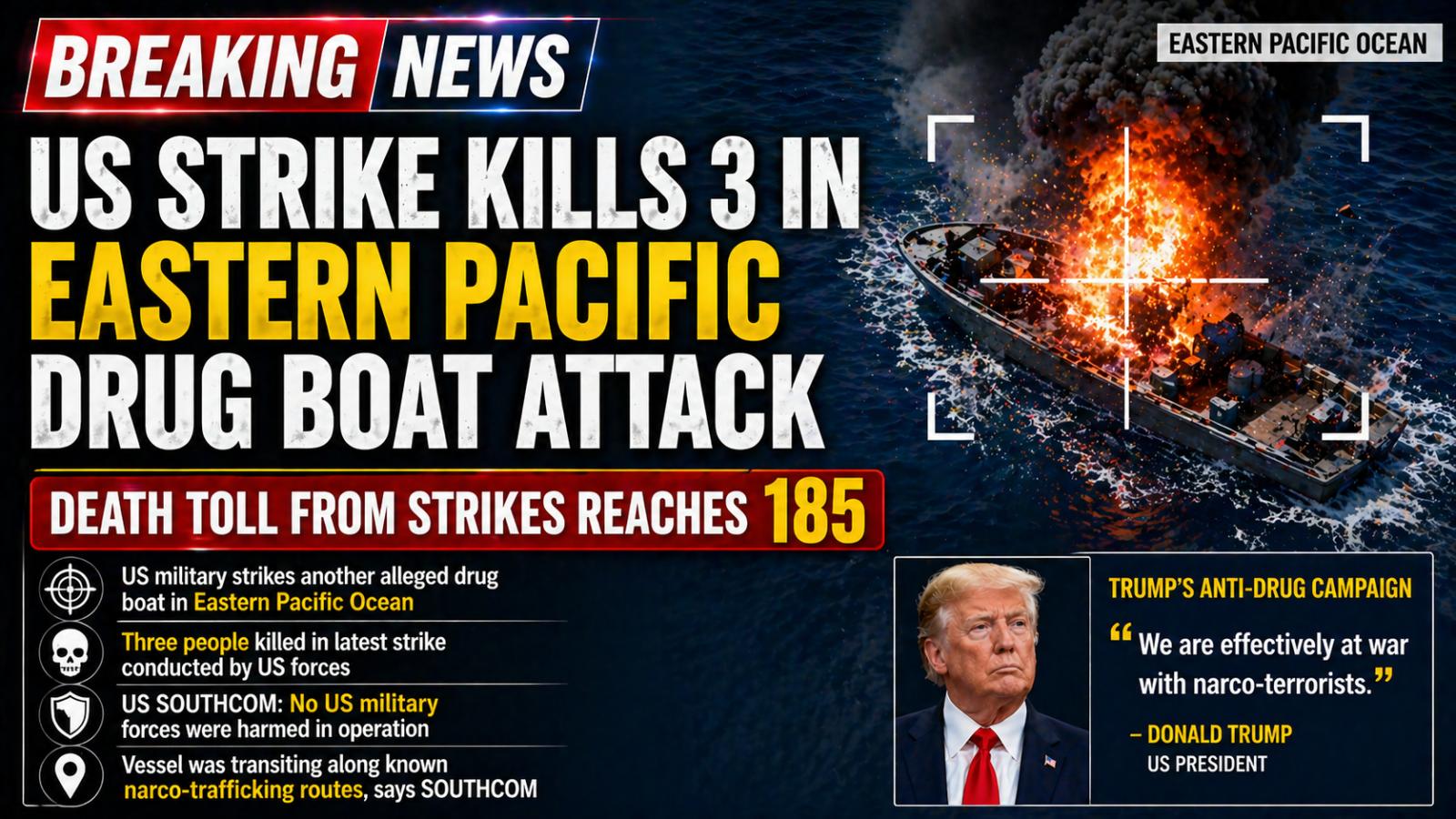
US Expands Anti-Drug Campaign With New Pacific Strike
The United States military carried out another strike on a suspected drug-trafficking vessel in the Eastern Pacific, resulting in the deaths of three individuals, on Sunday (Apr 26), according to officials. The operation was conducted under the direction of US Southern Command, which stated that the vessel was operating along known narcotics trafficking routes and was actively engaged in il
US Expands Anti-Drug Campaign With New Pacific Strike
The United States military carried out another strike on a suspected drug-trafficking vessel in the Eastern Pacific, resulting in the deaths of three individuals, on Sunday (Apr 26), according to officials. The operation was conducted under the direction of US Southern Command, which stated that the vessel was operating along known narcotics trafficking routes and was actively engaged in il
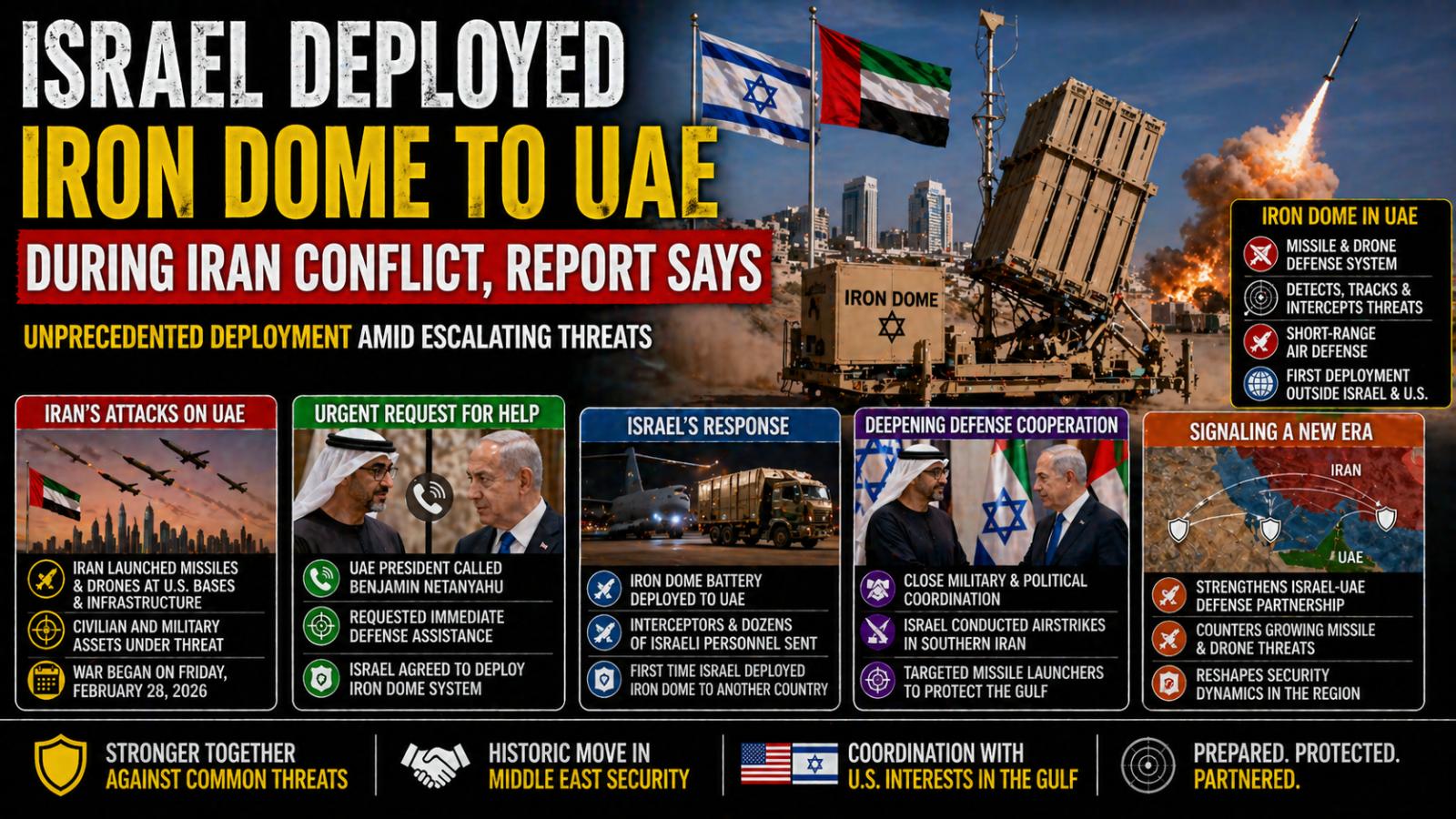
Israel deployed Iron Dome to UAE during Iran conflict, report says
Israel deployed Iron Dome to UAE during Iran conflict, report says, underscoring a previously undisclosed military move that signals deepening defense cooperation between the two countries during heightened tensions in the Gulf. According to a report citing U.S. and Israeli officials, the deployment occurred in the early phase of the war that began on Friday, February 28, 2026, when the United Arab Emirate
Israel deployed Iron Dome to UAE during Iran conflict, report says
Israel deployed Iron Dome to UAE during Iran conflict, report says, underscoring a previously undisclosed military move that signals deepening defense cooperation between the two countries during heightened tensions in the Gulf. According to a report citing U.S. and Israeli officials, the deployment occurred in the early phase of the war that began on Friday, February 28, 2026, when the United Arab Emirate
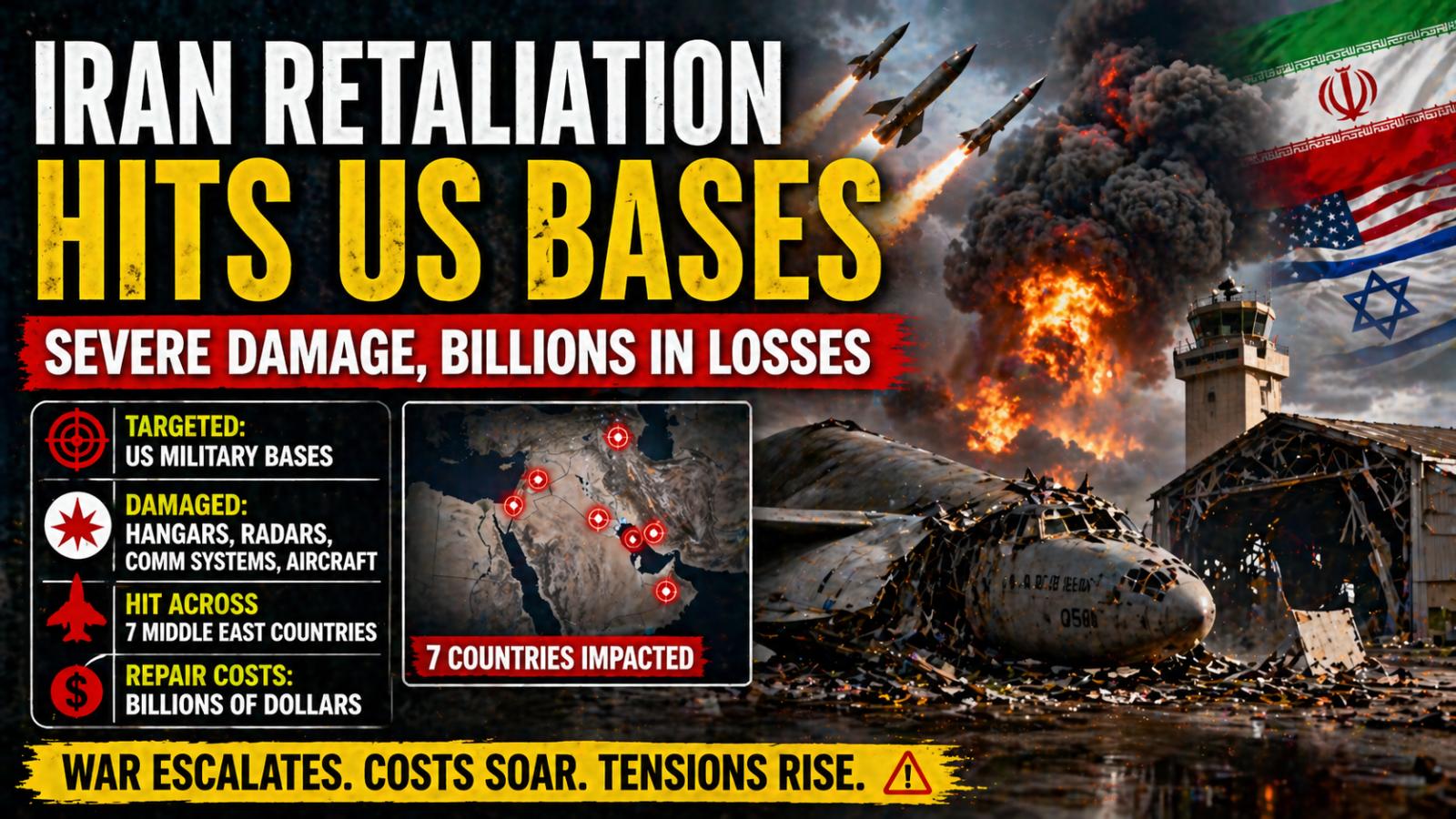
What damage did Iran war cause? US bases hit hard after airstrikes
The Iran war, which began on Friday, February 28, 2026, following joint airstrikes by the United States and Israel, has led to widespread infrastructure destruction across Iran while also triggering significant retaliation. New reporting indicates that Iranian counterattacks have caused extensive damage to US military installations across the Middle East, raising concerns about escalating defense costs and regional instability. Escalation after joint US-Israel airstrikes on
What damage did Iran war cause? US bases hit hard after airstrikes
The Iran war, which began on Friday, February 28, 2026, following joint airstrikes by the United States and Israel, has led to widespread infrastructure destruction across Iran while also triggering significant retaliation. New reporting indicates that Iranian counterattacks have caused extensive damage to US military installations across the Middle East, raising concerns about escalating defense costs and regional instability. Escalation after joint US-Israel airstrikes on
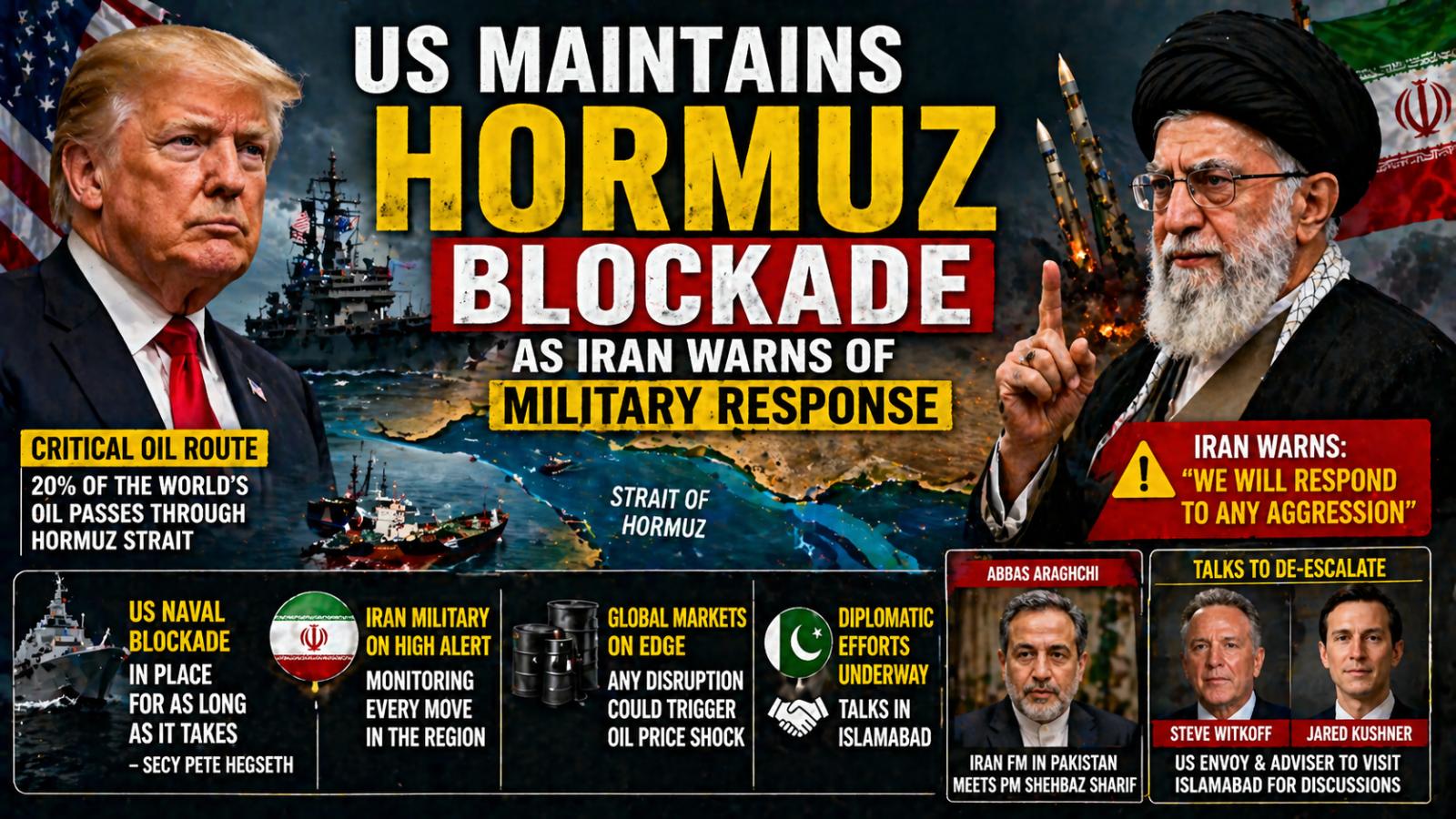
US maintains Hormuz blockade as Iran warns of military response
US maintains Hormuz blockade as Iran warns of retaliation, escalating tensions over a key global oil route while both sides pursue parallel diplomatic talks in Pakistan. US maintains Hormuz blockade as Iran warns of military response as tensions escalated on Saturday, April 25, 2026, when Iranian officials warned they would respond if U.S. naval actions targeting Iranian ports continue. The statement, issued through state-run media, described the U.S. presence in t
US maintains Hormuz blockade as Iran warns of military response
US maintains Hormuz blockade as Iran warns of retaliation, escalating tensions over a key global oil route while both sides pursue parallel diplomatic talks in Pakistan. US maintains Hormuz blockade as Iran warns of military response as tensions escalated on Saturday, April 25, 2026, when Iranian officials warned they would respond if U.S. naval actions targeting Iranian ports continue. The statement, issued through state-run media, described the U.S. presence in t
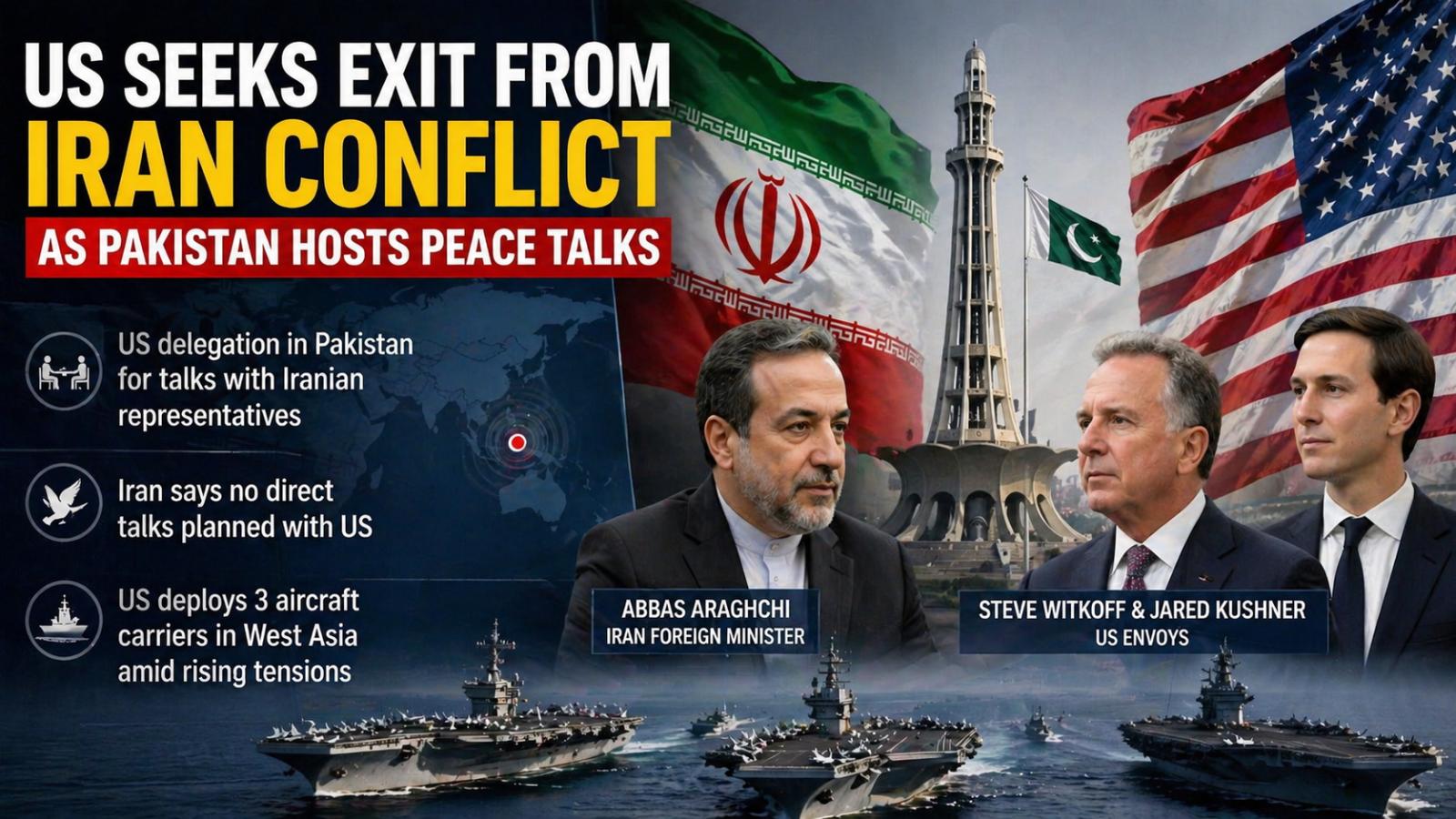
West Asia tensions rise as US envoys head to Pakistan for Iran talks
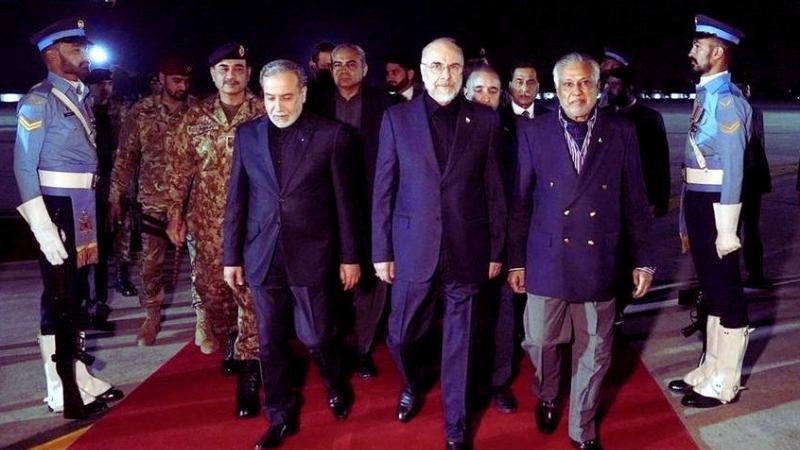
The US Iran conflict has entered a critical phase as Iran’s Defence Ministry claimed that the United States is seeking a “face-saving” way to exit the war, even as Washington sends a delegation to Pakistan for peace talks. The statement highlights growing diplomatic activity alongside rising military tensions in West Asia, with Pakistan emerging as a key mediator in the crisis. According to Iranian media reports, a defence ministry spokesperson said that Iran’s military strength has become dominant in the region, forcing the United States to look for a way out of what it described as a prolonged and difficult conflict. The remarks come at a time when US envoys Steve Witkoff and Jared Kushner are heading to Pakistan for discussions that the White House said would include talks with Iranian representatives. However, Iran has publicly denied plans for direct negotiations with the United States. Iranian Foreign Minister Abbas Araghchi arrived in Islamabad for an official visit and is scheduled to meet senior Pakistani officials. Iranian Foreign Ministry spokesperson Esmaeil Baqaei clarified that the visit is focused on consultations with Pakistan as part of its mediation efforts and not on direct dialogue with the US. He added that Iran’s position would be communicated through Pakistani channels. The diplomatic developments unfold against a backdrop of intensifying West Asia tensions, particularly around the Strait of Hormuz, a vital global oil route. The United States has significantly increased its military presence in the region, deploying three aircraft carrier strike groups, marking the largest such deployment since the Iraq war in 2003. According to US Central Command, the deployment includes more than 200 aircraft and around 15,000 personnel. As both diplomatic and military activities escalate, uncertainty remains over whether meaningful progress toward de-escalation can be achieved. While Pakistan continues its mediation role, the absence of direct Iran-US talks suggests that a resolution may still be distant, keeping the region on edge.
West Asia tensions rise as US envoys head to Pakistan for Iran talks
The US Iran conflict has entered a critical phase as Iran’s Defence Ministry claimed that the United States is seeking a “face-saving” way to exit the war, even as Washington sends a delegation to Pakistan for peace talks. The statement highlights growing diplomatic activity alongside rising military tensions in West Asia, with Pakistan emerging as a key mediator in the crisis. According to Iranian media reports, a defence ministry spokesperson said that Iran’s military strength has become dominant in the region, forcing the United States to look for a way out of what it described as a prolonged and difficult conflict. The remarks come at a time when US envoys Steve Witkoff and Jared Kushner are heading to Pakistan for discussions that the White House said would include talks with Iranian representatives. However, Iran has publicly denied plans for direct negotiations with the United States. Iranian Foreign Minister Abbas Araghchi arrived in Islamabad for an official visit and is scheduled to meet senior Pakistani officials. Iranian Foreign Ministry spokesperson Esmaeil Baqaei clarified that the visit is focused on consultations with Pakistan as part of its mediation efforts and not on direct dialogue with the US. He added that Iran’s position would be communicated through Pakistani channels. The diplomatic developments unfold against a backdrop of intensifying West Asia tensions, particularly around the Strait of Hormuz, a vital global oil route. The United States has significantly increased its military presence in the region, deploying three aircraft carrier strike groups, marking the largest such deployment since the Iraq war in 2003. According to US Central Command, the deployment includes more than 200 aircraft and around 15,000 personnel. As both diplomatic and military activities escalate, uncertainty remains over whether meaningful progress toward de-escalation can be achieved. While Pakistan continues its mediation role, the absence of direct Iran-US talks suggests that a resolution may still be distant, keeping the region on edge.










