Washington Paper Mill Chemical Tank Rupture Leaves One Dead
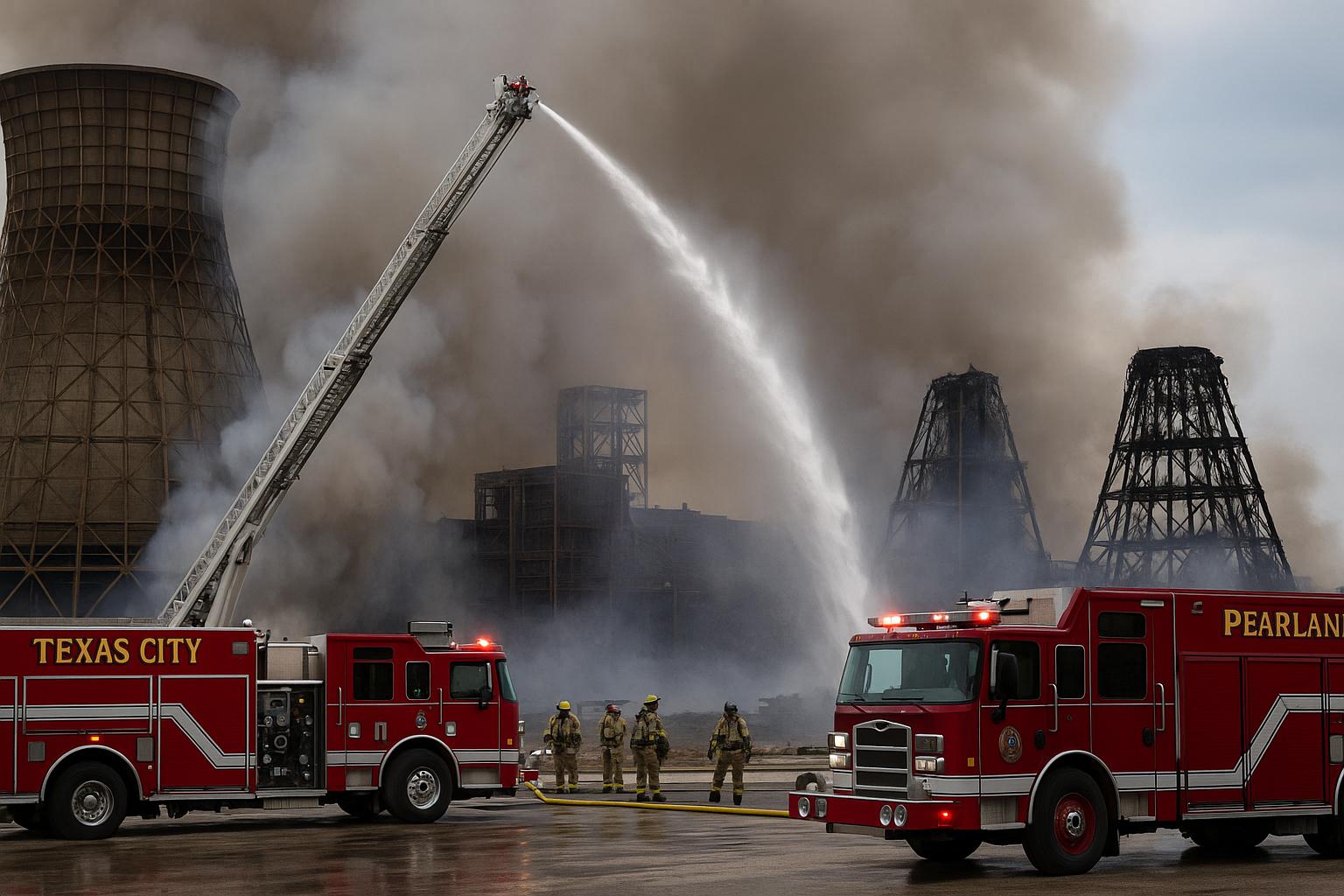
Chemical Tank Rupture Hits Washington Mill At least one person has died, nine people were injured and nine employees remain unaccounted for after a chemical tank ruptured at a paper and packaging facility in Longview, Washington. The incident occurred Tuesday morning at the Nippon Dynawave Packaging Co. facility, where a tank containing white liquor, a hazardous chemical mixture used in the paper-making pro
Washington Paper Mill Chemical Tank Rupture Leaves One Dead
Chemical Tank Rupture Hits Washington Mill At least one person has died, nine people were injured and nine employees remain unaccounted for after a chemical tank ruptured at a paper and packaging facility in Longview, Washington. The incident occurred Tuesday morning at the Nippon Dynawave Packaging Co. facility, where a tank containing white liquor, a hazardous chemical mixture used in the paper-making pro
Trump Honors US Troops at Arlington, Reiterates Iran Nuclear Stance
Memorial Day Tribute at Arlington On Memorial Day, May 25, President Donald Trump paid tribute to the US troops killed during the campaign against Iran while reaffirming that Tehran “will never have a nuclear weapon.” Speaking at Arlington National Cemetery, Trump honored the fallen soldiers of Operation Epic Fury, describing them as “wonderful, special people” who gave their lives to protect global
Trump Honors US Troops at Arlington, Reiterates Iran Nuclear Stance
Memorial Day Tribute at Arlington On Memorial Day, May 25, President Donald Trump paid tribute to the US troops killed during the campaign against Iran while reaffirming that Tehran “will never have a nuclear weapon.” Speaking at Arlington National Cemetery, Trump honored the fallen soldiers of Operation Epic Fury, describing them as “wonderful, special people” who gave their lives to protect global
India Hosts Quad Delhi Meeting as Indo-Pacific Security, China and West Asia Tensions Take Centre Stage
India is hosting the Quad foreign ministers’ meeting in New Delhi on May 26, 2026, bringing together senior leaders from India, the United States, Japan and Australia. External Affairs Minister S. Jaishankar is chairing the meeting, with U.S. Secretary of State Marco Rubio, Australian Foreign Minister Penny Wong and Japanese Foreign Minister Toshimitsu Motegi attending the talks. The participation details are confirmed by India’s Ministry of External Affairs. The meeting comes a
India Hosts Quad Delhi Meeting as Indo-Pacific Security, China and West Asia Tensions Take Centre Stage
India is hosting the Quad foreign ministers’ meeting in New Delhi on May 26, 2026, bringing together senior leaders from India, the United States, Japan and Australia. External Affairs Minister S. Jaishankar is chairing the meeting, with U.S. Secretary of State Marco Rubio, Australian Foreign Minister Penny Wong and Japanese Foreign Minister Toshimitsu Motegi attending the talks. The participation details are confirmed by India’s Ministry of External Affairs. The meeting comes a
Trump Sends 5,000 More US Troops To Poland Amid NATO Tensions
Trump Announces New Poland Troop Deployment US President Donald Trump said Thursday,May 21,2026 that the United States will deploy 5,000 additional troops to Poland, reversing earlier indications that a planned deployment had been canceled. Trump announced the decision on Truth Social and said it was influenced by his relationship with Polish President Karol Nawrocki, a nationalist ally whom he supported during last year’
Trump Sends 5,000 More US Troops To Poland Amid NATO Tensions
Trump Announces New Poland Troop Deployment US President Donald Trump said Thursday,May 21,2026 that the United States will deploy 5,000 additional troops to Poland, reversing earlier indications that a planned deployment had been canceled. Trump announced the decision on Truth Social and said it was influenced by his relationship with Polish President Karol Nawrocki, a nationalist ally whom he supported during last year’
Indian Techies Race Against 60-Day H-1B Visa Deadline Amid US Tech Layoffs
The latest wave of Silicon Valley layoffs affecting Indian H-1B visa holders has put thousands of Indian techies under extreme pressure. Professionals working at major companies like Meta, Amazon, and LinkedIn now face a ticking 60-day clock to either find a new employer willing to sponsor their visa, switch to another legal status, or leave the United States. In today’s slowing US tech job market, securing H-1B visa transfers or completing interviews and background checks within this short
Indian Techies Race Against 60-Day H-1B Visa Deadline Amid US Tech Layoffs
The latest wave of Silicon Valley layoffs affecting Indian H-1B visa holders has put thousands of Indian techies under extreme pressure. Professionals working at major companies like Meta, Amazon, and LinkedIn now face a ticking 60-day clock to either find a new employer willing to sponsor their visa, switch to another legal status, or leave the United States. In today’s slowing US tech job market, securing H-1B visa transfers or completing interviews and background checks within this short
Tamil Film Industry Seeks Reforms From Vijay Government
After the formation of the new government led by Vijay, the Tamil film industry is expecting major reforms to address theatre losses, piracy, OTT pressure and rising production costs. Tamil Film Industry Looks To Vijay Government After the formation of the new government led by Vijay, the Tamil film industry has placed several expectations before the administration. Producers, theatre owners and distributors beli
Tamil Film Industry Seeks Reforms From Vijay Government
After the formation of the new government led by Vijay, the Tamil film industry is expecting major reforms to address theatre losses, piracy, OTT pressure and rising production costs. Tamil Film Industry Looks To Vijay Government After the formation of the new government led by Vijay, the Tamil film industry has placed several expectations before the administration. Producers, theatre owners and distributors beli
AMCA Defence Hub in Puttaparthi: Rajnath & Chandrababu Lay Foundation
Defence Minister Rajnath Singh and Andhra Pradesh Chief Minister N. Chandrababu Naidu recently laid the foundation stone for the Rs 15,000-crore AMCA defence hub in Puttaparthi. The Advanced Medium Combat Aircraft (AMCA) flight testing and integration complex is a key part of India’s fifth-generation stealth fighter programme, aiming to strengthen the country’s defence aerospace capabilities. Previously, the Tamil Nadu government under Chief Minister MK Stalin had prop
AMCA Defence Hub in Puttaparthi: Rajnath & Chandrababu Lay Foundation
Defence Minister Rajnath Singh and Andhra Pradesh Chief Minister N. Chandrababu Naidu recently laid the foundation stone for the Rs 15,000-crore AMCA defence hub in Puttaparthi. The Advanced Medium Combat Aircraft (AMCA) flight testing and integration complex is a key part of India’s fifth-generation stealth fighter programme, aiming to strengthen the country’s defence aerospace capabilities. Previously, the Tamil Nadu government under Chief Minister MK Stalin had prop
Noida Workers Protest Case Sparks NSA Debate In UP
The Noida workers’ protest case intensified on May 14, 2026, exactly one month after violence broke out during labour demonstrations in the industrial hub on April 13. Uttar Pradesh Police invoked the stringent National Security Act (NSA) against Delhi University history graduate Aakriti Chaudhary, 25, and former journalist Satyam Verma, alleging their involvement in organising unrest, arson, and public disorder during the protests. Police claimed the violence was not spontaneous but part of a pre-planned operation carried out by an “organised syndicate of outsiders” linked to labour activist groups, an allegation strongly denied by the families of those arrested. The protests initially began over workers’ demands for better wages, overtime payments, and safer working conditions in Noida’s industrial sector before escalating into clashes and police action. Authorities registered 15 FIRs, detained nearly 1,200 people, and jailed around 60 accused under charges ranging from rioting to attempted murder. Police also sought a three-day custody of several accused, while the court scheduled the hearing for May 15. Along with Chaudhary and Verma, several students, labour activists, and workers from different states were arrested, including NIT graduates, research aspirants, and daily wage earners accused of supporting the demonstrations. Families of the accused alleged that many were targeted for supporting workers’ rights and labour movements. Chaudhary’s father defended her activism and questioned how she could be blamed for violence that allegedly occurred after she was detained. Friends and supporters of Verma highlighted his background in journalism, translation work, and social activism. Human rights groups, labour unions, and opposition leaders have meanwhile criticized the use of NSA in a labour protest case, raising concerns over freedom of expression, preventive detention laws, and the treatment of labour activists in India. The controversy has triggered nationwide political and legal debate over balancing public order with democratic rights during industrial unrest. Security has been tightened across sensitive industrial zones in Noida as investigations continue. Analysts believe the case could have long-term implications for labour movements, workers’ rights campaigns, and the future use of stringent security laws during protests across India.
Noida Workers Protest Case Sparks NSA Debate In UP
The Noida workers’ protest case intensified on May 14, 2026, exactly one month after violence broke out during labour demonstrations in the industrial hub on April 13. Uttar Pradesh Police invoked the stringent National Security Act (NSA) against Delhi University history graduate Aakriti Chaudhary, 25, and former journalist Satyam Verma, alleging their involvement in organising unrest, arson, and public disorder during the protests. Police claimed the violence was not spontaneous but part of a pre-planned operation carried out by an “organised syndicate of outsiders” linked to labour activist groups, an allegation strongly denied by the families of those arrested. The protests initially began over workers’ demands for better wages, overtime payments, and safer working conditions in Noida’s industrial sector before escalating into clashes and police action. Authorities registered 15 FIRs, detained nearly 1,200 people, and jailed around 60 accused under charges ranging from rioting to attempted murder. Police also sought a three-day custody of several accused, while the court scheduled the hearing for May 15. Along with Chaudhary and Verma, several students, labour activists, and workers from different states were arrested, including NIT graduates, research aspirants, and daily wage earners accused of supporting the demonstrations. Families of the accused alleged that many were targeted for supporting workers’ rights and labour movements. Chaudhary’s father defended her activism and questioned how she could be blamed for violence that allegedly occurred after she was detained. Friends and supporters of Verma highlighted his background in journalism, translation work, and social activism. Human rights groups, labour unions, and opposition leaders have meanwhile criticized the use of NSA in a labour protest case, raising concerns over freedom of expression, preventive detention laws, and the treatment of labour activists in India. The controversy has triggered nationwide political and legal debate over balancing public order with democratic rights during industrial unrest. Security has been tightened across sensitive industrial zones in Noida as investigations continue. Analysts believe the case could have long-term implications for labour movements, workers’ rights campaigns, and the future use of stringent security laws during protests across India.
South Indian Film Producers Meet in Hyderabad to Address Key Industry Issues
The South Indian Film Producers Association (SIFPA) convened its second official meeting in Hyderabad on Sunday, bringing together key players from the Telugu, Tamil, Malayalam, and Kannada film industries. This significant event saw active participation from major producer councils, guilds, and associations that represent the interests of filmmakers across these four regions. The discussions focused on several critical issues facing the industry today. One of the most pressing concerns was the rising production costs, which have been affecting the overall profitability of South Indian cinema. Producers discussed the challenges posed by fluctuating expenses in the face of rising inflation, which have made it difficult to maintain budgetary control while delivering high-quality films. Another topic under scrutiny was the ongoing challenges faced by the theatrical exhibition sector, especially in light of the increasing importance of OTT platforms. There was significant conversation surrounding OTT release window regulations and how they affect the traditional cinematic experience. Producers are seeking more structured regulations for OTT releases to create a balanced relationship between cinema halls and online platforms. Additionally, SIFPA discussed the need for more sustainable models of film financing to ensure the long-term growth and stability of the industry. This includes exploring new financing strategies that could alleviate the heavy reliance on private investors, who often bring their own set of challenges. The meeting also emphasized the importance of fostering collaboration among the South Indian film industries. With the growing international reach of South Indian cinema, there is a pressing need to strengthen bonds between producers, distributors, exhibitors, and content buyers. This collaboration is expected to enhance the collective growth of the regional film industries and improve their position both nationally and internationally. SIFPA reiterated its commitment to building a unified and transparent ecosystem for South Indian cinema, one that prioritizes industry stability, collective growth, and greater cooperation among all stakeholders. The association stressed that only by working together could the industry overcome common challenges and ensure its future sustainability. SIFPA has scheduled its next meeting in Cochin on June 14, 2026. Further deliberations and policy discussions are expected to continue, as the association works to implement strategies that will benefit the entire South Indian film ecosystem.


South Indian Film Producers Meet in Hyderabad to Address Key Industry Issues
The South Indian Film Producers Association (SIFPA) convened its second official meeting in Hyderabad on Sunday, bringing together key players from the Telugu, Tamil, Malayalam, and Kannada film industries. This significant event saw active participation from major producer councils, guilds, and associations that represent the interests of filmmakers across these four regions. The discussions focused on several critical issues facing the industry today. One of the most pressing concerns was the rising production costs, which have been affecting the overall profitability of South Indian cinema. Producers discussed the challenges posed by fluctuating expenses in the face of rising inflation, which have made it difficult to maintain budgetary control while delivering high-quality films. Another topic under scrutiny was the ongoing challenges faced by the theatrical exhibition sector, especially in light of the increasing importance of OTT platforms. There was significant conversation surrounding OTT release window regulations and how they affect the traditional cinematic experience. Producers are seeking more structured regulations for OTT releases to create a balanced relationship between cinema halls and online platforms. Additionally, SIFPA discussed the need for more sustainable models of film financing to ensure the long-term growth and stability of the industry. This includes exploring new financing strategies that could alleviate the heavy reliance on private investors, who often bring their own set of challenges. The meeting also emphasized the importance of fostering collaboration among the South Indian film industries. With the growing international reach of South Indian cinema, there is a pressing need to strengthen bonds between producers, distributors, exhibitors, and content buyers. This collaboration is expected to enhance the collective growth of the regional film industries and improve their position both nationally and internationally. SIFPA reiterated its commitment to building a unified and transparent ecosystem for South Indian cinema, one that prioritizes industry stability, collective growth, and greater cooperation among all stakeholders. The association stressed that only by working together could the industry overcome common challenges and ensure its future sustainability. SIFPA has scheduled its next meeting in Cochin on June 14, 2026. Further deliberations and policy discussions are expected to continue, as the association works to implement strategies that will benefit the entire South Indian film ecosystem.



Reverse Migration Fear: 30K Kerala Students May Return Amid Global Visa Crackdown
Reverse migration concerns are growing rapidly in Kerala as countries like the United Kingdom, Canada, Australia, and several European nations tighten immigration and student visa policies. Education experts and overseas consultancy agencies estimate that nearly 30,000 Malayali students could return home over the coming years due to stricter migration rules, reduced work opportunities, and changing settlement regulations abroad. The issue is creating anxiety among students and families who once viewed overseas education as a stable path toward global careers and permanent residency. For many years, Kerala witnessed a sharp rise in students moving abroad for higher education, attracted by better salaries, international exposure, and long-term settlement opportunities. However, recent policy changes in foreign nations are creating uncertainty for thousands of students who invested heavily through education loans and family savings. Many students now fear limited job opportunities and uncertain residency prospects after completing their courses. Countries such as the UK have introduced tighter dependent visa restrictions and stricter financial eligibility rules for international students. Canada has announced caps on student permits, while Australia has increased scrutiny in visa approvals and raised language and financial requirements for applicants. These changes are making it harder for students to secure employment and permanent residency after graduation, forcing many to reconsider their future plans abroad. The possibility of large-scale reverse migration is raising concerns about Kerala’s economy and employment sector. Returning graduates may struggle to find jobs that match their international qualifications and work experience. Education consultants in Kochi, Thiruvananthapuram, Kozhikode, and other cities report that students are becoming more cautious while selecting foreign destinations, increasingly preferring countries with stable immigration pathways. Experts believe Kerala may eventually need stronger employment programs, startup incentives, and skill-based opportunities to support returning graduates and prevent rising unemployment.
Reverse Migration Fear: 30K Kerala Students May Return Amid Global Visa Crackdown
Reverse migration concerns are growing rapidly in Kerala as countries like the United Kingdom, Canada, Australia, and several European nations tighten immigration and student visa policies. Education experts and overseas consultancy agencies estimate that nearly 30,000 Malayali students could return home over the coming years due to stricter migration rules, reduced work opportunities, and changing settlement regulations abroad. The issue is creating anxiety among students and families who once viewed overseas education as a stable path toward global careers and permanent residency. For many years, Kerala witnessed a sharp rise in students moving abroad for higher education, attracted by better salaries, international exposure, and long-term settlement opportunities. However, recent policy changes in foreign nations are creating uncertainty for thousands of students who invested heavily through education loans and family savings. Many students now fear limited job opportunities and uncertain residency prospects after completing their courses. Countries such as the UK have introduced tighter dependent visa restrictions and stricter financial eligibility rules for international students. Canada has announced caps on student permits, while Australia has increased scrutiny in visa approvals and raised language and financial requirements for applicants. These changes are making it harder for students to secure employment and permanent residency after graduation, forcing many to reconsider their future plans abroad. The possibility of large-scale reverse migration is raising concerns about Kerala’s economy and employment sector. Returning graduates may struggle to find jobs that match their international qualifications and work experience. Education consultants in Kochi, Thiruvananthapuram, Kozhikode, and other cities report that students are becoming more cautious while selecting foreign destinations, increasingly preferring countries with stable immigration pathways. Experts believe Kerala may eventually need stronger employment programs, startup incentives, and skill-based opportunities to support returning graduates and prevent rising unemployment.
Trump’s 10% Global Tariffs Face Legal Setback, Court Orders Refunds
The Trump administration had introduced the 10% tariff in February, following a Supreme Court decision that struck down many of his earlier tariffs. The administration argued that the new measure was necessary to address balance-of-payments deficits, citing Section 122 of the Trade Act of 1974. However, the court found that this legal justification was not applicable to the current situation. The U.S. trade court's ruling has implications for the administrat
Trump’s 10% Global Tariffs Face Legal Setback, Court Orders Refunds
The Trump administration had introduced the 10% tariff in February, following a Supreme Court decision that struck down many of his earlier tariffs. The administration argued that the new measure was necessary to address balance-of-payments deficits, citing Section 122 of the Trade Act of 1974. However, the court found that this legal justification was not applicable to the current situation. The U.S. trade court's ruling has implications for the administrat
Could Alberta Leave Canada? Inside the Rising Independence Movement and 2026 Referendum Push
Alberta’s independence movement is gaining momentum—but can Alberta actually leave Canada? The short answer: not easily. Yet a new referendum push is forcing the question back into national debate. Alberta referendum gains traction A pro-independence group has submitted over 300,000 signatures—far above the ~178,000 required—to trigger a potential Alberta referendum in 2026. Officials say th
Could Alberta Leave Canada? Inside the Rising Independence Movement and 2026 Referendum Push
Alberta’s independence movement is gaining momentum—but can Alberta actually leave Canada? The short answer: not easily. Yet a new referendum push is forcing the question back into national debate. Alberta referendum gains traction A pro-independence group has submitted over 300,000 signatures—far above the ~178,000 required—to trigger a potential Alberta referendum in 2026. Officials say th
Shell Profits Jump 24% as Oil Prices Surge on Middle East Crisis
Shell Profits Rise as Oil Prices Surge Shell profits climbed sharply in the first quarter as oil prices surged during the Middle East conflict, helping the energy giant beat market expectations. The London-based company reported adjusted earnings of $6.92 billion, up 24% from a year earlier, as Brent crude volatility boosted oil trading, refining margins and energy market returns. Middle East Conflict Drives Energy Volatility
Shell Profits Jump 24% as Oil Prices Surge on Middle East Crisis
Shell Profits Rise as Oil Prices Surge Shell profits climbed sharply in the first quarter as oil prices surged during the Middle East conflict, helping the energy giant beat market expectations. The London-based company reported adjusted earnings of $6.92 billion, up 24% from a year earlier, as Brent crude volatility boosted oil trading, refining margins and energy market returns. Middle East Conflict Drives Energy Volatility
Three dead in shooting outside restaurant in Linz, Austria; police recover weapon
LINZ, Austria, May 7 — Three people were killed in a shooting outside a restaurant in the Austrian city of Linz on Thursday, police said, adding that the weapon used has been recovered. Emergency services responded shortly after the incident was reported in a public area, where multiple fatalities were confirmed at the scene, a police spokesperson said. Authorities have not released full details of how the shooting unfolded. Local media, including Kronen Zeitung, reported that a man shot two women before killing himself. Police said the suspected attacker is among the dead but have not fully confirmed the sequence of events. The area was secured as officers began investigations to identify those involved and determine the circumstances surrounding the incident. Officials said there is no indication of an ongoing threat to the public. Police have urged witnesses to come forward as inquiries continue.
Three dead in shooting outside restaurant in Linz, Austria; police recover weapon
LINZ, Austria, May 7 — Three people were killed in a shooting outside a restaurant in the Austrian city of Linz on Thursday, police said, adding that the weapon used has been recovered. Emergency services responded shortly after the incident was reported in a public area, where multiple fatalities were confirmed at the scene, a police spokesperson said. Authorities have not released full details of how the shooting unfolded. Local media, including Kronen Zeitung, reported that a man shot two women before killing himself. Police said the suspected attacker is among the dead but have not fully confirmed the sequence of events. The area was secured as officers began investigations to identify those involved and determine the circumstances surrounding the incident. Officials said there is no indication of an ongoing threat to the public. Police have urged witnesses to come forward as inquiries continue.
Massive Investments Pour Into Andhra Pradesh, Boosting Industrial Growth and Employment
Andhra Pradesh has emerged as a hotspot for fresh investments, as evidenced by the announcements made during the 17th State Investment Promotion Board (SIPB) meeting. The state continues to attract national and international investors across various sectors, such as renewable energy, green hydrogen, bio CNG, manufacturing, and data infrastructure, bringing an unprecedented boost to its industrial and employment landscape.
Massive Investments Pour Into Andhra Pradesh, Boosting Industrial Growth and Employment
Andhra Pradesh has emerged as a hotspot for fresh investments, as evidenced by the announcements made during the 17th State Investment Promotion Board (SIPB) meeting. The state continues to attract national and international investors across various sectors, such as renewable energy, green hydrogen, bio CNG, manufacturing, and data infrastructure, bringing an unprecedented boost to its industrial and employment landscape.
Celina Jaitly Custody Battle: Actor Breaks Down at Son’s Grave, Alleges Denied Access to Children
Celina Jaitly custody battle has intensified as the actor shared an emotional video from Austria, alleging she has been denied access to her children during ongoing divorce proceedings. The video, filmed at her late son Shamsher’s grave, shows Jaitly visibly distraught—bringing attention to a deeply personal and legal struggle unf
Celina Jaitly Custody Battle: Actor Breaks Down at Son’s Grave, Alleges Denied Access to Children
Celina Jaitly custody battle has intensified as the actor shared an emotional video from Austria, alleging she has been denied access to her children during ongoing divorce proceedings. The video, filmed at her late son Shamsher’s grave, shows Jaitly visibly distraught—bringing attention to a deeply personal and legal struggle unf
Trump Drug Pricing Plan Could Cut $529B: Will Your Costs Drop?
The White House says aligning U.S. drug prices with global rates may slash costs—but experts remain divided. What the $529 Billion Savings Really Means According to White House economists, Trump’s drug pricing strategy—often called the “most favored nation” model—could reduce prescription drug costs by up to $529 billion over 10 years. The idea is simple: Americans s
Trump Drug Pricing Plan Could Cut $529B: Will Your Costs Drop?
The White House says aligning U.S. drug prices with global rates may slash costs—but experts remain divided. What the $529 Billion Savings Really Means According to White House economists, Trump’s drug pricing strategy—often called the “most favored nation” model—could reduce prescription drug costs by up to $529 billion over 10 years. The idea is simple: Americans s
GLP-1 Weight Loss Drugs Lift Pharma Profits, But Deloitte Warns of Bubble Risk
GLP-1 Drugs Drive Pharma Growth GLP-1 weight loss drugs are powering a sharp rebound in pharma R&D returns, but analysts warn the boom may be creating a risky “bubble effect” across the sector. According to Deloitte’s latest pharma innovation analysis, R&D returns among the world’s top 20 drugmakers have climbed to 7%, driven largely by obesity and diabetes treatments such as GLP-1 drugs. Obesity Drugs Overtake Oncology
GLP-1 Weight Loss Drugs Lift Pharma Profits, But Deloitte Warns of Bubble Risk
GLP-1 Drugs Drive Pharma Growth GLP-1 weight loss drugs are powering a sharp rebound in pharma R&D returns, but analysts warn the boom may be creating a risky “bubble effect” across the sector. According to Deloitte’s latest pharma innovation analysis, R&D returns among the world’s top 20 drugmakers have climbed to 7%, driven largely by obesity and diabetes treatments such as GLP-1 drugs. Obesity Drugs Overtake Oncology
Australia opens Bondi Beach attack hearings amid antisemitism concerns
Australia has launched public hearings on May 4, 2026, into the Bondi Beach attack and the rising wave of antisemitism, aiming to uncover both the causes of the deadly shooting and the broader social impact. The inquiry focuses on the tragic events of December 14, 2025, when a mass shooting during a Hanukkah celebration at Sydney’s Bondi Beach left 15 people dead, including a child. Authorities have confirmed the attack was driven by antisemitism, placing it at the center of a wider national concern. The hearings, taking place in Sydney, are part of a royal commission examining hate crimes and social cohesion. Witnesses appearing before the panel include victims’ families, community leaders, and individuals who have faced antisemitic abuse. Some participants have been granted anonymity due to fears of retaliation, underlining the seriousness of the situation. Victim testimonies highlight growing fear One of the first witnesses, Sheina Gutnick, whose father was killed while confronting the attackers, described receiving disturbing messages after the incident. She said the aftermath made her feel that antisemitism had become more open and normalized. Her testimony reflects a broader concern within the Jewish community about safety and acceptance in Australia. The commission is being led by former High Court judge Virginia Bell and will proceed in three phases. The first phase examines the scale and nature of antisemitism across the country. The second phase will investigate the circumstances of the Bondi Beach attack in detail, while the final phase will explore how online platforms may be contributing to radicalisation and the spread of hate. Another witness shared concerns about long-term safety, explaining that after decades of living in Australia, they are now questioning whether the country remains secure for future generations. Such accounts point to a shift in public sentiment that the inquiry aims to address. An interim report released earlier by the commission proposed 14 recommendations, including stricter firearm laws and increased security for Jewish gatherings and events. Officials have also noted that international tensions may be influencing domestic incidents, adding complexity to the issue. The hearings are expected to provide critical insights into the Bondi Beach attack and help shape policies to address antisemitism, strengthen security, and restore confidence in social harmony.
Australia opens Bondi Beach attack hearings amid antisemitism concerns
Australia has launched public hearings on May 4, 2026, into the Bondi Beach attack and the rising wave of antisemitism, aiming to uncover both the causes of the deadly shooting and the broader social impact. The inquiry focuses on the tragic events of December 14, 2025, when a mass shooting during a Hanukkah celebration at Sydney’s Bondi Beach left 15 people dead, including a child. Authorities have confirmed the attack was driven by antisemitism, placing it at the center of a wider national concern. The hearings, taking place in Sydney, are part of a royal commission examining hate crimes and social cohesion. Witnesses appearing before the panel include victims’ families, community leaders, and individuals who have faced antisemitic abuse. Some participants have been granted anonymity due to fears of retaliation, underlining the seriousness of the situation. Victim testimonies highlight growing fear One of the first witnesses, Sheina Gutnick, whose father was killed while confronting the attackers, described receiving disturbing messages after the incident. She said the aftermath made her feel that antisemitism had become more open and normalized. Her testimony reflects a broader concern within the Jewish community about safety and acceptance in Australia. The commission is being led by former High Court judge Virginia Bell and will proceed in three phases. The first phase examines the scale and nature of antisemitism across the country. The second phase will investigate the circumstances of the Bondi Beach attack in detail, while the final phase will explore how online platforms may be contributing to radicalisation and the spread of hate. Another witness shared concerns about long-term safety, explaining that after decades of living in Australia, they are now questioning whether the country remains secure for future generations. Such accounts point to a shift in public sentiment that the inquiry aims to address. An interim report released earlier by the commission proposed 14 recommendations, including stricter firearm laws and increased security for Jewish gatherings and events. Officials have also noted that international tensions may be influencing domestic incidents, adding complexity to the issue. The hearings are expected to provide critical insights into the Bondi Beach attack and help shape policies to address antisemitism, strengthen security, and restore confidence in social harmony.
Luxury Car Oil Shortage Could Hit Soon: What the Global Base Oil Crisis Means for You
The global base oil shortage is no longer just an industry headline—it’s becoming a real concern for luxury car owners worldwide. As supply chains tighten due to geopolitical tensions around the Strait of Hormuz, the availability of high-performance engine oils used in premium vehicles is under pressure. For owners of brands like BMW, Mercedes-Benz, and Audi, this could soon translate into higher maintenance costs, limited oil availability, and delayed servicing. What’s Causing the Global Base Oil Shortage? At the heart of the issue is the ongoing instability linked to tensions involving Iran and critical oil transit routes. The Strait of Hormuz handles a significant portion of the world’s petroleum shipments—not just crude oil, but also refined products like base oils, which are essential for lubricant production. Base oils form the foundation of: Synthetic engine oils Industrial lubricants High-performance automotive fluids With shipping disruptions, delayed tankers, and rising insurance risks, the supply of these materials has tightened globally. Why Luxury Cars Are Hit Harder Not all vehicles are affected equally. Luxury and high-performance cars rely heavily on Group III and Group IV base oils, including advanced formulations like polyalphaolefins (PAO). These oils are designed to: Handle extreme temperatures Protect high-speed engines Maintain performance under pressure Unlike regular vehicles, luxury cars cannot easily switch to cheaper alternatives without risking engine damage or reduced efficiency. That’s why this shortage hits premium segments first—and hardest. Rising Prices and Supply Pressure The numbers already show stress in the system: The Gulf region contributes around 20% of global Group III base oil production It accounted for nearly half of U.S. imports in recent periods Prices in some markets have nearly doubled since the crisis began With inventories shrinking and delivery times increasing, lubricant manufacturers are struggling to keep up. If disruptions continue, experts warn that: Oil prices could rise further Service costs for luxury vehicles may spike Availability could become inconsistent in certain regions What This Means for Luxury Car Owners If you own a premium vehicle, here’s what you might notice in the coming weeks or months: Higher Maintenance Costs Synthetic oil changes could become significantly more expensive. Service Delays Workshops may face shortages or longer wait times for specific oil grades. Risk of Substitutes Some service centers might use alternative oils—potentially affecting performance if not approved. Should You Be Worried Right Now? Not immediately—but it’s something to watch closely. There’s no need to panic or stockpile engine oil. However: Stick to authorized service centers Ensure correct oil specifications are used Avoid delaying essential maintenance Being proactive now can help you avoid bigger issues later. A Bigger Energy and Supply Chain Problem This isn’t just about cars—it reflects a deeper issue in the global energy ecosystem. Heavy reliance on specific regions like the Persian Gulf makes supply chains vulnerable. Alongside geopolitical tensions, factors like: Refinery disruptions Export restrictions Seasonal risks (like hurricanes in U.S. Gulf Coast) are amplifying the pressure. Industry experts see this as a warning sign of long-term structural risks in the oil and automotive sectors. What Happens Next? If shipping routes stabilize and production resumes, the situation could ease within months. But if disruptions persist: Prices may remain elevated Supply chains could tighten further Luxury vehicle ownership costs may rise globally For now, both manufacturers and consumers are bracing for continued uncertainty. Final Takeaway The global base oil shortage is quietly building into a significant challenge—especially for luxury car owners. While it may not yet be visible at every service center, the signs are clear: tightening supply, rising costs, and growing dependence on fragile global networks. Staying informed—and maintaining your vehicle responsibly—will be key in navigating what could become one of the most overlooked automotive disruptions of the year.
Luxury Car Oil Shortage Could Hit Soon: What the Global Base Oil Crisis Means for You
The global base oil shortage is no longer just an industry headline—it’s becoming a real concern for luxury car owners worldwide. As supply chains tighten due to geopolitical tensions around the Strait of Hormuz, the availability of high-performance engine oils used in premium vehicles is under pressure. For owners of brands like BMW, Mercedes-Benz, and Audi, this could soon translate into higher maintenance costs, limited oil availability, and delayed servicing. What’s Causing the Global Base Oil Shortage? At the heart of the issue is the ongoing instability linked to tensions involving Iran and critical oil transit routes. The Strait of Hormuz handles a significant portion of the world’s petroleum shipments—not just crude oil, but also refined products like base oils, which are essential for lubricant production. Base oils form the foundation of: Synthetic engine oils Industrial lubricants High-performance automotive fluids With shipping disruptions, delayed tankers, and rising insurance risks, the supply of these materials has tightened globally. Why Luxury Cars Are Hit Harder Not all vehicles are affected equally. Luxury and high-performance cars rely heavily on Group III and Group IV base oils, including advanced formulations like polyalphaolefins (PAO). These oils are designed to: Handle extreme temperatures Protect high-speed engines Maintain performance under pressure Unlike regular vehicles, luxury cars cannot easily switch to cheaper alternatives without risking engine damage or reduced efficiency. That’s why this shortage hits premium segments first—and hardest. Rising Prices and Supply Pressure The numbers already show stress in the system: The Gulf region contributes around 20% of global Group III base oil production It accounted for nearly half of U.S. imports in recent periods Prices in some markets have nearly doubled since the crisis began With inventories shrinking and delivery times increasing, lubricant manufacturers are struggling to keep up. If disruptions continue, experts warn that: Oil prices could rise further Service costs for luxury vehicles may spike Availability could become inconsistent in certain regions What This Means for Luxury Car Owners If you own a premium vehicle, here’s what you might notice in the coming weeks or months: Higher Maintenance Costs Synthetic oil changes could become significantly more expensive. Service Delays Workshops may face shortages or longer wait times for specific oil grades. Risk of Substitutes Some service centers might use alternative oils—potentially affecting performance if not approved. Should You Be Worried Right Now? Not immediately—but it’s something to watch closely. There’s no need to panic or stockpile engine oil. However: Stick to authorized service centers Ensure correct oil specifications are used Avoid delaying essential maintenance Being proactive now can help you avoid bigger issues later. A Bigger Energy and Supply Chain Problem This isn’t just about cars—it reflects a deeper issue in the global energy ecosystem. Heavy reliance on specific regions like the Persian Gulf makes supply chains vulnerable. Alongside geopolitical tensions, factors like: Refinery disruptions Export restrictions Seasonal risks (like hurricanes in U.S. Gulf Coast) are amplifying the pressure. Industry experts see this as a warning sign of long-term structural risks in the oil and automotive sectors. What Happens Next? If shipping routes stabilize and production resumes, the situation could ease within months. But if disruptions persist: Prices may remain elevated Supply chains could tighten further Luxury vehicle ownership costs may rise globally For now, both manufacturers and consumers are bracing for continued uncertainty. Final Takeaway The global base oil shortage is quietly building into a significant challenge—especially for luxury car owners. While it may not yet be visible at every service center, the signs are clear: tightening supply, rising costs, and growing dependence on fragile global networks. Staying informed—and maintaining your vehicle responsibly—will be key in navigating what could become one of the most overlooked automotive disruptions of the year.