The United Arab Emirates has approved significant amendments to its child care framework, allowing foreign residents to foster children of unknown parentage, a move that expands access to a system that was previously restricted to Emirati citizens. The changes, enacted under Federal Decree-Law No. 12 of 2025, revise provisions of the 2022 law governing child welfare and are aimed at strengthening institutional care while broadening social participation in foster services.
The updated legal framework reflects the UAE’s evolving social policies and its focus on inclusive community responsibility. By permitting non-citizen residents to participate in foster care, authorities aim to provide greater stability and family-based care for children without known guardians, while maintaining oversight and regulatory safeguards under existing welfare mechanisms.
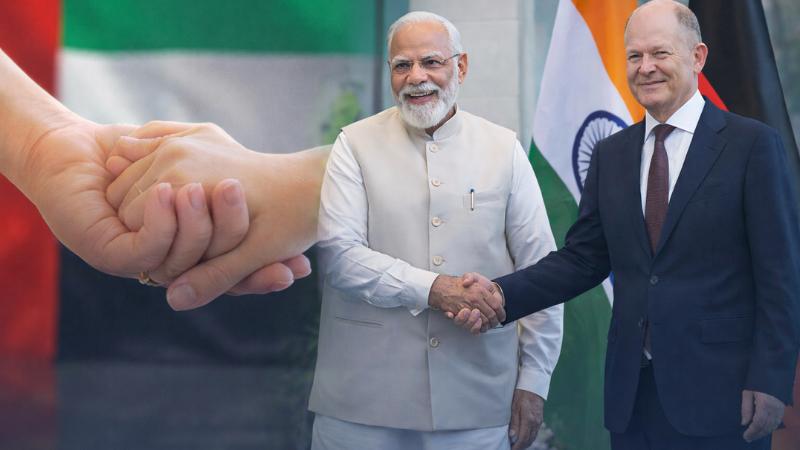
Separately, diplomatic engagement between India and Germany gained momentum as Prime Minister Narendra Modi welcomed German Chancellor Friedrich Merz’s announcement of visa-free transit for Indian citizens. Speaking at a joint press conference, Modi described the measure as an important step toward strengthening people-to-people ties and enhancing mobility between the two countries.
The Prime Minister highlighted a newly developed roadmap for higher education cooperation, noting that it would give fresh direction to bilateral engagement in academic and research sectors. He invited German universities to establish campuses in India, underlining education as a core pillar of the expanding partnership. Modi also expressed appreciation for the visa-free transit initiative, describing it as a practical step toward deeper societal and cultural exchange.
During their discussions, the two leaders addressed a range of global and regional developments, including ongoing conflicts in Ukraine and Gaza. Both reaffirmed a shared position that terrorism represents a serious threat to humanity and emphasized their continued commitment to combating it through coordinated international efforts. Modi reiterated India’s long-standing advocacy for peaceful conflict resolution and support for initiatives aimed at reducing global instability.
On matters of global governance, the Prime Minister stressed the need for reforming international institutions to better reflect contemporary realities. He cited collaborative efforts through the G4 group to push for reform of the United Nations Security Council, stating that ongoing institutional changes were essential for maintaining global credibility and effectiveness. The signing of several memorandums of understanding during the visit was described as a step that would provide renewed momentum to cooperation across multiple sectors.
Climate action, energy transition, and technology cooperation featured prominently in the bilateral agenda. Modi noted expanding collaboration in urban development, urban mobility, and clean energy initiatives, particularly highlighting the potential of large-scale green hydrogen projects involving companies from both nations. He described these ventures as potential game changers for future energy security and sustainability.
The Prime Minister also underscored commitments to building secure, resilient, and trustworthy supply chains, noting that cooperation in technology, defence, and security had strengthened steadily over the years. He acknowledged Germany’s efforts to simplify defence trade procedures and announced plans to develop a structured roadmap to enhance industrial-level defence collaboration between the two countries.
Reflecting on historical ties, Modi recalled the longstanding cultural and intellectual connections between India and Germany, referencing figures such as Rabindranath Tagore, Swami Vivekananda, and Madam Bhikaji Cama. He said these shared legacies continue to shape a modern partnership rooted in mutual respect and common values.
Chancellor Merz’s visit coincided with the 75th anniversary of diplomatic relations between India and Germany and the 25th anniversary of their Strategic Partnership. The two-day visit, spanning January 12 and 13, was aimed at further strengthening cooperation across education, technology, climate action, and global governance. As part of his itinerary, the German Chancellor was scheduled to visit leading technology and research institutions before concluding his trip.