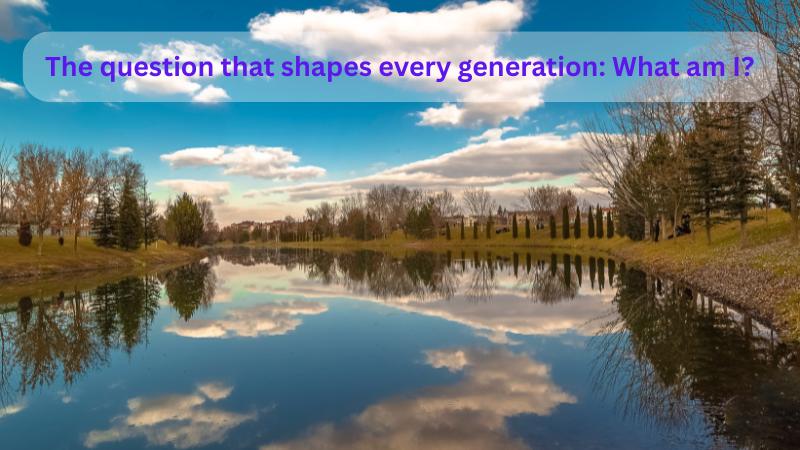
The process of questioning “What am I?” should begin early in life. When children are encouraged to reflect on their behavior, intentions, and values, they develop emotional maturity and clarity of purpose. Asking this question at a young age helps individuals grow with awareness rather than correction. Instead of waiting for life to teach through mistakes, the habit of introspection shapes self-discipline and empathy naturally.
For a child, “What am I?” might mean asking, “Am I a caring and respectful son or daughter?” During student years, it becomes, “Am I focused, sincere, and responsible in my studies?” These simple reflections nurture personal accountability. As individuals move through life, the same question evolves with experience. In friendship, one may ask, “Do I offer support and positivity to those around me?” In adulthood, it becomes, “Am I growing in my career with honesty and balance?”
Among family relationships, the question “What am I?” holds even deeper relevance. One of the most overlooked yet vital bonds is that between siblings. As people grow older, differences in opinions, lifestyle, or success often weaken the closeness once shared in childhood. Misunderstandings and emotional distance can quietly replace warmth and companionship. But when one pauses to ask, “What am I as a brother or sister?”, it brings a shift in perspective. It reminds each person of their role in nurturing love, understanding, and forgiveness. A conscious effort to maintain that bond can prevent deterioration and preserve emotional strength within the family.
As responsibilities expand, the question deepens further. Within families, it invites reflection: “Am I a nurturing parent or a considerate partner?” As members of a community, it encourages awareness of how one’s actions affect others and the environment. At a societal level, it leads to a sense of duty, promoting cooperation, fairness, and civic responsibility.
The most profound impact of asking “What am I?” lies in its ability to connect self-growth with collective progress. When individuals consciously refine their thoughts and actions, their families become more peaceful and understanding. A balanced family contributes to a healthier society, which ultimately strengthens the nation. In this way, self-awareness becomes the foundation for social and global harmony.
Self-reflection also strengthens emotional intelligence. It enables people to understand not just what they do, but why they do it. In a world often driven by external validation, the inner question “What am I?” brings a sense of direction rooted in values rather than opinions. It teaches balance between personal ambitions and shared responsibilities, between growth and gratitude.
Asking this question regularly prevents stagnation. It keeps individuals aligned with purpose, reminding them that character is not built in a moment but refined through continuous reflection. Whether one is a student, employee, sibling, parent, or grandparent, self-awareness keeps evolving. The question “What am I?” adjusts with time but never loses its relevance.
Ultimately, when a person begins to live with this question in mind, actions become more thoughtful, communication becomes kinder, and decisions carry greater meaning. The world does not change overnight, but every act of awareness adds light to the collective consciousness. The practice of self-questioning thus becomes not just a personal tool, but a social responsibility.
In every phase of life, “What am I?” acts as a mirror to one’s intentions and behavior. It is not about judgment but growth, not about perfection but progress. The earlier one begins this journey, the richer it becomes. It is a reminder that inner clarity is the true strength of an evolving society—and that understanding what we are is the first step toward becoming who we are meant to be.