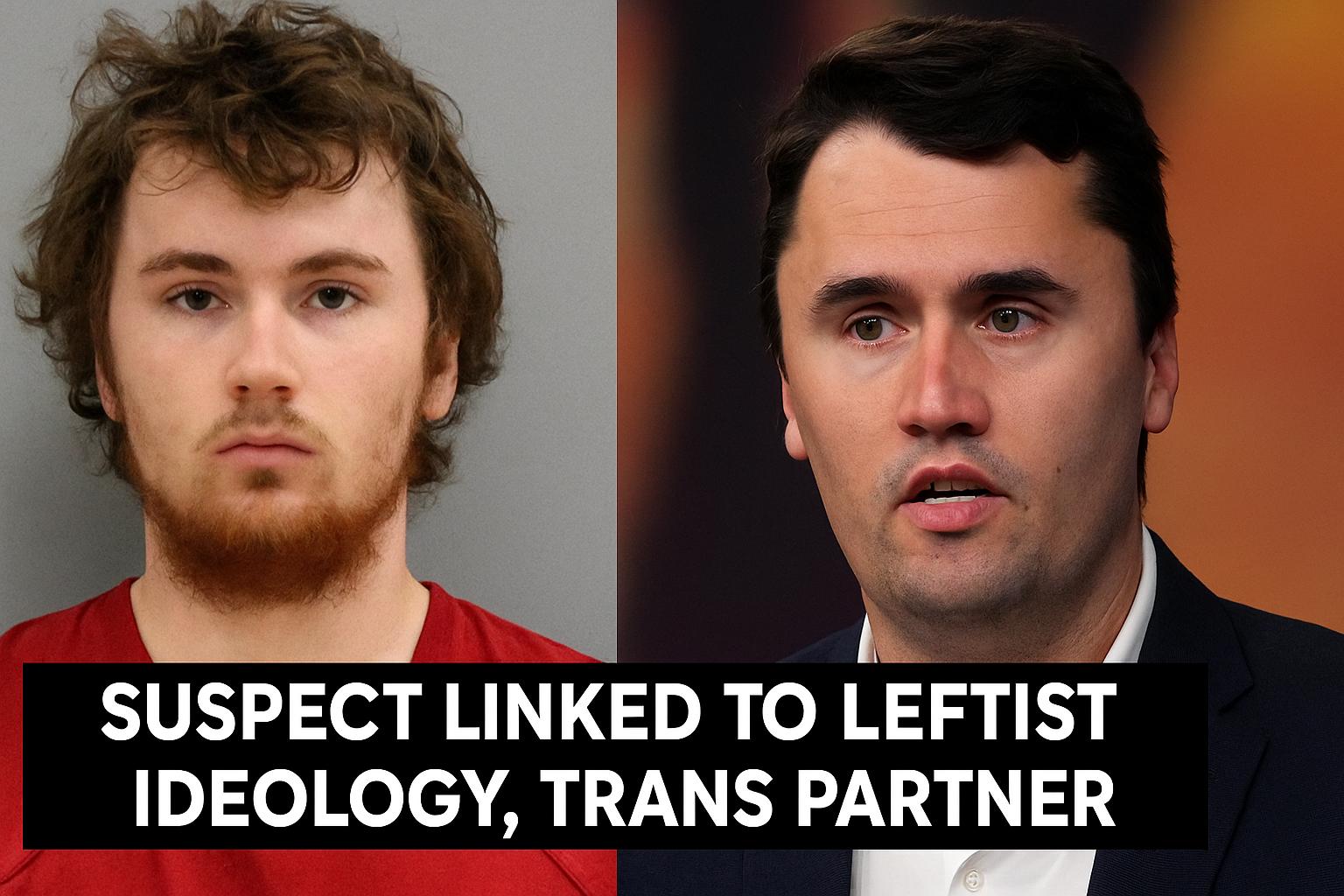
Utah Governor Spencer Cox revealed on Sunday that Tyler Robinson, the man arrested for assassinating conservative activist Charlie Kirk, had been romantically involved with a transgender partner and was associated with leftist ideology. In his remarks, Cox confirmed that Robinson’s political leanings and personal life are being carefully examined by investigators as they piece together a possible motive behind the shocking killing.
Speaking during a television interview, Cox acknowledged that Robinson, 22, had been living with a transgender roommate who was also his romantic partner. The partner, identified as a male transitioning to female, has been fully cooperative with investigators and had no knowledge of Robinson’s alleged plan to kill Kirk. Cox clarified that the partner’s transition itself has not been directly tied to the motive but said investigators are still working to determine what role, if any, Robinson’s relationship or personal environment may have played. Formal charges against Robinson are expected to be filed on Tuesday.
The governor also disclosed that Robinson has not been cooperating with investigators, leaving authorities to rely on information gathered from his family, friends, and those around him. According to Cox, these sources have indicated that Robinson was motivated by leftist beliefs, a factor that may have contributed to his targeting of Kirk. The 31-year-old activist, a close ally of US President Donald Trump, was fatally shot last week while addressing a student rally at a university in Utah.
Cox urged Americans to work toward lowering the political temperature in the country, warning against further escalation of division and hostility. He emphasized that toxic rhetoric and violent polarization are contributing to tragic incidents like the one that claimed Kirk’s life. His appeal for calm came at a time when the revelation of Robinson’s relationship with a transgender partner sparked anger among far-right circles and fueled heated debate across the political spectrum.
Among those reacting was conservative commentator Laura Loomer, who called for the transgender movement to be labeled as a terrorist organization. Tech billionaire Elon Musk also amplified posts on his social media platform that denounced gender-affirming treatment and blamed leftist ideology for violent incidents. Musk even declared at a far-right rally in London that the left had become “the party of murder.” These reactions highlight how the killing of Kirk has become another flashpoint in America’s ongoing culture wars over gender and ideology.
Kirk, who founded Turning Point USA, was known for his sharp criticism of transgender rights and gender identity issues. His outspoken views frequently placed him at the center of national debates. In the past, he described transgender identity as a rejection of Christian faith, referring to it as a “throbbing middle finger to God” in one of his speeches. He often linked gender identity issues to what he saw as broader societal decline. Only last year, Kirk referred to what he described as a “trans delusion death cult” after a shooting incident in Minneapolis carried out by a suspect who identified as transgender.
The circumstances surrounding Robinson’s alleged motivation are still under investigation, but his association with leftist ideology, combined with his personal relationship and possible resentment toward Kirk’s public stance on gender identity, are being closely scrutinized. For investigators, determining whether the killing was politically or personally motivated remains a critical task.
The assassination of Charlie Kirk has reignited discussion over the rise of political violence in the United States. Law enforcement authorities have already warned of increased threats against public figures across the political divide, and this incident adds urgency to debates over free speech, identity, and ideological conflict. With charges pending and further details expected to surface during legal proceedings, the case continues to highlight the deep divisions in American society.
As the investigation progresses, questions remain over how personal ideology, political beliefs, and the influence of identity struggles intersected to produce one of the most high-profile political assassinations in recent years. Governor Cox’s comments suggest that while the exact motive may still be unclear, the toxic mix of ideological conflict and social tensions played a central role in fueling this tragedy.