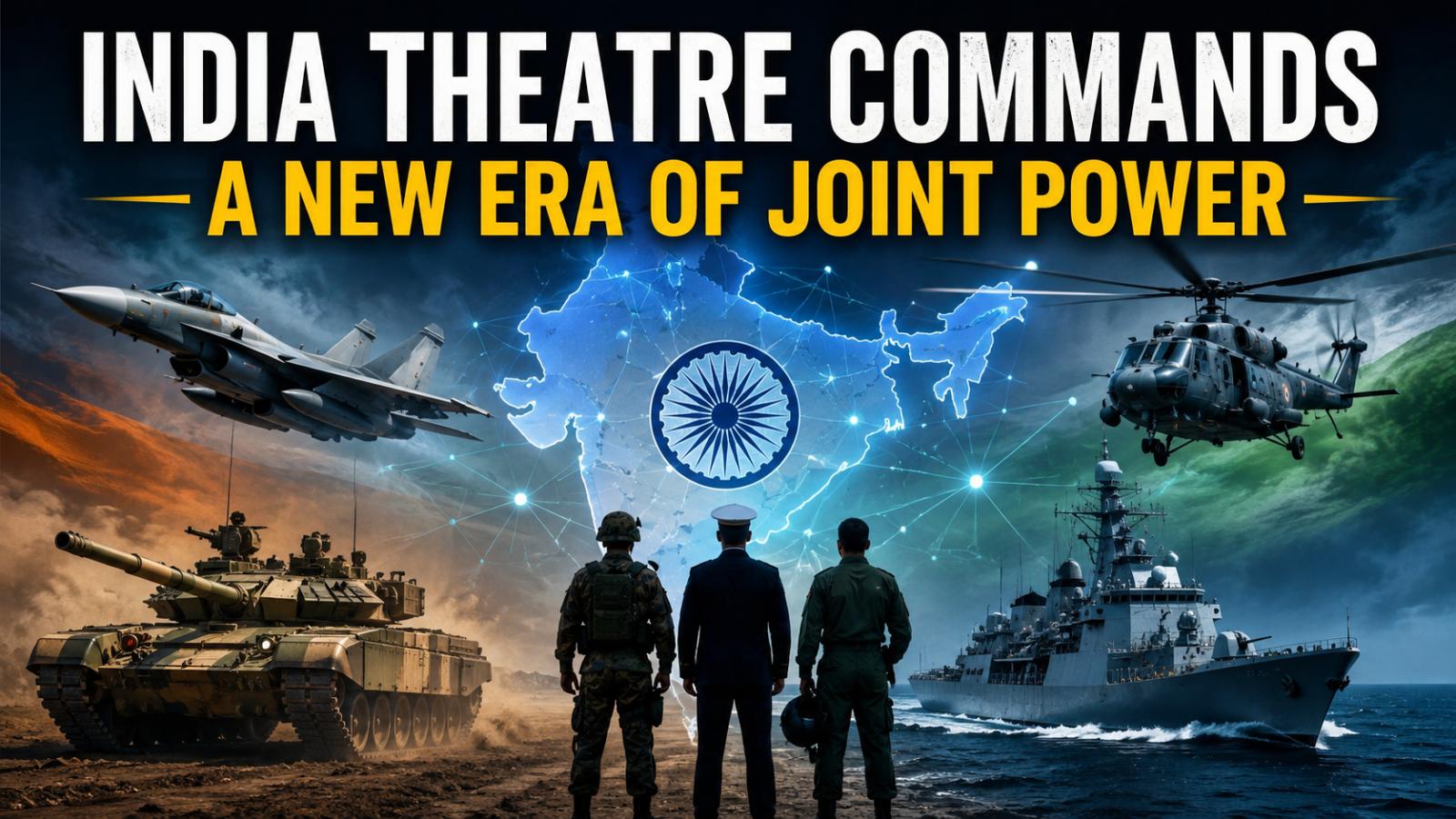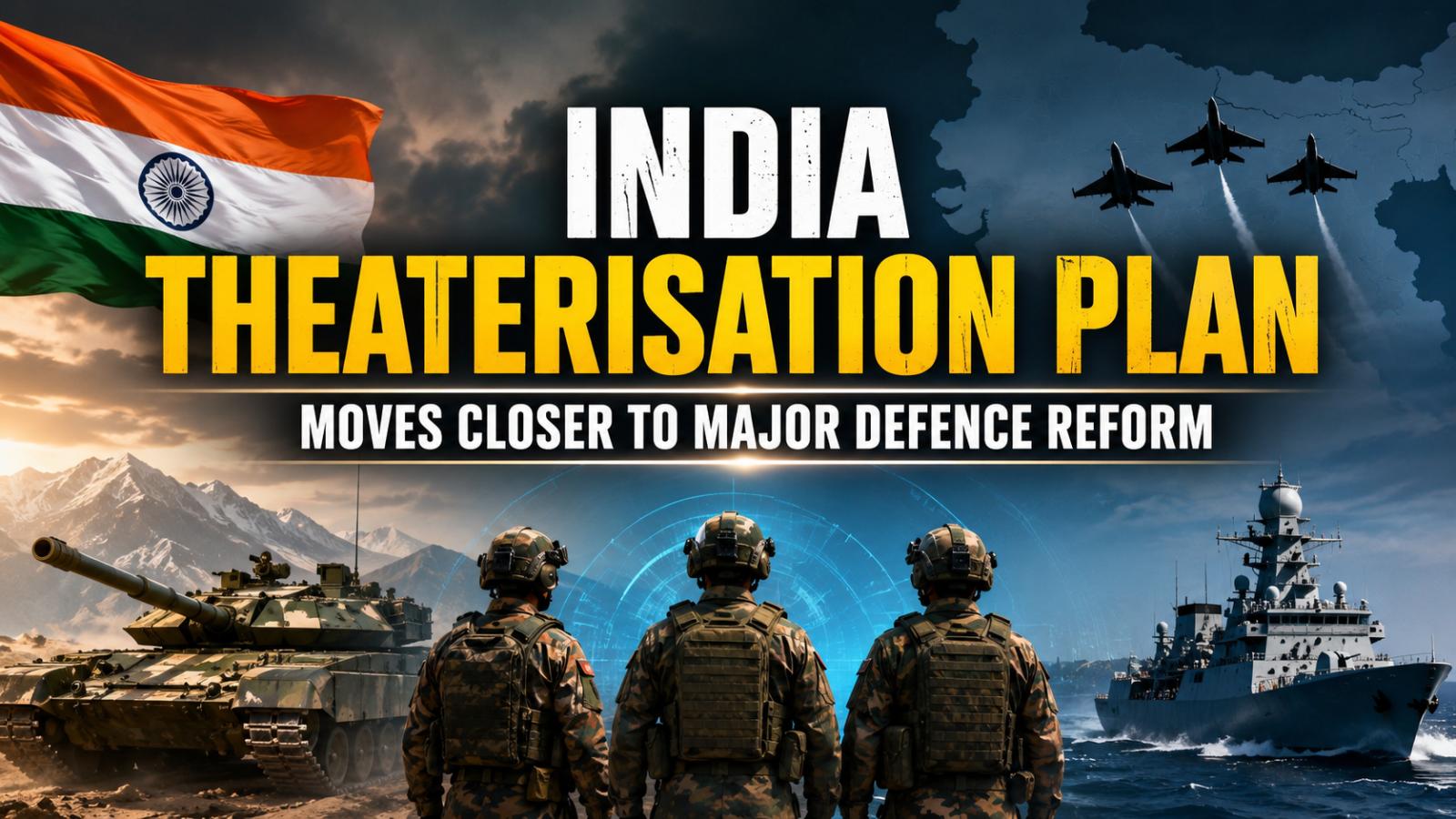
India’s proposed theaterisation plan could become its biggest military command reform. It aims to improve Army, Navy and Air Force coordination through integrated theatre commands, faster decisions and region-specific operational planning.
Integrated theatre commands and CDS reform
Reports indicate that Chief of Defence Staff General NS Raja Subramani may present the latest proposal to Defence Minister Rajnath Singh. The Ministry of Defence has confirmed that studies are examining integrated commands for land borders, the maritime domain and joint air defence, but no final structure or rollout date has been officially announced.
The reform would place forces assigned to a geographical or functional theatre under one operational commander. Service chiefs would continue leading recruitment, training, modernisation and force generation, while theatre commanders would plan and conduct operations with assigned Army, Navy and Air Force resources.
China, Pakistan and maritime commands
The reported model includes commands focused on the northern border, western front and maritime security. Reports suggest an Army officer could lead the China-facing command, an Air Force officer could oversee the Pakistan-oriented theatre and a Navy officer could head the maritime command.
However, these assignments remain proposals rather than a confirmed government arrangement. India currently operates through separate service-specific command structures. Theaterisation seeks to reduce overlap and establish clearer responsibility by combining intelligence, logistics, surveillance and combat resources under unified operational headquarters.
Air Force role and command challenges
The hardest issue may be the control of limited, high-value assets. The Air Force must move aircraft, air-defence systems and support platforms quickly between regions. Permanently dividing these resources among theatre commands could reduce flexibility, while retaining central control could weaken the authority of theatre commanders.
Rank and accountability also need clarity. Policymakers must decide whether theatre commanders should hold three-star or four-star rank and define their relationship with the CDS and service chiefs. New headquarters, doctrines and joint training systems will require considerable funding, preparation and testing.
Joint commands and operational benefits
Supporters say joint military commands can shorten decision-making during conflicts spanning land, sea, air, cyber, space and information domains. Integrated planning may improve intelligence sharing, logistics and the deployment of specialised capabilities.
The reform also reflects lessons from coordination gaps examined after the 1999 Kargil conflict. However, changing the command structure alone will not guarantee better performance. India will need clear authority, interoperable technology, joint exercises and safeguards against extra bureaucracy.
If implemented carefully, India theaterisation could strengthen operational readiness and region-specific defence planning. A rushed rollout could instead create confusion over military assets and command responsibility. Its success will depend on whether the three services can operate through a genuinely unified system rather than merely creating new headquarters.