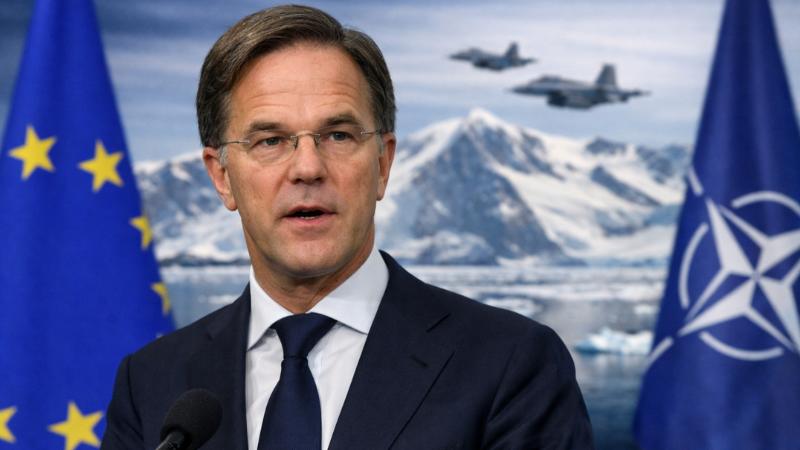
NATO Secretary General Mark Rutte has reiterated that Europe remains fundamentally dependent on the United States for its collective defense, pushing back against any notion that the continent could independently guarantee its security. Speaking to lawmakers at the European Parliament on Monday, Rutte emphasized that the transatlantic alliance remains indispensable at a time of rising geopolitical uncertainty and renewed debate over Europe’s military capabilities.
Rutte’s remarks come amid heightened diplomatic tensions involving Greenland, following renewed signals from US President Donald Trump about his interest in acquiring the strategically important Arctic territory. The issue has once again drawn attention to security dynamics in the Arctic region, where climate change, emerging shipping routes, and access to natural resources are reshaping geopolitical calculations. Greenland, an autonomous territory within the Kingdom of Denmark, occupies a central role in these discussions due to its location and strategic value.
Addressing members of the European Parliament, Rutte dismissed suggestions that Europe, whether through the European Union or broader regional cooperation, could defend itself without American involvement. He stated that any such belief was unrealistic, underscoring that the US continues to provide critical military capabilities, intelligence, and deterrence that Europe cannot yet replicate on its own. His comments reflect long-standing concerns within NATO about uneven defense spending and capability gaps among European members.
The NATO chief also referred to ongoing diplomatic frameworks involving Denmark, Greenland, and the United States. According to Rutte, discussions between the three parties are expected to continue independently, highlighting that NATO’s role is not to intervene directly in territorial or bilateral negotiations but to ensure broader alliance stability. He described this engagement as a separate workstream that remains the responsibility of the governments involved.
Rutte’s intervention follows recent friction between Washington and European allies over burden-sharing within NATO and historical military commitments. Disagreements have resurfaced over the scale and nature of allied troop contributions in past operations, reflecting broader debates about responsibility, leadership, and accountability within the alliance. These exchanges have reinforced concerns in Europe about the reliability of transatlantic relations, particularly in light of shifting political priorities in the United States.
Despite these tensions, Rutte stressed that NATO unity remains essential in addressing current and emerging security threats, from conventional military challenges to cyber risks and instability along Europe’s periphery. He argued that strengthening European defense capabilities should be seen as a complement to, rather than a replacement for, US involvement. Increased investment by European nations, he said, would help rebalance the alliance while preserving its core foundation.
The comments are likely to reignite discussion within European capitals about defense spending, strategic autonomy, and the future shape of NATO. While European leaders have repeatedly called for greater self-reliance, Rutte’s message was clear that such ambitions must be grounded in practical realities. For now, he suggested, the transatlantic partnership remains the cornerstone of European security, particularly as geopolitical competition intensifies in regions such as the Arctic.
As debates continue over Greenland, Arctic security, and Europe’s defense posture, Rutte’s remarks underline a central message: Europe’s security architecture is still deeply intertwined with the United States, and any effort to redefine that relationship will require long-term commitment, investment, and political consensus across the alliance.