India’s nuclear doctrine has evolved over decades, with a clear emphasis on No First Use (NFU). This defensive posture is grounded in the idea of deterring potential nuclear attacks by assuring a credible second-strike capability. By adopting NFU, India ensures that it will only use nuclear weapons in retaliation, maintaining a strong and defensive stance in global security matters.
As India’s nuclear strategy matured, advancements in its arsenal played a pivotal role in enhancing its deterrence. The development of the Agni missile series, which includes the advanced K-15 and K-4 submarine-launched ballistic missiles, significantly bolstered India’s second-strike capabilities. These developments ensure the survivability of India’s nuclear arsenal, even in the face of a first strike, making it capable of launching a retaliatory attack with devastating impact.
India's nuclear trajectory was not without challenges. The country's nuclear tests in 1974 and 1998 were met with condemnation from various global powers, especially the U.S., China, and Pakistan. Despite the international sanctions that followed these tests, India successfully navigated the diplomatic landscape. A key milestone came with the 2008 U.S.-India Nuclear Deal, which provided India with the opportunity to access nuclear fuel and technology. This agreement helped India gain recognition as a responsible nuclear power on the world stage and was a significant turning point in its nuclear diplomacy.
The nuclear arms race in South Asia, particularly with Pakistan and China, has been a defining factor in India's security strategy. While India’s nuclear capabilities ensure deterrence, the rivalry with neighboring Pakistan and the growing tensions with China have continued to shape the country’s defense policy. India’s nuclear program has thus served as a cornerstone for its defense strategy, providing a sense of security while asserting its position in global geopolitics.
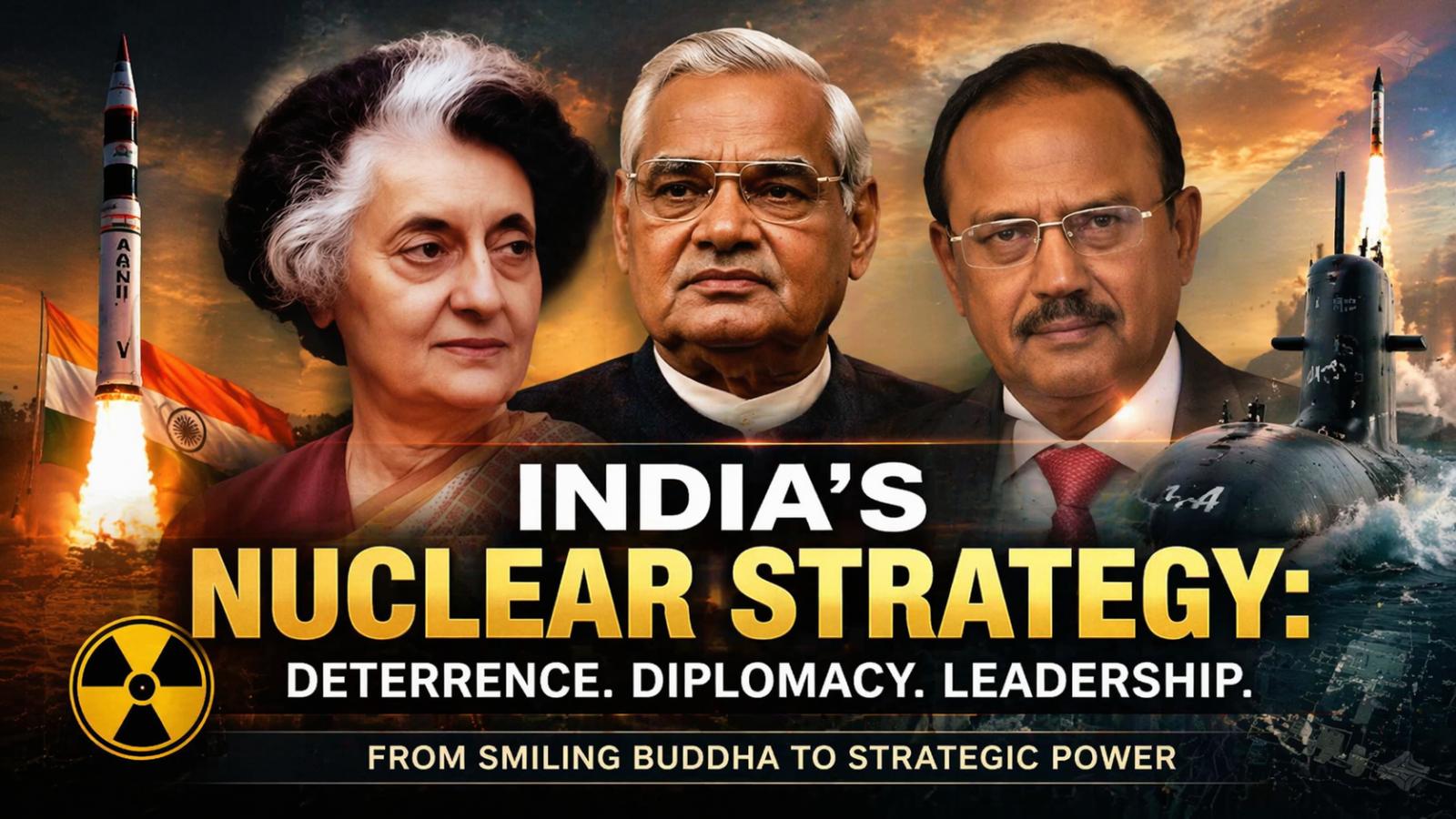
Leadership has played a critical role in shaping India’s nuclear policy. Indira Gandhi’s leadership during the Smiling Buddha test in 1974 marked the country’s emergence as a nuclear power. Atal Bihari Vajpayee’s tenure saw India’s strategic defense modernization, including the development of long-range missile systems. More recently, National Security Advisor Ajit Doval has been instrumental in fine-tuning India’s nuclear doctrine, ensuring that its nuclear deterrence remains credible and robust. Through these efforts, India has not only secured its sovereignty but also solidified its place as a global nuclear power.
In conclusion, India’s nuclear doctrine continues to evolve, driven by technological advancements and diplomatic strategies. By maintaining a defensive posture while modernizing its deterrence capabilities, India ensures that its security remains uncompromised in an increasingly complex and competitive global security environment.
As India’s nuclear strategy matured, advancements in its arsenal played a pivotal role in enhancing its deterrence. The development of the Agni missile series, which includes the advanced K-15 and K-4 submarine-launched ballistic missiles, significantly bolstered India’s second-strike capabilities. These developments ensure the survivability of India’s nuclear arsenal, even in the face of a first strike, making it capable of launching a retaliatory attack with devastating impact.
India's nuclear trajectory was not without challenges. The country's nuclear tests in 1974 and 1998 were met with condemnation from various global powers, especially the U.S., China, and Pakistan. Despite the international sanctions that followed these tests, India successfully navigated the diplomatic landscape. A key milestone came with the 2008 U.S.-India Nuclear Deal, which provided India with the opportunity to access nuclear fuel and technology. This agreement helped India gain recognition as a responsible nuclear power on the world stage and was a significant turning point in its nuclear diplomacy.
The nuclear arms race in South Asia, particularly with Pakistan and China, has been a defining factor in India's security strategy. While India’s nuclear capabilities ensure deterrence, the rivalry with neighboring Pakistan and the growing tensions with China have continued to shape the country’s defense policy. India’s nuclear program has thus served as a cornerstone for its defense strategy, providing a sense of security while asserting its position in global geopolitics.
Leadership has played a critical role in shaping India’s nuclear policy. Indira Gandhi’s leadership during the Smiling Buddha test in 1974 marked the country’s emergence as a nuclear power. Atal Bihari Vajpayee’s tenure saw India’s strategic defense modernization, including the development of long-range missile systems. More recently, National Security Advisor Ajit Doval has been instrumental in fine-tuning India’s nuclear doctrine, ensuring that its nuclear deterrence remains credible and robust. Through these efforts, India has not only secured its sovereignty but also solidified its place as a global nuclear power.
In conclusion, India’s nuclear doctrine continues to evolve, driven by technological advancements and diplomatic strategies. By maintaining a defensive posture while modernizing its deterrence capabilities, India ensures that its security remains uncompromised in an increasingly complex and competitive global security environment.