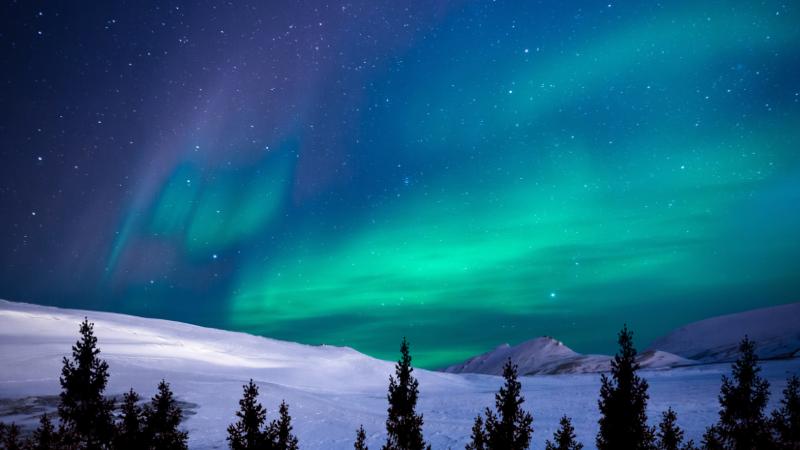
A breathtaking display of northern lights may be visible across parts of the United States tonight, May 31, as space weather experts forecast heightened geomagnetic storm activity that could push auroras much farther south than usual. According to the National Oceanic and Atmospheric Administration, Earth is currently being impacted by high-speed solar wind, which is increasing geomagnetic pressure and fueling storm conditions in Earth’s upper atmosphere—an ideal scenario for aurora hunters.
Forecasters are predicting geomagnetic storm conditions reaching G3 levels, with the possibility of escalating to G4 severity. These levels are part of NOAA's scale for geomagnetic disturbances, where G1 is minor and G5 represents extreme conditions. The trigger behind this activity includes both elevated solar winds and an Earth-directed coronal mass ejection (CME), which ejects charged solar particles that interact with Earth’s magnetic field to produce auroras. The Kp index, a global geomagnetic indicator, is forecast to peak at approximately 4.67 over the weekend, suggesting moderate to strong auroral activity. For context, the Kp index ranges from 0 to 9, with values above 5 typically needed for auroras to become visible across the northern U.S.
Just a few days ago, a surprise geomagnetic storm on May 28 reached G3 intensity, despite earlier forecasts anticipating only a G1 event. That storm produced unexpected auroras across 17 U.S. states and was even visible as far south as Italy. Tonight’s event could have a similarly dramatic reach, making it a prime night for skywatchers in northern and central parts of the U.S.
Based on the latest forecast data, the states most likely to catch a glimpse of the aurora borealis tonight include Alaska, Montana, North Dakota, Minnesota, Wisconsin, and Michigan. These are traditionally high-latitude areas often within the auroral oval—the region surrounding the magnetic poles where auroras are most likely to be visible. However, the current geomagnetic conditions suggest that auroras may also be visible in more southern states such as Nebraska, Iowa, Illinois, and even parts of Connecticut and Massachusetts. The full list of states potentially seeing auroral activity includes: Alaska, Montana, North Dakota, Minnesota, Wisconsin, Michigan, South Dakota, Vermont, New Hampshire, Maine, Idaho, Washington, Oregon, New York, Massachusetts, Nebraska, Iowa, Wyoming, Illinois, and Connecticut.
Auroras can be unpredictable in their reach and intensity. Even with promising forecasts, a range of atmospheric and environmental factors must align for an ideal viewing experience. Cloud cover, light pollution, and local geomagnetic variations can all influence visibility. For the best chance to witness the spectacle, observers in the predicted visibility zone should head to a north-facing location far from city lights. As we approach the summer solstice around June 20 and 21, the available hours of darkness in northern states become shorter. Therefore, the most favorable time to catch the northern lights will likely be between 1 a.m. and 2 a.m., when the sky is at its darkest.
To track live aurora activity and get the most accurate forecast for your location, it’s advisable to use a space weather or aurora tracking app. Tools such as “My Aurora Forecast & Alerts” and “Space Weather Live” provide real-time updates, forecast maps, and alerts based on your region, helping you plan your viewing efforts effectively. These apps often include updates from NOAA’s Space Weather Prediction Center and offer useful metrics like the current Kp index, cloud cover predictions, and satellite imagery of solar activity.
This weekend’s storm is another reminder of how dynamic and awe-inspiring space weather can be. With the sun currently nearing a peak in its 11-year solar cycle, these kinds of strong geomagnetic storms may become more frequent, increasing the chances for stunning auroral displays in the months to come. For now, however, tonight offers a rare and exciting opportunity for many Americans to experience the magic of the northern lights without needing to travel to the Arctic Circle. Whether you're an experienced skywatcher or someone hoping to catch their first glimpse of the aurora borealis, tonight's forecast offers a good reason to keep your eyes on the sky.