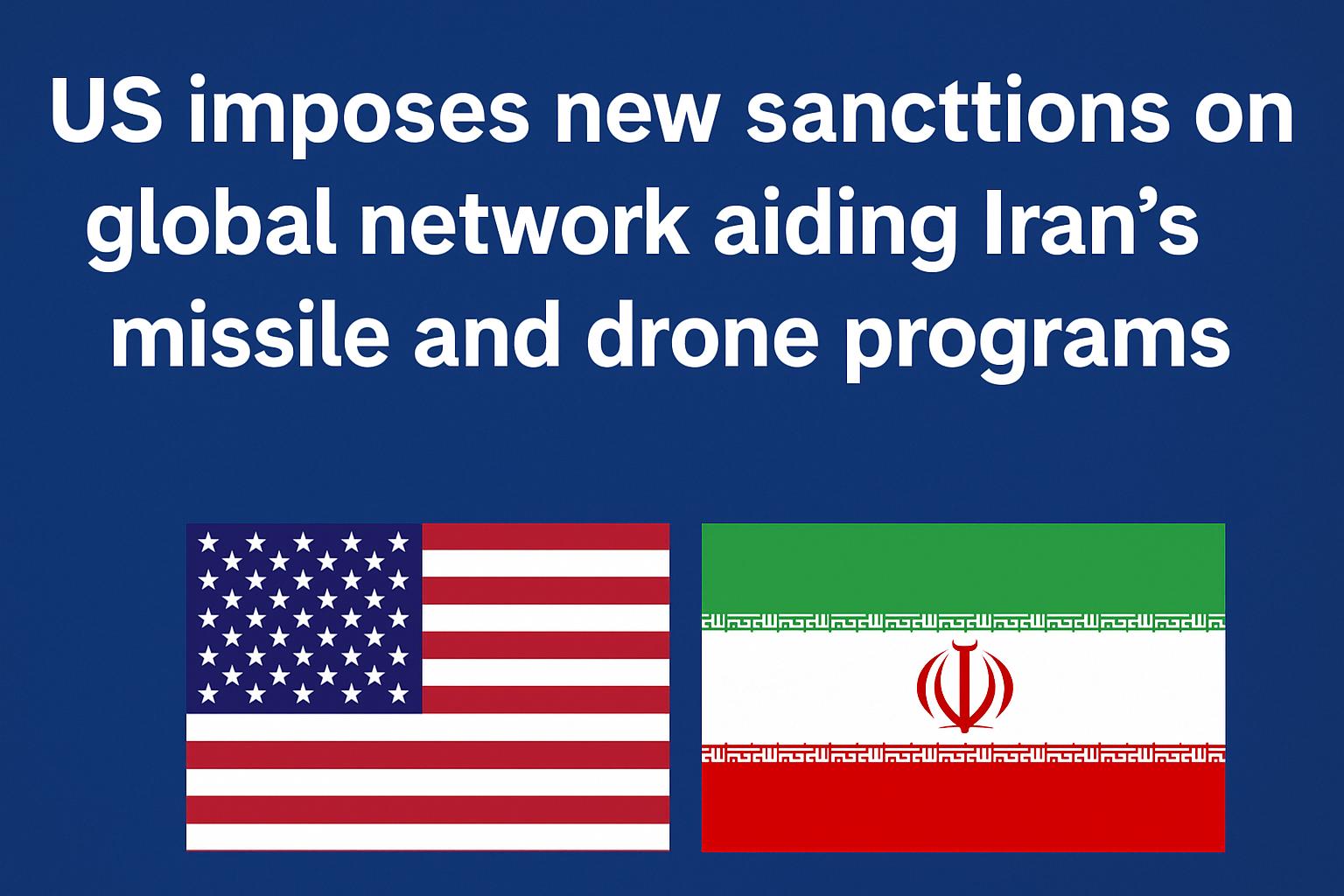
The United States has announced a fresh wave of sanctions targeting individuals and entities accused of supporting Iran’s ballistic missile and drone development programs. The move underscores Washington’s ongoing effort to curtail Tehran’s military capabilities and disrupt its network of global suppliers.
In a detailed statement released on Wednesday, the US Treasury Department confirmed that 32 individuals and companies operating across eight countries—including Iran, the United Arab Emirates, Turkey, China, Hong Kong, India, Germany, and Ukraine—were designated under the latest sanctions package. These actors are accused of facilitating procurement activities that supply critical materials, components, and technical support to Iran’s missile and unmanned aerial vehicle (UAV) programs.
According to the Treasury Department, these networks have been instrumental in advancing Iran’s ability to produce long-range missiles and sophisticated drones, which have increasingly been deployed in regional conflicts. The department warned that the continued proliferation of such systems poses a direct threat to US and allied forces in West Asia, as well as to international commercial shipping routes in the Red Sea.
Officials emphasized that the sanctions are part of Washington’s broader campaign to counter Iran’s destabilizing activities and limit its access to global financial and trade systems. The statement noted that Iran’s weapons programs rely heavily on a network of intermediaries and front companies that source key technologies and materials from abroad. By targeting these networks, US authorities aim to weaken Iran’s capacity to expand its ballistic missile arsenal and drone fleet.
For years, the United States, alongside several European partners and Israel, has accused Iran of using its nuclear program as a façade to advance military weapons capabilities. Tehran, however, has repeatedly rejected these claims, asserting that its nuclear and missile activities are intended for defensive and peaceful purposes. Despite such denials, Washington continues to view Iran’s growing military research and procurement operations as a significant security challenge in the Middle East.
The US State Department said the latest action builds upon the directives outlined in the National Security Presidential Memorandum-2, aimed at countering Iran’s aggressive pursuit of both conventional and asymmetric weapons systems. The memorandum also seeks to restrict the Islamic Revolutionary Guard Corps (IRGC) and its affiliates from accessing international financial resources that could support their military objectives.
“Today’s sanctions reaffirm the United States’ commitment to disrupting Iran’s global supply chains,” the State Department added. “We will continue to use all available tools, including the designation of foreign-based entities, to expose and dismantle procurement channels that contribute to Iran’s ballistic missile and UAV programs.”
Analysts note that this latest round of sanctions signals a continued tightening of US policy toward Iran, particularly as tensions remain high in the Middle East over maritime security and the country’s expanding influence in regional conflicts. The measures are also expected to further isolate Tehran from key international markets, placing additional pressure on its already strained economy.
Washington’s approach, officials insist, will remain firm as it seeks to uphold international security norms and limit Iran’s ability to threaten neighboring countries through missile proliferation. The latest sanctions reflect a coordinated effort by US agencies to identify and penalize all parties involved in enabling Iran’s weapons production networks, regardless of their geographic location.
The move is the latest in a series of actions taken by the United States this year aimed at curbing Iran’s weapons development and deterring the spread of missile technology across volatile regions. By striking at the heart of Iran’s procurement infrastructure, Washington hopes to undermine its long-term ambitions in military expansion and reinforce international stability.