Global geopolitics is witnessing a major shift as India positions itself for what is being described as the “Mother of All Trade Deals” with the European Union. This development comes at a time when United States President Donald Trump has intensified tariff pressures and sanctions on several nations, including India. These aggressive trade policies have forced multiple global powers to rethink their economic alliances, creating fresh opportunities for India on the international stage.
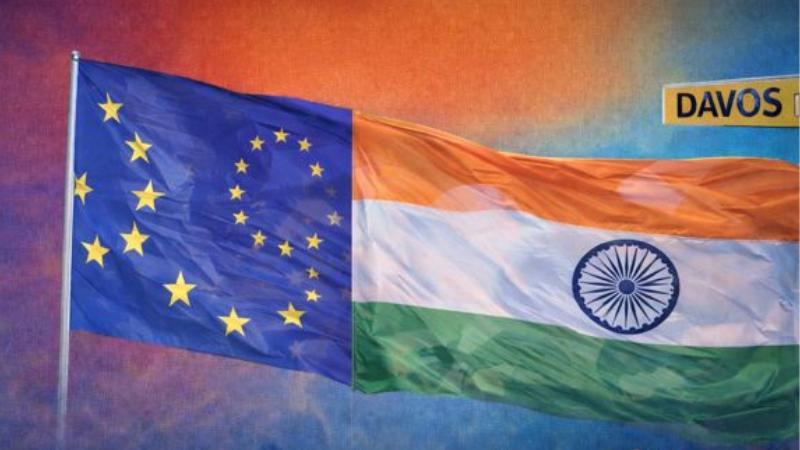
At the ongoing World Economic Forum Summit in Davos, European Commission President Ursula von der Leyen confirmed that she will travel to India next weekend to push forward negotiations for a long-pending trade agreement. If finalized, the deal would become one of the largest trade agreements in history, covering nearly two billion people across both regions. The scale of this agreement is expected to redefine global trade dynamics and establish a new economic partnership between India and the European Union.
The proposed agreement is expected to significantly boost India’s textile industry, enabling it to compete more effectively with China’s dominance in global textile exports. In parallel, European companies would gain easier access to Indian markets in sectors such as automobiles, beverages, processed foods, and manufacturing. This mutual access could accelerate investment flows, technology transfers, and job creation in both regions.
For Europe, the deal offers a strategic alternative as tensions with the United States continue to grow. By strengthening ties with India, the EU aims to reduce its dependence on uncertain American trade policies. For India, this partnership could act as a powerful counterbalance to U.S. tariffs while strengthening its economic standing across global markets.
With Donald Trump continuing to impose high tariffs on Indian goods, the EU deal appears to be a timely and strategic opportunity for the Indian subcontinent. Analysts believe that this agreement could elevate India’s position as a preferred global trade partner while giving European nations a stable and fast-growing market to rely upon. If finalized, this trade pact could mark a historic turning point in international commerce, placing India at the center of a new global economic corridor. As negotiations move forward, all eyes remain on India and the European Union as they prepare to reshape the future of global trade relations.