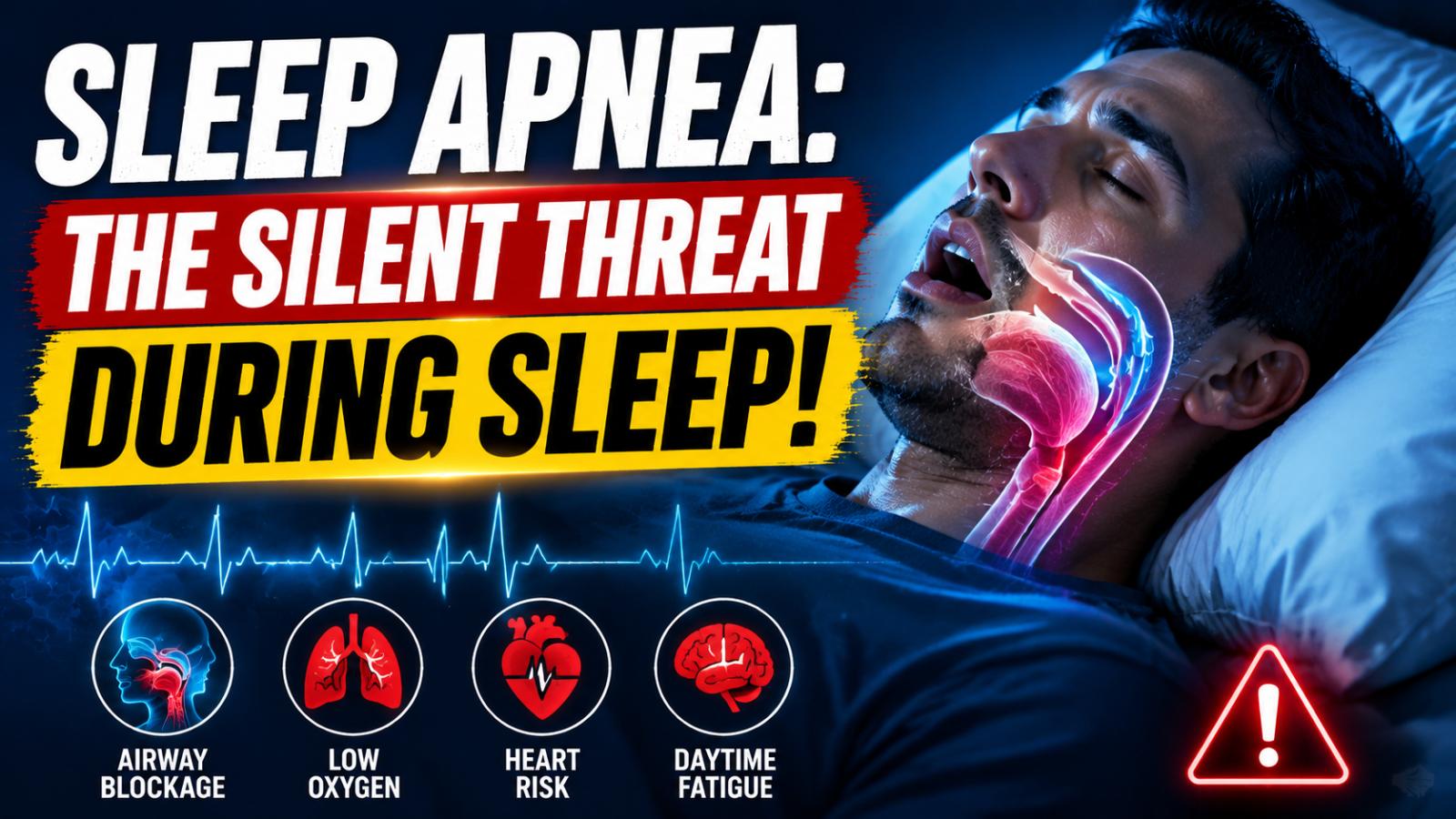
Sleep Apnea: A Silent Nighttime Breathing Disorder
Sleep apnea is a serious medical condition where breathing repeatedly stops and starts during sleep. Unlike simple snoring, it involves partial or complete blockage of the airway, leading to reduced oxygen supply to the brain and body. Many individuals remain unaware of the condition as it occurs during sleep, often going undiagnosed for years.
How Breathing Disruption Happens During Sleep
During normal sleep, the airway remains open, allowing steady airflow. In sleep apnea, the throat muscles relax excessively, causing the airway to narrow or fully collapse. This leads to brief pauses in breathing, sometimes lasting several seconds. In response, the brain triggers a sudden gasp or awakening to restore airflow. This cycle can repeat multiple times throughout the night, severely disrupting sleep quality.
Oxygen Drops and Body Stress
Each interruption in breathing leads to a drop in blood oxygen levels. When oxygen decreases, the body enters a state of stress, activating survival responses such as increased heart rate and sudden awakening. Over time, repeated oxygen deprivation places strain on the cardiovascular system and affects brain function, increasing risks related to long-term health.
Common Symptoms Often Ignored
Many individuals with sleep apnea experience extreme daytime fatigue, difficulty concentrating, irritability, and frequent headaches. Because these symptoms develop gradually, they are often mistaken for stress, poor sleep habits, or workload pressure. In severe cases, individuals may fall asleep unintentionally during daily activities, increasing safety risks.
Health Risks Associated With Sleep Apnea
Untreated sleep apnea is linked to serious health complications, including high blood pressure, heart disease, stroke risk, and metabolic disorders. Continuous oxygen deprivation during sleep can weaken the body’s recovery process and increase long-term strain on vital organs. Medical experts emphasize early detection to prevent complications.
Diagnosis and Treatment Options
A sleep study conducted in a clinical setting remains the most effective method to diagnose sleep apnea. This test monitors breathing patterns, oxygen levels, and sleep stages throughout the night. Once diagnosed, treatment options such as CPAP therapy, lifestyle changes, and medical interventions can significantly improve breathing quality and overall health outcomes.
Importance of Early Awareness
Sleep apnea is often underestimated because it occurs silently during sleep. However, early awareness and medical evaluation can prevent long-term damage and improve quality of life. With proper diagnosis and treatment, patients can restore healthy sleep patterns and reduce associated health risks.