Bay Bridge delays could more than double under major Bay Area transit service cuts, according to a new SPUR analysis. The study examines potential traffic, cost and emissions impacts as voters consider Proposition RTM and San Francisco's Proposition H.
Transit funding debate intensifies
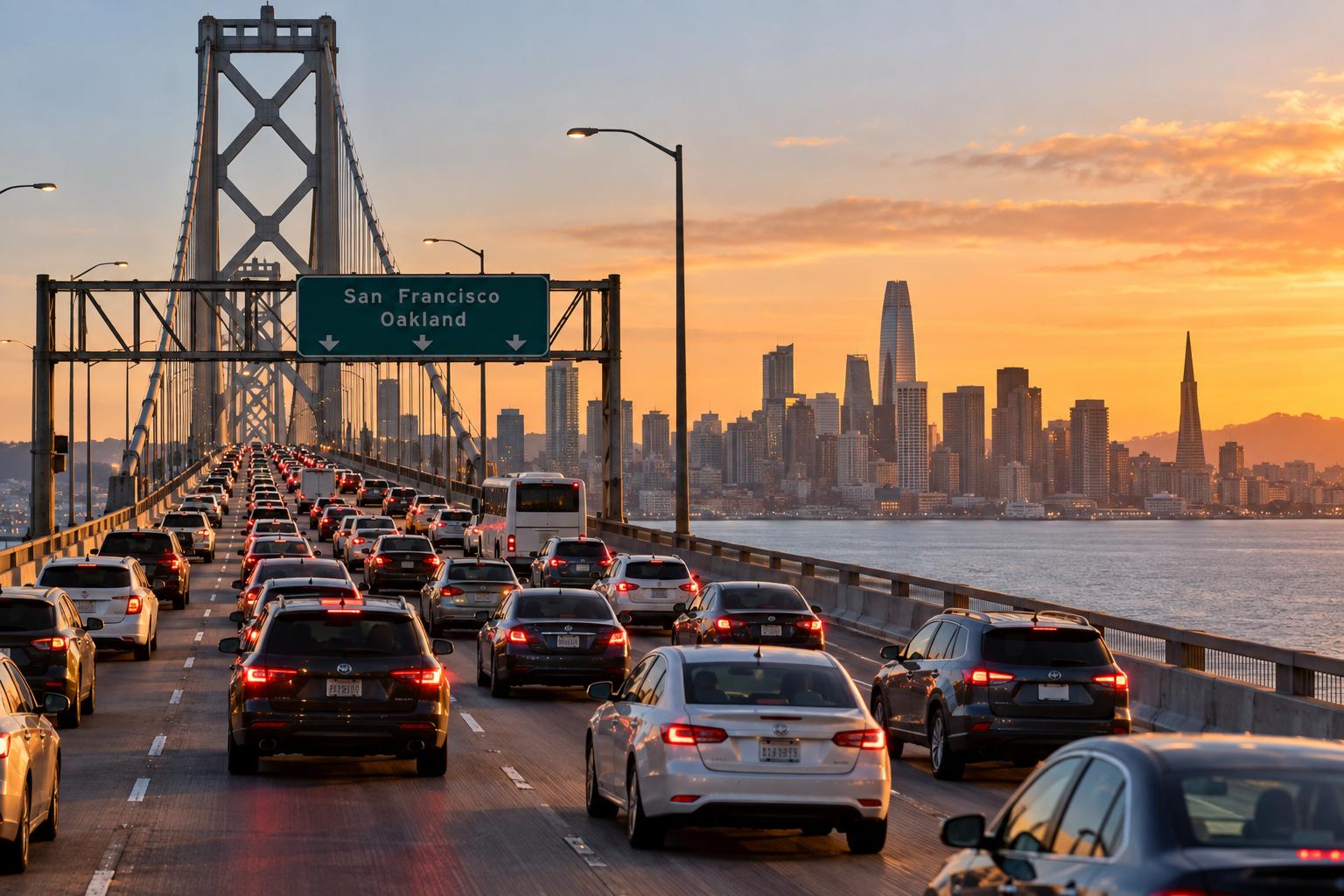
Bay Bridge delays could more than double during peak commute periods if major Bay Area transit agencies make severe service cuts, according to a SPUR analysis published September 22, 2026.
The study examines potential reductions at BART, Muni, Caltrain and AC Transit as the agencies confront operating deficits linked partly to lasting changes in commuting and fare revenue following the COVID-19 pandemic. SPUR says some agencies could begin significant service reductions as early as January 2027.
Proposition RTM and Proposition H
Voters will consider two transit funding measures on November 3, 2026.
Proposition RTM, formally called the Connect Bay Area Transit Initiative, would establish a 14-year retail sales tax of 0.5% in Alameda, Contra Costa, San Mateo and Santa Clara counties and 1% in San Francisco. The measure would provide funding for several regional transit systems.
San Francisco's Proposition H would establish a parcel tax to support Muni operations. City election records identify the measure as the “Parcel Tax to Fund Public Muni Operations.”
SPUR projects wider traffic impacts
SPUR's modeling estimates that major transit service reductions could add roughly 498 million vehicle miles traveled annually across the region. The analysis also projects heavier congestion at the Bay Bridge, Caldecott Tunnel and several major highway corridors, along with increased transportation costs for some commuters who shift from transit to driving.
SPUR sponsors Proposition RTM and participated in discussions that helped shape Proposition H, a connection the organization discloses in its report.
Opponents question service-cut assumptions
The Committee for Affordable Bay Area Transit, which opposes Proposition RTM, argues that transit agencies and state policymakers should examine alternatives before imposing a new regional sales tax. The group has proposed options including redirecting some transportation funding, reducing certain costs and reconsidering existing service structures.
The disagreement centers partly on whether the severe service reductions modeled by SPUR would occur if the measures fail and what other funding options could realistically be available. Voters in the affected Bay Area counties will decide Proposition RTM on November 3, while San Francisco voters will separately decide Proposition H.