The Pakistan-occupied Kashmir election violence overshadowed the first phase of polling after deadly clashes left at least 19 people dead. PoK protests, Rawalakot firing, JAAC demonstrations and political accusations intensified while India reaffirmed its long-standing position on the disputed territory.
Pakistan-Occupied Kashmir Election Violence Turns Deadly
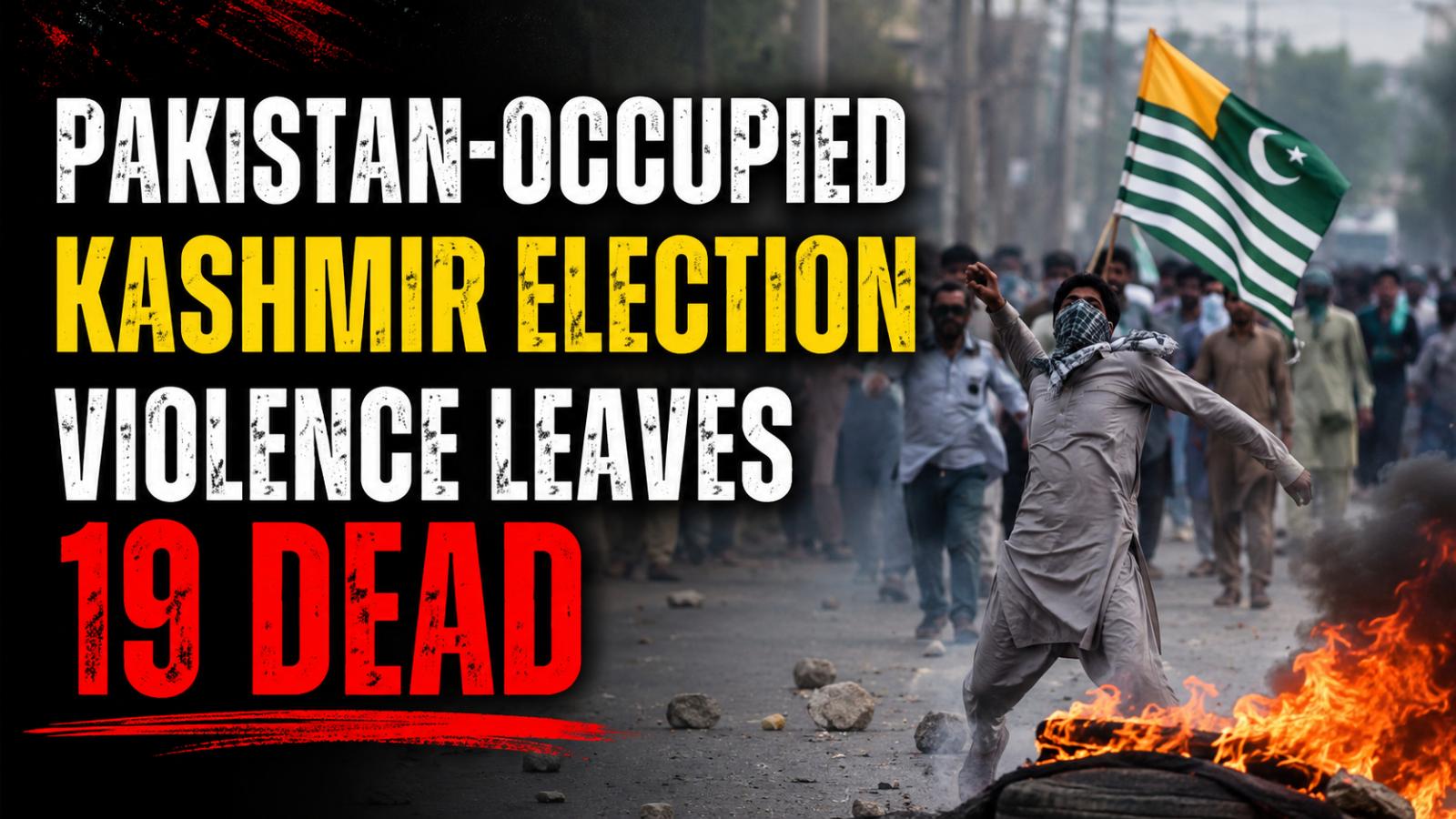
At least 19 people were killed and several others injured after violence erupted during the first phase of elections to the so-called legislative assembly in Pakistan-occupied Kashmir (PoK) on July 27. Polling, scheduled to continue in three phases until August 10, was disrupted by clashes, allegations of electoral malpractice and widespread anti-government protests. According to statements released by the Awami Action Committee (JAAC), the victims died during firing linked to ongoing demonstrations in Rawalakot.
India has consistently rejected elections conducted in Pakistan-occupied Kashmir, maintaining that the entire Union Territories of Jammu and Kashmir and Ladakh, including PoK and Gilgit-Baltistan, remain integral and inalienable parts of India. The Ministry of External Affairs has repeatedly stated that Pakistan continues its illegal occupation of these territories and has described the unrest as the outcome of prolonged administrative oppression and exploitation.
PoK Protests Intensify After Rawalakot Firing
The election-day violence coincided with a renewed wave of JAAC protests after negotiations with authorities failed. Protesters claimed Pakistani security personnel opened fire during demonstrations in Rawalakot, triggering panic and further unrest across the region. Thousands later began a march toward Muzaffarabad after authorities failed to meet the group's deadline for accepting its demands.
JAAC sought the release of detained activists, withdrawal of criminal cases against protesters and broader political reforms. When discussions ended without an agreement, supporters gathered in large numbers, escalating tensions across several districts.
PTI Boycott and Political Parties Exchange Allegations
Pakistan Tehreek-e-Insaf (PTI), led by former Prime Minister Imran Khan, boycotted the elections while the authorities maintained a ban on the Joint Awami Action Committee. PTI claimed that more than 100 people had died during violence connected to protests over recent weeks, although those figures remain disputed.
The Pakistan Peoples Party (PPP) alleged that one of its workers, Mukhtar Yunus, was killed and two others injured during firing allegedly carried out by supporters of the ruling Pakistan Muslim League-Nawaz (PML-N). PPP Chairman Bilawal Bhutto-Zardari questioned the Election Commission's response and called for accountability. Meanwhile, the PML-N rejected the accusations, with both parties alleging poll rigging and electoral irregularities in multiple constituencies.
JAAC Protests Delay Polling in Key Districts
The so-called assembly consists of 53 seats, including 45 directly elected representatives and eight reserved seats for women, technocrats and clerics. Authorities postponed polling in the Sudhnoti and Rawalakot districts until August 10 because of the deteriorating security situation.
The JAAC has opposed the continuation of 12 refugee seats in the assembly, arguing that the arrangement requires significant reforms. After authorities rejected those demands and subsequently banned the organization, protests spread across several parts of the region.
The developments have drawn renewed attention to political instability in Pakistan-occupied Kashmir. While competing parties continue to exchange accusations over election conduct, the security situation remains fragile. India has reiterated through official Ministry of External Affairs statements that it does not recognize these elections and continues to regard Pakistan-occupied Kashmir and Gilgit-Baltistan as integral parts of India under Pakistan's illegal occupation. With additional polling phases scheduled through August 10, authorities face growing pressure to restore order while addressing the ongoing political unrest and public protests.