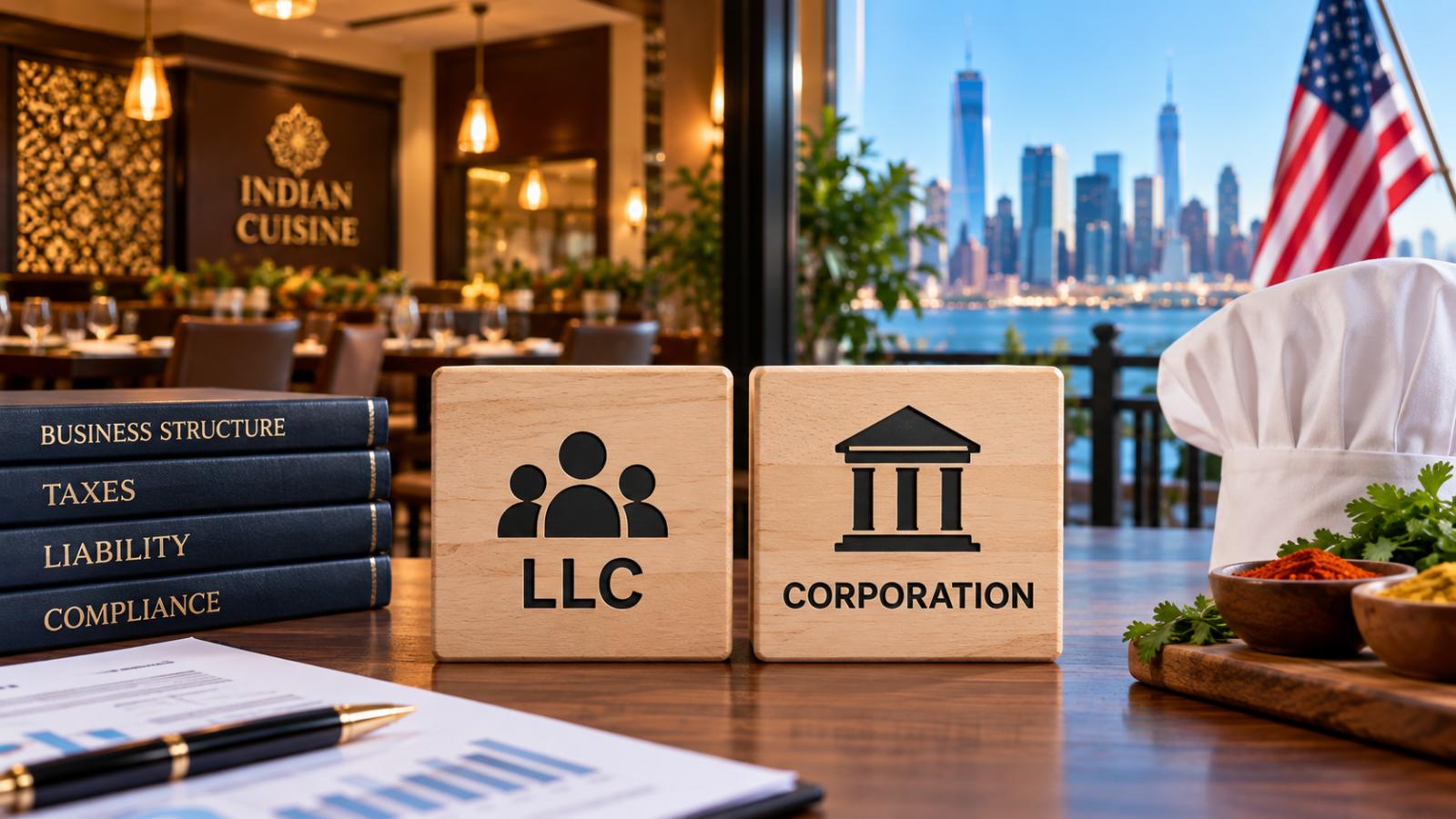
Choosing an LLC or corporation for an NRI-owned restaurant affects liability, taxes, paperwork and foreign-owner reporting. This guide explains how LLCs and C corporations differ, why S-corp status may be unavailable, and what Indian investors should review before forming the business.
Choosing a legal structure is one of the first decisions for an NRI planning to buy or operate a restaurant in the United States. The structure affects liability, taxes, reporting and management.
LLC for an NRI Restaurant Owner
An LLC is created under state law, and the IRS says most states allow individuals, corporations, other LLCs and foreign entities to be members. LLCs generally provide personal-liability protection, although state rules and exceptions apply.
For federal tax purposes, a domestic single-member LLC is generally treated as a disregarded entity unless it elects corporate treatment. A domestic LLC with two or more members is generally treated as a partnership unless it elects to be taxed as a corporation.
When a C Corporation May Be Considered
A C corporation is a separate legal entity from its shareholders. It generally offers strong liability protection and can raise capital through stock, but it also requires more formal recordkeeping and pays corporate income tax. Dividends can create an additional layer of tax.
For an NRI investor, the choice depends on ownership plans, financing, expected profits, distributions and cross-border tax consequences.
Why S Corporation Status Can Be a Problem
The IRS states that an S corporation cannot have a nonresident alien shareholder. An NRI who is a nonresident alien for U.S. tax purposes therefore cannot simply choose S-corporation status.
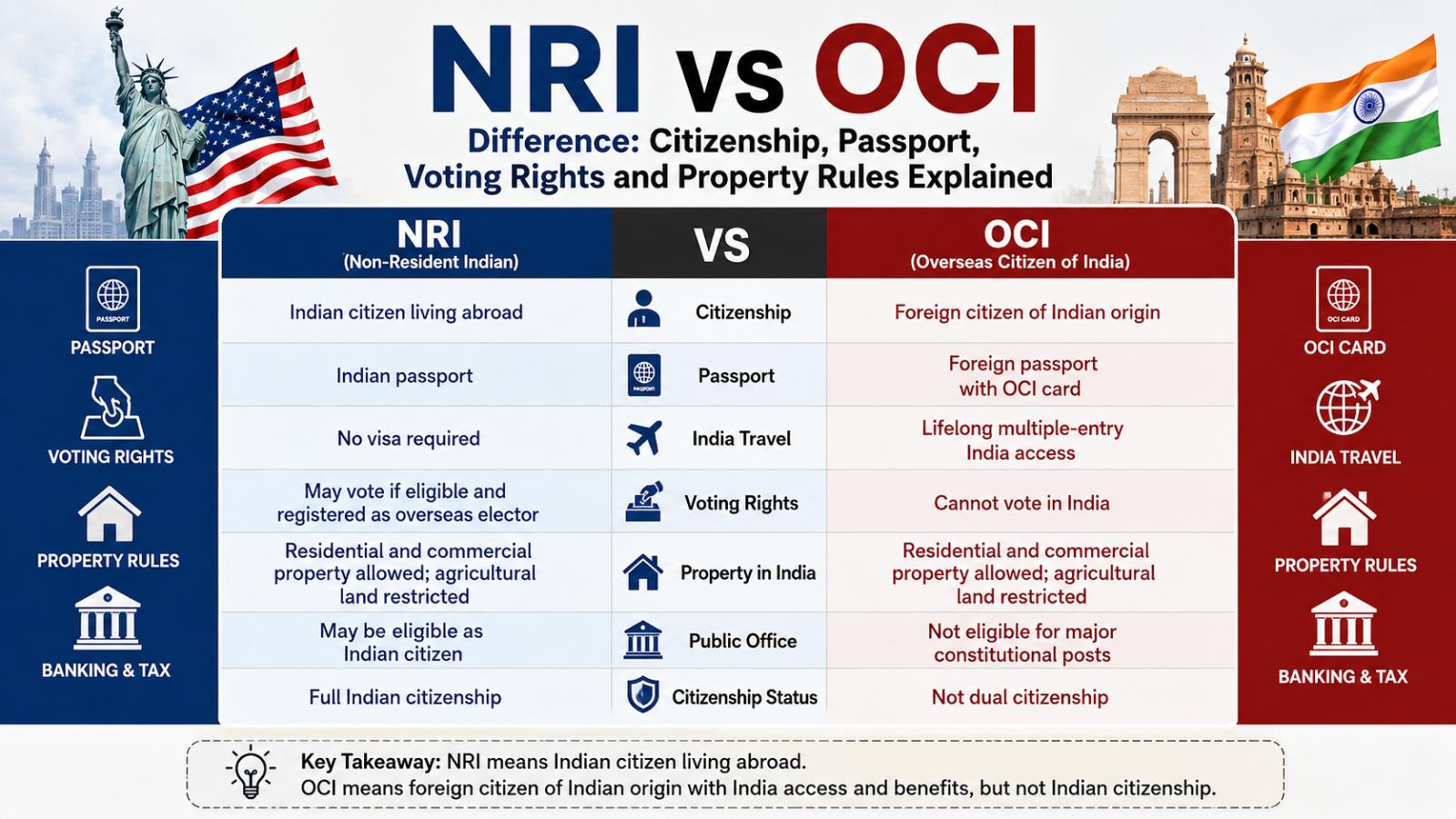
Because “NRI” is an Indian term rather than a U.S. tax classification, the investor’s actual U.S. tax-residency status matters.
Foreign-Owned LLC Reporting Requirements
A foreign-owned U.S. single-member LLC can have reporting obligations even when it is disregarded for ordinary federal income-tax purposes. Certain foreign-owned U.S. disregarded entities with reportable transactions must file a pro forma Form 1120 with Form 5472.
International applicants without a U.S. legal residence or principal place of business also cannot use the standard online EIN application and must use another IRS method.
Which Structure Is Better?
There is no single structure that is best for every NRI restaurant owner. An LLC may offer flexibility, while a C corporation may suit investors who want a corporate structure or outside capital. State law, taxes, foreign-owner reporting and the investor’s immigration and tax status should be reviewed before formation.