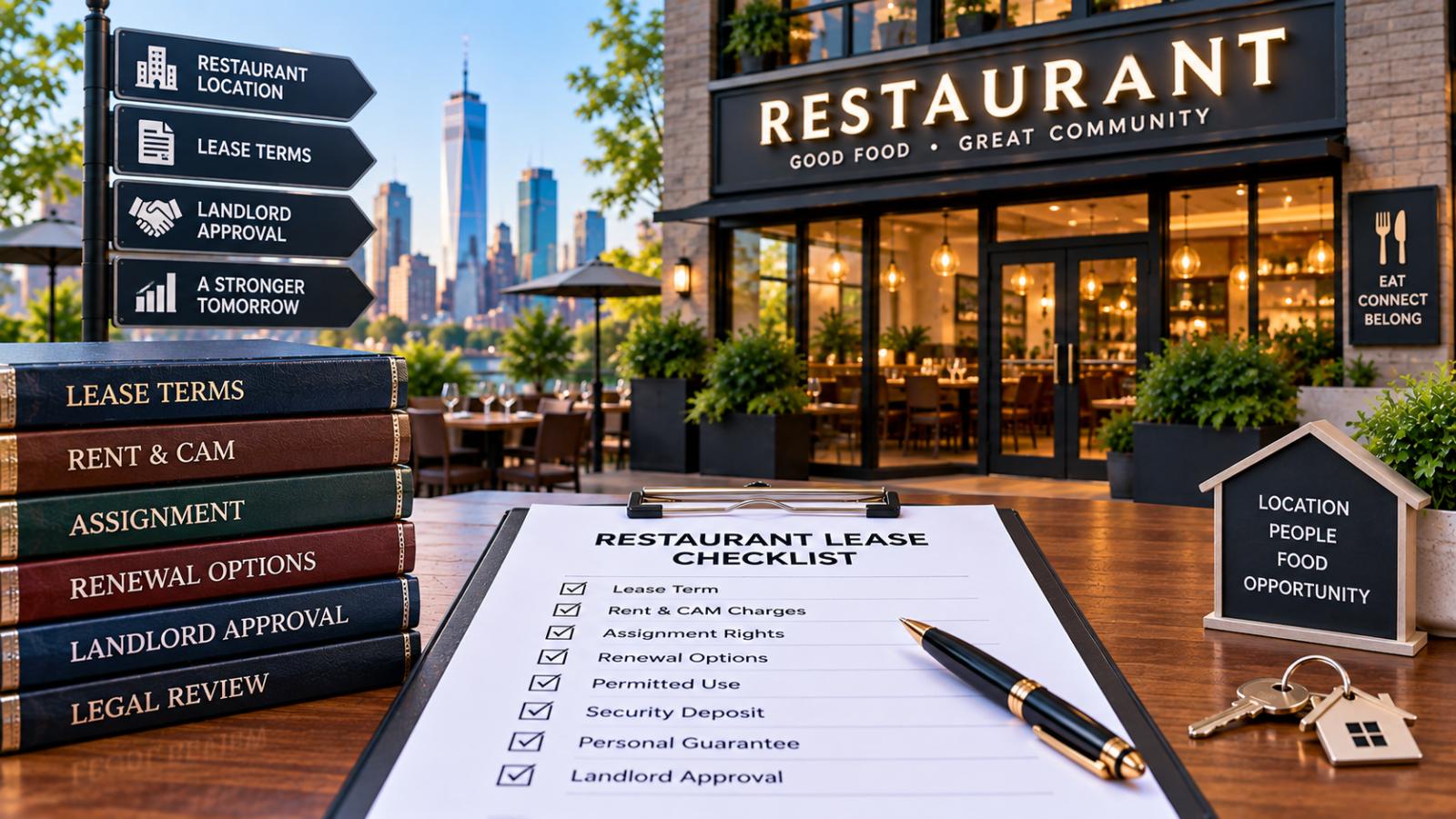
A restaurant lease checklist USA helps NRI buyers determine whether an existing location can support the acquisition. Rent, additional charges, remaining lease term, assignment rights, renewal options, permitted use and landlord conditions should be reviewed before closing.
A restaurant's lease can be one of its most important operating commitments. Buying the business does not necessarily guarantee the buyer the right to occupy the same premises on the seller's existing terms.
The U.S. Small Business Administration recommends examining contracts and leases when evaluating an existing business and emphasizes due diligence before completing an acquisition.
Check the Remaining Lease Term
Buyers should determine how much time remains on the lease and whether renewal options exist. A short remaining term can create uncertainty if the restaurant purchase price assumes years of continued operation at the location.
Review the base rent, scheduled increases, renewal periods and conditions for exercising renewal rights.
Calculate the Full Occupancy Cost
Monthly base rent may not represent the restaurant's total property cost. Commercial leases can require additional payments such as common-area maintenance, property-related expenses, insurance or utilities depending on the agreement. Government commercial-lease materials recognize CAM charges as a possible lease expense.
Buyers should calculate the total annual occupancy cost rather than comparing restaurants only by advertised rent.
Can the Lease Be Assigned to the Buyer?
When an existing restaurant changes hands, the buyer should confirm whether the lease permits assignment and whether landlord approval is required.
The purchase should not proceed on the assumption that acquiring restaurant equipment, inventory or goodwill automatically transfers the right to occupy the premises. The SBA specifically recommends reviewing leases and other contracts during acquisition due diligence.
Review Guarantees and Lease Restrictions
Check whether the landlord requires a security deposit or personal guarantee and what financial exposure the guarantee creates.
The lease should also be reviewed for permitted restaurant use, signage, alterations, maintenance responsibilities, operating restrictions and early-termination provisions. SBA guidance notes that leases can be structured differently and recommends examining their terms carefully, including length and potential early-termination costs.
Review the Lease Before Closing
An NRI buyer should obtain the complete lease, amendments and renewal documents rather than relying on the seller's summary. Any proposed assignment or new lease should be coordinated with the landlord before the restaurant acquisition closes.
A strong location can add substantial value to a restaurant, but unfavorable lease obligations can continue long after the purchase. Legal and financial review of the lease should therefore be part of the acquisition decision itself.