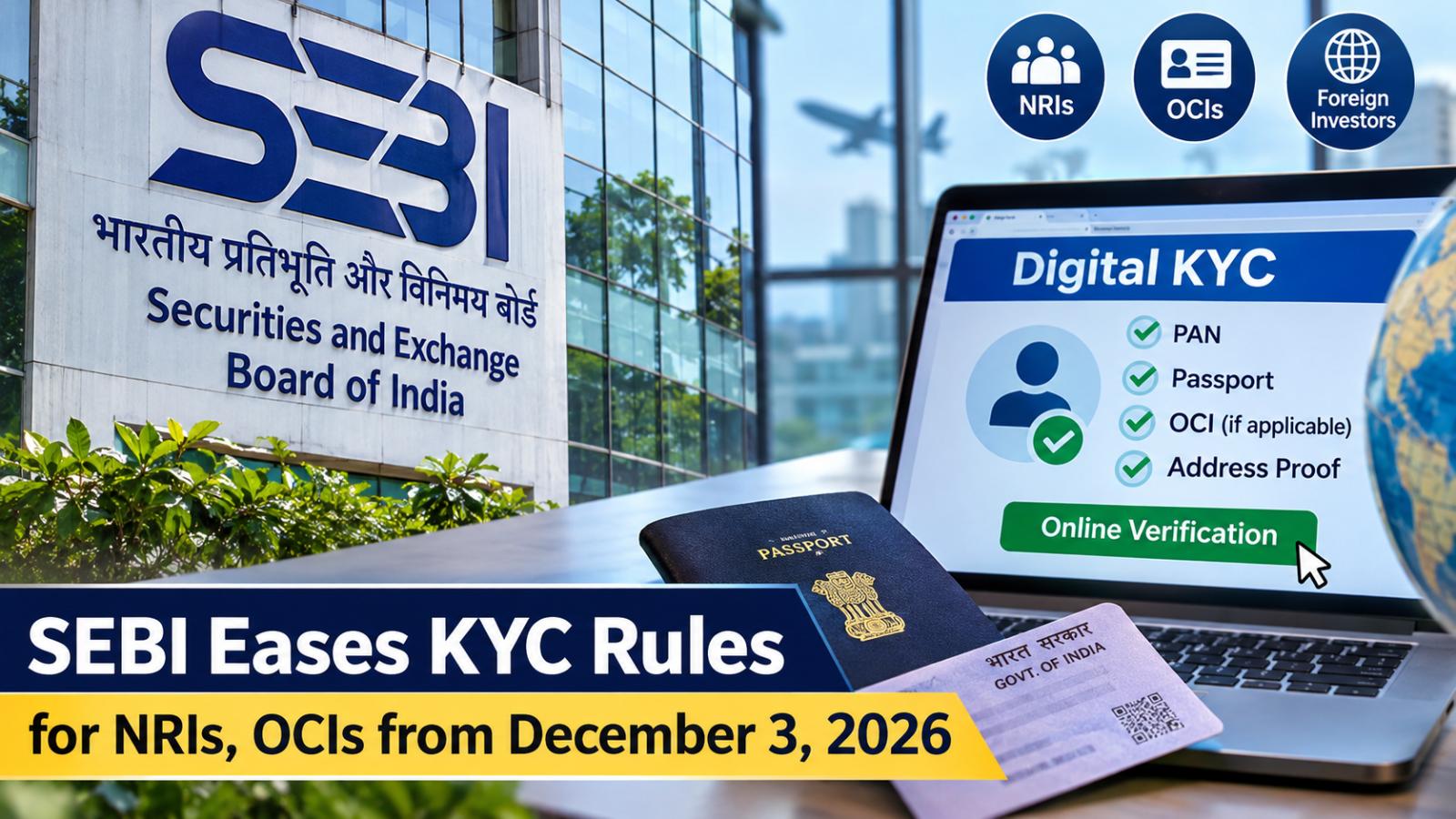
SEBI KYC rules for NRIs, OCIs and eligible foreign nationals will change on December 3, 2026. The revised framework allows digital onboarding from FATF-compliant countries, introduces video verification safeguards and simplifies the sharing of investor KYC records.
India's Securities and Exchange Board of India (SEBI) has relaxed Know Your Customer (KYC) requirements for eligible overseas investors, allowing them to complete digital onboarding without traveling to India.
The new rules, announced on November 4, 2026, will take effect on December 3, 2026. They cover non-resident Indians (NRIs), Overseas Citizens of India (OCIs) and foreign nationals located in countries compliant with Financial Action Task Force (FATF) standards.
Digital KYC for overseas investors
Under the revised framework, SEBI-registered intermediaries, including brokers, can accept KYC information and supporting documents electronically from eligible individuals living abroad.
Previously, digital onboarding required clients to be physically present in India. Removing that requirement makes it easier for qualifying overseas investors, including those living in the United States, to complete identity verification remotely.
SEBI KYC document requirements
Applicants must provide a Permanent Account Number (PAN), passport copy and OCI card where applicable, along with acceptable identity and address documents.
An overseas residential address can serve as the applicant's current address. KYC forms may be submitted electronically with valid electronic signatures, subject to the prescribed verification procedures.
Video verification for NRI investors
When physical verification is impractical, intermediaries can conduct Video In-Person Verification (VIPV).
The process includes identity checks, liveness verification and location-related safeguards. An authorized representative must be present, and the verification process is subject to concurrent audit.
Digitally submitted specimen signatures must also be checked against a handwritten signature provided during video verification.
KYC record sharing and re-KYC
KYC Registration Agencies (KRAs) can validate investor information against official databases and share existing records with other intermediaries.
Financial institutions may also rely on eligible records available through the Central KYC Records Registry, reducing repetitive documentation.
However, the receiving intermediary remains responsible for customer verification and risk-based due diligence. Completed KYC information must be submitted to the relevant KRA within three working days.
FATF eligibility and December 3 implementation
The revised framework also applies to eligible investors updating existing KYC records.
Investors in FATF-noncompliant countries remain subject to existing requirements. Foreign nationals applying through India's Foreign Portfolio Investor route continue to follow the separate FPI framework.
From December 3, 2026, eligible overseas investors will have a simpler route to completing KYC, while regulated intermediaries must continue enforcing identity verification and anti-money-laundering safeguards.