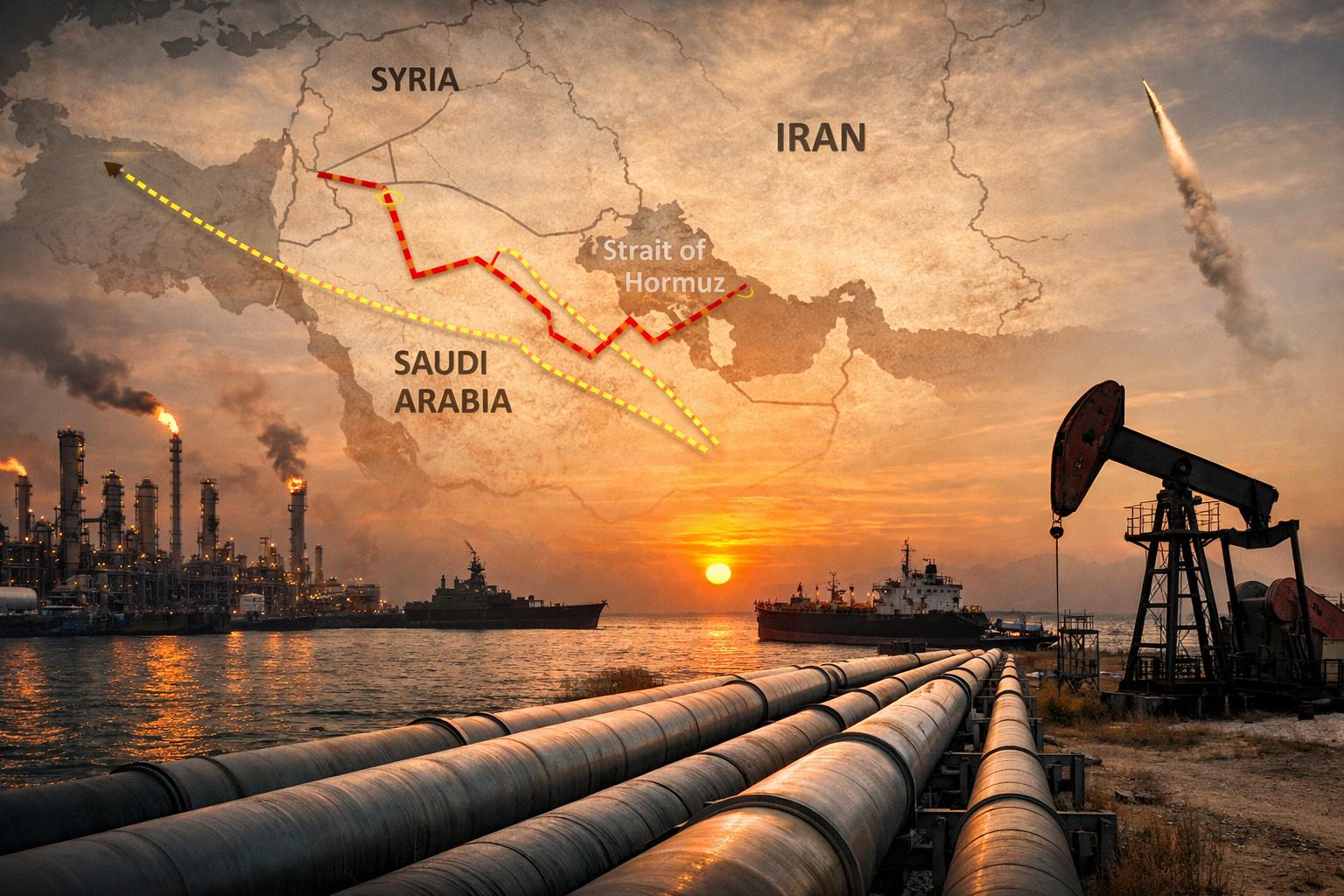
The blockade has exposed the region’s heavy dependence on the narrow maritime route, prompting officials and industry leaders to reconsider long-term infrastructure strategies. Saudi Arabia has emerged as a rare exception, continuing exports through its East-West pipeline, which routes crude oil to the Red Sea. The system currently allows the kingdom to ship approximately 7 million barrels per day out of its 10.2 million barrel daily production, providing a vital alternative while other exporters remain constrained.
Economic consequences are already becoming apparent. According to Oxford Economics, the disruption, combined with damage from recent strikes, is expected to push Gulf Cooperation Council economies into a mild recession this year, with an estimated contraction of 0.2 percent. Lost export revenue and ongoing geopolitical tensions are compounding financial pressures across the region.
In response, policymakers are increasingly focused on developing a broader network of overland pipelines to bypass maritime chokepoints entirely. Energy experts emphasize that a single pipeline would not be sufficient. Instead, a complex web of interconnected corridors stretching across multiple countries is being considered as a more resilient solution.
Such projects, however, face significant hurdles. They would require substantial investment, years of construction, and delicate political coordination among nations with differing strategic interests. Regional conflicts, including ongoing tensions linked to Gaza, further complicate prospects for large-scale cooperation, particularly for routes that might involve politically sensitive transit points.
Despite these challenges, industry leaders remain cautiously optimistic. Some executives argue that expanding pipeline infrastructure across the region, potentially linking to broader initiatives such as transcontinental trade corridors, could reduce vulnerability to future disruptions and reshape global energy logistics.
The current crisis has underscored a fundamental shift in thinking among Gulf producers: securing energy exports may increasingly depend not on maritime routes, but on diversified, land-based networks designed to withstand geopolitical shocks.