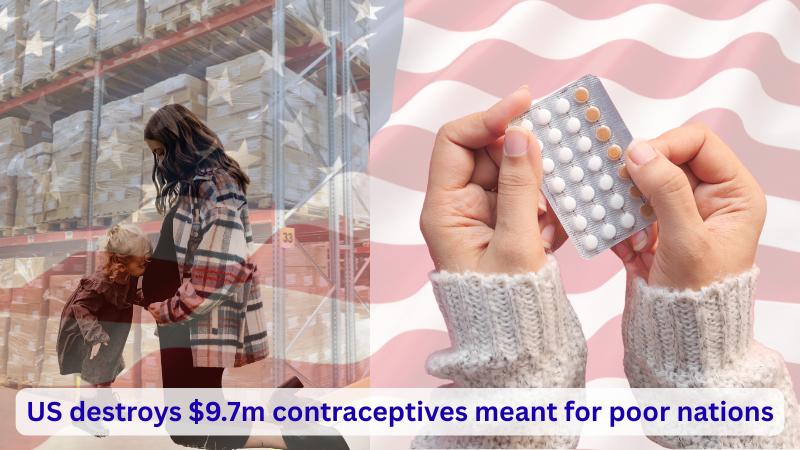
The Trump administration has come under intense criticism after the United States Agency for International Development (USAID) confirmed that nearly ten million dollars’ worth of contraceptives earmarked for people in low-income nations were deliberately destroyed earlier this year. The products, which included birth control pills, intrauterine devices, and hormonal implants valued at $9.7 million, were stored in a warehouse in Belgium before being incinerated at a medical waste facility. According to USAID, the destruction was ordered on the grounds that the items were not classified as “life-saving” products under US government guidelines.
Internal correspondence revealed that several international health and philanthropic organizations, including foundations focused on family planning and child health, had offered to purchase or accept the contraceptives as a donation. These offers could have allowed the US government to recover taxpayer money or at least avoid additional disposal costs. Instead, the administration chose to proceed with dismantling the stockpile, an operation that alone cost $167,000.
A spokesperson for the State Department defended the move, arguing that the products in question were abortion inducing and therefore could not be distributed as foreign aid. The official stated that President Trump was committed to protecting unborn children globally and that no abortifacient drugs would be supplied under the banner of humanitarian support. US law prohibits USAID from purchasing or distributing abortion-inducing medicines.
However, evidence shows that none of the contraceptives destroyed fell under the category of abortifacients. Inventory records confirmed that the products worked by preventing ovulation or fertilization, methods that stop pregnancy from occurring rather than ending an existing one. This finding has fueled accusations that the administration misrepresented the nature of the contraceptives in order to justify their destruction.
The decision has been branded as reckless and cruel by health professionals and rights organizations. Beth Schlachter, a leading voice in reproductive health advocacy, criticized the administration’s actions as a deliberate attempt to deny millions of women in poor nations the tools necessary for family planning and basic healthcare. She noted that dismantling nearly ten million dollars’ worth of safe and effective contraceptives under the false claim that they were abortion-inducing amounted to an outrageous act of cruelty.
Health experts further warned that the destruction of the contraceptives would have long-term consequences. Millions of women in developing countries depend on donated family planning products to avoid unintended pregnancies, reduce maternal mortality, and safeguard their health. Stripping away this lifeline, they argue, could derail years of progress in global health and undermine efforts to reduce poverty by giving families greater control over their futures.
The Belgian government also attempted to intervene before the contraceptives were destroyed. According to diplomatic sources, officials launched an extensive effort to prevent the incineration, highlighting the products’ humanitarian importance. Belgian Foreign Minister Maxime Prévot reportedly even reached out to senior US lawmakers, including Senator Marco Rubio, to halt the process, but those attempts ultimately failed.
The incident has sparked renewed debate over the role of ideology in shaping US foreign aid policy. Critics contend that labeling widely used and scientifically proven birth control methods as abortion drugs distorts public health policy and prioritizes politics over lives. Supporters of the administration argue that the decision aligns with the president’s stance on protecting unborn children, though this justification has been widely challenged by medical experts.
As global health organizations scramble to fill the gap left by the destroyed stockpile, millions of women in low-income nations are expected to feel the impact. Without access to reliable contraception, unintended pregnancies are likely to rise, which in turn may increase maternal deaths and strain fragile healthcare systems. The consequences of this decision, critics warn, will reverberate for years, affecting not just women’s health but also broader social and economic development goals.
The Trump administration’s choice to incinerate nearly ten million dollars’ worth of contraceptives has therefore become a flashpoint in international debates about reproductive rights, foreign aid priorities, and the intersection of politics with global health policy. For many, it symbolizes a setback in the fight to provide equitable healthcare access to the world’s most vulnerable populations.