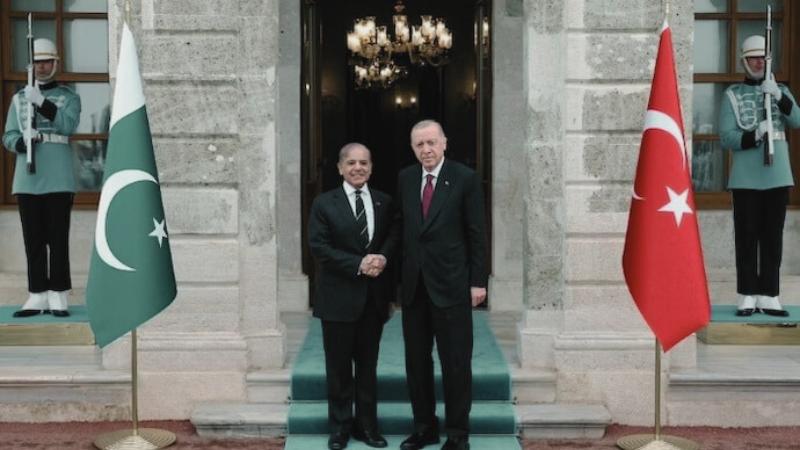
At the Doha emergency summit attended by leaders from over 40 Muslim countries, the idea of an Islamic Nato gained momentum, with Pakistan aggressively pitching for an Arab-Islamic task force. The meeting followed Israel’s strike in Qatar and brought together Pakistan, Turkey, Saudi Arabia, the UAE, Egypt, and others under one forum.
Pakistan, represented by Prime Minister Shehbaz Sharif and Foreign Minister Ishaq Dar, highlighted the need for a united Muslim military force to counter what it called Israeli expansionist designs. Dar warned that the Muslim world was awaiting a clear roadmap, while Turkey’s President Recep Tayyip Erdogan added calls for economic pressure on Israel.
For India, the presence of Pakistan and Turkey in such a proposed bloc raises concerns. Pakistan has historically tried to use multilateral platforms to internationalise Kashmir, and Turkey has openly supported Islamabad’s stance. In a Nato-like pact, where an attack on one member is an attack on all, Pakistan may attempt to leverage this alliance against India.
However, the proposal is still in its infancy. Many potential members, such as Saudi Arabia, the UAE, and Egypt, enjoy strong relations with New Delhi and are unlikely to turn against India. The alliance currently appears more focused on Israel rather than South Asia, but its long-term evolution will be critical for India’s strategic outlook.