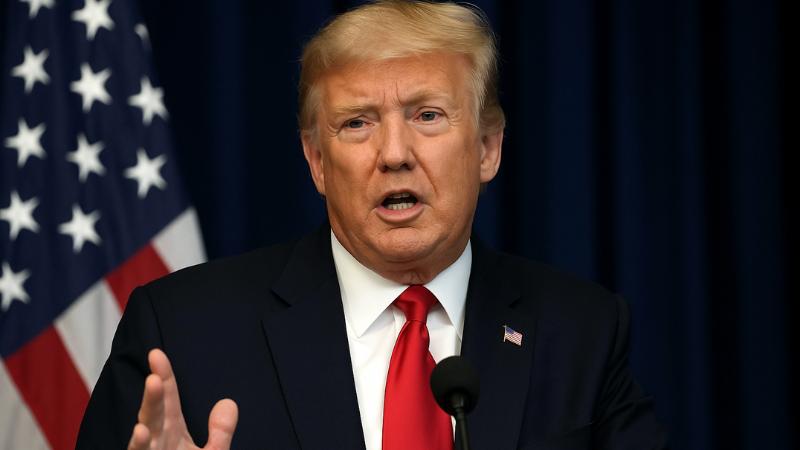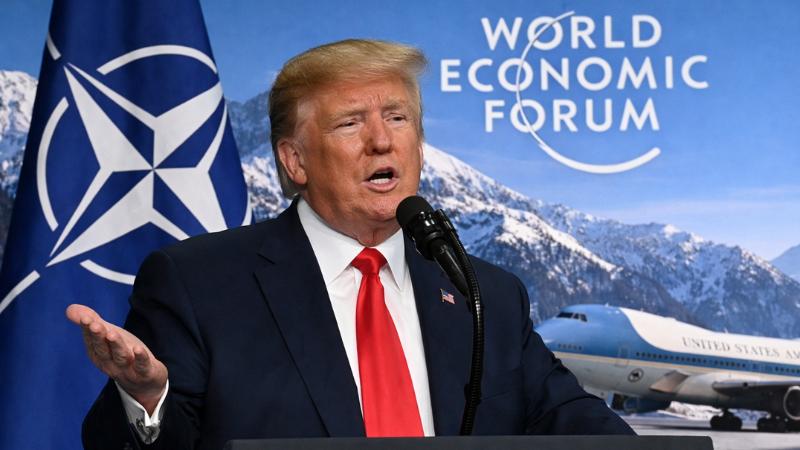
US President Donald Trump on Wednesday reaffirmed Washington’s commitment to the North Atlantic Treaty Organization while openly questioning whether the military alliance would offer the same level of support to the United States in a moment of crisis. Speaking at the World Economic Forum’s annual meeting in Davos, Trump struck a blunt tone as he described what he views as an imbalance in the long-standing transatlantic partnership.
Addressing global political and business leaders gathered in the Swiss Alps, Trump said the United States would continue to stand firmly with Nato, but suggested that the burden of collective defense has fallen disproportionately on American taxpayers for decades. He argued that while Washington has consistently honored its obligations, it remains unclear whether other members would respond with equal resolve if the United States were threatened. The remarks underscored his long-held position that the alliance, while strategically important, requires greater contributions and accountability from its European members.
Trump portrayed Nato as an arrangement in which the United States has invested heavily with limited tangible return. He said American financial and military support has effectively underwritten Europe’s security since the alliance’s formation, raising questions about fairness and reciprocity. His comments, delivered in a direct and unsparing manner, highlighted ongoing tensions within the alliance over defense spending and shared responsibility, issues that have resurfaced repeatedly during his presidency.
The president’s appearance in Davos followed an unexpected delay in his travel to Switzerland after Air Force One was forced to return shortly after departure due to a technical issue. The aircraft turned back as a precaution when a minor electrical irregularity was detected onboard. Standard safety procedures were followed, and the flight later resumed without further incident. Trump played down the disruption, telling reporters before leaving Washington that international trips often come with surprises and that the United States would be well represented at the global summit.
During the brief interruption, passengers experienced a momentary loss of lighting in the press cabin, though the situation was quickly stabilized. The White House emphasized that there was no danger to those onboard and confirmed that the president would arrive in Davos as scheduled. Trump is expected to remain at the forum for a short visit before returning to the United States the following day.
Reinforcing his presence at the event, Trump also addressed supporters through his social media platform, stating that he would personally represent American interests at the high-profile gathering. The message reflected his view of Davos as a critical venue for advancing US priorities on trade, security, and global influence.
In addition to Nato, Trump signaled that discussions in Davos would include the strategic future of Greenland, a topic he has raised repeatedly in the context of national security. He said the Arctic territory remains vital to American defense interests and expressed optimism that dialogue could eventually lead to an arrangement acceptable to all parties involved. Trump suggested that any understanding regarding Greenland would also align with broader Nato objectives, framing the issue as one of collective security rather than unilateral ambition.
By placing Greenland alongside Nato in his Davos agenda, Trump reinforced his broader message that US security considerations should take precedence in international negotiations. His remarks reflected a consistent approach to foreign policy that emphasizes strategic advantage, burden-sharing, and a reassessment of traditional alliances in light of contemporary threats.
Trump’s Davos address is likely to resonate beyond the forum, as it revisits core debates about the future of Nato, the role of the United States in global defense, and the expectations placed on allied nations. While affirming America’s continued participation in the alliance, his comments also served as a warning that long-standing partnerships may face renewed scrutiny unless they evolve to reflect what he describes as a more balanced and equitable framework.