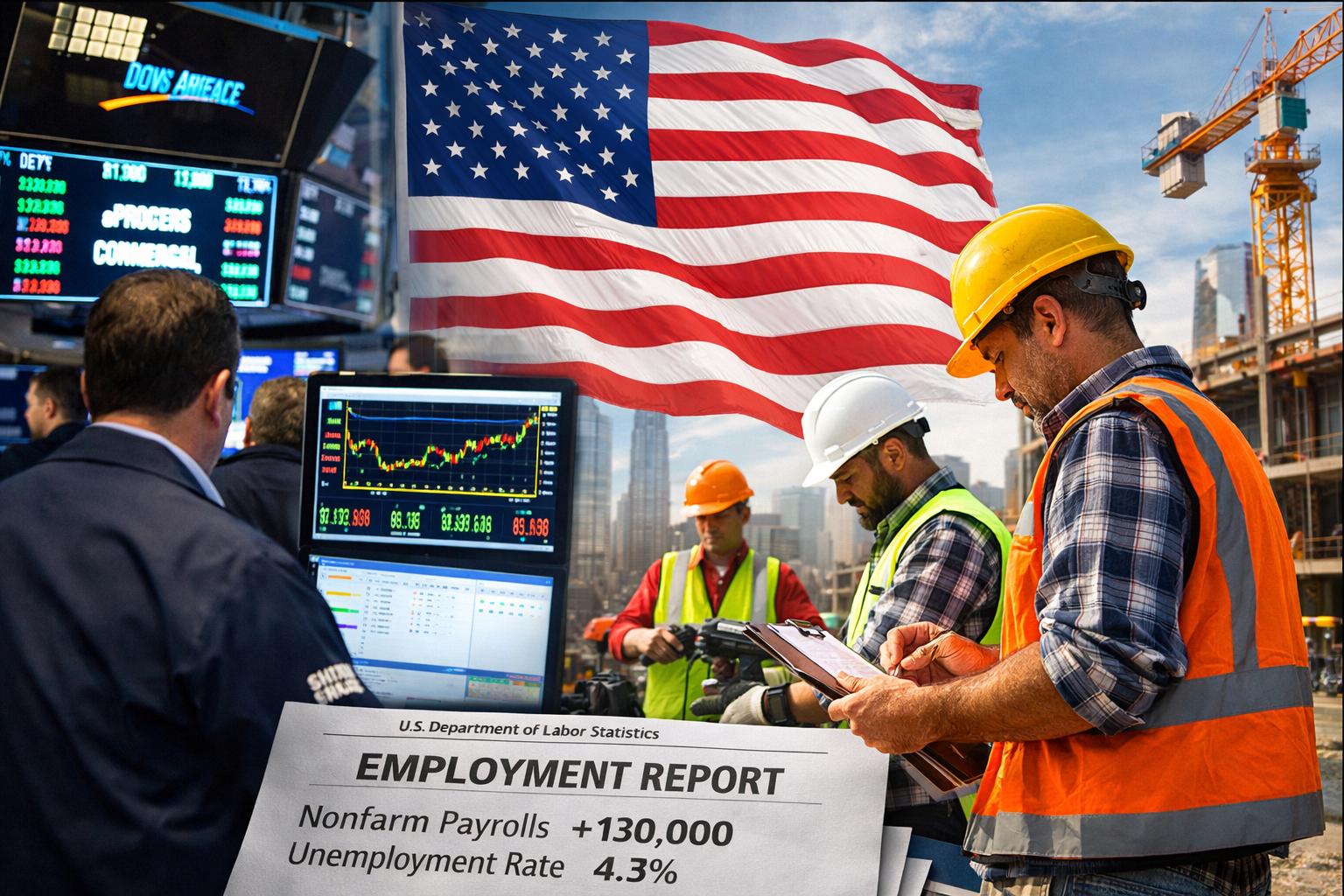
Job growth at the start of 2026 exceeded expectations, offering reassurance that the U.S. labor market remains resilient despite months of subdued hiring and broader economic uncertainty. Fresh data from the Bureau of Labor Statistics showed nonfarm payrolls increased by 130,000 in January, well above economists’ forecasts of 55,000 and marking a notable improvement from December’s revised gain of 48,000.
The stronger hiring figures were accompanied by a modest decline in the unemployment rate, which edged down to 4.3% from 4.4% the previous month. A broader measure of labor underutilization that includes discouraged workers and those employed part time for economic reasons fell to 8%, signaling slightly improved conditions across the labor force. The data suggest that while the pace of growth remains moderate, the labor market is stabilizing after a prolonged period of slow expansion.
Financial markets reacted positively to the report. Stock futures moved higher shortly after the release, while Treasury yields climbed as investors interpreted the figures as evidence of steady economic growth. The release had been delayed by nearly a week due to the partial government shutdown that ended earlier in February.
Industry-level trends showed gains concentrated in health care and social assistance, which together accounted for most of the new positions. Health care alone added 82,000 jobs, while social assistance rose by 42,000. Construction employment also posted a 33,000 increase after a largely stagnant year. Offsetting those gains were declines in federal government payrolls, which fell by 34,000, and losses in financial activities totaling 22,000.
Wage data pointed to continued income growth. Average hourly earnings rose 0.4% for the month and were up 3.7% compared with a year earlier, figures that align with expectations and could support consumer spending. Analysts said the combination of rising wages and steady hiring may help maintain economic momentum even as businesses remain cautious about expanding their workforce.
Annual benchmark revisions released alongside the report showed earlier job counts for the April 2024 to March 2025 period were revised lower by 898,000 positions. Although the adjustment was significant, it largely matched market expectations and did not materially change the overall outlook.
The household survey, which is used to calculate the unemployment rate, showed even stronger improvement, with 528,000 more people reporting employment. The labor force participation rate ticked up to 62.5%, suggesting more Americans are either working or actively seeking jobs.
The latest figures may influence monetary policy expectations. With labor conditions appearing stable and wage growth intact, futures markets indicate the Federal Reserve is likely to keep interest rates unchanged at its upcoming meeting, though investors continue to weigh the possibility of a rate cut later in the year. Overall, the January payrolls report points to a labor market that, while not booming, remains on solid footing as 2026 begins.