Preparing for Navratri becomes easier when worship materials are organised before the celebrations begin. A category-wise shopping list helps families arrange the prayer space, prepare offerings and avoid searching for essential items just before aarti.
The checklist supplied by Acharya Pandit Vishnu Sharma covers home worship, Ghatasthapana, bhog, fasting, Kanya Puja and havan. It is a planning reference rather than a requirement to purchase every item. Materials and offerings differ according to regional practices, family customs and the rituals being performed.
Navratri 2026: India and USA Dates, Timings, Colours and Goddess Forms
Puja Items: Daily Worship Essentials
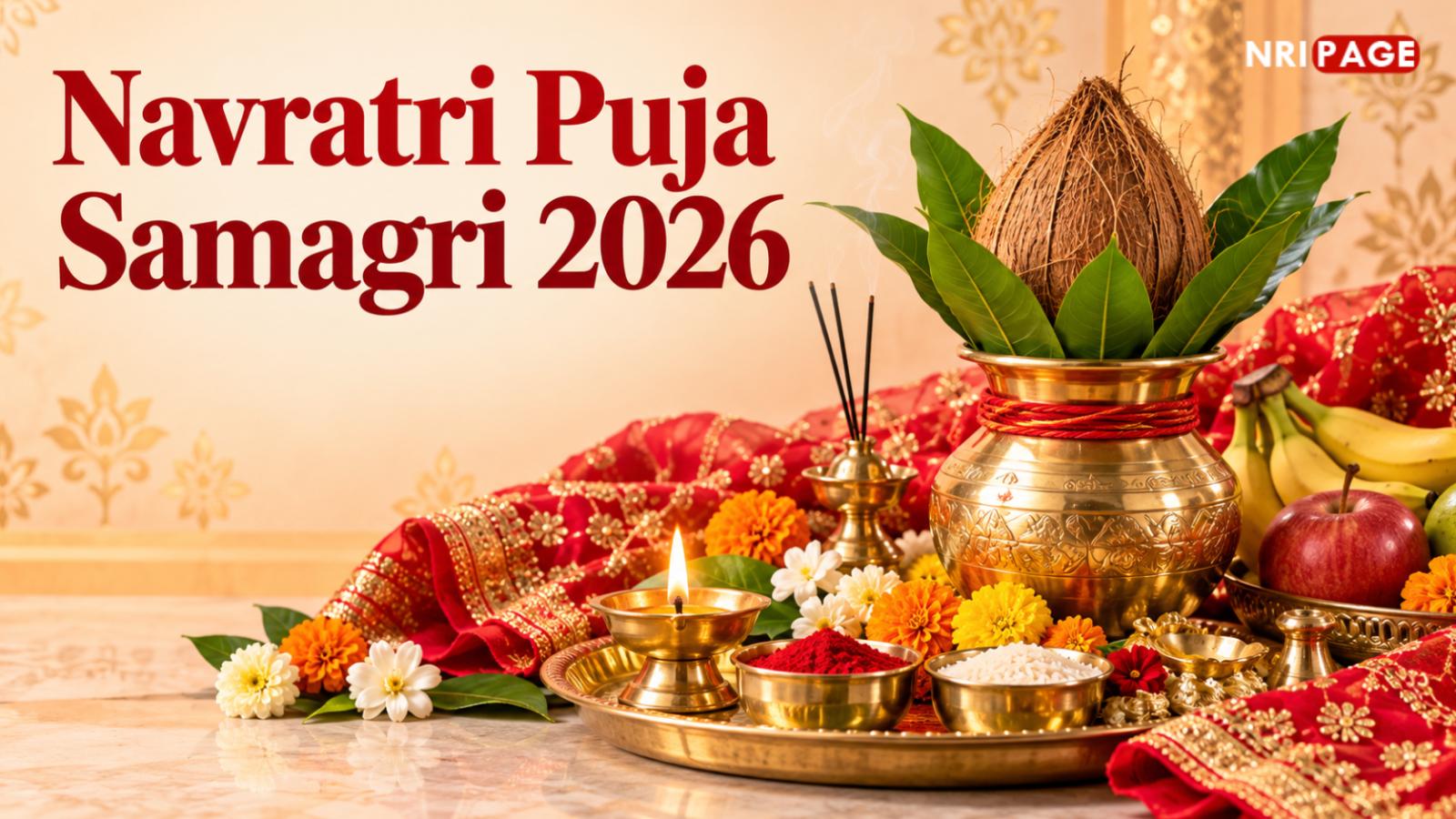
For daily Devi worship, arrange an image or idol of the Goddess, a clean prayer space and a puja thali. Keep frequently used materials together so they are readily available for prayers and aarti.
| Item | Common Use |
|---|---|
| Devi image or idol | Focus of worship |
| Roli or kumkum | Tilak and devotional offerings |
| Akshat — unbroken rice | Puja and sankalp |
| Fresh flowers and garlands | Offerings and decoration |
| Diya and cotton wicks | Lighting the worship lamp |
| Oil or ghee | Fuel for the diya |
| Incense or dhoop | Daily worship |
| Clean water and a vessel | Ritual use |
| Fruits and sweets | Bhog and prasadam |
| Puja thali and small bowls | Organising materials |
Chandan, turmeric, a bell, a conch shell and Gangajal may also be included where customary. A red chunri or cloth can be used for decoration according to the household’s practice.
Kalash List: Ghatasthapana Materials
Families performing Ghatasthapana commonly prepare a copper, brass or clay Kalash with water, a coconut and mango leaves. Sacred thread, rice, a betel nut, coins and flowers also appear in the supplied checklist.
Keep the following materials ready:
- Kalash and clean water.
- Coconut and red cloth, where used.
- Mango leaves.
- Mauli or sacred thread.
- Akshat, supari, coins and flowers.
- Clean soil or sand and a tray, if sowing barley.
- Barley seeds and durva grass, where customary.
Barley sowing and some additional offerings are specific to particular traditions. Confirm your household’s practice before purchasing materials for these arrangements.
Navratri Recipes 2026: Nine-Day Prasadam Menu and Cooking Tips
Bhog Guide: Offerings, Fasting and Kanya Puja
Seasonal fruits, coconut, jaggery and sweets such as halwa, kheer or boondi are among the offering ideas in the source. Families preparing panchamrit can arrange milk, curd, honey, ghee and sugar according to their customary recipe.
Those observing a fast may keep sabudana, buckwheat flour, water chestnut flour, samak rice, fruits, milk, curd, nuts and rock salt available. These ingredients are commonly associated with some Navratri fasting traditions; permitted foods vary between households.
For Kanya Puja, commonly observed on Ashtami or Navami according to local practice, the checklist includes a puja thali, roli, akshat, flowers, seating mats and water. Halwa, puri and chana are familiar food offerings in many families, while gifts, clothes or dakshina may be arranged according to custom.
Puja Prep: Havan Supplies and Shopping Tips
If a havan is planned, the source lists havan mixture, dry coconut, ghee, camphor, suitable wood, sesame seeds and matchsticks. Ask the officiating priest for the exact materials and quantities before buying specialised supplies.
Begin by checking what is already available at home. Separate reusable items, such as the thali and Kalash, from consumables including flowers, lamp oil and food ingredients. Purchase fresh offerings closer to the day they will be used.
A simple checklist can prevent unnecessary purchases. Choose materials for the rituals your household actually observes, organise them in advance and keep lit lamps away from cloth and other flammable decorations.