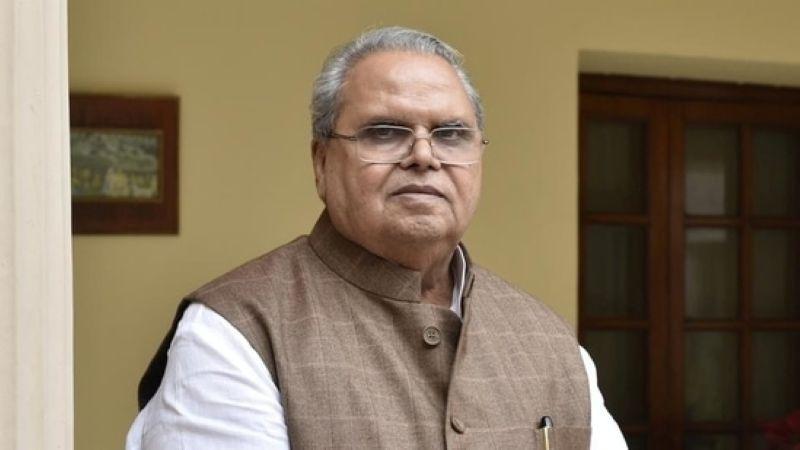
Former Jammu and Kashmir Governor Satyapal Malik passed away at the age of 79 on Tuesday after a prolonged illness. The veteran politician died around 1:00 PM at Ram Manohar Lohia Hospital in New Delhi, where he had been undergoing treatment. Malik, a prominent political figure with a career spanning more than five decades, played a pivotal role in Indian politics and governance. He was notably the Governor during the historic abrogation of Article 370, a landmark decision that revoked Jammu and Kashmir’s special status in August 2019. Today marks the sixth anniversary of that momentous event.
Satyapal Malik had a dynamic political journey. Before becoming the last Governor of the erstwhile state of Jammu and Kashmir, he was a three-time parliamentarian and held various positions, including that of a Union Minister under the leadership of VP Singh. He was the first politician to hold the Governor's post in Jammu and Kashmir since the onset of militancy in the region. Malik later served as the Governor of Goa and Meghalaya, and he also briefly held the position of Governor of Bihar in 2017.
His tenure as the Governor of Jammu and Kashmir from August 2018 to October 2019 was marked by his involvement in the controversial decision to abrogate Article 370, which had granted special status to the state. Malik’s role in this historic decision drew significant attention and controversy, with many praising the move while others criticized its implications on the region's autonomy.
Malik's political career began in the 1970s, and he was deeply influenced by Chaudhary Charan Singh, joining the Bhartiya Kranti Dal. Over the years, he switched allegiances, first joining the Congress Party in 1984 before later moving to the Janata Dal and eventually the BJP in 2004. His political evolution and diverse affiliations showcased his adaptability, but his criticism of the central government became more pronounced after his tenure as Governor. He strongly advocated for farmers' rights and supported the farmers' protests, critiquing the government's handling of the situation.
In 2023, Malik made explosive claims regarding the 2019 Pulwama attack, accusing the Home Ministry of failing to act on intelligence requests from the CRPF and claiming that he had been instructed by Prime Minister Modi and NSA Ajit Doval to remain silent on the matter. His statements fueled controversy and drew attention to the complex political dynamics during his time in office. Malik's legacy is a mixture of bold political decisions, controversy, and deep involvement in the evolution of Jammu and Kashmir’s political landscape. His passing marks the end of an era, leaving behind a complex yet influential legacy in Indian politics.