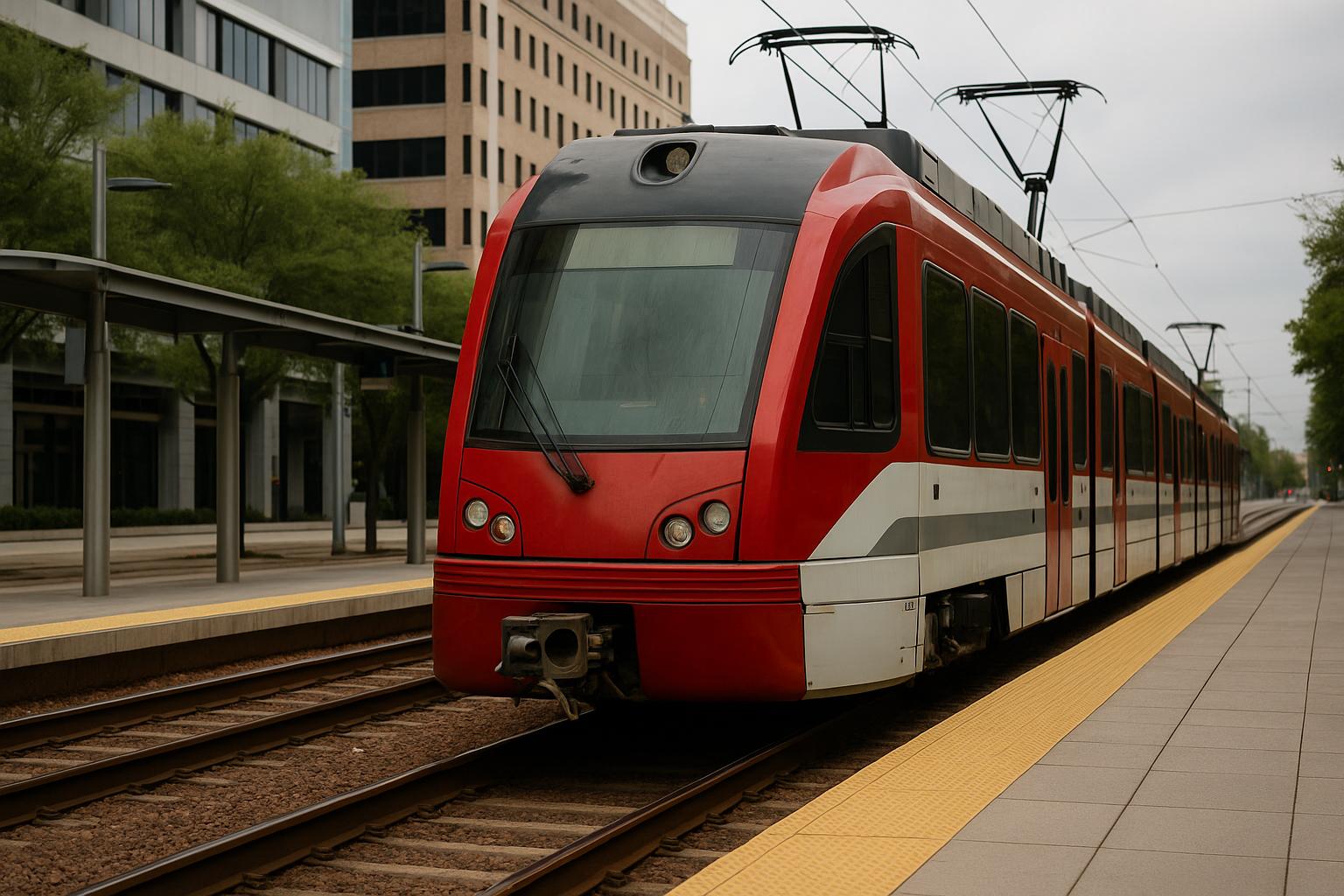
Houston, Texas — After weeks of mounting frustration among commuters, METRO officials say early signs of improvement are emerging along Houston’s METRORail Red Line. The agency acknowledged that service delays have been impacting travel times and ridership but emphasized that the process of restoring consistent service reliability will take time and continued collaboration with the City of Houston.
During Thursday’s METRO Committee Meeting, Vice President of Service Russell Frank described the past several weeks as “a down month” for the Red Line, noting that the slowdown has discouraged some regular riders. Frank said that despite the challenges, METRO’s operations team has been actively engaged in diagnosing the issues and implementing timing adjustments to improve train flow through critical intersections in downtown and midtown.
“Our staff is very much engaged and working on solutions,” Frank told board members. “We’ve made some timing changes and restored some signals to their previous settings. We’re beginning to see benefits, but this is an iterative process. To our customers, we ask for patience as we continue refining operations.”
The Red Line, which runs from Northline Transit Center to Fannin South, has experienced significant travel disruptions since late September. The delays began after a citywide traffic signal timing update on September 20 altered coordination along key routes shared by buses, trains, and other transit services. METRO says the timing changes were initially intended to improve traffic flow across multiple modes of transportation, including METROLift and curb2curb services. However, the ripple effects have slowed rail operations, particularly through downtown intersections that previously granted priority to trains.
METRO is now working closely with city engineers to readjust signal timing, with particular focus on restoring “signal preemption,” a system that gives trains temporary priority at intersections to keep schedules running efficiently. According to officials, the agency has already restored preemption to 16 of 26 intersections in downtown and midtown, a step METRO hopes will alleviate delays as adjustments continue.
Peter Eccles, Director of Policy and Planning for LINK Houston, a nonprofit advocating for equitable transit access, said the partial restoration is a positive sign but more work is needed to fully restore system efficiency. “We appreciate that signal preemption has now been restored to 16 of 26 intersections,” Eccles said. “This is a great first step, but without full preemption, Red Line service will continue to face delays, operate below capacity, and lose riders.”
LINK Houston has been urging both METRO and city leaders to restore complete preemption across the affected intersections. Eccles added that the group’s online petition calling for full restoration has already gathered more than 600 signatures, underscoring widespread concern from daily commuters.
Riders who depend on the Red Line for work and school say the delays have disrupted their schedules for weeks. “There’s always a delay of 10 to 20 minutes,” said Michelle Blackwell, a Near Northside resident who uses the Red Line regularly. “Even today, there was a 10-minute delay. It’s become normal to expect it.”
Transit advocates and residents who spoke during the public comment portion of Thursday’s meeting expressed similar frustrations, noting that the signal timing changes have had a disproportionate effect on rail users compared to drivers. Some also argued that the lack of reliability could discourage new riders from using public transportation altogether, reversing years of effort to promote Houston’s rail system as a convenient and sustainable option.
METRO leaders reiterated their commitment to resolving the issue and said the agency is in constant communication with Houston’s traffic management team to fine-tune the system. Officials expect to present a more comprehensive update during next month’s METRO board meeting, including revised data on travel times, ridership trends, and progress on signal synchronization.
While early signs suggest the adjustments are beginning to yield results, officials acknowledged that restoring pre-pandemic reliability levels will require ongoing coordination, testing, and public feedback. The agency continues to encourage riders to report persistent issues so teams can track problem areas in real time.
As Houston’s population and transportation needs grow, the Red Line remains a critical link connecting communities from the Near Northside through downtown and the Texas Medical Center. For METRO, striking the right balance between traffic flow and transit priority is now central to ensuring that the city’s rail network remains both efficient and dependable for thousands of daily commuters.