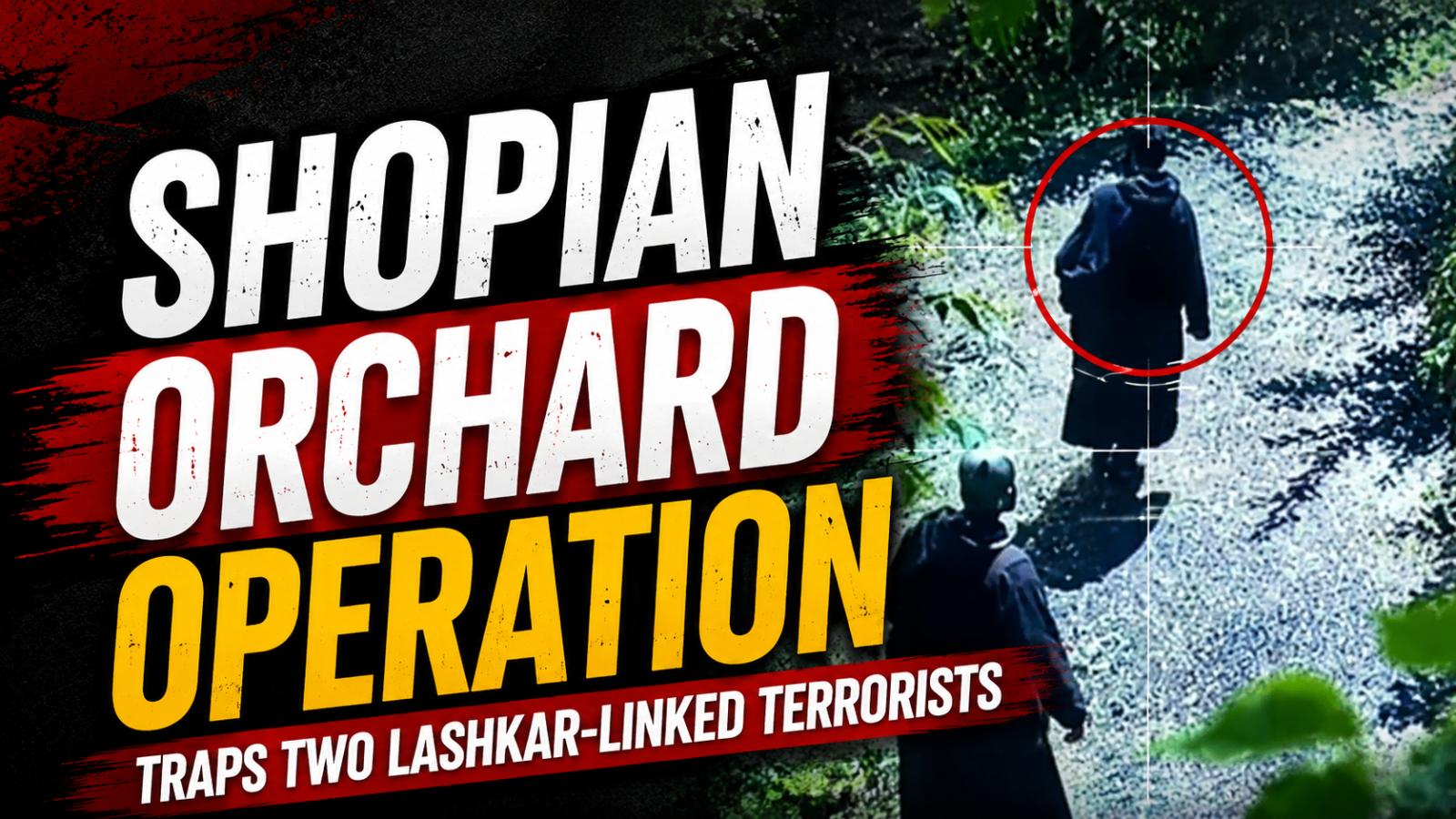
Shopian orchard operation traps two Lashkar-linked terrorists
Security forces launched a major counter-terror operation in Jammu and Kashmir’s Shopian district after cameras detected two suspected Lashkar-e-Taiba terrorists inside an orchard. The operation began after surveillance inputs confirmed movement in the area, prompting a joint team of the Indian Army, Jammu and Kashmir Police and the CRPF to seal the surrounding villages and block possible escape routes.
Officials said the operation zone covers seven villages, making the search difficult because of civilian areas, dense orchards and multiple exit points. By evening, security forces had cleared four villages while maintaining a tight cordon around the orchard. The two trapped suspects have been identified as Latif and Zakir, both residents of Kulgam district.
Gunfight starts during cordon operation
The encounter escalated after the two suspects opened fire at security forces during the search. The joint team returned fire and strengthened the cordon to prevent movement toward nearby village belts, forest patches or orchard routes.
According to records, Zakir is believed to have joined Lashkar-e-Taiba in 2024, while Latif reportedly joined the outfit in 2025. Their presence in Shopian is significant because the district has often been used as a transit route between south Kashmir, central Kashmir and the Pir Panjal region.
Why Shopian remains sensitive
Shopian becomes especially challenging for security forces during summer, when thick foliage and orchard cover can help terrorists hide or escape during cordon-and-search operations. Officials said sealing escape routes was necessary before expanding the search.
The operation also highlights the continuing concern over local recruitment in Kashmir. While Pakistan-backed foreign terrorists are often used in major attacks, local operatives remain important to logistics networks. They can assist with shelter, movement, communication and recruitment support.
The latest Shopian orchard operation is aimed not only at neutralising the two Lashkar-linked terrorists but also at disrupting the wider support chain in south Kashmir. Security officials believe targeting local operatives is essential to weakening terror logistics and preventing fresh recruitment in the region.