The ongoing conflict between the US, Israel, and Iran continues to escalate as the war in the Middle East enters its second month with no sign of abating. Tensions have been rising ever since US President Donald Trump’s ultimatum for Iran to engage in negotiations was issued, but Tehran remains defiant and continues its aggressive stance.
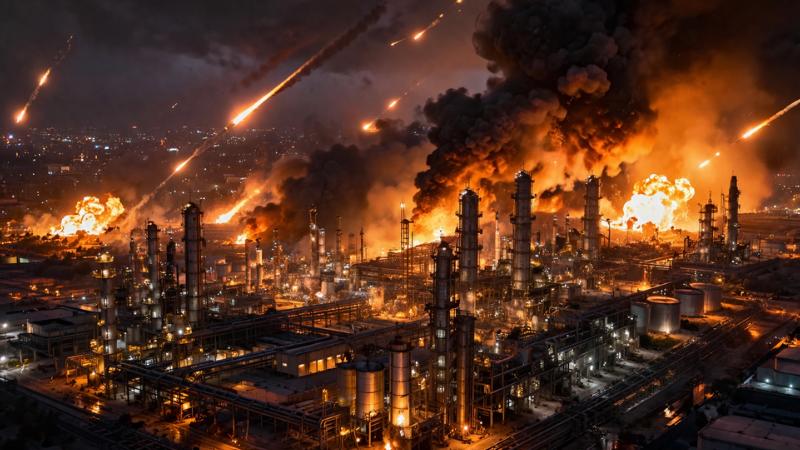
Israel has intensified its military operations in the region, striking Iran’s largest petrochemical complex, which it claims serves as a central hub for chemical exports. This airstrike is part of a broader pattern of coordinated US-Israeli strikes against Iranian targets, further fueling the already high tensions between the two nations. As hostilities continue, an Iranian official has urged citizens to form human chains around critical energy facilities in a bid to protect them from any potential US airstrikes.
In a media address on 6th April 2026, President Trump shared details about the rescue of two American pilots whose F-15E fighter jet was shot down by Iran’s air defense systems. One of the pilots was rescued shortly after ejecting, while the weapon systems officer (WSO), a US Air Force colonel, was recovered in a separate operation conducted by US special forces. This operation highlights the growing intensity of military actions between the two countries.
The US president also warned Iran about the blockade of the Strait of Hormuz, which Tehran has effectively shut down in retaliation for the escalating conflict. The Strait of Hormuz is a key global shipping lane, with roughly 20% of the world’s crude oil passing through it, making any disruption a significant concern for the global economy. In a strongly worded post on his Truth Social platform, Trump warned Iran that failure to reopen the Strait would lead to severe military consequences.