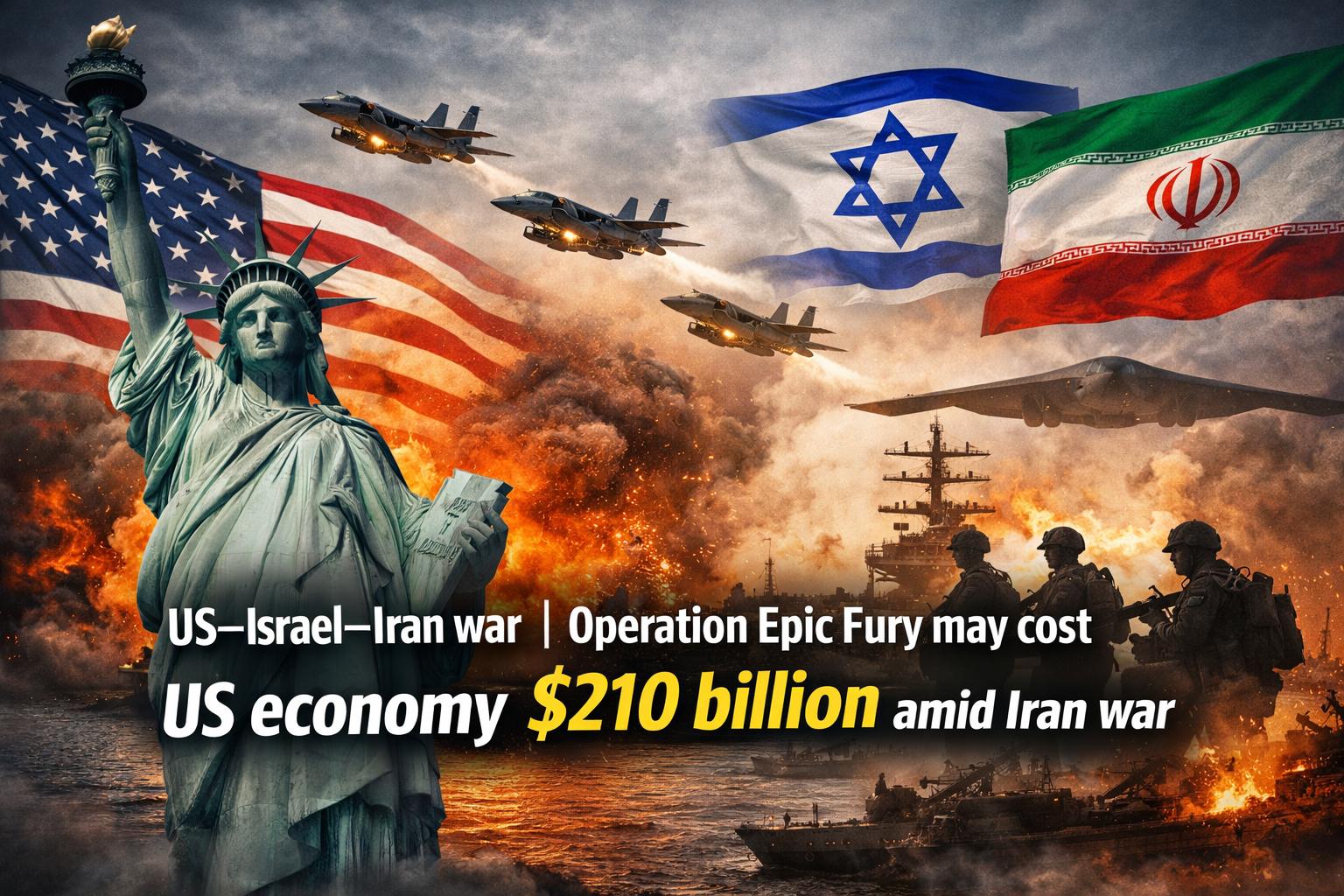
The United States could face an economic impact of up to $210 billion as Operation Epic Fury intensifies tensions with Iran, according to leading budget analysts. President Donald Trump has indicated that the conflict may continue for at least four weeks, raising concerns about prolonged military spending and wider fallout for the US economy. Estimates by economist Kent Smetters of the Penn Wharton Budget Model suggest that the total cost of the Iran conflict could significantly strain federal finances.
Direct military expenditures, including munitions, equipment losses, and aircraft replacement, are projected at roughly $65 billion, with the figure potentially rising to $95 billion if the conflict extends or escalates. The US military has already reported the loss of three F-15E Strike Eagle fighter jets in Kuwait in what officials described as a friendly fire incident. Replacement and operational costs are expected to add to the growing defense budget burden, particularly if ground forces are deployed.
Beyond battlefield expenses, analysts warn of broader economic consequences. Disruptions to trade and energy markets could add an estimated $115 billion in losses, driven largely by volatility in oil prices and supply concerns in the Strait of Hormuz, a critical artery for global crude shipments. Retaliatory strikes and regional instability have led to shutdowns of oil and gas facilities and interruptions in shipping routes, amplifying pressure on energy markets.
The initial phase of military mobilization had already imposed substantial costs before active strikes began. More than a dozen Navy vessels and over 100 aircraft were deployed to the Middle East in the lead-up to the operation. In the first 24 hours of offensive action alone, expenditures were estimated at $779 million, including the deployment of B-2 bombers, F-22 and F-35 fighter jets, guided-missile destroyers, and advanced missile defense systems.
The rising cost of war comes at a time of domestic economic challenges, including inflation and a persistent cost-of-living crisis. Public support for the military campaign appears limited, with recent polling indicating that only a minority of Americans back the strikes on Iran. As the conflict unfolds, policymakers face mounting questions over how sustained military engagement could reshape fiscal priorities and economic stability.