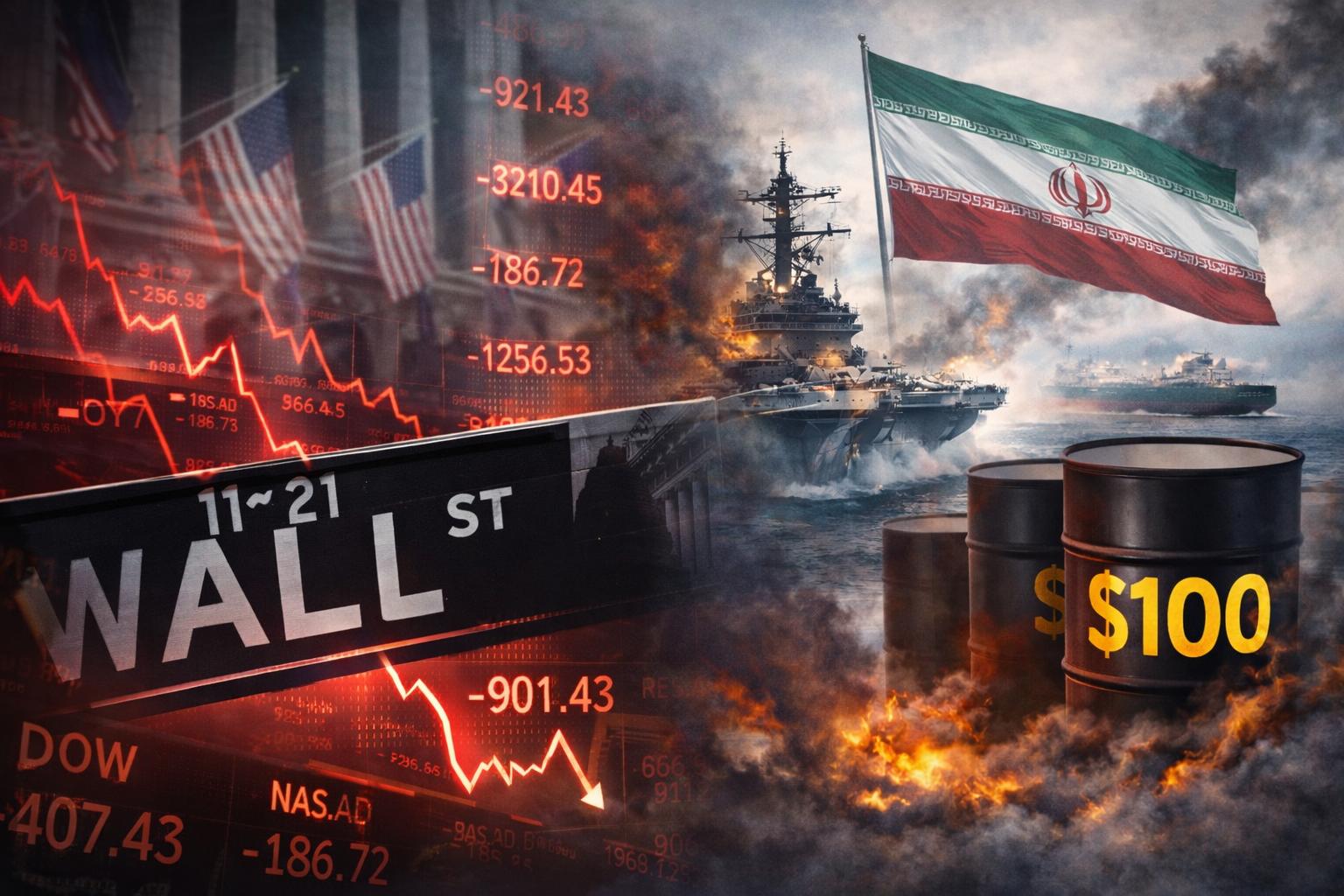
U.S. stock markets opened lower on Monday, April 13, 2026, as investor sentiment weakened following the collapse of high-stakes negotiations between the United States and Iran and a sharp rebound in global oil prices. The downturn reflected rising geopolitical uncertainty after talks aimed at easing tensions ended without agreement over the weekend.
As of 9:40 AM ET on April 13, 2026, the Dow Jones Industrial Average fell 0.72 percent, while the S&P 500 declined 0.33 percent and the Nasdaq Composite dropped 0.36 percent. At the same time, oil markets surged, with Brent crude rising nearly 6 percent to above $100 per barrel and U.S. West Texas Intermediate also climbing past the $100 mark, signaling renewed pressure on global energy markets.
Market volatility increased as the CBOE Volatility Index rose to 20.61, indicating heightened investor caution. Analysts noted a shift toward a “risk-off” environment, as traders reacted to escalating tensions in the Strait of Hormuz, a critical channel for global oil supply.
The market reaction followed the U.S. Navy’s move to begin restricting maritime activity linked to Iran after negotiations held in Islamabad failed to produce a ceasefire or nuclear agreement. The blockade targets vessels associated with Iranian ports, intensifying concerns over potential disruptions to global trade and energy flows.
Despite the geopolitical strain, some analysts said the market response remained relatively contained compared to the scale of the crisis. However, the continued rise in oil prices and uncertainty over supply routes could pose longer-term risks for both equity markets and the broader global economy.