Trump Tariff Lawsuit Filed by 25 US States
The Trump tariff lawsuit filed by 25 US states challenges new forced-labour duties on 60 trading partners. The case questions the administration’s use of Section 301 and could affect import costs, India-US trade talks and future sanctions tied to Russian energy.
25 States Sue Trump Over New Tariffs
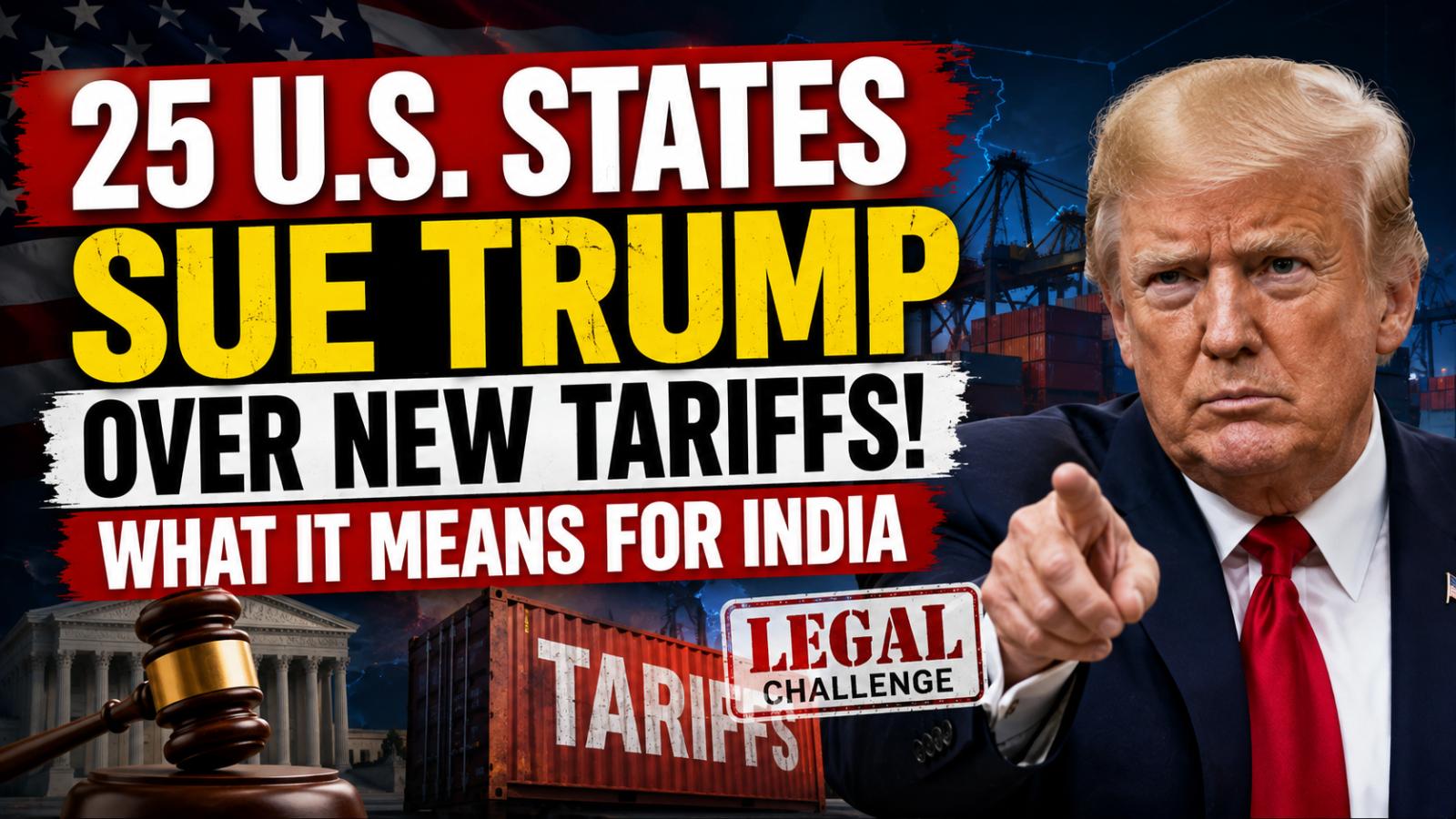
A coalition of 25 US states sued the Trump administration on Monday, August 3, seeking to block tariffs ranging from 10% to 12.5% on goods imported from 60 trading partners. The complaint was filed in the US Court of International Trade and argues that the administration exceeded its authority when it imposed the latest duties.
The targeted economies account for more than 99% of goods imported into the United States, according to the US Trade Representative’s Section 301 action. The administration says the tariffs respond to foreign practices that fail to prevent forced labour from entering international supply chains.
The states argue that forced labour is being used as a legal justification for another broad tariff programme. New York Attorney General Letitia James said the administration was again attempting to raise costs for families and businesses after losing an earlier tariff case before the Supreme Court.
Supreme Court Tariff Ruling
The latest dispute follows the Supreme Court’s February 20, 2026 ruling that the International Emergency Economic Powers Act does not authorise a president to impose tariffs. That judgment removed the legal basis for several earlier duties introduced under emergency powers.
After that setback, the administration shifted to Section 301 of the Trade Act of 1974. Unlike IEEPA, Section 301 specifically permits trade action against foreign practices that burden US commerce, but it requires investigations and supporting findings.
The states claim the administration rushed that process and failed to establish a sufficient connection between each targeted economy and forced-labour imports. The government is expected to argue that the US Trade Representative completed the required investigations and acted within powers granted by Congress.
India Tariff Risk
India is among the economies affected by the new forced-labour tariffs. The immediate issue is therefore not a proposed 500% duty but the additional 10% or 12.5% charge applied under the Section 301 programme.
A separate sanctions bill targeting countries that continue purchasing large quantities of Russian energy could create another risk for India. The Senate advanced the Lindsey O. Graham Sanctioning Russia and Iran Act in late July. The current version would allow Trump to impose tariffs of up to 100% on countries heavily dependent on Russian energy, including India and China. It has not yet passed both chambers of Congress or become law.
That distinction matters. Reporting the possible duty as 500% would exaggerate the current proposal and mislead readers about India’s immediate exposure.
Impact on India-US Trade Talks
The legal challenge could provide temporary leverage to Indian negotiators, but it does not automatically suspend the tariffs. Unless the court issues an injunction, importers may still have to pay the duties while the case continues.
Higher US tariffs could reduce the competitiveness of Indian exports and increase pressure in ongoing trade discussions. A future Russian energy sanction could also force India to weigh cheaper Russian crude against access to the US market.
However, the states’ lawsuit focuses on the legality of the forced-labour tariffs, not on India’s Russian oil purchases. These are separate policy disputes and should not be presented as a single tariff action.
The case will test whether the administration followed Section 301 correctly or merely used a new statute to recreate tariffs invalidated under IEEPA. Its outcome could affect US consumers, import-dependent businesses and nearly every major American trading partner.