Reports suggesting that the United States and Russia have drafted a confidential peace proposal for Ukraine have stirred uncertainty in Kyiv and prompted questions across Europe about the future direction of the conflict. The alleged initiative, first detailed in recent media reports, points to a possible framework designed without Ukrainian participation and containing concessions that could fundamentally reshape the country’s territorial and security landscape.
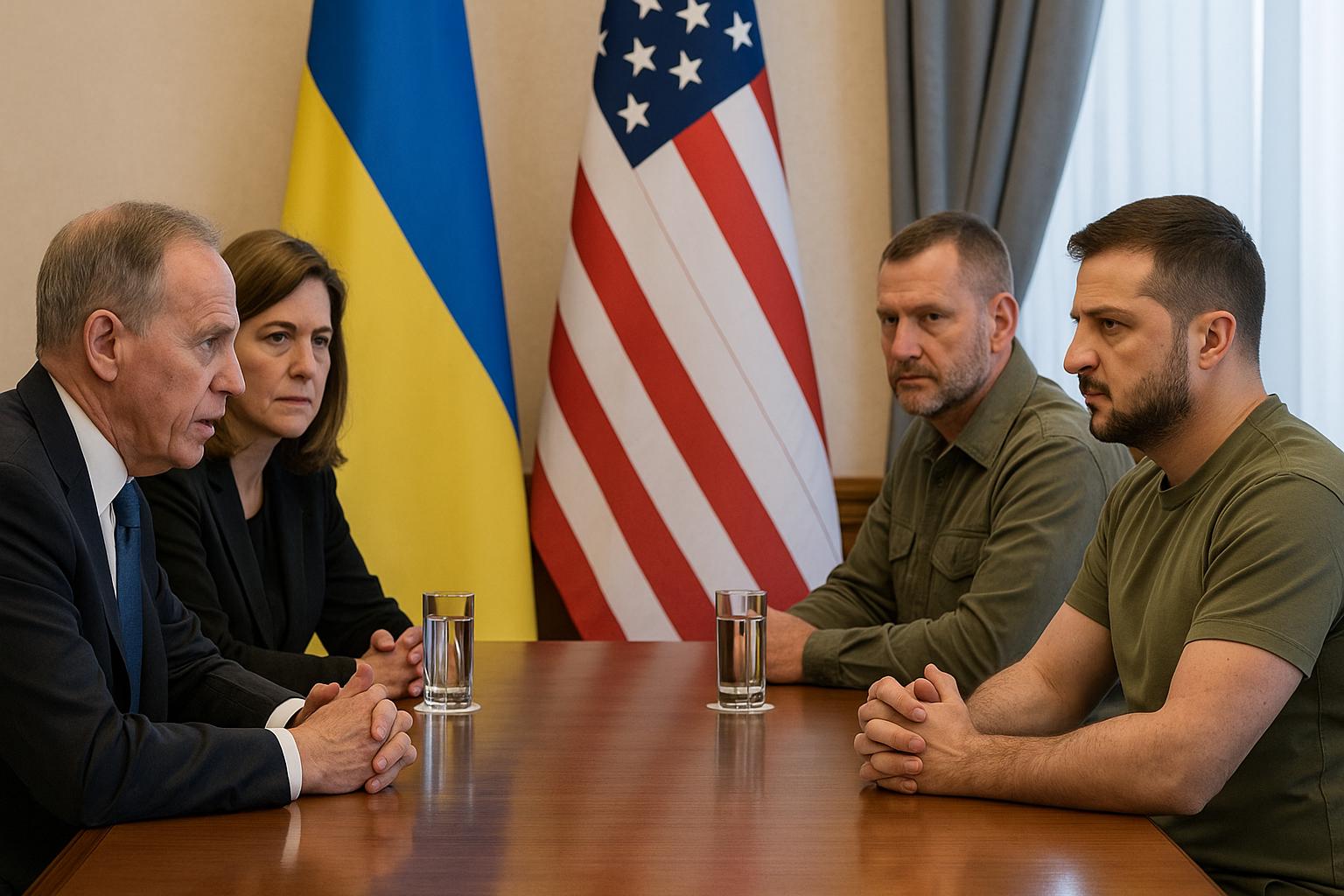
Senior U.S. military officials arrived in Ukraine on Thursday as part of what American authorities described as a fact-finding mission to meet national leaders and discuss efforts to end the war with Russia. The visit followed the emergence of leaked accounts claiming that Washington and Moscow had secretly exchanged ideas and developed a 28-point plan outlining potential conditions for a settlement.
According to the reports, the draft proposal includes provisions under which Ukraine would concede control over parts of the eastern Donbas region, reduce its armed forces by half and abandon certain categories of military equipment. One account suggested an arrangement in which Russia could assume administrative control of Donbas while formally recognizing Ukrainian ownership, with Moscow reportedly paying rent for the territory. None of these claims have been independently confirmed.
A senior Ukrainian official told reporters that Kyiv had received indirect signals that a set of American ideas was being prepared but emphasized that Ukraine had not been involved in drafting any such proposals. The Kremlin dismissed suggestions that new peace concepts had been discussed in recent months, while declining to comment directly on the contents of the reports.
The White House has not verified the existence of the 28-point plan, though U.S. Secretary of State Marco Rubio acknowledged that Washington was developing potential options aimed at eventually bringing the conflict to a close. He said that any durable agreement would require both sides to accept difficult compromises and that efforts were ongoing to compile ideas informed by input from all parties.
Ukrainian President Volodymyr Zelenskyy has not commented on the leaked plan, but peace discussions are expected to feature prominently in his talks with the visiting U.S. delegation. Zelenskyy noted this week that only the United States held sufficient influence to steer the war toward a meaningful conclusion and reiterated Kyiv’s openness to constructive diplomatic formats capable of producing tangible results.
Ukraine’s First Deputy Foreign Minister Serhii Kyslytsia responded more directly, suggesting that the sudden emergence of multiple proposals appeared to be part of what he described as an effort to amplify unrealistic or misleading narratives. Whether Ukraine would ever consider the concessions referenced in the reports remains doubtful, with political, strategic and public resistance likely.
Kyiv’s position is further complicated by its growing dependence on U.S. military assistance and delays in European supplies that once arrived at a faster pace. Although European partners continue to voice support, several diplomats have expressed dissatisfaction with any peace process that excludes Ukraine or regional stakeholders. EU foreign policy chief Kaja Kallas stressed that no plan could succeed without Ukrainian and European participation, noting that there had been no indication of reciprocal concessions from Russia.
Analysts at the Institute for the Study of War warned that, if accurate, the reported plan would amount to a near-total Ukrainian capitulation and would leave the country vulnerable to renewed Russian aggression. They argued that the terms would grant Russia strategic advantages while offering Ukraine no meaningful guarantees, effectively mirroring the demands Moscow presented during negotiations early in the war.
The reported framework, analysts added, reflected the same maximalist territorial ambitions Russia has maintained since the 2022 invasion, suggesting that Moscow’s core objectives have not shifted despite the vast human and material toll of the ongoing conflict. As U.S. officials meet Ukrainian leaders, the extent to which these reports influence real policy discussions remains unclear, but the debate highlights the difficult choices facing Ukraine as it navigates both the battlefield reality and the evolving diplomatic landscape.