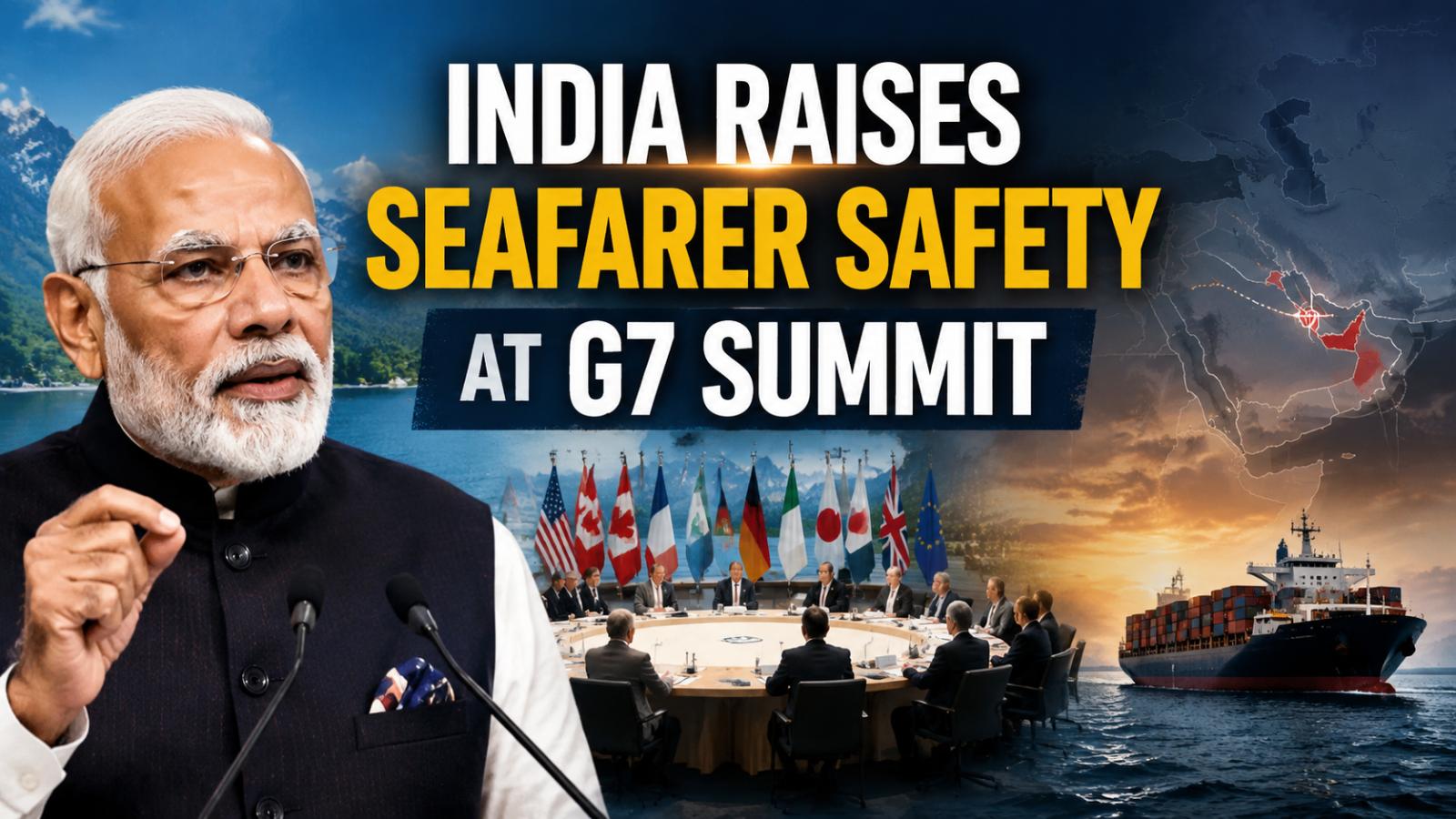
At the G7 summit in Evian, India placed maritime safety and the protection of seafarers at the center of global discussions. Prime Minister Narendra Modi raised concerns over rising risks faced by commercial shipping crews, particularly those operating through sensitive international sea lanes. He emphasized that disruptions at sea are no longer isolated incidents but a growing threat to global trade stability and human safety.
Rising instability in critical sea routes
Modi pointed to escalating tensions in West Asia as a key factor affecting international shipping corridors, including the Strait of Hormuz. This narrow passage remains one of the most important energy transit routes in the world, and any instability in the region has a direct impact on fuel supply chains and freight movement across continents. The increasing frequency of maritime incidents has added pressure on shipping operators and raised insurance and operational risks.
Incident involving Indian crew draws attention
The discussion gained urgency following a recent maritime episode in the Gulf region involving an oil tanker and a military-linked strike. Reports indicated casualties among multinational crew members, including Indians, triggering concern in New Delhi over the safety of its citizens working in global shipping networks. The incident has intensified debate on accountability, escalation control, and the protection of civilian maritime workers in conflict-adjacent waters.
Diplomatic outreach and repatriation steps
Indian authorities confirmed that arrangements were made to bring back the mortal remains of the deceased crew members. The government has also been in contact with relevant international stakeholders to clarify circumstances surrounding the incident and ensure that affected families receive support. The episode has added diplomatic weight to India’s broader call for stronger global maritime safeguards.
Call for coordinated global response
Prime Minister Modi urged G7 nations to treat maritime safety as a shared responsibility rather than a regional concern. He stressed the need for coordinated international mechanisms to secure trade routes, prevent escalation in conflict-prone waters, and protect seafarers who play a critical role in sustaining global supply chains. The message aligned with India’s broader push for stable, rules-based maritime governance in an increasingly volatile geopolitical environment.