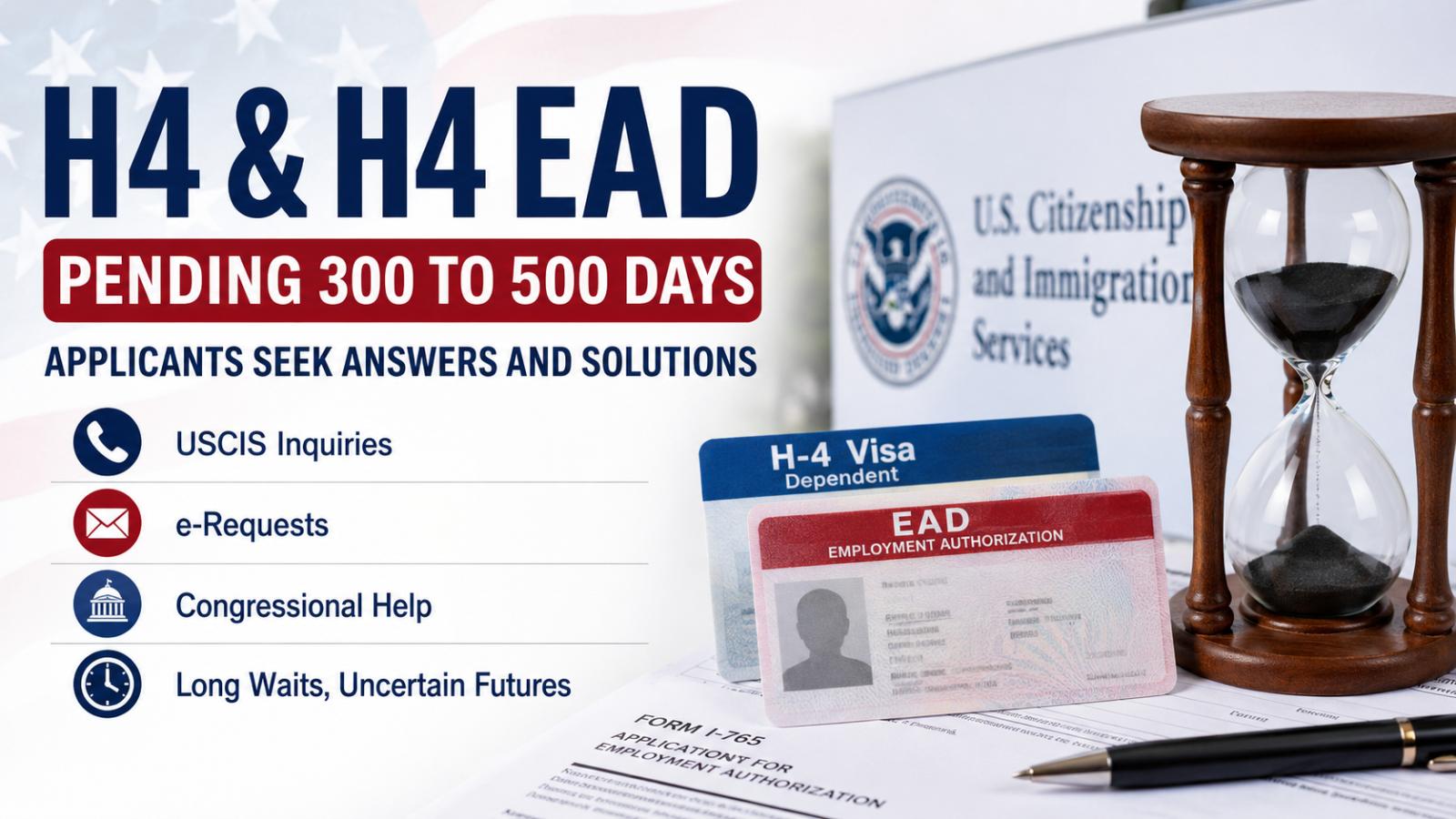
H4 EAD cases pending 300 to 500 days are prompting applicants and their families to seek firsthand accounts of what produced a meaningful response from U.S. Citizenship and Immigration Services.
People affected by long H-4 dependent status and employment authorization delays say they want practical information from applicants who faced similar waits and later received a case update, clearer explanation or approval.
H4 EAD Cases Pending 300 to 500 Days Remain Unresolved
Applicants say they have tried several established follow-up channels, including calling USCIS, submitting online e-Requests and contacting a member of Congress or a senator. Some have also sent premium-processing-related emails when applicable.
Despite those efforts, some cases reportedly remain pending. Applicants are now asking which actions led to direct movement and which resulted only in automated or routine replies.
Applicants Seek Details on USCIS and Congressional Inquiries
The discussion is centered on specific experiences rather than broad immigration advice. Applicants want to know how others contacted USCIS or an elected official, how long a response took and whether the inquiry produced an update, approval or useful case information.
They are also asking contributors to separate successful interventions from steps that generated no substantive change. That distinction could help families decide how to follow up on delayed H4 visa and H4 EAD cases without assuming that one method will work for everyone.
The prolonged waits matter because H-4 status and employment authorization decisions can affect a family’s immigration stability and a dependent spouse’s ability to work. With no single solution identified, applicants are relying on clear, experience-based accounts to better understand their legitimate follow-up options.