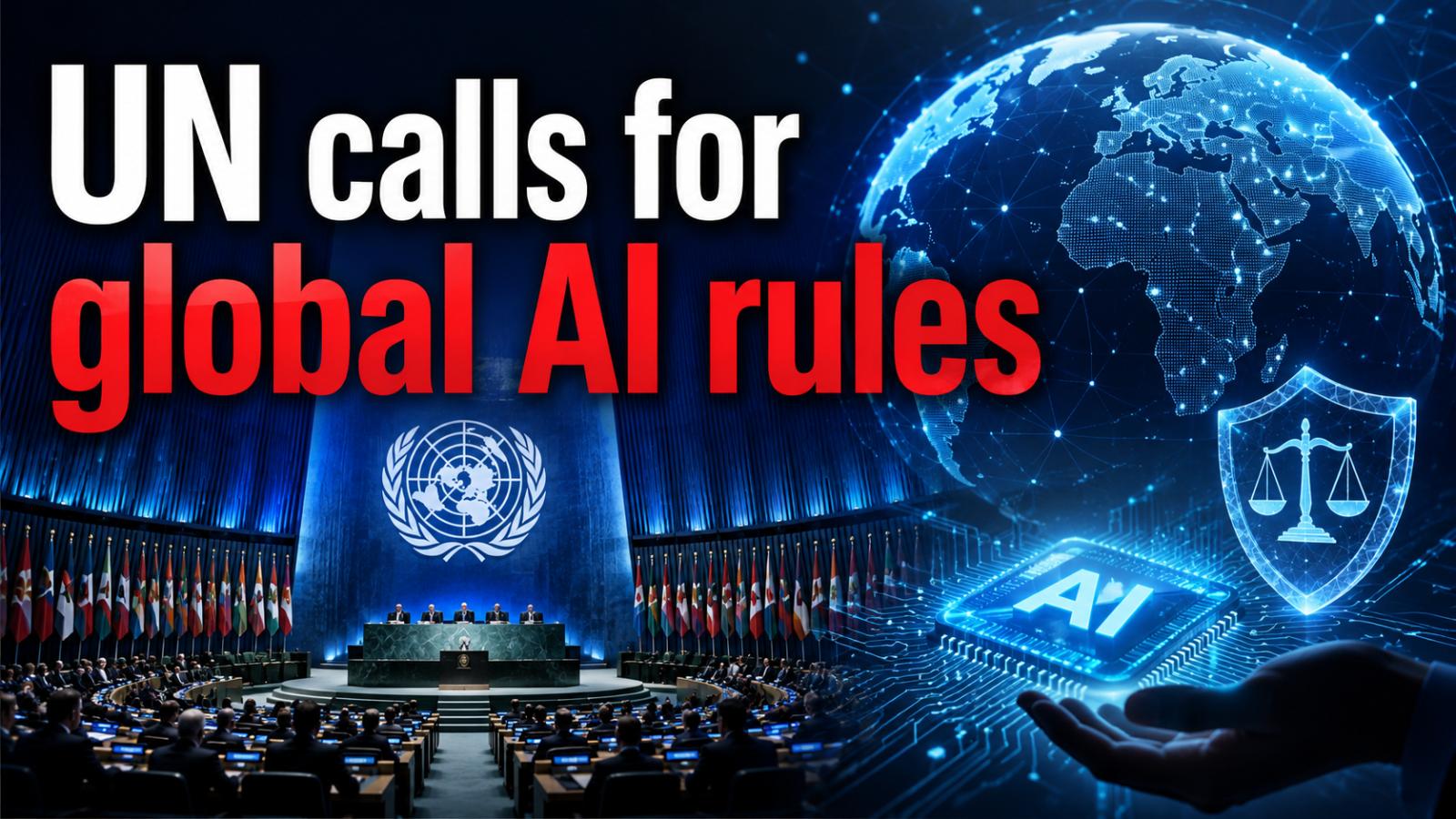
The United Nations has called for stronger global rules on artificial intelligence as concern grows over the speed at which AI systems are entering public life, business, education and security. UN Secretary-General António Guterres said governments cannot afford to wait until powerful AI tools create deeper social, political or military risks before agreeing on clear safeguards.
Speaking ahead of the Global Dialogue on AI Governance in Geneva, Guterres said artificial intelligence has the potential to support healthcare, learning, development and public services. However, he warned that the same technology could also spread misinformation, weaken trust, increase inequality and place major decisions in the hands of systems that people do not fully understand or control.
Call for human control and accountability
Guterres said the biggest challenge is not only the growth of AI, but the lack of common rules around how it is built and used. Many institutions, he said, were designed for older technologies that followed direct human instructions. New AI systems can now generate content, write code, make recommendations and act with limited oversight, raising questions about responsibility when things go wrong.
The UN chief stressed that human control must remain central to AI governance. He said people should not be pushed into a future where automated tools make choices affecting jobs, security, education or public debate without consent, transparency and accountability.
Child safety becomes a key concern
One major focus of the UN’s message is AI child safety. Guterres urged governments and technology companies to create shared standards for tools used by children and young people. He supported stronger safeguards to ensure AI platforms are age-appropriate, fair and less likely to expose minors to harmful, misleading or manipulative content.
Children may trust chatbot responses more easily and may not always recognize false, biased or unsafe advice. That makes child-focused AI safety rules an urgent part of the broader global AI governance plan.
UN renews warning on killer robots
Guterres also repeated his concern over autonomous weapons, often described as killer robots. He said machines should not be allowed to select targets or take human lives without meaningful human judgment. The UN has pushed for stronger international action before such weapons become more common and harder to regulate.
The warning comes as AI power remains concentrated among a small number of companies and countries. Guterres said that without global cooperation, many nations could be left without a voice in shaping rules for a technology that will affect everyone. His message was clear: the window to build safe, fair and accountable AI rules is open now, but it may not remain open for long.