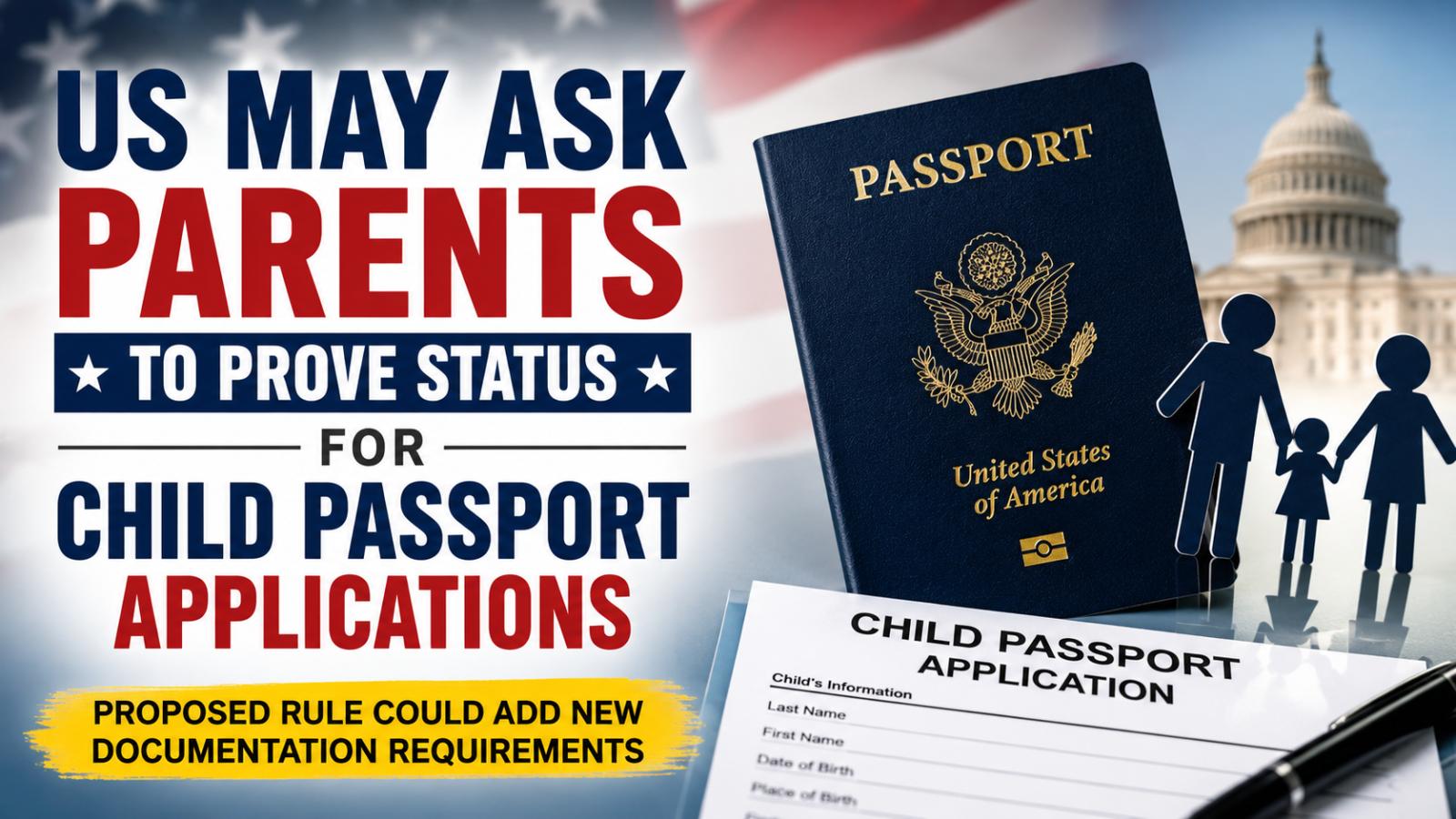
The US State Department is considering new passport procedures that could require parents or legal guardians to provide proof of their own citizenship or immigration status when applying for a passport for a child. The possible change is linked to the Trump administration’s efforts to implement new rules surrounding birthright citizenship and prevent what officials describe as misuse of US citizenship laws.
The proposal has not yet been finalized, meaning families should continue following the passport requirements currently published by the State Department. If adopted, however, the policy could add another layer of documentation for some parents seeking US passports for their children.
Parents May Need Additional Citizenship Documents
Under the proposed system, passport officials could ask parents or guardians to establish their own citizenship or lawful immigration status in addition to providing documents proving the child’s US citizenship.
A US citizen parent could potentially be asked to provide documents such as a valid US passport, birth certificate or other recognized citizenship evidence. Parents who are not US citizens could be asked for immigration documents showing their status in the country, including permanent resident records or other official immigration documentation.
The additional information would help federal officials determine whether a child falls under any restrictions created by the administration’s latest interpretation of birthright citizenship.
Currently, children under 16 applying for a US passport generally must provide evidence of their own citizenship. Families are also required to establish the relationship between the child and the parents or guardians, provide identification and meet parental consent requirements. The proposed change would place greater emphasis on the immigration or citizenship status of the parents themselves.
Birthright Citizenship Policy Drives Proposed Change
The possible passport requirement follows executive actions aimed at changing how the federal government applies birthright citizenship rules in certain cases.
The administration has argued that citizenship protections should not automatically apply in every circumstance involving children born in the United States to parents who are not citizens or permanent residents. Federal agencies have therefore been directed to prepare guidance explaining how the policy should be implemented.
The administration has also increased its focus on so-called birth tourism, a term used for people who travel to the United States primarily to give birth so that their child may obtain US citizenship.
US immigration rules already allow authorities to deny visitor visas when officials determine that the primary purpose of travel is giving birth in the country to obtain citizenship for a child. The latest measures seek to expand scrutiny beyond visa applications and into other federal processes connected with citizenship documentation.
Legal Challenges Could Affect Implementation
Efforts to restrict or reinterpret birthright citizenship continue to face significant legal challenges. Opponents argue that citizenship for people born in the United States is protected by the 14th Amendment and cannot be significantly narrowed through executive action alone.
Several cases involving the administration’s citizenship policies have moved through federal courts, and judges are reviewing questions involving constitutional protections, presidential authority and how government agencies may implement the new directives.
Because the legal process remains active, any passport-related changes could be modified, delayed or blocked depending on future court rulings and final federal guidance.
This uncertainty is particularly important for families preparing international travel, because children generally need their own passports to travel outside the United States.
What Parents Should Know Before Applying
Parents planning to apply for a child’s US passport should continue using the official requirements currently in effect unless the State Department formally announces changes.
Applicants should prepare the child’s citizenship evidence, proof of the parental or guardian relationship, identification documents, consent forms and any other records required for the individual application.
Families with complex citizenship situations, including children born abroad, parents with different immigration statuses or cases involving citizenship through a parent, may face additional documentation requirements even under existing rules.
If the proposed policy becomes final, parents could be required to provide more detailed evidence of their own citizenship or immigration status before a child’s passport is issued.